
Spicy Salmon Sushi Bowl
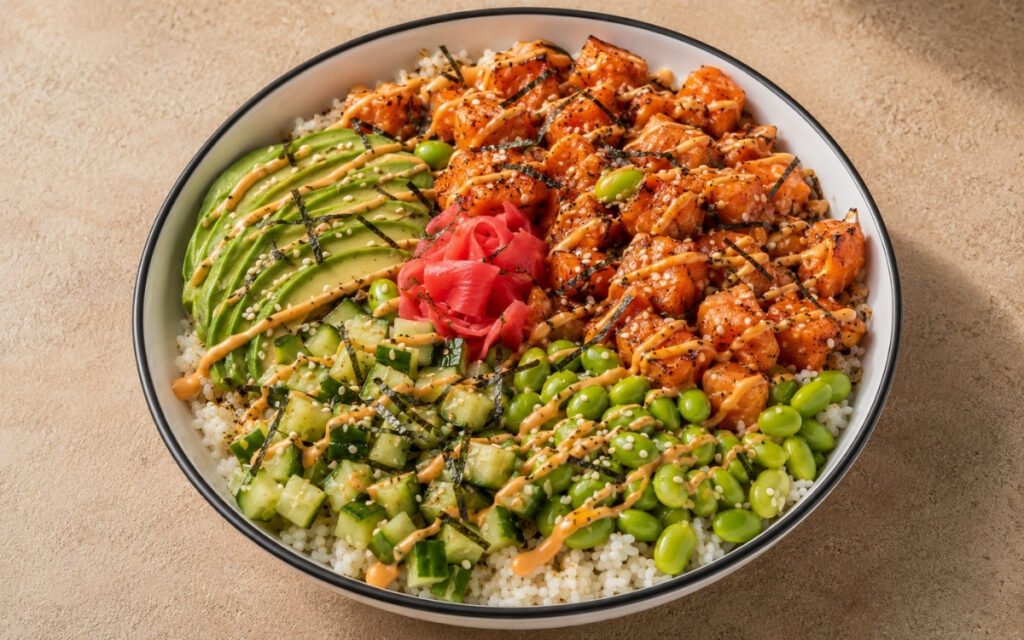
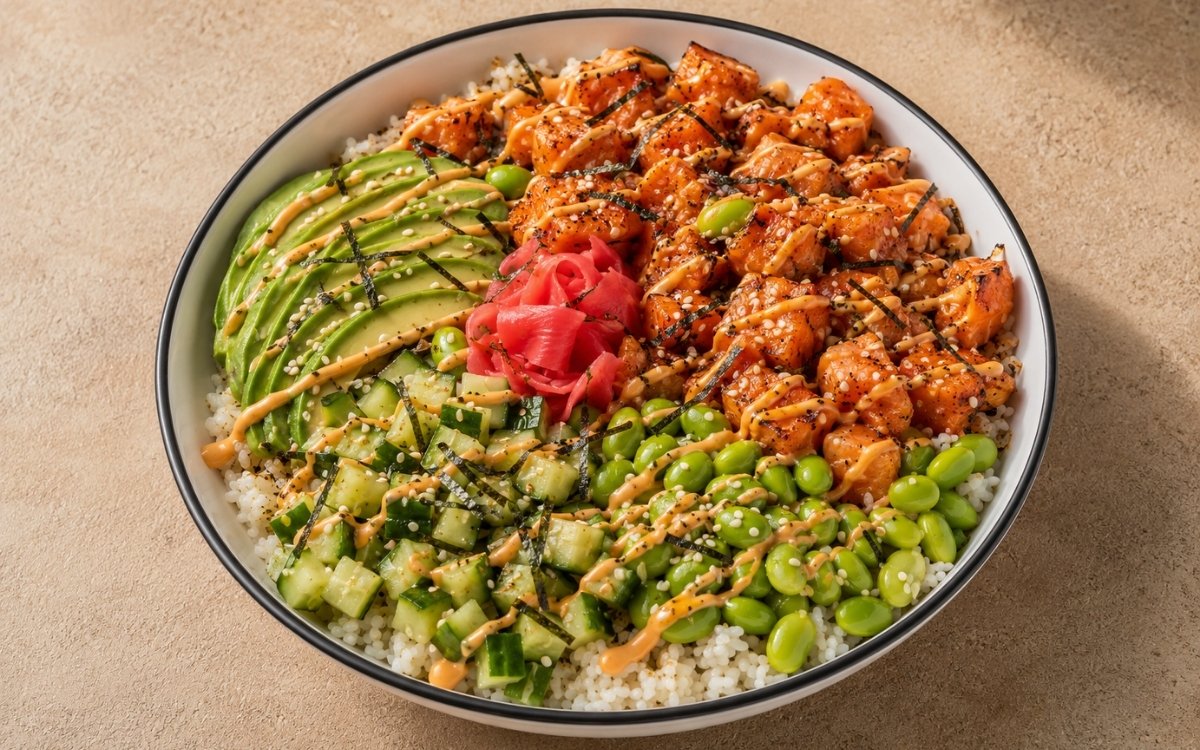
Sushi rice seasoned with the standard rice vinegar, sugar, and salt mixture folded through while still warm — the specific preparation that converts cooked Japanese short-grain rice into the slightly sticky, distinctly flavoured sushi rice that everything else in this bowl is built around. Salmon cubes marinated briefly in soy, sesame oil, honey, and ginger, then seared at maximum heat for 90 seconds per side so the honey caramelises against the surface while the centre remains medium-rare. Spicy mayo whisked from Japanese mayonnaise, sriracha, and lime juice drizzled over the assembled bowl. Sliced avocado, diced cucumber, edamame, pickled ginger, nori strips, and toasted sesame seeds alongside. The deconstructed sushi roll that delivers the same flavour combination with significantly less technical effort. Forty-five minutes.
Prep Time : 25 min
Cook Time : 20 min
Servings : 4
25 min
20 min
4
Ingredients
For the Sushi Rice
• 300g sushi rice, uncooked — this one on Amazon
• 480ml water
• 45ml rice vinegar
• 15g granulated sugar
• 7g kosher salt
For the Spicy Salmon Marinade
• 40ml soy sauce
• 15ml sesame oil — this one on Amazon
• 20g honey
• 10g fresh ginger, peeled and grated
• 600g fresh salmon fillet, cut into 2cm cubes
• 15ml neutral oil (for searing)
For the Spicy Mayo
• 80g Japanese mayonnaise — this one on Amazon
• 20g sriracha
• 5ml fresh lime juice
For the Spicy Salmon Sushi Bowl Components
• 200g cucumber, peeled and diced
• 2 ripe avocados, approximately 300g total flesh, sliced
• 200g frozen shelled edamame
• 4 sheets nori, cut into thin strips — this one on Amazon
• 40g pickled ginger — this one on Amazon
• 30g white sesame seeds, toasted
This post may contain affiliate links. As an Amazon Associate I earn from qualifying purchases, at no additional cost to you.
Directions
- Cook and Season the Sushi Rice
Rinse the 300g of sushi rice under cold running water until completely clear — sushi rice has a significantly higher surface starch content than long-grain rice and requires thorough rinsing to prevent the cooked grains from clumping into a gummy mass rather than producing the slightly sticky but individually distinct grains that sushi rice requires. Combine the rinsed rice with 480 ml of water and cook until tender and sticky — typically 15 minutes at a low simmer covered. While the rice is still cooking or immediately after, prepare the sushi vinegar: combine the 45ml of rice vinegar, 15g of sugar, and 7g of salt in a small bowl and stir until the sugar and salt have completely dissolved into the vinegar. The dissolution is important — undissolved sugar produces sweet pockets within the rice rather than uniform seasoning throughout. When the rice has finished cooking, transfer it to a wide, non-metallic bowl — a wooden sushi tub (hangiri) is traditional but a large ceramic or glass bowl works equally well. Pour the seasoned vinegar mixture evenly over the rice and immediately begin folding it through using a rice paddle or wooden spoon — a cutting-and-folding motion rather than stirring, which would crush and break the grains. Simultaneously, if possible, fan the rice gently while folding — the fanning cools the rice surface rapidly, helping the vinegar absorb evenly and producing the characteristic glossy appearance of properly seasoned sushi rice. The rice is at the correct stage when it tastes specifically of sweet-salty-acidic rice vinegar throughout every grain and has a slight gloss on the surface. Cover with a damp cloth — not plastic wrap, which traps moisture and makes the surface waterlogged — and allow to rest at room temperature. Do not refrigerate: cold destroys sushi rice’s texture, making the grains hard and dry rather than maintaining their specific sticky, room-temperature suppleness. - Marinate the Salmon
In a medium bowl, whisk together the 40ml of soy sauce, 15ml of sesame oil, 20g of honey, and 10g of grated fresh ginger until the honey has fully dissolved and the marinade is uniform. Cut the 600g of fresh salmon fillet into 2cm cubes, removing any pin bones by running a finger along the flesh and pulling out any bones found with tweezers or needle-nose pliers. Add the salmon cubes to the marinade and toss gently to coat every surface. Allow to marinate for 10 minutes at room temperature while preparing the other components. The 10-minute window is the correct marinating time for cubed salmon in a soy-honey-based marinade — sufficient for the soy’s salt and the marinade’s character to begin penetrating the outer layer, and short enough that the soy’s salt does not draw out significant moisture from the cubes or the honey’s sugar begin to break down the surface proteins, which would produce a softer exterior during searing rather than the caramelised crust the recipe requires. - Prepare the Bowl Components
While the salmon marinates, prepare all remaining bowl components so assembly requires no additional active preparation once the salmon is seared. Peel and dice the 200g of cucumber into small, uniform cubes — approximately 1cm dice, small enough to be scooped in a single spoonful alongside the rice rather than requiring a separate bite. Halve and pit the 2 avocados, then slice the flesh thinly while still in the skin — approximately 5mm slices — and scoop out with a large spoon to maintain the fan shape. Place the 200g of frozen edamame in a heatproof bowl and cover with boiling water for 3 minutes until thawed and just tender, then drain thoroughly. Using kitchen scissors, cut each nori sheet into thin strips — approximately 1cm wide and 5cm long — which provide the correct size for scattering over the bowl and picking up on chopsticks or a fork without overwhelming each bite with seaweed flavour. Measure out the 40g of pickled ginger and set aside. - Make the Spicy Mayo and Toast the Sesame Seeds
In a small bowl, whisk together the 80g of Japanese mayonnaise, 20g of sriracha, and 5ml of lime juice until completely smooth and uniform. Japanese mayonnaise — specifically Kewpie brand, made with egg yolks only rather than whole eggs and seasoned with rice vinegar and MSG — has a richer, creamier, more deeply flavoured character than standard Western mayonnaise, producing a spicy mayo that is substantially more complex and more specifically Japanese-tasting than the same preparation made with regular mayonnaise. The sriracha provides the heat and the garlic-fermented chili character. The lime juice’s small quantity provides the acid brightness that prevents the mayonnaise-heavy sauce from tasting flat and rich without lightening. Transfer to a squeeze bottle for clean, controlled drizzling, or simply to a small bowl. Toast the 30g of white sesame seeds in a dry pan over medium heat for 2–3 minutes, stirring frequently, until fragrant and lightly golden. Transfer immediately to a plate — sesame seeds continue toasting on residual heat if left in the pan. - Sear the Salmon
Heat the 15ml of neutral oil in a large non-stick skillet or wok over the absolute highest available heat until shimmering. Remove the salmon cubes from the marinade, shaking off the excess — very thick marinade coating the cubes will burn at high heat before the salmon is seared rather than caramelising. The honey in the marinade that has adhered to the salmon’s surface will caramelise at high heat — producing the specific sweet, slightly charred, deeply golden exterior that defines the seared salmon cubes. Add the salmon cubes in a single layer with clear space between each — work in two batches if the pan cannot accommodate all cubes without crowding, as crowded cubes steam each other and prevent the caramelisation. Leave completely undisturbed for 90 seconds. After 90 seconds the honey and soy on the underside of each cube should have caramelised to a deep golden-brown. Flip each cube and sear the second side for 90 seconds. The target interior temperature is medium-rare — the centre of each cube should still be slightly translucent and very moist when a knife is inserted, approximately 52°C internal temperature. At this temperature the salmon is moist, slightly silky, and the exterior caramelisation provides textural contrast against the soft interior. Remove from heat immediately as residual heat continues cooking the cubes after removal. - Assemble the Bowls
Divide the seasoned sushi rice among four large wide bowls — approximately 250g of cooked rice per bowl, mounded into the centre with enough surface area for each component to be placed around it in distinct sections. Arrange the seared salmon cubes in the largest section, slightly fanned or piled so the caramelised surfaces are visible. Arrange the sliced avocado in an adjacent section, fanning the slices. Place the diced cucumber in its own section. Distribute the edamame evenly across each bowl. Scatter the nori strips over the assembled bowl. Place the pickled ginger in a distinct small pile — it serves as a palate cleanser between bites of the spicy salmon and the other components, as in traditional sushi service. Drizzle the spicy mayo generously over the salmon and across the rice in long, overlapping lines rather than a single concentrated pool — the drizzle should reach most of the bowl’s surface. Scatter the toasted sesame seeds over each bowl. Serve immediately while the salmon is still warm against the room-temperature rice.
*Notes :
- The sushi rice seasoning technique — folding the vinegar mixture through warm rice with a cutting motion while fanning — is worth practising for the specific result it produces. The cutting-and-folding motion distributes the vinegar evenly without crushing the grains, which would produce a gummy, paste-like rice rather than individually distinct grains. The fanning cools the surface rapidly and simultaneously — as the vinegar is absorbed, the surface moisture evaporates, producing the characteristic slight gloss and the specific slightly sticky but not wet texture. The damp cloth cover maintains the rice at the correct slightly warm room temperature and prevents the surface from drying without trapping moisture that would make it waterlogged. Properly prepared sushi rice holds well at room temperature for up to 2 hours — the most practical make-ahead step in this recipe.
- Japanese mayonnaise — Kewpie — is the specific product for the spicy mayo rather than a generic substitution. Its composition differs fundamentally from standard mayonnaise: it uses only egg yolks rather than whole eggs, producing a richer, creamier, more deeply yellow emulsion with a more complex flavour. It is also seasoned with rice vinegar rather than white vinegar and contains MSG, which amplifies every other flavour it contacts. The resulting spicy mayo made from Kewpie tastes specifically Japanese in character — the same sauce made with standard mayonnaise produces a functional but noticeably less complex result. Available at Asian grocery stores and increasingly at mainstream supermarkets.
Why This Recipe Works
This recipe works because it treats each component with the specific technique its character requires — the sushi rice seasoned with the correct folding method rather than stirring, the salmon seared at the highest heat for the shortest time that produces caramelisation without overcooking the medium-rare centre, and the spicy mayo made from the specific Japanese mayonnaise rather than a generic substitute.
The bowl format provides all the flavour of a spicy salmon roll with considerably less technical preparation. The temperature contrast — warm salmon against room-temperature rice — is the specific experience that makes a sushi bowl satisfying in a way that a fully cold preparation would not be.
Ingredient Breakdown
Sushi Rice (Vinegar-Seasoned, Room Temperature)
The specifically flavoured base — rice vinegar, sugar, and salt folded through warm rice produces the distinct sweet-salty-acidic character that identifies the dish as a sushi preparation.
Honey in the Salmon Marinade
The caramelisation agent — at high heat the honey’s sugars caramelise against the pan surface, producing the sweet, slightly charred exterior the seared salmon cubes require.
90-Second Sear (Medium-Rare Interior)
The technique requirement — maximum heat for the shortest window that produces caramelisation without cooking the centre beyond medium-rare.
Japanese Mayonnaise (Kewpie)
The specific spicy mayo base — egg yolk-only, rice vinegar, and MSG-seasoned; fundamentally richer and more complex than standard mayonnaise in this application.
Pickled Ginger
The palate-cleansing element — placed as a distinct component rather than mixed through, used between bites as in traditional sushi service.
Nori Strips
The umami aromatic finish — cut into strips small enough to accompany each bite rather than dominating.
Flavor Structure Explained
This Spicy salmon sushi bowl follows a layered balance model:
- Sweet-savory glazed core (salmon, soy, honey)
- Bright acidic foundation (seasoned sushi rice)
- Creamy spicy layer (sriracha-Kewpie mayo)
- Fresh cooling contrast (cucumber, avocado, edamame)
- Umami aromatic finish (nori, sesame, ginger, sesame oil)
Salmon defines the primary character with caramelised soy sweetness and rich, fatty depth concentrated on each glazed piece. Sushi rice forms the structural foundation through sweet-acidic vinegar seasoning that sharpens and lifts every other flavor. The spicy mayo provides creamy heat that bridges the salmon and rice into a cohesive whole. Fresh vegetables and avocado create cooling contrast through crunch and creaminess. Nori, sesame, pickled ginger, and sesame oil complete the bowl with layered umami and aroma that give the dish its unmistakably sushi-inspired identity.
Common Mistakes to Avoid
- Not Dissolving the Sugar and Salt Before Adding to Rice – Undissolved granules produce sweet or salty pockets rather than uniform seasoning throughout the rice.
- Stirring Rather Than Folding the Vinegar Through the Rice – Stirring crushes the grains into a gummy paste. Always use a cutting-and-folding motion.
- Refrigerating the Sushi Rice – Cold destroys sushi rice’s texture irreversibly — making the grains hard and dry. Always keep at room temperature covered with a damp cloth.
- Using Standard Mayonnaise Instead of Kewpie – The result is functional but noticeably less complex. Kewpie is worth seeking out for this specific application.
- Not Removing Excess Marinade Before Searing – The honey-soy pooled on the salmon’s surface burns rather than caramelises at high heat. Shake off excess before placing in the pan.
- Overcooking the Salmon Beyond Medium-Rare – At 90 seconds per side the salmon is caramelised on the exterior and medium-rare throughout — the correct eating texture. Beyond this it becomes dry and grainy.
Variations
Fully Cooked Salmon Version
Cook the salmon cubes for 2–3 minutes per side until fully opaque throughout, reaching 63°C internal temperature. The texture will be firmer and less silky but still excellent with the marinade’s caramelised crust.
With Tobiko
Add 20g of flying fish roe (tobiko) scattered over each assembled bowl for the specifically sushi-restaurant visual and textural element — the small, slightly crunchy, mildly briny roe provides a finishing pop of texture and umami.
With Wakame Salad
Add 80g of rehydrated wakame seaweed salad — available at Japanese grocery stores dressed in sesame and rice vinegar — as an additional bowl component alongside the cucumber and edamame.
Tuna Version
Replace the salmon with 600g of sushi-grade tuna cut into 2cm cubes — the same marinade and 90-second-per-side searing technique apply. Tuna’s firmer flesh produces a more distinct caramelised exterior.
Storage & Make-Ahead
Sushi rice can be kept at room temperature for up to 2 hours if covered with a damp cloth, which makes it the most practical make-ahead component of the dish. It should not be refrigerated, since cold storage negatively affects its texture.
Spicy mayo can be refrigerated in a sealed jar for up to 3 days. It is one of the most versatile make-ahead sauces and can also be used on sandwiches, with dumplings, or as a dipping sauce.
Seared salmon is best served immediately because medium-rare salmon firms up noticeably during refrigeration. If you need to make it ahead, slightly undercook it and reheat it very briefly before serving.
The sushi bowl components can mostly be prepared in advance. The cucumber, edamame, and nori strips can be prepared up to 2 hours ahead and refrigerated. The avocado, however, should be sliced only immediately before assembly to prevent oxidation.
Frequently Asked Questions
What is sushi-grade salmon?
Sushi-grade salmon has been handled, processed, and stored according to standards that make it safe to consume at medium-rare or raw. It is available at reputable fishmongers and Japanese grocery stores. If sushi-grade is unavailable or food safety is a concern, cook the salmon cubes to 63°C throughout — the flavour and marinade are excellent at fully cooked doneness.
Why Japanese mayonnaise rather than regular?
Kewpie Japanese mayonnaise uses only egg yolks (rather than whole eggs), rice vinegar (rather than white vinegar), and contains MSG — producing a richer, creamier, more deeply flavoured emulsion with a more complex taste than standard mayonnaise. The resulting spicy mayo has a specifically Japanese character that standard mayo cannot replicate.
Why fold the sushi rice vinegar rather than stir?
Stirring crushes the starch-engorged rice grains into a sticky, gummy paste. The cutting-and-folding motion distributes the vinegar evenly while keeping each grain intact — producing the correct slightly sticky but individually distinct sushi rice texture.
Can I prepare the sushi rice ahead of time?
Yes — up to 2 hours at room temperature covered with a damp cloth. Do not refrigerate: cold temperature converts sushi rice from its characteristic slightly sticky, tender room-temperature texture to hard, dry, unpleasant grains that cannot be restored.
Why the honey in the salmon marinade?
The honey’s concentrated sugars caramelise at the high searing temperature, producing the specific sweet, slightly charred golden exterior that makes the seared salmon cubes visually and texturally distinctive — the same caramelisation principle applied to beef, chicken, and other proteins throughout this collection.
Nutrition Facts
( per serving )
Calories
~915 kcal
Protein
35 g
Fat
49 g
Carbs
82 g
Calories
~915 kcal
Protein
35 g
Fat
49 g
Carbs
82 g
Related Recipes
Related Recipes

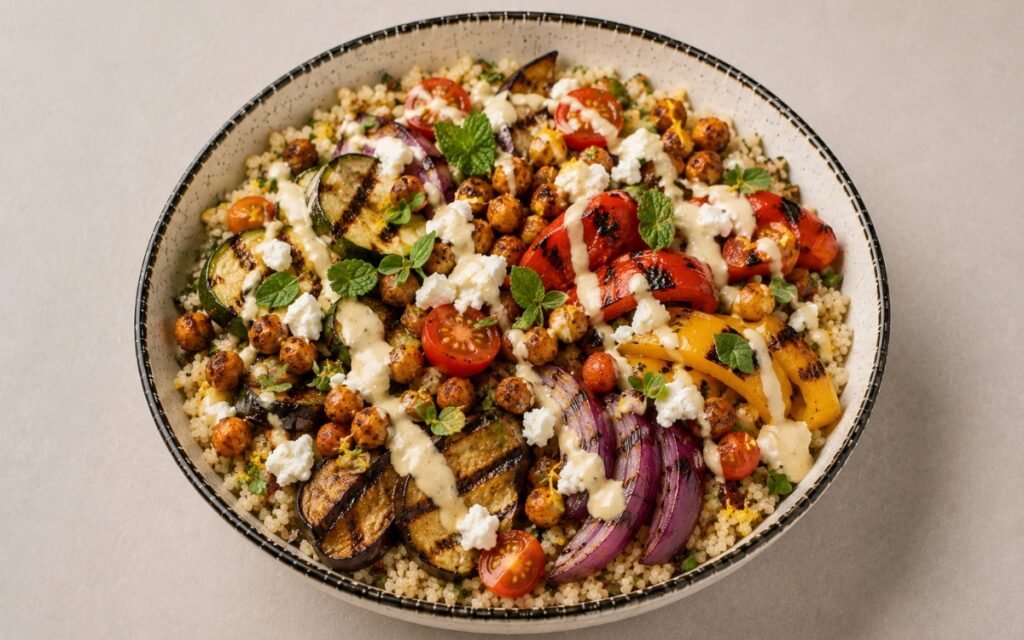
Grilled Mediterranean Veggie Bowl
Smoky grilled vegetables with lemon-herb quinoa, crispy chickpeas & creamy tahini-yogurt sauce.
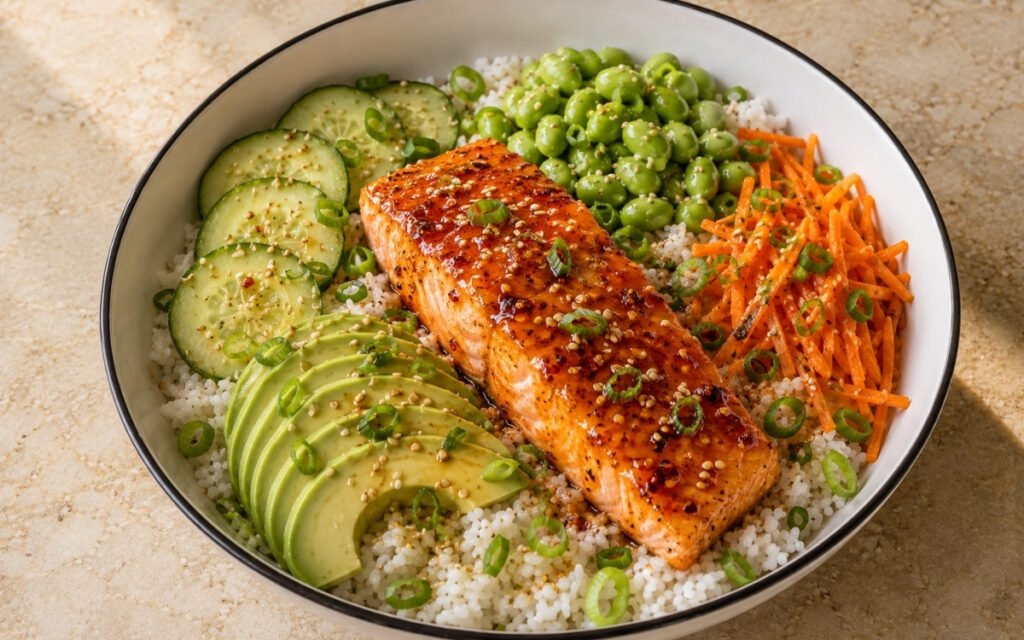
Hot Honey Salmon Rice Bowl
Salmon seared in sesame oil and glazed with gochugaru hot honey in the final minute — over jasmine rice with pickled carrots, avocado, and soy sauce. 35 minutes.
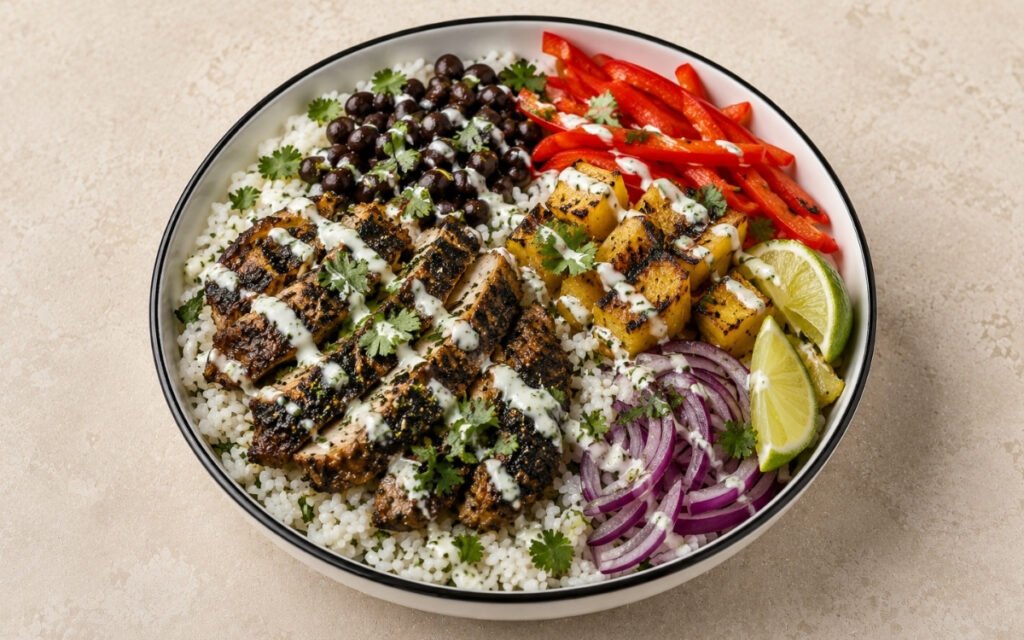
Caribbean Jerk Chicken Rice Bowl
Charred jerk-spiced chicken over coconut rice with black beans, grilled pineapple, peppers, and lime-cilantro crema.
You might also like
You might also like
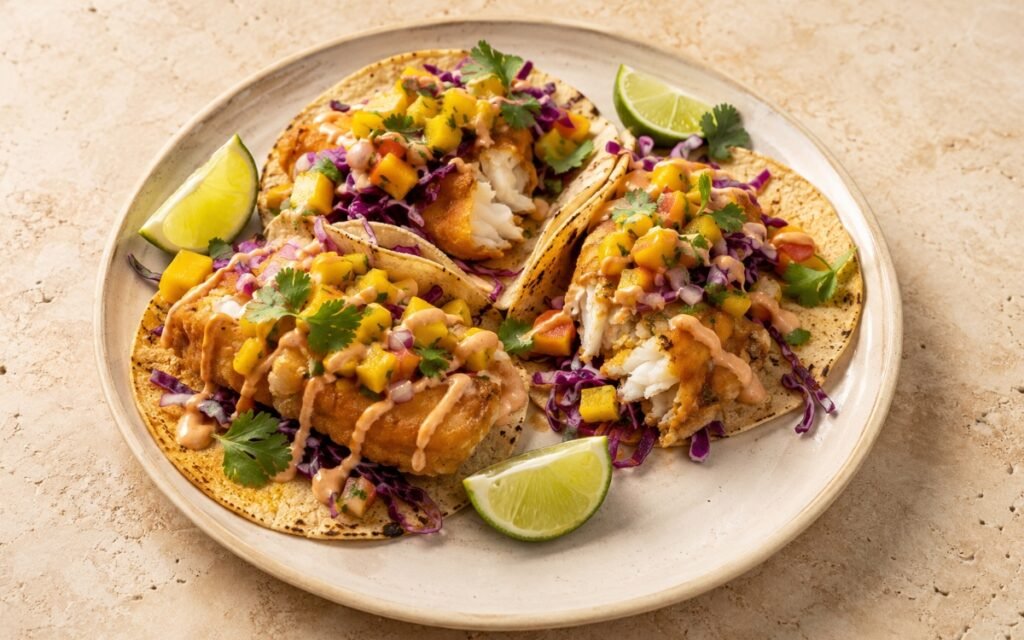
Fish Tacos with Mango Salsa
Cod dredged and battered cold, fried until golden and crisp, piled onto small corn tortillas with purple cabbage, mango salsa, and chipotle crema.
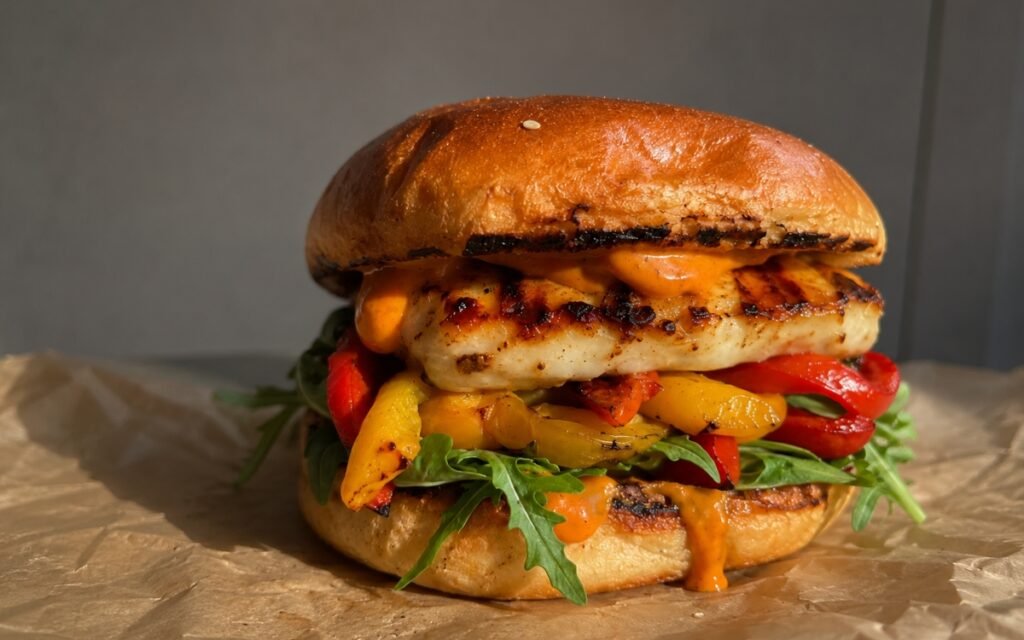
Grilled Halloumi Burger with Roasted Peppers
Golden grilled halloumi in a toasted brioche bun with caramelized peppers, peppery rocket, and creamy harissa-lime mayo.
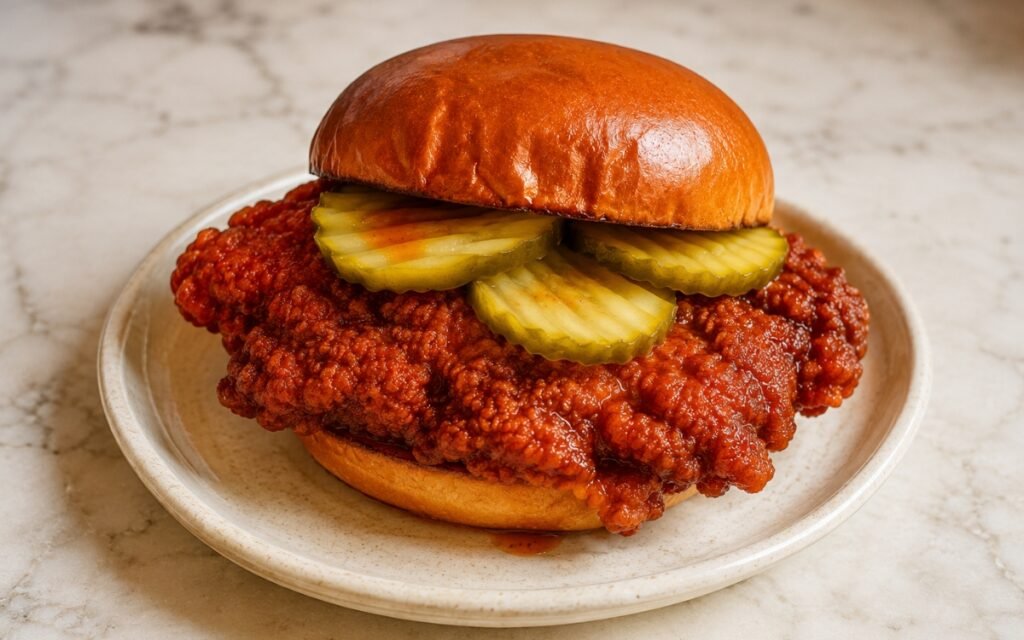
Nashville Hot Chicken Sandwich
Double-dredged, cold-water-rehydrated fried chicken coated in a fiery Nashville hot glaze, served on toasted brioche with mayonnaise and dill pickles.
Spicy Salmon Sushi Bowl
Ingredients
Method
- Rinse the 300g of sushi rice under cold running water until completely clear — sushi rice has a significantly higher surface starch content than long-grain rice and requires thorough rinsing to prevent the cooked grains from clumping into a gummy mass rather than producing the slightly sticky but individually distinct grains that sushi rice requires. Combine the rinsed rice with 480 ml of water and cook until tender and sticky — typically 15 minutes at a low simmer covered. While the rice is still cooking or immediately after, prepare the sushi vinegar: combine the 45ml of rice vinegar, 15g of sugar, and 7g of salt in a small bowl and stir until the sugar and salt have completely dissolved into the vinegar. The dissolution is important — undissolved sugar produces sweet pockets within the rice rather than uniform seasoning throughout. When the rice has finished cooking, transfer it to a wide, non-metallic bowl — a wooden sushi tub (hangiri) is traditional but a large ceramic or glass bowl works equally well. Pour the seasoned vinegar mixture evenly over the rice and immediately begin folding it through using a rice paddle or wooden spoon — a cutting-and-folding motion rather than stirring, which would crush and break the grains. Simultaneously, if possible, fan the rice gently while folding — the fanning cools the rice surface rapidly, helping the vinegar absorb evenly and producing the characteristic glossy appearance of properly seasoned sushi rice. The rice is at the correct stage when it tastes specifically of sweet-salty-acidic rice vinegar throughout every grain and has a slight gloss on the surface. Cover with a damp cloth — not plastic wrap, which traps moisture and makes the surface waterlogged — and allow to rest at room temperature. Do not refrigerate: cold destroys sushi rice's texture, making the grains hard and dry rather than maintaining their specific sticky, room-temperature suppleness.
- In a medium bowl, whisk together the 40ml of soy sauce, 15ml of sesame oil, 20g of honey, and 10g of grated fresh ginger until the honey has fully dissolved and the marinade is uniform. Cut the 600g of fresh salmon fillet into 2cm cubes, removing any pin bones by running a finger along the flesh and pulling out any bones found with tweezers or needle-nose pliers. Add the salmon cubes to the marinade and toss gently to coat every surface. Allow to marinate for 10 minutes at room temperature while preparing the other components. The 10-minute window is the correct marinating time for cubed salmon in a soy-honey-based marinade — sufficient for the soy’s salt and the marinade’s character to begin penetrating the outer layer, and short enough that the soy’s salt does not draw out significant moisture from the cubes or the honey’s sugar begin to break down the surface proteins, which would produce a softer exterior during searing rather than the caramelised crust the recipe requires.
- While the salmon marinates, prepare all remaining bowl components so assembly requires no additional active preparation once the salmon is seared. Peel and dice the 200g of cucumber into small, uniform cubes — approximately 1cm dice, small enough to be scooped in a single spoonful alongside the rice rather than requiring a separate bite. Halve and pit the 2 avocados, then slice the flesh thinly while still in the skin — approximately 5mm slices — and scoop out with a large spoon to maintain the fan shape. Place the 200g of frozen edamame in a heatproof bowl and cover with boiling water for 3 minutes until thawed and just tender, then drain thoroughly. Using kitchen scissors, cut each nori sheet into thin strips — approximately 1cm wide and 5cm long — which provide the correct size for scattering over the bowl and picking up on chopsticks or a fork without overwhelming each bite with seaweed flavour. Measure out the 40g of pickled ginger and set aside.
- In a small bowl, whisk together the 80g of Japanese mayonnaise, 20g of sriracha, and 5ml of lime juice until completely smooth and uniform. Japanese mayonnaise — specifically Kewpie brand, made with egg yolks only rather than whole eggs and seasoned with rice vinegar and MSG — has a richer, creamier, more deeply flavoured character than standard Western mayonnaise, producing a spicy mayo that is substantially more complex and more specifically Japanese-tasting than the same preparation made with regular mayonnaise. The sriracha provides the heat and the garlic-fermented chili character. The lime juice’s small quantity provides the acid brightness that prevents the mayonnaise-heavy sauce from tasting flat and rich without lightening. Transfer to a squeeze bottle for clean, controlled drizzling, or simply to a small bowl. Toast the 30g of white sesame seeds in a dry pan over medium heat for 2–3 minutes, stirring frequently, until fragrant and lightly golden. Transfer immediately to a plate — sesame seeds continue toasting on residual heat if left in the pan.
- Heat the 15ml of neutral oil in a large non-stick skillet or wok over the absolute highest available heat until shimmering. Remove the salmon cubes from the marinade, shaking off the excess — very thick marinade coating the cubes will burn at high heat before the salmon is seared rather than caramelising. The honey in the marinade that has adhered to the salmon’s surface will caramelise at high heat — producing the specific sweet, slightly charred, deeply golden exterior that defines the seared salmon cubes. Add the salmon cubes in a single layer with clear space between each — work in two batches if the pan cannot accommodate all cubes without crowding, as crowded cubes steam each other and prevent the caramelisation. Leave completely undisturbed for 90 seconds. After 90 seconds the honey and soy on the underside of each cube should have caramelised to a deep golden-brown. Flip each cube and sear the second side for 90 seconds. The target interior temperature is medium-rare — the centre of each cube should still be slightly translucent and very moist when a knife is inserted, approximately 52°C internal temperature. At this temperature the salmon is moist, slightly silky, and the exterior caramelisation provides textural contrast against the soft interior. Remove from heat immediately as residual heat continues cooking the cubes after removal.
- Divide the seasoned sushi rice among four large wide bowls — approximately 250g of cooked rice per bowl, mounded into the centre with enough surface area for each component to be placed around it in distinct sections. Arrange the seared salmon cubes in the largest section, slightly fanned or piled so the caramelised surfaces are visible. Arrange the sliced avocado in an adjacent section, fanning the slices. Place the diced cucumber in its own section. Distribute the edamame evenly across each bowl. Scatter the nori strips over the assembled bowl. Place the pickled ginger in a distinct small pile — it serves as a palate cleanser between bites of the spicy salmon and the other components, as in traditional sushi service. Drizzle the spicy mayo generously over the salmon and across the rice in long, overlapping lines rather than a single concentrated pool — the drizzle should reach most of the bowl’s surface. Scatter the toasted sesame seeds over each bowl. Serve immediately while the salmon is still warm against the room-temperature rice.