
Creamy Coconut Chicken Rice Bowl
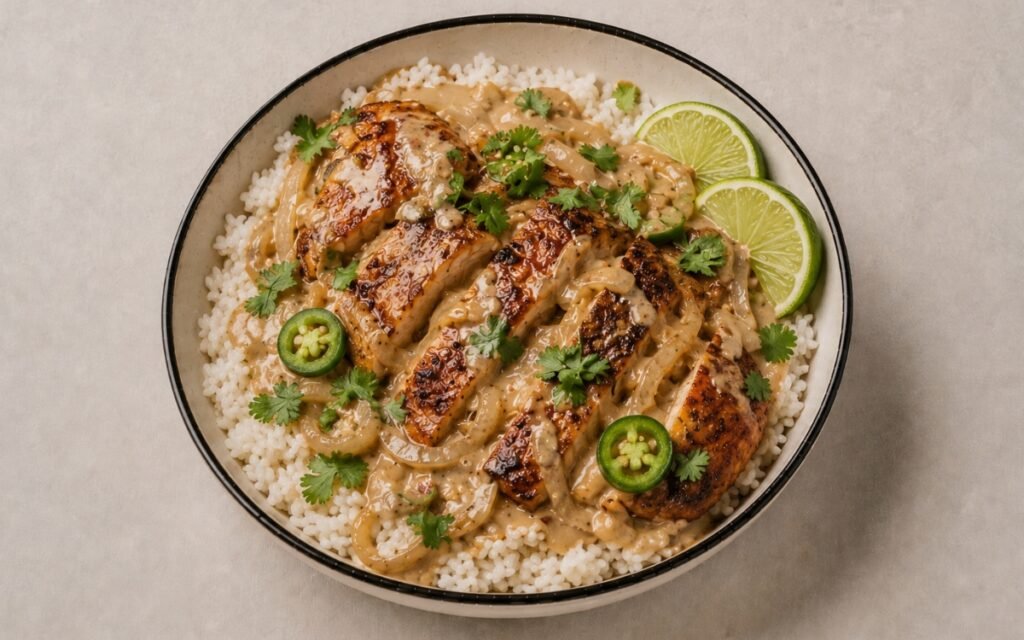
Chicken thighs seared deeply on both sides in the same skillet the sauce is subsequently built in — the fond from the sear dissolving into the onion, garlic, ginger, and jalapeño base before the chicken stock, lime juice, brown sugar, soy sauce, and coconut cream produce the specific rich, balanced sauce that the chicken finishes simmering in. The soy sauce — technically optional, functionally not — adds the savoury depth and slight caramel complexity that prevents the coconut cream from tasting only sweet and rich. Coconut-lime jasmine rice cooked in coconut milk and water, lime juice folded through at the end. The bowl that tastes like considerably more effort than 45 minutes and improves as leftovers.
Prep Time : 15 min
Cook Time : 30 min
Servings : 4
15 min
30 min
4
Ingredients
For the Coconut Lime Rice
• 300 ml jasmine rice, uncooked — this one on Amazon
• 250 ml water
• 200 ml coconut milk — this one on Amazon
• Pinch of fine sea salt
• 15 ml fresh lime juice
For the Creamy Coconut Chicken
• 800 g boneless, skinless chicken thighs
• Salt and black pepper, to taste
• 15 ml vegetable oil
• 2 medium onions, thinly sliced
• 5 garlic cloves, minced
• 20 g fresh ginger, finely grated
• 1 small jalapeño, deseeded and finely chopped
• 400 ml chicken stock
• 200ml coconut cream — not coconut milk — this one on Amazon
• 30 ml fresh lime juice
• 30 g light brown sugar — this one on Amazon
• 30ml soy sauce — optional but strongly recommended
Optional Thickener
• 10 g cornstarch
• 30 ml cold water
To Serve
• Lime slices
• Fresh cilantro
• thin jalapeño slices (optional)
This post may contain affiliate links. As an Amazon Associate I earn from qualifying purchases, at no additional cost to you.
Directions
- Cook the Coconut Lime Rice
Rinse the jasmine rice under cold running water until nearly clear — removing the surface starch that would make the coconut milk’s fat produce a gluey, heavy result rather than the light, separate-grain rice the bowl requires. In a medium saucepan, combine the 250ml of water and 200ml of coconut milk — the 1:1 ratio of water to coconut milk produces a rice that tastes specifically and clearly of coconut without being heavy or greasy. Add the pinch of fine sea salt. Bring to a boil over high heat. Add the rinsed rice and bring back to a full boil, then immediately reduce the heat to the lowest possible setting, cover tightly, and cook for 15 minutes without lifting the lid. Turn the heat off completely and allow the rice to sit covered and undisturbed for a further 10 minutes — this extended rest in the off-heat steam distributes moisture through the upper layers and allows the coconut milk’s fat to be absorbed fully into each grain rather than remaining on the surface as a coating. After the full 10 minutes, add the 15ml of lime juice and fluff once gently with a fork — a single light fluffing motion rather than repeated stirring, which would compress the grains and produce the heavy, dense coconut rice that the careful cooking technique specifically tries to avoid. The lime juice folds through the warm grains and its acidity cuts the coconut’s richness, producing the bright-coconut combination that makes this rice a specifically active flavour component rather than a neutral base. - Sear the Chicken Thighs
Pat the 800g of chicken thighs completely dry on all surfaces with paper towels — the drying step is the prerequisite for the deep golden sear that is the foundation of the sauce’s flavour. Season generously with salt and black pepper on both sides. Heat the 15ml of vegetable oil in a large, deep skillet over medium-high heat until shimmering. Add the chicken thighs in a single layer. Sear undisturbed for 6–7 minutes on the first side until the underside is deeply golden and releases naturally from the pan — the sustained undisturbed contact develops the concentrated Maillard crust that will dissolve into the sauce as fond during the subsequent steps and contribute the savory depth that coconut cream alone cannot provide. Flip each thigh and sear the second side for 6–7 minutes until cooked through to 74°C internal temperature. Transfer to a plate and rest for 5 minutes. The resting period allows the juices to redistribute before the chicken is returned to the sauce — the accumulated resting juices on the plate are returned to the skillet with the chicken at the combining step. - Build the Coconut Sauce
Do not clean the skillet after removing the chicken — the fond left on the surface from the sear is the flavour foundation of the sauce. Reduce the heat to medium. Add the 2 thinly sliced onions to the fond and oil in the pan. Cook for 5–7 minutes, stirring occasionally, until completely softened and showing light golden colour at the edges — the onions absorb the accumulated chicken fond as they soften and their own natural sugars begin to caramelise, building the sweet aromatic base. Add the 5 minced garlic cloves, 20g of grated fresh ginger, and the deseeded, finely chopped jalapeño simultaneously. Cook for 60–90 seconds, stirring continuously — the 90-second maximum window produces fragrant, fully bloomed aromatics without any browning. The jalapeño is deseeded specifically to provide lifting, aromatic heat rather than the aggressive burning heat of the seeds — at this quantity and preparation it adds warmth without dominating. Pour in the 400ml of chicken stock, 30ml of lime juice, 30g of light brown sugar, and 30ml of soy sauce. Stir to combine, scraping the pan base to incorporate any remaining fond. Simmer for 5–10 minutes until the liquid is slightly reduced and cohesive — the individual components integrating into a unified sauce base rather than tasting separately of each ingredient. The soy sauce at this stage is the element that transforms the sauce from sweet-and-coconut to genuinely savoury and complex — it provides the specific umami depth and slight caramel saltiness that prevents the finished sauce from tasting one-dimensional. If omitted, the sauce will be pleasant but noticeably flatter. Stir in the 200ml of coconut cream. Coconut cream rather than coconut milk is specified because its higher fat content produces a richer, more coating sauce that holds its emulsification better during the subsequent simmering with the chicken — coconut milk produces a thinner sauce that requires significant cornstarch thickening to achieve the same body. Bring to a gentle simmer. - Combine and Finish
Slice the rested chicken thighs into thick pieces or leave whole — both work, though sliced pieces present better in the bowl and absorb more sauce from the larger exposed surface area. Return the chicken to the skillet and pour all accumulated resting juices from the plate directly into the sauce. Spoon sauce generously over every piece of chicken. Cover and simmer gently for 3–5 minutes — the chicken heats through completely and the sauce exchanges flavour with the chicken during this final covered simmer. The sauce should now be glossy, moderately thick, and coating. If after 3–5 minutes the sauce remains thinner than the correct coating consistency, whisk the 10g of cornstarch with 30ml of cold water until completely smooth and stir into the simmering sauce. The cornstarch gelatinises within 1–2 minutes of contact with the simmering liquid, thickening the sauce to the correct glossy, lightly thickened consistency that coats each chicken piece and pools attractively around the rice rather than running off. - Serve
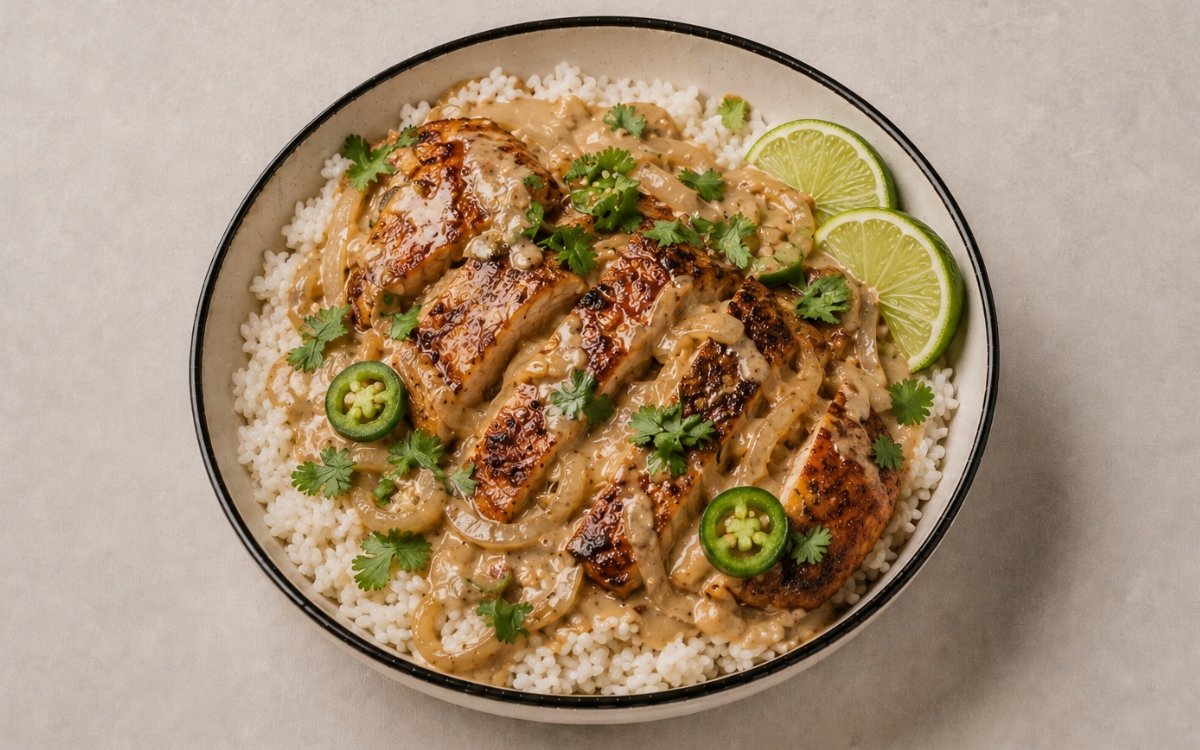
Divide the coconut lime rice between four bowls — mounding it in the centre or spreading across the base according to preference. Ladle the creamy coconut chicken over the rice generously — spooning additional sauce to ensure the rice is reached by the sauce and each bowl has a visible pool of the golden-yellow coconut liquid around the chicken. Finish each bowl with lime slices alongside for squeezing at the table, a generous scatter of fresh cilantro leaves, and thin jalapeño slices for those who want additional heat. Serve immediately while the sauce is at its most fluid — it thickens slightly as it cools.
*Notes :
- The coconut cream versus coconut milk distinction in the sauce is worth understanding for the specific reasons it matters here. Coconut cream is the thick, fat-rich layer that separates and rises to the top of full-fat coconut milk during processing — it is sold separately as a higher-fat, more concentrated coconut product. In a sauce that simmers with chicken for 3–5 minutes after the cream is added, the higher fat content of coconut cream emulsifies more stably and produces a richer, more coating consistency than coconut milk, which is more water-based and more prone to breaking or remaining thin. If only coconut milk is available, use 400ml rather than 200ml and simmer the sauce for longer to reduce and concentrate.
- The soy sauce addition — technically listed as optional in this recipe — deserves explanation as to why it is functionally non-optional. The sauce’s character without soy sauce is sweet (brown sugar), acidic (lime), rich (coconut cream), and mildly aromatic (ginger, garlic) — all positive notes that nonetheless lack the savoury umami depth that makes a sauce taste specifically complete rather than pleasantly mild. The 30ml of soy sauce adds the glutamate-rich savoury depth and a background caramel-sweet saltiness that balances the coconut’s sweetness and the lime’s brightness into something more complex. Without it the sauce tastes like a good coconut dish; with it the sauce tastes like a specifically memorable one.
Why This Recipe Works
This recipe works because it uses one pan sequentially — searing the chicken to produce the fond, building the aromatics on the fond, simmering the sauce in the same pan, and finishing the chicken back in the sauce — so every stage builds on the flavour accumulated by the previous one.
The coconut lime rice’s specific coconut-milk and lime juice combination produces a base that actively contributes flavour rather than being neutral. And the soy sauce’s savoury depth anchors the sauce’s sweetness and richness into the balanced, complete result that makes the bowl taste like it took longer than 45 minutes.
Ingredient Breakdown
Coconut Cream (Rather Than Coconut Milk)
The sauce richness — higher fat content produces a more stable, more coating, more naturally thick sauce without requiring excessive cornstarch thickening.
Soy Sauce (Technically Optional, Functionally Essential)
The depth anchor — umami and caramel saltiness grounding the coconut’s sweetness and lime’s acidity into a complete, balanced sauce.
Chicken Fond (Not Wiped Between Steps)
The flavour continuity — the sear’s Maillard deposits dissolving into the onion and stock to provide savoury depth throughout.
Deseeded Jalapeño
The lifting aromatic heat — deseeding reduces the intensity from burning to warmth, providing aromatic heat that lifts rather than dominates the sauce.
Coconut Milk in the Rice
The flavoured cooking medium — coconut milk replacing half the water infuses each grain with specific coconut flavour during absorption.
Lime Juice at Two Stages
In the sauce for acid balance during cooking; folded through the rice after cooking for fresh aromatic brightness — two distinct applications at different stages.
Flavor Structure Explained
This creamy coconut chicken bowl follows a layered balance model:
- Rich tropical core (coconut cream)
- Savory umami depth (soy sauce, chicken fond)
- Bright citrus lift (lime in sauce and rice)
- Warm aromatic spice (ginger, garlic, jalapeño)
- Flavor continuity base (coconut-lime rice)
Coconut cream defines the foundation with smooth, slightly sweet richness that coats every component. Soy sauce and chicken fond anchor that sweetness with savory depth and umami, preventing the bowl from feeling flat or dessert-like. Lime cuts through the richness with sharp acidity, keeping the profile bright and lively. Ginger, garlic, and jalapeño add warmth, spice, and aromatic complexity that deepen the sauce. Coconut-lime rice reinforces the same flavor dimensions at the base, creating continuity so every spoonful feels cohesive from top to bottom.
Common Mistakes to Avoid
- Overworking the Coconut Rice – A single gentle fluff after the lime juice is the correct finishing technique. Repeated stirring compresses the grains and produces dense, heavy coconut rice.
- Wiping the Skillet Between the Sear and the Sauce – The fond is the sauce’s depth foundation. Never clean the pan between the chicken sear and the onion step.
- Omitting the Soy Sauce – The sauce without soy is pleasant but noticeably one-dimensional. The 30ml is the specific addition that makes the sauce taste complete.
- Using Coconut Milk Instead of Coconut Cream – Coconut milk produces a thinner, more prone-to-breaking sauce. Coconut cream provides the body and stability without requiring excessive cornstarch.
- Not Returning Resting Juices to the Pan – The accumulated juices from the resting chicken plate contain concentrated flavour. Always return them with the chicken.
- Adding Cornstarch Directly Without Slurry – Undissolved cornstarch produces lumps. Always whisk with cold water to a smooth slurry before adding to the simmering sauce.
Variations
With Lemongrass
Add 2 bruised lemongrass stalks to the sauce alongside the stock — simmer for the full 5–10 minutes and remove before adding the coconut cream. The lemongrass adds a specifically Thai-adjacent citrus-herbal aromatic depth.
With Spinach
Fold 100g of baby spinach into the sauce during the final simmer — the residual heat wilts it gently within 60 seconds, adding fresh vegetable colour and mild flavour without any additional cooking.
With Chickpeas
Add one drained 400g can of chickpeas alongside the chicken at the combining step for a heartier, protein-rich version where the chickpeas absorb the coconut sauce.
Spicier Version
Leave the jalapeño seeds in and add 5g of gochugaru or a second jalapeño to the sauce for a version where the heat is more prominently present throughout.
Storage & Make-Ahead
The assembled bowl can be refrigerated for up to 4 days and is actually one of the better make-ahead bowls in this collection. The sauce deepens in flavor overnight as the chicken and aromatics continue to blend together during storage. To reheat it, warm it gently over low heat with a splash of stock if the sauce has thickened too much in the refrigerator.
The sauce can also be prepared up to 2 days in advance and stored separately. When ready to serve, reheat the chicken gently in the sauce.
Coconut lime rice can be refrigerated for up to 3 days. It will firm up during storage, but gentle reheating with a small splash of water will restore its texture.
Frequently Asked Questions
Why coconut cream rather than coconut milk?
Coconut cream has approximately twice the fat content of coconut milk — its higher fat produces a richer, more stable sauce that coats the chicken and pools attractively without the thinness of coconut milk. It also emulsifies more stably during simmering.
Is the soy sauce really necessary?
The soy sauce is listed as optional because the dish works without it — but it provides the specific savoury umami depth that prevents the coconut-lime sauce from tasting only sweet and rich. Every tester has preferred the version with soy sauce. Include it.
Why deseeded jalapeño?
Fettuccine is the traditional and most functional shape — its wide, flat surface area provides maximum contact with the coating sauce. Tagliatelle is the closest substitute. Spaghetti works but provides less sauce surface area. Shorter shapes like penne or rigatoni can work but produce a different, less classically Alfredo result.
Can I use chicken breast instead of thighs?
Yes — reduce the searing time to 4–5 minutes per side and monitor the internal temperature carefully at 74°C to prevent drying. Thighs are specifically preferred because their fat content keeps them moist through the dual cooking — sear and subsequent sauce simmer.
Why does the coconut rice taste different from plain lime rice?
The jasmine rice absorbs 200ml of coconut milk as its cooking liquid — the fat and aromatic compounds of the coconut infuse every grain during the absorption. The result tastes specifically of coconut throughout the grain rather than only at the surface. The lime juice’s acidity then balances the coconut’s richness at the finish.
Nutrition Facts
( per serving )
Calories
~970 kcal
Protein
47 g
Fat
51 g
Carbs
77 g
Calories
~970 kcal
Protein
47 g
Fat
51 g
Carbs
77 g
Related Recipes
Related Recipes

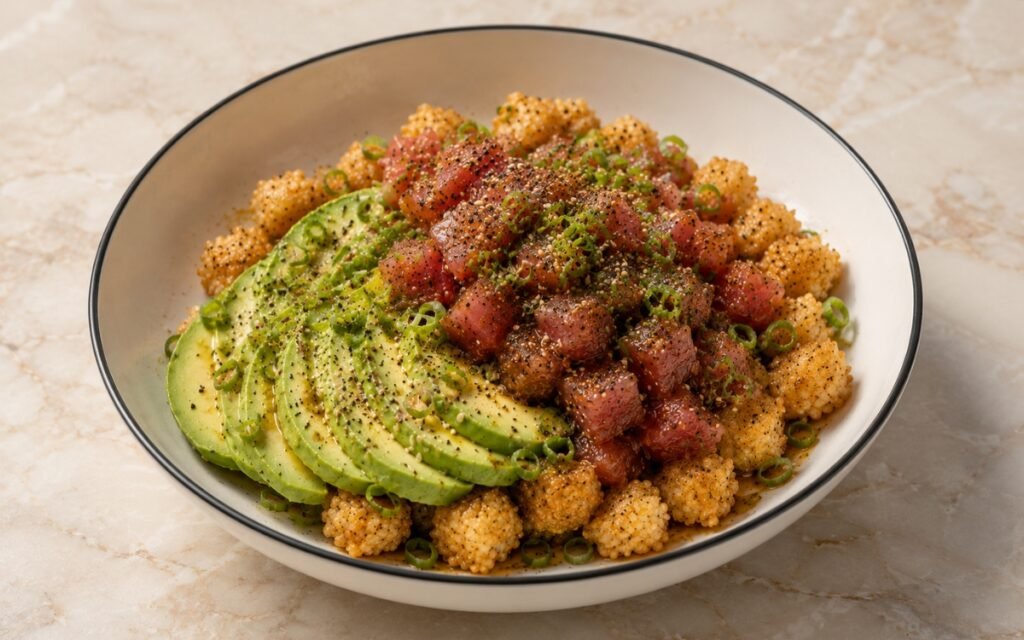
Crispy Rice Salad with Spicy Tuna & Avocado
Crunchy baked sushi rice topped with soy-sesame tuna, creamy avocado, scallions, and a glossy sesame dressing.
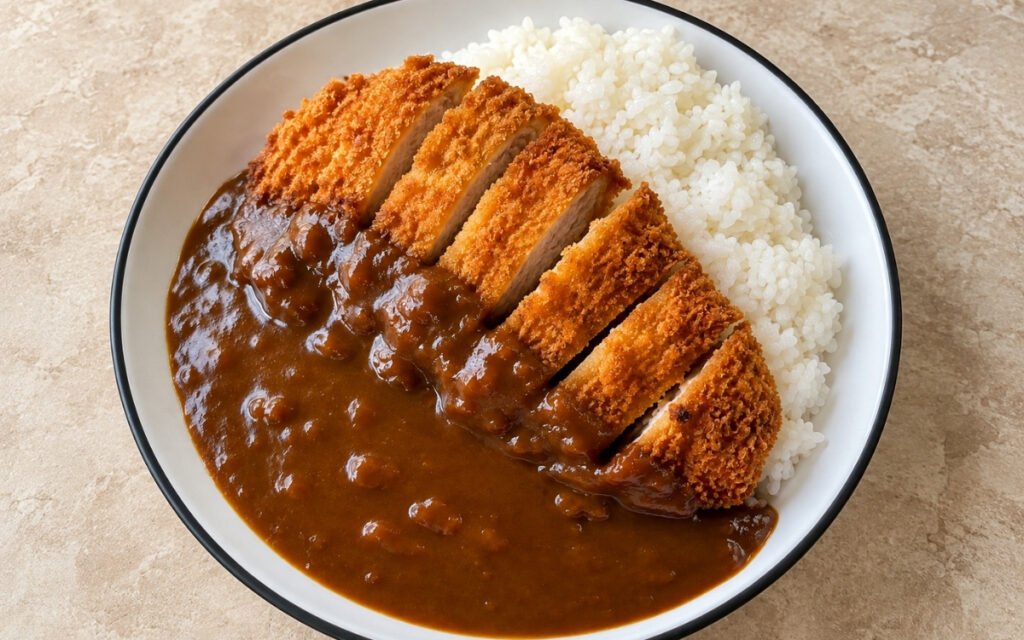
Katsu Curry — Japanese Pork Cutlet Curry
Crisp golden panko-breaded pork cutlets, fluffy white rice, and a thick glossy dark-brown curry sauce, savory-sweet and rich.
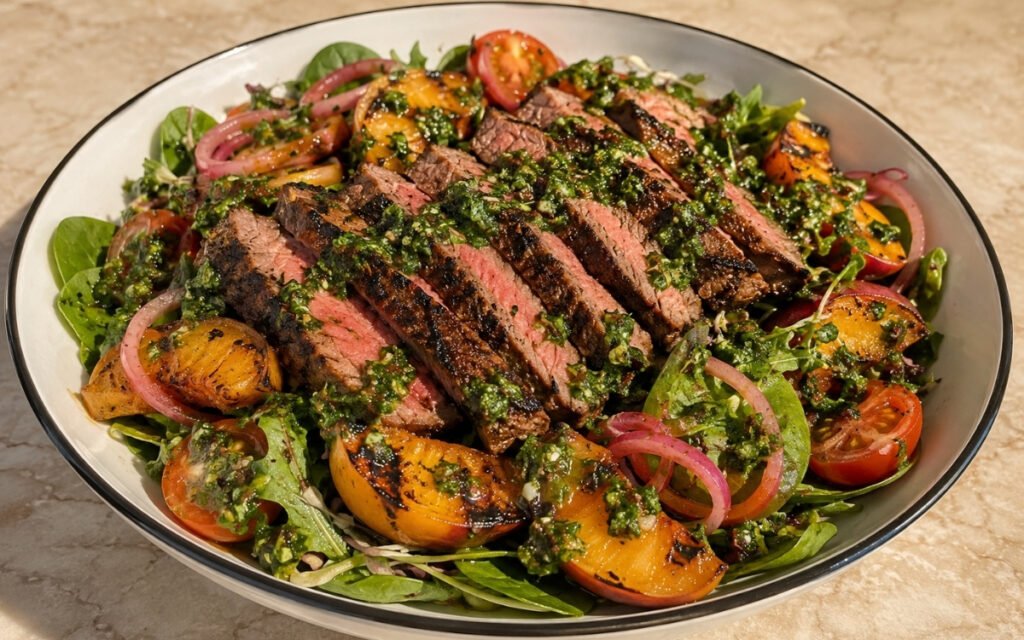
Grilled Steak & Peach Chimichurri Salad
Sliced medium-rare sirloin over fresh greens with grilled peaches, pickled red onion and a heavy chimichurri drizzle.
You might also like
You might also like
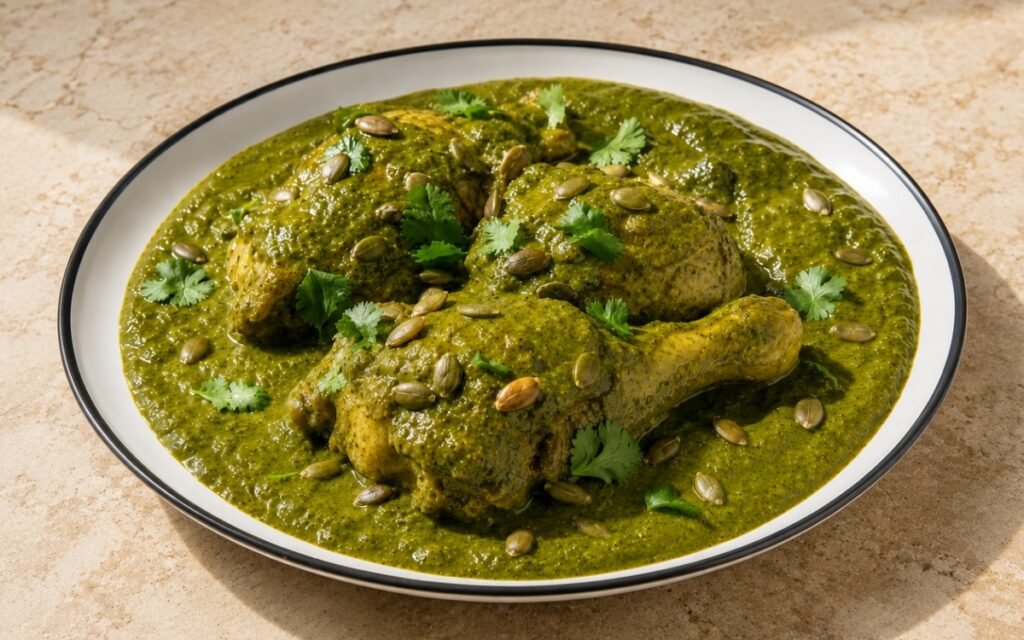
Pipián Verde Chicken
Gently poached chicken finished in a vivid green pipián sauce of roasted tomatillos, pumpkin seeds, green chiles, and herbs.
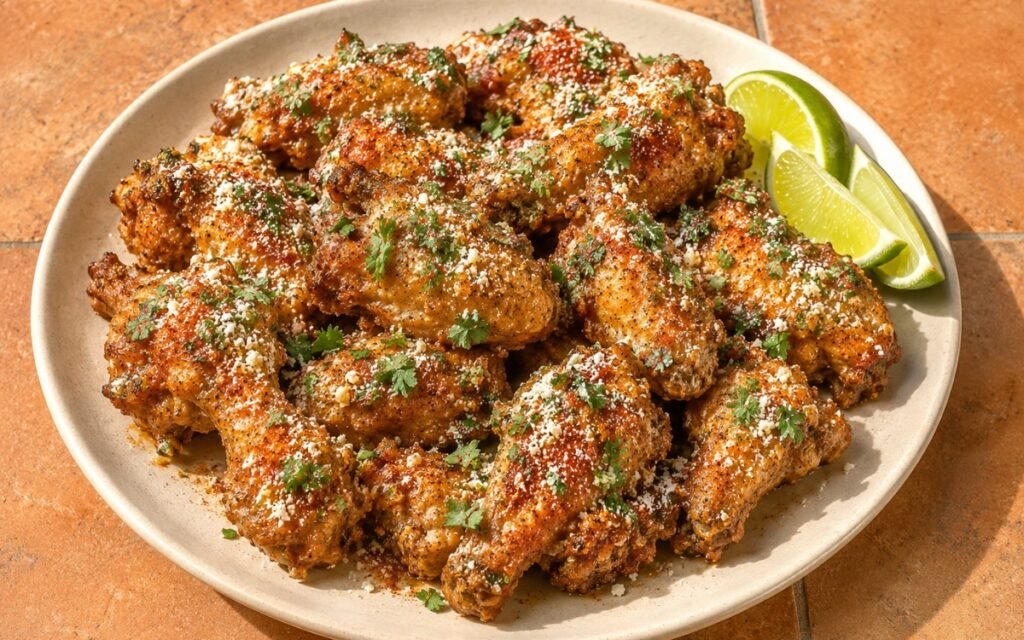
Elote-Style Chicken Wings
Oven-baked wings with crackling skin, tossed hot in a creamy mayo-crema elote sauce, then topped with crumbled cotija and chili powder.
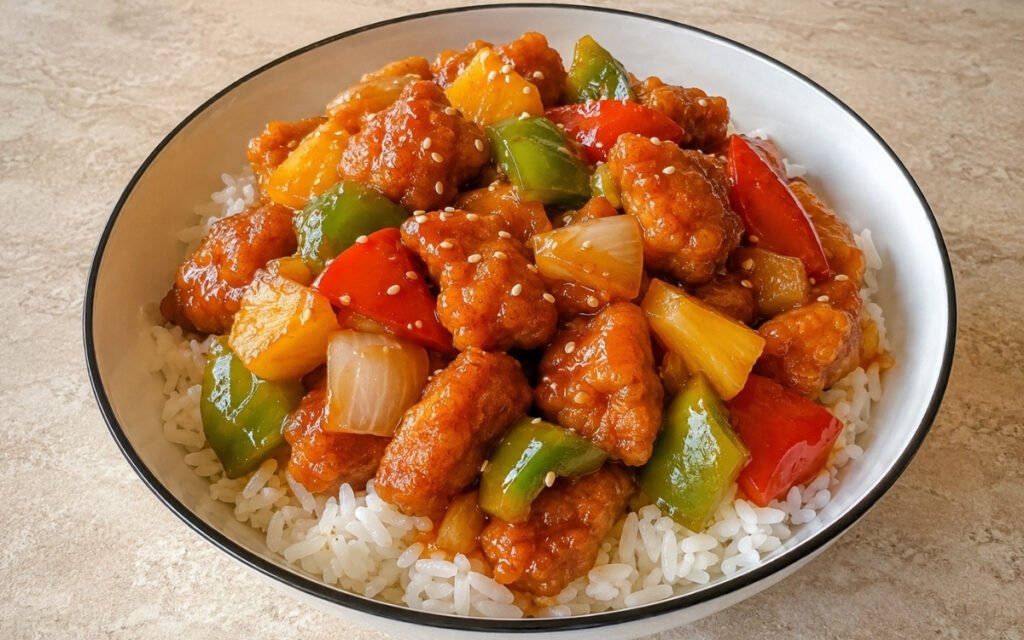
Sweet and Sour Chicken
Double-fried battered chicken thighs with pineapple and vegetables tossed in a glossy tangy-sweet sauce — the restaurant crispiness technique explained for home cooking in 50 minutes.
Creamy Coconut Chicken Rice Bowl
Ingredients
Method
- Rinse the jasmine rice under cold running water until nearly clear — removing the surface starch that would make the coconut milk’s fat produce a gluey, heavy result rather than the light, separate-grain rice the bowl requires. In a medium saucepan, combine the 250ml of water and 200ml of coconut milk — the 1:1 ratio of water to coconut milk produces a rice that tastes specifically and clearly of coconut without being heavy or greasy. Add the pinch of fine sea salt. Bring to a boil over high heat. Add the rinsed rice and bring back to a full boil, then immediately reduce the heat to the lowest possible setting, cover tightly, and cook for 15 minutes without lifting the lid. Turn the heat off completely and allow the rice to sit covered and undisturbed for a further 10 minutes — this extended rest in the off-heat steam distributes moisture through the upper layers and allows the coconut milk’s fat to be absorbed fully into each grain rather than remaining on the surface as a coating. After the full 10 minutes, add the 15ml of lime juice and fluff once gently with a fork — a single light fluffing motion rather than repeated stirring, which would compress the grains and produce the heavy, dense coconut rice that the careful cooking technique specifically tries to avoid. The lime juice folds through the warm grains and its acidity cuts the coconut’s richness, producing the bright-coconut combination that makes this rice a specifically active flavour component rather than a neutral base.
- Pat the 800g of chicken thighs completely dry on all surfaces with paper towels — the drying step is the prerequisite for the deep golden sear that is the foundation of the sauce’s flavour. Season generously with salt and black pepper on both sides. Heat the 15ml of vegetable oil in a large, deep skillet over medium-high heat until shimmering. Add the chicken thighs in a single layer. Sear undisturbed for 6–7 minutes on the first side until the underside is deeply golden and releases naturally from the pan — the sustained undisturbed contact develops the concentrated Maillard crust that will dissolve into the sauce as fond during the subsequent steps and contribute the savory depth that coconut cream alone cannot provide. Flip each thigh and sear the second side for 6–7 minutes until cooked through to 74°C internal temperature. Transfer to a plate and rest for 5 minutes. The resting period allows the juices to redistribute before the chicken is returned to the sauce — the accumulated resting juices on the plate are returned to the skillet with the chicken at the combining step.
- Do not clean the skillet after removing the chicken — the fond left on the surface from the sear is the flavour foundation of the sauce. Reduce the heat to medium. Add the 2 thinly sliced onions to the fond and oil in the pan. Cook for 5–7 minutes, stirring occasionally, until completely softened and showing light golden colour at the edges — the onions absorb the accumulated chicken fond as they soften and their own natural sugars begin to caramelise, building the sweet aromatic base. Add the 5 minced garlic cloves, 20g of grated fresh ginger, and the deseeded, finely chopped jalapeño simultaneously. Cook for 60–90 seconds, stirring continuously — the 90-second maximum window produces fragrant, fully bloomed aromatics without any browning. The jalapeño is deseeded specifically to provide lifting, aromatic heat rather than the aggressive burning heat of the seeds — at this quantity and preparation it adds warmth without dominating. Pour in the 400ml of chicken stock, 30ml of lime juice, 30g of light brown sugar, and 30ml of soy sauce. Stir to combine, scraping the pan base to incorporate any remaining fond. Simmer for 5–10 minutes until the liquid is slightly reduced and cohesive — the individual components integrating into a unified sauce base rather than tasting separately of each ingredient. The soy sauce at this stage is the element that transforms the sauce from sweet-and-coconut to genuinely savoury and complex — it provides the specific umami depth and slight caramel saltiness that prevents the finished sauce from tasting one-dimensional. If omitted, the sauce will be pleasant but noticeably flatter. Stir in the 200ml of coconut cream. Coconut cream rather than coconut milk is specified because its higher fat content produces a richer, more coating sauce that holds its emulsification better during the subsequent simmering with the chicken — coconut milk produces a thinner sauce that requires significant cornstarch thickening to achieve the same body. Bring to a gentle simmer.
- Slice the rested chicken thighs into thick pieces or leave whole — both work, though sliced pieces present better in the bowl and absorb more sauce from the larger exposed surface area. Return the chicken to the skillet and pour all accumulated resting juices from the plate directly into the sauce. Spoon sauce generously over every piece of chicken. Cover and simmer gently for 3–5 minutes — the chicken heats through completely and the sauce exchanges flavour with the chicken during this final covered simmer. The sauce should now be glossy, moderately thick, and coating. If after 3–5 minutes the sauce remains thinner than the correct coating consistency, whisk the 10g of cornstarch with 30ml of cold water until completely smooth and stir into the simmering sauce. The cornstarch gelatinises within 1–2 minutes of contact with the simmering liquid, thickening the sauce to the correct glossy, lightly thickened consistency that coats each chicken piece and pools attractively around the rice rather than running off.
- Divide the coconut lime rice between four bowls — mounding it in the centre or spreading across the base according to preference. Ladle the creamy coconut chicken over the rice generously — spooning additional sauce to ensure the rice is reached by the sauce and each bowl has a visible pool of the golden-yellow coconut liquid around the chicken. Finish each bowl with lime slices alongside for squeezing at the table, a generous scatter of fresh cilantro leaves, and thin jalapeño slices for those who want additional heat. Serve immediately while the sauce is at its most fluid — it thickens slightly as it cools.