Ingredients
Method
Cook the Coconut Lime Rice
- Rinse the jasmine rice under cold running water until nearly clear — removing the surface starch that would make the coconut milk's fat produce a gluey, heavy result rather than the light, separate-grain rice the bowl requires. In a medium saucepan, combine the 250ml of water and 200ml of coconut milk — the 1:1 ratio of water to coconut milk produces a rice that tastes specifically and clearly of coconut without being heavy or greasy. Add the pinch of fine sea salt. Bring to a boil over high heat. Add the rinsed rice and bring back to a full boil, then immediately reduce the heat to the lowest possible setting, cover tightly, and cook for 15 minutes without lifting the lid. Turn the heat off completely and allow the rice to sit covered and undisturbed for a further 10 minutes — this extended rest in the off-heat steam distributes moisture through the upper layers and allows the coconut milk's fat to be absorbed fully into each grain rather than remaining on the surface as a coating. After the full 10 minutes, add the 15ml of lime juice and fluff once gently with a fork — a single light fluffing motion rather than repeated stirring, which would compress the grains and produce the heavy, dense coconut rice that the careful cooking technique specifically tries to avoid. The lime juice folds through the warm grains and its acidity cuts the coconut's richness, producing the bright-coconut combination that makes this rice a specifically active flavour component rather than a neutral base.
Sear the Chicken Thighs
- Pat the 800g of chicken thighs completely dry on all surfaces with paper towels — the drying step is the prerequisite for the deep golden sear that is the foundation of the sauce's flavour. Season generously with salt and black pepper on both sides. Heat the 15ml of vegetable oil in a large, deep skillet over medium-high heat until shimmering. Add the chicken thighs in a single layer. Sear undisturbed for 6–7 minutes on the first side until the underside is deeply golden and releases naturally from the pan — the sustained undisturbed contact develops the concentrated Maillard crust that will dissolve into the sauce as fond during the subsequent steps and contribute the savory depth that coconut cream alone cannot provide. Flip each thigh and sear the second side for 6–7 minutes until cooked through to 74°C internal temperature. Transfer to a plate and rest for 5 minutes. The resting period allows the juices to redistribute before the chicken is returned to the sauce — the accumulated resting juices on the plate are returned to the skillet with the chicken at the combining step.
Build the Coconut Sauce
- Do not clean the skillet after removing the chicken — the fond left on the surface from the sear is the flavour foundation of the sauce. Reduce the heat to medium. Add the 2 thinly sliced onions to the fond and oil in the pan. Cook for 5–7 minutes, stirring occasionally, until completely softened and showing light golden colour at the edges — the onions absorb the accumulated chicken fond as they soften and their own natural sugars begin to caramelise, building the sweet aromatic base. Add the 5 minced garlic cloves, 20g of grated fresh ginger, and the deseeded, finely chopped jalapeño simultaneously. Cook for 60–90 seconds, stirring continuously — the 90-second maximum window produces fragrant, fully bloomed aromatics without any browning. The jalapeño is deseeded specifically to provide lifting, aromatic heat rather than the aggressive burning heat of the seeds — at this quantity and preparation it adds warmth without dominating. Pour in the 400ml of chicken stock, 30ml of lime juice, 30g of light brown sugar, and 30ml of soy sauce. Stir to combine, scraping the pan base to incorporate any remaining fond. Simmer for 5–10 minutes until the liquid is slightly reduced and cohesive — the individual components integrating into a unified sauce base rather than tasting separately of each ingredient. The soy sauce at this stage is the element that transforms the sauce from sweet-and-coconut to genuinely savoury and complex — it provides the specific umami depth and slight caramel saltiness that prevents the finished sauce from tasting one-dimensional. If omitted, the sauce will be pleasant but noticeably flatter. Stir in the 200ml of coconut cream. Coconut cream rather than coconut milk is specified because its higher fat content produces a richer, more coating sauce that holds its emulsification better during the subsequent simmering with the chicken — coconut milk produces a thinner sauce that requires significant cornstarch thickening to achieve the same body. Bring to a gentle simmer.
Combine and Finish
- Slice the rested chicken thighs into thick pieces or leave whole — both work, though sliced pieces present better in the bowl and absorb more sauce from the larger exposed surface area. Return the chicken to the skillet and pour all accumulated resting juices from the plate directly into the sauce. Spoon sauce generously over every piece of chicken. Cover and simmer gently for 3–5 minutes — the chicken heats through completely and the sauce exchanges flavour with the chicken during this final covered simmer. The sauce should now be glossy, moderately thick, and coating. If after 3–5 minutes the sauce remains thinner than the correct coating consistency, whisk the 10g of cornstarch with 30ml of cold water until completely smooth and stir into the simmering sauce. The cornstarch gelatinises within 1–2 minutes of contact with the simmering liquid, thickening the sauce to the correct glossy, lightly thickened consistency that coats each chicken piece and pools attractively around the rice rather than running off.
Serve
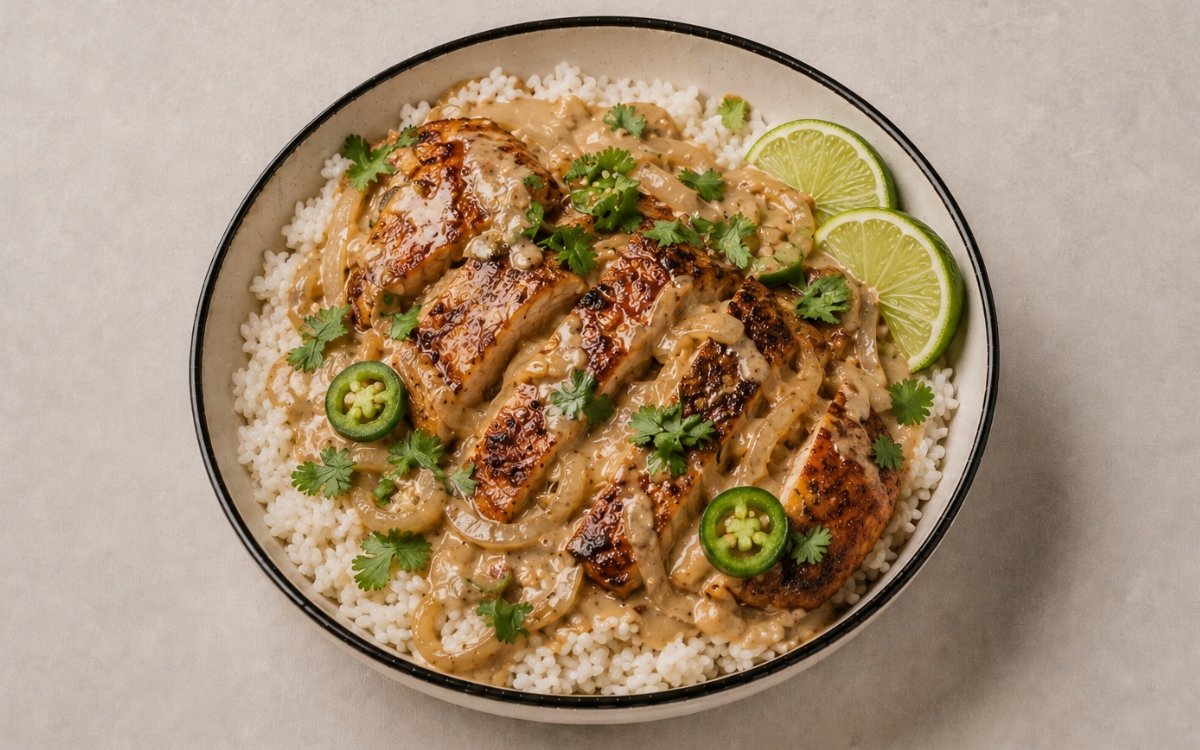
- Divide the coconut lime rice between four bowls — mounding it in the centre or spreading across the base according to preference. Ladle the creamy coconut chicken over the rice generously — spooning additional sauce to ensure the rice is reached by the sauce and each bowl has a visible pool of the golden-yellow coconut liquid around the chicken. Finish each bowl with lime slices alongside for squeezing at the table, a generous scatter of fresh cilantro leaves, and thin jalapeño slices for those who want additional heat. Serve immediately while the sauce is at its most fluid — it thickens slightly as it cools.
Notes
The coconut cream versus coconut milk distinction in the sauce is worth understanding for the specific reasons it matters here. Coconut cream is the thick, fat-rich layer that separates and rises to the top of full-fat coconut milk during processing — it is sold separately as a higher-fat, more concentrated coconut product. In a sauce that simmers with chicken for 3–5 minutes after the cream is added, the higher fat content of coconut cream emulsifies more stably and produces a richer, more coating consistency than coconut milk, which is more water-based and more prone to breaking or remaining thin. If only coconut milk is available, use 400ml rather than 200ml and simmer the sauce for longer to reduce and concentrate.
The soy sauce addition — technically listed as optional in this recipe — deserves explanation as to why it is functionally non-optional. The sauce's character without soy sauce is sweet (brown sugar), acidic (lime), rich (coconut cream), and mildly aromatic (ginger, garlic) — all positive notes that nonetheless lack the savoury umami depth that makes a sauce taste specifically complete rather than pleasantly mild. The 30ml of soy sauce adds the glutamate-rich savoury depth and a background caramel-sweet saltiness that balances the coconut's sweetness and the lime's brightness into something more complex. Without it the sauce tastes like a good coconut dish; with it the sauce tastes like a specifically memorable one.