
Creamy Cajun Shrimp Pasta
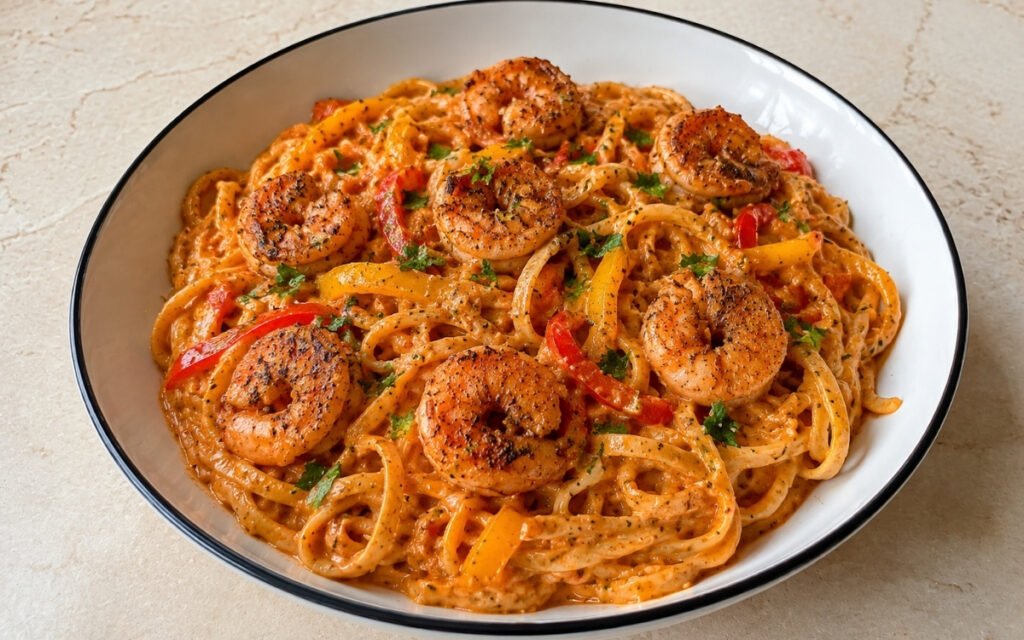
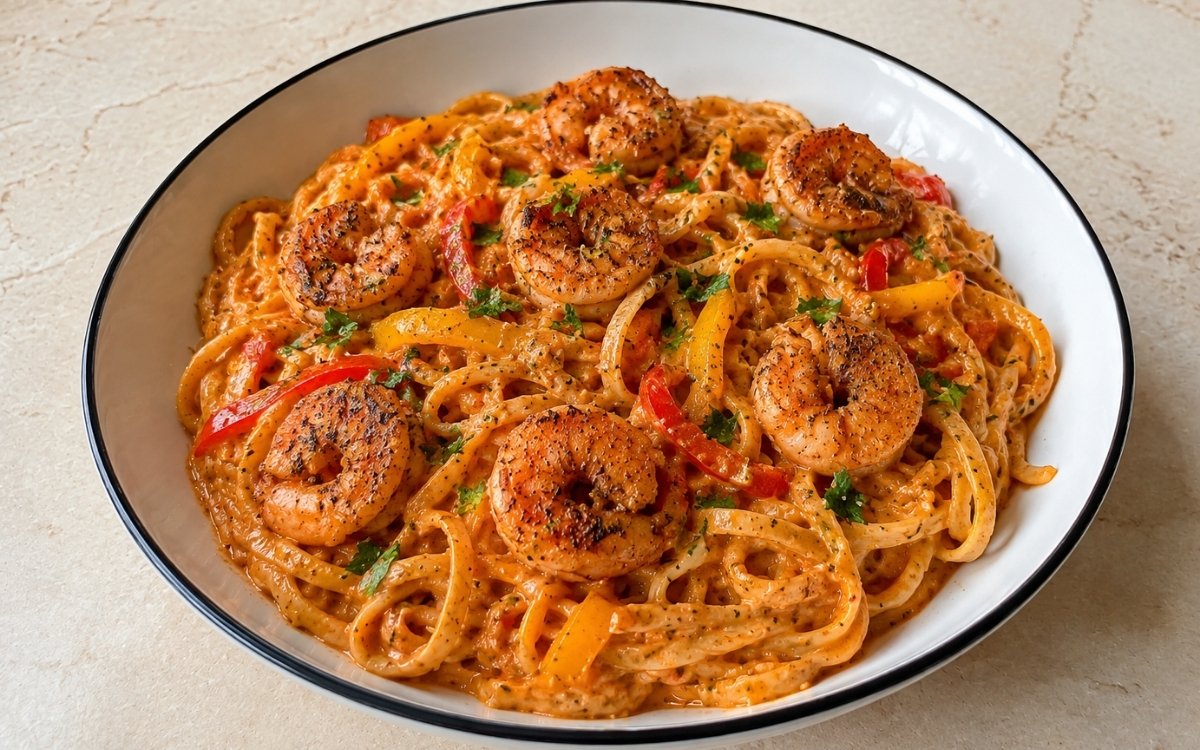
Bold Louisiana spicing meets a velvety Parmesan cream sauce in a one-pan pasta that delivers everything simultaneously — the golden seared crust of Cajun-seasoned shrimp, the tender-crisp char of colourful bell peppers, and the deeply seasoned, slightly smoky, richly creamy sauce that coats every strand of linguine. The cream cheese is not a shortcut but a deliberate choice: it melts into the heavy cream and produces a sauce with more body, more cling, and more resistance to breaking than cream alone. Thirty-five minutes, one pan, the kind of pasta that makes a weeknight feel like a restaurant occasion.
Prep Time : 15 min
Cook Time : 20 min
Servings : 4
15 min
20 min
4
Ingredients
For the Pasta
• 340g linguine pasta — this one on Amazon
• Salt for pasta water
• 120ml pasta water, reserved
For the Shrimp
• 600g large shrimp, peeled and deveined
• 1 tablespoon (9g) Cajun seasoning — this one on Amazon
• 45ml olive oil
For the Cajun Sauce
• 30g unsalted butter
• 4 cloves garlic (16g), minced
• 1 medium red bell pepper (150g), thinly sliced
• 1 medium yellow bell pepper (150g), thinly sliced
• 1 tablespoon (9g) Cajun seasoning
• 1 teaspoon (3g) smoked paprika
• 1/2 teaspoon (1g) cayenne pepper
• 120ml chicken stock
• 180ml heavy cream
• 60g cream cheese, softened
• 60g freshly grated Parmesan cheese — this one on Amazon
• 15ml fresh lemon juice
• 30g fresh parsley, chopped
• Salt and black pepper to taste
This post may contain affiliate links. As an Amazon Associate I earn from qualifying purchases, at no additional cost to you.
Directions
- Cook the Pasta
Bring a large pot of water to a full rolling boil and add salt generously — the water should taste clearly seasoned. Add the linguine and cook according to the package directions until al dente — approximately 9–10 minutes. Unlike the Roman pasta dishes in this collection where the pasta finishes cooking in the sauce, the linguine here is cooked to full al dente before adding to the cream sauce — cream-based sauces do not absorb into pasta the way starchy pasta water-based emulsions do, and finishing in a cream sauce does not add meaningful flavour penetration. Before draining, reserve 120ml of the starchy pasta water in a heatproof jug — it will be used to loosen the sauce if it thickens beyond the correct coating consistency. Drain and set aside. - Season and Sear the Shrimp
Pat the shrimp completely dry on both sides with paper towels — thorough drying is the most critical preparation step for a proper sear. Any surface moisture converts to steam the moment the shrimp contacts the hot oil, dropping the pan temperature and producing pale, steamed shrimp rather than the golden-crusted, Maillard-caramelised surface that this dish requires. In a bowl, toss the dried shrimp with the 9g of Cajun seasoning until every surface is evenly coated. Allow to sit for 5 minutes — this brief marinating period gives the spice’s oil-soluble aromatic compounds time to begin penetrating the shrimp’s surface layer, producing a more integrated flavour rather than seasoning that simply sits on the outside. Heat the 45ml of olive oil in a large, deep skillet over medium-high heat until shimmering. Add the seasoned shrimp in a single layer — work in batches if needed to maintain space between each piece, as crowding drops the temperature and produces steaming rather than searing. Sear undisturbed for 2 minutes — the Cajun seasoning’s paprika and spices caramelise against the hot pan surface, creating a deeply coloured, aromatic crust with more flavour complexity than unseasoned shrimp would develop in the same time. Flip and cook for 1–2 minutes more until just cooked through and opaque throughout. Transfer to a plate immediately — the shrimp are pulled slightly before being fully done because they return to the pan at the end and will finish in the warm sauce. - Sauté the Aromatics and Bell Peppers
Without cleaning the pan — the Cajun-seasoned fond from the shrimp sear is concentrated flavour — reduce the heat to medium and add the 30g of butter. As the butter melts and foams, add the minced garlic and cook for 45 seconds, stirring continuously, until fragrant and very lightly golden. At medium heat with the pan’s residual warmth from the shrimp searing, garlic moves quickly toward browning — 45 seconds of continuous stirring is the window between fragrant and bitter. Add both the red and yellow bell pepper slices to the pan. Cook for 4–5 minutes, stirring occasionally but not continuously — allowing the slices to sit against the pan surface for 60–90 second intervals produces the slight char at the edges that gives the peppers their flavour character alongside their tender-crisp texture. The colour combination of red and yellow is not purely aesthetic — each bell pepper variety has a slightly different sugar content and flavour profile, and together they produce a more complex, more interesting pepper presence than a single colour alone. Add the second tablespoon of Cajun seasoning, the smoked paprika, and the cayenne pepper directly to the peppers. Stir constantly for 30 seconds — the dry spices toast against the hot pan surface in the residual fat, blooming their aromatic compounds and deepening their flavour character. Toasted spices produce a more complex, rounded result than spices added directly to liquid, which simply hydrate rather than develop through heat contact. - Build the Creamy Sauce
Pour in the 120ml of chicken stock and immediately scrape the bottom of the pan firmly to lift all the accumulated fond — the Cajun-seasoned, pepper-fat-enriched fond that has been building since the shrimp sear is the deepest flavour layer in the sauce and every bit of it should dissolve into the stock at this deglazing step. Allow to simmer for 2 minutes, reducing slightly and concentrating the stock. Add the 180ml of heavy cream and the 60g of softened cream cheese. Whisk continuously as the cream cheese melts — the whisking motion breaks the cream cheese into progressively smaller pieces and disperses it evenly through the cream before it has a chance to clump. The cream cheese is the structural innovation in this sauce compared to a standard cream pasta sauce. It contributes additional fat, more protein, and a slight lactic acid tang that balances the richness of the heavy cream. More importantly, its protein and fat content stabilises the cream sauce against breaking during the high-heat pasta tossing step — plain heavy cream sauces can separate under vigorous tossing, while cream cheese-enriched sauces maintain their emulsification more reliably. Whisk for 2–3 minutes until completely smooth, then reduce the heat to medium-low. Add the 60g of freshly grated Parmesan and whisk until fully incorporated and the sauce has thickened slightly — approximately 1–2 minutes. The Parmesan adds the deep, savoury, umami-rich layer that prevents the cream sauce from tasting flat and one-dimensionally dairy-rich. If the sauce thickens beyond the correct consistency at this stage, add reserved pasta water in 30ml increments, whisking after each addition until the sauce returns to a flowing, coating consistency. - Combine the Pasta
Add the cooked al dente linguine to the cream sauce in the skillet. Toss with tongs for 1–2 minutes, turning the pasta through the sauce continuously and ensuring every strand is completely coated. Unlike the emulsion-based Roman pastas where tossing is the mechanical emulsification step, here the tossing purpose is sauce penetration and coating — ensuring every strand is uniformly covered and that the pasta’s starch releases slightly into the cream sauce, thickening and enriching it further. The pasta will absorb some of the sauce during this tossing period and the overall volume will reduce slightly — this is correct and expected. - Return the Shrimp and Finish
Return the seared shrimp to the pan along with any accumulated resting juices from the plate — these juices contain Cajun-seasoned rendered shrimp fat and represent concentrated flavour that should always go back into the sauce rather than being discarded. Add the 15ml of fresh lemon juice and half of the chopped parsley. Toss gently for approximately 1 minute — gentle tossing rather than the vigorous motion used during pasta combining prevents the shrimp from breaking apart and ensures they warm through without continuing to cook. The lemon juice provides the acid brightness that cuts through the cream sauce’s richness and makes the Cajun spicing taste more vivid rather than buried in dairy fat. Taste and adjust — the dish needs to be assessed for salt, heat level, and acidity simultaneously. Add black pepper generously; add more Cajun seasoning or a few drops of hot sauce if additional heat is wanted; add more lemon if the cream feels heavy. - Plate and Serve
Divide among four warm plates or shallow bowls, using tongs to ensure each portion receives an even distribution of linguine, shrimp, and bell pepper pieces. Spoon any remaining sauce from the pan over each portion. Scatter the remaining chopped parsley over each bowl — the fresh, green herb contrast against the deep orange-red Cajun cream sauce is both visual and flavour completion. Serve immediately.
*Notes :
- Cajun seasoning varies significantly in salt content and spice intensity between brands. Some commercial Cajun seasonings are very heavily salted — when used at 2 tablespoons total, a highly salted seasoning can make the dish aggressively salty before any additional salt is added. Taste your Cajun seasoning before starting and calibrate accordingly — if it is very salty, reduce the total quantity slightly and adjust at the end with additional salt rather than using the full specified amount. Making your own Cajun seasoning — paprika, garlic powder, onion powder, dried thyme, dried oregano, black pepper, cayenne, and salt — gives full control over both salt level and heat intensity.
- The 31–40 count shrimp — slightly smaller than the 16/20 count specified for the lemon garlic shrimp pasta — are appropriate here because the bold Cajun seasoning and cream sauce can carry a slightly higher shrimp-to-sauce ratio per forkful than the more delicate lemon butter sauce. At 31–40 count, there are approximately 5–6 shrimp per serving, which distributes well through the pasta. Larger shrimp work equally well — adjust searing time to account for the greater size.
- The two Cajun seasoning additions — one on the shrimp before searing and one in the sauce — are deliberate and produce different results. The seasoning on the shrimp caramelises against the hot pan during the sear, producing the darker, deeper, toasted spice character of the crust. The seasoning in the sauce blooms in the butter and fat with the peppers, producing a more aromatic, more evenly distributed spice presence throughout every bite. Both levels of spice flavour development are present simultaneously in the finished dish.
Why This Recipe Works
This recipe works because it builds the sauce’s flavour in three sequential layers that compound rather than simply add. The shrimp sear produces a Cajun-spiced fond that dissolves into the sauce base. The pepper sauté with toasted spices adds aromatic complexity from the bloomed spices’ fat-soluble compounds.
The cream cheese enriches the heavy cream sauce beyond what cream alone can produce and stabilises it against breaking. Each decision builds directly on the previous one toward a more flavoured, more structurally sound sauce than any single-stage cream sauce preparation could achieve.
Ingredient Breakdown
Cajun Seasoning (Applied Twice)
Applied to shrimp for caramelised crust development and to the sauce for aromatic bloom in fat — two different flavour expressions of the same seasoning.
Cream Cheese (60g)
The sauce stabiliser and body contributor — more resistant to breaking under heat than cream alone, and contributing a mild lactic acid tang that balances the cream’s richness.
Heavy Cream (180ml)
The sauce base — provides the luxurious richness that defines Cajun cream pasta, stabilised by the cream cheese and thickened by the Parmesan.
Parmesan (60g, Freshly Grated)
The savoury depth layer — umami-rich and slightly salty, preventing the cream sauce from tasting flat despite its richness.
Bell Peppers (Red and Yellow)
Colour, sweetness, and tender-crisp texture — charred at the edges for caramelised sweetness and cooked to tender-crisp for structural interest.
Smoked Paprika
The smoke dimension added on top of the Cajun seasoning’s base — deepens the sauce’s complexity and adds the slightly smoky warmth characteristic of Louisiana cooking.
Lemon Juice
The acid balance added at the finish — cuts through the cream’s richness and makes the Cajun spicing taste more vivid rather than muted by dairy fat.
Flavor Structure Explained
This pasta follows a layered balance model:
- Bold spiced core (Cajun seasoning, shrimp)
- Creamy rich base (cream, cream cheese, Parmesan)
- Sweet vegetal contrast (bell peppers)
- Bright acidic lift (lemon)
- Integrated intensity (all layers combined)
Cajun seasoning defines the core with layered spice — sweet paprika, building heat, and savory aromatics embedded in both shrimp and sauce. The cream-based sauce builds a heavy, coating richness that amplifies and carries those spices. Bell peppers introduce sweetness that softens the intensity, while lemon cuts through with acidity to keep the dish from becoming overwhelming. The structure is intentionally dense — every element pushes flavor forward, creating a bold, unified profile rather than a restrained one.
Common Mistakes to Avoid
- Not Drying the Shrimp Thoroughly – The most important preparation step — wet shrimp steam rather than sear. Always dry completely and allow the Cajun seasoning 5 minutes to adhere before searing.
- Over-cooking the Shrimp in the Initial Sear – Shrimp fully cooked in the sear step will be over-cooked by the time they are returned to the warm sauce. Pull them just as they turn opaque throughout — still very slightly underdone at the very centre.
- Browning the Garlic – 45 seconds at medium heat with continuous stirring is the correct window. Any darkening beyond very light gold introduces bitterness into the cream sauce.
- Adding Cold Cream Cheese to the Sauce – Softened cream cheese melts smoothly with whisking; cold, firm cream cheese resists dispersing and leaves lumps. Always use cream cheese brought to room temperature.
- Adding Parmesan to Boiling Cream – Parmesan’s proteins seize at boiling temperature, producing a grainy, separated sauce. Always reduce to medium-low before adding the cheese and whisk continuously.
- Not Using Reserved Pasta Water – When the cream sauce thickens past the correct consistency, pasta water loosens it while adding starch that improves the sauce’s cling. Always reserve before draining.
Variations
Chicken Version
Replace the shrimp with 600g of thinly sliced chicken breast or thigh, seasoned with the same Cajun seasoning and seared in the same way. Increase the initial searing time to 3–4 minutes per side and ensure the internal temperature reaches 74°C before setting aside. All other steps are identical.
Extra Spicy Version
Increase the cayenne to 2g and add 1 tsp of hot sauce to the cream sauce during the Parmesan addition for a more assertively spiced dish where the heat is prominent rather than present in the background.
Vegetarian Version
Omit the shrimp and add 200g of sliced cremini or portobello mushrooms to the pepper sauté step, cooking until deeply golden. The mushrooms’ umami depth substitutes for the shrimp’s savoury contribution and their texture provides the substantive element the dish needs.
Lighter Version
Replace the heavy cream with equal-part evaporated milk and reduce the cream cheese to 30g. The sauce will be less rich but still coating and well-flavoured — a meaningful calorie reduction with acceptable quality trade-off.
Storage & Make-Ahead
Assembled pasta can be refrigerated for up to 3 days. During storage, the pasta will absorb some of the cream sauce, so when reheating, add 2 to 3 tablespoons of milk or cream per portion and warm it gently in a pan over low heat, stirring until the sauce returns to a smooth, flowing consistency. Do not microwave it at full power, because the cream sauce can separate and the shrimp can turn rubbery.
The Cajun cream sauce on its own, without the pasta or shrimp, can be refrigerated for up to 3 days and reheats well over low heat with occasional whisking. This is the most practical make-ahead method: prepare the sauce base in advance, then cook fresh pasta and sear fresh shrimp when you are ready to serve.
The shrimp can be seared up to 4 hours ahead and refrigerated. Before adding them to the reheated sauce, let them come back to room temperature.
Frequently Asked Questions
How spicy is this dish?
With the specified quantities — 2 tablespoons of Cajun seasoning total and ½ tsp of cayenne — the heat level is moderate to medium-high, building and clearly present but manageable for most palates. For a milder version, reduce the cayenne to ¼ tsp and use a mild Cajun seasoning. For more heat, increase the cayenne or add hot sauce at the table.
What Cajun seasoning brand works best?
Any quality Cajun seasoning works — Tony Chachere’s, Slap Ya Mama, and Zatarain’s are the most widely available and most reliable options. Be aware that salt content varies significantly by brand — taste before using and reduce quantity if yours is particularly salty.
Can I use half-and-half instead of heavy cream?
Half-and-half produces a thinner, less coating sauce that is more prone to breaking during the high-heat tossing step. If using it, reduce the heat more aggressively during the sauce-making step and do not allow it to boil. The cream cheese’s stabilising effect becomes even more important when using lower-fat dairy.
Why both red and yellow bell peppers?
Beyond the visual appeal, red and yellow peppers have different sugar contents and slightly different flavour profiles — red peppers are sweeter and slightly more complex; yellow peppers are milder and slightly more fruity. Together they produce a more interesting pepper presence than a single colour alone.
What should I serve alongside?
Creamy Cajun shrimp pasta is a complete one-pan meal that needs no significant accompaniment. Garlic bread or toasted baguette for sauce-mopping, or a simply dressed green salad to provide a fresh, slightly acidic contrast to the cream sauce’s richness, are both excellent alongside it.
Nutrition Facts
( per serving )
Calories
~748 kcal
Protein
42 g
Fat
38 g
Carbs
56 g
Calories
~748 kcal
Protein
42 g
Fat
38 g
Carbs
56 g
Related Recipes
Related Recipes

Spicy Italian ‘Nduja Pasta
Calabrian ‘nduja melted into olive oil until it becomes the sauce — mascarpone finish, 30 minutes.
Creamy Salmon Pasta with Lemon & Dill
Butter-seared salmon at 52°C folded into a crème fraîche cream sauce with dill stems infused and fresh dill added last — bright, elegant, 35 minutes.
Easy Authentic Carbonara Pasta
Six ingredients, the 45-second cooling window, and continuous tossing — authentic Roman egg emulsion, no cream needed.
You might also like
You might also like
Pulled Pork Sandwich
Slow-braised pork shoulder shredded and tossed in a reduced, glossy barbecue glaze, piled onto toasted brioche buns with fresh coleslaw.
Shrimp Po’Boy Tacos
Crispy fried shrimp in warm homemade corn tortillas with cold shredded lettuce, tomato, pickles, and creamy remoulade.
Sloppy Joe Sandwich
Well-seared 85/15 ground beef finished in a glossy, tangy tomato-based sauce, piled generously into soft toasted burger buns.
Creamy Cajun Shrimp Pasta
Ingredients
Method
- Bring a large pot of water to a full rolling boil and add salt generously — the water should taste clearly seasoned. Add the linguine and cook according to the package directions until al dente — approximately 9–10 minutes. Unlike the Roman pasta dishes in this collection where the pasta finishes cooking in the sauce, the linguine here is cooked to full al dente before adding to the cream sauce — cream-based sauces do not absorb into pasta the way starchy pasta water-based emulsions do, and finishing in a cream sauce does not add meaningful flavour penetration. Before draining, reserve 120ml of the starchy pasta water in a heatproof jug — it will be used to loosen the sauce if it thickens beyond the correct coating consistency. Drain and set aside.
- Pat the shrimp completely dry on both sides with paper towels — thorough drying is the most critical preparation step for a proper sear. Any surface moisture converts to steam the moment the shrimp contacts the hot oil, dropping the pan temperature and producing pale, steamed shrimp rather than the golden-crusted, Maillard-caramelised surface that this dish requires. In a bowl, toss the dried shrimp with the 9g of Cajun seasoning until every surface is evenly coated. Allow to sit for 5 minutes — this brief marinating period gives the spice’s oil-soluble aromatic compounds time to begin penetrating the shrimp’s surface layer, producing a more integrated flavour rather than seasoning that simply sits on the outside. Heat the 45ml of olive oil in a large, deep skillet over medium-high heat until shimmering. Add the seasoned shrimp in a single layer — work in batches if needed to maintain space between each piece, as crowding drops the temperature and produces steaming rather than searing. Sear undisturbed for 2 minutes — the Cajun seasoning’s paprika and spices caramelise against the hot pan surface, creating a deeply coloured, aromatic crust with more flavour complexity than unseasoned shrimp would develop in the same time. Flip and cook for 1–2 minutes more until just cooked through and opaque throughout. Transfer to a plate immediately — the shrimp are pulled slightly before being fully done because they return to the pan at the end and will finish in the warm sauce.
- Without cleaning the pan — the Cajun-seasoned fond from the shrimp sear is concentrated flavour — reduce the heat to medium and add the 30g of butter. As the butter melts and foams, add the minced garlic and cook for 45 seconds, stirring continuously, until fragrant and very lightly golden. At medium heat with the pan’s residual warmth from the shrimp searing, garlic moves quickly toward browning — 45 seconds of continuous stirring is the window between fragrant and bitter. Add both the red and yellow bell pepper slices to the pan. Cook for 4–5 minutes, stirring occasionally but not continuously — allowing the slices to sit against the pan surface for 60–90 second intervals produces the slight char at the edges that gives the peppers their flavour character alongside their tender-crisp texture. The colour combination of red and yellow is not purely aesthetic — each bell pepper variety has a slightly different sugar content and flavour profile, and together they produce a more complex, more interesting pepper presence than a single colour alone. Add the second tablespoon of Cajun seasoning, the smoked paprika, and the cayenne pepper directly to the peppers. Stir constantly for 30 seconds — the dry spices toast against the hot pan surface in the residual fat, blooming their aromatic compounds and deepening their flavour character. Toasted spices produce a more complex, rounded result than spices added directly to liquid, which simply hydrate rather than develop through heat contact.
- Pour in the 120ml of chicken stock and immediately scrape the bottom of the pan firmly to lift all the accumulated fond — the Cajun-seasoned, pepper-fat-enriched fond that has been building since the shrimp sear is the deepest flavour layer in the sauce and every bit of it should dissolve into the stock at this deglazing step. Allow to simmer for 2 minutes, reducing slightly and concentrating the stock. Add the 180ml of heavy cream and the 60g of softened cream cheese. Whisk continuously as the cream cheese melts — the whisking motion breaks the cream cheese into progressively smaller pieces and disperses it evenly through the cream before it has a chance to clump. The cream cheese is the structural innovation in this sauce compared to a standard cream pasta sauce. It contributes additional fat, more protein, and a slight lactic acid tang that balances the richness of the heavy cream. More importantly, its protein and fat content stabilises the cream sauce against breaking during the high-heat pasta tossing step — plain heavy cream sauces can separate under vigorous tossing, while cream cheese-enriched sauces maintain their emulsification more reliably. Whisk for 2–3 minutes until completely smooth, then reduce the heat to medium-low. Add the 60g of freshly grated Parmesan and whisk until fully incorporated and the sauce has thickened slightly — approximately 1–2 minutes. The Parmesan adds the deep, savoury, umami-rich layer that prevents the cream sauce from tasting flat and one-dimensionally dairy-rich. If the sauce thickens beyond the correct consistency at this stage, add reserved pasta water in 30ml increments, whisking after each addition until the sauce returns to a flowing, coating consistency.
- Add the cooked al dente linguine to the cream sauce in the skillet. Toss with tongs for 1–2 minutes, turning the pasta through the sauce continuously and ensuring every strand is completely coated. Unlike the emulsion-based Roman pastas where tossing is the mechanical emulsification step, here the tossing purpose is sauce penetration and coating — ensuring every strand is uniformly covered and that the pasta’s starch releases slightly into the cream sauce, thickening and enriching it further. The pasta will absorb some of the sauce during this tossing period and the overall volume will reduce slightly — this is correct and expected.
- Return the seared shrimp to the pan along with any accumulated resting juices from the plate — these juices contain Cajun-seasoned rendered shrimp fat and represent concentrated flavour that should always go back into the sauce rather than being discarded. Add the 15ml of fresh lemon juice and half of the chopped parsley. Toss gently for approximately 1 minute — gentle tossing rather than the vigorous motion used during pasta combining prevents the shrimp from breaking apart and ensures they warm through without continuing to cook. The lemon juice provides the acid brightness that cuts through the cream sauce’s richness and makes the Cajun spicing taste more vivid rather than buried in dairy fat. Taste and adjust — the dish needs to be assessed for salt, heat level, and acidity simultaneously. Add black pepper generously; add more Cajun seasoning or a few drops of hot sauce if additional heat is wanted; add more lemon if the cream feels heavy.
- Divide among four warm plates or shallow bowls, using tongs to ensure each portion receives an even distribution of linguine, shrimp, and bell pepper pieces. Spoon any remaining sauce from the pan over each portion. Scatter the remaining chopped parsley over each bowl — the fresh, green herb contrast against the deep orange-red Cajun cream sauce is both visual and flavour completion. Serve immediately.