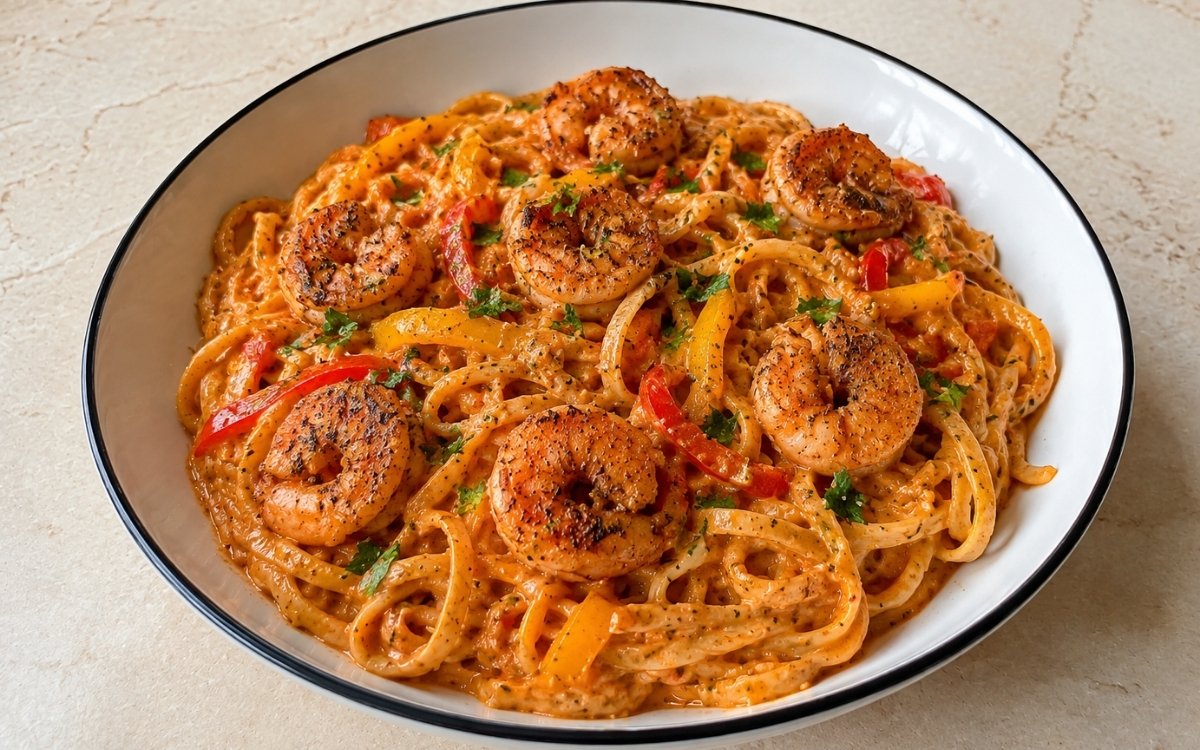
Ingredients
Method
Cook the Pasta
- Bring a large pot of water to a full rolling boil and add salt generously — the water should taste clearly seasoned. Add the linguine and cook according to the package directions until al dente — approximately 9–10 minutes. Unlike the Roman pasta dishes in this collection where the pasta finishes cooking in the sauce, the linguine here is cooked to full al dente before adding to the cream sauce — cream-based sauces do not absorb into pasta the way starchy pasta water-based emulsions do, and finishing in a cream sauce does not add meaningful flavour penetration. Before draining, reserve 120ml of the starchy pasta water in a heatproof jug — it will be used to loosen the sauce if it thickens beyond the correct coating consistency. Drain and set aside.
Season and Sear the Shrimp
- Pat the shrimp completely dry on both sides with paper towels — thorough drying is the most critical preparation step for a proper sear. Any surface moisture converts to steam the moment the shrimp contacts the hot oil, dropping the pan temperature and producing pale, steamed shrimp rather than the golden-crusted, Maillard-caramelised surface that this dish requires. In a bowl, toss the dried shrimp with the 9g of Cajun seasoning until every surface is evenly coated. Allow to sit for 5 minutes — this brief marinating period gives the spice's oil-soluble aromatic compounds time to begin penetrating the shrimp's surface layer, producing a more integrated flavour rather than seasoning that simply sits on the outside. Heat the 45ml of olive oil in a large, deep skillet over medium-high heat until shimmering. Add the seasoned shrimp in a single layer — work in batches if needed to maintain space between each piece, as crowding drops the temperature and produces steaming rather than searing. Sear undisturbed for 2 minutes — the Cajun seasoning's paprika and spices caramelise against the hot pan surface, creating a deeply coloured, aromatic crust with more flavour complexity than unseasoned shrimp would develop in the same time. Flip and cook for 1–2 minutes more until just cooked through and opaque throughout. Transfer to a plate immediately — the shrimp are pulled slightly before being fully done because they return to the pan at the end and will finish in the warm sauce.
Sauté the Aromatics and Bell Peppers
- Without cleaning the pan — the Cajun-seasoned fond from the shrimp sear is concentrated flavour — reduce the heat to medium and add the 30g of butter. As the butter melts and foams, add the minced garlic and cook for 45 seconds, stirring continuously, until fragrant and very lightly golden. At medium heat with the pan's residual warmth from the shrimp searing, garlic moves quickly toward browning — 45 seconds of continuous stirring is the window between fragrant and bitter. Add both the red and yellow bell pepper slices to the pan. Cook for 4–5 minutes, stirring occasionally but not continuously — allowing the slices to sit against the pan surface for 60–90 second intervals produces the slight char at the edges that gives the peppers their flavour character alongside their tender-crisp texture. The colour combination of red and yellow is not purely aesthetic — each bell pepper variety has a slightly different sugar content and flavour profile, and together they produce a more complex, more interesting pepper presence than a single colour alone. Add the second tablespoon of Cajun seasoning, the smoked paprika, and the cayenne pepper directly to the peppers. Stir constantly for 30 seconds — the dry spices toast against the hot pan surface in the residual fat, blooming their aromatic compounds and deepening their flavour character. Toasted spices produce a more complex, rounded result than spices added directly to liquid, which simply hydrate rather than develop through heat contact.
Build the Creamy Sauce
- Pour in the 120ml of chicken stock and immediately scrape the bottom of the pan firmly to lift all the accumulated fond — the Cajun-seasoned, pepper-fat-enriched fond that has been building since the shrimp sear is the deepest flavour layer in the sauce and every bit of it should dissolve into the stock at this deglazing step. Allow to simmer for 2 minutes, reducing slightly and concentrating the stock. Add the 180ml of heavy cream and the 60g of softened cream cheese. Whisk continuously as the cream cheese melts — the whisking motion breaks the cream cheese into progressively smaller pieces and disperses it evenly through the cream before it has a chance to clump. The cream cheese is the structural innovation in this sauce compared to a standard cream pasta sauce. It contributes additional fat, more protein, and a slight lactic acid tang that balances the richness of the heavy cream. More importantly, its protein and fat content stabilises the cream sauce against breaking during the high-heat pasta tossing step — plain heavy cream sauces can separate under vigorous tossing, while cream cheese-enriched sauces maintain their emulsification more reliably. Whisk for 2–3 minutes until completely smooth, then reduce the heat to medium-low. Add the 60g of freshly grated Parmesan and whisk until fully incorporated and the sauce has thickened slightly — approximately 1–2 minutes. The Parmesan adds the deep, savoury, umami-rich layer that prevents the cream sauce from tasting flat and one-dimensionally dairy-rich. If the sauce thickens beyond the correct consistency at this stage, add reserved pasta water in 30ml increments, whisking after each addition until the sauce returns to a flowing, coating consistency.
Combine the Pasta
- Add the cooked al dente linguine to the cream sauce in the skillet. Toss with tongs for 1–2 minutes, turning the pasta through the sauce continuously and ensuring every strand is completely coated. Unlike the emulsion-based Roman pastas where tossing is the mechanical emulsification step, here the tossing purpose is sauce penetration and coating — ensuring every strand is uniformly covered and that the pasta's starch releases slightly into the cream sauce, thickening and enriching it further. The pasta will absorb some of the sauce during this tossing period and the overall volume will reduce slightly — this is correct and expected.
Return the Shrimp and Finish
- Return the seared shrimp to the pan along with any accumulated resting juices from the plate — these juices contain Cajun-seasoned rendered shrimp fat and represent concentrated flavour that should always go back into the sauce rather than being discarded. Add the 15ml of fresh lemon juice and half of the chopped parsley. Toss gently for approximately 1 minute — gentle tossing rather than the vigorous motion used during pasta combining prevents the shrimp from breaking apart and ensures they warm through without continuing to cook. The lemon juice provides the acid brightness that cuts through the cream sauce's richness and makes the Cajun spicing taste more vivid rather than buried in dairy fat. Taste and adjust — the dish needs to be assessed for salt, heat level, and acidity simultaneously. Add black pepper generously; add more Cajun seasoning or a few drops of hot sauce if additional heat is wanted; add more lemon if the cream feels heavy.
Plate and Serve
- Divide among four warm plates or shallow bowls, using tongs to ensure each portion receives an even distribution of linguine, shrimp, and bell pepper pieces. Spoon any remaining sauce from the pan over each portion. Scatter the remaining chopped parsley over each bowl — the fresh, green herb contrast against the deep orange-red Cajun cream sauce is both visual and flavour completion. Serve immediately.
Notes
Cajun seasoning varies significantly in salt content and spice intensity between brands. Some commercial Cajun seasonings are very heavily salted — when used at 2 tablespoons total, a highly salted seasoning can make the dish aggressively salty before any additional salt is added. Taste your Cajun seasoning before starting and calibrate accordingly — if it is very salty, reduce the total quantity slightly and adjust at the end with additional salt rather than using the full specified amount. Making your own Cajun seasoning — paprika, garlic powder, onion powder, dried thyme, dried oregano, black pepper, cayenne, and salt — gives full control over both salt level and heat intensity.
The 31–40 count shrimp — slightly smaller than the 16/20 count specified for the lemon garlic shrimp pasta — are appropriate here because the bold Cajun seasoning and cream sauce can carry a slightly higher shrimp-to-sauce ratio per forkful than the more delicate lemon butter sauce. At 31–40 count, there are approximately 5–6 shrimp per serving, which distributes well through the pasta. Larger shrimp work equally well — adjust searing time to account for the greater size.
The two Cajun seasoning additions — one on the shrimp before searing and one in the sauce — are deliberate and produce different results. The seasoning on the shrimp caramelises against the hot pan during the sear, producing the darker, deeper, toasted spice character of the crust. The seasoning in the sauce blooms in the butter and fat with the peppers, producing a more aromatic, more evenly distributed spice presence throughout every bite. Both levels of spice flavour development are present simultaneously in the finished dish.