
Spicy Chili Garlic Oil Noodles
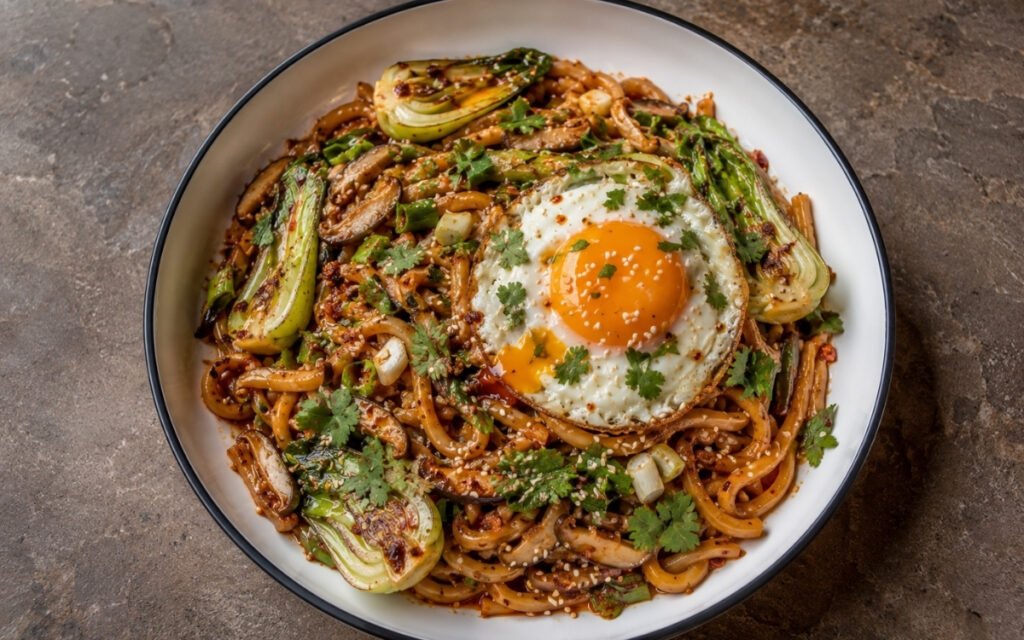
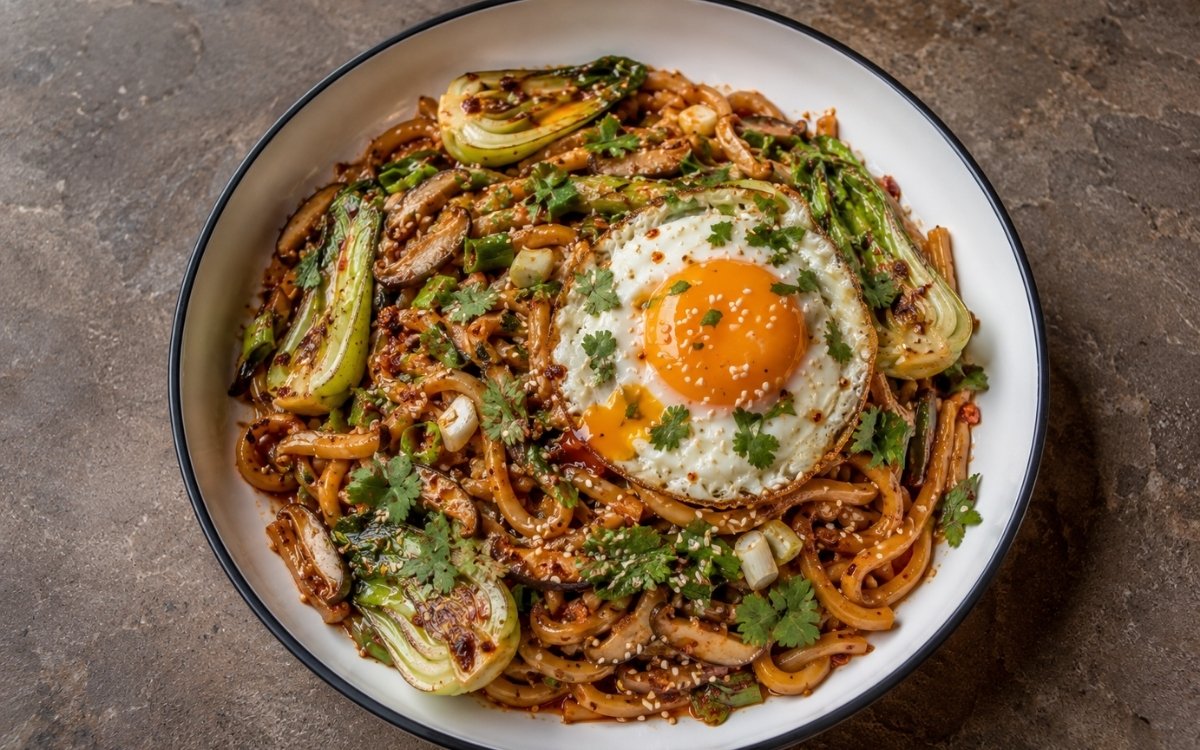
Homemade chili garlic oil — gochugaru and Sichuan peppercorns steeped in oil heated to exactly the right temperature — poured over wheat noodles with stir-fried shiitake, bok choy, and a crispy-edged, runny-yolk fried egg on top. The sauce base is soy, black vinegar, sesame oil, and sugar whisked together before the heat is turned on, so the only active cooking is the oil infusion and the wok work. The Sichuan peppercorns add the numbing, slightly floral heat that Korean gochugaru alone cannot produce — together they create the specific addictive combination that makes you reach for one more bite even when the heat is building. Twenty-five minutes from start to bowl.
Prep Time : 10 min
Cook Time : 15 min
Servings : 4
10 min
15 min
4
Ingredients
For the Noodles
• 400g dried wheat noodles (lo mein or udon style)
• 120ml reserved pasta cooking water
• 15ml toasted sesame oil (for tossing)
For the Chili Garlic Oil
• 120ml vegetable oil
• 40g Korean gochugaru (coarse chili flakes) — this one on Amazon
• 15g Sichuan peppercorns, lightly crushed — this one on Amazon
• 45g fresh garlic, minced (about 12 cloves)
• 30g fresh ginger, minced
For the Sauce Base
• 60ml soy sauce
• 45ml Chinese black vinegar — this one on Amazon
• 30ml toasted sesame oil — this one on Amazon
• 25g granulated sugar
• 8g MSG (or substitute with additional salt to taste)
For the Vegetables and Toppings
• 200g baby bok choy, halved lengthwise
• 150g shiitake mushrooms, stems removed and thinly sliced
• 60g scallions, cut into 2-inch pieces (white and green parts separated)
• 4 large eggs
• 15ml vegetable oil, for frying eggs
• 6g kosher salt
• 100g fresh cilantro, roughly chopped)
• 20g white sesame seeds, toasted
This post may contain affiliate links. As an Amazon Associate I earn from qualifying purchases, at no additional cost to you.
Directions
- Cook and Prepare the Noodles
Bring a large pot of salted water to a full rolling boil. Add the 400g of dried wheat noodles and cook according to the package directions until just al dente — typically 4–5 minutes for lo mein style, slightly longer for udon. The noodles should be cooked through with just a faint resistance when bitten — they will not receive any further cooking in the wok beyond reheating during tossing, so the texture at draining is essentially the texture at serving. Before draining, reserve 120ml of the starchy noodle cooking water in a heatproof jug. Drain the noodles and rinse briefly under cold running water — the cold rinse stops the cooking immediately, preventing the noodles from continuing to soften through residual heat, and removes the excess surface starch that would cause the noodles to clump together during the wait before wok cooking. Immediately toss the rinsed, drained noodles with the 15ml of toasted sesame oil, tossing to coat every strand. The sesame oil provides flavour and prevents sticking — without it, noodles left to rest will bond into a solid mass. Set aside. - Whisk the Sauce Base
Before making the chili oil or heating the wok, prepare the sauce base — this ensures it is ready to pour immediately during the wok cooking step without any delay. In a small bowl, combine the 60ml of soy sauce, 45ml of Chinese black vinegar, 30ml of toasted sesame oil, 25g of sugar, and 8g of MSG. Whisk until the sugar has completely dissolved and the mixture is uniform. The sauce base is the flavour framework of the entire dish — the soy provides salt and deep savory umami; the Chinese black vinegar provides a specifically complex, slightly malty, moderately acidic note that regular rice vinegar or balsamic cannot replicate; the sesame oil provides nutty, toasted aromatic richness; the sugar balances the soy’s saltiness and the vinegar’s acidity; the MSG amplifies every other flavour compound present simultaneously. The substitution of salt for MSG is noted in the ingredients — salt provides saltiness without the additional glutamate that enhances the perception of all other flavours, so the result without MSG will be good but less vivid. Set aside. - Make the Chili Garlic Oil
This step requires precise oil temperature management — it is the technique decision that determines whether the chili oil smells of toasted, aromatic spice or of burnt bitterness. Heat the 120ml of vegetable oil in a small saucepan over medium heat. Monitor the temperature — the target is 175–180°C. If you do not have a thermometer, test by inserting a wooden chopstick vertically into the oil: at the correct temperature it should produce a steady, vigorous stream of small bubbles rising from the tip. Remove the saucepan from the heat when the temperature is reached, and allow to rest for 2 minutes — this brief rest drops the temperature slightly, providing a margin of safety against burning the spices on contact. Place the 40g of gochugaru and 15g of lightly crushed Sichuan peppercorns in a heatproof bowl. Add the 45g of minced garlic and 30g of minced ginger on top. Carefully pour the hot oil in a slow, steady stream over all the spices and aromatics. The mixture will sizzle vigorously and steam significantly — this is correct and expected. The hot oil flash-extracts the fat-soluble aromatic compounds, capsaicin, and colour pigments from the gochugaru and peppercorns simultaneously, and blooms the garlic and ginger’s aromatic compounds into the surrounding oil. At the correct temperature, the gochugaru turns the oil a vivid, deep red-orange and the mixture smells of toasted spice, garlic, and warmth. If the oil is too hot, the gochugaru will darken to brown immediately and the mixture will smell of burnt chili rather than toasted — discard and start again. Stir the chili oil and allow to steep for at least 5 minutes while the remaining preparation continues. The longer it steeps, the deeper the flavour extraction. - Stir-Fry the Aromatics and Vegetables
Heat a large wok or deep skillet over high heat until genuinely smoking hot — this requires 2–3 minutes of preheating over the highest available flame. Wok cooking’s specific results depend on the extremely high temperature that produces the slightly charred, smoky flavour known as wok hei — the particular aroma and taste of high-heat wok cooking that cannot be produced at the lower temperatures of a moderately hot pan. Add 30ml of the prepared chili oil to the smoking wok — use a combination of the infused oil and some of the solid spice mixture, or strain for a cleaner visual presentation while still using the deeply flavoured oil. The moment the oil hits the smoking wok, add the white scallion parts, the 45g of minced garlic, and the 30g of minced ginger simultaneously. Stir-fry for 45 seconds — moving continuously with a wok spatula or tongs, turning the ingredients against the hot wok surface rather than simply stirring. At this temperature the garlic and ginger’s aromatics bloom explosively — the result should smell intensely fragrant within 20 seconds of hitting the wok. Add the 150g of thinly sliced shiitake mushrooms. Stir-fry for 2–3 minutes, keeping the vegetables moving but allowing brief moments of stationary contact with the hot surface — these brief contacts produce the slight caramelisation at the mushroom edges that adds smoky depth. The mushrooms will release moisture initially, which the high heat evaporates almost immediately, then begin to caramelise. Add the 200g of halved bok choy. Stir-fry for 1–2 minutes until the leaves wilt and the stems turn bright green with slight char marks at the cut edges. Season with the 6g of kosher salt. - Fry the Eggs
While the vegetables cook, or immediately after, fry the eggs in a separate non-stick skillet. Heat the 15ml of vegetable oil in the skillet over medium-high heat until shimmering. Crack all 4 eggs into the pan, keeping them separate. Fry for 2–3 minutes without disturbing — the edges should develop a crispy, lace-like golden-brown border while the yolk remains completely liquid. This is the classic Chinese-style fried egg — crispy at the edges and bottom, runny at the top — that provides the textural contrast between its crisp exterior and liquid yolk against the noodles. Remove from heat when the whites are fully set but the yolk moves freely when the pan is gently shaken. - Toss the Noodles
Add the sesame-tossed noodles to the wok with the stir-fried vegetables. Pour the entire sauce base over the noodles. Add 60ml of the reserved noodle cooking water. Toss everything together vigorously for 1–2 minutes using tongs or chopsticks — lifting from the bottom and folding over the top, working quickly to coat every strand of noodle in the sauce and distribute the vegetables evenly throughout. The noodle cooking water’s starch emulsifies the oil-based and vinegar-based components of the sauce into a cohesive, slightly thickened coating rather than the oily, separated liquid that would result without it. Add more noodle water in 15ml increments if needed — the noodles should be glossy and uniformly coated, not dry or swimming in excess liquid. - Finish and Serve
Add the green scallion parts and half of the 100g of cilantro to the wok. Toss for 30 seconds — enough to briefly wilt the green scallions and distribute the cilantro without fully cooking either. Remove from heat immediately. Divide among four serving bowls. Place one fried egg over each bowl. Scatter the remaining cilantro over each bowl. Scatter the 20g of toasted sesame seeds across all four portions. Drizzle additional chili oil from the batch — as much or as little as the heat preference of each person at the table dictates — over each bowl. Serve immediately.
*Notes :
- Gochugaru and Sichuan peppercorns are the specific spice combination that gives this dish its distinctive character, and neither can replace the other. Gochugaru — Korean coarse chili flakes made from sun-dried, deseeded red chilies — provides a fruity, moderately spiced heat with a slightly sweet, almost smoky character. Its heat is direct and clear. Sichuan peppercorns provide an entirely different sensation: the compound hydroxy-alpha-sanshool activates mechanoreceptors in the mouth rather than heat receptors, producing the characteristic tingling, numbing, slightly citrus-floral sensation that is mala — “numbing and spicy” — the defining characteristic of Sichuan cooking. Together they produce a heat experience that alternates and compounds — the gochugaru’s direct heat and the Sichuan peppercorn’s numbing tingle are present simultaneously and reinforce each other, producing the addictive quality that makes this dish specifically more compelling than a simply spicy preparation.
- Chinese black vinegar — Chinkiang vinegar, named for the city of Zhenjiang in Jiangsu province — is produced from glutinous rice through a complex fermentation process and has a complex, slightly malty, slightly woody flavour profile that is completely different from rice vinegar, balsamic, or any Western vinegar. Its specific acidity and aromatic character are integral to the sauce base — no direct substitute produces the same result. Available at Asian grocery stores and increasingly online.
- MSG in this recipe is used as a specific flavour amplifier rather than a salt substitute. Monosodium glutamate enhances the perception of umami — the savoury, mouth-coating fifth taste — and simultaneously makes all other flavour compounds more vivid. At 8g for four servings (2g per person), it amplifies the soy sauce’s umami, the sesame oil’s nuttiness, the vinegar’s complexity, and the chili’s heat simultaneously, producing a more vibrant, more complete flavour experience than the same sauce without it. MSG is safe at normal culinary quantities and is present naturally in parmesan cheese, tomatoes, fish sauce, and soy sauce.
Why This Recipe Works
This recipe works because it prepares every component before any heat is turned on — the sauce base whisked, the noodles cooked and tossed with sesame oil, the chili oil made at the correct temperature — so the wok cooking step happens with everything ready and the high heat of wok cooking is uninterrupted by preparation pauses. The chili oil is made at the specific temperature that extracts the spices’ aromatic compounds without burning them.
The sauce base’s components are specifically chosen for their individual contributions that no other single ingredient provides. The wok hei developed at maximum heat provides the smoky depth that no lower-temperature cooking method achieves. And the fried egg’s crispy-edged, runny-yolk contrast against the coated noodles provides the textural and flavour completion that makes each bowl genuinely satisfying.
Ingredient Breakdown
Gochugaru (40g)
Korean coarse chili flakes — fruity, moderately spiced, slightly sweet heat that colours the oil vivid red and provides the primary chili character.
Sichuan Peppercorns (15g, Crushed)
The numbing spice — hydroxy-alpha-sanshool produces the mouth-tingling, slightly citrus-floral mala sensation that gochugaru cannot provide.
Chinese Black Vinegar
The sauce’s secondary acid and aromatic component — complex, malty, and specifically Chinese in character; cannot be closely substituted.
MSG
The flavour amplifier — enhances the perception of umami and simultaneously makes every other compound in the sauce more vivid.
Noodle Cooking Water
The emulsifying starch medium — allows the oil-based and vinegar-based sauce components to coat the noodles as a unified, glossy film rather than separating.
Fried Egg (Crispy-Edged, Runny Yolk)
The textural and flavour topping — crispy at the edges and bottom, liquid at the yolk; broken at the table so the yolk runs into the noodles.
Cilantro (100g)
The fresh herbal counterpoint — used generously in the Chinese-cooking tradition as a finishing herb rather than a decoration.
Flavor Structure Explained
This noodle bowl follows a layered balance model:
- Spicy heat core (gochugaru, Sichuan peppercorn)
- Savory umami depth (soy sauce, MSG, garlic, ginger, shiitake)
- Sharp acidic lift (black vinegar)
- Aromatic complexity (sesame oil, chili, cilantro)
- Creamy finishing layer (egg)
Chili and peppercorn define the dominant layer with direct heat and numbing intensity that drives the dish. Umami elements build a deep, savory base that makes the heat feel full rather than harsh. Black vinegar cuts through with sharp acidity, keeping the profile lifted and preventing oiliness. Aromatics add fragrance and complexity, shaping both smell and taste. The egg finishes the structure with creamy richness, rounding the heat and tying all elements into a cohesive, high-impact whole.
Common Mistakes to Avoid
- Overheating the Oil for the Chili Oil – Oil above 200°C burns gochugaru to brown bitterness rather than toasting it to red aromatic depth. Use a thermometer or chopstick test and always rest the oil 2 minutes after removing from heat.
- Not Preheating the Wok Sufficiently – A moderately warm wok produces steamed, pale vegetables rather than charred, wok-hei-flavoured ones. Preheat for 2–3 full minutes over maximum heat.
- Not Rinsing the Noodles After Draining – Unrinsed noodles continue cooking through residual heat and clump together within minutes. Always rinse briefly under cold water and immediately toss with sesame oil.
- Adding All Components to the Wok Without Preparation Complete – The wok cooking step moves too quickly for concurrent preparation. All sauce, noodles, and vegetables must be ready before the wok is turned on.
- Under-seasoning – The MSG, soy, and salt together provide the dish’s seasoning — taste at the end of tossing and add additional soy or salt if flat.
- Overcooking the Egg Yolk – The runny yolk is the finishing element that adds richness to the noodles at each bowl. Fry until the white is fully set and remove immediately — 2–3 minutes at medium-high heat, no longer.
Variations
Milder Version
Reduce gochugaru to 25g and omit the Sichuan peppercorns entirely for a sauce with clear chili warmth but without the numbing tingle. The dish remains bold and flavourful at this heat level.
Vegetable Variations
Snap peas, Chinese broccoli (gai lan), thinly sliced bell peppers, bean sprouts, and enoki mushrooms all work as substitutes or additions to the bok choy and shiitake combination. Adjust stir-fry timing to each vegetable’s density.
Chili Garlic Oil Noodles With Tofu
Add 200g of extra-firm tofu pressed dry and cut into 2cm cubes — fry in the wok in the chili oil for 3–4 minutes until golden before the scallions and garlic, then set aside and return with the noodles.
Dan Dan Noodle Style
Add 200g of minced pork stir-fried with additional soy and five-spice powder to the wok before the vegetables for a protein-forward version that moves the dish toward the Sichuan dan dan noodle tradition.
Storage & Make-Ahead
Assembled noodles are best served immediately, since the noodles continue to absorb the sauce during storage and the fresh aroma of the sesame oil fades over time. They can be refrigerated for up to 2 days, but they will lose some of their glossy coating. To reheat them, warm them in a wok or pan with a splash of water and a little extra soy sauce and sesame oil.
Chili garlic oil can be stored in a sealed jar at room temperature for up to 1 week or in the refrigerator for up to 1 month. Its flavor becomes deeper over the first 24 hours as the spices continue to infuse the oil. It is worth making a larger batch, since it also works well as a finishing oil for eggs, dumplings, rice, and roasted vegetables throughout the week.
The sauce base can be refrigerated for up to 2 weeks. Before using it, whisk it well, since the ingredients may separate during storage.
Frequently Asked Questions
What is gochugaru and where do I find it?
Gochugaru is a Korean coarse red chili flake made from sun-dried, deseeded chilies — fruity, moderately spiced, and slightly sweet in character, producing a deep red colour when infused into oil. Available at Korean grocery stores, Asian supermarkets, and increasingly in the international section of mainstream supermarkets. Not interchangeable with generic red pepper flakes, which are sharper, less fruity, and more aggressively hot at the same quantity.
What is the numbing sensation from Sichuan peppercorns?
The tingling, slightly numbing sensation is produced by hydroxy-alpha-sanshool — a compound in Sichuan peppercorns that activates mechanoreceptors in the mouth rather than heat receptors, creating a tactile buzzing or tingling sensation. Combined with gochugaru’s direct heat, the two sensations reinforce each other — the mala combination that defines Sichuan cooking’s specific addictive quality.
Can I substitute Chinese black vinegar?
The closest substitutes are a mixture of rice vinegar and a very small amount of balsamic vinegar — approximately 30ml rice vinegar and 15ml balsamic — which approximates the malty, slightly complex character without precisely replicating it. Worcestershire sauce at 20ml can provide a partial substitute for the complexity but adds additional flavour compounds not in the original.
Is MSG necessary?
No — the sauce without MSG is still good. MSG enhances the perception of every other flavour compound present and makes the overall dish taste more vivid and complete. At the quantity used (8g for 4 servings, 2g per person), it is safe and commonly used in professional kitchens. Salt provides saltiness without the flavour amplification; the dish will taste good but less layered without MSG.
What noodles work best?
Lo mein noodles — the classic thick wheat noodles of Chinese cooking — produce the most authentic result with good chew and excellent sauce absorption. Udon-style noodles provide a thicker, more substantial format with considerable chew. Both work well. Avoid very thin noodles like angel hair or rice vermicelli, which have insufficient body for the assertively flavoured sauce.
Nutrition Facts
( per serving )
Calories
~9500 kcal
Protein
26 g
Fat
50 g
Carbs
99 g
Calories
~9500 kcal
Protein
26 g
Fat
50 g
Carbs
99 g
Related Recipes
Related Recipes

Baked Ziti
Ziti tossed in a rich beef and pork tomato sauce, layered with creamy ricotta pockets, mozzarella, and Parmesan, baked until bubbling.
Creamy Sun-Dried Tomato Pasta
Parmesan cream built in sun-dried tomato oil with burst cherry tomatoes and toasted pine nuts — 30 minutes.
Risotto alla Milanese
Deep golden Carnaroli rice with saffron, white wine, and a Parmigiano-Reggiano mantecatura, finished to a loose, glossy all’onda texture.
You might also like
You might also like
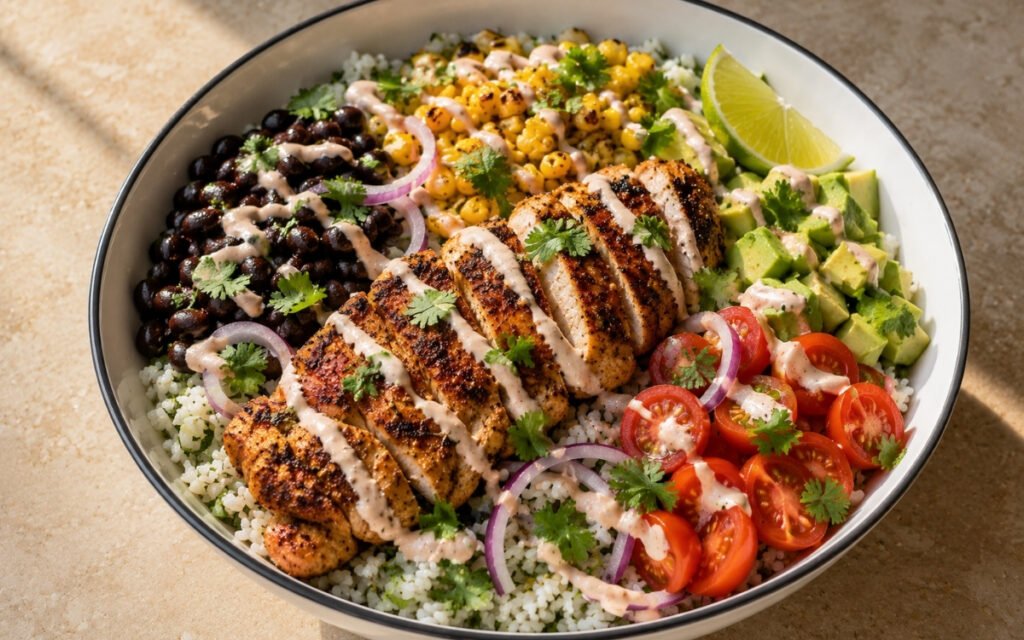
Chili Lime Chicken Rice Bowl
Chili-lime marinated chicken and charred corn over cilantro-lime rice with black beans, avocado, and Greek yogurt crema — vibrant, balanced, 45 minutes.
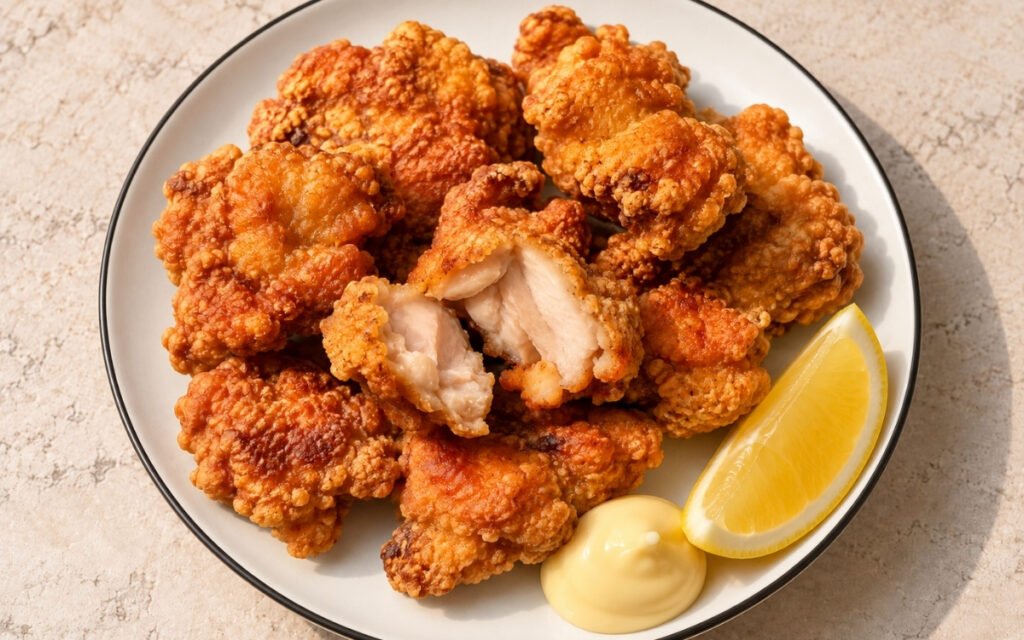
Karaage — Japanese Fried Chicken
Bite-sized double-fried chicken thigh pieces marinated in soy sauce, sake, ginger and garlic, coated in potato starch for a deeply golden, craggy crust.
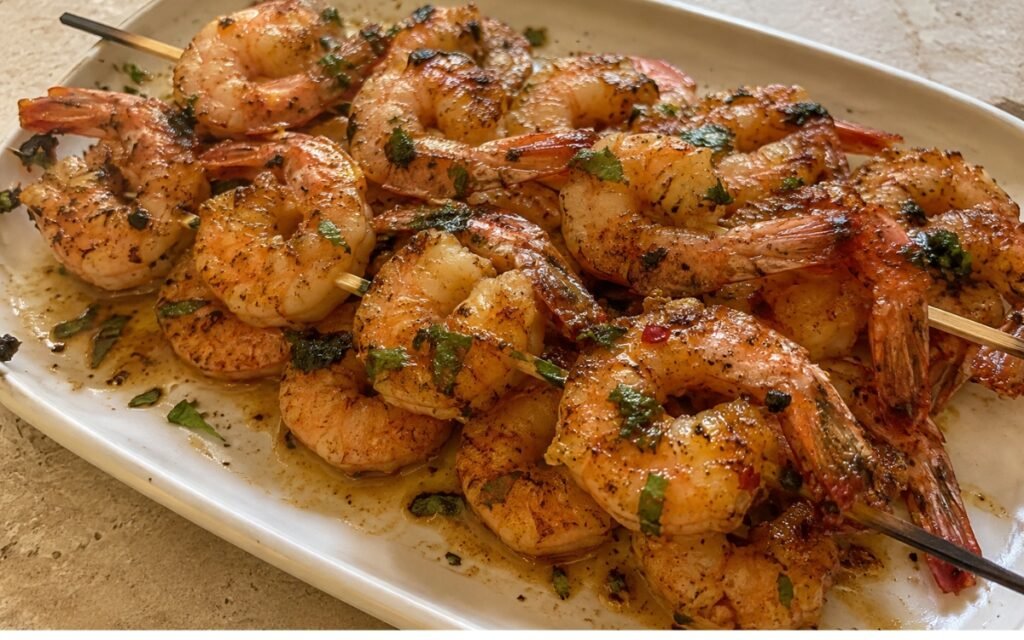
Garlic Shrimp Skewers
Shrimp marinated 30 minutes in garlic herb butter, threaded on double skewers, grilled fast with fresh butter basting until charred. Juicy and garlicky.
Spicy Chili Garlic Oil Noodles
Ingredients
Method
- Bring a large pot of salted water to a full rolling boil. Add the 400g of dried wheat noodles and cook according to the package directions until just al dente — typically 4–5 minutes for lo mein style, slightly longer for udon. The noodles should be cooked through with just a faint resistance when bitten — they will not receive any further cooking in the wok beyond reheating during tossing, so the texture at draining is essentially the texture at serving. Before draining, reserve 120ml of the starchy noodle cooking water in a heatproof jug. Drain the noodles and rinse briefly under cold running water — the cold rinse stops the cooking immediately, preventing the noodles from continuing to soften through residual heat, and removes the excess surface starch that would cause the noodles to clump together during the wait before wok cooking. Immediately toss the rinsed, drained noodles with the 15ml of toasted sesame oil, tossing to coat every strand. The sesame oil provides flavour and prevents sticking — without it, noodles left to rest will bond into a solid mass. Set aside.
- Before making the chili oil or heating the wok, prepare the sauce base — this ensures it is ready to pour immediately during the wok cooking step without any delay. In a small bowl, combine the 60ml of soy sauce, 45ml of Chinese black vinegar, 30ml of toasted sesame oil, 25g of sugar, and 8g of MSG. Whisk until the sugar has completely dissolved and the mixture is uniform. The sauce base is the flavour framework of the entire dish — the soy provides salt and deep savory umami; the Chinese black vinegar provides a specifically complex, slightly malty, moderately acidic note that regular rice vinegar or balsamic cannot replicate; the sesame oil provides nutty, toasted aromatic richness; the sugar balances the soy’s saltiness and the vinegar’s acidity; the MSG amplifies every other flavour compound present simultaneously. The substitution of salt for MSG is noted in the ingredients — salt provides saltiness without the additional glutamate that enhances the perception of all other flavours, so the result without MSG will be good but less vivid. Set aside.
- This step requires precise oil temperature management — it is the technique decision that determines whether the chili oil smells of toasted, aromatic spice or of burnt bitterness. Heat the 120ml of vegetable oil in a small saucepan over medium heat. Monitor the temperature — the target is 175–180°C. If you do not have a thermometer, test by inserting a wooden chopstick vertically into the oil: at the correct temperature it should produce a steady, vigorous stream of small bubbles rising from the tip. Remove the saucepan from the heat when the temperature is reached, and allow to rest for 2 minutes — this brief rest drops the temperature slightly, providing a margin of safety against burning the spices on contact. Place the 40g of gochugaru and 15g of lightly crushed Sichuan peppercorns in a heatproof bowl. Add the 45g of minced garlic and 30g of minced ginger on top. Carefully pour the hot oil in a slow, steady stream over all the spices and aromatics. The mixture will sizzle vigorously and steam significantly — this is correct and expected. The hot oil flash-extracts the fat-soluble aromatic compounds, capsaicin, and colour pigments from the gochugaru and peppercorns simultaneously, and blooms the garlic and ginger’s aromatic compounds into the surrounding oil. At the correct temperature, the gochugaru turns the oil a vivid, deep red-orange and the mixture smells of toasted spice, garlic, and warmth. If the oil is too hot, the gochugaru will darken to brown immediately and the mixture will smell of burnt chili rather than toasted — discard and start again. Stir the chili oil and allow to steep for at least 5 minutes while the remaining preparation continues. The longer it steeps, the deeper the flavour extraction.
- Heat a large wok or deep skillet over high heat until genuinely smoking hot — this requires 2–3 minutes of preheating over the highest available flame. Wok cooking’s specific results depend on the extremely high temperature that produces the slightly charred, smoky flavour known as wok hei — the particular aroma and taste of high-heat wok cooking that cannot be produced at the lower temperatures of a moderately hot pan. Add 30ml of the prepared chili oil to the smoking wok — use a combination of the infused oil and some of the solid spice mixture, or strain for a cleaner visual presentation while still using the deeply flavoured oil. The moment the oil hits the smoking wok, add the white scallion parts, the 45g of minced garlic, and the 30g of minced ginger simultaneously. Stir-fry for 45 seconds — moving continuously with a wok spatula or tongs, turning the ingredients against the hot wok surface rather than simply stirring. At this temperature the garlic and ginger’s aromatics bloom explosively — the result should smell intensely fragrant within 20 seconds of hitting the wok. Add the 150g of thinly sliced shiitake mushrooms. Stir-fry for 2–3 minutes, keeping the vegetables moving but allowing brief moments of stationary contact with the hot surface — these brief contacts produce the slight caramelisation at the mushroom edges that adds smoky depth. The mushrooms will release moisture initially, which the high heat evaporates almost immediately, then begin to caramelise. Add the 200g of halved bok choy. Stir-fry for 1–2 minutes until the leaves wilt and the stems turn bright green with slight char marks at the cut edges. Season with the 6g of kosher salt.
- While the vegetables cook, or immediately after, fry the eggs in a separate non-stick skillet. Heat the 15ml of vegetable oil in the skillet over medium-high heat until shimmering. Crack all 4 eggs into the pan, keeping them separate. Fry for 2–3 minutes without disturbing — the edges should develop a crispy, lace-like golden-brown border while the yolk remains completely liquid. This is the classic Chinese-style fried egg — crispy at the edges and bottom, runny at the top — that provides the textural contrast between its crisp exterior and liquid yolk against the noodles. Remove from heat when the whites are fully set but the yolk moves freely when the pan is gently shaken.
- Add the sesame-tossed noodles to the wok with the stir-fried vegetables. Pour the entire sauce base over the noodles. Add 60ml of the reserved noodle cooking water. Toss everything together vigorously for 1–2 minutes using tongs or chopsticks — lifting from the bottom and folding over the top, working quickly to coat every strand of noodle in the sauce and distribute the vegetables evenly throughout. The noodle cooking water’s starch emulsifies the oil-based and vinegar-based components of the sauce into a cohesive, slightly thickened coating rather than the oily, separated liquid that would result without it. Add more noodle water in 15ml increments if needed — the noodles should be glossy and uniformly coated, not dry or swimming in excess liquid.
- Add the green scallion parts and half of the 100g of cilantro to the wok. Toss for 30 seconds — enough to briefly wilt the green scallions and distribute the cilantro without fully cooking either. Remove from heat immediately. Divide among four serving bowls. Place one fried egg over each bowl. Scatter the remaining cilantro over each bowl. Scatter the 20g of toasted sesame seeds across all four portions. Drizzle additional chili oil from the batch — as much or as little as the heat preference of each person at the table dictates — over each bowl. Serve immediately.