
Pan-Seared Skirt Steak
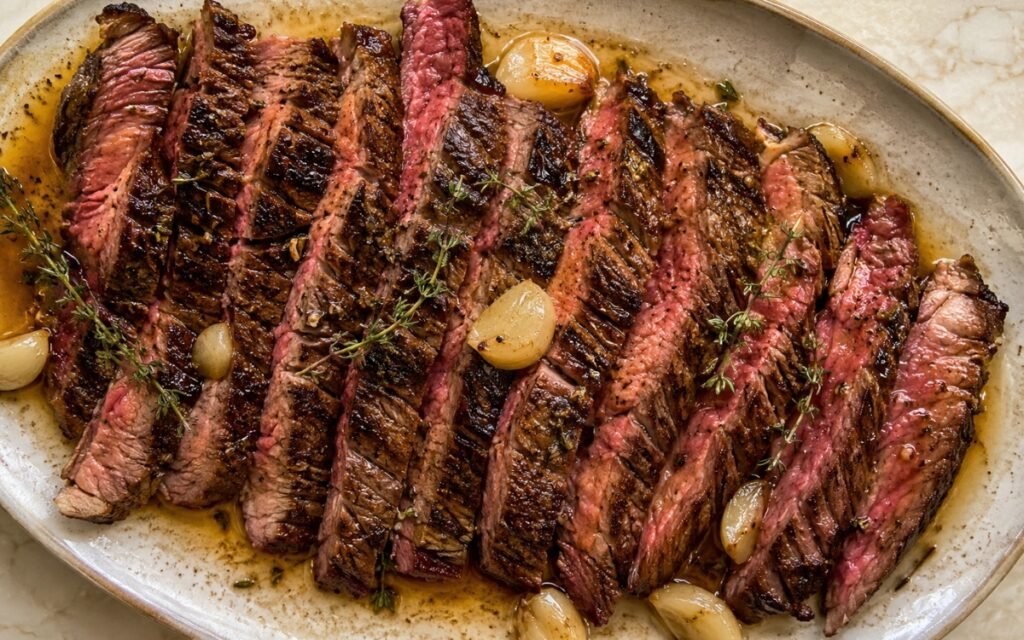
This pan-seared skirt steak delivers restaurant-quality results in under 15 minutes of active cooking. The high-heat sear creates a deeply caramelised crust while keeping the interior perfectly medium-rare and juicy. Sliced against the grain and finished with herb-infused butter, this quick-cooking cut offers intense beefy flavour that rivals any steakhouse — and it is on the table in under an hour.
Prep Time : 40 min
Cook Time : 8 min
Servings : 4
40 min
8 min
4
Ingredients
For the Steak
• 800g skirt steak
• 30ml olive oil — this one on Amazon
• 30g unsalted butter — this one on Amazon
• 4 garlic cloves, smashed
• 4 sprigs fresh thyme
For the Seasoning
• 8g fine sea salt
• 4g freshly ground black pepper
• 4g garlic powder
• 3g smoked paprika
This post may contain affiliate links. As an Amazon Associate I earn from qualifying purchases, at no additional cost to you.
Directions
- Temper the Steak
Remove the skirt steak from the refrigerator and set it on a clean cutting board or plate at room temperature for a full 30 minutes before cooking. This is not a minor courtesy step — it is the preparation decision that most directly determines whether the steak cooks evenly from edge to centre. A cold steak straight from the refrigerator has a dramatic temperature gradient between its cold interior and its room-temperature surface. When that cold interior hits a hot pan, the exterior cooks and browns rapidly while the centre remains cold and requires significantly more cooking time to reach the target temperature. The result is overcooked, grey outer layers flanking a barely-warm centre — the opposite of the edge-to-edge pink medium-rare that makes skirt steak worth eating. Thirty minutes at room temperature narrows this gradient substantially. While the steak tempers, pat every surface completely dry with paper towels. Dry steak is essential for proper browning — moisture on the surface creates steam when it contacts the hot pan, and steam prevents the Maillard reaction browning that produces the caramelised crust this recipe depends on. - Season the Steak
In a small bowl, combine the fine sea salt, freshly ground black pepper, garlic powder, and smoked paprika. Mix briefly to distribute the spices evenly. Season the dried steak generously on both sides and all edges, pressing the seasoning mixture firmly into the surface with your palm and fingers rather than simply sprinkling and hoping it adheres. The pressing motion ensures the spices make direct contact with the meat’s surface rather than sitting loose and ready to fall off when the steak hits the hot pan. The smoked paprika in this blend serves two purposes — it adds a subtle smokiness that bridges the seasoning to the char produced by the sear, and it deepens the visual color of the crust, producing the dark, intensely colored exterior that signals properly developed flavor. - Preheat the Pan
Place a large cast iron skillet over high heat and allow it to preheat for a full 3 minutes until it begins to smoke lightly. Cast iron is specified rather than stainless steel or non-stick for specific reasons: its density retains heat extremely well and does not drop temperature when cold meat is added — a temperature drop immediately after the steak goes in is what causes steaming rather than searing. Cast iron’s naturally rough surface also promotes better crust development than a smooth pan. If your skillet is not smoking when you add the oil, it is not hot enough — continue heating. Add the 30ml of olive oil and swirl immediately to coat the surface. The oil should shimmer and begin to smoke at the edges within seconds of being added if the pan is correctly preheated. - Sear the First Side
Lay the seasoned steak flat in the pan — if the steak is too long to lie flat without folding or curling, cut it into 2–3 sections before cooking. A folded or arched steak makes uneven contact with the pan surface and produces uneven cooking and crust development across the cut. Once placed, do not move the steak. Do not press it. Do not check underneath it prematurely. Leave it completely undisturbed for 3 minutes. The steak will initially stick to the pan — this is normal and expected. A properly formed Maillard crust will release naturally from the cast iron surface when it is ready to be flipped. If the steak resists when you attempt to lift it, it needs another 30–60 seconds. Forcing it before the crust has fully set tears the exterior and leaves it behind on the pan. - Flip and Baste
After 3 minutes, the bottom should show a dark, caramelised crust with visible deep-brown color across the entire surface. Flip the steak to the second side. Immediately add the 30g of unsalted butter, the 4 smashed garlic cloves, and the 4 fresh thyme sprigs to the pan alongside the steak. The butter will foam immediately on contact with the hot pan — this foaming is the water in the butter evaporating. Tilt the pan toward you at a slight angle and use a large spoon to scoop the foaming, thyme-and-garlic-infused butter continuously over the top surface of the steak. This basting technique — known as arrosage in French cuisine — does three things: it transfers flavor from the butter, garlic, and thyme onto the steak’s surface; it moderates the top surface temperature slightly, preventing the exterior from drying out while the second side sears; and it builds the rich, glossy appearance characteristic of a properly finished restaurant steak. Continue basting continuously for 2–3 minutes. - Check Temperature and Rest
Monitor the internal temperature using an instant-read thermometer inserted into the thickest part of the steak. Remove the steak from the pan when the temperature reads 54°C (130°F) for medium-rare — carry-over cooking during the rest will bring it to 57–60°C, which is the ideal medium-rare range. Skirt steak is a thin cut that moves through temperature zones extremely quickly; the difference between medium-rare and medium can be as little as 60 seconds of additional cooking. An instant-read thermometer is not optional for precision — it is the only reliable method for hitting the target consistently. Transfer the steak to a cutting board and rest for 5 minutes. During this rest, spoon any remaining pan juices, garlic, and thyme from the skillet over the resting steak. The rest allows the muscle fibres that contracted under high heat to relax and reabsorb the juices driven toward the centre during cooking, redistributing moisture evenly throughout. - Slice and Serve
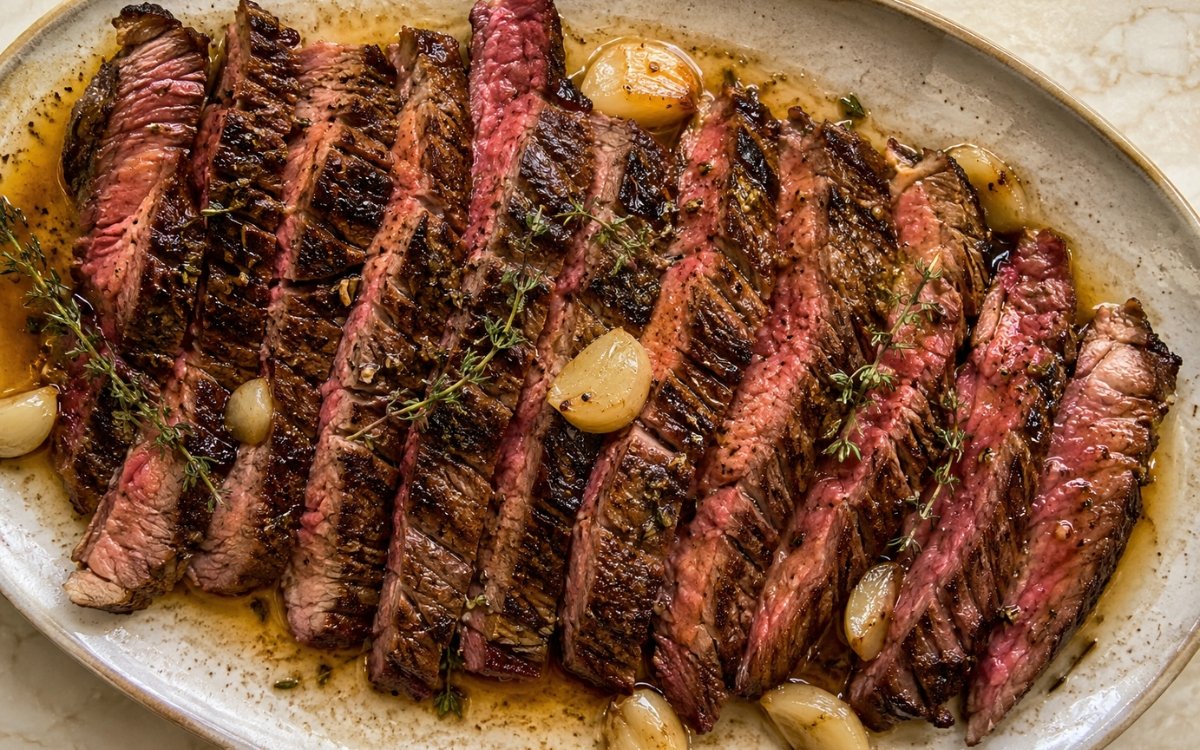
Identify the grain direction of the skirt steak before slicing — the visible parallel lines of muscle fibres running along the length of the cut. Skirt steak has a more pronounced, clearly visible grain than many other cuts, which makes this identification straightforward. Slice firmly and confidently against the grain — perpendicular to the fibre direction — into strips approximately 5–7mm thick. Against-the-grain slicing is non-negotiable for skirt steak: it shortens the individual muscle fibres in each slice, which is what produces tender, pleasant strips rather than the long, chewy, fibrous mouthfuls that result from cutting with the grain. Arrange the sliced steak on a serving platter and spoon the reserved pan juices, butter, and smashed garlic over the top. Serve immediately.
*Notes :
- Skirt steak comes in two varieties — outside skirt and inside skirt — and the distinction matters. Outside skirt is thicker, more uniform in width, and has slightly more fat marbling that makes it more flavorful and more forgiving to cook. It is the version served in steakhouses and is the preferred choice for this recipe. Inside skirt is thinner, wider, and more variable in thickness, which makes it cook unevenly and more prone to overcooking in spots. If your butcher or supermarket has a choice, specify outside skirt.
- The smashed garlic technique deserves explanation. Laying the flat side of a chef’s knife over a garlic clove and pressing firmly with the heel of your hand crushes the clove open without mincing it. This releases aromatic compounds and exposes surface area for flavor infusion into the butter without producing fine garlic pieces that would burn immediately in the screaming-hot pan. Smashed garlic infuses without scorching — the correct technique for a butter-basting application.
- Skirt steak should only ever be served at medium-rare to medium. Beyond medium, the relatively lean muscle fibres tighten and compress, producing dry, tough meat that no amount of slicing technique can compensate for. If your household requires well-done steak, a different, fattier cut such as ribeye is a better choice — its higher fat content protects it from drying out at higher temperatures in a way that skirt steak cannot.
Why This Recipe Works
This recipe works because it sequences the three decisions that most determine the quality of a pan-seared steak correctly: the temper (even cooking), the screaming-hot dry surface (proper crust formation), and the butter baste (flavor development and surface protection on the second side). Each step addresses a specific failure mode of home steak cooking. Together they produce a steak with the edge-to-edge pink interior, deeply caramelised crust, and rich herb-butter finish that defines the best restaurant steak — and skirt steak’s short cook time means the margin for error is even smaller than with thicker cuts, making technique even more important.
Ingredient Breakdown
Skirt Steak
An intensely flavoured, relatively lean cut from the plate section with pronounced grain and rapid cooking time — at its best at medium-rare, never beyond medium.
Cast Iron Skillet
The pan that retains heat through the temperature shock of cold meat — essential for maintaining searing temperatures throughout the cook.
Olive Oil
The initial searing fat — high smoke point relative to butter, which would burn during the initial 3-minute sear at maximum heat.
Unsalted Butter
Added only on the flip for basting — its milk solids contribute flavor and aroma while the fat carries the garlic and thyme across the steak’s surface.
Smashed Garlic
Releases aromatics into the butter without producing fine pieces that would burn — the correct garlic treatment for a basting application.
Fresh Thyme
Contributes earthy, slightly floral aromatic notes that infuse the butter and transfer to the steak during basting.
Smoked Paprika
Adds subtle smokiness and deepens the crust’s color — bridges the seasoning to the char created by the sear.
Flavor Structure Explained
This steak follows a layered balance model:
- Caramelized crust (high-heat sear)
- Juicy interior (beef)
- Aromatic fat layer (butter, garlic, herbs)
- Smoky-spiced depth (paprika, Maillard reaction)
- Rich cohesive finish (butter baste)
The crust defines the first impact — deeply caramelised, intensely savory, with slight bitterness and smoky complexity from high-heat searing and spices. The interior provides contrast, delivering clean, rich, juicy beef flavor that remains tender and balanced. The butter baste overlays both layers, adding a film of richness infused with garlic and herbs that enhances aroma and mouthfeel. Smoky and spiced notes deepen the crust’s complexity, while the fat unifies everything into a cohesive whole. The interplay between crust, interior, and butter is what gives the steak its full, satisfying character.
Common Mistakes to Avoid
- Skipping the Temper – A cold steak in a hot pan overcooks at the edges before the centre reaches temperature. The 30-minute temper is the foundation of even cooking.
- Cooking on a Wet Surface – Any moisture on the steak’s exterior prevents browning. Pat completely dry immediately before seasoning.
- Under-heating the Pan – If the pan is not smoking before the steak goes in, the steak steams rather than sears. Three full minutes of preheating at maximum heat is the minimum.
- Moving the Steak Before the Crust Sets – The crust releases naturally when ready. Moving it before then tears the exterior. Leave it alone.
- Cooking Beyond Medium – Skirt steak becomes dry and tough past medium. Use a thermometer and pull at 54°C.
- Cutting With the Grain – The most common serving mistake. Identify the grain direction before making a single cut and slice strictly perpendicular to it.
Variations
Chimichurri Finish
Replace the butter baste with a generous spoonful of fresh chimichurri spooned over the resting steak — the herb oil penetrates the hot meat in the same way as the butter baste and produces a completely different, brighter, more acidic flavor profile.
Chili-Spiced Version
Add 3g of cayenne pepper and 3g of ground coriander to the seasoning blend for a spicier, more assertive crust with a building heat.
Asian-Inspired
Marinate the steak for 30 minutes in soy sauce, sesame oil, grated ginger, and garlic before patting completely dry and applying the dry seasoning for a hybrid flavor profile excellent sliced over rice bowls.
Steak Salad
Slice the rested steak and serve over a composed salad of arugula, cherry tomatoes, shaved Parmesan, and a simple red wine vinaigrette for a complete, elegant meal.
Storage & Make-Ahead
Cooked steak can be refrigerated in an airtight container for up to 3 days. Skirt steak is especially good served cold, thinly sliced over salads or grain bowls, and does not need to be reheated. If you prefer to reheat it, warm it briefly in a hot, dry pan for 60 to 90 seconds per side, just until it reaches serving temperature without continuing to cook inside.
The dry seasoning can be applied to the uncooked steak up to 24 hours in advance. Refrigerate the steak uncovered on a rack to extend the dry-brining effect and help develop an even better crust. Then remove it from the refrigerator 30 minutes before cooking, as usual.
Any remaining butter, garlic, and thyme from the pan can be spooned over the resting steak. You can also refrigerate these pan juices separately and use them within 24 hours as a finishing sauce for pasta, vegetables, or bread.
Frequently Asked Questions
What is the difference between inside and outside skirt steak?
Outside skirt is thicker, more uniform, and more flavorful — it is what steakhouses serve and the preferred choice for this recipe. Inside skirt is thinner, wider, and more variable in thickness. Specify outside skirt to your butcher if possible.
Can I use a stainless steel pan instead of cast iron?
A heavy stainless steel pan works, though it retains less heat than cast iron and is more likely to cool down when the cold steak is added. If using stainless, preheat for an extra minute and ensure the pan is smoking before adding the oil.
How do I know where the grain is?
The grain on skirt steak is clearly visible as parallel lines running along the length of the cut. Hold the steak up to the light if needed — the lines become very clear. Cut perpendicular to those lines.
What should I serve with this?
For a natural pairing: Crispy Parmesan Smashed Potatoes make an exceptional side — their crispy, cheesy exterior complements the steak’s char.Classic Chimichurri Sauce spooned over the sliced steak is the defining accompaniment for skirt steak specifically. For a lighter complete plate, serve alongside the Classic Red Wine Vinaigrette tossed with arugula and cherry tomatoes.
Can I cook this on an outdoor grill instead?
Yes — grill over the hottest zone for 3–4 minutes per side. The technique is identical: screaming hot grate, do not move, flip once. The butter baste is more difficult to execute on an open grill but can be done in a small cast iron pan on the side of the grill simultaneously.
Nutrition Facts
( per serving )
Calories
~420 kcal
Protein
48 g
Fat
24 g
Carbs
1 g
Calories
~420 kcal
Protein
48 g
Fat
24 g
Carbs
1 g
Related Recipes
Related Recipes

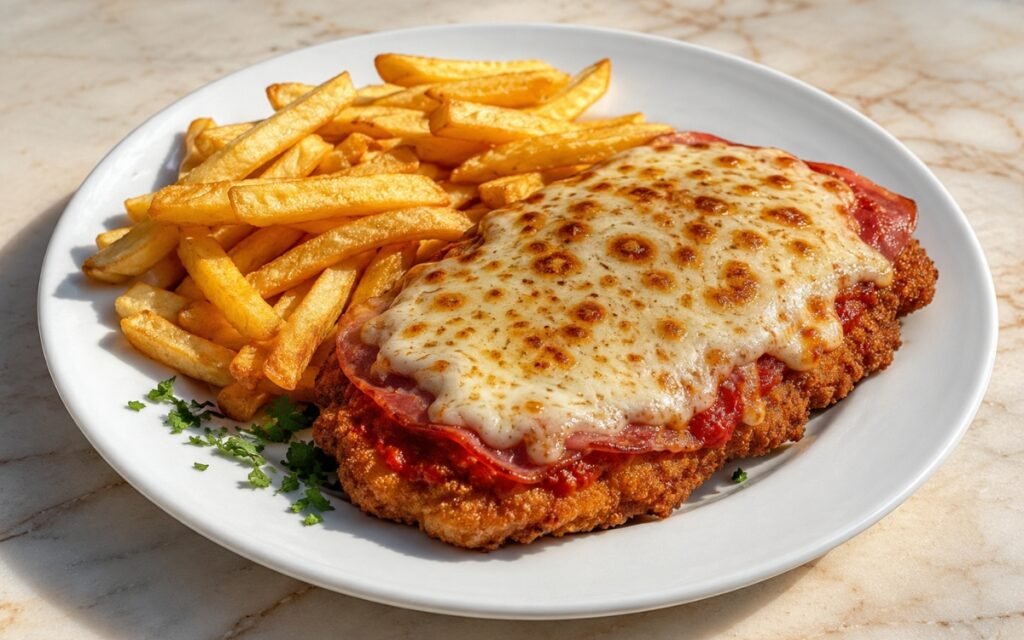
Argentine Milanesa Napolitana
Breaded, fried chicken cutlets topped with tomato sauce, smoked ham, and melted mozzarella, served with crispy double-fried fries.
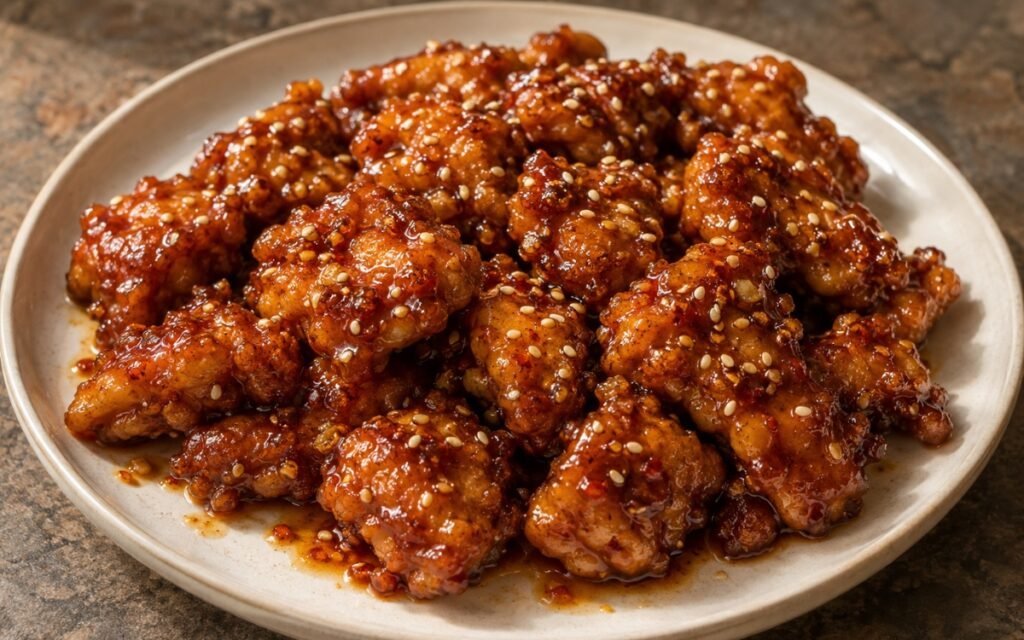
Crispy Honey Garlic Chicken
Chicken coated in cornstarch, partially seared for crust, finished in a honey soy garlic glaze that clings. Crisp and sticky.
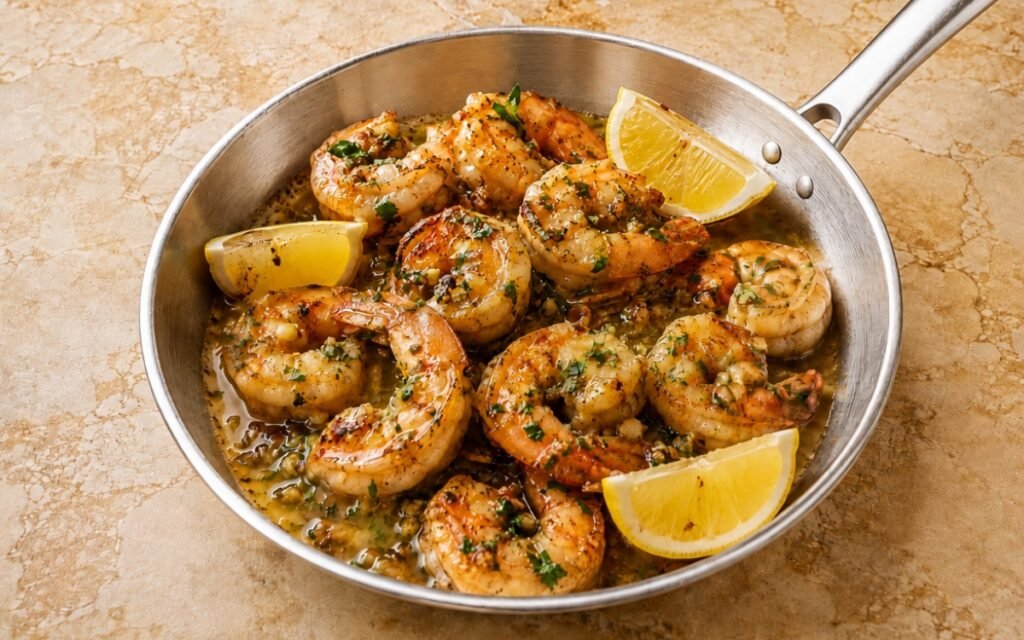
Garlic Butter Shrimp Skillet
Hard-seared shrimp finished gently in a glossy garlic butter sauce with lemon, parsley, and chili flakes.
You might also like
You might also like
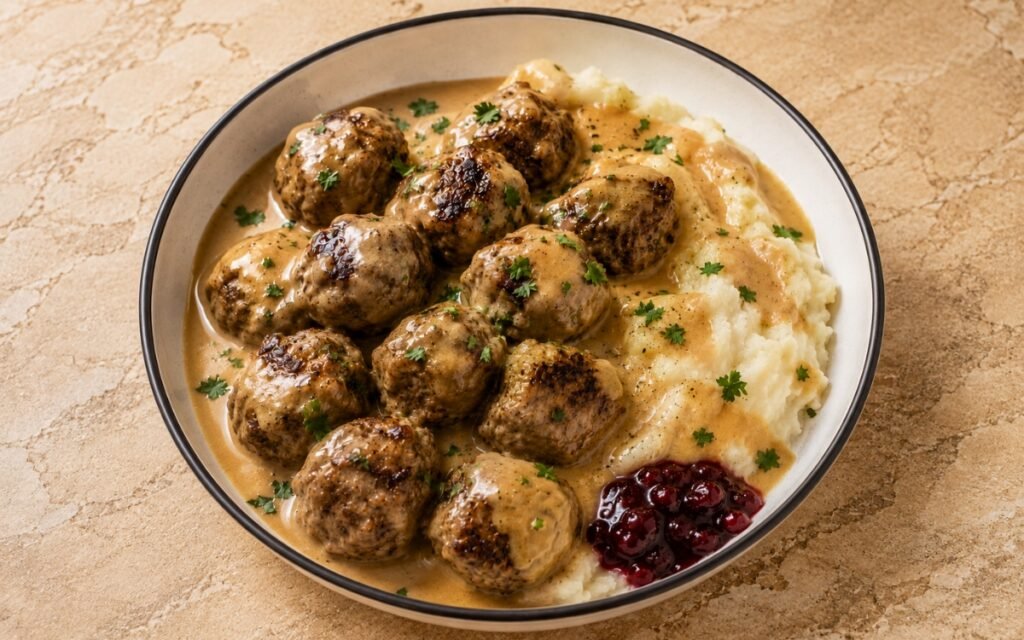
Swedish Meatballs
Tender panade-enriched beef and pork meatballs, gently spiced with allspice and nutmeg, in a creamy brown gravy over mashed potatoes.
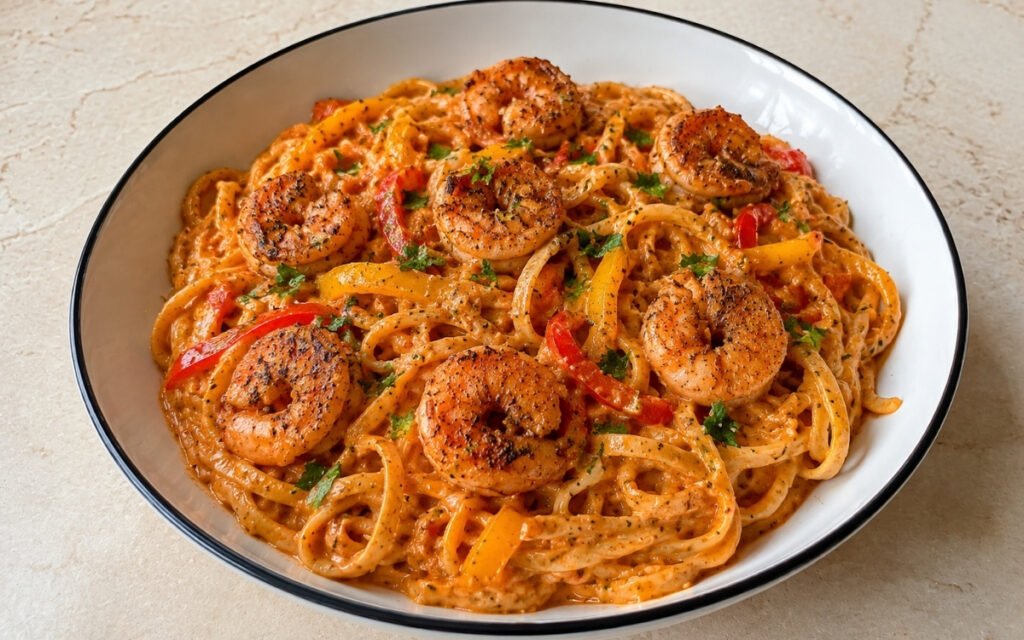
Creamy Cajun Shrimp Pasta
Cajun-seared shrimp and charred peppers in a cream cheese-stabilised Parmesan sauce — bold and spiced in 35 minutes.
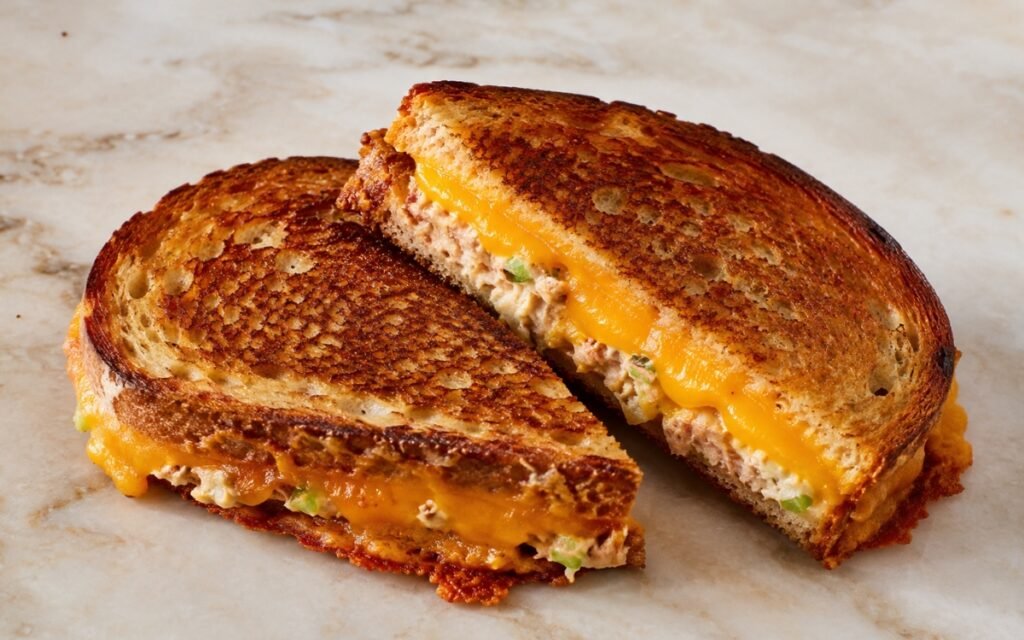
Tuna Melt
Creamy tuna salad and sharp melted cheddar griddled between buttery sourdough until deeply golden and crisp.
Pan-Seared Skirt Steak
Ingredients
Method
- Remove the skirt steak from the refrigerator and set it on a clean cutting board or plate at room temperature for a full 30 minutes before cooking. This is not a minor courtesy step — it is the preparation decision that most directly determines whether the steak cooks evenly from edge to centre. A cold steak straight from the refrigerator has a dramatic temperature gradient between its cold interior and its room-temperature surface. When that cold interior hits a hot pan, the exterior cooks and browns rapidly while the centre remains cold and requires significantly more cooking time to reach the target temperature. The result is overcooked, grey outer layers flanking a barely-warm centre — the opposite of the edge-to-edge pink medium-rare that makes skirt steak worth eating. Thirty minutes at room temperature narrows this gradient substantially. While the steak tempers, pat every surface completely dry with paper towels. Dry steak is essential for proper browning — moisture on the surface creates steam when it contacts the hot pan, and steam prevents the Maillard reaction browning that produces the caramelised crust this recipe depends on.
- In a small bowl, combine the fine sea salt, freshly ground black pepper, garlic powder, and smoked paprika. Mix briefly to distribute the spices evenly. Season the dried steak generously on both sides and all edges, pressing the seasoning mixture firmly into the surface with your palm and fingers rather than simply sprinkling and hoping it adheres. The pressing motion ensures the spices make direct contact with the meat’s surface rather than sitting loose and ready to fall off when the steak hits the hot pan. The smoked paprika in this blend serves two purposes — it adds a subtle smokiness that bridges the seasoning to the char produced by the sear, and it deepens the visual color of the crust, producing the dark, intensely colored exterior that signals properly developed flavor.
- Place a large cast iron skillet over high heat and allow it to preheat for a full 3 minutes until it begins to smoke lightly. Cast iron is specified rather than stainless steel or non-stick for specific reasons: its density retains heat extremely well and does not drop temperature when cold meat is added — a temperature drop immediately after the steak goes in is what causes steaming rather than searing. Cast iron’s naturally rough surface also promotes better crust development than a smooth pan. If your skillet is not smoking when you add the oil, it is not hot enough — continue heating. Add the 30ml of olive oil and swirl immediately to coat the surface. The oil should shimmer and begin to smoke at the edges within seconds of being added if the pan is correctly preheated.
- Lay the seasoned steak flat in the pan — if the steak is too long to lie flat without folding or curling, cut it into 2–3 sections before cooking. A folded or arched steak makes uneven contact with the pan surface and produces uneven cooking and crust development across the cut. Once placed, do not move the steak. Do not press it. Do not check underneath it prematurely. Leave it completely undisturbed for 3 minutes. The steak will initially stick to the pan — this is normal and expected. A properly formed Maillard crust will release naturally from the cast iron surface when it is ready to be flipped. If the steak resists when you attempt to lift it, it needs another 30–60 seconds. Forcing it before the crust has fully set tears the exterior and leaves it behind on the pan.
- After 3 minutes, the bottom should show a dark, caramelised crust with visible deep-brown color across the entire surface. Flip the steak to the second side. Immediately add the 30g of unsalted butter, the 4 smashed garlic cloves, and the 4 fresh thyme sprigs to the pan alongside the steak. The butter will foam immediately on contact with the hot pan — this foaming is the water in the butter evaporating. Tilt the pan toward you at a slight angle and use a large spoon to scoop the foaming, thyme-and-garlic-infused butter continuously over the top surface of the steak. This basting technique — known as arrosage in French cuisine — does three things: it transfers flavor from the butter, garlic, and thyme onto the steak’s surface; it moderates the top surface temperature slightly, preventing the exterior from drying out while the second side sears; and it builds the rich, glossy appearance characteristic of a properly finished restaurant steak. Continue basting continuously for 2–3 minutes.
- Monitor the internal temperature using an instant-read thermometer inserted into the thickest part of the steak. Remove the steak from the pan when the temperature reads 54°C (130°F) for medium-rare — carry-over cooking during the rest will bring it to 57–60°C, which is the ideal medium-rare range. Skirt steak is a thin cut that moves through temperature zones extremely quickly; the difference between medium-rare and medium can be as little as 60 seconds of additional cooking. An instant-read thermometer is not optional for precision — it is the only reliable method for hitting the target consistently. Transfer the steak to a cutting board and rest for 5 minutes. During this rest, spoon any remaining pan juices, garlic, and thyme from the skillet over the resting steak. The rest allows the muscle fibres that contracted under high heat to relax and reabsorb the juices driven toward the centre during cooking, redistributing moisture evenly throughout.
- Identify the grain direction of the skirt steak before slicing — the visible parallel lines of muscle fibres running along the length of the cut. Skirt steak has a more pronounced, clearly visible grain than many other cuts, which makes this identification straightforward. Slice firmly and confidently against the grain — perpendicular to the fibre direction — into strips approximately 5–7mm thick. Against-the-grain slicing is non-negotiable for skirt steak: it shortens the individual muscle fibres in each slice, which is what produces tender, pleasant strips rather than the long, chewy, fibrous mouthfuls that result from cutting with the grain. Arrange the sliced steak on a serving platter and spoon the reserved pan juices, butter, and smashed garlic over the top. Serve immediately.