
Italian Puttanesca Pasta
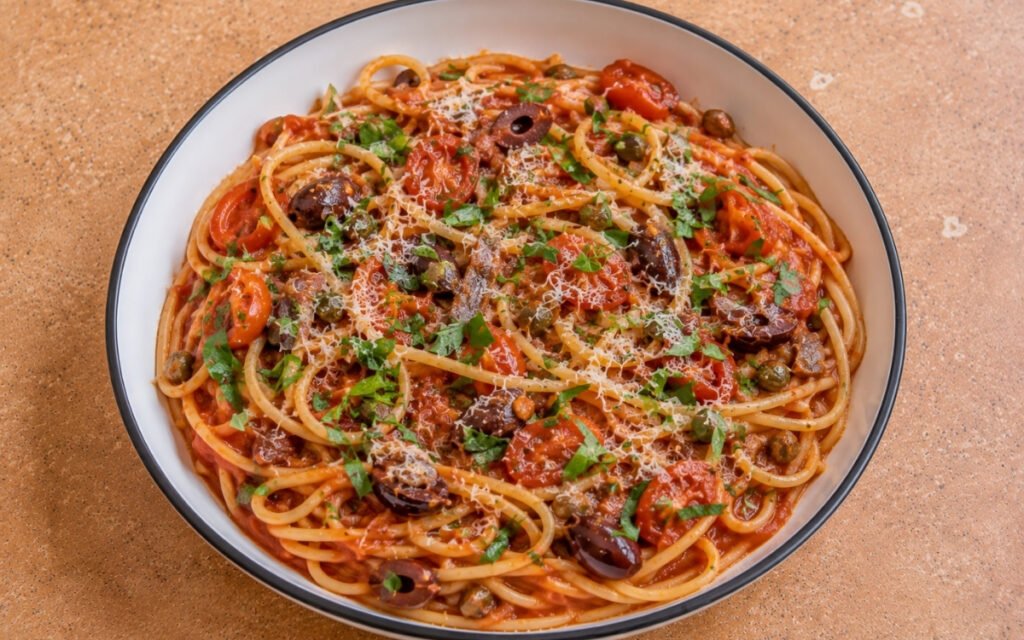
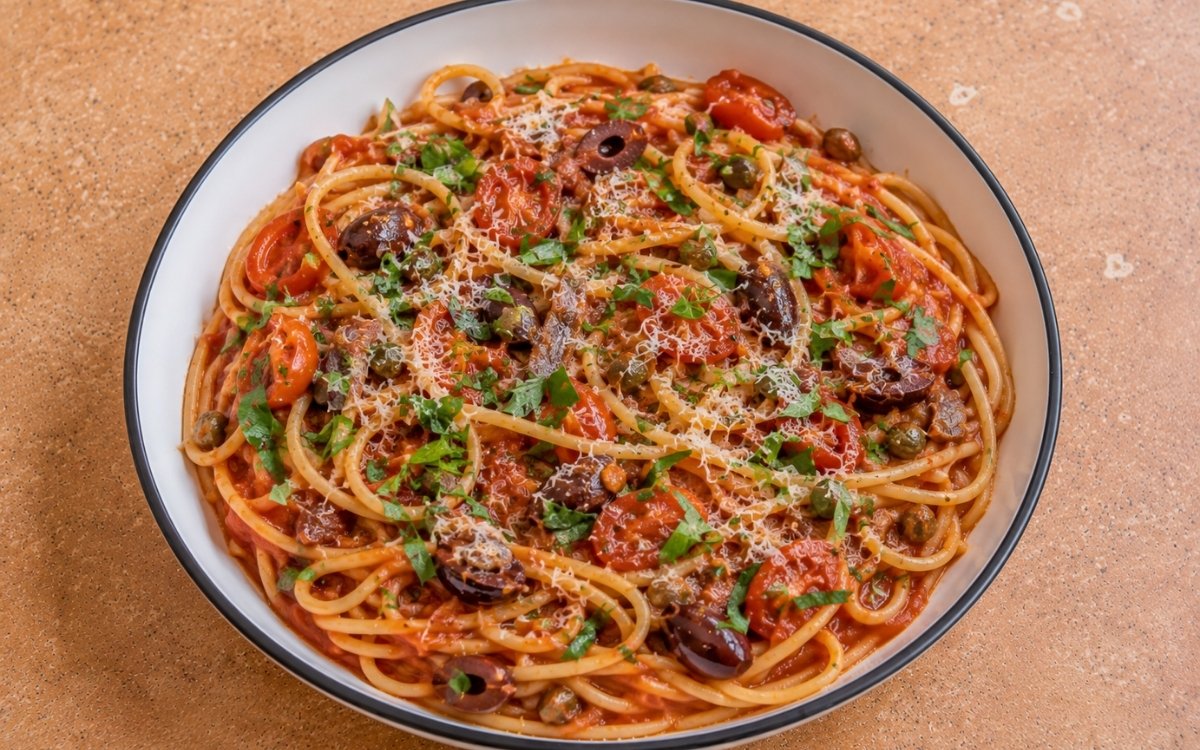
Puttanesca is the sauce that makes itself feel urgent — anchovies dissolved completely into olive oil to become the invisible umami foundation, garlic and chili bloomed in the same oil, San Marzano tomatoes reduced into a concentrated base, and then the three defining ingredients of the dish added together: Kalamata olives, capers, and cherry tomatoes. The result is intensely savoury, briny, slightly spicy, and deeply flavoured in a way that takes 25 minutes and uses pantry staples. There is no cream, no cheese in the sauce, and no technique more complex than tossing pasta in a pan — just the specific combination of olive, caper, anchovy, and tomato that makes puttanesca one of the most immediately recognisable and most satisfying pasta sauces in Italian cooking.
Prep Time : 15 min
Cook Time : 25 min
Servings : 4
15 min
25 min
4
Ingredients
For the Pasta
• 400g spaghetti or linguine — this one on Amazon
• Coarse sea salt, for the pasta water
For the Puttanesca Sauce
• 80ml extra virgin olive oil
• 8 anchovy fillets in oil (about 35g), drained and chopped — this one on Amazon
• 6 garlic cloves, approximately 30g, thinly sliced
• 1g red pepper flakes, about ½ tsp
• 800g canned San Marzano tomatoes, hand-crushed — this one on Amazon
• 400g cherry tomatoes, halved
• 120g Kalamata olives, pitted and halved
• 60g capers, drained and rinsed — this one on Amazon
• 15g fresh oregano leaves, roughly chopped
• 45g fresh flat-leaf parsley, chopped
• Freshly ground black pepper to taste
• 40g Parmigiano-Reggiano, finely grated (for finishing) — this one on Amazon
This post may contain affiliate links. As an Amazon Associate I earn from qualifying purchases, at no additional cost to you.
Directions
- Bring the Pasta Water to a Boil
Bring a large pot of water to a full rolling boil. Add enough coarse sea salt so the water tastes assertively of the sea — approximately 2 tablespoons per 4 litres. The pasta water’s seasoning is the only salt applied to the pasta itself and it must be present throughout every strand from the inside out — puttanesca’s sauce is already very intensely flavoured from the anchovies, olives, and capers, which means under-seasoned pasta will create an imbalance where the sauce is overpowering and the pasta beneath it is bland. Hold at the boil while preparing the sauce. - Dissolve the Anchovies into the Oil
In a large, deep sauté pan, heat the 80ml of extra-virgin olive oil over medium heat until it shimmers. Add the roughly chopped anchovy fillets and cook for 2–3 minutes, stirring and pressing continuously with a wooden spoon to break them down. The anchovies dissolve completely and visibly into the oil during this time — within 2 minutes there should be no intact fillet pieces remaining, only a slightly thickened, amber-tinged, intensely aromatic oil. This dissolution is the foundational step of the entire recipe and the reason puttanesca is not a fishy pasta despite its anchovy content. When anchovies are cooked in olive oil at medium heat, their proteins break down and their glutamate-rich flavour compounds distribute uniformly through the oil — producing an oil with a deep, savoury, umami-rich base character that is not identifiable as anchovy in the finished dish. People who are averse to the taste of anchovies consistently cannot detect them in correctly made puttanesca because the fillets have ceased to exist as a distinct ingredient. What they have become is the savory depth that makes puttanesca taste more complex and more satisfying than a plain tomato sauce. At no point in the finished dish does any piece of anchovy remain. - Add Garlic and Chili
Add the thinly sliced garlic and red pepper flakes to the anchovy-infused oil simultaneously. Cook for 60–90 seconds, stirring continuously. The anchovy oil is already richly aromatic — adding the garlic to this flavoured medium rather than plain oil means the garlic blooms its compounds into an oil that is already carrying the anchovy’s savoury depth, producing a more layered, more complex aromatic base than garlic in plain oil would produce in the same time. The red pepper flakes add their fat-soluble capsaicin to the oil during these 60–90 seconds — as in every recipe that begins with chili in oil, the fat-soluble extraction during this brief cooking period distributes the heat evenly through the sauce rather than concentrating it in individual flakes encountered during eating. The garlic should reach pale golden and the oil should be intensely fragrant — deeply savoury, garlicky, and warmly spiced simultaneously. - Build the San Marzano Tomato Base
Add the 800g of hand-crushed San Marzano tomatoes with all their juices to the anchovy-garlic oil. Hand-crushing — squeezing each whole tomato directly over the pan until it breaks open — produces a varied texture with distinct tomato pieces alongside the sauce base, more visually interesting and more texturally layered than pre-crushed tomatoes. Increase the heat to medium-high and bring to a vigorous simmer. Cook for 8–10 minutes, stirring occasionally, until the sauce has thickened slightly, the raw tomato character has mellowed, and the oil from the anchovy-garlic base has integrated into the tomato rather than floating separately. At this stage the sauce should taste concentrated, deeply savoury, slightly spiced, and rich — the raw tomato sharpness of the uncooked canned tomatoes replaced by a rounder, deeper, more developed flavour that 8–10 minutes of vigorous simmering produces. - Add Olives, Capers, and Cherry Tomatoes
Add the 400g of halved cherry tomatoes, 120g of halved Kalamata olives, and 60g of drained and rinsed capers to the sauce simultaneously. These three ingredients are the defining components that make puttanesca specifically puttanesca rather than a generic tomato sauce, and their addition together rather than sequentially is intentional — they each contribute to the same briny, acidic, intensely flavoured character and should develop together during the subsequent simmer. Simmer for 5–6 minutes, stirring occasionally. During this time the cherry tomatoes break down partially at their edges, releasing their juice into the sauce and adding a fresher, brighter tomato note on top of the concentrated San Marzano base — providing a two-layer tomato character. The olives soften slightly and release some of their brine into the surrounding sauce. The capers, rinsed of their strongest brine before adding, contribute a more measured, nutty, slightly floral flavour rather than a harsh pickled character. Add the roughly chopped fresh oregano in the final minute of this simmer — oregano’s aromatic compounds are relatively stable at heat compared to basil but still most vivid when added near the end of cooking rather than from the start. - Cook the Pasta and Finish in the Sauce
While the sauce has been simmering, cook the pasta in the boiling salted water for 2 minutes less than the package directions — it will finish cooking in the sauce. When the pasta is ready, use tongs to transfer it directly from the boiling water to the sauce, bringing approximately 120ml of starchy pasta water with the transfer. Increase the heat to high. Toss vigorously with the tongs for 2–3 minutes, turning the pasta continuously through the sauce. The pasta finishes cooking during this high-heat tossing period, absorbing the sauce’s intense briny, savoury, spiced character directly into the pasta’s structure. The pasta’s surface starch releases into the sauce during the vigorous tossing and combines with the olive oil and tomato’s water content to produce the lightly emulsified, coating consistency that distinguishes pasta tossed in the sauce from pasta simply plated with sauce poured over it. The high heat during this step is important for puttanesca specifically — it reduces and concentrates the sauce slightly around the pasta in a way that the lower-heat finishing step of cream-based dishes does not, producing a more intensely flavoured, more glossy coating. - Finish with Herbs and Parmigiano
Remove the pan from the heat. Add three-quarters of the chopped parsley and toss briefly to distribute — the parsley wilts very slightly in the residual heat and releases its fresh, clean aromatic compounds into the sauce. Taste and assess — the seasoning of puttanesca requires careful evaluation because multiple very salty ingredients are present. The capers, olives, and anchovies all contribute saltiness throughout the dish; additional salt is almost never needed. Evaluate instead for heat level (can add more chili), acidity (a small squeeze of lemon juice brightens if needed), and pepper. Divide among four warm shallow bowls immediately. Scatter the reserved parsley over each bowl. Scatter the 40g of finely grated Parmigiano-Reggiano over each portion — traditionally puttanesca is served without cheese in Naples and Rome, where the convention of no cheese with intensely brined preparations holds. In this recipe a small amount of Parmigiano at serving adds a savoury, slightly creamy finishing note that balances the sauce’s intensity without dominating it. Serve immediately.
*Notes :
- Puttanesca’s origin story — that it was invented by Italian women of the night who needed a quick, pantry-based dinner between clients — is the most famous culinary mythology in Italian pasta history and almost certainly apocryphal. The most likely actual origin is mid-20th century Naples, where the dish appeared in the 1950s as a quick, bold, pantry-based sauce using the preserved ingredients that coastal Southern Italian kitchens always had available: canned tomatoes, olive oil, anchovies, olives, and capers. The name puttanesca — from puttana, Italian for a woman of loose virtue — may simply refer to the sauce’s bold, assertive, unapologetic character rather than any specific social history. It has been a staple of Neapolitan cooking since its first appearance and one of the most reproduced Italian pasta dishes internationally.
- The anchovy question — whether to include them in a version served to people who believe they do not like anchovies — has a clear answer. Dissolved anchovies are not detectable as anchovy by any palate in a correctly made puttanesca. They are a flavour compound delivery system, not an ingredient with its own presence in the finished dish. The umami depth of puttanesca made without anchovies is noticeably flatter and less complex than the same sauce with them. If anchovy aversion is a concern, simply do not mention them — the sauce will be eaten and enjoyed by every person who believes they dislike anchovies.
- The capers should be rinsed before use regardless of whether they are packed in brine or salt. Brine-packed capers retain intense salt and vinegar from the pickling liquid that, without rinsing, can make the sauce aggressively sharp. Salt-packed capers — available at Italian specialty stores and generally considered higher quality — require a more thorough rinse and a brief soak to remove the salt curing before use.
Why This Recipe Works
This recipe works because it builds puttanesca’s flavour in layers rather than combining all ingredients simultaneously. The anchovy dissolves into the oil first, creating the flavoured fat base that every subsequent ingredient cooks in. The garlic and chili bloom in the anchovy oil. The San Marzano tomatoes reduce in the anchovy-garlic oil, absorbing and being absorbed by the existing flavour compounds.
The olives, capers, and cherry tomatoes add their specific saline, acidic, fresh contributions to the already-developed base. The pasta finishes in the sauce at high heat, absorbing the entire flavour profile. Every step builds on the previous one toward the same intensely flavoured, coherent outcome.
Ingredient Breakdown
Anchovies (Dissolved into Oil)
The invisible umami foundation — fully dissolved, undetectable as anchovy, providing the deep savoury base that makes puttanesca more complex than any tomato sauce without them.
San Marzano Tomatoes (800g, Hand-Crushed)
The sauce body — sweet, low-acid, concentrated during simmering into the primary flavour foundation.
Cherry Tomatoes (400g)
The fresh tomato layer added on top of the concentrated base — partial breakdown during simmering provides a brighter, fresher tomato note that gives the sauce a two-dimensional tomato character.
Kalamata Olives
The defining savoury-briny element — fruity, slightly bitter, and specifically Mediterranean in character.
Capers
The sharp, tangy, slightly floral secondary brine note — rinsed before use for controlled rather than aggressive saltiness.
Red Pepper Flakes (Bloomed in Anchovy Oil)
Pervasive background heat distributed through the oil — not a prominent spice note but a warmth that runs through every element of the sauce.
Fresh Oregano
The specific Mediterranean herb that belongs in puttanesca — more heat-stable than basil, with an earthy, slightly pungent aromatic character specifically suited to the sauce’s bold flavour profile.
Fresh Parsley
The finishing herb brightness — added at the end for clean, green aromatic freshness that lifts the intensity of all other flavours.
Flavor Structure Explained
This pasta follows a layered balance model:
- Savory-briny core (anchovies, olives, capers, garlic)
- Sweet-acidic body (tomato)
- Fresh herbal contrast (cherry tomatoes, parsley, oregano)
- Background heat (chili)
- Bold integrated intensity (all layers combined)
Anchovies, olives, capers, and garlic define the core with concentrated, briny-savory depth that drives the entire dish. Tomato builds the body, adding sweetness and acidity that prevent the brine from becoming harsh or one-dimensional. Fresh elements lift the profile, introducing brightness and herbal freshness that keep the sauce dynamic. Chili runs underneath as a steady warmth, enhancing without dominating. The structure is built on intensity controlled by contrast — bold, direct, and unmistakably Mediterranean.
Common Mistakes to Avoid
- Not Fully Dissolving the Anchovies – Anchovy pieces remaining intact in the finished sauce provide direct anchovy flavour that many people find off-putting. Stir and press continuously for the full 2–3 minutes until no pieces remain.
- Over-salting – The anchovies, olives, capers, and pasta water together provide significant salt. Always taste before adding any additional salt — the dish almost never needs it.
- Not Rinsing the Capers – Unreinforced brine-packed capers can make the sauce aggressively sharp. Always rinse before using.
- Adding All Tomatoes at Once – The two-tomato approach — San Marzano as the base that simmers for 8–10 minutes, cherry tomatoes added for the final 5–6 minutes — produces a more complex, two-dimensional tomato character than any single tomato type would. Follow the staging.
- Not Finishing the Pasta in the Sauce – Puttanesca is intensely flavoured — pasta finished separately and then plated alongside it misses the absorption that makes every strand taste of the sauce rather than simply being coated. Always finish in the sauce at high heat.
- Using Pre-Pitted Olives in Brine – Pre-pitted Kalamata olives packed in brine are less flavourful and have a slightly rubbery texture compared to olives packed in oil or bought from a deli counter. Source the best Kalamata olives available.
Variations
Without Anchovies
Add 15ml of soy sauce and 1 tablespoon of tomato paste to the oil instead — neither replicates anchovy’s specific flavour compounds but together they provide some of the umami depth the anchovies would have contributed. The sauce is a different, simpler preparation rather than equivalent.
Extra Olive Version
Increase the olives to 200g and add 60g of green Castelvetrano olives alongside the Kalamata for a more complex olive presence — the Castelvetrano’s milder, buttery character contrasts with the Kalamata’s more assertive brine.
Puttanesca with Tuna
Add one 150g can of good quality oil-packed tuna, drained, alongside the olives and capers. The tuna adds a protein element and a secondary savoury depth that complements the anchovy’s dissolved character — a specifically Sicilian variation.
Baked Puttanesca Pasta
After tossing the pasta in the sauce, transfer to a baking dish, scatter additional olives and cherry tomatoes over the surface, and bake at 200°C for 10 minutes until the top begins to caramelise. The baked version has a more concentrated, more intensely flavoured character than the stovetop version.
Storage & Make-Ahead
Puttanesca sauce without pasta is one of the best make-ahead sauces in this collection. It can be refrigerated for up to 5 days, and its flavor becomes deeper and more integrated over the first 24 to 48 hours as the brine from the olives and capers continues to season the tomato base. In fact, the sauce is often noticeably better on the second day. It also freezes well for up to 3 months.
Assembled pasta can be refrigerated for up to 2 days. To reheat it, warm it gently in a pan over low heat with a splash of water. The pasta will absorb some of the sauce during storage, but the reheated dish is still excellent, especially because the pasta has had time to take on more of the sauce’s full flavor.
For entertaining, the best make-ahead approach is to prepare the sauce up to 2 days in advance, refrigerate it, and then reheat it with freshly cooked pasta just before serving. In many cases, the sauce on day 2 is arguably even better than it is on the day it is made.
Frequently Asked Questions
Will people taste the anchovies?
No — dissolved anchovies are completely undetectable as a distinct ingredient in puttanesca. They become the sauce’s savoury foundation, distributing their glutamate-rich flavour compounds uniformly through the oil. The finished dish does not taste of fish or anchovy — it tastes of a bold, intensely savoury tomato sauce whose depth cannot be explained by the visible ingredients alone.
What are Kalamata olives and can I substitute them?
Kalamata olives are a specific Greek variety — dark purple, almond-shaped, packed in brine or olive oil, with a fruity, slightly smoky, intensely savoury character. They are the specific olive for puttanesca’s flavour profile. Gaeta olives — the small, wrinkled Italian black olive — are the most traditional Italian substitute with a comparable briny depth. Generic black olives from a can lack the flavour complexity and should be avoided.
Is Parmigiano traditional with puttanesca?
No — in Naples and Rome, puttanesca is traditionally served without cheese. The intensely brined, savoury sauce is considered complete without dairy addition. Including Parmigiano at serving is a non-traditional choice that many people prefer for its savoury, balancing finish — a personal decision rather than a correctness issue.
Can I make puttanesca sauce ahead?
Yes — it is one of the best make-ahead pasta sauces in the collection, improving over 24–48 hours in the refrigerator as the brine and savoury compounds continue to integrate. Make 1–2 days ahead and cook pasta fresh when ready to serve.
Why both San Marzano and cherry tomatoes?
The two-tomato approach produces a more complex, layered tomato character. San Marzano tomatoes — reduced from the beginning of cooking — provide concentrated, deep, sweet tomato body. Cherry tomatoes — added for the final 5–6 minutes — provide a fresher, brighter, slightly more acidic tomato note. Together they produce a tomato sauce with more dimension than either variety alone.
Nutrition Facts
( per serving )
Calories
~758 kcal
Protein
28 g
Fat
30 g
Carbs
94 g
Calories
~758 kcal
Protein
28 g
Fat
30 g
Carbs
94 g
Related Recipes
Related Recipes

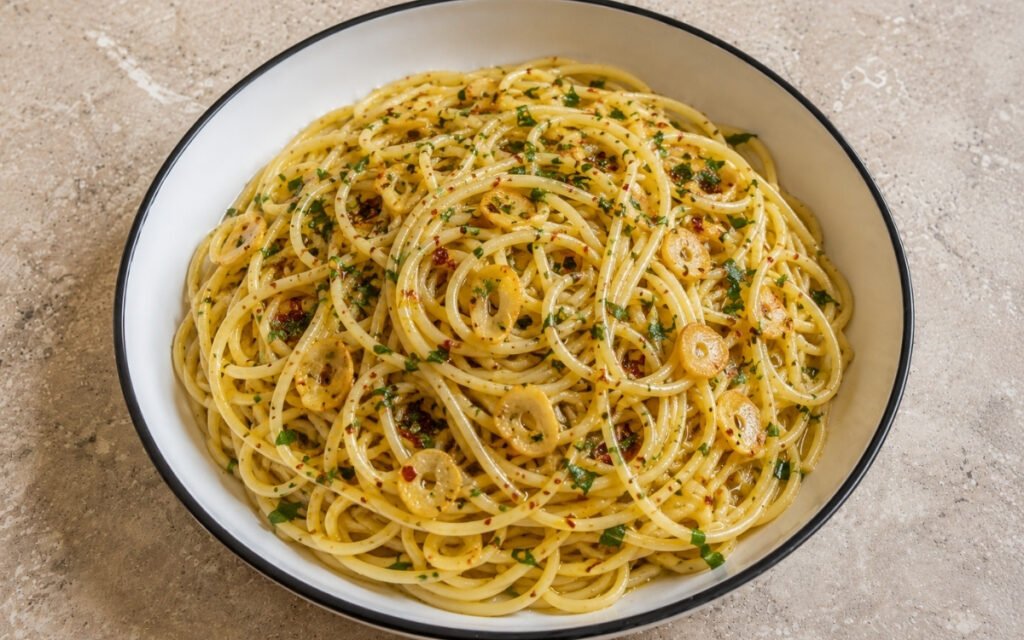
4-Ingredient Aglio e Olio Pasta
Paper-thin garlic toasted to pale gold, emulsified with pasta water — four ingredients, 20 minutes.
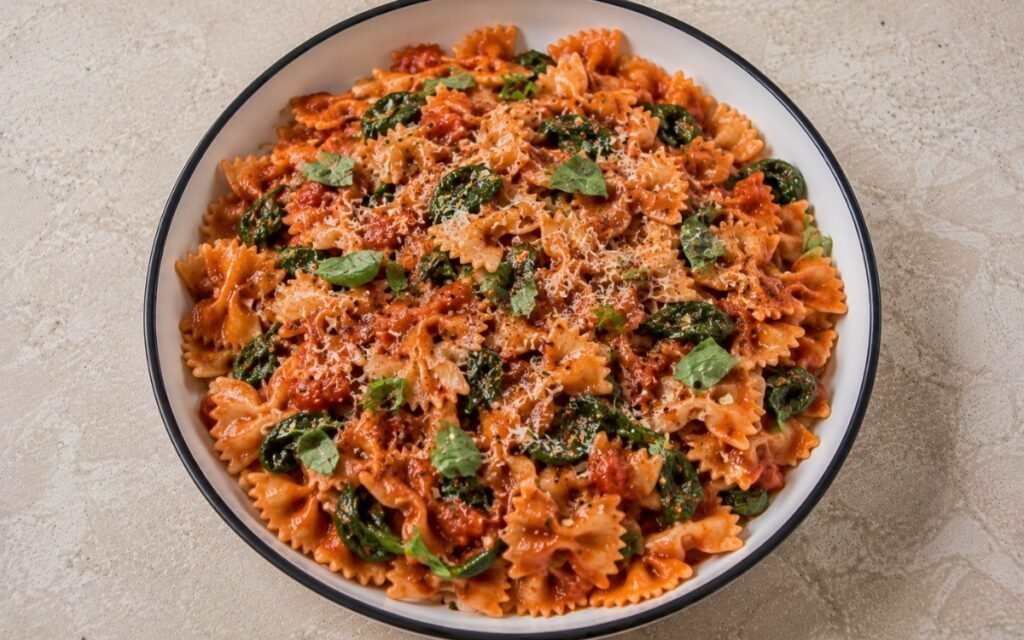
Tomato Spinach Farfalle Pasta
Tomato paste caramelised for depth, crushed tomatoes simmered glossy, spinach wilted in the last 90 seconds — farfalle finished in the sauce. 30 minutes.
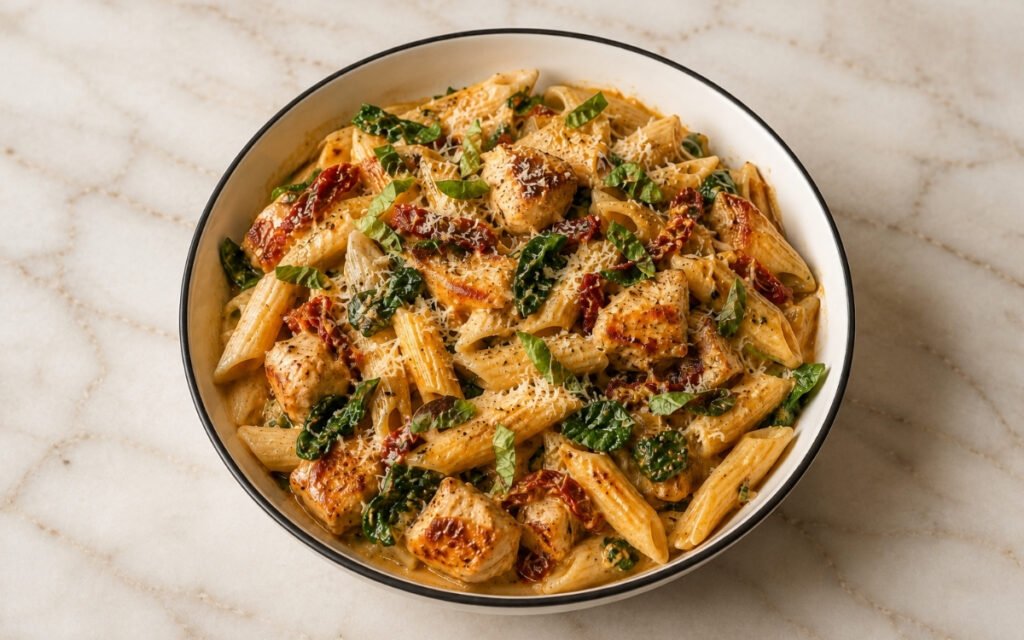
Tuscan Chicken Cream Pasta
Seared chicken, sun-dried tomatoes, spinach, and Parmigiano cream in one pan — finished with the tomato jar oil. 40 minutes.
You might also like
You might also like
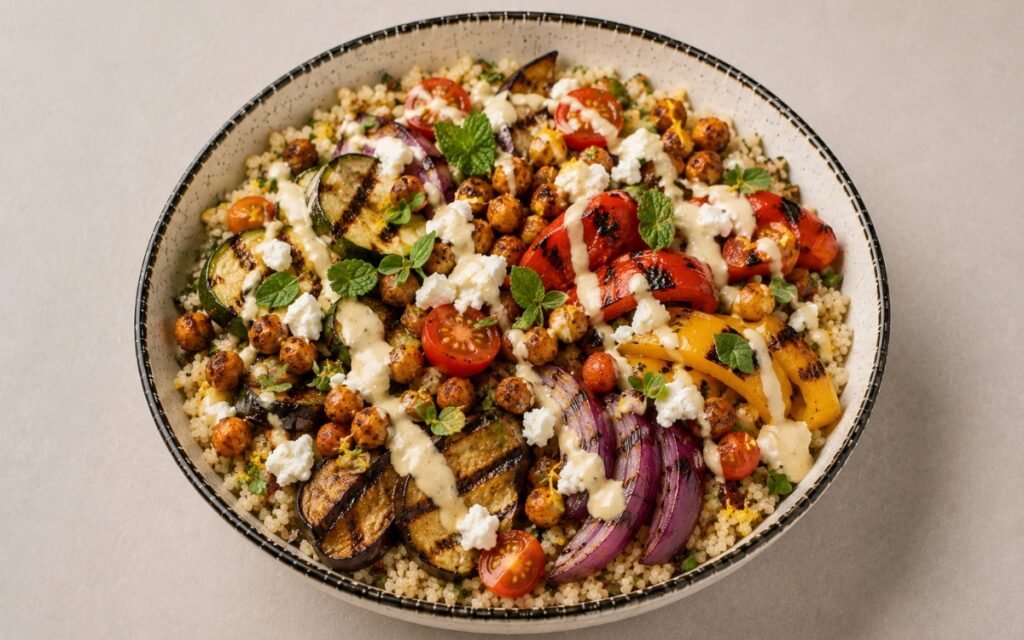
Grilled Mediterranean Veggie Bowl
Smoky grilled vegetables with lemon-herb quinoa, crispy chickpeas & creamy tahini-yogurt sauce.
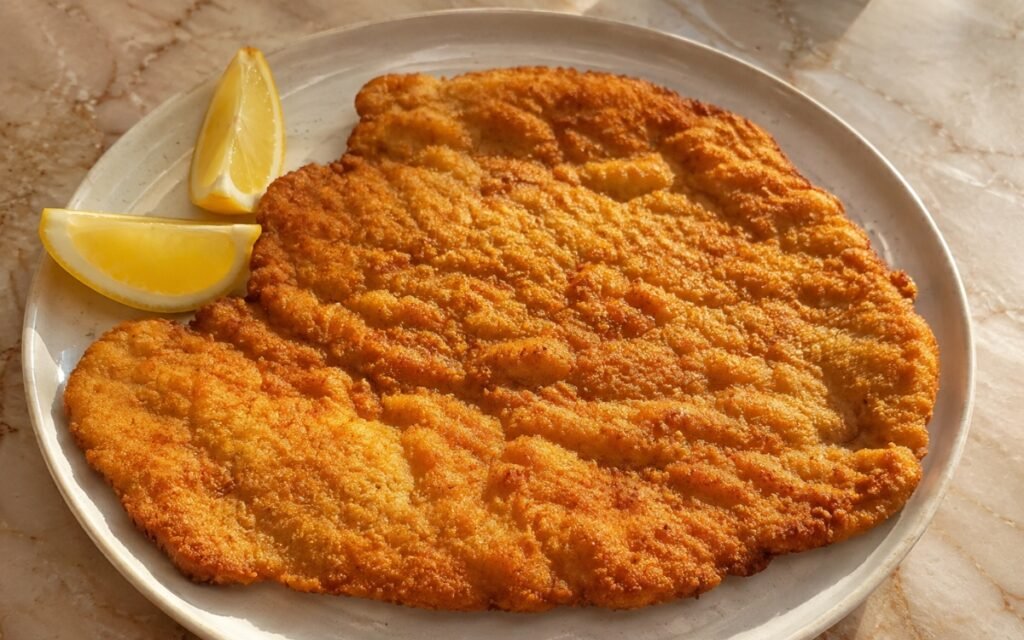
Austrian Pork Schnitzel
Pork loin pounded uniformly, breaded loosely for a wavy crust, fried in floating fat until golden — served immediately with lemon. Light and crispy.
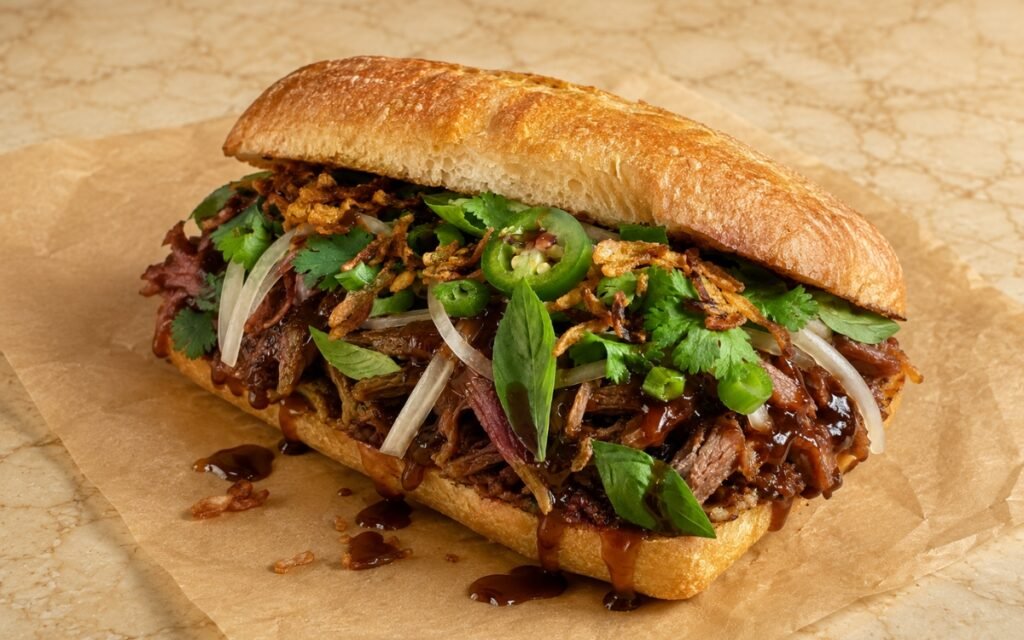
Pho Sandwich
Slow-braised beef in a fragrant, charred pho-style spice base, sliced and glazed, piled into a crusty baguette with fresh herbs and crispy shallots.
Italian Puttanesca Pasta
Ingredients
Method
- Bring a large pot of water to a full rolling boil. Add enough coarse sea salt so the water tastes assertively of the sea — approximately 2 tablespoons per 4 litres. The pasta water’s seasoning is the only salt applied to the pasta itself and it must be present throughout every strand from the inside out — puttanesca’s sauce is already very intensely flavoured from the anchovies, olives, and capers, which means under-seasoned pasta will create an imbalance where the sauce is overpowering and the pasta beneath it is bland. Hold at the boil while preparing the sauce.
- In a large, deep sauté pan, heat the 80ml of extra-virgin olive oil over medium heat until it shimmers. Add the roughly chopped anchovy fillets and cook for 2–3 minutes, stirring and pressing continuously with a wooden spoon to break them down. The anchovies dissolve completely and visibly into the oil during this time — within 2 minutes there should be no intact fillet pieces remaining, only a slightly thickened, amber-tinged, intensely aromatic oil. This dissolution is the foundational step of the entire recipe and the reason puttanesca is not a fishy pasta despite its anchovy content. When anchovies are cooked in olive oil at medium heat, their proteins break down and their glutamate-rich flavour compounds distribute uniformly through the oil — producing an oil with a deep, savoury, umami-rich base character that is not identifiable as anchovy in the finished dish. People who are averse to the taste of anchovies consistently cannot detect them in correctly made puttanesca because the fillets have ceased to exist as a distinct ingredient. What they have become is the savory depth that makes puttanesca taste more complex and more satisfying than a plain tomato sauce. At no point in the finished dish does any piece of anchovy remain.
- Add the thinly sliced garlic and red pepper flakes to the anchovy-infused oil simultaneously. Cook for 60–90 seconds, stirring continuously. The anchovy oil is already richly aromatic — adding the garlic to this flavoured medium rather than plain oil means the garlic blooms its compounds into an oil that is already carrying the anchovy’s savoury depth, producing a more layered, more complex aromatic base than garlic in plain oil would produce in the same time. The red pepper flakes add their fat-soluble capsaicin to the oil during these 60–90 seconds — as in every recipe that begins with chili in oil, the fat-soluble extraction during this brief cooking period distributes the heat evenly through the sauce rather than concentrating it in individual flakes encountered during eating. The garlic should reach pale golden and the oil should be intensely fragrant — deeply savoury, garlicky, and warmly spiced simultaneously.
- Add the 800g of hand-crushed San Marzano tomatoes with all their juices to the anchovy-garlic oil. Hand-crushing — squeezing each whole tomato directly over the pan until it breaks open — produces a varied texture with distinct tomato pieces alongside the sauce base, more visually interesting and more texturally layered than pre-crushed tomatoes. Increase the heat to medium-high and bring to a vigorous simmer. Cook for 8–10 minutes, stirring occasionally, until the sauce has thickened slightly, the raw tomato character has mellowed, and the oil from the anchovy-garlic base has integrated into the tomato rather than floating separately. At this stage the sauce should taste concentrated, deeply savoury, slightly spiced, and rich — the raw tomato sharpness of the uncooked canned tomatoes replaced by a rounder, deeper, more developed flavour that 8–10 minutes of vigorous simmering produces.
- Add the 400g of halved cherry tomatoes, 120g of halved Kalamata olives, and 60g of drained and rinsed capers to the sauce simultaneously. These three ingredients are the defining components that make puttanesca specifically puttanesca rather than a generic tomato sauce, and their addition together rather than sequentially is intentional — they each contribute to the same briny, acidic, intensely flavoured character and should develop together during the subsequent simmer. Simmer for 5–6 minutes, stirring occasionally. During this time the cherry tomatoes break down partially at their edges, releasing their juice into the sauce and adding a fresher, brighter tomato note on top of the concentrated San Marzano base — providing a two-layer tomato character. The olives soften slightly and release some of their brine into the surrounding sauce. The capers, rinsed of their strongest brine before adding, contribute a more measured, nutty, slightly floral flavour rather than a harsh pickled character. Add the roughly chopped fresh oregano in the final minute of this simmer — oregano’s aromatic compounds are relatively stable at heat compared to basil but still most vivid when added near the end of cooking rather than from the start.
- While the sauce has been simmering, cook the pasta in the boiling salted water for 2 minutes less than the package directions — it will finish cooking in the sauce. When the pasta is ready, use tongs to transfer it directly from the boiling water to the sauce, bringing approximately 120ml of starchy pasta water with the transfer. Increase the heat to high. Toss vigorously with the tongs for 2–3 minutes, turning the pasta continuously through the sauce. The pasta finishes cooking during this high-heat tossing period, absorbing the sauce’s intense briny, savoury, spiced character directly into the pasta’s structure. The pasta’s surface starch releases into the sauce during the vigorous tossing and combines with the olive oil and tomato’s water content to produce the lightly emulsified, coating consistency that distinguishes pasta tossed in the sauce from pasta simply plated with sauce poured over it. The high heat during this step is important for puttanesca specifically — it reduces and concentrates the sauce slightly around the pasta in a way that the lower-heat finishing step of cream-based dishes does not, producing a more intensely flavoured, more glossy coating.
- Remove the pan from the heat. Add three-quarters of the chopped parsley and toss briefly to distribute — the parsley wilts very slightly in the residual heat and releases its fresh, clean aromatic compounds into the sauce. Taste and assess — the seasoning of puttanesca requires careful evaluation because multiple very salty ingredients are present. The capers, olives, and anchovies all contribute saltiness throughout the dish; additional salt is almost never needed. Evaluate instead for heat level (can add more chili), acidity (a small squeeze of lemon juice brightens if needed), and pepper. Divide among four warm shallow bowls immediately. Scatter the reserved parsley over each bowl. Scatter the 40g of finely grated Parmigiano-Reggiano over each portion — traditionally puttanesca is served without cheese in Naples and Rome, where the convention of no cheese with intensely brined preparations holds. In this recipe a small amount of Parmigiano at serving adds a savoury, slightly creamy finishing note that balances the sauce’s intensity without dominating it. Serve immediately.