Ingredients
Method
Temper the Steak
- Remove the skirt steak from the refrigerator and set it on a clean cutting board or plate at room temperature for a full 30 minutes before cooking. This is not a minor courtesy step — it is the preparation decision that most directly determines whether the steak cooks evenly from edge to centre. A cold steak straight from the refrigerator has a dramatic temperature gradient between its cold interior and its room-temperature surface. When that cold interior hits a hot pan, the exterior cooks and browns rapidly while the centre remains cold and requires significantly more cooking time to reach the target temperature. The result is overcooked, grey outer layers flanking a barely-warm centre — the opposite of the edge-to-edge pink medium-rare that makes skirt steak worth eating. Thirty minutes at room temperature narrows this gradient substantially. While the steak tempers, pat every surface completely dry with paper towels. Dry steak is essential for proper browning — moisture on the surface creates steam when it contacts the hot pan, and steam prevents the Maillard reaction browning that produces the caramelised crust this recipe depends on.
Season the Steak
- In a small bowl, combine the fine sea salt, freshly ground black pepper, garlic powder, and smoked paprika. Mix briefly to distribute the spices evenly. Season the dried steak generously on both sides and all edges, pressing the seasoning mixture firmly into the surface with your palm and fingers rather than simply sprinkling and hoping it adheres. The pressing motion ensures the spices make direct contact with the meat's surface rather than sitting loose and ready to fall off when the steak hits the hot pan. The smoked paprika in this blend serves two purposes — it adds a subtle smokiness that bridges the seasoning to the char produced by the sear, and it deepens the visual color of the crust, producing the dark, intensely colored exterior that signals properly developed flavor.
Preheat the Pan
- Place a large cast iron skillet over high heat and allow it to preheat for a full 3 minutes until it begins to smoke lightly. Cast iron is specified rather than stainless steel or non-stick for specific reasons: its density retains heat extremely well and does not drop temperature when cold meat is added — a temperature drop immediately after the steak goes in is what causes steaming rather than searing. Cast iron's naturally rough surface also promotes better crust development than a smooth pan. If your skillet is not smoking when you add the oil, it is not hot enough — continue heating. Add the 30ml of olive oil and swirl immediately to coat the surface. The oil should shimmer and begin to smoke at the edges within seconds of being added if the pan is correctly preheated.
Sear the First Side
- Lay the seasoned steak flat in the pan — if the steak is too long to lie flat without folding or curling, cut it into 2–3 sections before cooking. A folded or arched steak makes uneven contact with the pan surface and produces uneven cooking and crust development across the cut. Once placed, do not move the steak. Do not press it. Do not check underneath it prematurely. Leave it completely undisturbed for 3 minutes. The steak will initially stick to the pan — this is normal and expected. A properly formed Maillard crust will release naturally from the cast iron surface when it is ready to be flipped. If the steak resists when you attempt to lift it, it needs another 30–60 seconds. Forcing it before the crust has fully set tears the exterior and leaves it behind on the pan.
Flip and Baste
- After 3 minutes, the bottom should show a dark, caramelised crust with visible deep-brown color across the entire surface. Flip the steak to the second side. Immediately add the 30g of unsalted butter, the 4 smashed garlic cloves, and the 4 fresh thyme sprigs to the pan alongside the steak. The butter will foam immediately on contact with the hot pan — this foaming is the water in the butter evaporating. Tilt the pan toward you at a slight angle and use a large spoon to scoop the foaming, thyme-and-garlic-infused butter continuously over the top surface of the steak. This basting technique — known as arrosage in French cuisine — does three things: it transfers flavor from the butter, garlic, and thyme onto the steak's surface; it moderates the top surface temperature slightly, preventing the exterior from drying out while the second side sears; and it builds the rich, glossy appearance characteristic of a properly finished restaurant steak. Continue basting continuously for 2–3 minutes.
Check Temperature and Rest
- Monitor the internal temperature using an instant-read thermometer inserted into the thickest part of the steak. Remove the steak from the pan when the temperature reads 54°C (130°F) for medium-rare — carry-over cooking during the rest will bring it to 57–60°C, which is the ideal medium-rare range. Skirt steak is a thin cut that moves through temperature zones extremely quickly; the difference between medium-rare and medium can be as little as 60 seconds of additional cooking. An instant-read thermometer is not optional for precision — it is the only reliable method for hitting the target consistently. Transfer the steak to a cutting board and rest for 5 minutes. During this rest, spoon any remaining pan juices, garlic, and thyme from the skillet over the resting steak. The rest allows the muscle fibres that contracted under high heat to relax and reabsorb the juices driven toward the centre during cooking, redistributing moisture evenly throughout.
Slice and Serve
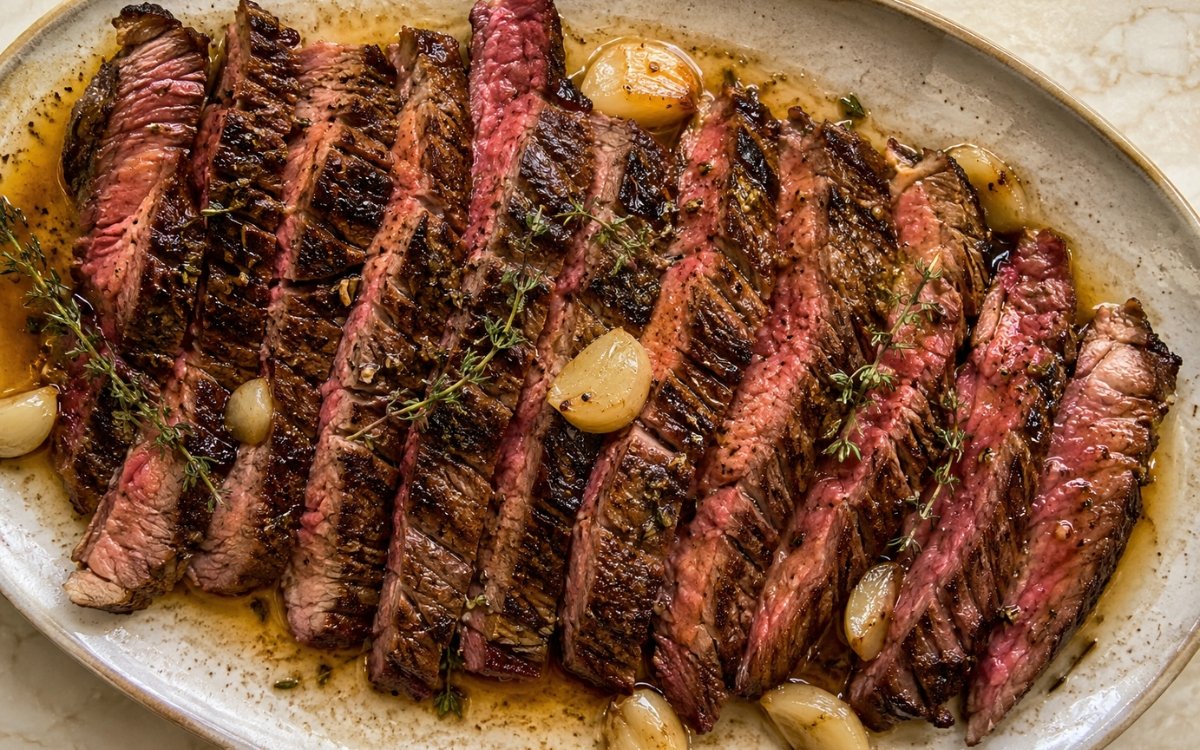
- Identify the grain direction of the skirt steak before slicing — the visible parallel lines of muscle fibres running along the length of the cut. Skirt steak has a more pronounced, clearly visible grain than many other cuts, which makes this identification straightforward. Slice firmly and confidently against the grain — perpendicular to the fibre direction — into strips approximately 5–7mm thick. Against-the-grain slicing is non-negotiable for skirt steak: it shortens the individual muscle fibres in each slice, which is what produces tender, pleasant strips rather than the long, chewy, fibrous mouthfuls that result from cutting with the grain. Arrange the sliced steak on a serving platter and spoon the reserved pan juices, butter, and smashed garlic over the top. Serve immediately.
Notes
Skirt steak comes in two varieties — outside skirt and inside skirt — and the distinction matters. Outside skirt is thicker, more uniform in width, and has slightly more fat marbling that makes it more flavorful and more forgiving to cook. It is the version served in steakhouses and is the preferred choice for this recipe. Inside skirt is thinner, wider, and more variable in thickness, which makes it cook unevenly and more prone to overcooking in spots. If your butcher or supermarket has a choice, specify outside skirt.
The smashed garlic technique deserves explanation. Laying the flat side of a chef's knife over a garlic clove and pressing firmly with the heel of your hand crushes the clove open without mincing it. This releases aromatic compounds and exposes surface area for flavor infusion into the butter without producing fine garlic pieces that would burn immediately in the screaming-hot pan. Smashed garlic infuses without scorching — the correct technique for a butter-basting application.
Skirt steak should only ever be served at medium-rare to medium. Beyond medium, the relatively lean muscle fibres tighten and compress, producing dry, tough meat that no amount of slicing technique can compensate for. If your household requires well-done steak, a different, fattier cut such as ribeye is a better choice — its higher fat content protects it from drying out at higher temperatures in a way that skirt steak cannot.