
Herb-Crusted Salmon Rice Bowl
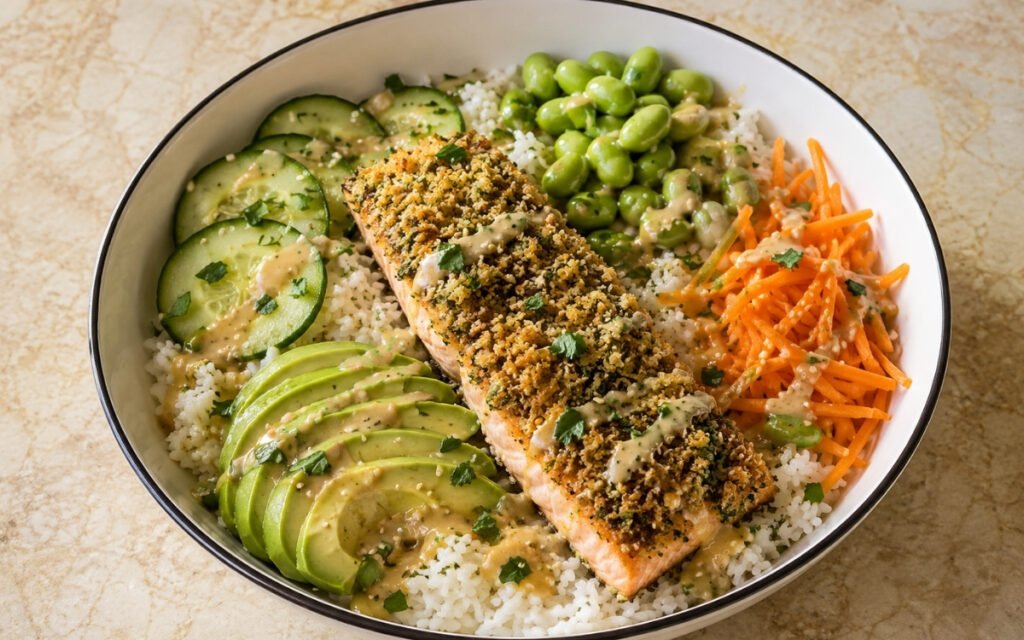
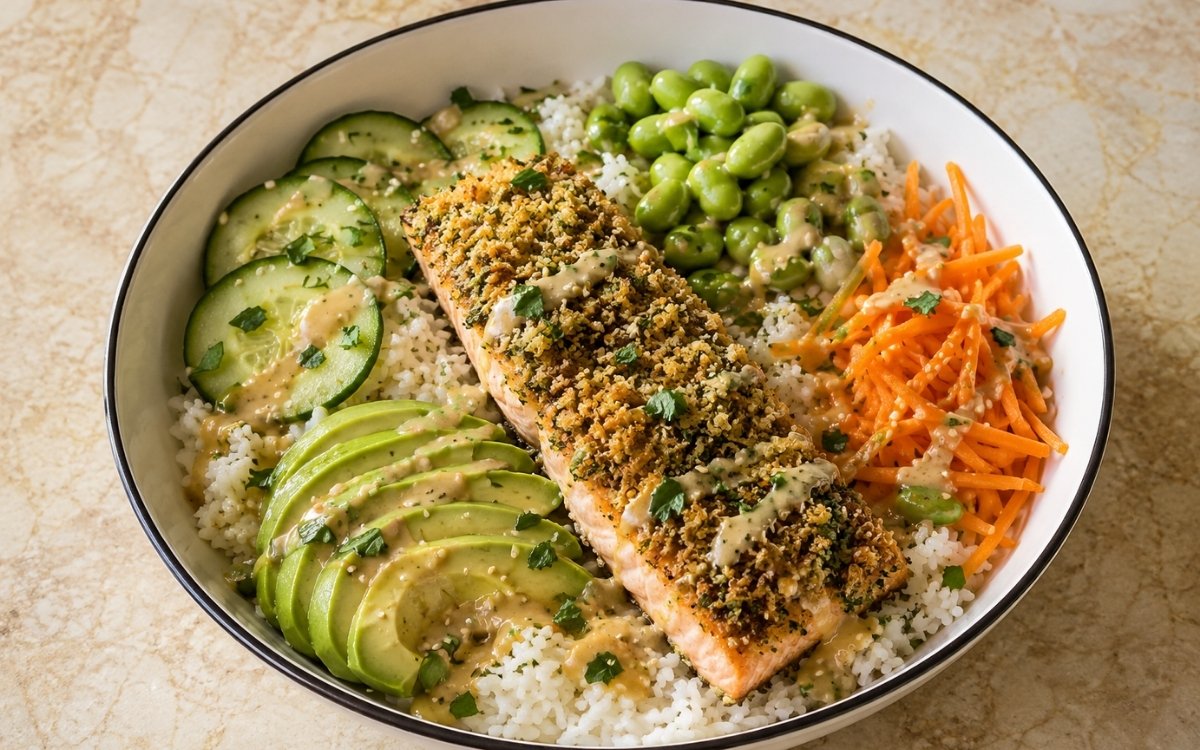
Salmon seared flesh-side down first so the crust side goes on last — herb-and-panko pressed onto the top of each fillet immediately after the flip, then cooked on the skin side while the crust sets and turns golden above. The technique produces a salmon that is simultaneously crispy-crusted on top, golden-skinned underneath, and just cooked through at the centre. Fluffy jasmine rice underneath, cucumber, edamame, julienned carrot, and avocado arranged alongside, and a lemon-miso dressing with grated ginger and rice vinegar whisked until pourable and drizzled over everything. The kind of bowl that feels like a restaurant order and takes forty minutes at home.
Prep Time : 15 min
Cook Time : 25 min
Servings : 4
15 min
25 min
4
Ingredients
For the Rice
• 320g jasmine rice, uncooked
• 480ml water
• Pinch of salt
For the Herb-Crusted Salmon Fillets
• 680g fresh salmon fillets, skin-on, cut into 4 equal portions
• 30g fresh parsley leaves
• 15g fresh dill
• 10g fresh chives
• 40g panko breadcrumbs — this one on Amazon
• 45g extra-virgin olive oil, divided
• 1 lemon zested
• 3 cloves garlic, minced (about 9g)
• Salt and black pepper to taste
For the Bowl Components
• 200g English cucumber, thinly sliced
• 160g shelled edamame, cooked
• 100g carrots, julienned or shredded
• 200g ripe avocado, sliced — about 1 large avocado
For the Lemon-Miso Dressing
• 30g white miso paste — this one on Amazon
• 30ml rice vinegar
• 15g honey
• 15g fresh ginger, peeled and grated
• 60 ml fresh lemon juice
• Water, as needed for consistency
For Garnish
• 15g toasted sesame seeds — this one on Amazon
• Additional fresh herbs (parsley, chives, dill)
This post may contain affiliate links. As an Amazon Associate I earn from qualifying purchases, at no additional cost to you.
Directions
- Cook the Jasmine Rice
Rinse the 320g of jasmine rice under cold running water in a fine-mesh sieve, working the grains gently with your fingers until the water running through them is clear rather than cloudy. This rinsing removes the excess surface starch — the starch coating on jasmine rice that, if left, causes the grains to clump together and makes the finished rice gummy rather than fluffy and distinct. Combine the rinsed rice with 480ml of cold water and a pinch of salt in a medium, heavy-bottomed saucepan. Bring to a full boil over high heat — you want a genuine rolling boil, not just the first sign of simmering. Immediately reduce the heat to the lowest possible setting, cover tightly, and simmer for 15 minutes without lifting the lid. The trapped steam inside the covered pot is the cooking medium for the rice; any escape of steam during this period affects the water-to-rice ratio and can produce unevenly cooked or undercooked grains. After 15 minutes, remove from the heat completely — still covered. Allow to stand for 5 minutes. This standing period is the step that separates fluffy jasmine rice from wet, slightly sticky rice — the residual steam inside the covered pan redistributes and fully cooks the topmost grains without any additional heat, while the bottom grains firm slightly from contact with the now-cooling pan. After 5 minutes, remove the lid and fluff with a fork — lift and separate the grains with a gentle raking motion rather than pressing down, which compresses the grains together. - Make the Herb Crust
hile the rice cooks, prepare the herb crust. Finely chop the 30g of parsley, 15g of dill, and 10g of chives together on the same board — working all three herbs simultaneously produces a more evenly mixed, more finely minced combination than chopping each separately. The three-herb combination provides three distinct aromatic dimensions: parsley for clean, slightly grassy freshness; dill for the specific anise-adjacent, slightly floral note that has a classic affinity with salmon; chives for mild onion character and colour. In a small bowl, combine the finely chopped herbs with the 40g of panko breadcrumbs, 15ml of olive oil, the lemon zest from both lemons, the minced garlic, and a generous seasoning of salt and black pepper. Mix thoroughly until the herbs are distributed evenly through the panko and the mixture is slightly moistened and cohesive — the olive oil is what binds the crust to the salmon surface and helps it develop golden colour during cooking. The mixture should hold together when pressed between your fingers without being wet or pasty. Set aside. - Prepare and Sear the Salmon
Pat each of the 4 salmon portions completely dry on all surfaces with paper towels. Thorough drying is the preparation prerequisite for a proper sear on both the flesh and the skin — any surface moisture produces steam rather than the direct dry-heat contact that develops the Maillard crust. Season both sides generously with salt and black pepper. Heat the 20ml of olive oil in a large non-stick skillet over medium-high heat until shimmering and just beginning to show the first wisps of heat haze above the surface — at shimmering the oil is at the correct searing temperature; smoking indicates it has been held at high heat too long and the oil is degrading. Add the salmon fillets flesh-side down — not skin-side first. This is the counterintuitive sequencing decision that the herb-crust technique requires: the flesh side sears for 4 minutes undisturbed, building the Maillard crust and cooking approximately the bottom half of the fillet through, while the skin side and the top surface are uncooked. Sear flesh-side down for exactly 4 minutes without moving or pressing — consistent contact with the hot pan produces the even golden crust that characterises a properly seared salmon. - Apply the Herb Crust and Finish Cooking
After 4 minutes, carefully flip each salmon fillet using a thin spatula — sliding it under the flesh side and turning the fillet so the skin side is now facing down against the hot pan. Immediately — within 10 seconds of the flip — divide the herb-panko mixture among the four fillets and press it firmly onto the top surface of each with your fingers or the back of a spoon. The pressing motion compacts the herb crust against the moist, just-seared flesh surface, helping it adhere during the remaining cooking time. Reduce the heat to medium. Cook for 4–5 minutes until the salmon reaches 52°C internal temperature for a medium result with a slightly translucent centre, or 57°C for a fully cooked-through result. During this time the skin crisps against the pan heat below while the herb crust above dries and turns golden from the pan’s ambient heat and the olive oil in the crust. The crust should show golden-brown colouring and a light crispness when pressed gently at the correct moment. Remove from the heat immediately — residual heat continues cooking the salmon after it leaves the pan. - Make the Lemon-Miso Dressing
In a small bowl, combine the 30g of white miso paste, 30ml of rice vinegar, 60ml of fresh lemon juice, 15g of honey, 15g of grated fresh ginger, and the remaining olive oil from the 45ml total. Whisk vigorously until completely smooth and emulsified — the miso paste resists immediate incorporation but disperses evenly with 30–45 seconds of continuous whisking. White miso is specifically suited to this dressing because its shorter fermentation period produces a milder, sweeter, less aggressively salty flavour than red or dark miso, complementing the honey and lemon without overwhelming the salmon’s delicate flavour. The rice vinegar provides the clean, mildly acidic brightness; the fresh ginger provides the sharp, warm aromatic depth; the honey provides the sweetness that balances the miso’s saltiness and the vinegar’s acidity. If the dressing is too thick to drizzle freely after whisking, add water 5ml at a time while continuing to whisk until it reaches a pourable, slightly flowing consistency. Taste and adjust — it should be simultaneously bright, slightly sweet, savoury, and lightly spiced. - Assemble and Serve
Divide the fluffed jasmine rice among four wide, shallow bowls — forming a generous base that covers most of the bowl’s surface. Arrange the bowl components around the perimeter: the thinly sliced cucumber in overlapping rounds, the cooked edamame scattered or arranged in a concentrated area, the julienned or shredded carrot fanned into the remaining space, and the avocado slices fanned at one side of the bowl. Place one herb-crusted salmon fillet in the centre of each assembled bowl — the herb crust facing upward. Drizzle the lemon-miso dressing generously over the salmon and across the bowl components — the dressing should reach every component rather than pooling only at the centre. Scatter the 15g of toasted sesame seeds over each bowl. Add a small arrangement of additional fresh herb leaves if desired. Serve immediately — avocado oxidises and the herb crust softens if the assembled bowls sit.
*Notes :
- The herb crust application technique — pressing the mixture onto the flesh side of the salmon immediately after flipping rather than before searing — is specifically designed around a practical problem: herb crusts applied before searing either fall off during the first sear or prevent the flesh from developing proper direct-contact caramelisation. Applied immediately after the flip, the herb crust has the benefit of adhering to the freshly seared, slightly rough, moist flesh surface while the skin crisps below and the ambient pan heat cooks the crust from below through the salmon. This produces a simultaneously crispy-skinned and herb-crusted fillet that neither conventional pre-crusted baking nor pan-searing from skin side first achieves.
- White miso paste — shiro miso — is the correct miso for a dressing of this character. Red miso or mixed miso has a longer fermentation period producing stronger, more aggressive saltiness and deeper, more assertive umami. In a dressing where the miso is balanced against honey, lemon, and ginger, white miso’s milder sweetness allows each component to remain distinct rather than the miso dominating. The dressing keeps refrigerated for up to 3 days — its flavour deepens slightly as the ginger and miso continue to exchange aromatic compounds, making a day-ahead dressing marginally better than same-day.
- The bowl composition balances four textural and thermal registers simultaneously: warm fluffy rice and just-cooked salmon for temperature and comfort; cool cucumber and room-temperature avocado for freshness and contrast; edamame for firm, slightly chewy protein presence; and the crispy herb crust as the textural highlight.
Why This Recipe Works
This recipe works because each component is prepared with the specific technique its character requires — the rice rinsed and rested for fluffy distinct grains, the salmon seared flesh-first and herb-crusted post-flip for simultaneous crispy skin and golden crust, the dressing emulsified cold for a stable, pourable consistency.
The bowl’s composition is balanced rather than assembled randomly — warm and cool, soft and crunchy, mild and assertively flavoured elements are distributed through every bowl so each bite contains multiple registers simultaneously.
Ingredient Breakdown
Salmon (Flesh-First Sear, Crust Applied Post-Flip)
The bowl’s protein — the two-stage cooking technique produces crispy skin below and herb crust above simultaneously.
Three-Herb Crust (Parsley, Dill, Chives)
The aromatic coating — each herb provides a distinct note; parsley for freshness, dill for the specific salmon-affinity aromatic, chives for mild onion depth.
Panko Breadcrumbs (In the Herb Crust)
The textural element — provides the golden, crispy surface that herbs alone cannot produce.
White Miso Dressing
The flavour-unifying drizzle — simultaneously sweet, salty, bright, and lightly spiced; connects all bowl components under a common dressing.
Jasmine Rice (Rinsed and Rested)
The base — rinsed for distinct, fluffy grains; rested for even final cooking from residual steam.
Avocado, Cucumber, Edamame, Carrot
The four bowl components — providing contrasting textures, temperatures, and flavours alongside the rice and salmon.
Flavor Structure Explained
This salmon rice bowl follows a layered balance model:
- Rich aromatic core (herb-crusted salmon)
- Savory-bright dressing layer (miso, lemon, ginger)
- Fresh vegetal contrast (cucumber, edamame, carrot, avocado)
- Neutral grounding base (rice)
- Nutty finishing note (sesame seeds)
Salmon defines the foundation with rich, slightly fatty depth enhanced by the fresh herb crust. The miso-lemon-ginger dressing acts as the unifying layer, bringing umami, acidity, and warmth across every component. Vegetables create contrast through freshness, crunch, sweetness, and creaminess, ensuring variety in each bite. Rice grounds the bowl with a neutral, comforting base that supports without competing. Sesame seeds finish the structure with aromatic nuttiness, tying the entire composition together.
Common Mistakes to Avoid
- Not Drying the Salmon Thoroughly – Surface moisture prevents searing and produces a grey, steamed surface rather than the golden Maillard crust.
- Searing Skin-Side First – The skin-first technique does not allow the herb crust to be applied and cooked correctly. Always sear flesh-side first, then apply the crust post-flip.
- Not Pressing the Herb Crust Firmly – A loosely applied crust falls off during the remainder of cooking. Press firmly onto the moist seared flesh immediately after flipping.
- Over-stirring the Rice During Cooking – Lifting the lid or stirring during the 15-minute simmer releases steam and disrupts the water absorption. Leave completely undisturbed.
- Not Resting the Rice – Skipping the 5-minute covered rest produces unevenly cooked, slightly wet rice. Always rest before fluffing.
- Assembling Bowls Too Early – Avocado oxidises and the herb crust softens quickly after plating. Always assemble immediately before serving.
Variations
With Arctic Char or Steelhead Trout
Both species are closely related to salmon and share a comparable fat content, colour, and flavour — the same technique and timing produce an almost identical result. Arctic char has a slightly milder, cleaner flavour.
With Tofu
Press 680g of extra-firm tofu thoroughly dry, cut into thick slabs, and apply the herb crust to all surfaces rather than one. Pan-fry in the olive oil for 3–4 minutes per side until golden. The technique adapts well; the herb crust adheres to the firm tofu surface.
With Brown Rice
Replace jasmine rice with short-grain brown rice — cook at 180ml additional water and 35–40 minutes rather than 15 minutes. The nuttier, more fibrous character of brown rice provides a more robust base that holds its own against the assertive miso dressing.
Spicy Version
Add 30ml of sriracha or gochujang to the miso dressing alongside the other components — the fermented chili paste’s fruity heat and the miso’s umami are specifically complementary flavour partners.
Storage & Make-Ahead
These bowls are not suitable for storage, so they should be assembled only in the amount that will be eaten immediately.
Seared salmon can be refrigerated for up to 2 days. The herb crust will soften during storage, but it will still be flavorful. To reheat it, use a 180°C oven for 6 to 8 minutes rather than a microwave, which would steam the crust.
Lemon-miso dressing can be refrigerated in a sealed jar for up to 3 days, and its flavor actually improves overnight. Whisk it before using, since it may separate during storage.
Cooked rice can be refrigerated for up to 4 days. To reheat it, add a splash of water and warm it in a covered pan over low heat, or microwave it covered with a damp paper towel.
Frequently Asked Questions
Why sear flesh-side down first rather than skin-side down?
The herb crust is applied immediately after the flip — onto the just-seared, slightly rough and moist flesh surface where it adheres most effectively. Starting skin-side down would mean the crust goes on the raw flesh side and then sits against the pan, either burning or falling off. The flesh-first technique allows the crust to adhere and cook from ambient pan heat without direct contact.
What internal temperature should I cook the salmon to?
52°C produces a medium result with a slightly translucent, very moist centre — the salmon continues cooking slightly from residual heat after leaving the pan. 57°C produces a fully cooked-through result. Both are correct depending on preference; the recipe targets 52°C for the best eating quality.
Can I bake the salmon instead of pan-searing?
Yes — apply the herb crust to the flesh side of unseared skin-on portions and bake at 200°C for 12–14 minutes on a lined baking sheet. The skin will not crisp as effectively as pan-searing but the herb crust will still develop golden colour.
Why white miso specifically?
White miso’s shorter fermentation produces a milder, sweeter, less aggressively salty flavour than red or dark miso. In a dressing balanced with honey and lemon, white miso’s gentleness allows all components to remain distinct. Red miso would overpower the other dressing elements.
Can I prepare any components ahead?
The miso dressing keeps 3 days ahead in the refrigerator and improves overnight. The rice can be cooked ahead and reheated. The herb crust mixture can be prepared up to 2 hours ahead and held at room temperature. The salmon is best seared immediately before serving.
Nutrition Facts
( per serving )
Calories
~870 kcal
Protein
47 g
Fat
39 g
Carbs
84 g
Calories
~870 kcal
Protein
47 g
Fat
39 g
Carbs
84 g
Related Recipes
Related Recipes

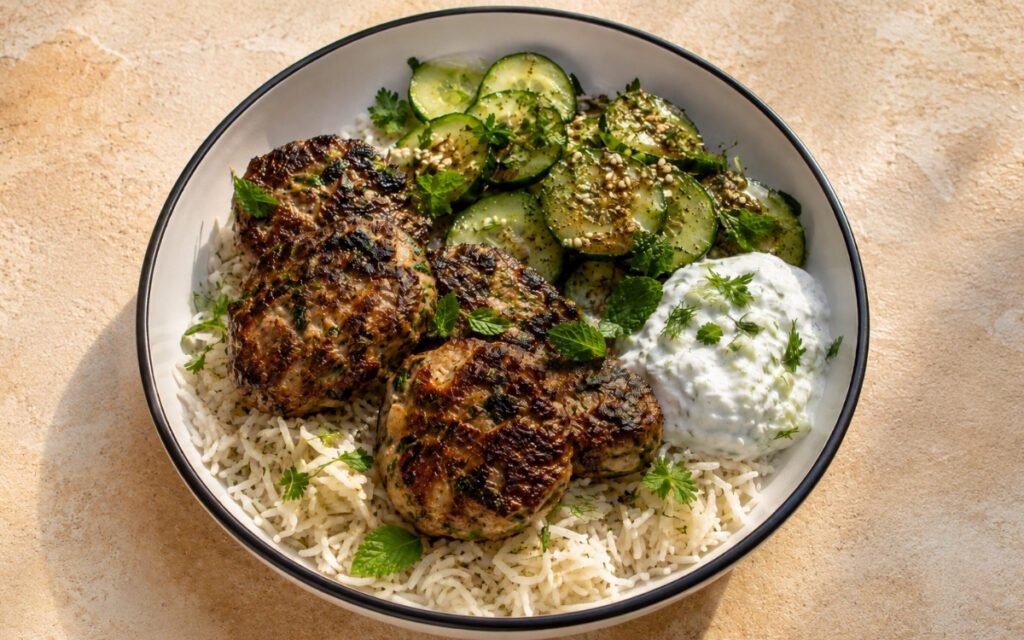
Herby Turkey Burgers with Za’atar Cucumber Salad
Juicy herb-seasoned turkey burgers with za’atar cucumber salad, creamy tzatziki, and buttery rice.
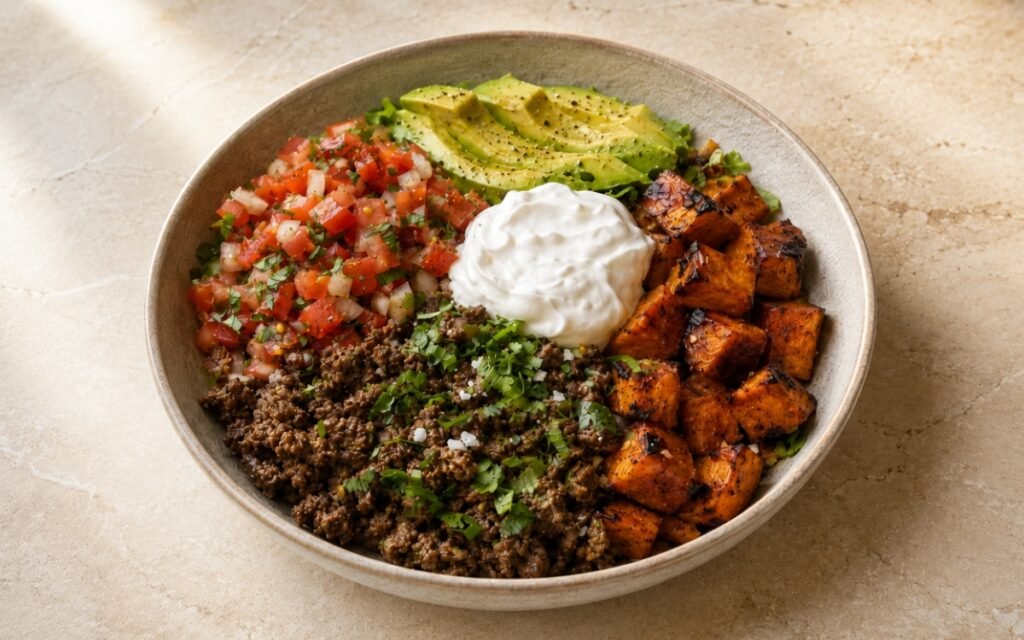
Sweet Potato Ground Beef Burrito Bowl
Crisp roasted sweet potato and browned seasoned ground beef with fresh pico de gallo, sliced avocado and cool sour cream.
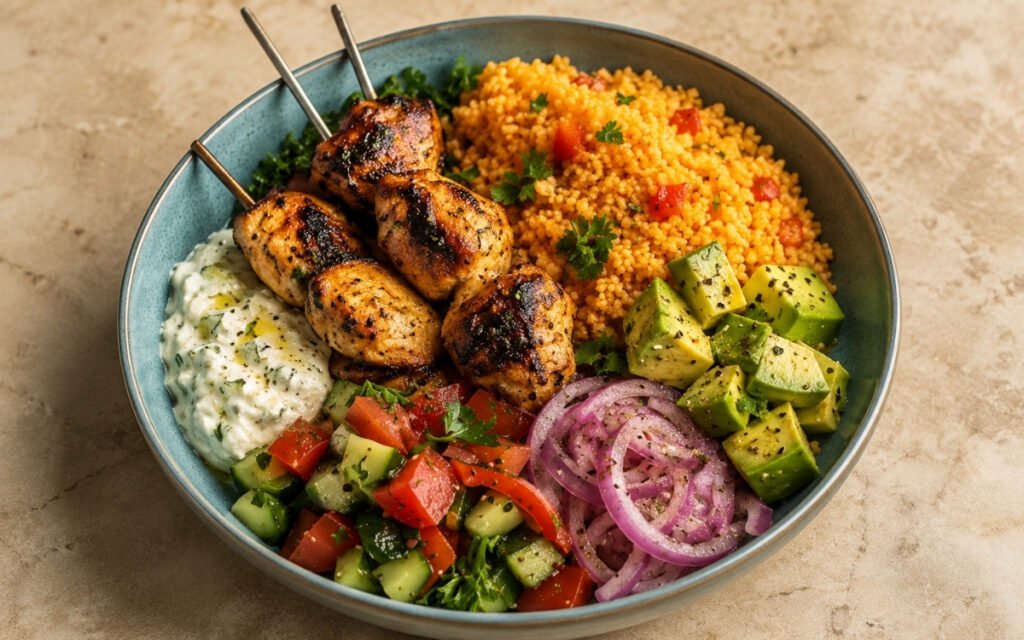
Greek Chicken Souvlaki Mediterranean Bowl
Charred chicken souvlaki over golden couscous with tzatziki, pink pickled onion, tomato-cucumber salad and avocado.
You might also like
You might also like
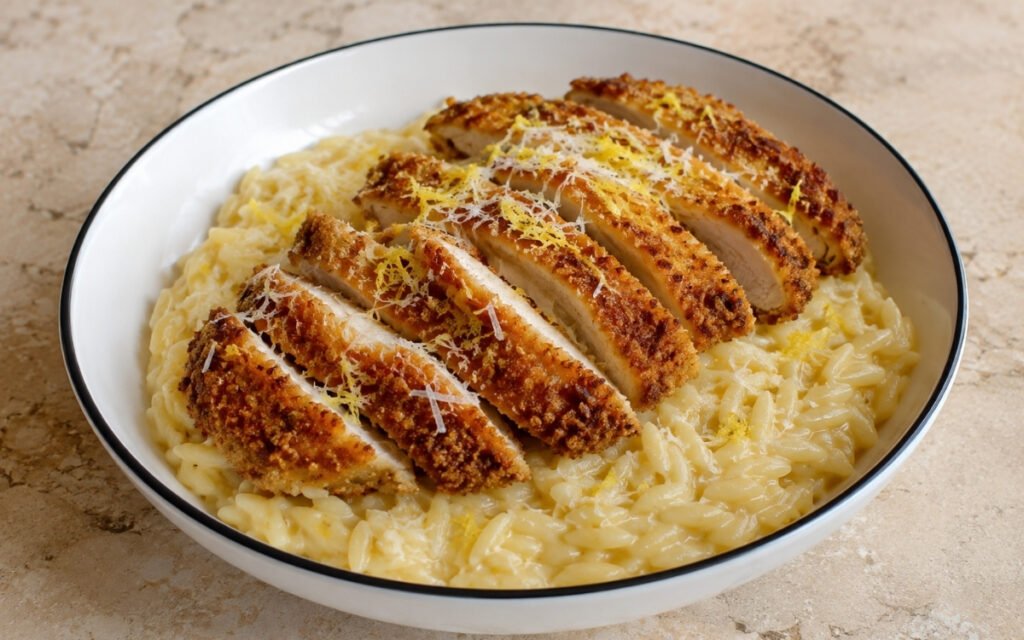
Lemon Chicken Cutlet Orzo
Crispy Parmesan-breaded cutlets sliced over creamy caramelised onion, double lemon, and ricotta orzo — 55 minutes.
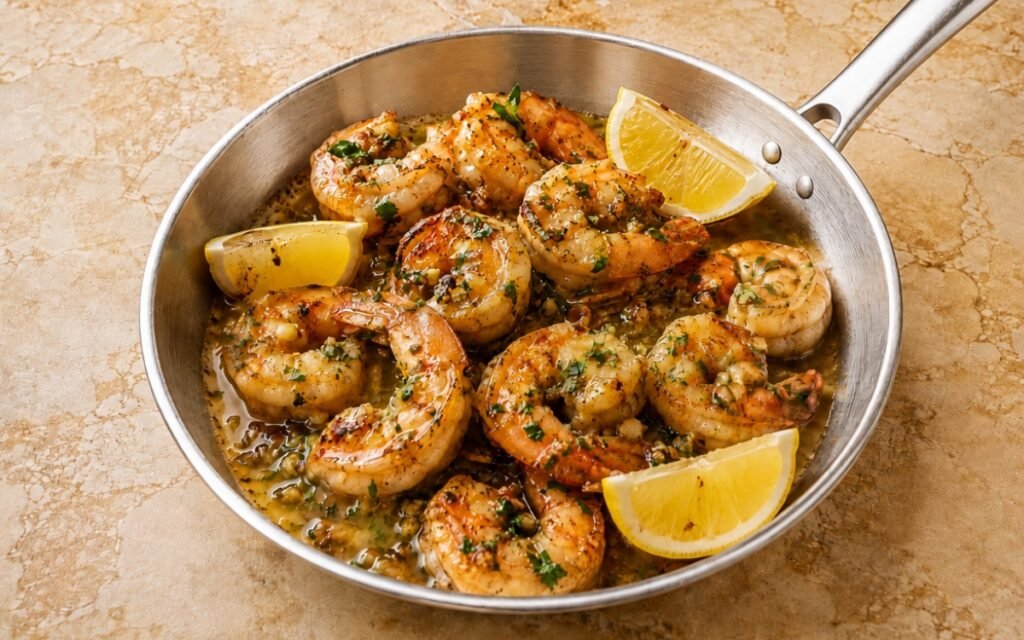
Garlic Butter Shrimp Skillet
Hard-seared shrimp finished gently in a glossy garlic butter sauce with lemon, parsley, and chili flakes.
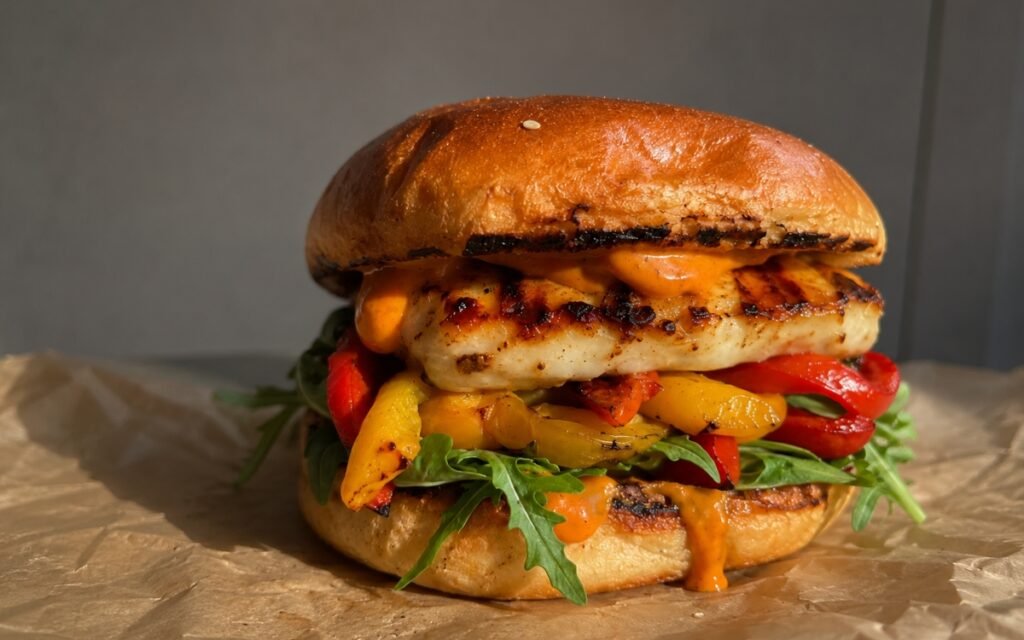
Grilled Halloumi Burger with Roasted Peppers
Golden grilled halloumi in a toasted brioche bun with caramelized peppers, peppery rocket, and creamy harissa-lime mayo.
Herb-Crusted Salmon Rice Bowl
Ingredients
Method
- Rinse the 320g of jasmine rice under cold running water in a fine-mesh sieve, working the grains gently with your fingers until the water running through them is clear rather than cloudy. This rinsing removes the excess surface starch — the starch coating on jasmine rice that, if left, causes the grains to clump together and makes the finished rice gummy rather than fluffy and distinct. Combine the rinsed rice with 480ml of cold water and a pinch of salt in a medium, heavy-bottomed saucepan. Bring to a full boil over high heat — you want a genuine rolling boil, not just the first sign of simmering. Immediately reduce the heat to the lowest possible setting, cover tightly, and simmer for 15 minutes without lifting the lid. The trapped steam inside the covered pot is the cooking medium for the rice; any escape of steam during this period affects the water-to-rice ratio and can produce unevenly cooked or undercooked grains. After 15 minutes, remove from the heat completely — still covered. Allow to stand for 5 minutes. This standing period is the step that separates fluffy jasmine rice from wet, slightly sticky rice — the residual steam inside the covered pan redistributes and fully cooks the topmost grains without any additional heat, while the bottom grains firm slightly from contact with the now-cooling pan. After 5 minutes, remove the lid and fluff with a fork — lift and separate the grains with a gentle raking motion rather than pressing down, which compresses the grains together.
- While the rice cooks, prepare the herb crust. Finely chop the 30g of parsley, 15g of dill, and 10g of chives together on the same board — working all three herbs simultaneously produces a more evenly mixed, more finely minced combination than chopping each separately. The three-herb combination provides three distinct aromatic dimensions: parsley for clean, slightly grassy freshness; dill for the specific anise-adjacent, slightly floral note that has a classic affinity with salmon; chives for mild onion character and colour. In a small bowl, combine the finely chopped herbs with the 40g of panko breadcrumbs, 15ml of olive oil, the lemon zest from both lemons, the minced garlic, and a generous seasoning of salt and black pepper. Mix thoroughly until the herbs are distributed evenly through the panko and the mixture is slightly moistened and cohesive — the olive oil is what binds the crust to the salmon surface and helps it develop golden colour during cooking. The mixture should hold together when pressed between your fingers without being wet or pasty. Set aside.
- Pat each of the 4 salmon portions completely dry on all surfaces with paper towels. Thorough drying is the preparation prerequisite for a proper sear on both the flesh and the skin — any surface moisture produces steam rather than the direct dry-heat contact that develops the Maillard crust. Season both sides generously with salt and black pepper. Heat the 20ml of olive oil in a large non-stick skillet over medium-high heat until shimmering and just beginning to show the first wisps of heat haze above the surface — at shimmering the oil is at the correct searing temperature; smoking indicates it has been held at high heat too long and the oil is degrading. Add the salmon fillets flesh-side down — not skin-side first. This is the counterintuitive sequencing decision that the herb-crust technique requires: the flesh side sears for 4 minutes undisturbed, building the Maillard crust and cooking approximately the bottom half of the fillet through, while the skin side and the top surface are uncooked. Sear flesh-side down for exactly 4 minutes without moving or pressing — consistent contact with the hot pan produces the even golden crust that characterises a properly seared salmon.
- After 4 minutes, carefully flip each salmon fillet using a thin spatula — sliding it under the flesh side and turning the fillet so the skin side is now facing down against the hot pan. Immediately — within 10 seconds of the flip — divide the herb-panko mixture among the four fillets and press it firmly onto the top surface of each with your fingers or the back of a spoon. The pressing motion compacts the herb crust against the moist, just-seared flesh surface, helping it adhere during the remaining cooking time. Reduce the heat to medium. Cook for 4–5 minutes until the salmon reaches 52°C internal temperature for a medium result with a slightly translucent centre, or 57°C for a fully cooked-through result. During this time the skin crisps against the pan heat below while the herb crust above dries and turns golden from the pan’s ambient heat and the olive oil in the crust. The crust should show golden-brown colouring and a light crispness when pressed gently at the correct moment. Remove from the heat immediately — residual heat continues cooking the salmon after it leaves the pan.
- In a small bowl, combine the 30g of white miso paste, 30ml of rice vinegar, 60ml of fresh lemon juice, 15g of honey, 15g of grated fresh ginger, and the remaining olive oil from the 45ml total. Whisk vigorously until completely smooth and emulsified — the miso paste resists immediate incorporation but disperses evenly with 30–45 seconds of continuous whisking. White miso is specifically suited to this dressing because its shorter fermentation period produces a milder, sweeter, less aggressively salty flavour than red or dark miso, complementing the honey and lemon without overwhelming the salmon’s delicate flavour. The rice vinegar provides the clean, mildly acidic brightness; the fresh ginger provides the sharp, warm aromatic depth; the honey provides the sweetness that balances the miso’s saltiness and the vinegar’s acidity. If the dressing is too thick to drizzle freely after whisking, add water 5ml at a time while continuing to whisk until it reaches a pourable, slightly flowing consistency. Taste and adjust — it should be simultaneously bright, slightly sweet, savoury, and lightly spiced.
- Divide the fluffed jasmine rice among four wide, shallow bowls — forming a generous base that covers most of the bowl’s surface. Arrange the bowl components around the perimeter: the thinly sliced cucumber in overlapping rounds, the cooked edamame scattered or arranged in a concentrated area, the julienned or shredded carrot fanned into the remaining space, and the avocado slices fanned at one side of the bowl. Place one herb-crusted salmon fillet in the centre of each assembled bowl — the herb crust facing upward. Drizzle the lemon-miso dressing generously over the salmon and across the bowl components — the dressing should reach every component rather than pooling only at the centre. Scatter the 15g of toasted sesame seeds over each bowl. Add a small arrangement of additional fresh herb leaves if desired. Serve immediately — avocado oxidises and the herb crust softens if the assembled bowls sit.