
Sweet Potato Ground Beef Burrito Bowl
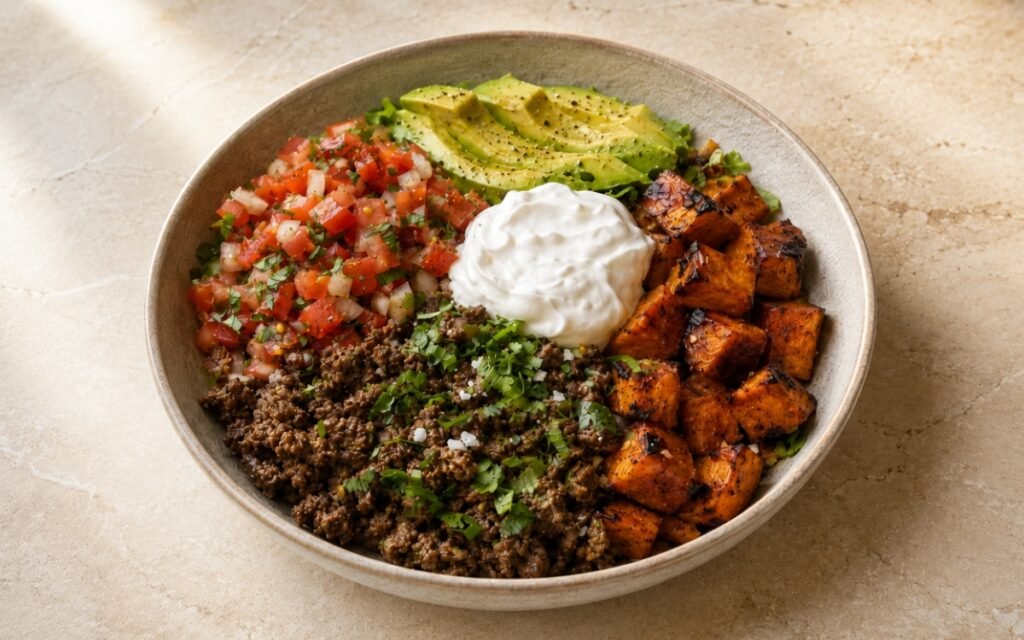
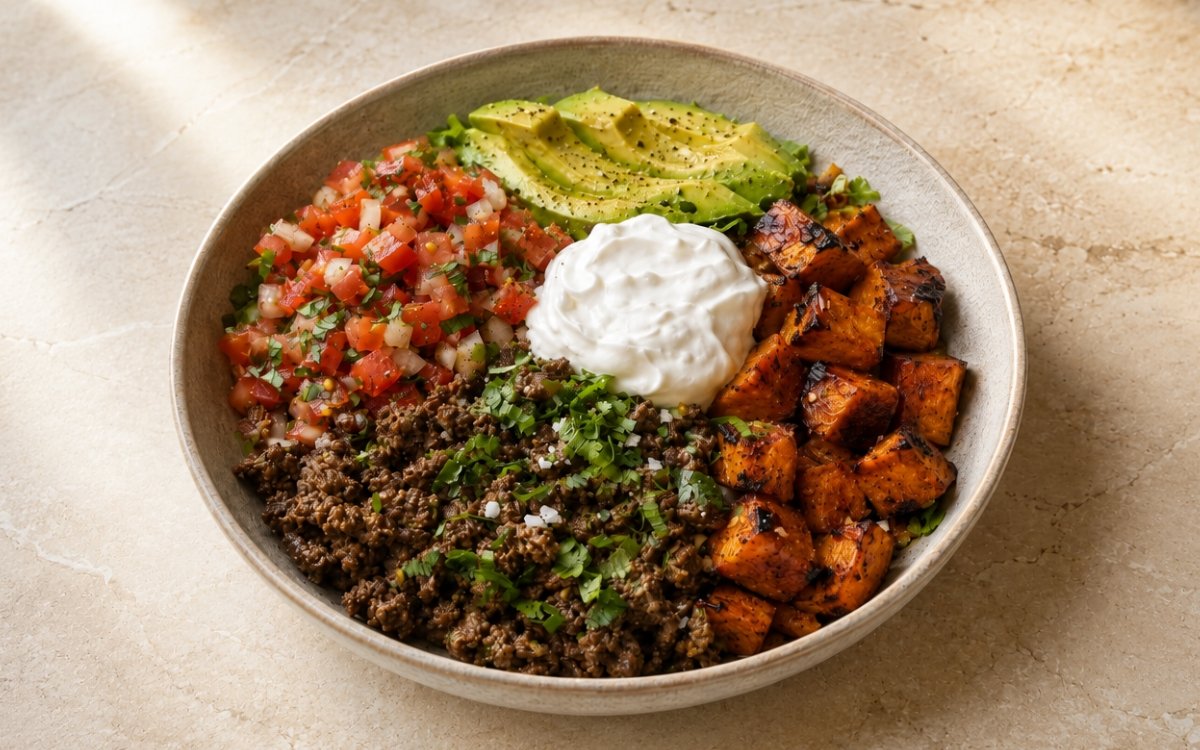
Roasted sweet potato and seasoned ground beef burrito bowl with fresh pico de gallo, sliced avocado, sour cream or Mexican crema, and chopped cilantro, built in clear sections of crispy orange sweet potato cubes, juicy browned beef, vivid fresh pico, creamy white sour cream, and clean green avocado slices. Giving the sweet potato genuine space on the tray is the technique this whole bowl depends on for its defining texture — crowded chunks trap steam between each other and soften instead of developing the crisp, browned edges this dish is built around, the same spacing principle used elsewhere in this collection whenever roasted vegetables need real caramelisation rather than a steamed result. Letting the ground beef sear undisturbed before breaking it up matters just as much, since that initial contact time is what produces genuinely browned edges rather than pale, crumbled meat. Adding the spice blend directly into the hot centre of the pan, once the beef has already started browning, blooms the spices in fat and heat rather than letting them sit dusty in a cold, wet pan. The payoff is a bowl with real colour and textural range — crisp roasted sweet potato, browned beef, bright raw pico, and clean, cool avocado and sour cream, all staying visually distinct.
Prep Time : 25 min
Cook Time : 35 min
Servings : 4
25 min
35 min
4
Ingredients
For the Pico de Gallo — (Full recipe — see Pico de Gallo)
• 5 ripe, meaty tomatoes, preferably Roma, about 400g
• 1 sweet onion, finely diced
• 1 red onion, finely diced
• 1 jalapeño pepper, deseeded, finely diced
• Juice of 3 limes
• Zest of half a lime
• 1 tbsp extra-virgin olive oil — this one on Amazon
• Salt to taste
• Freshly ground black pepper to taste
For the Roasted Sweet Potatoes
• 1kg sweet potatoes, peeled and diced into 2–3cm chunks
• 45ml olive oil — this one on Amazon
• 8g fine sea salt
• 3g freshly cracked black pepper
• 4g smoked paprika
• 3g garlic powder
• 3g onion powder
• 1g chili powder, optional
For the Seasoned Ground Beef
• 800g 90/10 ground beef
• 15ml neutral oil, only if needed
• 8g fine sea salt
• 4g ground cumin — this one on Amazon
• 3g smoked paprika — this one on Amazon
• 3g garlic powder
• 3g onion powder
• 2g dried Mexican oregano — this one on Amazon
• 2g freshly cracked black pepper
• 1g chili powder, optional
• 30ml water, only if needed to loosen at the end
• 15ml fresh lime juice
For the Avocado
• 2 ripe avocados, ½ avocado per serving, thinly sliced
• Fine sea salt, to taste
• Freshly cracked black pepper, to taste
• 10ml fresh lime juice
For Serving
• 200g sour cream or Mexican crema, 50g per serving
• 25g fresh cilantro, chopped
• Lime wedges, optional
This post may contain affiliate links. As an Amazon Associate I earn from qualifying purchases, at no additional cost to you.
Directions
- Prepare the Pico de Gallo
Dice the tomatoes, sweet onion, red onion, and jalapeño evenly. Combine them with lime juice, lime zest, olive oil, salt, and black pepper. Let the pico sit for 10–15 minutes, then taste and adjust salt or lime. If it releases a lot of liquid, drain lightly before serving. The pico should stay fresh and chunky, not turn into tomato water. Dicing every component to a genuinely even size keeps the pico’s flavour consistent bite to bite, and the short rest lets excess tomato liquid separate out before it reaches the bowl. - Roast the Sweet Potatoes
Preheat the oven to 220°C. Add the diced sweet potatoes to a large bowl with olive oil, salt, black pepper, smoked paprika, garlic powder, onion powder, and chili powder if using. Toss aggressively until every piece is evenly coated. Spread on a baking tray in a single layer with space between the chunks. Roast for 25–30 minutes, turning once halfway, until browned and crisp at the edges but soft inside. Do not crowd the tray. Crowded sweet potatoes steam and turn limp instead of roasting. Genuine space between each piece is what allows the oven’s dry heat to reach every surface directly — chunks touching or piled on each other trap steam in the gaps between them, and that trapped moisture is exactly what prevents the browning and crisping this step is meant to produce. - Cook the Ground Beef
Heat a wide skillet over medium-high heat. Add the ground beef and break it into medium crumbles. Let it sear undisturbed for 2–3 minutes before stirring so the meat develops browned edges. When the beef is mostly browned but still juicy, add the salt, cumin, smoked paprika, garlic powder, onion powder, oregano, black pepper, and chili powder if using directly into the hot centre of the pan. Stir the spices through the beef and cook for 1–2 minutes until fragrant and slightly caramelised into the meat. If the beef looks dry, add 30ml water and scrape up the browned bits. Finish with lime juice. The beef should be juicy, browned, and lightly crisp in places. It should not be soggy, grey, or dry. Waiting to add the spices until the beef has already begun browning, rather than seasoning it from the start, is what lets them bloom directly in hot fat rather than sitting in cold, releasing liquid — added too early, the same spices taste noticeably duller and more dusty by the time the beef is done. - Prepare the Avocado
Slice the avocados thinly. Season with salt, black pepper, and a little lime juice. Keep the slices clean so they can be fanned neatly in each bowl. A light seasoning directly on the avocado gives it its own distinct flavour in the bowl, rather than relying entirely on the beef and pico to carry seasoning for the whole plate. - Assemble the Bowls
Divide the roasted sweet potatoes between 4 bowls. Add the seasoned ground beef in a generous section beside the potatoes. Spoon pico de gallo into another section. Add ½ sliced avocado per bowl, fanned along one side. Add 50g sour cream or Mexican crema in a thick spoonful near the centre. Finish with chopped fresh cilantro and lime wedges if using. Keeping every component in its own section rather than mixing them together preserves both the visual presentation and each element’s individual texture — the crisp sweet potato edges and the beef’s browned crumbles both hold up considerably better when they’re not sitting directly under a pool of sour cream or pico liquid. - Serve
Fill serving glasses with fresh ice, pour the sangria over the ice, and Serve immediately while the beef and sweet potatoes are hot, the pico is fresh, the avocado is cleanly sliced, and the sour cream stays cold and thick. The contrast between the hot roasted potato and beef against the cool pico, avocado, and sour cream is sharpest right at assembly, so serving without delay is what preserves that temperature and texture range through to the table.
*Notes :
- Giving the sweet potato real space on the roasting tray is worth taking seriously rather than treating as a minor detail. Diced sweet potato releases a fair amount of moisture as it roasts, and when pieces are crowded together, that released steam has nowhere to escape except back onto the surrounding potato, softening exactly the surfaces that are supposed to be crisping. A single, properly spaced layer lets that moisture evaporate away instead, which is the difference between genuinely crisp, browned edges and a limp, steamed result with the same ingredients and oven temperature.
- Searing the ground beef undisturbed for the first few minutes, rather than breaking it up immediately, is a small patience-based step that has an outsized effect on the finished texture. Beef broken apart and stirred from the moment it hits the pan releases moisture quickly and effectively steams in its own juices, producing pale, soft crumbles. Letting it sit in contact with the hot pan first allows real browning to develop on at least one surface of each piece before it’s disturbed.
- Timing the spice addition to the point where the beef has already started browning, rather than seasoning from the very beginning, is a technique worth applying consistently. Ground beef in a cold or just-warming pan releases liquid as it initially cooks, and spices added into that liquid steep rather than bloom, tasting flatter and dustier once the beef is finished. Adding them once real fat and heat are present in the pan lets the spices toast and develop their full aromatic character.
- This bowl’s visual and textural identity depends on every component staying in its own distinct section rather than blending together, which is a principle worth carrying through from assembly to the moment of serving. Sweet potato, beef, pico, avocado, and sour cream are all built with different, specific textures in mind, and combining them into one mixed bowl before serving softens and dulls each of those textures far faster than letting the person eating combine them bite by bite at the table.
Why This Recipe Works
This recipe works because both of its hot components are handled specifically to develop real browning: the sweet potato is spaced out on the tray so steam can escape and the edges genuinely crisp.
The ground beef is seared undisturbed before being broken up and seasoned, letting the spices bloom in fat rather than steep in liquid.
Fresh pico de gallo, cleanly sliced avocado, and cold sour cream are all added only at final assembly, keeping the bowl’s cool, fresh components distinct from its hot, savoury ones right up to serving.
Ingredient Breakdown
Evenly Diced, Well-Spaced Sweet Potato
The roasting technique — cut to a consistent size and spread with real space on the tray so it crisps rather than steams.
Undisturbed-Seared Ground Beef
The browning technique — left in contact with the hot pan before breaking up, developing real colour rather than pale, steamed crumbles.
90/10 Ground Beef
The specified fat ratio — lean enough to avoid drowning the bowl in grease while still contributing enough fat for flavour.
Spices Bloomed in the Hot Pan
The seasoning technique — added once the beef has already started browning, toasting in fat rather than steeping in liquid.
Late-Added Fresh Components (Pico, Avocado, Sour Cream)
The finishing layer — kept separate and added only at final assembly to stay bright, clean, and visually distinct.
Flavor Structure Explained
This burrito bowl follows a layered balance model:
- Sweet caramelised foundation (roasted sweet potato)
- Savoury spiced centre (seasoned ground beef)
- Bright raw acidity (pico de gallo)
- Rich cool contrast (avocado, sour cream)
- Fresh sharp finish (cilantro, lime)
Roasted sweet potato provides a naturally sweet, caramelised foundation with real textural crunch at the edges. Seasoned, browned ground beef adds savoury, well-spiced depth as the bowl’s central protein. Fresh pico de gallo cuts through both with bright, raw tomato and onion acidity. Avocado and sour cream both cool the bowl down with rich, fat-forward creaminess. A final scatter of fresh cilantro and a squeeze of lime finish everything with clean, aromatic brightness that keeps the whole bowl balanced.
Common Mistakes to Avoid
- Crowding the Sweet Potato on the Tray – This traps steam and produces limp, soft potato instead of crisp, browned edges. Always spread it in a single layer with real space between pieces.
- Breaking Up the Beef Immediately Instead of Searing First – This releases moisture too quickly and produces pale, steamed crumbles rather than browned ones. Always let it sear undisturbed for the first few minutes.
- Adding the Spices Too Early – Spices added to a cold or just-warming pan taste dusty rather than bloomed. Always wait until the beef has started browning before seasoning.
- Skipping the Draining Step on the Pico – Excess liquid runs into the beef and sour cream, making the whole bowl watery. Always drain lightly if the pico looks very wet.
- Assembling Too Far Ahead of Serving – The hot and cold components both lose their distinct textures and temperatures if left sitting together. Always assemble and serve immediately.
Variations
Spicier Version
Increase the chili powder in both the sweet potato and the beef seasoning, and leave the jalapeño seeds in the pico de gallo, for a noticeably sharper heat throughout.
With Black Beans
Add a section of warmed, drained black beans alongside the beef for a heartier, more substantial bowl.
Chicken Version
Substitute the ground beef with the same-weight seared, diced chicken thigh, seasoned identically, for a lighter protein option.
Cheese-Topped Version
Scatter shredded Mexican cheese blend or crumbled cotija over the hot beef and sweet potato before adding the remaining cool toppings.
Storage & Make-Ahead
Roasted sweet potato can be refrigerated in an airtight container for up to 4 days. Reheat in a hot oven or skillet to restore some crispness rather than microwaving.
Cooked, seasoned ground beef can be refrigerated for up to 3 days. Reheat gently in a skillet.
Pico de gallo is best made fresh within a few hours of serving; it can be refrigerated for up to 1 day, though it will release more liquid over time.
Sliced avocado is best cut fresh just before assembly; pre-sliced avocado browns within a few hours even with lime juice.
Assemble the bowls only when ready to serve, using freshly sliced avocado and fresh pico for the best result.
Frequently Asked Questions
Why does the sweet potato need so much space on the roasting tray?
Diced sweet potato releases moisture as it roasts, and crowded pieces trap that steam between each other instead of letting it escape. That trapped moisture is exactly what prevents the crisp, browned edges this dish depends on — a single, properly spaced layer is what allows real caramelisation to develop.
Why sear the ground beef undisturbed before breaking it up?
Beef broken apart immediately releases moisture quickly and effectively steams rather than browns. Letting it sit in contact with the hot pan first, undisturbed, allows real colour to develop on the meat’s surface before it’s stirred and crumbled further.
Why add the spices only after the beef has started browning, rather than seasoning it from the start?
Spices added to beef in a cold or just-warming pan steep in the released liquid rather than blooming in fat, which produces a flatter, dustier flavour. Waiting until real heat and fat are present lets the spices toast properly and develop their full aromatic character.
Why is 90/10 ground beef specified rather than a fattier blend?
This ratio provides enough fat for real flavour and browning without releasing so much grease that it pools in the bowl and makes everything feel heavy. A fattier blend would need more careful draining to avoid overwhelming the other components.
Are there similar burrito bowl recipes worth trying, and how can I add more flavour to this one?
Classic Chicken Burrito Bowl and Beef Burrito Rice Bowl both follow a similar sectioned, loaded-bowl format worth exploring. For extra flavour and depth on this specific bowl, a drizzle of Salsa Verde or Salsa Roja over the beef and sweet potato adds another layer of brightness or smoky richness alongside the pico.
Nutrition Facts
( per serving )
Calories
~680 kcal
Protein
36 g
Fat
38 g
Carbs
52 g
Calories
~680 kcal
Protein
36 g
Fat
38 g
Carbs
52 g
Related Recipes
Related Recipes

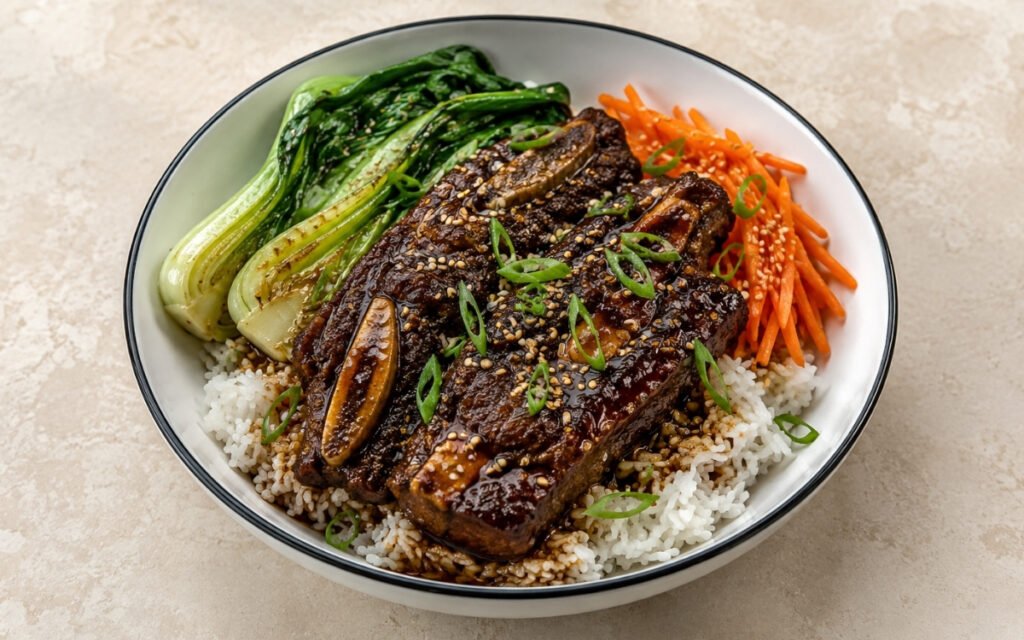
Korean-Style Braised Beef Rice Bowl
Bone-in short ribs braised 2 hours in soy-mirin-gochugaru-star anise liquid — strained, reduced to a glossy sauce, shredded beef returned. Over jasmine rice with bok choy.
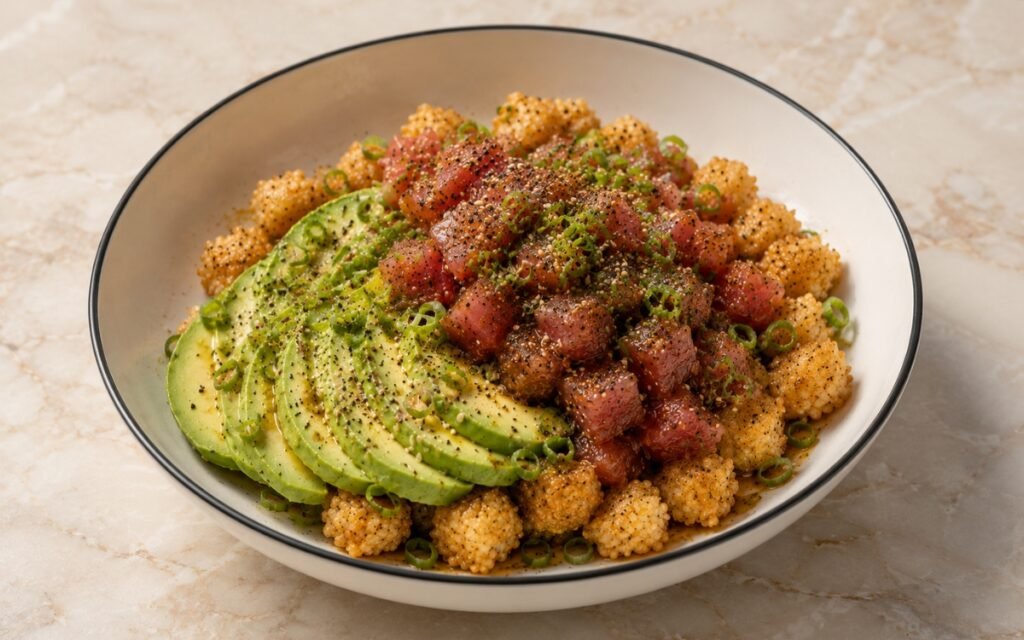
Crispy Rice Salad with Spicy Tuna & Avocado
Sushi rice compressed firmly and baked at 220°C until crunchy outside and chewy inside — topped with soy-sesame marinated tuna for exactly 15 minutes, sliced avocado, and scallions. Serve immediately.
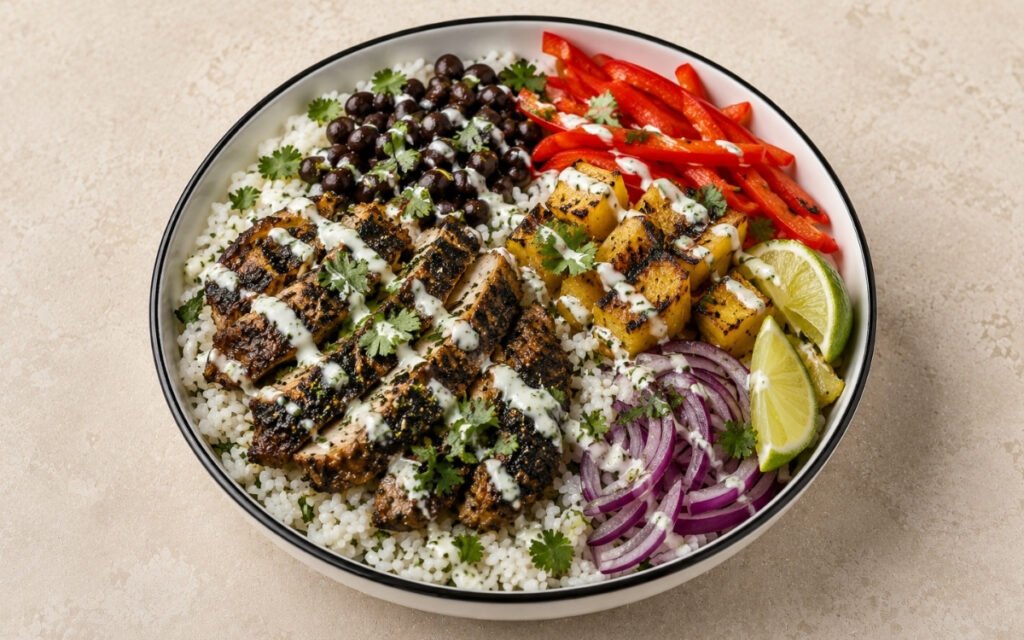
Caribbean Jerk Chicken Rice Bowl
Chicken thighs scored, marinated in blended allspice jerk paste, and deeply charred in cast iron — over coconut rice with charred pineapple, black beans, and lime-cilantro crema.
You might also like
You might also like
Homemade Chicken Shawarma
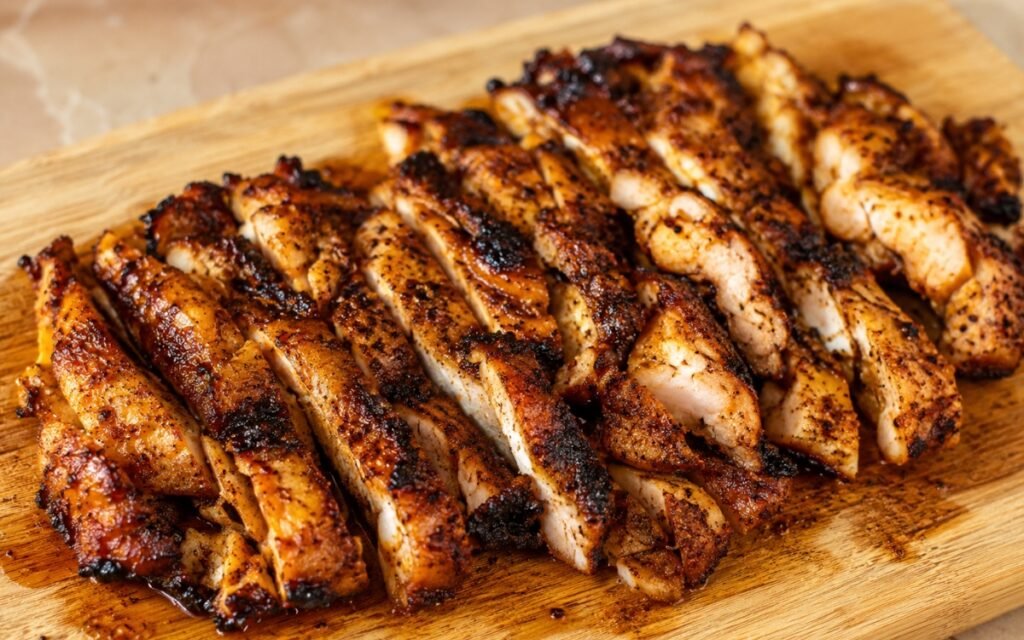
Chicken thighs marinated in thick yogurt and warm spices, grilled undisturbed for deep char — rested and sliced against the grain. Aromatic and tangy.
Chopped Cheese
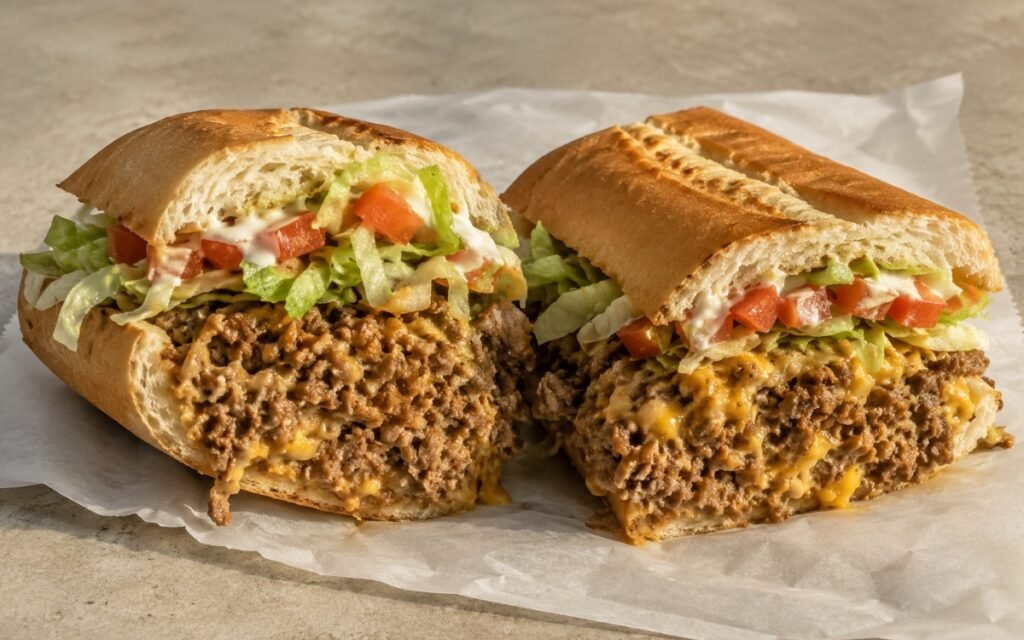
Seared ground beef and caramelized onion chopped together with melted American cheese, piled into a soft hoagie roll with lettuce and tomato.
Blackened Salmon Tacos
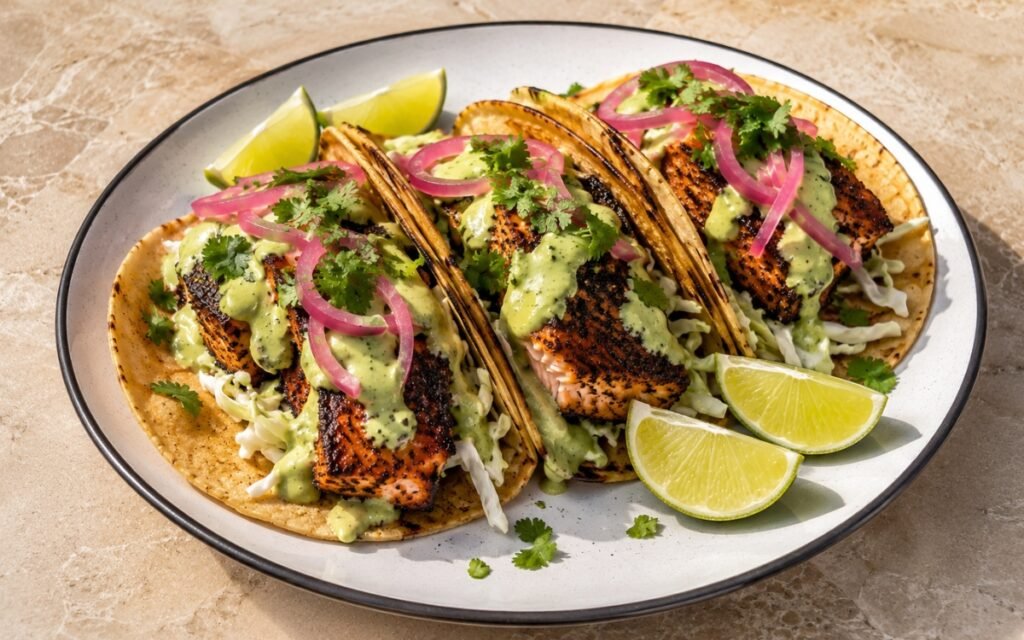
Homemade corn tortillas filled with flaky blackened salmon, cabbage, avocado crema, pickled red onion, and cilantro.
Sweet Potato Ground Beef Burrito Bowl
Ingredients
Method
- Dice the tomatoes, sweet onion, red onion, and jalapeño evenly. Combine them with lime juice, lime zest, olive oil, salt, and black pepper. Let the pico sit for 10–15 minutes, then taste and adjust salt or lime. If it releases a lot of liquid, drain lightly before serving. The pico should stay fresh and chunky, not turn into tomato water. Dicing every component to a genuinely even size keeps the pico’s flavour consistent bite to bite, and the short rest lets excess tomato liquid separate out before it reaches the bowl.
- Preheat the oven to 220°C. Add the diced sweet potatoes to a large bowl with olive oil, salt, black pepper, smoked paprika, garlic powder, onion powder, and chili powder if using. Toss aggressively until every piece is evenly coated. Spread on a baking tray in a single layer with space between the chunks. Roast for 25–30 minutes, turning once halfway, until browned and crisp at the edges but soft inside. Do not crowd the tray. Crowded sweet potatoes steam and turn limp instead of roasting. Genuine space between each piece is what allows the oven’s dry heat to reach every surface directly — chunks touching or piled on each other trap steam in the gaps between them, and that trapped moisture is exactly what prevents the browning and crisping this step is meant to produce.
- Heat a wide skillet over medium-high heat. Add the ground beef and break it into medium crumbles. Let it sear undisturbed for 2–3 minutes before stirring so the meat develops browned edges. When the beef is mostly browned but still juicy, add the salt, cumin, smoked paprika, garlic powder, onion powder, oregano, black pepper, and chili powder if using directly into the hot centre of the pan. Stir the spices through the beef and cook for 1–2 minutes until fragrant and slightly caramelised into the meat. If the beef looks dry, add 30ml water and scrape up the browned bits. Finish with lime juice. The beef should be juicy, browned, and lightly crisp in places. It should not be soggy, grey, or dry. Waiting to add the spices until the beef has already begun browning, rather than seasoning it from the start, is what lets them bloom directly in hot fat rather than sitting in cold, releasing liquid — added too early, the same spices taste noticeably duller and more dusty by the time the beef is done.
- Slice the avocados thinly. Season with salt, black pepper, and a little lime juice. Keep the slices clean so they can be fanned neatly in each bowl. A light seasoning directly on the avocado gives it its own distinct flavour in the bowl, rather than relying entirely on the beef and pico to carry seasoning for the whole plate.
- Divide the roasted sweet potatoes between 4 bowls. Add the seasoned ground beef in a generous section beside the potatoes. Spoon pico de gallo into another section. Add ½ sliced avocado per bowl, fanned along one side. Add 50g sour cream or Mexican crema in a thick spoonful near the centre. Finish with chopped fresh cilantro and lime wedges if using. Keeping every component in its own section rather than mixing them together preserves both the visual presentation and each element’s individual texture — the crisp sweet potato edges and the beef’s browned crumbles both hold up considerably better when they’re not sitting directly under a pool of sour cream or pico liquid.
- Serve immediately while the beef and sweet potatoes are hot, the pico is fresh, the avocado is cleanly sliced, and the sour cream stays cold and thick. The contrast between the hot roasted potato and beef against the cool pico, avocado, and sour cream is sharpest right at assembly, so serving without delay is what preserves that temperature and texture range through to the table.