
Pico de Gallo
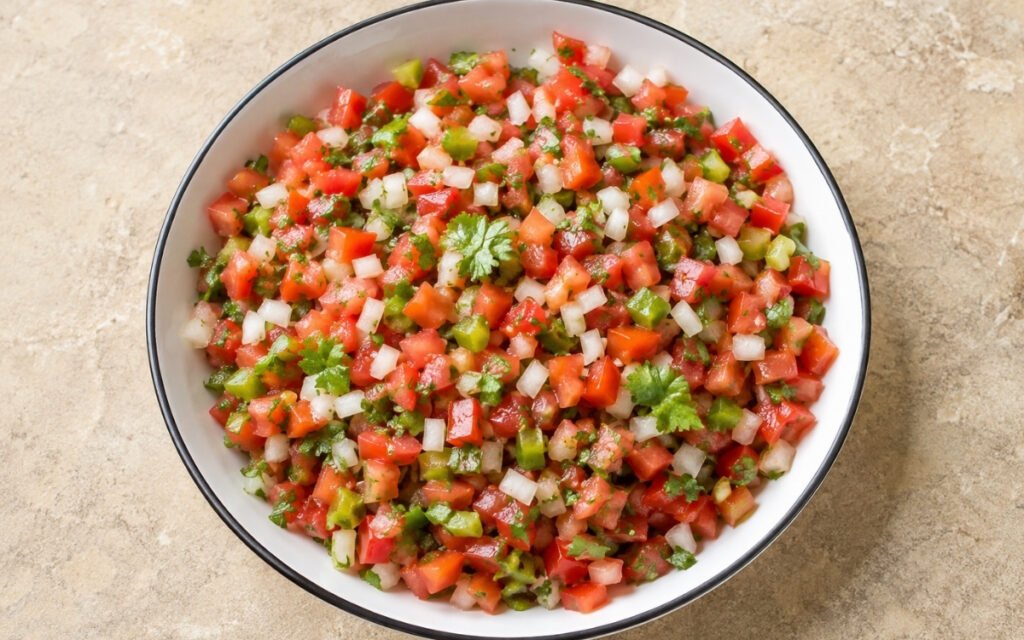
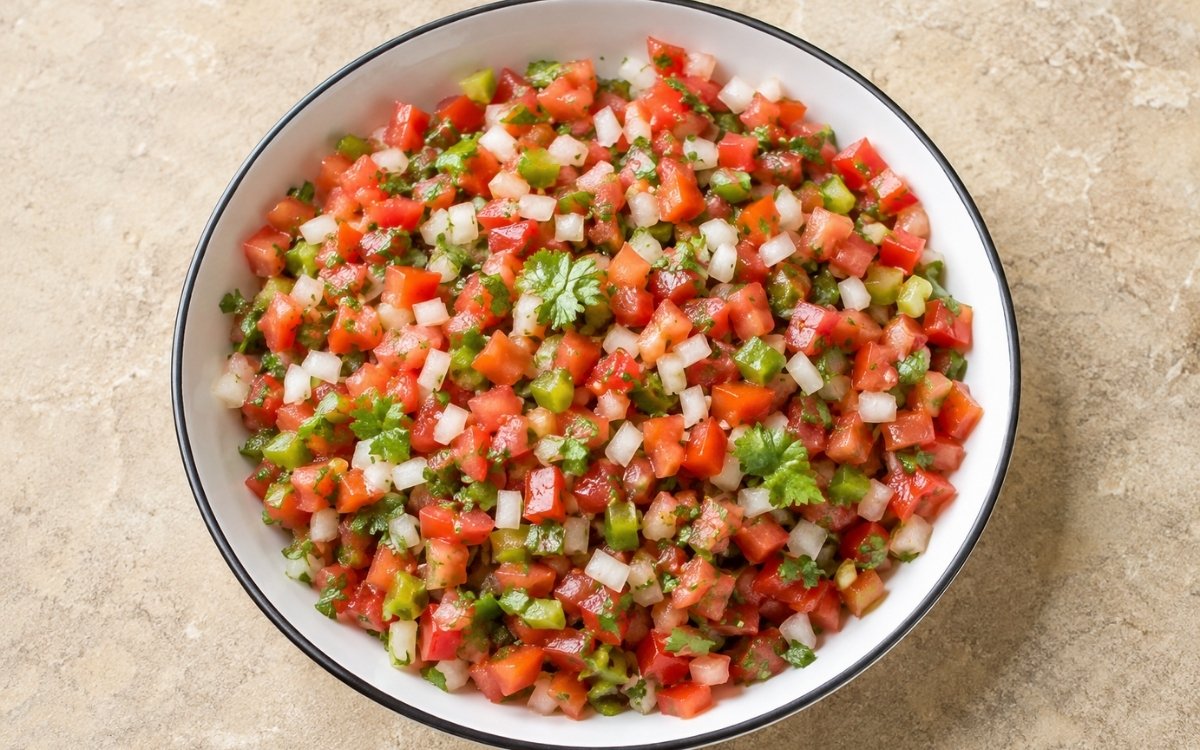
The freshest, most honest condiment in Mexican cooking — ripe Roma tomatoes, sweet and red onion, jalapeño, lime, and a touch of olive oil, all cut to the same size and combined in one bowl. Pico de gallo is not a dish on its own. It is the component that makes burritos, tacos, carne asada, fajitas, and nachos taste complete — fresh, bright, slightly sharp, and alive in a way that no jarred salsa can replicate. Ten minutes of knife work and you have the real thing.
Prep Time : 10 min
Cook Time : 0 min
Servings : 4
10 min
0 min
4
Ingredients
For the Pico de Gallo
• 5 ripe, meaty tomatoes, preferably Roma, about 400g
• 1 sweet onion, finely diced
• 1 red onion, finely diced
• 1 jalapeño pepper, deseeded, finely diced
• Juice of 3 limes
• Zest of half a lime
• 1 tbsp extra-virgin olive oil — this one on Amazon
• Salt to taste
• Freshly ground black pepper to taste
This post may contain affiliate links. As an Amazon Associate I earn from qualifying purchases, at no additional cost to you.
Directions
- Salt the Tomatoes First
Roma tomatoes are specified for this recipe because their flesh-to-juice ratio is significantly higher than regular round tomatoes. Roma tomatoes are meaty, dense, and relatively dry inside — they have thick walls, small seed cavities, and comparatively little internal liquid. This is precisely what pico de gallo needs: tomatoes that contribute sweet, ripe flavour and firm texture without immediately flooding the bowl with watery juice that dilutes everything and produces a pico that is more liquid than salsa. Using regular round tomatoes or beefsteak tomatoes produces noticeably wetter, less structured pico that pools at the bottom of the bowl within minutes. Cut the Roma tomatoes into ¼ inch cubes — approximately 6mm per side. The specific size is not arbitrary: pieces this size provide enough substance to be scooped with a chip or folded into a taco without falling apart, while being small enough that each cube is a single, clean bite that distributes evenly through whatever dish the pico accompanies. As you dice them, transfer to a bowl and season immediately with a generous pinch of salt. Toss briefly and allow to sit while you prepare the remaining ingredients. The salt draws out excess moisture from the tomato cells through osmosis — this moisture collects at the bottom of the bowl during the prep time rather than releasing into the finished pico during serving. Drain any accumulated liquid before combining. - Dice the Onions to the Same Size
Peel and dice both the sweet onion and the red onion to the same ¼ inch cube size as the tomatoes. The uniform size across all components is the single most important knife skill decision in this recipe. Pico de gallo is a composed condiment — every spoonful should contain a roughly equal distribution of tomato, onion, jalapeño, and herb. When components are cut to different sizes, the smaller pieces dominate any given spoonful and the larger pieces are left behind. Uniform ¼ inch cuts ensure that every scoop is balanced. Sweet onion and red onion are used together deliberately. Sweet onion contributes mild, almost fruity sweetness that softens the tomato’s acidity. Red onion provides the sharper, slightly more pungent allium note and the vivid purple-pink colour contrast that makes pico look as vibrant as it tastes. Together they produce a more layered, interesting onion character than either alone. - Prepare the Jalapeño
Slice the jalapeño in half lengthwise. Using a small spoon or the tip of a knife, scrape out and discard all the seeds and the white membrane — the membrane contains the highest concentration of capsaicin and is the primary source of intense heat. Once deseeded, dice the jalapeño into pieces slightly smaller than the other components — approximately ⅛ inch cubes, about 3mm per side. The smaller jalapeño dice has a practical purpose beyond aesthetics: a ¼ inch piece of jalapeño can occasionally deliver a concentrated burst of heat that overwhelms the bite. A smaller, ⅛ inch piece distributes its flavour more evenly across the dish without any single piece producing a jarring spike. The jalapeño in properly made pico de gallo should be present as a warm, building background heat that develops over the course of eating rather than as an occasional ambush. - Zest and Juice the Limes
Zest half a lime over a small bowl before cutting any of the limes open — once a lime is juiced, its skin becomes too soft and unstable to zest cleanly. Apply only gentle pressure with the Microplane or fine grater, taking only the outermost green layer and none of the white pith beneath, which is bitter. Set the zest aside. Juice all three limes — roll each lime firmly on the counter before cutting to break down the internal membrane and maximise juice yield. Three limes provide the volume of acidity needed to season the full quantity of tomato, onion, and jalapeño in a way that one or two limes cannot. The lime juice in pico de gallo is not a garnish: it is the primary brightening agent that lifts and sharpens every other ingredient simultaneously. The zest adds concentrated citrus aromatic oils that provide a more complex, fragrant lime character than juice alone — it makes the pico taste more vividly of fresh lime without adding any additional acidity. - Combine Everything
Drain any accumulated tomato liquid from the bowl. Add the diced sweet onion, red onion, and jalapeño to the salted tomatoes. Add the lime zest, lime juice, and olive oil. Season with freshly ground black pepper. Toss everything together gently using a large spoon with slow, lifting strokes — the goal is even distribution of all components without mashing the tomato pieces or breaking the onion cubes into smaller fragments. The olive oil is a non-traditional addition to pico de gallo and worth noting as such. Authentic pico de gallo contains no fat. The tablespoon of olive oil in this recipe serves a specific and practical function: fat is a carrier for fat-soluble aromatic compounds, and a small amount of oil distributed through the pico helps carry the flavour molecules from the jalapeño, lime zest, and onion across every component in the bowl rather than leaving them concentrated in their source ingredient. The result is a pico where every bite tastes cohesively seasoned rather than having some pieces that are bland and others that are intensely flavoured. Taste and adjust: more salt if the flavour seems flat, more lime juice if brightness is needed, more black pepper for additional warmth. - Rest Before Serving
Allow the finished pico de gallo to rest at room temperature for 10–15 minutes before serving. During this time the salt continues drawing and redistributing moisture through all components, the lime juice softens the raw edge of the onion slightly, and the olive oil carries the flavour compounds from all ingredients into a more cohesive, unified condiment. Pico served immediately after mixing tastes like a bowl of separate diced ingredients. Pico served after a 15-minute rest tastes like a sauce — the same ingredients in a noticeably more integrated state.
*Notes :
- Pico de gallo — literally “beak of the rooster” in Spanish — is a raw salsa fresca from Mexican cuisine with no precise single origin story despite its universality. Unlike cooked salsas that develop flavour through heat, pico de gallo is defined entirely by the quality of its raw ingredients and the precision of its preparation. There is nowhere to hide behind roasting, reduction, or spicing. A pico made with underripe, mealy tomatoes will taste like underripe, mealy tomatoes regardless of the lime or seasoning added. Ripe, sweet, dense Roma tomatoes are not a preference but a requirement.
- The dual onion approach — sweet and red together — is a deliberate departure from most pico recipes that specify only one. Sweet onion alone produces pico that lacks the slight sharpness and colour that red onion brings. Red onion alone can be too aggressively pungent raw, particularly for the milder applications of pico as a component ingredient. Together they produce a balance that is simultaneously mild enough to eat generously on a taco and flavorful enough to contribute meaningful character to everything it accompanies.
- This pico is not a finished dish — it is an ingredient. It belongs on a burrito bowl, folded into a taco, spooned over carne asada, pressed into nachos, or alongside fajitas and chips. It is one of the foundational components of central and South American cooking, and as more recipes from this region are added to the collection, the pico will be linked across them as a natural pairing element.
Why This Recipe Works
This recipe works because it treats the two variables that most affect pico de gallo quality — tomato selection and uniform cutting — as requirements rather than suggestions. Roma tomatoes provide the meaty, low-moisture flesh that keeps the pico structured rather than watery. Uniform ¼ inch dicing ensures every spoonful is balanced rather than dominated by whatever component happened to be cut largest.
The dual onion combination provides layered allium character. The lime zest and juice together provide fuller citrus character than juice alone. And the small amount of olive oil solves the fat-soluble flavour distribution problem that leaves unemulsified pico tasting patchy and uneven.
Ingredient Breakdown
Roma Tomatoes
Low-moisture, meaty, dense flesh — the only variety that produces structured pico rather than watery salsa. Ripe is non-negotiable.
Sweet Onion
ild, slightly fruity allium sweetness — softens the sharpness of the red onion and provides gentle background depth.
Red Onion
Sharper allium character and vivid purple-pink colour contrast — provides the visual vibrancy and the slightly more pungent onion note that sweet onion alone lacks.
Jalapeño (Deseeded)
Background warmth without aggression — deseeded for even, building heat rather than concentrated bursts.
Lime Juice (3 limes)
The primary brightening acid — lifts every other ingredient simultaneously and is the defining flavour of fresh pico.
Lime Zest
Concentrated aromatic citrus oils — provides fragrant lime complexity beyond what juice alone contributes.
Olive Oil
Non-traditional fat carrier — distributes fat-soluble aromatic compounds from all ingredients evenly throughout the bowl for cohesive, uniform flavour in every bite.
Salt
The essential seasoning and moisture-drawing agent — salting the tomatoes early draws excess liquid before combining.
Flavor Structure Explained
This salsa follows a layered balance model:
- Sweet-acidic base (tomatoes)
- Dual allium depth (onion)
- Gentle heat (jalapeño)
- Bright citrus core (lime juice, zest)
- Smooth carrier (olive oil)
Tomatoes define the structure with fresh sweetness and natural acidity that lead the profile. Onion adds layered allium depth, balancing mild sweetness with sharper pungency. Jalapeño introduces a gradual, lingering heat that stays in the background. Lime juice sharpens and lifts the entire composition, while zest adds aromatic intensity. Olive oil provides a smooth medium that distributes flavors evenly, and salt ties everything together, enhancing clarity rather than adding its own presence.
Common Mistakes to Avoid
- Using Watery Tomatoes – Regular round tomatoes release far too much liquid into the bowl and produce watery, diluted pico within minutes of mixing. Roma or similarly dense varieties only.
- Inconsistent Dice Size – Components cut to different sizes produce uneven spoonfuls with one ingredient dominating each bite. Take the extra minutes to cut everything to the same size.
- Not Salting the Tomatoes Ahead – Salting after combining means the drawn-out moisture mixes into the finished pico. Salt the tomatoes first and drain before combining.
- Using Bottled Lime Juice – The flat, processed character of bottled lime is immediately apparent in a preparation where lime is the primary fresh flavour. Three fresh limes only.
- Skipping the Rest – Pico served immediately tastes like separate ingredients. The 15-minute rest integrates the flavours into a cohesive condiment.
- Not Tasting Before Serving – Tomato sweetness, jalapeño heat, and lime acidity all vary between individual pieces of produce. Always taste and calibrate salt, lime, and pepper before serving.
Variations
Mango Pico de Gallo
Replace 200g of the tomatoes with the same weight of diced ripe mango for a sweet-spicy variation that pairs particularly well with grilled fish, shrimp tacos, and any dish where tropical sweetness complements the heat.
Tomatillo Pico De Gallo
Replace half the Roma tomatoes with peeled, raw tomatillo diced to the same size for a tangier, more acidic, and slightly more complex pico with a characteristic Mexican tartness.
Extra Heat Version
Leave the jalapeño seeds in, or replace the jalapeño with a serrano chili — serranos are 3–5 times hotter than jalapeños and produce a noticeably more aggressive heat.
Herb-Forward Version
Add a large handful of finely chopped fresh cilantro for the more herb-present version most commonly found in restaurant pico. Some recipes also include a small amount of fresh mint for an unexpected but pleasant freshness.
Storage & Make-Ahead
Pico de gallo is always best within the first 2 hours of making, when the tomatoes are at maximum freshness and the lime’s aromatic compounds are most vibrant. Store in an airtight container in the refrigerator for up to 2 days — the tomatoes continue to release moisture over time and the pico becomes progressively wetter and softer. Drain accumulated liquid before serving from the refrigerator and taste, adding a fresh squeeze of lime juice to restore brightness that fades during storage. Not suitable for freezing — all components lose their texture completely when frozen.
Frequently Asked Questions
Why Roma tomatoes specifically?
Their high flesh-to-juice ratio keeps the pico structured rather than watery. Regular round tomatoes have larger seed cavities and thinner walls that release significantly more liquid into the bowl. If Roma tomatoes are unavailable, plum tomatoes or any small, dense, meaty variety are the closest substitutes.
How do I make it less spicy?
Deseed and de-membrane the jalapeño as directed, and dice it to the smaller ⅛ inch size. For even milder heat, use only half the jalapeño or replace with a small amount of finely diced green bell pepper which provides similar texture with no heat.
Is olive oil authentic in pico de gallo?
Traditional pico de gallo contains no fat — it is simply tomato, onion, jalapeño, lime, and salt. The tablespoon of olive oil in this recipe is a deliberate departure that improves the flavour cohesion of the finished pico by acting as a carrier for fat-soluble aromatic compounds. Omit it for the most traditional version.
What dishes should I use this with?
Pico de gallo belongs wherever central and South American flavours are present. Use it in burrito bowls, tacos, alongside carne asada, on nachos, with fajitas, or spooned over grilled chicken. As more recipes from this region are added to the collection, this pico will appear as a natural component across them.
Can I make this ahead?
Prepare up to 2 hours ahead at room temperature or up to 24 hours ahead refrigerated. Drain accumulated liquid and add a fresh squeeze of lime before serving from cold. The texture and brightness are best within the first hour.
Nutrition Facts
( per serving )
Calories
~75 kcal
Protein
2 g
Fat
4 g
Carbs
10 g
Calories
~75 kcal
Protein
2 g
Fat
4 g
Carbs
10 g
Related Recipes
Related Recipes

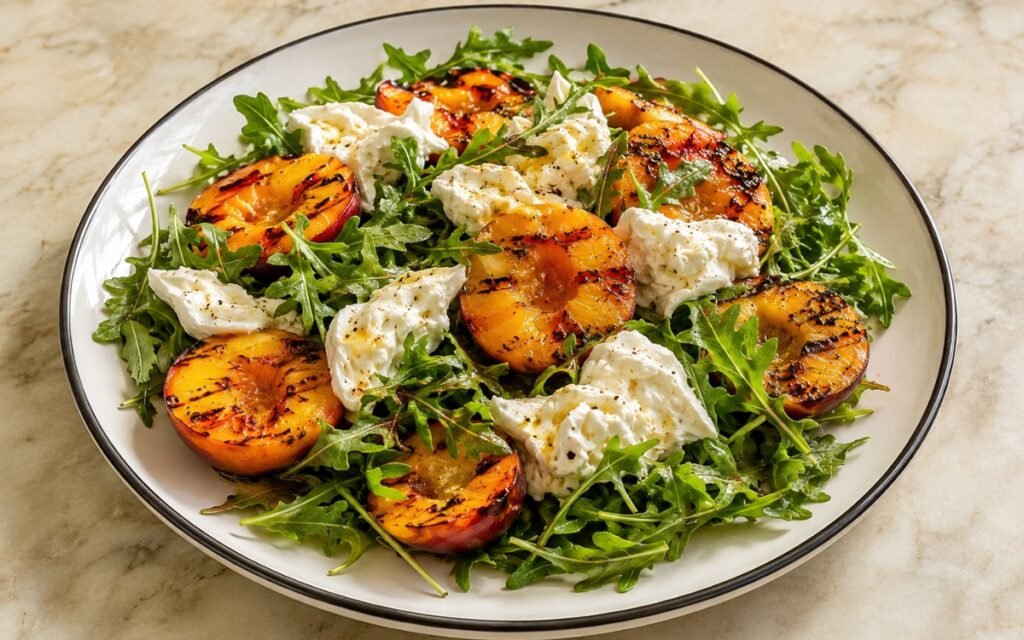
Grilled Peach and Burrata Salad
Caramelized grilled peaches with creamy burrata, arugula, and honey balsamic drizzle for summer.
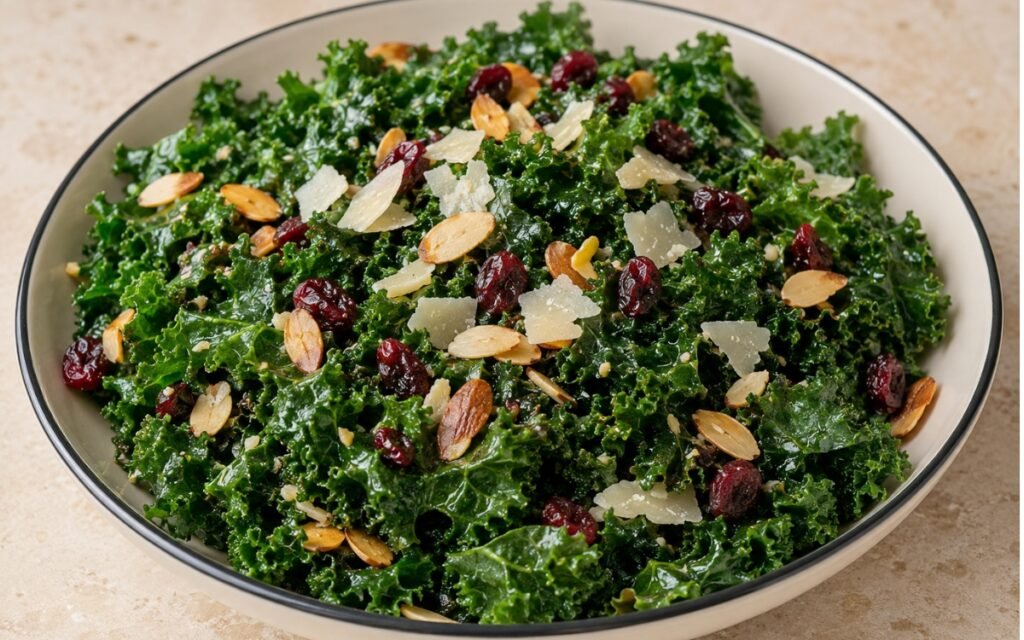
Lemon Parmesan Kale Salad
Massaged kale with bright lemon dressing, shaved Parmesan, toasted almonds, and cranberries.
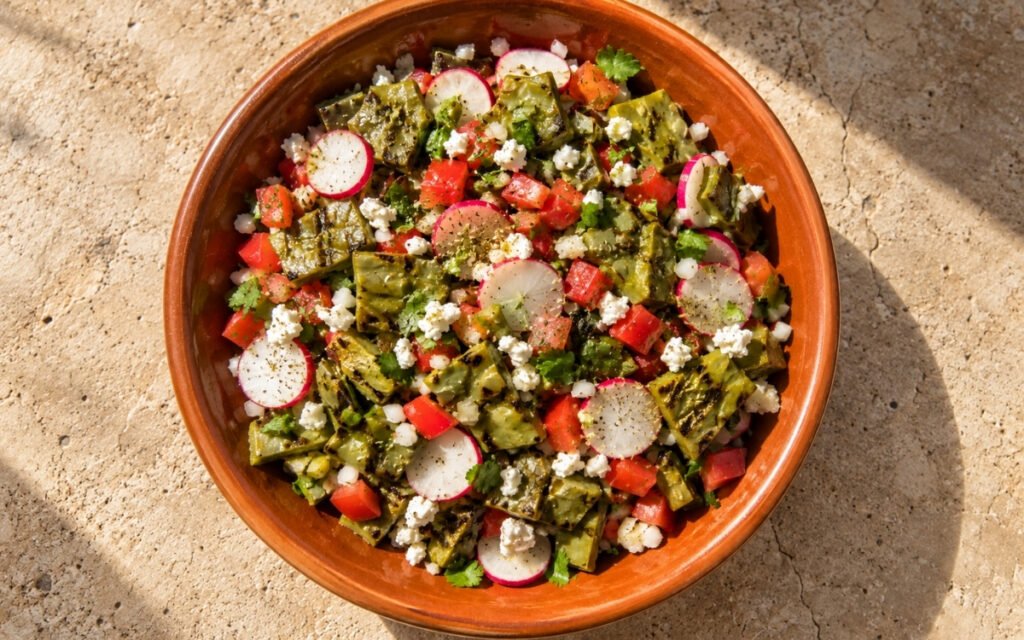
Mexican Nopales Salad
Lightly charred grilled cactus paddles with diced tomato, white onion, cilantro, radish, and queso fresco in a lime-oregano dressing.
You might also like
You might also like
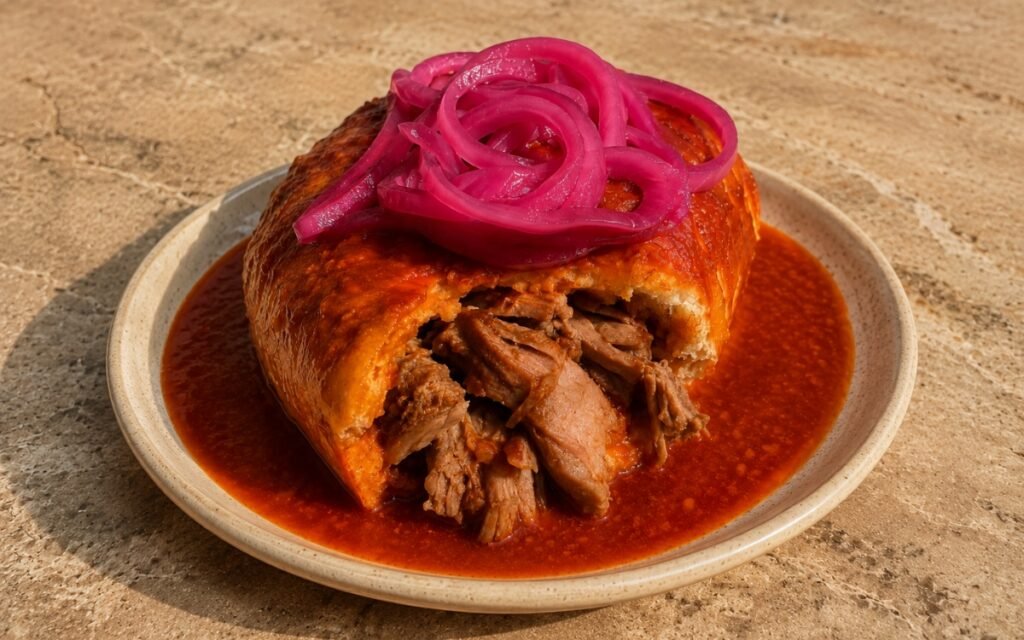
Sándwich Ahogado (Torta Ahogada)
Crusty birote rolls stuffed with juicy carnitas, drowned in thin red chile de árbol sauce and topped with pink pickled onion.
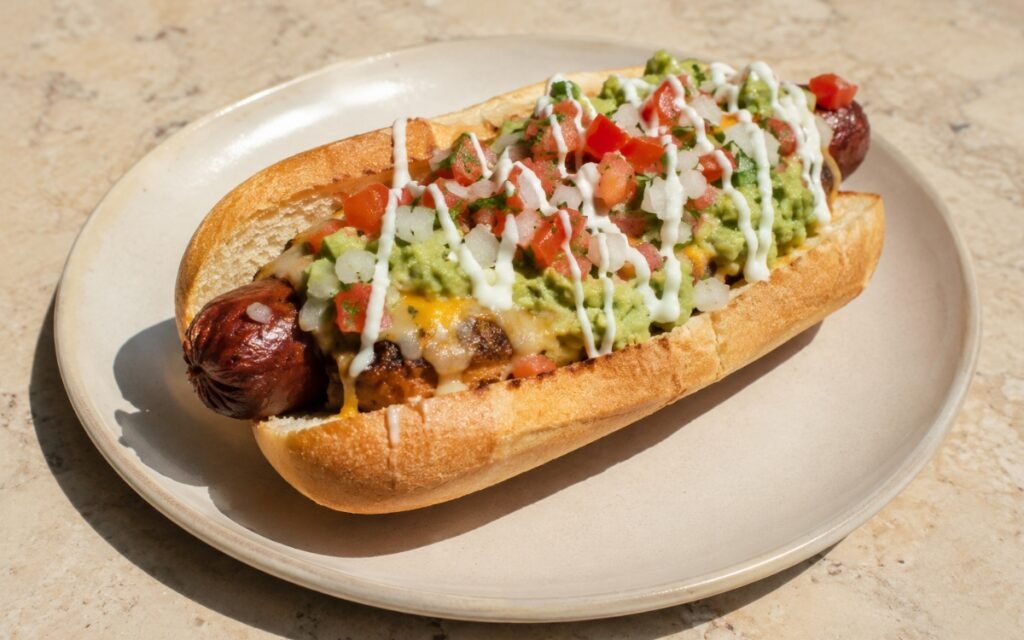
Mexican Hot Dog
Bacon-wrapped smoked frankfurters seared crisp, topped with melted Mexican cheese, guacamole, fresh pico de gallo, and a crema drizzle.
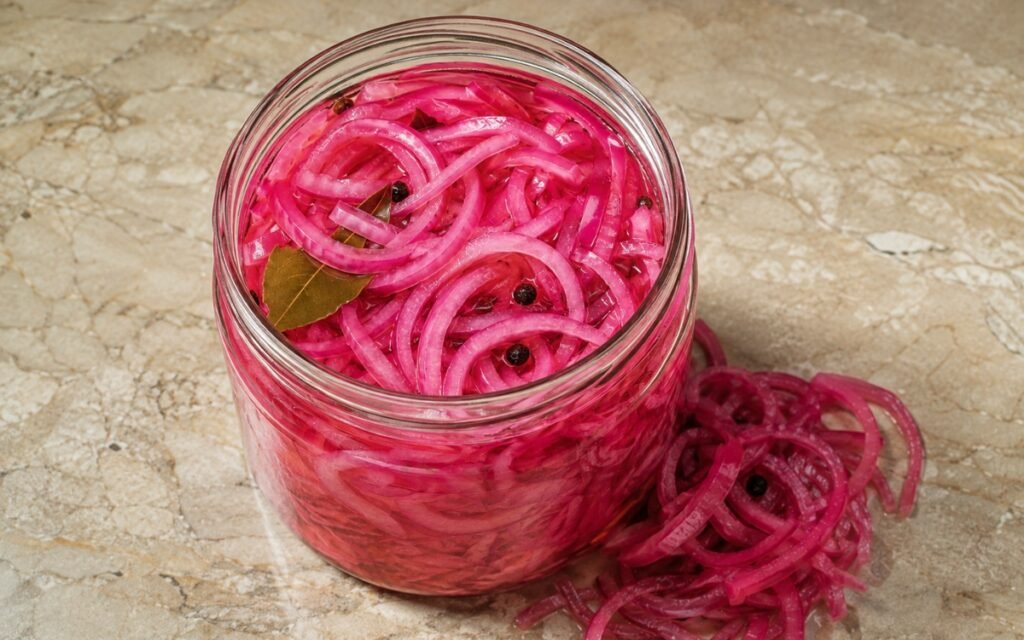
Pickled Red Onion
Thin, evenly sliced red onion pickled in a bright vinegar-lime brine with bay leaf, peppercorns, and coriander seeds.
Pico de Gallo
Ingredients
Method
- Roma tomatoes are specified for this recipe because their flesh-to-juice ratio is significantly higher than regular round tomatoes. Roma tomatoes are meaty, dense, and relatively dry inside — they have thick walls, small seed cavities, and comparatively little internal liquid. This is precisely what pico de gallo needs: tomatoes that contribute sweet, ripe flavour and firm texture without immediately flooding the bowl with watery juice that dilutes everything and produces a pico that is more liquid than salsa. Using regular round tomatoes or beefsteak tomatoes produces noticeably wetter, less structured pico that pools at the bottom of the bowl within minutes. Cut the Roma tomatoes into ¼ inch cubes — approximately 6mm per side. The specific size is not arbitrary: pieces this size provide enough substance to be scooped with a chip or folded into a taco without falling apart, while being small enough that each cube is a single, clean bite that distributes evenly through whatever dish the pico accompanies. As you dice them, transfer to a bowl and season immediately with a generous pinch of salt. Toss briefly and allow to sit while you prepare the remaining ingredients. The salt draws out excess moisture from the tomato cells through osmosis — this moisture collects at the bottom of the bowl during the prep time rather than releasing into the finished pico during serving. Drain any accumulated liquid before combining.
- Peel and dice both the sweet onion and the red onion to the same ¼ inch cube size as the tomatoes. The uniform size across all components is the single most important knife skill decision in this recipe. Pico de gallo is a composed condiment — every spoonful should contain a roughly equal distribution of tomato, onion, jalapeño, and herb. When components are cut to different sizes, the smaller pieces dominate any given spoonful and the larger pieces are left behind. Uniform ¼ inch cuts ensure that every scoop is balanced. Sweet onion and red onion are used together deliberately. Sweet onion contributes mild, almost fruity sweetness that softens the tomato’s acidity. Red onion provides the sharper, slightly more pungent allium note and the vivid purple-pink colour contrast that makes pico look as vibrant as it tastes. Together they produce a more layered, interesting onion character than either alone.
- Slice the jalapeño in half lengthwise. Using a small spoon or the tip of a knife, scrape out and discard all the seeds and the white membrane — the membrane contains the highest concentration of capsaicin and is the primary source of intense heat. Once deseeded, dice the jalapeño into pieces slightly smaller than the other components — approximately ⅛ inch cubes, about 3mm per side. The smaller jalapeño dice has a practical purpose beyond aesthetics: a ¼ inch piece of jalapeño can occasionally deliver a concentrated burst of heat that overwhelms the bite. A smaller, ⅛ inch piece distributes its flavour more evenly across the dish without any single piece producing a jarring spike. The jalapeño in properly made pico de gallo should be present as a warm, building background heat that develops over the course of eating rather than as an occasional ambush.
- Zest half a lime over a small bowl before cutting any of the limes open — once a lime is juiced, its skin becomes too soft and unstable to zest cleanly. Apply only gentle pressure with the Microplane or fine grater, taking only the outermost green layer and none of the white pith beneath, which is bitter. Set the zest aside. Juice all three limes — roll each lime firmly on the counter before cutting to break down the internal membrane and maximise juice yield. Three limes provide the volume of acidity needed to season the full quantity of tomato, onion, and jalapeño in a way that one or two limes cannot. The lime juice in pico de gallo is not a garnish: it is the primary brightening agent that lifts and sharpens every other ingredient simultaneously. The zest adds concentrated citrus aromatic oils that provide a more complex, fragrant lime character than juice alone — it makes the pico taste more vividly of fresh lime without adding any additional acidity.
- Drain any accumulated tomato liquid from the bowl. Add the diced sweet onion, red onion, and jalapeño to the salted tomatoes. Add the lime zest, lime juice, and olive oil. Season with freshly ground black pepper. Toss everything together gently using a large spoon with slow, lifting strokes — the goal is even distribution of all components without mashing the tomato pieces or breaking the onion cubes into smaller fragments. The olive oil is a non-traditional addition to pico de gallo and worth noting as such. Authentic pico de gallo contains no fat. The tablespoon of olive oil in this recipe serves a specific and practical function: fat is a carrier for fat-soluble aromatic compounds, and a small amount of oil distributed through the pico helps carry the flavour molecules from the jalapeño, lime zest, and onion across every component in the bowl rather than leaving them concentrated in their source ingredient. The result is a pico where every bite tastes cohesively seasoned rather than having some pieces that are bland and others that are intensely flavoured. Taste and adjust: more salt if the flavour seems flat, more lime juice if brightness is needed, more black pepper for additional warmth.
- Allow the finished pico de gallo to rest at room temperature for 10–15 minutes before serving. During this time the salt continues drawing and redistributing moisture through all components, the lime juice softens the raw edge of the onion slightly, and the olive oil carries the flavour compounds from all ingredients into a more cohesive, unified condiment. Pico served immediately after mixing tastes like a bowl of separate diced ingredients. Pico served after a 15-minute rest tastes like a sauce — the same ingredients in a noticeably more integrated state.