
Sumac Onions Salad
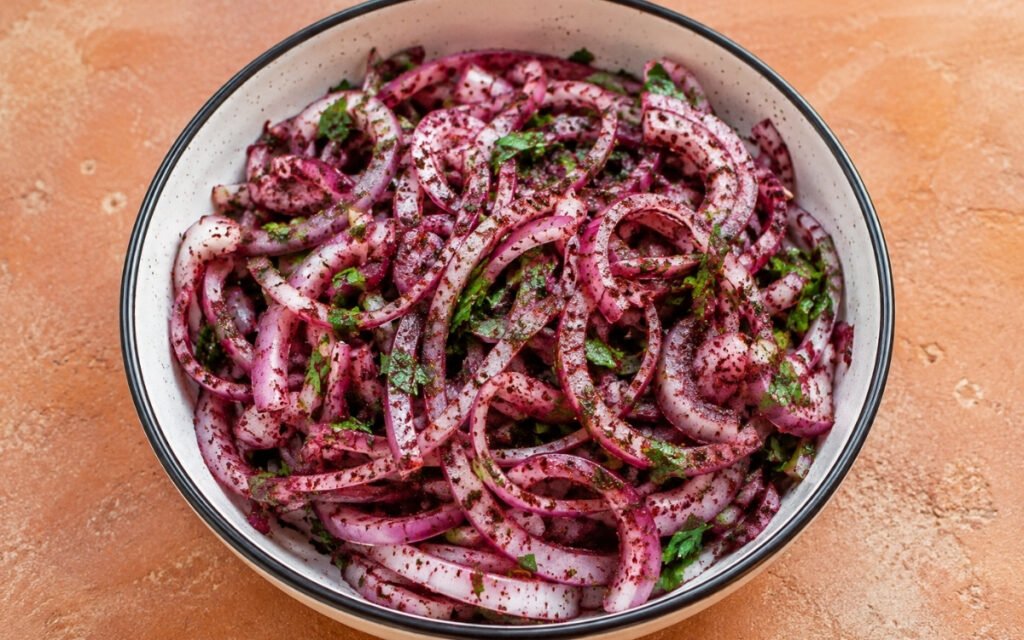
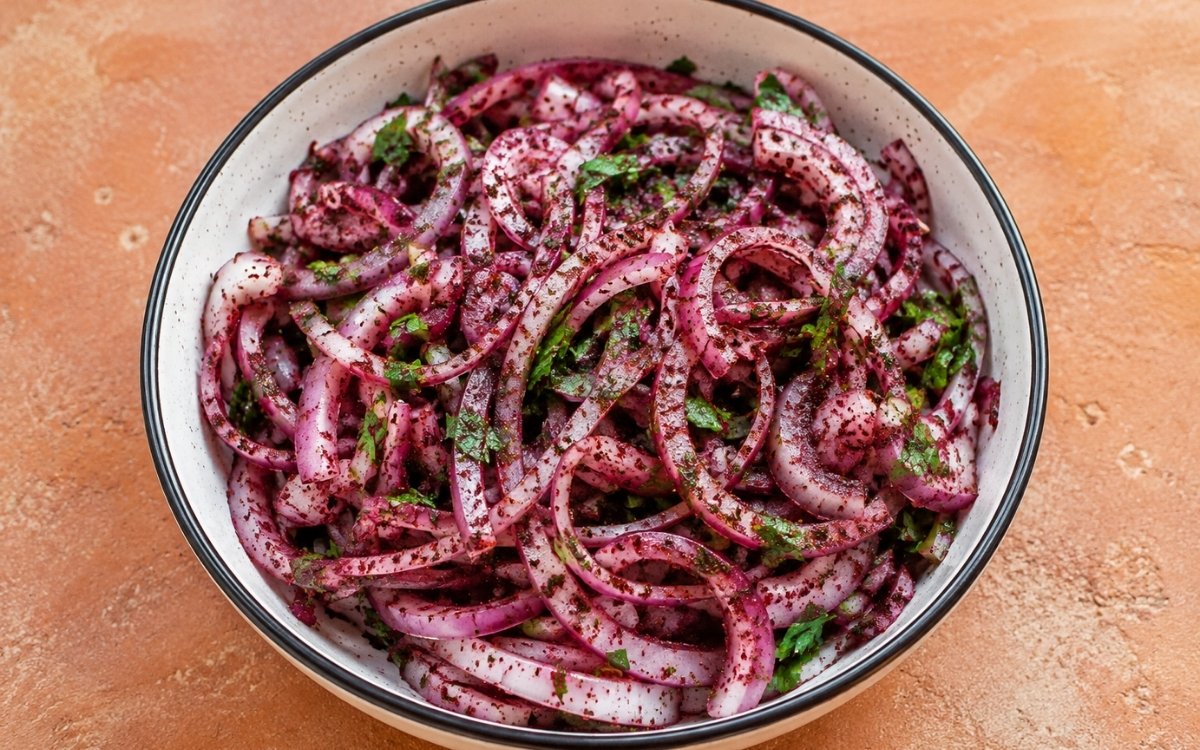
One of the great condiment salads of Middle Eastern cooking — thin-sliced red onion tossed vigorously in a sumac and lemon dressing until every ring is coated in the spice’s distinctive sour-fruity tartness, then folded through with fresh parsley and left to rest until the onion softens just enough to be pleasant without losing its bite. Sharp, bright, deeply aromatic, and ready in fifteen minutes. This is the salad that does not stand alone — it is the component that makes Beef Kofta Skewers, Chicken Shawarma, and Greek Chicken Souvlaki genuinely complete, and it transforms any grilled meat wrapped in flatbread into something worth making again.
Prep Time : 10 min
Cook Time : 0 min
Servings : 8
10 min
0 min
8
Ingredients
For the Sumac Onions Salad
• 4–5 medium red onions, halved and sliced into extra-thin semicircles
• Juice of 1 lemon
• Zest of half a lemon
• 3 tbsp extra-virgin olive oil — this one on Amazon
• 1 tbsp red wine vinegar — this one on Amazon
• 4–5 tbsp sumac, adjust to taste — this one on Amazon
• Large handful fresh flat-leaf parsley, roughly chopped
• Sea salt to taste
This post may contain affiliate links. As an Amazon Associate I earn from qualifying purchases, at no additional cost to you.
Directions
- Slice the Onions as Thin as Possible
Peel the red onions and cut each in half from root to tip. Place each half flat on the cutting board and slice into semicircles as thinly as possible — ideally on a mandoline set to its thinnest setting, which produces almost translucent rings of an even, consistent thickness that is nearly impossible to achieve by hand at speed. A sharp chef’s knife at a steady, controlled rhythm produces acceptable results — aim for 1–2mm thickness, thin enough that the rings are slightly flexible rather than rigid when held up. The thinness of the slices is the single most important knife skill decision in this recipe. Thick onion rings in sumac salad retain their raw sharpness and require a significantly longer rest to become palatable alongside grilled meats. Paper-thin rings have more surface area relative to their volume, which means the sumac and lemon dressing coats and penetrates them more completely in the same period of time, and they soften more quickly during the rest period from the acid’s gentle action on the cell walls. Transfer all sliced onions to a large bowl. If you want to take the sharpest edge off before dressing — though the sumac and lemon in this recipe moderate the harshness effectively on their own — cover with ice-cold water and a few ice cubes for 5 minutes, then drain and dry before proceeding. - Make the Sumac Dressing
In a small bowl, combine the lemon zest, lemon juice, extra-virgin olive oil, red wine vinegar, sumac, and a generous pinch of sea salt. Stir together until fully combined. The dressing is not emulsified — the olive oil and lemon juice will sit as separate layers if left to stand, but they combine well enough when poured directly over the onions and tossed vigorously to coat everything evenly. Sumac is the defining ingredient and deserves explanation. It is a dried, ground berry from the Rhus coriaria shrub grown throughout the Middle East and Mediterranean — its flavour is sour, fruity, slightly earthy, and distinctly complex in a way that lemon juice alone cannot replicate. In Middle Eastern cooking it performs the role that lemon performs in Mediterranean cooking — the primary souring agent — but with a distinctively different, more complex aromatic profile. At 4–5 tablespoons for this quantity of onion, the sumac produces a deeply red-purple coating on every ring that is as visually striking as it is aromatic. The combination of sumac’s fruit-sour character, lemon’s clean bright acidity, and red wine vinegar’s tannic sharpness creates a three-acid dressing with more layered complexity than any single acid would provide. Taste the dressing before adding it to the onions — it should taste intensely sour, fruity, and aromatic with enough salt to sharpen all the flavours. - Dress and Toss Vigorously
Pour the sumac dressing over the sliced onions. Now toss vigorously — this is not a gentle fold. Use two large spoons or your hands and work the onions through the dressing with continuous, firm, turning motions for 60–90 seconds. The vigorous tossing serves a specific purpose: it physically separates the onion rings from each other, ensuring every individual ring makes direct contact with the sumac dressing rather than having inner rings remain undressed inside a clump of outer ones. It also begins the mechanical softening process — the motion against itself and the bowl slightly bruises the outer layer of the onion cells, allowing the acid from the lemon and vinegar to begin penetrating the flesh more quickly. At the end of the vigorous tossing, every onion ring should be visibly coated in a deep red-purple sumac colour with no pale, undressed rings remaining. If pale rings are still visible, continue tossing until the colour is uniform throughout. - Add and Fold the Parsley
Chop the fresh flat-leaf parsley roughly — larger, recognisable pieces rather than a fine mince. The texture of the parsley in this salad is important: chunky, intact leaf pieces contribute visual freshness and provide clean, slightly grassy flavour bursts in individual bites alongside the heavily-dressed onion. A fine mince would distribute invisibly and contribute parsley flavour without any textural contrast. Scatter the chopped parsley over the dressed onions and now switch to a gentle folding technique — slow, lifting strokes with a large spoon or spatula, turning the salad over itself 4–5 times until the parsley is distributed throughout. The change from vigorous to gentle at this stage preserves the parsley’s colour and texture. Aggressive continued tossing would bruise the parsley into dark, soft fragments that lose both their visual appeal and their aromatic freshness within minutes. - Rest and Taste
Cover the bowl loosely and allow the salad to rest at room temperature for 5–10 minutes before serving. During this brief rest, the lemon juice and red wine vinegar continue to penetrate the onion flesh, softening the remaining sharpness of the raw onion without making the rings limp. The sumac’s colour continues to bleed into the surrounding dressing liquid, deepening the purple-red hue throughout the bowl. The olive oil coats the parsley leaves and prevents them from wilting immediately. After the rest, taste carefully: add more sumac if the fruity tartness needs amplifying — sumac is the defining flavour and the salad should taste prominently of it. Add more lemon juice if brightness is needed. Add more salt if the flavours seem muted. The salad should taste intensely flavoured — sour, bright, herbaceous, and aromatic — because it is designed to be eaten alongside rich, heavily-spiced grilled meats where a timid salad would disappear completely.
*Notes :
- Sumac is available at Middle Eastern grocery stores, specialty food shops, and increasingly in the international foods section of mainstream supermarkets. It is sold as a deep burgundy-red powder with a coarsely ground, slightly granular texture. Good quality sumac has a strongly fruity, sour aroma and an intensely tart flavour. Older or lower-quality sumac loses its vibrant colour and aromatic pungency, producing a flat, dusty result. Store in an airtight container away from light — it retains its best quality for 6–12 months after opening.
- The question of whether to soak the onions in ice water before dressing is addressed directly in this recipe: it is genuinely optional here, unlike in preparations where raw onion is only briefly dressed. The sumac’s tartness and the dual-acid dressing (lemon and red wine vinegar) perform the function of moderating the onion’s sharpness through chemical action on the allium compounds during the rest period — an effect that the ice-water technique achieves physically by washing out the compounds before dressing. Either approach produces a palatable result. The unsoftened raw version has more bite and sharpness; the pre-soaked version is milder and sweeter. Choose based on preference and intended serving context: more bite for wraps and sandwiches where the onion is a component among many; milder for presentations where the salad is served prominently alongside grilled meats.
- This salad is a foundational component of Middle Eastern mezze and kebab culture. In Turkey it is served as a standard accompaniment to doner and kebap. In Lebanon it appears alongside shawarma. In Israel it accompanies schnitzel and grilled meats. In its various regional forms it appears wherever grilled meat and flatbread are prepared together — which is to say, throughout an enormous swath of Middle Eastern, Eastern Mediterranean, and Central Asian cooking.
Why This Mocktail Works
This recipe works because sumac is not simply a colouring agent — it is a complex acid spice that simultaneously flavours the onion, moderates its sharpness through its own tartness, and coats every ring in a visually striking deep red that signals its flavour identity immediately. The vigorous initial tossing separates the rings and achieves uniform coating. The gentle parsley fold preserves freshness and texture.
The dual-acid dressing (lemon and red wine vinegar alongside sumac) creates a three-layer acidity that is more interesting and more flattering to the onion than any single acid alone. And the 10-minute rest allows the chemistry to proceed to the point where the onion is pleasant rather than raw.
Ingredient Breakdown
Red Onions (Paper-Thin)
The entire substance of the salad — sliced as thin as possible for maximum dressing penetration, minimal residual sharpness, and the semi-translucent visual quality that makes the finished salad striking.
Sumac
The defining ingredient — sour, fruity, complexly aromatic, and the spice that gives the salad its name, its colour, and its identity. Cannot be substituted.
Lemon Juice and Zest
The primary brightening acid — juice for clean sharpness, zest for aromatic complexity. Together with sumac they form the multi-layered acid character of the dressing.
Red Wine Vinegar
Secondary acid — tannic, slightly wine-forward, providing a different acid note from the lemon that adds depth to the dressing.
Extra-Virgin Olive Oil
The fat carrier — distributes the sumac and lemon aromatic compounds across every onion ring and prevents the parsley from wilting immediately.
Fresh Flat-leaf Parsley
The aromatic herb component — roughly chopped for texture and visual freshness, providing a clean, slightly grassy counterpoint to the intense sourness of the dressing.
Flavor Structure Explained
This salad follows a layered balance model:
- Sour dominant core (sumac)
- Bright acidic support (lemon, red wine vinegar)
- Pungent allium base (red onion)
- Smooth fat medium (olive oil)
- Fresh herbal lift (parsley)
Sumac defines the entire profile with intense, fruity tartness that leads aggressively. Lemon and red wine vinegar reinforce and expand that acidity, adding both brightness and sharpness. Red onion anchors the structure with pungent, savory depth, giving the acidity something to push against. Olive oil carries and rounds the sharp edges, ensuring the flavors read as cohesive rather than harsh. Parsley lifts the finish with clean herbal freshness, while salt amplifies and sharpens all elements into a focused, high-impact profile.
Common Mistakes to Avoid
- Slicing the Onions Too Thick – Thick rings retain raw sharpness, absorb dressing incompletely, and require much longer rest time to become pleasant. Always slice as thinly as possible.
- Under-tossing After Dressing – Gentle tossing leaves inner rings undressed and pale. Toss vigorously for a full 60–90 seconds until every ring is uniformly coated in deep red-purple sumac colour.
- Over-chopping the Parsley – Fine-minced parsley distributes invisibly and bruises immediately into dark, soft fragments. Rough chop only — keep the leaves recognisable.
- Not Resting Before Serving – The 10-minute rest is where the acid and sumac penetrate the onion flesh and moderate its rawness. Serving immediately produces a salad that is too aggressively sharp.
- Using Old or Low-Quality Sumac – Pale, dusty sumac without a strong fruity aroma produces a flat, flavourless result. Source fresh, dark burgundy sumac from a Middle Eastern grocer for the best result.
Variations
Roma Tomato Version
Add 5-6 Roma tomatoes cut into thin wedges — their meaty, low-moisture flesh absorbs the sumac dressing effectively without flooding the bowl with tomato juice. The tomato’s sweetness provides an additional contrast to the sumac’s tartness and the onion’s sharpness. Toss the tomato wedges in with the onions for the initial vigorous dressing, then fold the parsley in as directed.
Cucumber Version
Add 2 English cucumber, sliced paper-thin on a mandoline, to the onion mixture before dressing. The cucumber’s grassiness, freshness, and cooling quality is a natural complement to sumac’s tartness and pairs particularly well when the salad accompanies spiced grilled chicken. English cucumber is specified because its thin skin and smaller seed cavity produce cleaner-flavoured, less watery slices than standard cucumbers.
Herb-Forward Version
Add 20 fresh mint leaves torn or chiffonade-cut alongside the parsley for a more complex herb character particularly suited to lamb preparations.
Storage & Make-Ahead
The salad is best served within 1–2 hours of making. The onions continue to soften in the acid over time — after 2 hours they have lost most of their crunch and become noticeably limp, which some prefer as a more mellow, deeply dressed result. After 4 hours the onions are very soft and the parsley has wilted considerably. Refrigerate for up to 24 hours — the flavour deepens but the texture softens progressively. Taste before serving from the refrigerator and add fresh lemon juice, which fades during storage, to restore brightness. Drain any accumulated liquid before serving.
Frequently Asked Questions
What is sumac and where do I find it?
Sumac is a dark burgundy spice ground from the dried berries of the Rhus coriaria shrub, native to the Middle East and Mediterranean. Its flavour is intensely sour, fruity, and aromatic — the primary souring spice in Middle Eastern cooking. Available at Middle Eastern grocery stores, specialty spice shops, and increasingly in mainstream supermarket international foods aisles.
Can I substitute sumac with something else?
Sumac has a genuinely unique flavour profile that cannot be replicated by another single ingredient. For a functional but different result, a combination of lemon juice and a small amount of pomegranate molasses approaches its sour-fruity character. There is no single-ingredient substitute — source the real thing for this recipe.
What grilled proteins pair best with sumac onions?
This salad was specifically built to accompany Greek Chicken Souvlaki, Beef Kofta Skewers, and Homemade Chicken Shawarma — all proteins with bold spice profiles that specifically benefit from the salad’s sourness as a counterpoint. Beyond those, any grilled lamb, any kebab or skewer preparation, and any grilled chicken with Middle Eastern spicing pairs naturally. The salad’s sharpness cuts through fat and spice simultaneously, which is why it is so specifically suited to this cuisine’s flavour vocabulary.
What breads and wraps work best with this salad?
Sumac onions are at their best tucked into anything that wraps around grilled meat. Warm pita is the classic choice — its soft, slightly chewy interior absorbs the sumac-lemon dressing and the combination of meat, onion, and bread in one bite is definitive Middle Eastern street food. Lavash is the thin, crisp flatbread used throughout the Levant and Central Asia — its neutral character allows the sumac onion’s flavour to come through clearly in every bite. Flour tortillas work as a Western-accessible wrap that holds the combination cleanly. All three transform any grilled meat into a complete, portable meal, and the sumac onion salad is the component that makes the difference between a good wrap and a genuinely memorable one.
Nutrition Facts
( per serving )
Calories
~95 kcal
Protein
1 g
Fat
6 g
Carbs
10 g
Calories
~95 kcal
Protein
1 g
Fat
6 g
Carbs
10 g
Related Recipes
Related Recipes

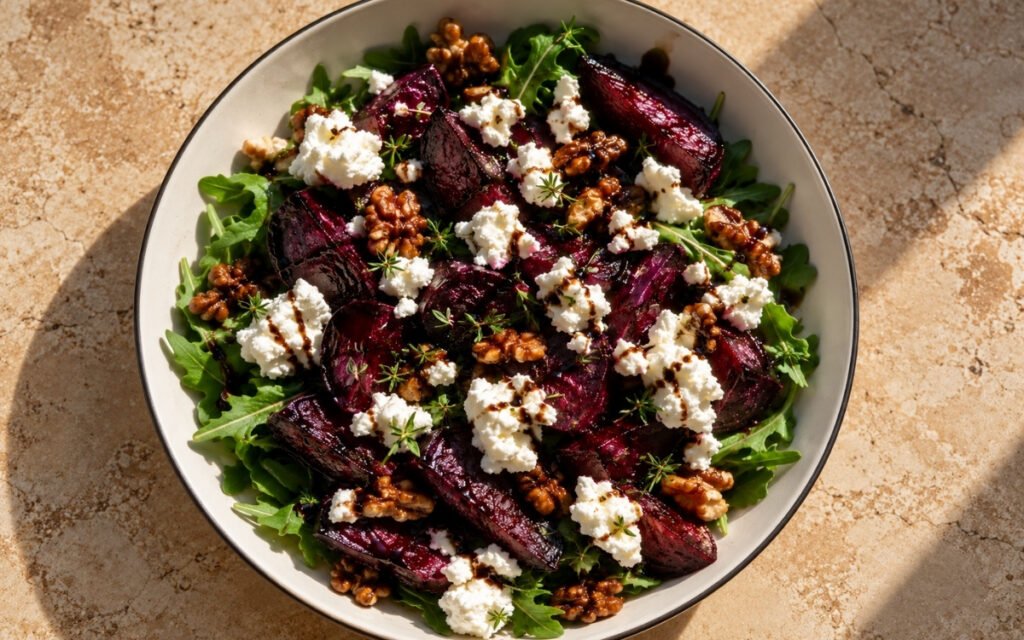
Roasted Beetroot and Goat Cheese Salad
Deep caramelized beet wedges with peppery rocket, creamy goat cheese, candied walnuts, thyme, and a dark balsamic reduction.
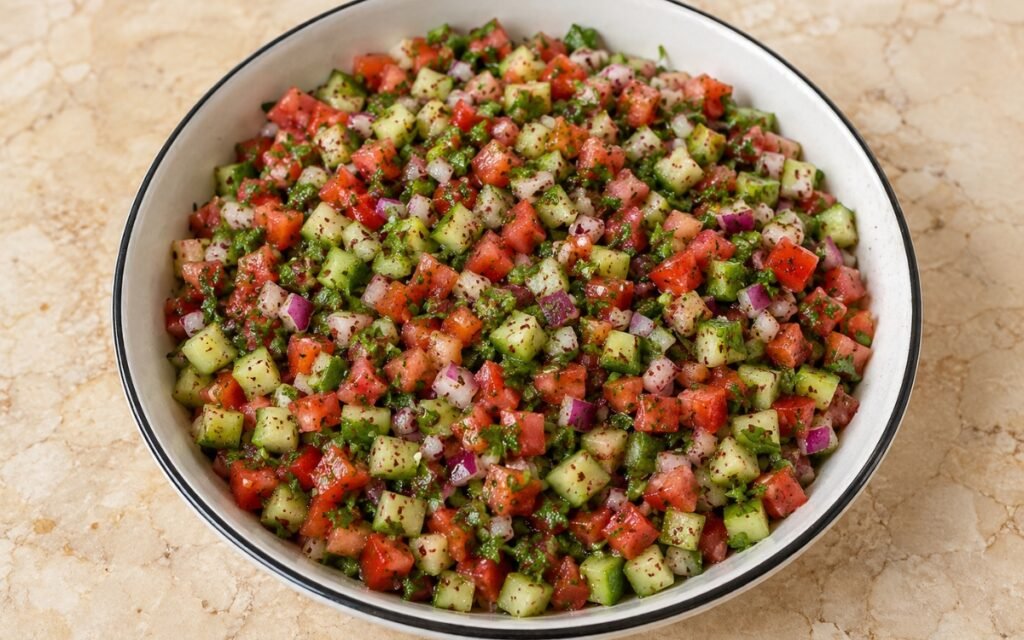
Authentic Persian Shirazi Salad
Traditional Iranian salad with finely diced cucumbers, tomatoes, onions, herbs, and lime-sumac dressing.
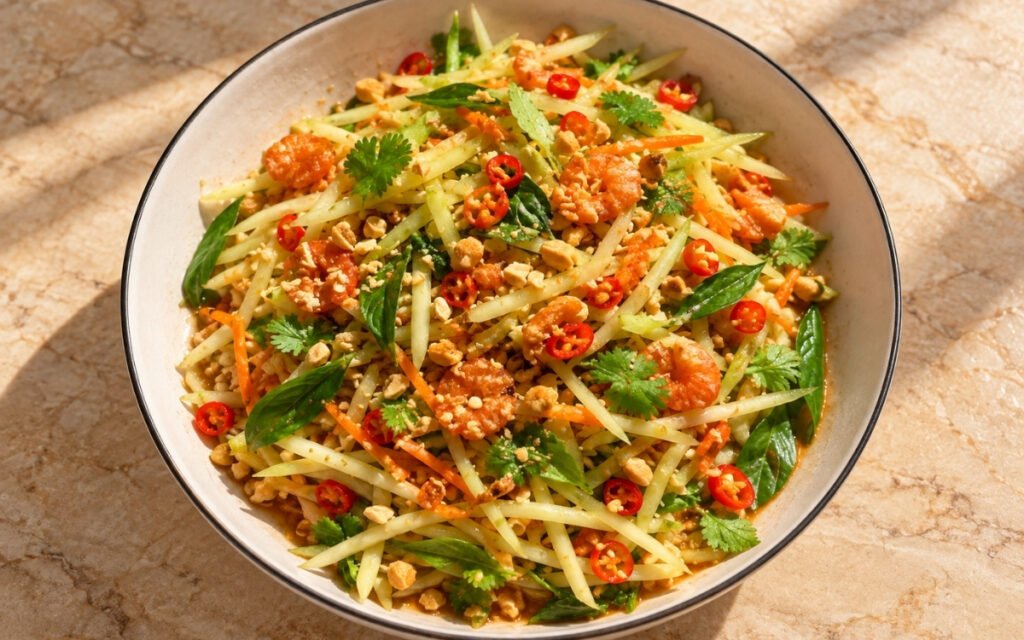
Thai Green Mango Salad with Peanuts & Chili
Crisp julienned unripe mango and carrot with dried shrimp, roasted peanuts, bird’s eye chili, and fresh herbs in a sour-salty-sweet dressing.
You might also like
You might also like
Salsa Verde
Broiled tomatillos and sweet onion blended with jalapeño, garlic, and fresh cilantro — rich, smoky, herby Mexican salsa verde ready in 30 minutes.
Green Zhoug
Fresh jalapeños, a whole bunch of cilantro, mint, garlic, and lime pulsed into a thick, coarse Yemeni herb sauce — ten minutes, no cooking, and the condiment that improves everything it touches.
Classic Guacamole
Three ripe avocados folded with red onion, jalapeño, lime, and cumin — rustic, rich, and perfectly seasoned in 20 minutes.
Sumac Onions Salad
Ingredients
Method
- Peel the red onions and cut each in half from root to tip. Place each half flat on the cutting board and slice into semicircles as thinly as possible — ideally on a mandoline set to its thinnest setting, which produces almost translucent rings of an even, consistent thickness that is nearly impossible to achieve by hand at speed. A sharp chef’s knife at a steady, controlled rhythm produces acceptable results — aim for 1–2mm thickness, thin enough that the rings are slightly flexible rather than rigid when held up. The thinness of the slices is the single most important knife skill decision in this recipe. Thick onion rings in sumac salad retain their raw sharpness and require a significantly longer rest to become palatable alongside grilled meats. Paper-thin rings have more surface area relative to their volume, which means the sumac and lemon dressing coats and penetrates them more completely in the same period of time, and they soften more quickly during the rest period from the acid’s gentle action on the cell walls. Transfer all sliced onions to a large bowl. If you want to take the sharpest edge off before dressing — though the sumac and lemon in this recipe moderate the harshness effectively on their own — cover with ice-cold water and a few ice cubes for 5 minutes, then drain and dry before proceeding.
- In a small bowl, combine the lemon zest, lemon juice, extra-virgin olive oil, red wine vinegar, sumac, and a generous pinch of sea salt. Stir together until fully combined. The dressing is not emulsified — the olive oil and lemon juice will sit as separate layers if left to stand, but they combine well enough when poured directly over the onions and tossed vigorously to coat everything evenly. Sumac is the defining ingredient and deserves explanation. It is a dried, ground berry from the Rhus coriaria shrub grown throughout the Middle East and Mediterranean — its flavour is sour, fruity, slightly earthy, and distinctly complex in a way that lemon juice alone cannot replicate. In Middle Eastern cooking it performs the role that lemon performs in Mediterranean cooking — the primary souring agent — but with a distinctively different, more complex aromatic profile. At 4–5 tablespoons for this quantity of onion, the sumac produces a deeply red-purple coating on every ring that is as visually striking as it is aromatic. The combination of sumac’s fruit-sour character, lemon’s clean bright acidity, and red wine vinegar’s tannic sharpness creates a three-acid dressing with more layered complexity than any single acid would provide. Taste the dressing before adding it to the onions — it should taste intensely sour, fruity, and aromatic with enough salt to sharpen all the flavours.
- Pour the sumac dressing over the sliced onions. Now toss vigorously — this is not a gentle fold. Use two large spoons or your hands and work the onions through the dressing with continuous, firm, turning motions for 60–90 seconds. The vigorous tossing serves a specific purpose: it physically separates the onion rings from each other, ensuring every individual ring makes direct contact with the sumac dressing rather than having inner rings remain undressed inside a clump of outer ones. It also begins the mechanical softening process — the motion against itself and the bowl slightly bruises the outer layer of the onion cells, allowing the acid from the lemon and vinegar to begin penetrating the flesh more quickly. At the end of the vigorous tossing, every onion ring should be visibly coated in a deep red-purple sumac colour with no pale, undressed rings remaining. If pale rings are still visible, continue tossing until the colour is uniform throughout.
- Chop the fresh flat-leaf parsley roughly — larger, recognisable pieces rather than a fine mince. The texture of the parsley in this salad is important: chunky, intact leaf pieces contribute visual freshness and provide clean, slightly grassy flavour bursts in individual bites alongside the heavily-dressed onion. A fine mince would distribute invisibly and contribute parsley flavour without any textural contrast. Scatter the chopped parsley over the dressed onions and now switch to a gentle folding technique — slow, lifting strokes with a large spoon or spatula, turning the salad over itself 4–5 times until the parsley is distributed throughout. The change from vigorous to gentle at this stage preserves the parsley’s colour and texture. Aggressive continued tossing would bruise the parsley into dark, soft fragments that lose both their visual appeal and their aromatic freshness within minutes.
- Cover the bowl loosely and allow the salad to rest at room temperature for 5–10 minutes before serving. During this brief rest, the lemon juice and red wine vinegar continue to penetrate the onion flesh, softening the remaining sharpness of the raw onion without making the rings limp. The sumac’s colour continues to bleed into the surrounding dressing liquid, deepening the purple-red hue throughout the bowl. The olive oil coats the parsley leaves and prevents them from wilting immediately. After the rest, taste carefully: add more sumac if the fruity tartness needs amplifying — sumac is the defining flavour and the salad should taste prominently of it. Add more lemon juice if brightness is needed. Add more salt if the flavours seem muted. The salad should taste intensely flavoured — sour, bright, herbaceous, and aromatic — because it is designed to be eaten alongside rich, heavily-spiced grilled meats where a timid salad would disappear completely.