
Muhammara
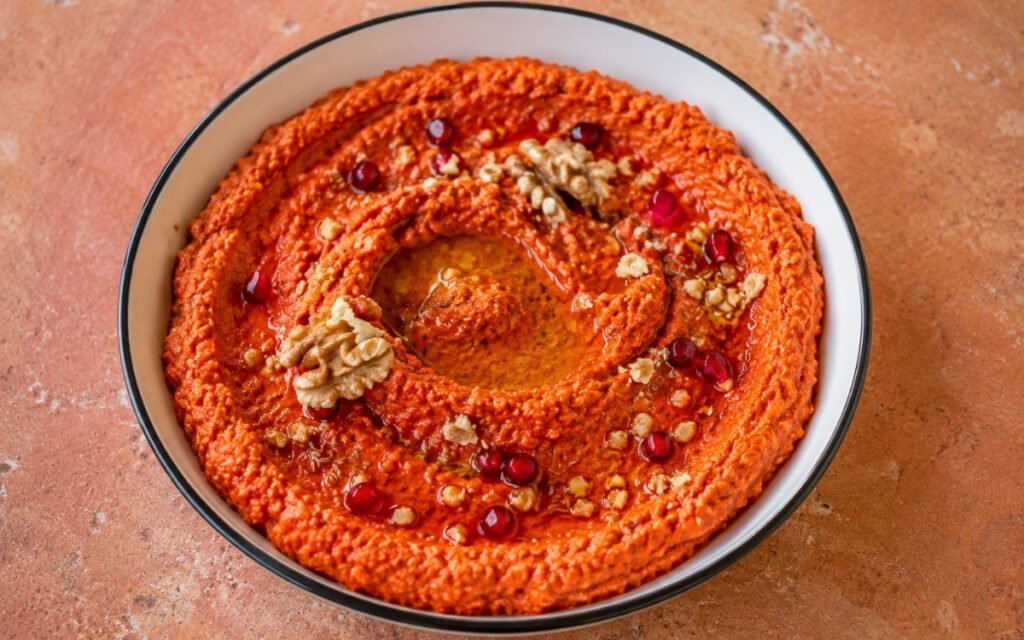
Muhammara is the Syrian red pepper and walnut dip that belongs on every mezze table — roasted red bell peppers charred under the broiler until blistered and sweet, blended with toasted walnuts, bread, pomegranate molasses, and Aleppo pepper into a thick, deeply flavoured paste that is simultaneously smoky, sweet, sour, nutty, and warmly spiced. Unlike hummus, which is neutral and creamy, muhammara has a distinctive, assertive character that makes it the most interesting thing on a shared table the moment it appears. Serve with warm Homemade Lavash, Fresh Pita Flatbread, or torn Sourdough Bread.
Prep Time : 15 min
Cook Time : 20 min
Servings : 8
15 min
20 min
8
Ingredients
For the Muhammara
• 3 large red bell peppers
• 100g walnuts
• 60g bread, cut into small cubes — sourdough, country bread, or 30–40g panko breadcrumbs as an alternative
• 2 garlic cloves
• 3 tbsp extra-virgin olive oil — this one on Amazon
• 1–3 tbsp pomegranate molasses, added gradually to taste — see note below
• 2 tsp fresh lemon juice, plus more to taste
• 1½ tbsp Aleppo pepper — this one on Amazon
• 1 tsp ground cumin — this one on Amazon
• 1 tsp fine sea salt, plus more to taste
For Serving
• Extra-virgin olive oil, for drizzling
• Pomegranate molasses, a few drops over the surface — this one on Amazon
For the Garnish
• 2–3 walnuts, roughly crushed
• 1 tsp cumin seeds
• Pomegranate seeds, for colour contrast
This post may contain affiliate links. As an Amazon Associate I earn from qualifying purchases, at no additional cost to you.
Directions
- Char the Red Bell Peppers
Preheat your oven to its broiler setting on the highest heat and position the rack close to the broiler element — approximately 10cm below it. Deseed the bell peppers by cutting off the tops and bottoms and slicing the four curved walls of flesh away from the central seed column, producing four flat pieces per pepper. Trim any remaining white pith or seed membrane from the inside of each wall piece — the pith is bitter and should be removed. Cut each flat wall piece into 4–5cm chunks. Place all the pepper pieces on a large rimmed baking sheet with the skin side facing up toward the broiler element — this orientation is deliberate and essential. With the skin facing the direct radiant heat of the broiler, the skin will blister, char, and caramelise while the cut interior heats and softens against the hot tray. You are aiming for black blisters covering most of the skin surface — irregular, dramatic charring with some patches remaining deep red rather than uniformly black. Uniformly black skin indicates the pepper has cooked past the point of caramelised sweetness into bitterness. The target is deeply blistered skin covering the majority of the surface with the flesh underneath fully softened and slightly collapsed. Broil for approximately 12–15 minutes, watching carefully from the 10-minute mark. Remove when the target charring is achieved. Allow to cool for 3–4 minutes. If you prefer the smoky character of the charred skin in the finished muhammara — which adds genuine depth — leave the skins on when transferring to the food processor. If you prefer a cleaner, brighter pepper flavour without any bitterness from the char, peel the skins away after cooling — they slip off easily from the blistered flesh. Either approach is correct and both produce excellent muhammara. - Toast the Walnuts and Bread
While the peppers are under the broiler, prepare the walnut-bread base. Place a dry skillet over medium heat and add the walnuts first, spreading them in a single layer. Toast, stirring frequently, for approximately 2 minutes — the walnuts should be fragrant and showing very faint golden coloration on their surfaces but not darkened or smelling of burnt fat. Walnut fat content is high enough that they move from toasted to burnt in under a minute at medium heat if left unattended. After 2 minutes of walnut toasting, add the bread cubes to the same pan and continue toasting everything together, stirring constantly. The bread cubes need 2–3 additional minutes to turn golden and dry — they are ready when they feel crisp, have taken on an even golden colour on most surfaces, and smell of toasted bread. The bread in this recipe serves a specific structural function: it thickens the muhammara, gives it body and a slightly grainy, paste-like texture rather than the smooth, liquid consistency that pepper and walnut alone would produce, and contributes a mild, neutral toasted-grain flavour that grounds the more assertive ingredients. If using panko breadcrumbs rather than bread cubes, the same toasting applies — add the panko after the walnuts and toast together, stirring constantly, for 1–2 minutes until golden. - Process the Walnut and Bread Mixture
Transfer the toasted walnuts and toasted bread to a food processor. Process on continuous high speed for 60–90 seconds, stopping once to scrape down the sides, until the mixture is ground to a fine, uniform crumb — the texture of a coarse nut flour rather than a paste. This fine-ground walnut-bread base is what gives muhammara its distinctive thick, slightly granular texture rather than the smooth, creamy consistency of a pure pepper dip. Do not over-process to a paste — the small, distinct walnut and bread particles are part of the muhammara’s textural identity. - Add All Remaining Ingredients and Process
Add the roasted pepper pieces to the food processor with the ground walnut-bread mixture. Add the garlic cloves — smashed or roughly chopped for more even processing. Add the olive oil, 1 tablespoon of pomegranate molasses as the starting amount, the lemon juice, Aleppo pepper, ground cumin, and fine sea salt. Process using a deliberate pulse technique rather than continuous blending — 5 seconds on, 2 seconds off, repeating 8–10 times. The pulse method gives you control over the final texture in a way that continuous blending does not. Muhammara should have a smooth overall consistency with visible small texture remaining — not a completely homogeneous paste, not a chunky rough blend, but a thick, spreadable mixture with a slightly rustic surface texture that retains visual character. Continuous blending produces a smooth, uniform paste that loses the character and personality of the individual ingredients. After 8–10 pulse cycles, check the texture — if it needs to be smoother, continue pulsing; if it has already reached the desired consistency, stop immediately. - Taste and Calibrate
Stop the processor and taste carefully — this is the most important step in the recipe and cannot be rushed. Muhammara operates on a four-dimensional flavour balance that requires active management: sweetness from the pomegranate molasses, acidity from the lemon juice and the molasses’s own tartness, heat and fruity warmth from the Aleppo pepper, and savory depth from the roasted pepper and walnut. Evaluate each dimension independently. If the dip tastes flat and one-dimensional despite having all ingredients present, it needs more salt — salt amplifies every other flavour and is almost always the first correction. If it tastes heavy and lacks brightness, it needs more lemon juice — add ½ tsp increments. If it needs more sweetness and depth, add additional pomegranate molasses — add ½ tbsp increments and process briefly after each addition, reassessing both the flavour and the consistency, as additional molasses loosens the texture. If the warmth from the Aleppo pepper is not present in the background, add a small additional amount. The finished muhammara should taste complex, assertive, and complete — every component should be perceptible in a balanced way, with no single element dominating. - Prepare the Garnish
For the most visually striking presentation, prepare the garnish immediately before serving. Place 2–3 walnuts on a cutting board and roughly crush them with the flat side of a knife or the bottom of a heavy pan — the target is irregular shards and small pieces rather than a fine crumble, which would disappear visually against the muhammara. In a small dry pan over medium heat, add 1 tsp of cumin seeds and toast for 60–90 seconds, stirring continuously, until the seeds are fragrant and have taken on a slightly darker colour. Remove immediately from the heat — cumin seeds move from fragrant to burnt very quickly once fully toasted. Allow the seeds to cool for 60 seconds before scattering over the finished dip. - Serve
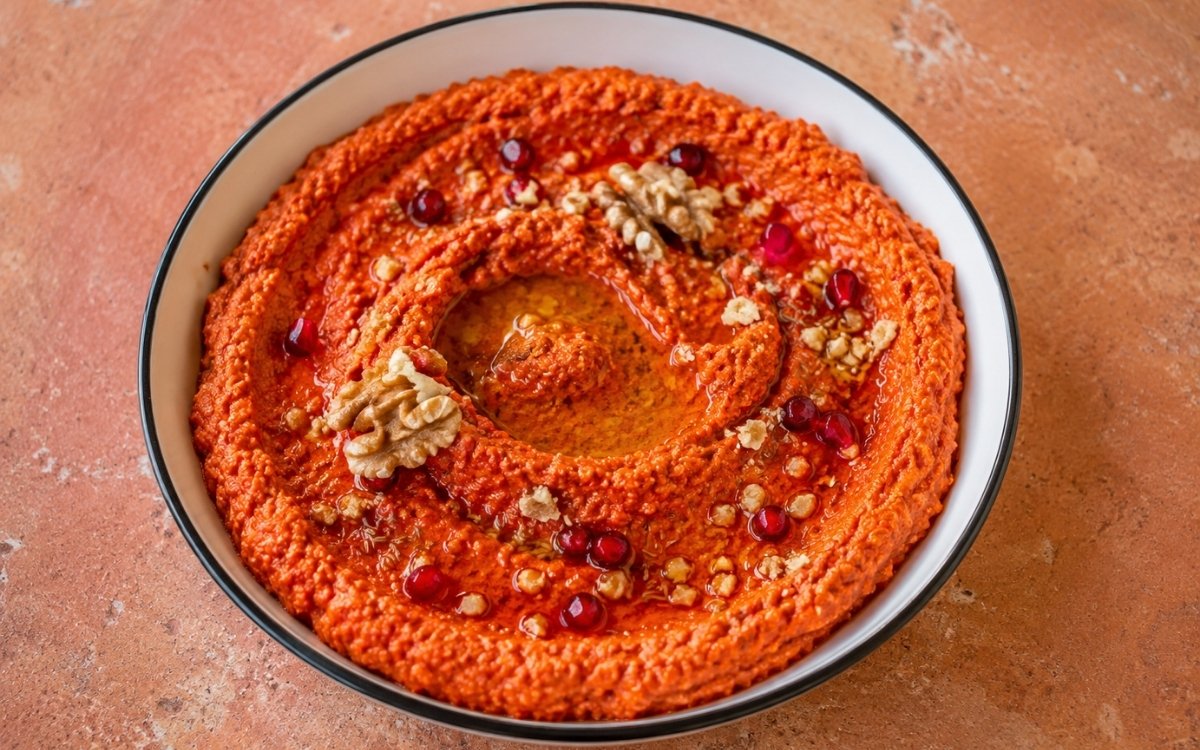
Transfer the muhammara to a wide, shallow serving bowl. Using the back of a spoon, create a shallow well or swooping surface — press and sweep from the centre outward in a single circular motion, building a slight ridge at the outer edge and a depression in the centre. Drizzle extra-virgin olive oil generously over the entire surface — the oil pools in the well and gives the muhammara its characteristic glossy finish. Add a few drops of pomegranate molasses over the surface in an irregular, non-uniform pattern — not poured evenly, but dripped in a loose spiral or scattered drops that provide visual contrast and concentrated flavour hits at the surface. Scatter the toasted cumin seeds across the surface. Distribute the roughly crushed walnut pieces across the top. Scatter the pomegranate seeds last — their vivid ruby red provides the visual contrast against the deep red-orange muhammara that makes the dish immediately striking. Serve with warm Homemade Lavash, Fresh Pita Flatbread, or torn Sourdough Bread.
*Notes :
- Muhammara is a Syrian dip originating in Aleppo — the city whose name it shares with its defining spice. Aleppo pepper (Pul Biber in Turkish) is a specific dried chili variety grown in the Aleppo region with a distinctive flavour profile: moderately spicy, slightly fruity, oily, and with a mild saltiness from the curing process. Its heat is building and warm rather than sharp, and its fruity complexity distinguishes it completely from generic dried chili flakes, cayenne, or paprika. Aleppo pepper is what makes muhammara taste specifically like muhammara — its character is not replicable by any other single spice. It is available at Middle Eastern grocery stores, specialty spice shops, and online. If genuinely unavailable, a combination of ½ tbsp sweet paprika, ½ tbsp smoked paprika, and a small pinch of cayenne is the closest functional substitute, but the result will lack the fruity depth of the original.
- Pomegranate molasses varies considerably in concentration, sweetness, and acidity between brands. Some are thick, intensely sweet, and barely tart; others are thin, very sour, and barely sweet. Starting with 1 tablespoon and adjusting after tasting is essential — adding the full 3 tablespoons of a very concentrated, sweet molasses would make the muhammara unpleasantly sweet, while 1 tablespoon of a thin, sour version may be insufficient to register. Always taste after each addition and let your palate guide the quantity.
- The walnut-bread thickener is the structural decision that gives muhammara its body and distinguishes it from a simple roasted pepper sauce. The walnuts contribute nutty fat richness and a slightly bitter edge that balances the sweetness of the roasted pepper and the molasses. The bread contributes neutral starch body that thickens the dip without adding competing flavour. The specific ratio of 100g walnuts to 60g bread at this quantity of pepper produces a muhammara that holds its shape on a spoon and spreads cleanly on flatbread without running — the correct consistency for a dip that will be served at a table. More bread produces a thicker, drier result; less bread produces a more liquid, sauce-like consistency suited to using as a pasta sauce or protein accompaniment.
Why This Recipe Works
This recipe works because it layers four distinct flavour-building steps before any seasoning is applied: the charring of the pepper skins develops caramelised complexity; the toasting of the walnuts and bread develops Maillard-reaction nuttiness; the processing order — walnut-bread first, then pepper — ensures the textural base is established before the wet ingredients loosen it; and the pulse technique preserves the rustic texture that continuous blending would eliminate.
The pomegranate molasses calibration step is what makes the difference between a muhammara that is technically correct and one that is genuinely compelling — the molasses is the sweetness-acidity-depth variable that determines the dip’s final character.
Ingredient Breakdown
Red Bell Peppers (Charred)
The primary flavour and colour foundation — caramelised, slightly smoky, deeply sweet from the charring process, providing the bulk and the warm red-orange colour identity of the dip.
Walnuts (Toasted)
The richness and slight bitterness element — toasted walnut fat provides depth and rounds the pepper’s sweetness, while the slight bitterness of walnut prevents the dip from tasting one-dimensionally sweet.
Bread (Toasted)
The structural thickener — provides body without competing flavour, gives muhammara its characteristic spreadable paste consistency.
Pomegranate Molasses
The defining sweet-acidic element — concentrated pomegranate sweetness and tartness that gives muhammara its distinctive complexity and the deep, fruity background that distinguishes it from any other pepper dip.
Aleppo Pepper
The irreplaceable spice — moderately spicy, fruity, oily, and slightly salty, providing the warm background heat and fruity aromatics that define muhammara’s character.
Ground Cumin
Earthy warmth — bridges the sweetness of the molasses and the pepper to the savory depth of the walnuts and garlic.
Lemon Juice
The brightening acid — lifts all other flavours and provides the clean citrus note that prevents the molasses from making the dip taste heavy.
Flavor Structure Explained
This dip follows a layered balance model:
- Sweet fruity core (roasted red pepper, pomegranate molasses)
- Bright acidity (lemon, molasses tartness)
- Warm spiced layer (Aleppo pepper, cumin)
- Nutty savory depth (walnut, garlic)
- Aromatic top finish (olive oil, molasses drizzle)
Roasted pepper and pomegranate molasses define the foundation with deep, caramelised sweetness and fruitiness. Acidity from lemon and molasses cuts through immediately, keeping the profile sharp and balanced. Aleppo pepper and cumin build a warm, spiced layer that develops through the mid-palate. Walnut and garlic anchor the dip with nutty, savory depth that gives it weight and substance. The finishing oil and molasses add aromatic lift and variation, ensuring each bite feels layered rather than static.
Common Mistakes to Avoid
- Under-charring the Peppers – Pale, barely-blistered peppers produce a flat, undeveloped dip without the caramelised sweetness the charring creates. Push the char further than feels comfortable — the black blisters are the flavour.
- Burning the Walnuts – Walnut fat burns very quickly at medium-high heat. Stir constantly and remove from heat the moment they are fragrant. Burnt walnuts are irreversibly bitter.
- Continuous Blending Instead of Pulsing – Continuous blending produces a smooth, homogeneous paste without textural character. Pulse in 5-second intervals and stop when the texture is right.
- Not Calibrating the Pomegranate Molasses – Adding the full quantity without tasting first risks making the dip overly sweet or overly tart depending on the brand. Always start with 1 tablespoon and adjust incrementally.
- Skipping the Tasting Step – Muhammara’s balance between sweet, tart, spiced, and savory requires active calibration — the correct amounts of each depend on the specific peppers and molasses used. Always taste and adjust before serving.
- Rushing the Garnish – The cumin seeds and crushed walnuts need a moment to toast and cool. Rushed toasting burns the cumin; hot garnish wilts the pomegranate seeds. Allow time for each element.
Variations
Extra Smoky Version
Add 1 canned chipotle pepper in adobo to the food processor alongside the roasted peppers for a smokier, deeper variation with a secondary heat dimension that amplifies the Aleppo pepper’s warmth.
Pasta Sauce Version
After blending, thin the muhammara with 3–4 tablespoons of pasta cooking water to achieve a sauce-like consistency. Toss with hot pasta, a drizzle of olive oil, and fresh parsley for a quick, deeply flavoured pasta sauce that is one of the most surprising and satisfying applications of the dip.
Spicier Version
Increase the Aleppo pepper to 2 tablespoons and add a small pinch of cayenne for a more assertively spiced muhammara suited to those who specifically want more heat presence.
Walnut-Forward Version
Increase walnuts to 150g and reduce the bread to 30g for a richer, more intensely nutty dip that is closer to a walnut paste than a pepper dip — excellent as a sauce base alongside grilled lamb and braised meats.
Storage & Make-Ahead
Store in an airtight container in the refrigerator for up to 5 days. Press plastic wrap directly onto the surface before sealing to prevent oxidation — the roasted pepper’s colour is prone to slight darkening when exposed to air, and direct-contact plastic minimises this. The flavour deepens and the garlic mellows over the first 24 hours in the refrigerator — muhammara made the day before serving is genuinely better than muhammara served immediately. Bring to room temperature for 20–30 minutes before serving and stir well — the olive oil solidifies slightly when cold. Re-drizzle with fresh olive oil and pomegranate molasses and re-garnish before serving. Freezes adequately for up to 2 months without garnish — thaw overnight in the refrigerator and stir well before serving.
Frequently Asked Questions
What is Aleppo pepper and where do I find it?
Aleppo pepper is a specific dried chili variety from the Aleppo region of Syria with a distinctive fruity, moderately spicy, slightly salty flavour profile. It is available at Middle Eastern grocery stores, specialty spice shops, and online. It is not interchangeable with generic chili flakes or paprika for this recipe — its specific fruity, oily character is what makes muhammara taste like muhammara rather than a generic pepper dip.
What is pomegranate molasses?
A thick, concentrated syrup made by reducing pomegranate juice until thick and intensely flavoured — both sweet and tart simultaneously. Available at Middle Eastern grocery stores, specialty food shops, and many mainstream supermarkets in the international foods section. Brands vary enormously in sweetness, tartness, and concentration — always start with a small amount and taste before adding more.
Can I use jarred roasted peppers instead of fresh?
Yes — drain thoroughly and proceed directly to the food processor step. The result will be slightly less complex in flavour as the char development from the broiling step is absent, but the dip will still be very good. Pat the jarred peppers dry before using to prevent excess liquid from making the dip too thin.
What should I serve muhammara with?
Warm Homemade Lavash or Fresh Pita Flatbread for the classic mezze dip application. Torn Sourdough Bread for a more rustic pairing. As a sauce base beneath grilled lamb or chicken. As a pasta sauce thinned with pasta cooking water. As a component in grain bowls alongside roasted vegetables and tahini.
How do I adjust the consistency if it becomes too thick?
Add olive oil a tablespoon at a time and pulse briefly to incorporate — olive oil thins the dip while adding richness rather than diluting the flavour as water would. If a significantly looser consistency is needed, add pomegranate molasses or lemon juice depending on which flavour direction the dip needs.
Nutrition Facts
( per serving )
Calories
~165 kcal
Protein
3 g
Fat
13 g
Carbs
11 g
Calories
~165 kcal
Protein
3 g
Fat
13 g
Carbs
11 g
Related Recipes
Related Recipes

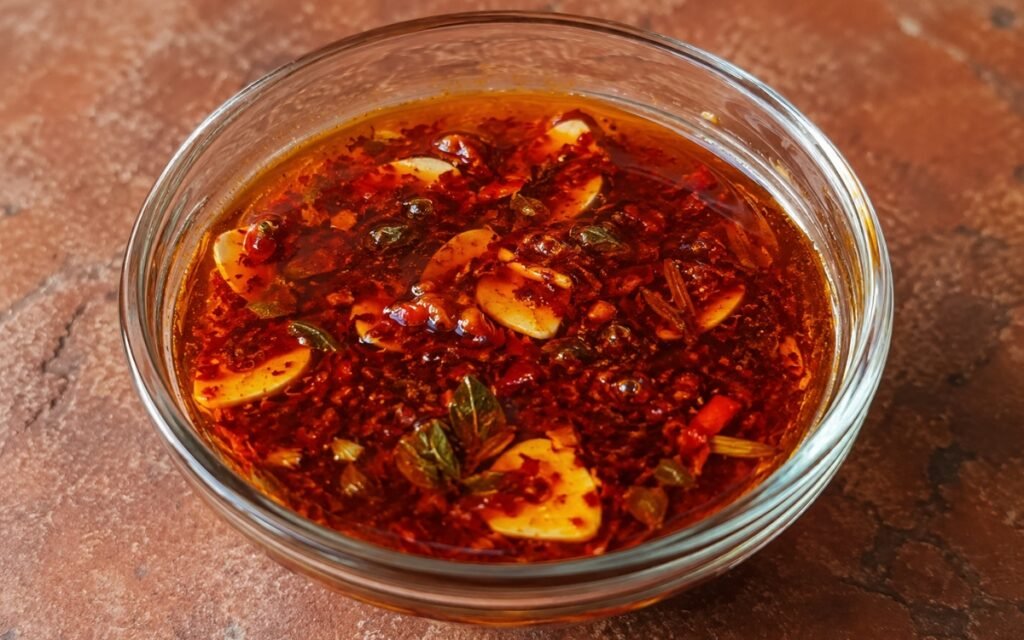
Calabrian Chili Oil Drizzle
Fruity-spicy chili oil with garlic and oregano. Instant flavor boost for pizza, pasta, and vegetables.
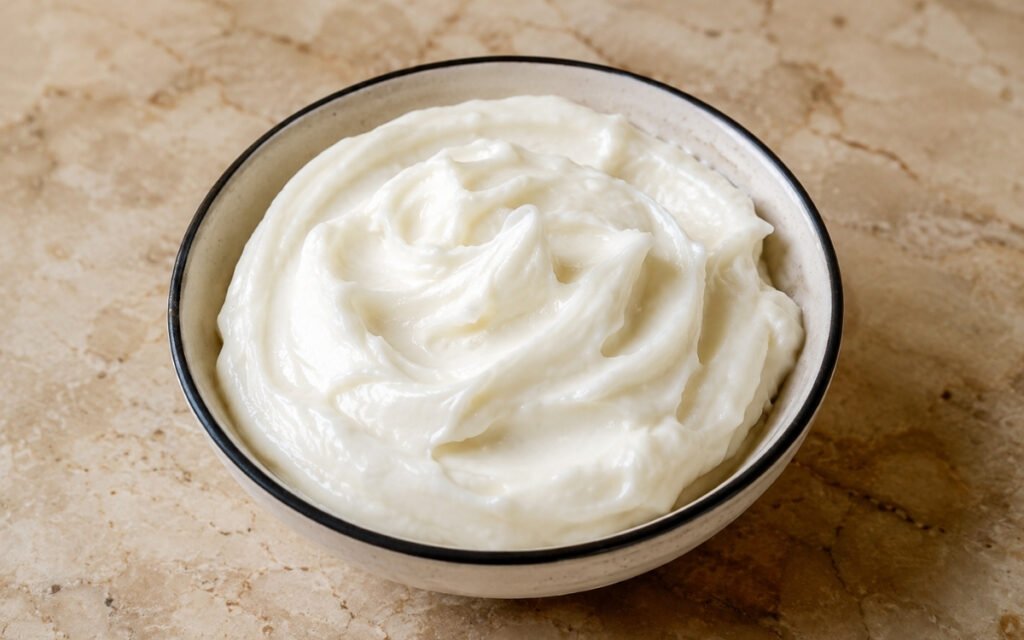
Toum (Lebanese Garlic Sauce)
Garlic, salt, lemon juice, and neutral oil emulsified drop by drop into a thick, white, airy Lebanese garlic sauce — refrigerated before serving so the flavour mellows from sharp to balanced.
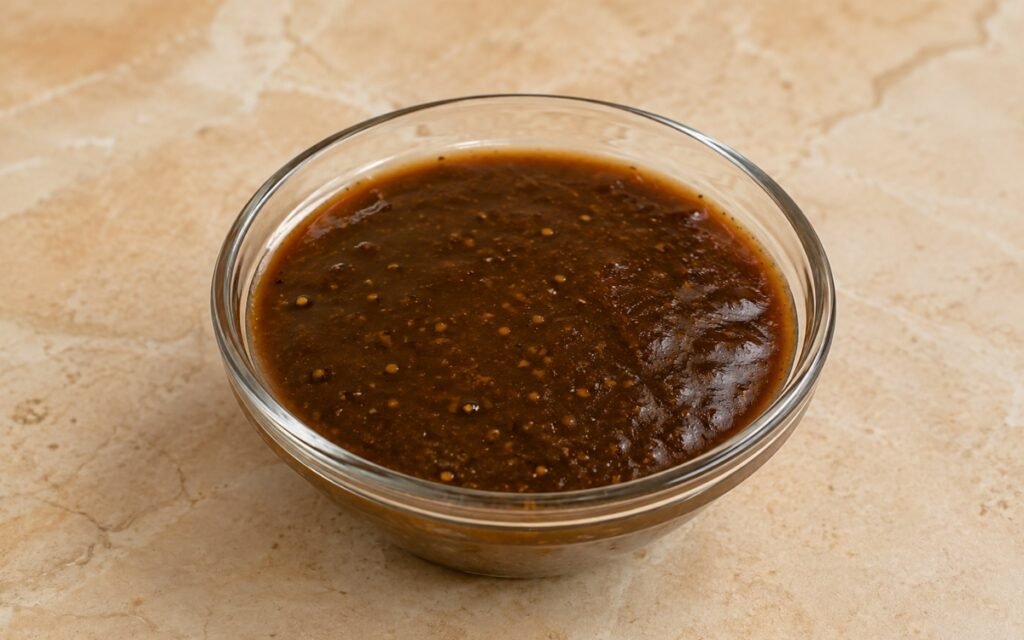
Balsamic Dijon Dressing
Rich aged balsamic and sharp Dijon emulsify into a bold, timeless 5-minute dressing.
You might also like
You might also like
Turkish Piyaz Bean Salad
Traditional Turkish white bean salad with tomatoes, onions, eggs, and tangy sumac dressing.
Blueberry Lemon Infused Water
Blueberries mashed for vivid colour, whole blueberries and lemon slices cold-infused in 3L water — removed after 4 hours. Vivid blue-purple to lavender and hydrating.
Peach Jasmine Iced Tea
Jasmine tea at 75–80°C for 2–3 minutes, peaches blended and strained — honey kept light, peach purée added with restraint, chilled. Floral and softly peachy.


Muhammara
Ingredients
Method
- Preheat your oven to its broiler setting on the highest heat and position the rack close to the broiler element — approximately 10cm below it. Deseed the bell peppers by cutting off the tops and bottoms and slicing the four curved walls of flesh away from the central seed column, producing four flat pieces per pepper. Trim any remaining white pith or seed membrane from the inside of each wall piece — the pith is bitter and should be removed. Cut each flat wall piece into 4–5cm chunks. Place all the pepper pieces on a large rimmed baking sheet with the skin side facing up toward the broiler element — this orientation is deliberate and essential. With the skin facing the direct radiant heat of the broiler, the skin will blister, char, and caramelise while the cut interior heats and softens against the hot tray. You are aiming for black blisters covering most of the skin surface — irregular, dramatic charring with some patches remaining deep red rather than uniformly black. Uniformly black skin indicates the pepper has cooked past the point of caramelised sweetness into bitterness. The target is deeply blistered skin covering the majority of the surface with the flesh underneath fully softened and slightly collapsed. Broil for approximately 12–15 minutes, watching carefully from the 10-minute mark. Remove when the target charring is achieved. Allow to cool for 3–4 minutes. If you prefer the smoky character of the charred skin in the finished muhammara — which adds genuine depth — leave the skins on when transferring to the food processor. If you prefer a cleaner, brighter pepper flavour without any bitterness from the char, peel the skins away after cooling — they slip off easily from the blistered flesh. Either approach is correct and both produce excellent muhammara.
- While the peppers are under the broiler, prepare the walnut-bread base. Place a dry skillet over medium heat and add the walnuts first, spreading them in a single layer. Toast, stirring frequently, for approximately 2 minutes — the walnuts should be fragrant and showing very faint golden coloration on their surfaces but not darkened or smelling of burnt fat. Walnut fat content is high enough that they move from toasted to burnt in under a minute at medium heat if left unattended. After 2 minutes of walnut toasting, add the bread cubes to the same pan and continue toasting everything together, stirring constantly. The bread cubes need 2–3 additional minutes to turn golden and dry — they are ready when they feel crisp, have taken on an even golden colour on most surfaces, and smell of toasted bread. The bread in this recipe serves a specific structural function: it thickens the muhammara, gives it body and a slightly grainy, paste-like texture rather than the smooth, liquid consistency that pepper and walnut alone would produce, and contributes a mild, neutral toasted-grain flavour that grounds the more assertive ingredients. If using panko breadcrumbs rather than bread cubes, the same toasting applies — add the panko after the walnuts and toast together, stirring constantly, for 1–2 minutes until golden.
- Transfer the toasted walnuts and toasted bread to a food processor. Process on continuous high speed for 60–90 seconds, stopping once to scrape down the sides, until the mixture is ground to a fine, uniform crumb — the texture of a coarse nut flour rather than a paste. This fine-ground walnut-bread base is what gives muhammara its distinctive thick, slightly granular texture rather than the smooth, creamy consistency of a pure pepper dip. Do not over-process to a paste — the small, distinct walnut and bread particles are part of the muhammara’s textural identity.
- Add the roasted pepper pieces to the food processor with the ground walnut-bread mixture. Add the garlic cloves — smashed or roughly chopped for more even processing. Add the olive oil, 1 tablespoon of pomegranate molasses as the starting amount, the lemon juice, Aleppo pepper, ground cumin, and fine sea salt. Process using a deliberate pulse technique rather than continuous blending — 5 seconds on, 2 seconds off, repeating 8–10 times. The pulse method gives you control over the final texture in a way that continuous blending does not. Muhammara should have a smooth overall consistency with visible small texture remaining — not a completely homogeneous paste, not a chunky rough blend, but a thick, spreadable mixture with a slightly rustic surface texture that retains visual character. Continuous blending produces a smooth, uniform paste that loses the character and personality of the individual ingredients. After 8–10 pulse cycles, check the texture — if it needs to be smoother, continue pulsing; if it has already reached the desired consistency, stop immediately.
- Stop the processor and taste carefully — this is the most important step in the recipe and cannot be rushed. Muhammara operates on a four-dimensional flavour balance that requires active management: sweetness from the pomegranate molasses, acidity from the lemon juice and the molasses’s own tartness, heat and fruity warmth from the Aleppo pepper, and savory depth from the roasted pepper and walnut. Evaluate each dimension independently. If the dip tastes flat and one-dimensional despite having all ingredients present, it needs more salt — salt amplifies every other flavour and is almost always the first correction. If it tastes heavy and lacks brightness, it needs more lemon juice — add ½ tsp increments. If it needs more sweetness and depth, add additional pomegranate molasses — add ½ tbsp increments and process briefly after each addition, reassessing both the flavour and the consistency, as additional molasses loosens the texture. If the warmth from the Aleppo pepper is not present in the background, add a small additional amount. The finished muhammara should taste complex, assertive, and complete — every component should be perceptible in a balanced way, with no single element dominating.
- For the most visually striking presentation, prepare the garnish immediately before serving. Place 2–3 walnuts on a cutting board and roughly crush them with the flat side of a knife or the bottom of a heavy pan — the target is irregular shards and small pieces rather than a fine crumble, which would disappear visually against the muhammara. In a small dry pan over medium heat, add 1 tsp of cumin seeds and toast for 60–90 seconds, stirring continuously, until the seeds are fragrant and have taken on a slightly darker colour. Remove immediately from the heat — cumin seeds move from fragrant to burnt very quickly once fully toasted. Allow the seeds to cool for 60 seconds before scattering over the finished dip.
- Transfer the muhammara to a wide, shallow serving bowl. Using the back of a spoon, create a shallow well or swooping surface — press and sweep from the centre outward in a single circular motion, building a slight ridge at the outer edge and a depression in the centre. Drizzle extra-virgin olive oil generously over the entire surface — the oil pools in the well and gives the muhammara its characteristic glossy finish. Add a few drops of pomegranate molasses over the surface in an irregular, non-uniform pattern — not poured evenly, but dripped in a loose spiral or scattered drops that provide visual contrast and concentrated flavour hits at the surface. Scatter the toasted cumin seeds across the surface. Distribute the roughly crushed walnut pieces across the top. Scatter the pomegranate seeds last — their vivid ruby red provides the visual contrast against the deep red-orange muhammara that makes the dish immediately striking. Serve with warm Homemade Lavash, Fresh Pita Flatbread, or torn Sourdough Bread.