
Lemon Garlic Shrimp Couscous Bowl
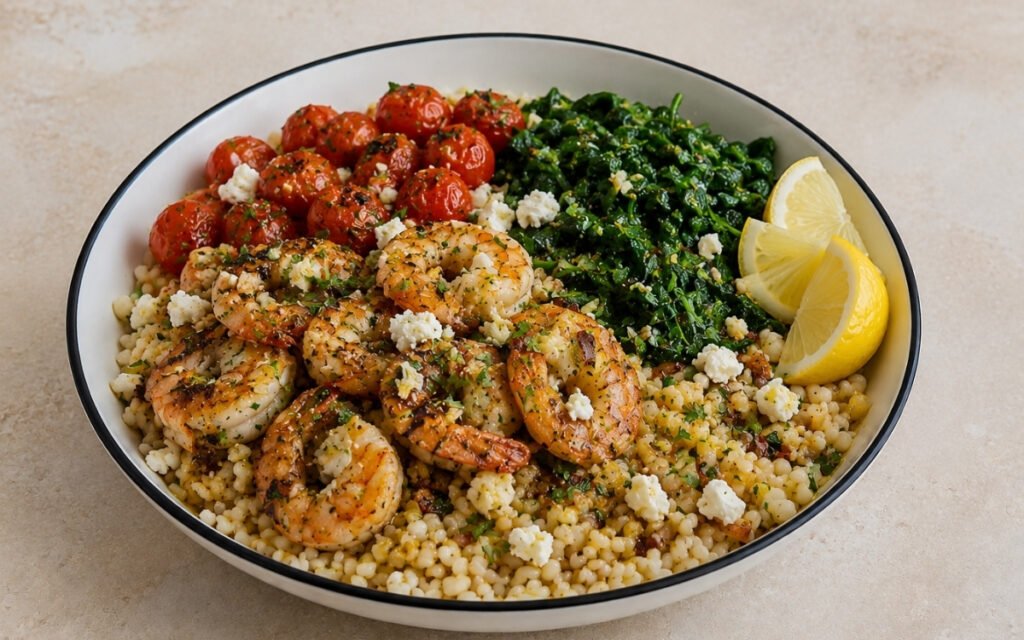
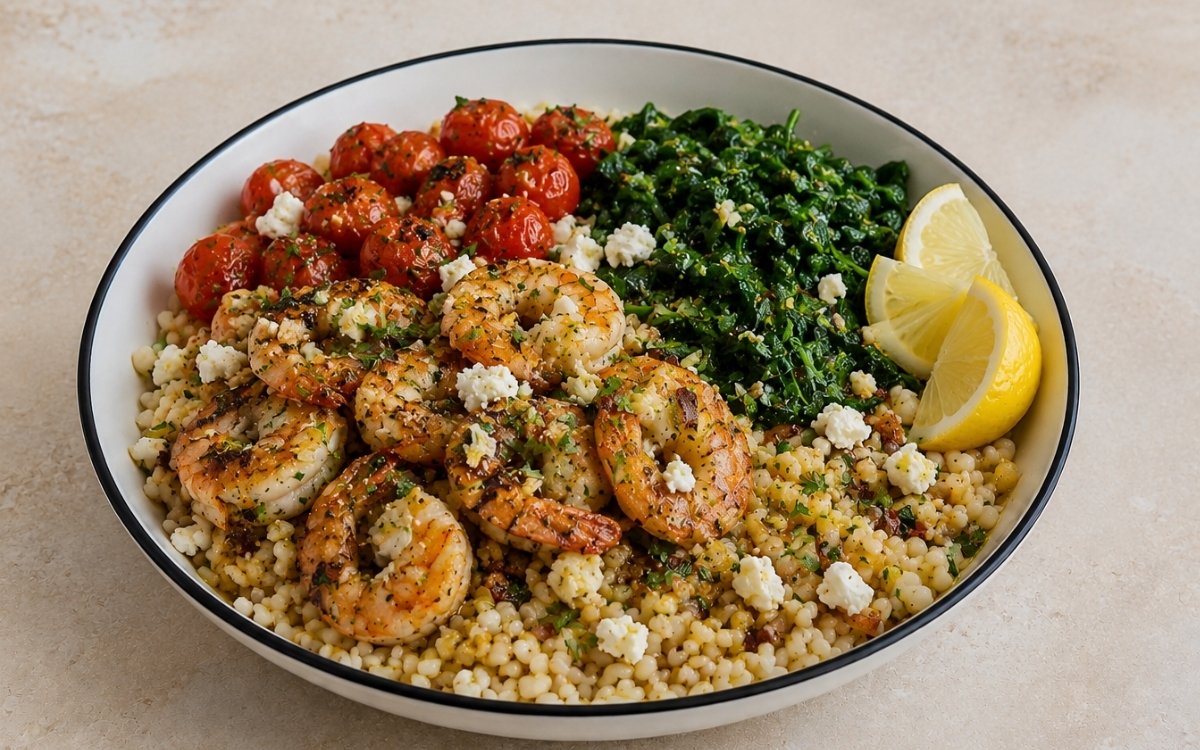
Pearl couscous — Israeli couscous, the round, slightly chewy format that is fundamentally different from fine-grain couscous and worth seeking out specifically — simmered in salted water and tossed with olive oil while the shrimp marinate in garlic, lemon zest, and red pepper flakes. The shrimp go into a smoking-hot skillet dry and undisturbed for 2 minutes so the garlic caramelises against the surface before the flip. Cherry tomatoes blistered in the same pan until they burst and release their juice. Spinach wilted in the residual garlic oil. A lemon-olive oil dressing poured over the assembled bowl, crumbled feta scattered over everything. Thirty-five minutes and a Mediterranean bowl that tastes of a restaurant by the sea.
Prep Time : 15 min
Cook Time : 20 min
Servings : 4
15 min
20 min
4
Ingredients
For the Pearl Couscous
• 300g pearl couscous, Israeli couscous — this one on Amazon
• 450ml water
• 3g salt
• 15ml olive oil
For the Lemon Garlic Shrimp
• 600g large shrimp, peeled and deveined
• 4 cloves garlic, minced
• Zest of 1 lemon
• 5ml lemon juice
• 3g fine salt
• 2g freshly ground black pepper
• 1g red pepper flakes
• 25ml extra-virgin olive oil, for searing — this one on Amazon
For the Vegetables
• 300g cherry tomatoes, halved
• 200g baby spinach
• 20ml extra-virgin olive oil
• Pinch of salt
For the Finishing
• 30ml fresh lemon juice
• 20ml extra-virgin olive oil
• 15g fresh herbs — flat-leaf parsley, basil, or dill — finely chopped
• 100g feta cheese, crumbled — this one on Amazon
• Lemon wedges for serving
This post may contain affiliate links. As an Amazon Associate I earn from qualifying purchases, at no additional cost to you.
Directions
- Cook the Pearl Couscous
Bring the 450ml of water with the 3g of salt to a full rolling boil in a medium saucepan. Add the 300g of pearl couscous and stir once to prevent the pearls from clumping together on the pot floor. Reduce the heat to medium-low and simmer uncovered for 8–10 minutes — pearl couscous cooks differently from fine-grain couscous in that it requires active simmering rather than simply being steeped in hot water off the heat. The pearls absorb water progressively during the simmer and develop their characteristic slightly chewy, al dente texture. Test at 8 minutes — the couscous should be tender throughout with a pleasant resistance when bitten, not soft and mushy or chalky and undercooked. Pearl couscous’s specific eating quality — its nuttier flavour, firmer texture, and the way it holds its shape in a dressed bowl without dissolving into a paste — is what makes it specifically more suitable for this bowl format than fine-grain couscous. Drain through a fine-mesh sieve. Return to the warm saucepan off the heat and toss immediately with the 15ml of olive oil, turning the couscous until every pearl is coated — the olive oil prevents the starchy pearls from sticking together into clumps as they cool. Set aside at room temperature. - Marinate the Shrimp
While the couscous cooks, pat the 600g of peeled and deveined shrimp completely dry on all surfaces with paper towels. This is the preparation prerequisite for a proper golden sear — surface moisture on shrimp converts to steam on contact with the hot oil, dropping the pan temperature and producing pale, steamed shrimp without the caramelised exterior that contributes both visual appeal and the Maillard depth that makes the garlic-lemon crust specifically delicious. In a large bowl, combine the dried shrimp with the 4 minced garlic cloves, lemon zest, 5ml of lemon juice, 3g of salt, 2g of black pepper, and 1g of red pepper flakes. Toss to coat every shrimp evenly and allow to marinate while the tomatoes are blistered and the skillet is prepared — 5–10 minutes is sufficient. The garlic adheres to the shrimp’s surface during the brief marinate and caramelises directly against the hot pan during searing, producing the specific golden, garlicky crust that defines lemon garlic shrimp. - Blister the Cherry Tomatoes
Heat the 20ml of olive oil in a large skillet over medium-high heat until shimmering. Add the 300g of halved cherry tomatoes cut-side down in a single layer. Cook for 4–5 minutes, shaking the pan occasionally rather than stirring continuously — the occasional shake moves the tomatoes without disrupting the direct contact between the cut surface and the hot oil that produces the blistering and partial caramelisation. The tomatoes are ready when they show deep golden-brown to slightly charred patches on their cut surfaces and some have burst or are beginning to release their juice. The cut-side down placement is the technique decision that produces the specific blistered, slightly charred tomato character — placing them cut-side up would produce soft, warm tomatoes without the caramelised surface. The released tomato juice accumulates in the pan and concentrates slightly, producing a more complex, sweeter tomato flavour from the same tomatoes than uncooked halves would provide. Transfer to a plate with all accumulated juice. - Sear the Shrimp
Without cleaning the skillet, add the 25ml of olive oil to the remaining tomato fond and heat over high heat until shimmering. The high heat is the specific requirement for shrimp — at medium heat, shrimp cook through before the exterior develops colour; at high heat, the exterior and the adhering garlic caramelise within the 2-minute window before the shrimp overcook. Add the marinated shrimp in a single layer with space between each piece — work in two batches if the skillet cannot accommodate all 600g without crowding, as crowded shrimp trap each other’s released moisture and steam rather than sear. Leave completely undisturbed for 2 minutes. The garlic adhering to each shrimp’s surface begins caramelising within the first 30 seconds of contact with the hot surface — by the 2-minute mark the underside of each shrimp should show golden colour and the garlic patches should be golden-brown and fragrant. Flip each shrimp and cook for a further 1–2 minutes until just opaque throughout and firm to the touch. Shrimp overcook rapidly — remove the moment opacity is complete throughout, as residual heat continues cooking them after removal. Transfer to a plate. - Wilt the Spinach
Reduce the heat to medium. Add the 200g of baby spinach to the skillet with whatever garlic-shrimp oil and fond remains. Toss continuously with tongs for 1–2 minutes until just wilted — the spinach leaves should collapse completely and show uniform bright green colour with no wilted-beyond-bright-green areas. The residual garlic and shrimp fond in the pan flavour the spinach as it wilts, absorbing the accumulated cooking character from the tomatoes, shrimp, and garlic rather than tasting of plain wilted spinach. Remove from heat immediately when wilted — continued heat produces dark, slightly bitter, waterlogged spinach. Season with a pinch of salt. - Make the Lemon-Herb Dressing and Assemble
In a small bowl or jug, whisk together the 30ml of fresh lemon juice, 20ml of olive oil, and 15g of finely chopped fresh herbs until combined — the lemon juice and olive oil will not fully emulsify without a binding agent but will combine sufficiently with whisking to distribute evenly when poured over the bowl. Divide the olive oil-tossed pearl couscous among four wide bowls. Top each bowl with the wilted spinach, blistered tomatoes with their accumulated juices, and the seared shrimp. The distinct placement of each component — spinach in one section, tomatoes in another, shrimp in the largest section — produces a more visually compelling and practically better bowl where each element retains its individual character until combined by the person eating. Drizzle the lemon-herb dressing over each assembled bowl generously — extending it across every component rather than pooling at the centre. Scatter 25g of crumbled feta over each bowl. The feta’s sharp, briny, slightly crystalline character against the sweet blistered tomatoes and the garlicky shrimp is the specifically Mediterranean combination that completes the bowl. Serve immediately with lemon wedges alongside.
*Notes :
- Pearl couscous — also called Israeli couscous, ptitim, or giant couscous — is made from toasted wheat semolina and has a fundamentally different character from fine-grain couscous. Where fine-grain couscous has a delicate, light texture that can become pasty in a dressed bowl, pearl couscous has a chewy, bouncy texture that holds its shape through dressing and serves as a substantial base. Its slightly toasted, slightly nutty flavour — a result of the manufacturing process — provides a background depth that plain rice or fine-grain couscous does not. It is available in most supermarkets in the international foods or grains section.
- The tomato-blistering-before-shrimp sequence is a deliberate technique choice. Blistering the tomatoes first produces the pan fond and residual sweetness that the shrimp subsequently sear in, adding the tomatoes’ caramelised character to the shrimp’s cooking environment. The fond from the tomatoes also flavours the spinach wilting step. Sequential use of the single pan — tomatoes first, shrimp second, spinach third — produces three components that each carry the accumulated character of the cooking sequence rather than being independent preparations cooked in fresh oil.
- The lemon-herb dressing added at assembly rather than during cooking is the technique that keeps the lemon’s brightness at maximum intensity. Lime or lemon juice added to a hot pan or stirred into hot components loses its most volatile aromatic compounds progressively — added at the last moment over assembled components, the juice’s citrus aromatics are at their most vivid.
Why This Recipe Works
This recipe works because it uses a single skillet sequentially — tomatoes first to develop the fond, shrimp second in the tomato-enriched oil, spinach last in the accumulated garlic-shrimp-tomato cooking medium — so every component contributes to the pan’s flavour base and benefits from what came before it.
The shrimp are dried and cooked at maximum heat for the sear they require. The couscous is dressed with olive oil immediately after draining to prevent clumping. And the lemon-herb dressing is added at assembly to preserve its aromatic freshness. Every decision serves the same goal of maximum flavour from minimum components.
Ingredient Breakdown
Pearl Couscous (Simmered, Olive Oil-Tossed)
The specific grain for this bowl — chewy, nutty, and substantial enough to carry the Mediterranean components without dissolving under the dressing.
Shrimp (Dried, High-Heat Sear)
The protein — patted dry and cooked at maximum heat so the garlic caramelises against the pan in 2 minutes before the shrimp overcook.
Garlic-Lemon-Zest Marinade
The flavour coating — garlic adheres to the shrimp surface and caramelises directly against the hot pan during searing; lemon zest provides aromatic citrus depth that juice alone cannot.
Blistered Cherry Tomatoes (Cut-Side Down)
The sweet-acidic component — cut-side contact with the hot oil produces the specific blistered, caramelised surface and the released juice that enriches the bowl.
Spinach (Wilted in Garlic-Shrimp Fond)
The fresh vegetable element — wilted in the accumulated cooking fond rather than fresh oil, absorbing the pan’s accumulated character.
Lemon-Herb Dressing (Added at Assembly)
The aromatic finishing layer — lemon juice at maximum volatile freshness, herbs at maximum aromatic intensity; drizzled at serving to preserve both.
Feta
The briny, salty, Mediterranean finishing element — its sharpness provides the specific contrast that makes the bowl taste specifically Greek-Mediterranean rather than generically Mediterranean.
Flavor Structure Explained
This shrimp couscous bowl follows a layered balance model:
- Bright savory core (lemon garlic shrimp)
- Sweet-acidic contrast (blistered cherry tomatoes)
- Salty creamy depth (feta)
- Fresh herbal lift (lemon-herb dressing, spinach)
- Nutty grounding base (couscous)
Shrimp defines the foundation with caramelised garlic richness and vivid lemon aroma running through every bite. Blistered tomatoes add concentrated sweetness and acidity that balance the seafood’s savory intensity. Feta contributes sharp salinity and creamy brininess that anchor the brighter elements in a distinctly Mediterranean profile. Herbs and spinach provide freshness and green aromatic contrast that keep the bowl lively. Couscous grounds the entire structure with mild nuttiness and chew, allowing all other registers to combine cohesively rather than compete.
Common Mistakes to Avoid
- Not Drying the Shrimp Before Searing – Wet shrimp produce steam rather than sear. The 2-minute caramelisation window requires a completely dry surface from the first contact.
- Cooking Shrimp at Insufficient Heat – Medium heat cooks the shrimp through before exterior colour develops. Always use high heat and accept the narrow 2-minute window.
- Overcrowding the Shrimp – Crowded shrimp steam each other. Cook in two batches if needed — both batches cook faster than waiting for an overcrowded pan to recover temperature.
- Stirring Rather Than Shaking the Tomatoes – Continuous stirring breaks the tomatoes before they have time to blister. Occasional shaking moves them without disrupting the direct contact that produces the char.
- Not Tossing Couscous with Olive Oil Immediately – Pearl couscous clumps rapidly as it cools without a coating. Toss while still warm from draining.
- Adding the Lemon-Herb Dressing During Cooking – The lemon’s most volatile aromatic compounds dissipate under heat. Always add at assembly.
Variations
With Chickpeas
Add 200g of drained, rinsed canned chickpeas to the skillet alongside the cherry tomatoes — they heat through in the same 4–5 minutes and add protein-rich bulk with a specific nutty character that complements the pearl couscous.
With Roasted Red Peppers
Add 150g of drained, sliced jarred roasted red peppers to each assembled bowl — their sweet, slightly smoky character is specifically well-suited to the lemon-garlic-feta combination.
With Scallops
Replace the shrimp with 600g of large sea scallops, patted very dry and seared for 2 minutes per side at maximum heat — the same technique applies and the scallops’ sweetness works particularly well with the blistered tomatoes and feta.
With Goat Cheese
Replace the feta with 100g of crumbled fresh goat cheese — milder, creamier, and less briny than feta, producing a more delicate, less assertively salty finish.
Storage & Make-Ahead
The assembled bowl is best served immediately, since the shrimp continue to firm slightly as they cool and the lemon dressing gradually softens the couscous.
Cooked pearl couscous can be refrigerated for up to 4 days. Before serving, toss it with a small amount of olive oil to loosen and separate any clumped pearls.
Blistered tomatoes can be refrigerated for up to 3 days, and the juices they release will deepen in flavor during storage. Cooked shrimp can be refrigerated for up to 2 days. They can be served cold over fresh couscous or reheated very briefly in a warm skillet for about 60 seconds.
The lemon-herb dressing is best made fresh immediately before serving so the herbs keep their bright color and the lemon retains its fresh aroma.
Frequently Asked Questions
What is pearl couscous and where do I find it?
Pearl couscous — also called Israeli couscous, ptitim, or giant couscous — is a toasted pasta made from wheat semolina in round, pearl-sized pieces. Unlike fine-grain couscous it requires active simmering rather than steeping. Available in most supermarkets in the grains, pasta, or international foods section. Its chewy texture and slightly nutty flavour are the specific qualities that make it the correct grain for this bowl.
Why lemon zest in the marinade and lemon juice in the dressing?
Lemon zest’s aromatic volatile oils provide fragrant, complex citrus character that survives brief cooking contact when caramelised on the shrimp’s surface. Lemon juice provides clean, direct acidity that is most vivid when added at serving without cooking. Both are necessary — zest for the cooked aromatic layer, juice for the fresh finishing brightness.
How do I know when the shrimp are cooked?
Shrimp are cooked when they have turned fully opaque — from translucent grey-pink to solid white-pink throughout — and curl into a loose C-shape. An O-shape indicates overcooked, tight, rubbery shrimp. Remove immediately when the C-shape opacity is complete throughout.
Can I use regular couscous instead of pearl?
Yes — reduce the water to 450ml, bring to a boil, pour over the couscous, cover, and rest off the heat for 2 minutes. The texture will be lighter and less chewy than pearl couscous and will absorb the dressing more rapidly.
Why is the dressing added at assembly rather than tossed through the couscous?
Dressing tossed through warm couscous is absorbed rapidly and the lemon’s aromatic freshness is lost within minutes. Added at assembly over the individual components, the dressing remains as a distinct, vivid layer that each person’s fork draws through as they eat.
Nutrition Facts
( per serving )
Calories
~710 kcal
Protein
38 g
Fat
30 g
Carbs
69 g
Calories
~710 kcal
Protein
38 g
Fat
30 g
Carbs
69 g
Related Recipes
Related Recipes

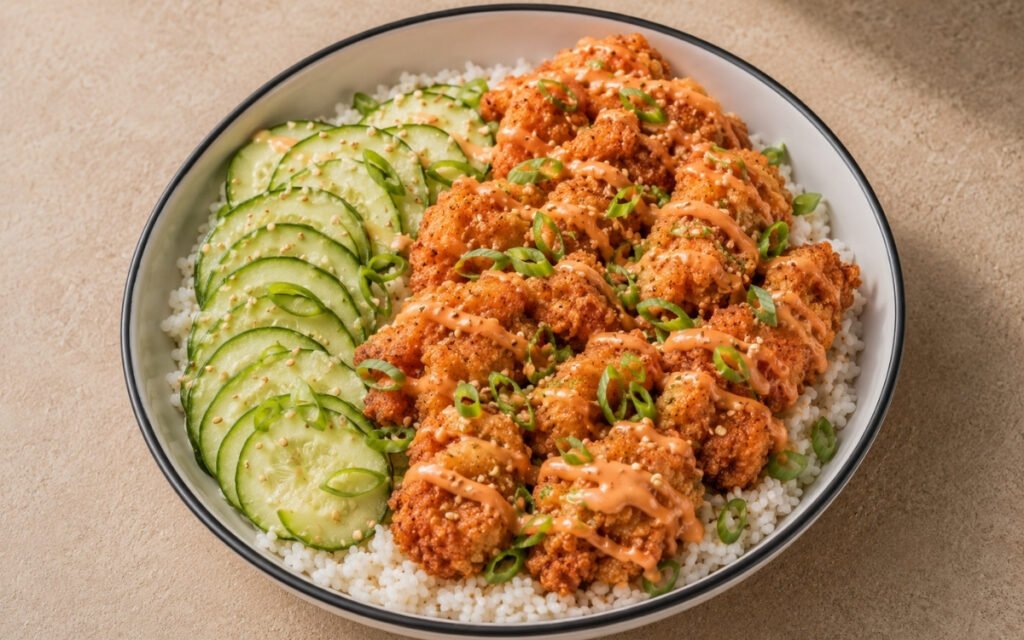
Bang Bang Chicken Rice Bowl
Crispy fried chicken in sweet-spicy bang bang sauce over jasmine rice with cucumber and scallions.
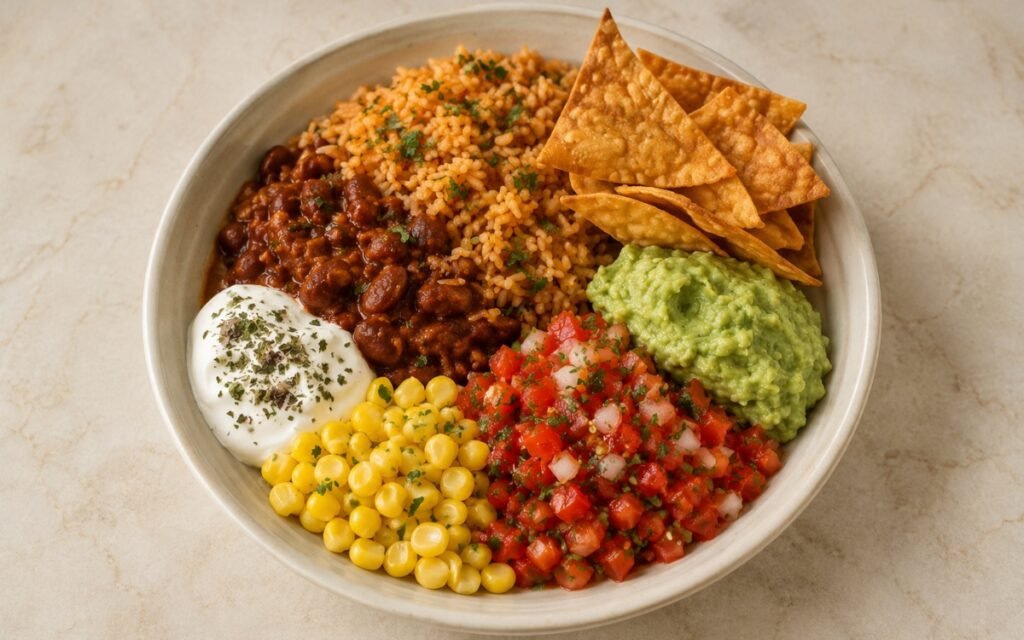
Loaded Mexican Taco Bowl
Toasted tomato rice, smoky chipotle red beans, fresh pico de gallo, plain guacamole, sour cream, and crispy tortilla chips, layered in one vibrant bowl.
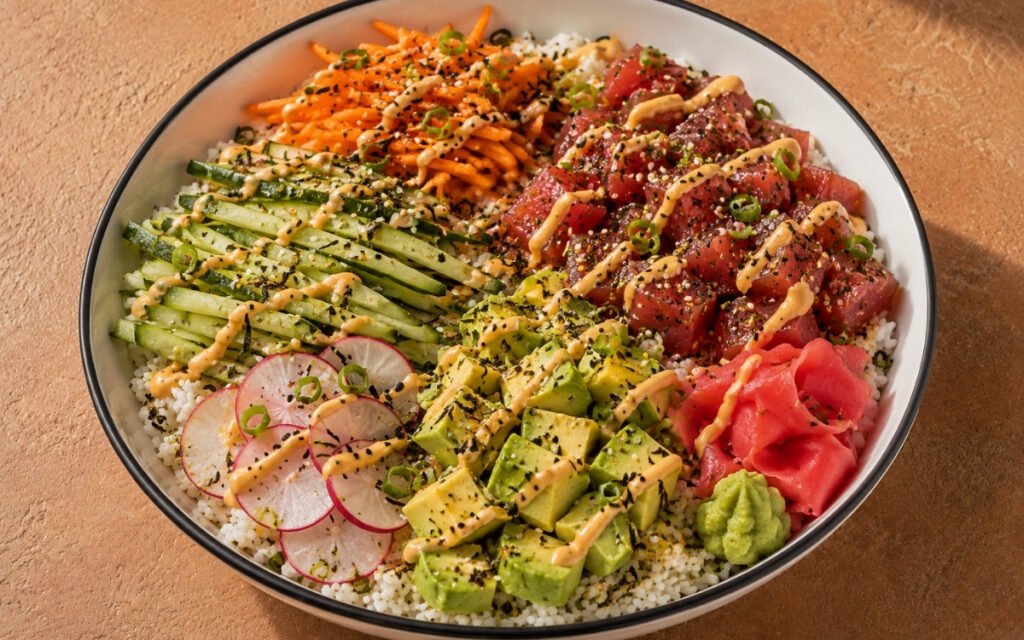
Tuna Poke Bowl
Authentic Hawaiian tuna poke bowl with marinated ahi, seasoned rice, vegetables, and spicy mayo.
You might also like
You might also like
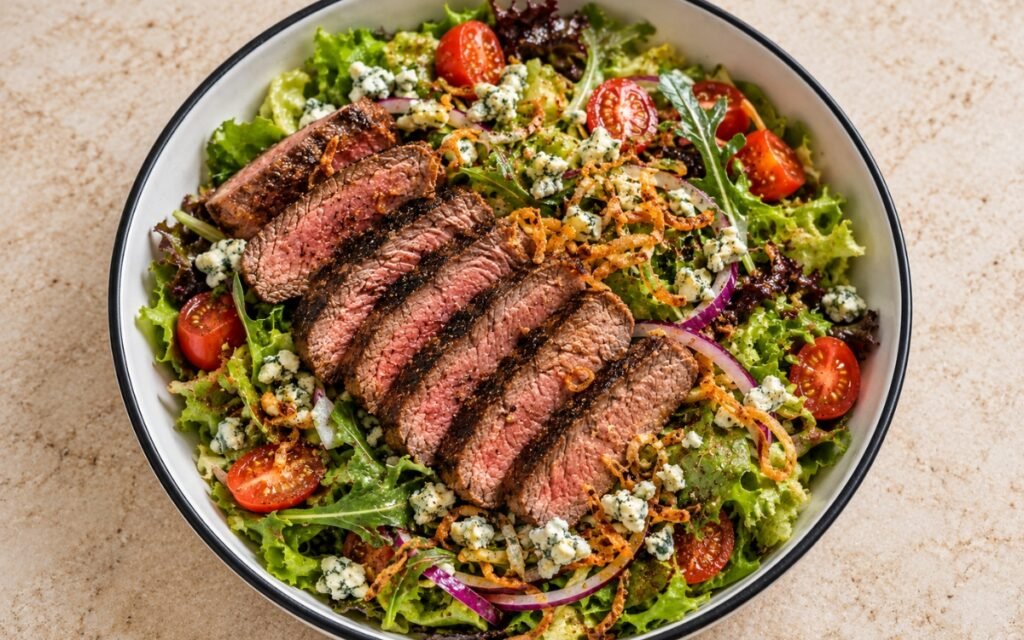
Steakhouse Steak Salad with Blue Cheese
Sliced medium-rare seared steak over crisp greens with cherry tomatoes, red onion, blue cheese crumbles, and crispy fried shallots.
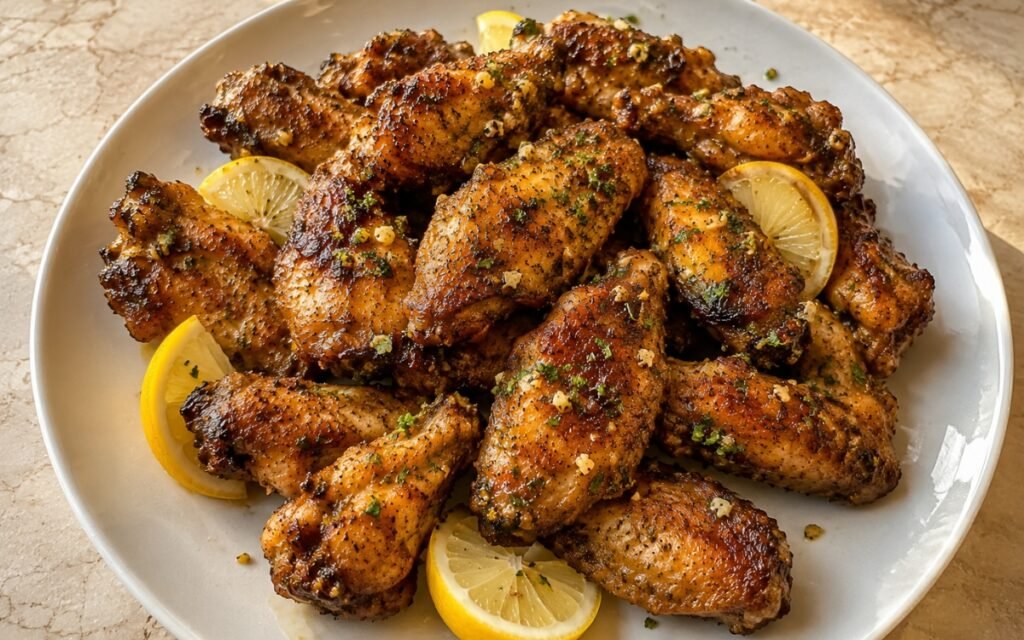
Crispy Lemon Garlic Chicken Wings
Oven-baked wings with crackling, deeply golden skin, tossed hot in a rich lemon-garlic butter sauce built mostly on zest.
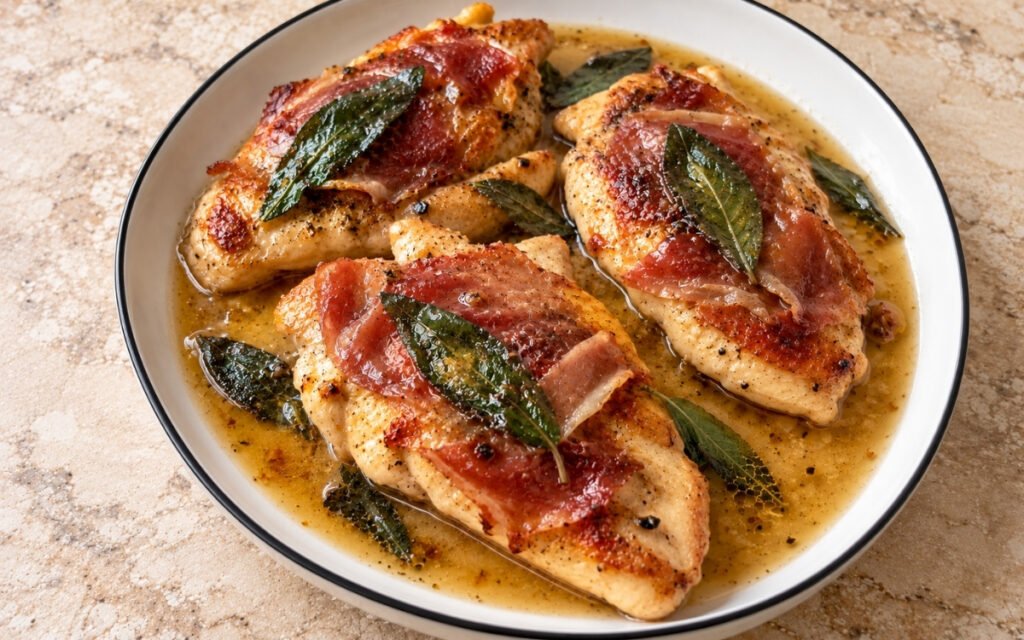
Chicken Saltimbocca
Thin seared chicken cutlets topped with prosciutto and sage, finished in a glossy buttery white wine pan sauce.
Lemon Garlic Shrimp Couscous Bowl
Ingredients
Method
- Bring the 450ml of water with the 3g of salt to a full rolling boil in a medium saucepan. Add the 300g of pearl couscous and stir once to prevent the pearls from clumping together on the pot floor. Reduce the heat to medium-low and simmer uncovered for 8–10 minutes — pearl couscous cooks differently from fine-grain couscous in that it requires active simmering rather than simply being steeped in hot water off the heat. The pearls absorb water progressively during the simmer and develop their characteristic slightly chewy, al dente texture. Test at 8 minutes — the couscous should be tender throughout with a pleasant resistance when bitten, not soft and mushy or chalky and undercooked. Pearl couscous's specific eating quality — its nuttier flavour, firmer texture, and the way it holds its shape in a dressed bowl without dissolving into a paste — is what makes it specifically more suitable for this bowl format than fine-grain couscous. Drain through a fine-mesh sieve. Return to the warm saucepan off the heat and toss immediately with the 15ml of olive oil, turning the couscous until every pearl is coated — the olive oil prevents the starchy pearls from sticking together into clumps as they cool. Set aside at room temperature.
- While the couscous cooks, pat the 600g of peeled and deveined shrimp completely dry on all surfaces with paper towels. This is the preparation prerequisite for a proper golden sear — surface moisture on shrimp converts to steam on contact with the hot oil, dropping the pan temperature and producing pale, steamed shrimp without the caramelised exterior that contributes both visual appeal and the Maillard depth that makes the garlic-lemon crust specifically delicious. In a large bowl, combine the dried shrimp with the 4 minced garlic cloves, lemon zest, 5ml of lemon juice, 3g of salt, 2g of black pepper, and 1g of red pepper flakes. Toss to coat every shrimp evenly and allow to marinate while the tomatoes are blistered and the skillet is prepared — 5–10 minutes is sufficient. The garlic adheres to the shrimp’s surface during the brief marinate and caramelises directly against the hot pan during searing, producing the specific golden, garlicky crust that defines lemon garlic shrimp.
- Heat the 20ml of olive oil in a large skillet over medium-high heat until shimmering. Add the 300g of halved cherry tomatoes cut-side down in a single layer. Cook for 4–5 minutes, shaking the pan occasionally rather than stirring continuously — the occasional shake moves the tomatoes without disrupting the direct contact between the cut surface and the hot oil that produces the blistering and partial caramelisation. The tomatoes are ready when they show deep golden-brown to slightly charred patches on their cut surfaces and some have burst or are beginning to release their juice. The cut-side down placement is the technique decision that produces the specific blistered, slightly charred tomato character — placing them cut-side up would produce soft, warm tomatoes without the caramelised surface. The released tomato juice accumulates in the pan and concentrates slightly, producing a more complex, sweeter tomato flavour from the same tomatoes than uncooked halves would provide. Transfer to a plate with all accumulated juice.
- Without cleaning the skillet, add the 25ml of olive oil to the remaining tomato fond and heat over high heat until shimmering. The high heat is the specific requirement for shrimp — at medium heat, shrimp cook through before the exterior develops colour; at high heat, the exterior and the adhering garlic caramelise within the 2-minute window before the shrimp overcook. Add the marinated shrimp in a single layer with space between each piece — work in two batches if the skillet cannot accommodate all 600g without crowding, as crowded shrimp trap each other’s released moisture and steam rather than sear. Leave completely undisturbed for 2 minutes. The garlic adhering to each shrimp’s surface begins caramelising within the first 30 seconds of contact with the hot surface — by the 2-minute mark the underside of each shrimp should show golden colour and the garlic patches should be golden-brown and fragrant. Flip each shrimp and cook for a further 1–2 minutes until just opaque throughout and firm to the touch. Shrimp overcook rapidly — remove the moment opacity is complete throughout, as residual heat continues cooking them after removal. Transfer to a plate.
- Reduce the heat to medium. Add the 200g of baby spinach to the skillet with whatever garlic-shrimp oil and fond remains. Toss continuously with tongs for 1–2 minutes until just wilted — the spinach leaves should collapse completely and show uniform bright green colour with no wilted-beyond-bright-green areas. The residual garlic and shrimp fond in the pan flavour the spinach as it wilts, absorbing the accumulated cooking character from the tomatoes, shrimp, and garlic rather than tasting of plain wilted spinach. Remove from heat immediately when wilted — continued heat produces dark, slightly bitter, waterlogged spinach. Season with a pinch of salt.
- In a small bowl or jug, whisk together the 30ml of fresh lemon juice, 20ml of olive oil, and 15g of finely chopped fresh herbs until combined — the lemon juice and olive oil will not fully emulsify without a binding agent but will combine sufficiently with whisking to distribute evenly when poured over the bowl. Divide the olive oil-tossed pearl couscous among four wide bowls. Top each bowl with the wilted spinach, blistered tomatoes with their accumulated juices, and the seared shrimp. The distinct placement of each component — spinach in one section, tomatoes in another, shrimp in the largest section — produces a more visually compelling and practically better bowl where each element retains its individual character until combined by the person eating. Drizzle the lemon-herb dressing over each assembled bowl generously — extending it across every component rather than pooling at the centre. Scatter 25g of crumbled feta over each bowl. The feta’s sharp, briny, slightly crystalline character against the sweet blistered tomatoes and the garlicky shrimp is the specifically Mediterranean combination that completes the bowl. Serve immediately with lemon wedges alongside.