
Greek Chicken Gyro Rice Bowl
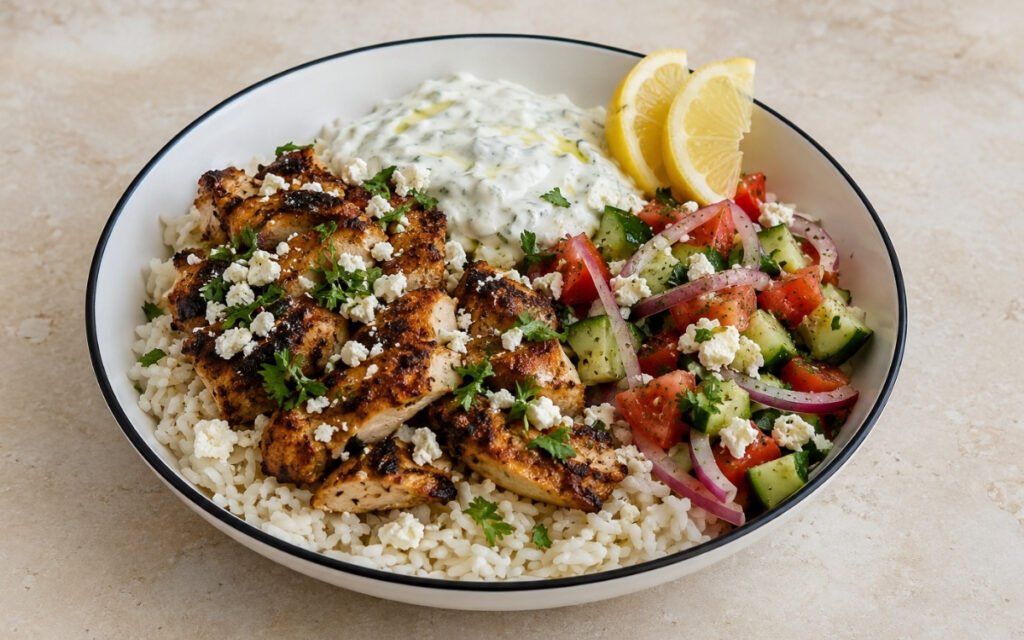
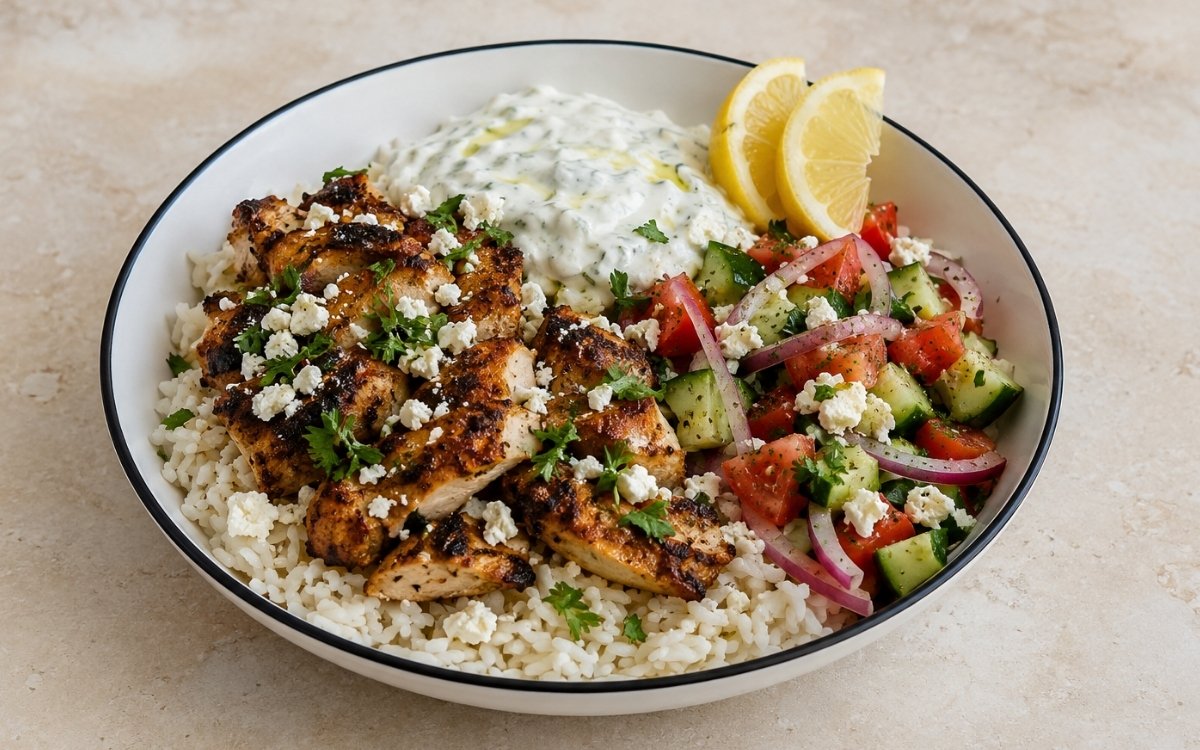
Chicken thigh strips marinated in oregano, cumin, paprika, lemon, and garlic for 15 minutes — then seared in a single layer until golden on both sides and rested before slicing. Fluffy basmati underneath, a quick cucumber-tomato salad dressed with red wine vinegar and oregano alongside, tzatziki made from the full Authentic Tzatziki recipe spooned generously over the top, and crumbled feta to finish. Every element of a proper Greek gyro in a bowl — the spiced chicken, the cool creamy tzatziki, the fresh salad, the salty feta — composing something that is more satisfying than the sum of its parts. Forty-five minutes including the marinade.
Prep Time : 20 min
Cook Time : 25 min
Servings : 4
20 min
25 min
4
Ingredients
For the Chicken Marinade
• 680g boneless, skinless chicken thighs, cut into 2cm strips
• 45ml extra-virgin olive oil
• 30ml fresh lemon juice
• 12g garlic cloves, minced
• 8g dried oregano
• 4g ground cumin
• 3g sweet paprika
• 6g fine salt
For the Rice
• 280g basmati rice
• 420ml water
• 4g salt
For the Tzatziki (Full recipe — see Authentic Tzatziki)
• 240g full-fat Greek yogurt
• 120g cucumber, grated and excess moisture squeezed out
• 8g garlic cloves, minced
• 15ml fresh lemon juice
• 15ml extra-virgin olive oil
• 6g fresh dill, finely chopped
• 3g fine salt
For the Cucumber-Tomato Salad
• 200g cucumber, diced
• 200g Roma tomatoes, diced
• 80g red onion, thinly sliced
• 20ml extra-virgin olive oil
• 15ml red wine vinegar — this one on Amazon
• 4g dried oregano
• 3g fine salt
For the Toppings
• 60g feta cheese, crumbled — this one on Amazon
• Fresh parsley for garnish
• Lemon wedges for serving
• Additional olive oil for drizzling
This post may contain affiliate links. As an Amazon Associate I earn from qualifying purchases, at no additional cost to you.
Directions
- Marinate the Chicken
In a large bowl, whisk together the 45ml of olive oil, 30ml of fresh lemon juice, 12g of minced garlic, 8g of dried oregano, 4g of ground cumin, 3g of paprika, and 6g of salt until fully combined. The marinade’s spice combination is the Greek gyro flavour profile in concentrated form — oregano is the defining herb of Greek cooking, providing the floral, slightly bitter aromatic character that is immediately identifiable as Greek; cumin adds the earthy, slightly citrusy warmth that deepens the marinade beyond plain herb-and-lemon; paprika provides colour and mild sweetness; and the ratio of lemon to oil is deliberately generous to ensure the chicken absorbs citrus brightness throughout rather than only at the surface. Add the 680g of chicken strips and toss to coat every surface thoroughly. Allow to marinate for 15 minutes at room temperature — sufficient for the lemon’s acidity to begin penetrating the surface and the spices to adhere. For a more deeply flavoured result, marinate for up to 4 hours refrigerated. If time allows before cutting into strips, pound each thigh to an even thickness — uniform strips cook at a consistent rate, preventing thicker pieces from remaining underdone while thinner pieces overcook. - Cook the Basmati Rice
Rinse the 280g of basmati rice under cold running water until completely clear. Combine with 420ml of cold water and 4g of salt in a medium saucepan. Bring to a full rolling boil over high heat, then reduce immediately to the lowest possible setting, cover tightly, and simmer for 15 minutes without lifting the lid. Remove from heat and allow to stand covered and undisturbed for 5 minutes. After the full rest, uncover and fluff with a fork using a gentle lifting motion. Basmati’s specific long-grain, low-starch character produces the separate, fluffy, non-sticky grains that carry the bowl’s components without clumping — the correct textural contrast to the creamy tzatziki and the moist chicken. - Make the Tzatziki
For the full authentic method — including the critical cucumber preparation, the correct garlic incorporation, and the resting technique — follow the complete Authentic Tzatziki recipe. For this bowl, you will need the full batch: combine the 240g of full-fat Greek yogurt with the 120g of grated cucumber that has had its excess moisture squeezed out completely, the 8g of minced garlic, 15ml of lemon juice, 15ml of olive oil, 6g of chopped fresh dill, and 3g of salt. The moisture removal from the grated cucumber is the most important step — inadequately drained cucumber produces a watery, thin tzatziki that runs off the bowl’s components rather than providing the thick, clinging, cooling contrast the dish requires. Refrigerate until assembly. - Prepare the Cucumber-Tomato Salad
Combine the 200g of diced cucumber, 200g of diced Roma tomatoes, and 80g of thinly sliced red onion in a medium bowl. In a small bowl, whisk together the 20ml of olive oil, 15ml of red wine vinegar, 4g of dried oregano, and 3g of salt until combined. Pour over the vegetables and toss gently. Allow to sit for the duration of the chicken cooking step — 10 minutes of standing allows the salt to draw a small amount of moisture from the cucumber and tomatoes and the oregano to bloom in the olive oil, producing a lightly dressed, slightly softened salad that has more cohesion and flavour than a freshly tossed version. The red wine vinegar provides the sharp, specifically Greek acid note that distinguishes this salad from a simple mixed vegetable accompaniment — its character is more tannic and more assertive than lemon juice alone. - Cook the Marinated Chicken
Heat a large skillet over medium-high heat until hot — no additional oil is needed as the olive oil in the marinade provides sufficient fat for searing. Add the marinated chicken strips in a single layer with space between each piece. Cook undisturbed for 4–5 minutes — the oregano and paprika in the marinade caramelise against the hot pan surface alongside the lemon’s reduced sugars, producing the specific golden-brown, slightly spiced crust that makes gyro chicken distinctive. After 4–5 minutes flip each strip and cook the second side for 4–5 minutes until cooked through to 75°C internal temperature. Transfer to a plate and rest for 3 minutes — the brief rest allows the juices to redistribute before slicing into bite-sized pieces if the strips have been left whole during cooking. - Assemble and Serve
Divide the basmati rice among four wide bowls. Top each with the cooked chicken pieces, arranging them so the caramelised surfaces are visible. Spoon the cucumber-tomato salad alongside the chicken. Add a generous dollop of tzatziki — the quantity should be substantial enough to be a primary component rather than a garnish, with a large spoonful that pools into the rice and extends toward the chicken. Scatter 15g of crumbled feta cheese per bowl — the feta’s sharp, salty character against the cool tzatziki and the warm, spiced chicken is the specific combination that makes this bowl taste unmistakably Greek. Scatter fresh parsley leaves over each bowl. Place lemon wedges alongside. Drizzle a small amount of good olive oil over each finished bowl — the raw olive oil’s fruity, grassy character at serving amplifies the Mediterranean character of the assembled bowl.
*Notes :
- The tzatziki preparation in this bowl uses the complete Authentic Tzatziki recipe deliberately — the quality of the tzatziki is the single component that most determines whether this bowl tastes like a restaurant-quality Greek dish or a generic chicken-and-yogurt preparation. Properly made tzatziki requires specific attention to cucumber moisture removal, garlic preparation, and resting time that produce a fundamentally different result from quickly combined yogurt and cucumber. The full recipe and technique are worth following completely rather than approximating.
- The dried oregano in both the marinade and the salad dressing is specified rather than fresh for this specific application. Dried Greek oregano — Origanum vulgare subsp. hirtum — has a more concentrated, more intensely aromatic character than fresh oregano when used in an oil-based marinade or dressing, because the drying process concentrates its essential oils. In applications where the oregano is bloomed in oil and will have time to release its compounds — as in this marinade and the salad dressing — dried produces a more distinctly Greek aromatic result than fresh. Fresh oregano is specified only for applications where its brightness and colour are required.
Why This Recipe Works
This recipe works because it is a bowl translation of the gyro’s specific component composition rather than simply spiced chicken over rice. Every traditional gyro element is present in its correct form: the oregano-cumin-paprika-lemon chicken, the cool and creamy tzatziki, the fresh tomato-cucumber-onion accompaniment dressed with red wine vinegar, and the crumbled feta.
The balance between the warm, spiced chicken and the cold, herbed tzatziki is the specific thermal and flavour contrast that makes the gyro format specifically compelling — reproduced in this bowl as the primary design principle.
Ingredient Breakdown
Oregano-Forward Chicken Marinade
The Greek spice identity — dried oregano as the primary aromatic, cumin for earthy depth, lemon for brightness; the specific combination that identifies the dish as Greek rather than simply Mediterranean.
Full-Fat Greek Yogurt Tzatziki
The cooling, creamy contrast element — the most important single component in the bowl for producing the authentic gyro character; see Authentic Tzatziki for the complete method.
Red Wine Vinegar Salad Dressing
The specifically Greek acid — more assertive and tannic than lemon juice, producing the salad’s characteristic sharp dressing character.
Crumbled Feta
The salty, slightly briny finishing element — its specific flavour against the tzatziki and the spiced chicken is the combination that most immediately signals authentic Greek flavour.
Basmati Rice
The base — long-grain, separate, and neutral; carrying the bold components without adding competing flavour.
Flavor Structure Explained
This chicken gyro rice bowl follows a layered balance model:
- Warm spiced core (Greek-seasoned chicken)
- Cool creamy contrast (tzatziki)
- Bright fresh acidity (cucumber-tomato salad, red wine vinegar)
- Salty briny finish (feta)
- Integrated temperature contrast (warm chicken, cold sauce)
Chicken defines the foundation with caramelised spice, lemon brightness, oregano’s herbal bitterness, and cumin’s earthy warmth concentrated in the crust. Tzatziki provides the defining contrast — cold, creamy, garlicky, and herb-forward against the warm chicken. The salad cuts through both with crisp freshness and vinegar acidity that keeps the bowl lively. Feta adds sharp salinity and briny intensity that ties the richer and brighter elements together. The structure depends on simultaneous contrast: warm and cool, rich and fresh, savory and acidic in every bite.
Common Mistakes to Avoid
- Not Squeezing the Cucumber for Tzatziki – This is the most common tzatziki error — inadequate moisture removal produces a watery sauce that runs off the bowl. Follow the Authentic Tzatziki technique completely.
- Not Resting the Chicken Before Slicing – The 3-minute rest prevents the redistributing juices from running out at the cut. Always rest before slicing.
- Using Low-Fat Greek Yogurt for Tzatziki – The fat content is what produces the thick, clinging consistency and rich mouthfeel. Full-fat only.
- Not Allowing the Salad to Sit – Tossing and serving immediately produces a less cohesive, less flavourful salad. The 10-minute standing period allows the oregano to bloom and the salt to draw light moisture from the vegetables.
- Using Fresh Oregano in the Marinade – Dried Greek oregano in an oil-based marinade produces a more concentrated, more specifically Greek aromatic result than fresh in this application.
- Not Using Enough Tzatziki – The tzatziki is a primary component, not a condiment — serve a generous dollop that pools into the rice.
Variations
With Kalamata Olives
Add 60g of pitted, halved Kalamata olives to the bowl assembly alongside the feta — their briny, intensely savoury character amplifies the Mediterranean flavour profile.
With Pepperoncini
Add 40g of sliced pickled pepperoncini to the bowl for a sharp, mild pickled pepper element that adds both acidity and gentle heat.
With Quinoa
Replace the basmati rice with 280g of uncooked quinoa cooked in 560ml of water — the protein-rich, slightly nutty quinoa works well with the Greek spice and tzatziki combination.
Lamb Version
Replace the chicken thighs with 680g of boneless lamb shoulder cut into thin strips — the same marinade and cooking technique apply. Lamb’s specific richness and slightly gamey depth is classically Greek and produces a more authentically gyro-adjacent flavour than chicken.
Storage & Make-Ahead
Tzatziki can be made up to 2 days in advance. Follow the storage instructions in the Authentic Tzatziki recipe, and keep in mind that the flavor actually deepens and improves overnight.
Marinated raw chicken can be kept in the refrigerator for up to 4 hours before cooking. Once cooked, the chicken can be refrigerated for up to 3 days. To reheat it, warm it in a hot, dry skillet for about 2 minutes per side.
Cucumber-tomato salad is best made fresh, since it releases moisture during storage and quickly becomes watery. If you want to prepare it ahead, combine the vegetables without the dressing and add the dressing only just before serving.
Basmati rice can be refrigerated for up to 4 days. Reheat it covered with a splash of water.
Frequently Asked Questions
Why is the tzatziki made from the full separate recipe?
Tzatziki’s quality depends on specific technique — proper cucumber preparation, garlic incorporation, and resting time — that produces a fundamentally different result from a quickly assembled yogurt-and-cucumber mixture. The Authentic Tzatziki recipe provides the complete method that makes the difference between restaurant-quality and mediocre.
Can I use chicken breast instead of thighs?
Yes — reduce cooking time to 3–4 minutes per side and monitor the internal temperature carefully at 74°C to prevent drying. Thighs are preferred for their fat content, which keeps them moist through searing and provides more flavour.
Why dried oregano rather than fresh?
Dried Greek oregano bloomed in olive oil in a marinade application releases its concentrated aromatic compounds progressively throughout the marinating and cooking period — producing a more distinctly Greek result than fresh in this specific use case.
What is the correct amount of tzatziki per bowl?
A generous dollop — approximately 3–4 tablespoons per bowl — enough to be a primary component that pools into the rice and extends toward the chicken rather than a small decorative spoonful. The tzatziki’s cooling contrast is the bowl’s defining characteristic; under-serving it undermines the composition.
Can I add pickled red onions?
Yes — pickled red onions are an excellent and specifically appropriate addition to this bowl. Their sharp vinegary acidity and vivid colour both complement the Greek flavour profile. The quick-pickle technique from the Korean Beef Bulgogi Bowl recipe — rice vinegar, sugar, salt — works perfectly for a 30-minute version.
Nutrition Facts
( per serving )
Calories
~900 kcal
Protein
46 g
Fat
45 g
Carbs
66 g
Calories
~900 kcal
Protein
46 g
Fat
45 g
Carbs
66 g
Related Recipes
Related Recipes

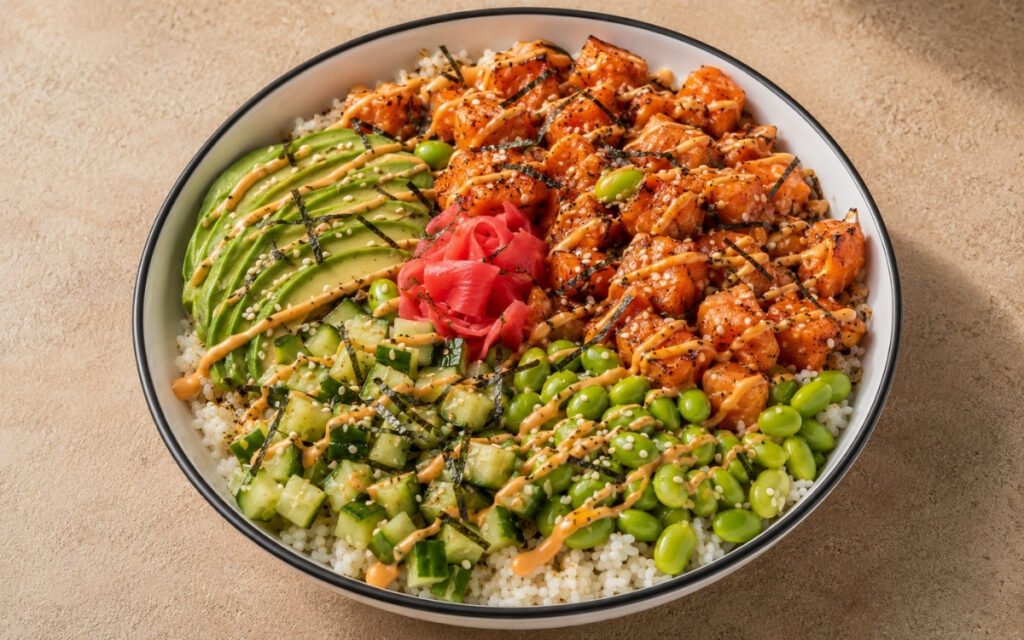
Spicy Salmon Sushi Bowl
Soy-honey marinated salmon seared 90 seconds for caramelised medium-rare — over seasoned sushi rice with spicy Kewpie mayo, avocado, edamame, nori, and pickled ginger. 45 minutes.
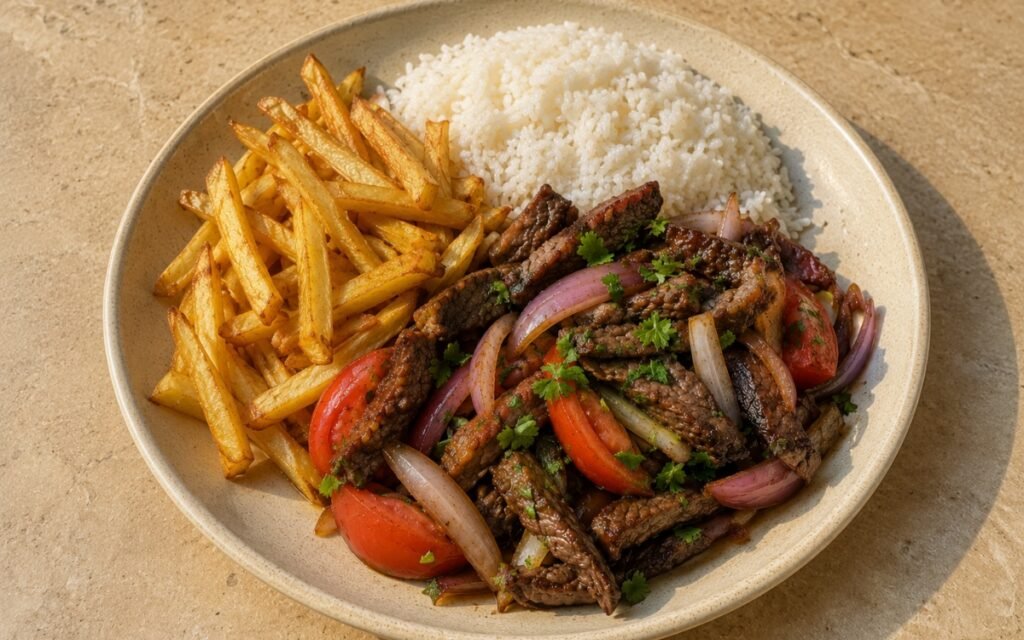
Peruvian Lomo Saltado
Deeply seared beef strips tossed fast with feathered shallots, tomato wedges, and a glossy soy-vinegar sauce, served with double-fried fries and rice.
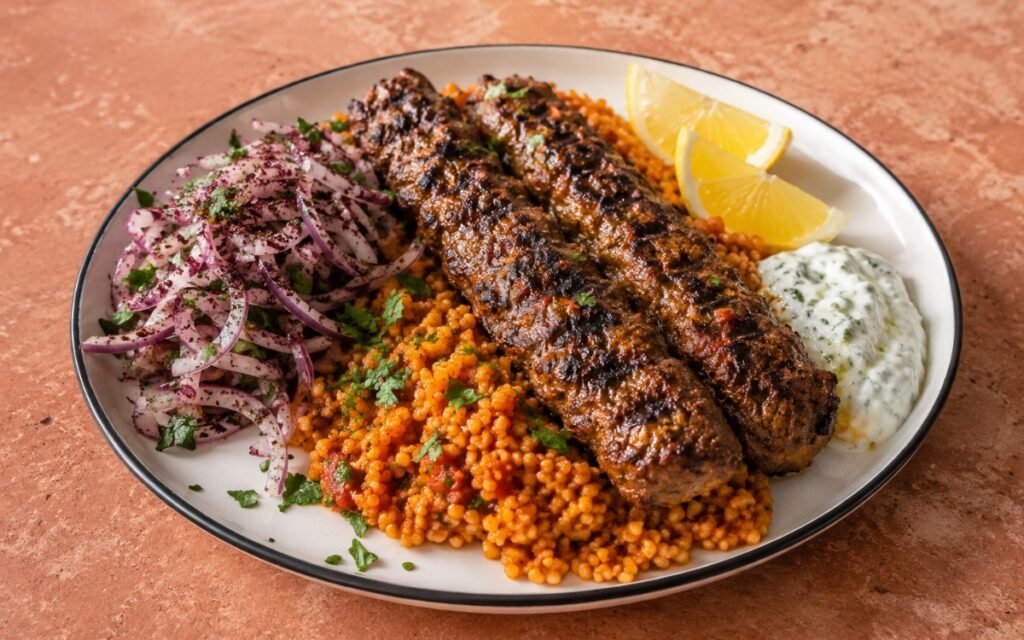
Turkish Adana Kebab with Tomato Couscous
Charred ground lamb Adana kebabs with pul biber on flat skewers, served over spiced tomato couscous with sumac onions.
You might also like
You might also like
Grilled Hot Honey Chicken Thighs
Grilled yogurt-marinated chicken thighs with charred edges and a sticky, glossy chili-infused hot honey glaze.
Sopa de Tortilla (Tortilla Soup)
A roasted, toasted, and fried tomato-chipotle broth with tender shredded chicken, topped with crisp golden tortilla strips, avocado, and cotija.
Grilled Chicken Caesar Salad
Grilled chicken breast, crisp romaine, golden croutons, shaved Parmesan, and a proper old-school Caesar dressing with no cream or mayonnaise.

Greek Chicken Gyro Rice Bowl
Ingredients
Method
- In a large bowl, whisk together the 45ml of olive oil, 30ml of fresh lemon juice, 12g of minced garlic, 8g of dried oregano, 4g of ground cumin, 3g of paprika, and 6g of salt until fully combined. The marinade’s spice combination is the Greek gyro flavour profile in concentrated form — oregano is the defining herb of Greek cooking, providing the floral, slightly bitter aromatic character that is immediately identifiable as Greek; cumin adds the earthy, slightly citrusy warmth that deepens the marinade beyond plain herb-and-lemon; paprika provides colour and mild sweetness; and the ratio of lemon to oil is deliberately generous to ensure the chicken absorbs citrus brightness throughout rather than only at the surface. Add the 680g of chicken strips and toss to coat every surface thoroughly. Allow to marinate for 15 minutes at room temperature — sufficient for the lemon’s acidity to begin penetrating the surface and the spices to adhere. For a more deeply flavoured result, marinate for up to 4 hours refrigerated. If time allows before cutting into strips, pound each thigh to an even thickness — uniform strips cook at a consistent rate, preventing thicker pieces from remaining underdone while thinner pieces overcook.
- Rinse the 280g of basmati rice under cold running water until completely clear. Combine with 420ml of cold water and 4g of salt in a medium saucepan. Bring to a full rolling boil over high heat, then reduce immediately to the lowest possible setting, cover tightly, and simmer for 15 minutes without lifting the lid. Remove from heat and allow to stand covered and undisturbed for 5 minutes. After the full rest, uncover and fluff with a fork using a gentle lifting motion. Basmati’s specific long-grain, low-starch character produces the separate, fluffy, non-sticky grains that carry the bowl’s components without clumping — the correct textural contrast to the creamy tzatziki and the moist chicken.
- For the full authentic method — including the critical cucumber preparation, the correct garlic incorporation, and the resting technique — follow the complete Authentic Tzatziki recipe. For this bowl, you will need the full batch: combine the 240g of full-fat Greek yogurt with the 120g of grated cucumber that has had its excess moisture squeezed out completely, the 8g of minced garlic, 15ml of lemon juice, 15ml of olive oil, 6g of chopped fresh dill, and 3g of salt. The moisture removal from the grated cucumber is the most important step — inadequately drained cucumber produces a watery, thin tzatziki that runs off the bowl’s components rather than providing the thick, clinging, cooling contrast the dish requires. Refrigerate until assembly.
- Combine the 200g of diced cucumber, 200g of diced Roma tomatoes, and 80g of thinly sliced red onion in a medium bowl. In a small bowl, whisk together the 20ml of olive oil, 15ml of red wine vinegar, 4g of dried oregano, and 3g of salt until combined. Pour over the vegetables and toss gently. Allow to sit for the duration of the chicken cooking step — 10 minutes of standing allows the salt to draw a small amount of moisture from the cucumber and tomatoes and the oregano to bloom in the olive oil, producing a lightly dressed, slightly softened salad that has more cohesion and flavour than a freshly tossed version. The red wine vinegar provides the sharp, specifically Greek acid note that distinguishes this salad from a simple mixed vegetable accompaniment — its character is more tannic and more assertive than lemon juice alone.
- Heat a large skillet over medium-high heat until hot — no additional oil is needed as the olive oil in the marinade provides sufficient fat for searing. Add the marinated chicken strips in a single layer with space between each piece. Cook undisturbed for 4–5 minutes — the oregano and paprika in the marinade caramelise against the hot pan surface alongside the lemon’s reduced sugars, producing the specific golden-brown, slightly spiced crust that makes gyro chicken distinctive. After 4–5 minutes flip each strip and cook the second side for 4–5 minutes until cooked through to 75°C internal temperature. Transfer to a plate and rest for 3 minutes — the brief rest allows the juices to redistribute before slicing into bite-sized pieces if the strips have been left whole during cooking.
- Divide the basmati rice among four wide bowls. Top each with the cooked chicken pieces, arranging them so the caramelised surfaces are visible. Spoon the cucumber-tomato salad alongside the chicken. Add a generous dollop of tzatziki — the quantity should be substantial enough to be a primary component rather than a garnish, with a large spoonful that pools into the rice and extends toward the chicken. Scatter 15g of crumbled feta cheese per bowl — the feta’s sharp, salty character against the cool tzatziki and the warm, spiced chicken is the specific combination that makes this bowl taste unmistakably Greek. Scatter fresh parsley leaves over each bowl. Place lemon wedges alongside. Drizzle a small amount of good olive oil over each finished bowl — the raw olive oil’s fruity, grassy character at serving amplifies the Mediterranean character of the assembled bowl.