
Chicken Parmigiana
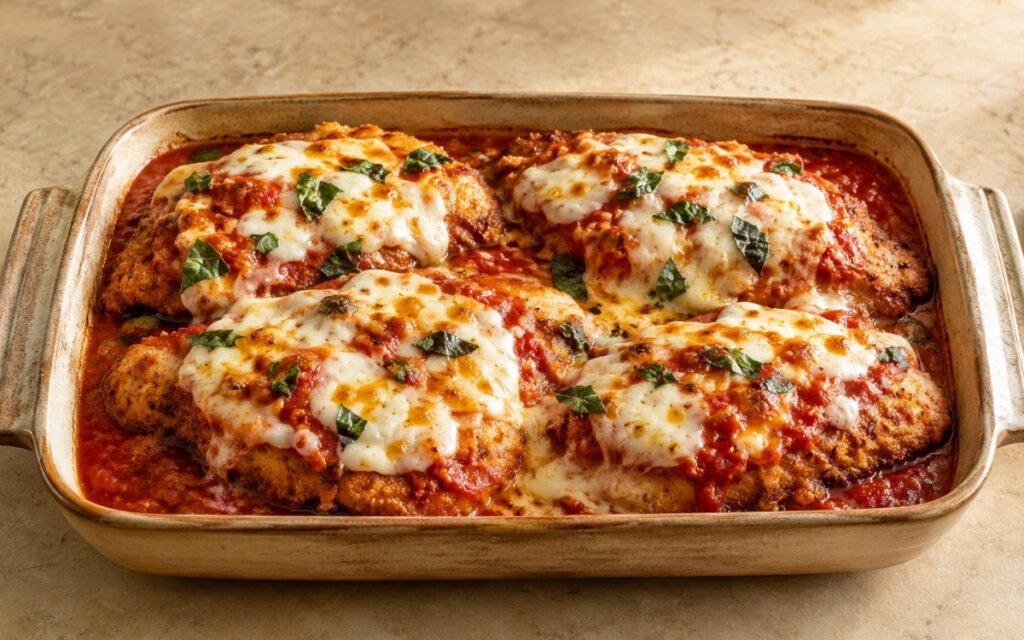
Chicken Parmigiana is the American-Italian dish that needs no introduction — a crispy fried cutlet, a ladle of good homemade marinara, and a blanket of melted mozzarella and Parmesan that comes out of the oven bubbling and slightly charred at the edges. The cutlet technique is the same as the Italian Fried Chicken Cutlets — butterflied, pounded thin, breaded through three stations, and fried at 175°C until golden — but here the cutlets become the base for something larger: a complete dish with its own sauce, its own melted cheese layer, and the specific satisfaction of something that is simultaneously crispy, saucy, and rich.
Prep Time : 25 min
Cook Time : 30 min
Servings : 4
25 min
30 min
4
Ingredients
For the Chicken Cutlets
• 900g boneless, skinless chicken breasts, about 4 medium — butterflied and pounded thin
• 100g all-purpose flour
• 8g fine sea salt
• Freshly ground black pepper
• 3 large eggs
• 150g Italian-style breadcrumbs — this one on Amazon
• 50g Parmesan cheese, finely grated
• 3g dried oregano
• Vegetable oil, for frying — approximately 100ml per batch
For the Homemade Marinara
• 2 cans (800g total) San Marzano or good quality crushed tomatoes
• 4 garlic cloves, thinly sliced
• 2 tbsp extra-virgin olive oil — this one on Amazon
• 1 tsp fine sea salt
• 1 tsp sugar
• ½ tsp dried oregano
• Small handful fresh basil leaves, added at the end
• Freshly ground black pepper to taste
For the Assembly
• 200g fresh mozzarella, torn, or shredded low-moisture mozzarella
• 50g Parmesan cheese, finely grated — this one on Amazon
• Fresh basil leaves, for garnish
This post may contain affiliate links. As an Amazon Associate I earn from qualifying purchases, at no additional cost to you.
Directions
- Make the Marinara
The marinara should be started first and can simmer while the chicken is being prepared. In a medium saucepan, heat the olive oil over medium heat. Add the thinly sliced garlic and cook for 60–90 seconds, stirring continuously, until the garlic is fragrant and just beginning to turn golden at the edges — do not allow it to brown fully or it will add bitterness to the sauce. Add both cans of crushed tomatoes. Add the salt, sugar, dried oregano, and several grinds of black pepper. Stir to combine and bring to a gentle simmer. Reduce heat to low and simmer uncovered for 20–25 minutes, stirring occasionally, until the sauce has thickened slightly and the raw tomato edge has cooked off completely. The sauce should taste rich, sweet, and gently acidic — balanced rather than sharp. Add the fresh basil leaves in the final minute of cooking. Remove from heat and taste for seasoning, adjusting salt if needed. The sugar is calibrated for the acidity of canned tomatoes — reduce or omit if your tomatoes are particularly sweet. A good marinara for chicken parm should be slightly thicker than a pasta sauce — it needs enough body to sit on top of the crispy cutlet without immediately running off into the baking dish. - Prepare and Fry the Chicken Cutlets
The full butterflying, pounding, breading, and frying technique is identical to the Italian Fried Chicken Cutlets — refer to that recipe for the complete step-by-step method. In summary: butterfly each breast open, pound to a uniform thickness of just under 1cm, bread through flour, egg, and the Parmesan-oregano breadcrumb mixture, and fry two at a time in 175°C vegetable oil for 3 minutes per side until deep golden brown and cooked to 74°C internally. Transfer to a wire rack — not paper towels — immediately after frying. The cutlets do not need to be fully drained and dried before assembly as they will be going directly into the oven, but the wire rack rest of 2–3 minutes allows the excess surface oil to drip away before the sauce goes on top. - Assemble in the Baking Dish
Preheat the oven to 200°C (390°F). Spread a thin layer of marinara — approximately 3–4 tablespoons — across the bottom of a large baking dish. This base layer prevents the cutlets from sticking to the dish and adds a layer of flavour beneath the chicken. Place the fried cutlets in a single layer over the sauce — they can overlap slightly at the edges but the majority of each cutlet should be flat. Spoon a generous amount of marinara over each cutlet, covering the centre and most of the surface but leaving the outer edges of the crust partially uncovered. The exposed crust edges will remain crisp in the oven while the sauced centre softens slightly — this deliberate partial coverage preserves the textural contrast between crisp crust and saucy centre that makes chicken parm satisfying rather than entirely soft. Distribute the torn fresh mozzarella or shredded low-moisture mozzarella evenly over the sauced areas of each cutlet. Scatter the additional 50g of finely grated Parmesan over the top of the mozzarella. - Bake Until Bubbling and Melted
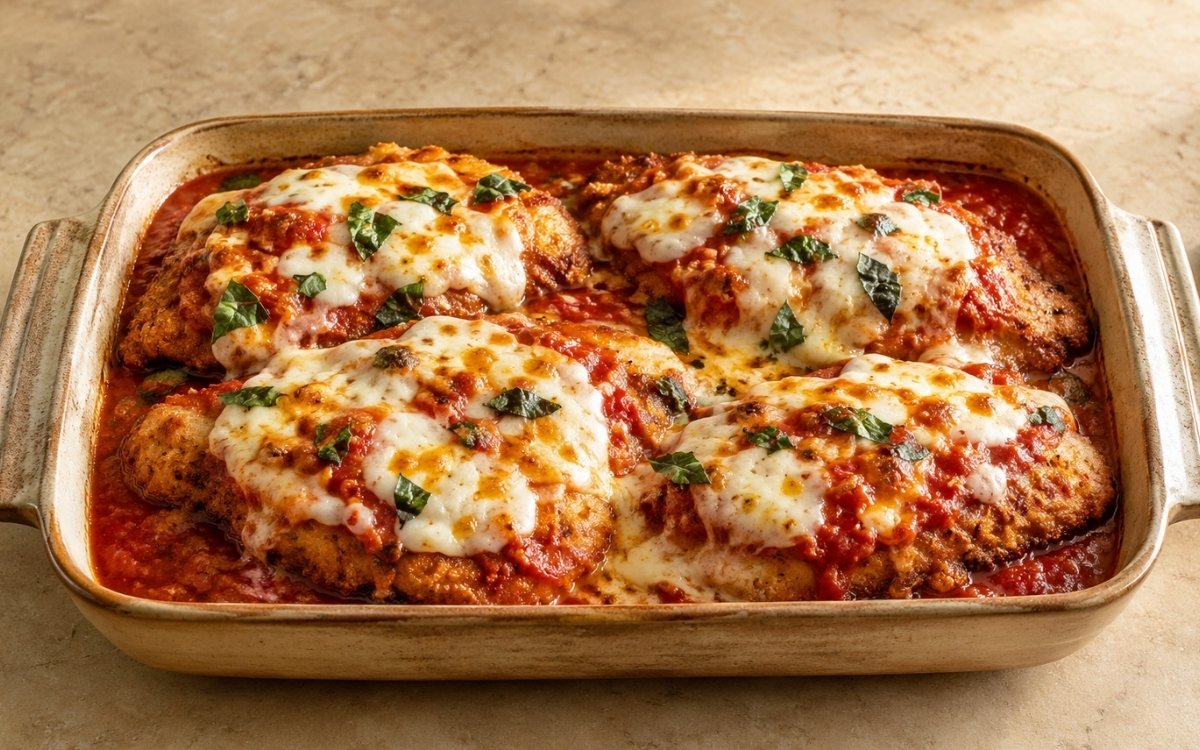
Place the baking dish in the fully preheated oven and bake for 8–10 minutes until the mozzarella has melted completely and shows the first signs of light golden browning at the surface, the sauce is visibly bubbling at the edges of the dish, and the Parmesan has formed a light golden crust on the surface. If the cheese has melted but not coloured, switch the oven to its broiler setting on high for 60–90 seconds — watching continuously — until the surface shows deep golden patches and the cheese edges are slightly charred. The broiler finish is optional but produces the more visually dramatic, restaurant-style result with patches of deep brown against the melted cheese. Remove from the oven and allow to rest in the baking dish for 3–4 minutes before serving — the sauce continues bubbling for a minute after leaving the oven and the rest allows the cheese to set slightly from completely liquid to a more cohesive layer. - Garnish and Serve
Scatter fresh basil leaves over the top of the baking dish immediately before serving — the residual heat of the dish wilts the basil slightly and releases its aromatic oils. Serve directly from the baking dish, using a wide spatula to lift each cutlet with its sauce and cheese layer intact. Serve over Spaghetti or alongside garlic bread for the classic American-Italian complete plate, or serve as a standalone dish with a simple dressed salad alongside.
*Notes :
- The marinara in this recipe is a simple, fast, high-quality sauce — not a slow-simmered ragù or a complex preparation. San Marzano tomatoes are specified because their low acidity, high flesh-to-liquid ratio, and sweet, concentrated tomato flavour produce a sauce with the richness and balance that chicken parm requires with minimal cooking time. Standard crushed tomatoes produce an acceptable result but may need slightly more sugar and longer cooking to reach the same balance. The sauce should taste complete on its own before it goes on the chicken — it is not corrected by the baking process, which only heats and reduces it slightly.
- The question of fresh versus low-moisture mozzarella is a genuine choice with different outcomes. Fresh mozzarella melts beautifully into large, irregular pools of white, creamy melted cheese with a clean, milky flavour — visually the most appealing result, and the choice when the dish is the centrepiece of the meal. Low-moisture mozzarella melts into a more uniform, more cohesive, more evenly distributed layer that stretches characteristically when lifted — the choice for a more practical, everyday result. Both are correct. Fresh mozzarella should be torn or sliced and patted dry with paper towels before applying — its higher moisture content releases water during baking that can make the sauce watery beneath the cheese.
- Leaving the crust edges uncovered by sauce is the technique decision that separates chicken parm that retains textural interest from chicken parm that is entirely soft. Sauce covering every millimetre of the cutlet steams the crust from above and produces a completely soft, bread-like layer rather than the contrast between crisp crust and soft, saucy, cheesy centre that makes the dish interesting.
Why This Recipe Works
This recipe works because it treats the fried cutlet as a structural element rather than simply the protein — one that must retain some of its crispness through the baking process to make the finished dish genuinely satisfying rather than simply saucy and cheesy. The partial sauce coverage preserves the outer crust edges.
The marinara’s correct consistency ensures it stays on the chicken rather than pooling immediately in the dish. The brief high-temperature bake followed by an optional broiler finish produces the melted, slightly charred cheese surface that visually defines the dish. And the rest after the oven allows the cheese to set enough to be served cleanly.
Ingredient Breakdown
Fried Chicken Cutlets
The structural base — the crust must be properly developed before baking to survive the oven step with some texture remaining.
Homemade Marinara
The flavour layer between chicken and cheese — rich, slightly sweet, balanced, and thick enough to stay on the cutlet rather than running into the dish.
San Marzano Crushed Tomatoes
The sauce foundation — low acidity, naturally sweet, and concentrated enough to produce a great marinara in 25 minutes rather than hours.
Fresh Basil (in sauce and as garnish)
Added at the end of the sauce and at serving — both applications preserve the volatile aromatic compounds that are destroyed by extended heat.
Fresh or Low-Moisture Mozzarella
The melting cheese layer — pools and stretches over the sauce, providing the creamy, mild dairy layer that defines chicken parm visually and texturally.
Parmesan
The flavour and browning layer on top — its lower moisture and higher protein produce the golden, slightly crunchy cheese surface above the mozzarella.
Flavor Structure Explained
This Chicken parmigiana follows a layered balance model:
- Crispy savory base (fried chicken crust)
- Bright acidic layer (marinara sauce)
- Creamy binding layer (mozzarella)
- Caramelized umami top (Parmesan)
- Integrated richness (combined layers)
The fried crust establishes the foundation with crunchy, savory intensity enhanced by Parmesan and herbs. Marinara cuts through that richness with sweet acidity and garlic-driven brightness, preventing heaviness. Mozzarella provides a soft, creamy layer that binds the structure and smooths transitions between elements. Parmesan on top adds a concentrated, caramelised finish with slight bitterness that deepens the overall flavor. The dish relies on all layers hitting together — contrast and cohesion in a single bite.
Common Mistakes to Avoid
- Over-saucing the Cutlet – Covering the entire crust with marinara steams the crust soft from above. Leave the outer edges uncovered — they stay crisp in the oven while the sauced centre melds with the cheese.
- Using Wet Fresh Mozzarella Without Drying It – Undried fresh mozzarella releases significant water during baking, making the sauce watery and the crust soggier than it needs to be. Always pat fresh mozzarella dry before using.
- Not Preheating the Oven Fully – A partially heated oven produces uneven melting and insufficient browning. Always wait for full temperature before the dish goes in.
- Skipping the Rest After Baking – Cheese straight from the oven is completely liquid and will slide off the cutlet when lifted. The 3–4 minute rest allows it to set slightly into a cohesive layer.
- Under-seasoning the Marinara – The marinara’s seasoning is the seasoning of the entire dish — the baking process does not add salt. Taste and correct before assembly.
- Making a Thin Marinara – Thin sauce runs off the chicken into the dish immediately. Cook the marinara to a slightly thicker consistency than a pasta sauce before using.
Variations
Spaghetti al Pomodoro Base
Serve the chicken parm over a generous portion of spaghetti tossed with additional marinara from the same batch — the classic American-Italian full plate. The pasta absorbs the sauce that runs from the cutlet during baking and creates a complete, deeply satisfying combination.
Eggplant Parmigiana
Replace the chicken cutlets with 1cm-thick slices of eggplant, salted and drained for 30 minutes, then breaded and fried using the identical technique. The assembly and baking method is identical. The eggplant version is the vegetarian foundation of the same dish.
Extra Cheese Version
Add a layer of thinly sliced provolone beneath the mozzarella — its slightly sharper, more tangy character adds complexity to the cheese layer and produces a more dramatically melted, more complex dairy blanket.
Broiler-Finished Version
After 8 minutes of baking, switch to the broiler at maximum heat for 90 seconds — watching continuously — to produce the deeply golden, slightly charred cheese surface that characterises restaurant-style chicken parm.
Storage & Make-Ahead
Assembled and baked chicken parm can be refrigerated for up to 3 days. To reheat it, cover it with foil and warm it in a 180°C oven for 12 to 15 minutes, then remove the foil for the last 3 minutes so the cheese can melt again and brown slightly on top.
The marinara makes a little more than you need for 4 portions. It can be refrigerated for up to 5 days or frozen for up to 3 months. Any extra works well as a sauce for pasta, pizza, or garlic bread.
If you want to prepare parts of the dish in advance, the fried cutlets can be made up to 24 hours ahead and refrigerated on a wire rack, while the marinara can be made up to 3 days in advance. For the best result, assemble and bake the dish fresh.
Chicken parm also freezes well before baking. Assemble it through the cheese stage, then freeze it in the baking dish for up to 2 months. Thaw it overnight in the refrigerator before baking at 200°C for 15 to 18 minutes instead of 8 to 10.
Frequently Asked Questions
What is the difference between this and the Italian Fried Chicken Cutlets?
The Italian Fried Chicken Cutlets are the standalone version — fried, served immediately with lemon, with the crust as the primary event. Chicken Parmigiana takes the same fried cutlet and transforms it with marinara, mozzarella, and Parmesan into a complete, sauced, baked dish. The cutlet technique is identical — the application is what differs.
Can I use store-bought marinara?
Yes — a good quality jarred marinara works as a practical shortcut. The homemade version in this recipe takes 25 minutes and produces noticeably better results, but a quality store-bought sauce is entirely acceptable.
Fresh or low-moisture mozzarella?
Fresh mozzarella produces more visually dramatic, creamy pools of melted cheese with a clean, milky flavour. Low-moisture produces a more uniform, stretchier, more practically manageable layer. Both are excellent — the choice is aesthetic and practical.
How do I prevent the crust from going completely soft?
Two techniques: pat fresh mozzarella completely dry before using to reduce steam; and leave the outer edges of each cutlet uncovered by sauce so they remain exposed to the dry oven heat rather than steaming under the sauce.
What should I serve alongside?
Spaghetti with additional marinara is the classic pairing. Garlic bread absorbs the sauce excellently. A simply dressed green salad with lemon vinaigrette provides the fresh, acidic contrast the richness of the dish needs.
Nutrition Facts
( per serving )
Calories
~620 kcal
Protein
58 g
Fat
26 g
Carbs
36 g
Calories
~620 kcal
Protein
58 g
Fat
26 g
Carbs
36 g
Related Recipes
Related Recipes

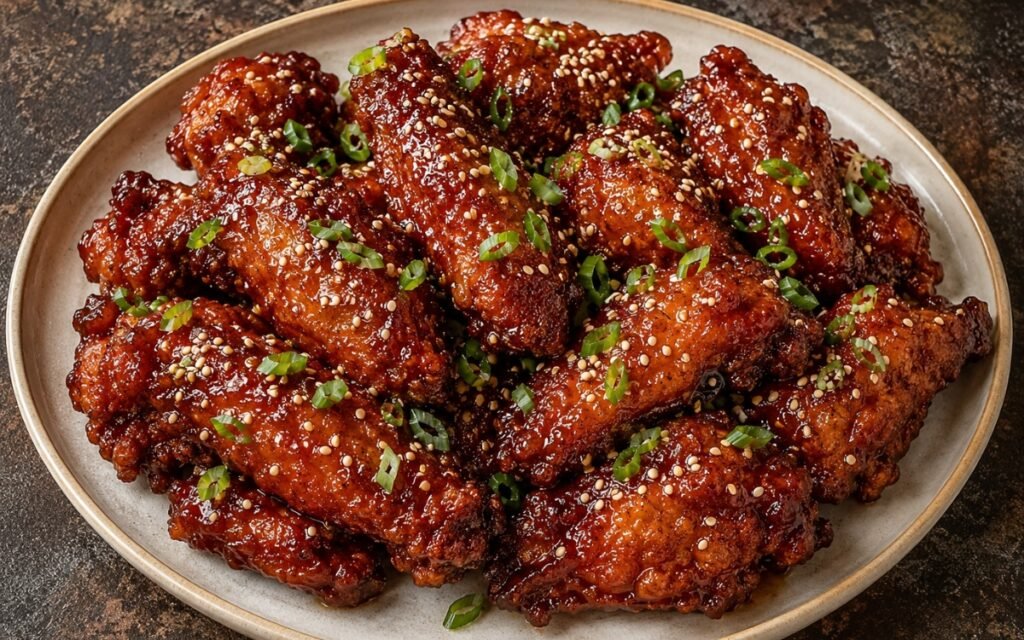
Korean BBQ Chicken Wings
Double-fried wings glazed in sticky gochujang barbecue deliver shattering crunch with sweet-heat intensity and garlic depth.
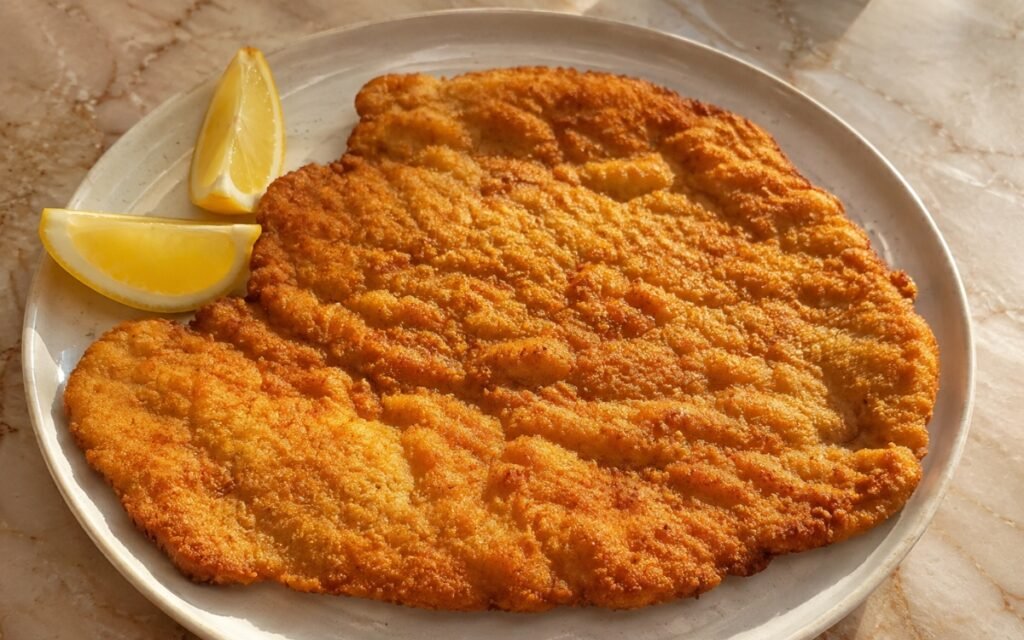
Austrian Pork Schnitzel
Pork loin pounded uniformly, breaded loosely for a wavy crust, fried in floating fat until golden — served immediately with lemon. Light and crispy.
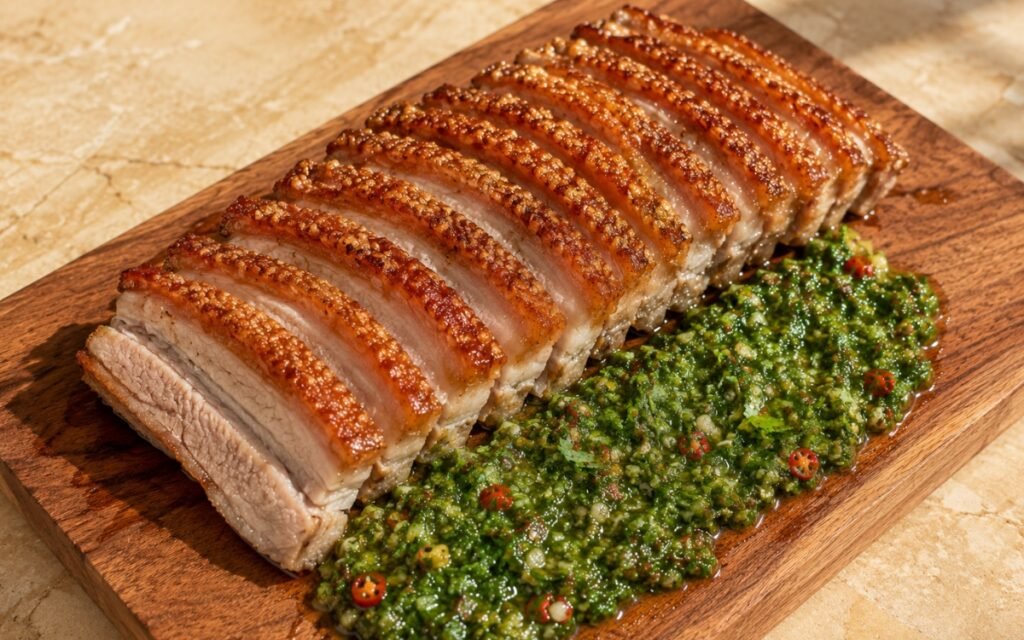
Steam-Roasted Pork Belly with Vietnamese-ish Herb Sauce
Skin-on pork belly steam-roasted for tender meat, finished hot for deep crackling, sliced thick and served with a sharp herb sauce.
You might also like
You might also like
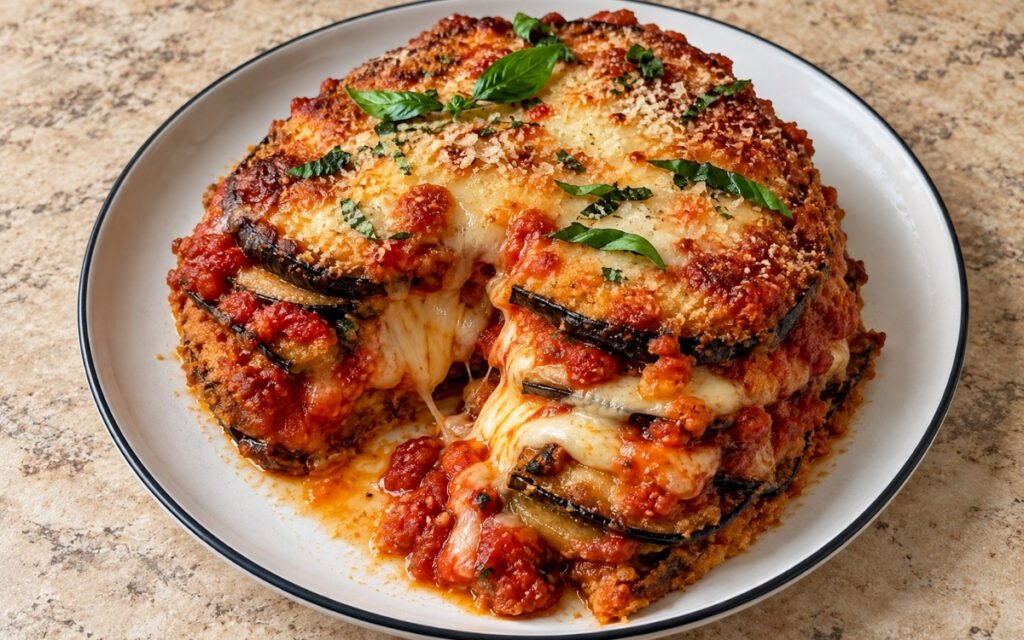
Eggplant Parmesan
Breaded fried eggplant slices layered with tomato sauce, mozzarella, Parmesan, and basil, then baked until bubbling and deeply flavorful.
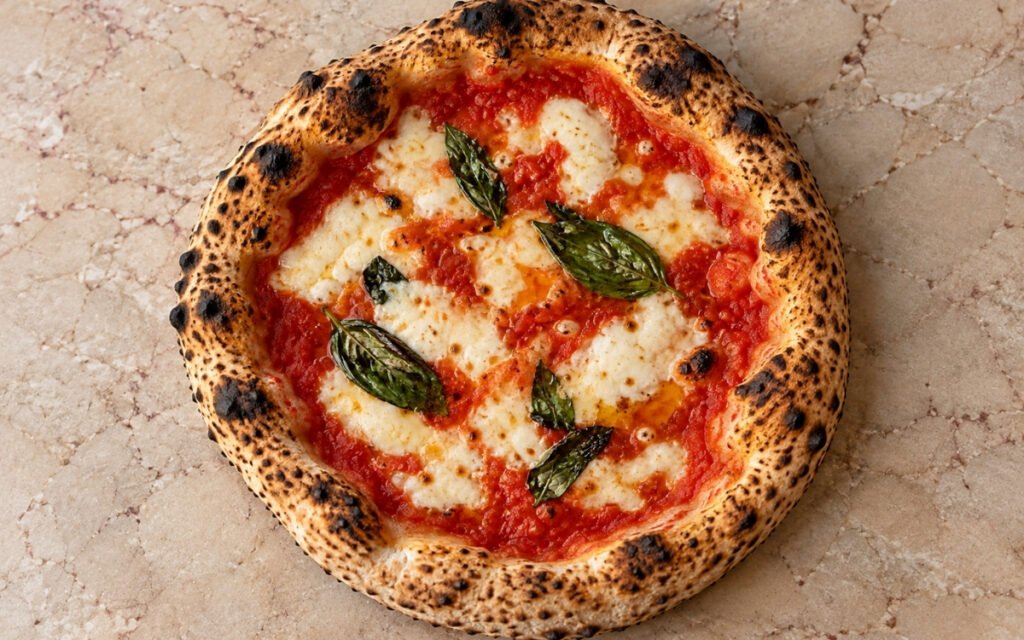
Neapolitan-Style Margherita Pizza
Puffy, leopard-spotted Neapolitan crust with bright uncooked tomato sauce, melted fresh mozzarella, and basil, made from half a batch of pizza dough.
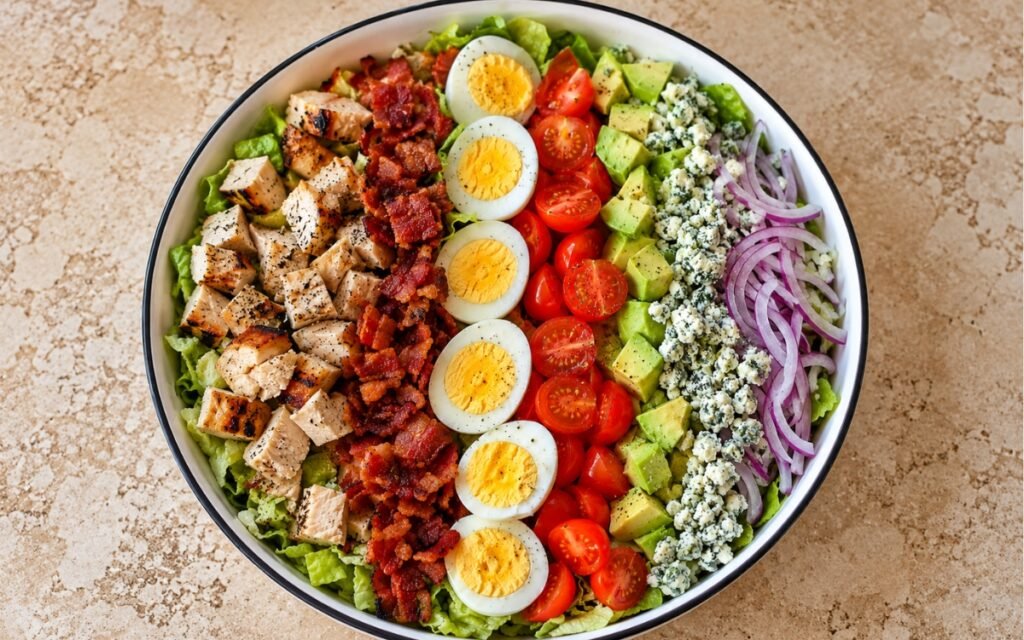
Classic Cobb Salad
Neat rows of seared chicken, crispy bacon, hard-boiled eggs, cherry tomatoes, avocado, blue cheese, and red onion over chopped lettuce with red wine vinaigrette.
Chicken Parmigiana
Ingredients
Method
- The marinara should be started first and can simmer while the chicken is being prepared. In a medium saucepan, heat the olive oil over medium heat. Add the thinly sliced garlic and cook for 60–90 seconds, stirring continuously, until the garlic is fragrant and just beginning to turn golden at the edges — do not allow it to brown fully or it will add bitterness to the sauce. Add both cans of crushed tomatoes. Add the salt, sugar, dried oregano, and several grinds of black pepper. Stir to combine and bring to a gentle simmer. Reduce heat to low and simmer uncovered for 20–25 minutes, stirring occasionally, until the sauce has thickened slightly and the raw tomato edge has cooked off completely. The sauce should taste rich, sweet, and gently acidic — balanced rather than sharp. Add the fresh basil leaves in the final minute of cooking. Remove from heat and taste for seasoning, adjusting salt if needed. The sugar is calibrated for the acidity of canned tomatoes — reduce or omit if your tomatoes are particularly sweet. A good marinara for chicken parm should be slightly thicker than a pasta sauce — it needs enough body to sit on top of the crispy cutlet without immediately running off into the baking dish.
- The full butterflying, pounding, breading, and frying technique is identical to the Italian Fried Chicken Cutlets — refer to that recipe for the complete step-by-step method. In summary: butterfly each breast open, pound to a uniform thickness of just under 1cm, bread through flour, egg, and the Parmesan-oregano breadcrumb mixture, and fry two at a time in 175°C vegetable oil for 3 minutes per side until deep golden brown and cooked to 74°C internally. Transfer to a wire rack — not paper towels — immediately after frying. The cutlets do not need to be fully drained and dried before assembly as they will be going directly into the oven, but the wire rack rest of 2–3 minutes allows the excess surface oil to drip away before the sauce goes on top.
- Preheat the oven to 200°C (390°F). Spread a thin layer of marinara — approximately 3–4 tablespoons — across the bottom of a large baking dish. This base layer prevents the cutlets from sticking to the dish and adds a layer of flavour beneath the chicken. Place the fried cutlets in a single layer over the sauce — they can overlap slightly at the edges but the majority of each cutlet should be flat. Spoon a generous amount of marinara over each cutlet, covering the centre and most of the surface but leaving the outer edges of the crust partially uncovered. The exposed crust edges will remain crisp in the oven while the sauced centre softens slightly — this deliberate partial coverage preserves the textural contrast between crisp crust and saucy centre that makes chicken parm satisfying rather than entirely soft. Distribute the torn fresh mozzarella or shredded low-moisture mozzarella evenly over the sauced areas of each cutlet. Scatter the additional 50g of finely grated Parmesan over the top of the mozzarella.
- Place the baking dish in the fully preheated oven and bake for 8–10 minutes until the mozzarella has melted completely and shows the first signs of light golden browning at the surface, the sauce is visibly bubbling at the edges of the dish, and the Parmesan has formed a light golden crust on the surface. If the cheese has melted but not coloured, switch the oven to its broiler setting on high for 60–90 seconds — watching continuously — until the surface shows deep golden patches and the cheese edges are slightly charred. The broiler finish is optional but produces the more visually dramatic, restaurant-style result with patches of deep brown against the melted cheese. Remove from the oven and allow to rest in the baking dish for 3–4 minutes before serving — the sauce continues bubbling for a minute after leaving the oven and the rest allows the cheese to set slightly from completely liquid to a more cohesive layer.
- Scatter fresh basil leaves over the top of the baking dish immediately before serving — the residual heat of the dish wilts the basil slightly and releases its aromatic oils. Serve directly from the baking dish, using a wide spatula to lift each cutlet with its sauce and cheese layer intact. Serve over Spaghetti or alongside garlic bread for the classic American-Italian complete plate, or serve as a standalone dish with a simple dressed salad alongside.