
Authentic Tzatziki
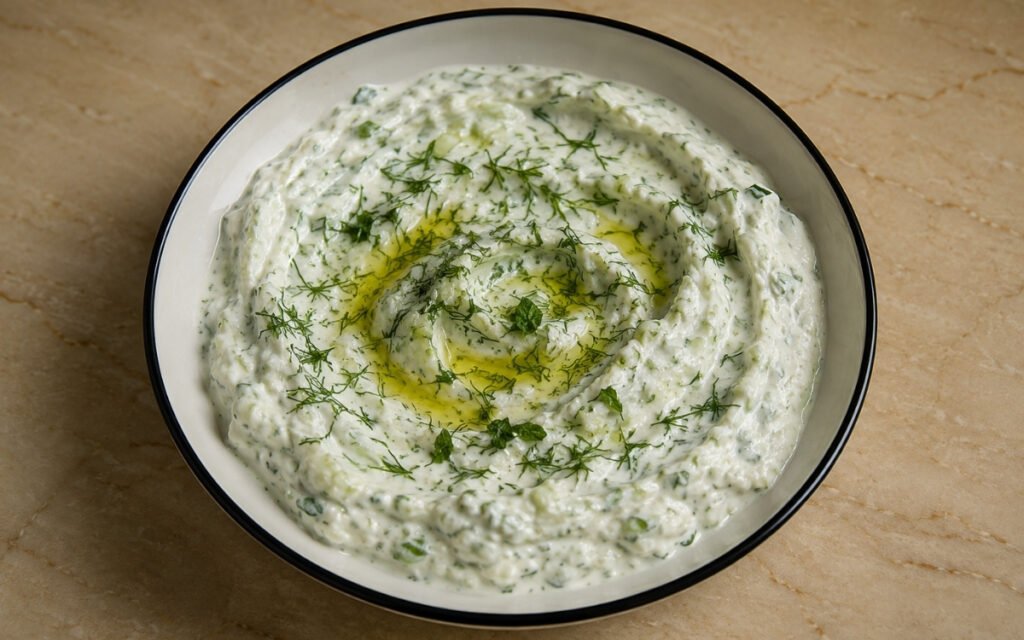
This is tzatziki done properly — thick enough to spoon, bright enough to cut through rich meats, and aromatic enough to stand on its own as a dip. Full-fat Greek yogurt, thoroughly squeezed cucumber, fresh dill, and mint come together in ten minutes into a sauce that improves with every hour it sits in the refrigerator. No shortcuts, no substitutions, no filler — just the real thing.
Prep Time : 10 min
Chill Time : 20 min
Servings : 4
10 min
20 min
4
Ingredients
For Tzatziki
• 240g full-fat Greek yogurt
• 120g cucumber, grated and firmly squeezed dry
• 8g garlic cloves, minced
• 15g fresh lemon juice
• 15g extra-virgin olive oil — this one on Amazon
• 6g fresh dill, finely chopped
• 10g fresh mint, finely chopped
• 3g salt
This post may contain affiliate links. As an Amazon Associate I earn from qualifying purchases, at no additional cost to you.
Directions
- Prepare the Cucumber
Grate the cucumber on the large holes of a box grater directly over a fine mesh strainer or clean kitchen cloth. Salt it lightly and let it sit for 5 minutes — the salt draws moisture out of the cells, which makes the subsequent squeezing dramatically more effective than squeezing unsalted cucumber. After 5 minutes, gather the cloth or use your hands to squeeze with genuine force. This is not a gentle press — squeeze repeatedly and hard until almost no more liquid comes out. The grated cucumber in your hand should feel nearly dry and hold together slightly rather than dripping. This step is the single most important thing you can do for tzatziki quality. Unsqueezed or under-squeezed cucumber releases its water into the yogurt base within minutes of mixing, thinning the sauce and diluting every flavor in it. A properly squeezed 120g of cucumber loses roughly 40–50% of its weight in expelled water. - Prepare the Garlic
Mince the garlic as finely as possible — ideally on a Microplane grater, which reduces it to a smooth paste that disperses invisibly and evenly throughout the sauce. Minced garlic from a knife is acceptable but produces occasional concentrated pockets of sharp raw garlic rather than the even background warmth that makes tzatziki’s garlic presence so satisfying. If you want a milder garlic character, combine the minced garlic with the lemon juice and let it sit for 5 minutes before mixing — the acid softens raw garlic’s harshest compounds considerably without eliminating its flavor. - Combine and Fold
In a medium bowl, add the Greek yogurt, squeezed cucumber, minced garlic, lemon juice, and salt. Fold together with a flexible spatula using slow, deliberate strokes — combine thoroughly but do not over-work. Greek yogurt’s thick, creamy texture comes from its strained protein structure, and aggressive stirring can break those proteins down, making the sauce thinner and slightly grainy. Once the base is uniform, fold in the chopped fresh dill and mint. Add the olive oil last, drizzling it around the edge of the bowl and folding it in gently so it ribbons through the sauce rather than pooling on top. - Chill and Serve
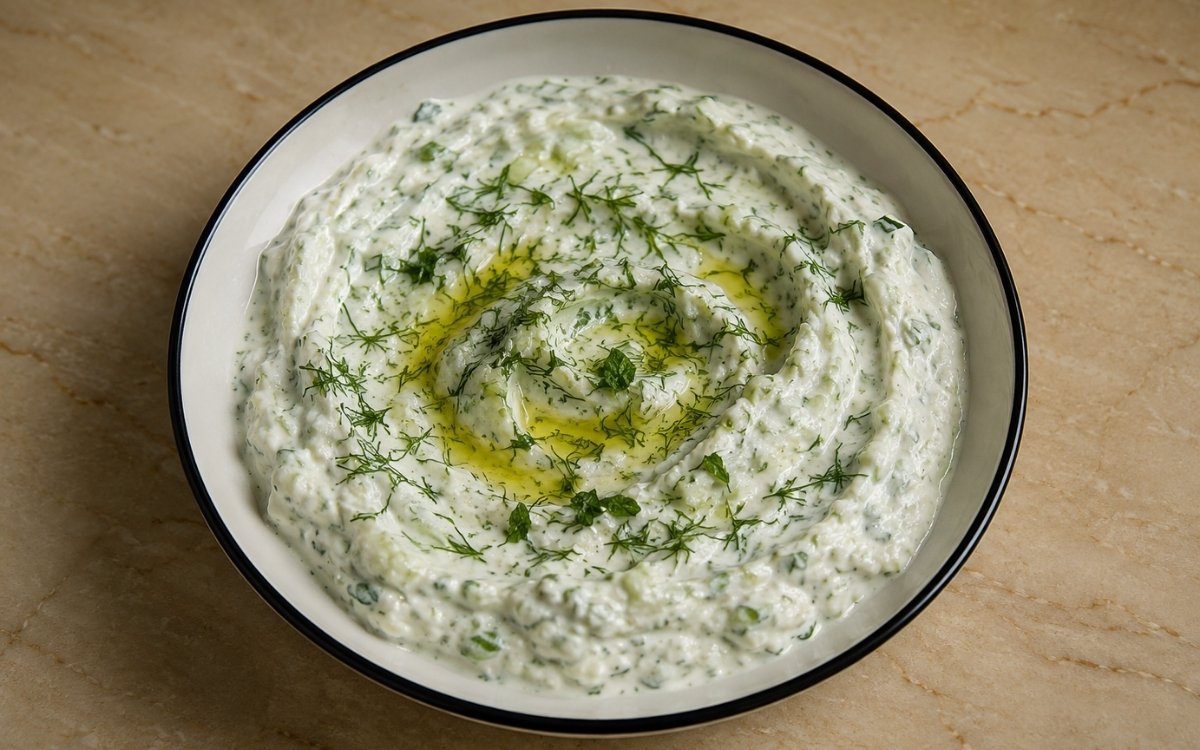
Cover and refrigerate for a minimum of 20 minutes before serving. This resting period is not optional — it is where the sauce becomes tzatziki rather than simply a mixture of its ingredients. The garlic infuses the yogurt, the dill and mint bloom fully, and the lemon integrates from a sharp note into a clean brightness that ties the whole sauce together. Serve in a shallow bowl with a drizzle of olive oil over the top and an optional pinch of dried dill or a small sprig of fresh dill for garnish.
*Notes :
- Tzatziki improves with time. Twenty minutes is the minimum, but an hour is better and overnight is best. As it rests, garlic softens, herbs integrate fully, and lemon shifts from sharp acidity to the clean brightness defining the sauce.
- Cucumber choice matters. English and Persian cucumbers have thinner skins, fewer seeds, and less water, so they give a cleaner, less bitter tzatziki with less squeezing. If using field cucumber, peel it and remove the seed core before grating.
- The olive oil amount is intentional. Fifteen grams adds smoothness and rounds the acidity without making the sauce oily. Fold it in gently for even distribution, then reserve a little for serving so the chilled surface looks polished and tastes complete.
- Garlic strength is personal. Eight grams gives moderate warmth that deepens after resting. Use twelve grams for a stronger sauce, or five grams for a milder version, ideally softened first in lemon juice. Never use garlic powder; it ruins the fresh flavor.
Why This Recipe Works
Tzatziki is a sauce of precision rather than complexity. There are only eight ingredients and no cooking involved, which means every preparation decision is fully exposed in the finished result. The recipe works because it addresses the two failure points that produce inferior tzatziki: insufficient cucumber squeezing and insufficient resting time.
The cucumber squeeze determines the sauce’s texture. The resting time determines the depth of its flavor. Everything else is simply quality ingredients handled with care — full-fat yogurt for richness and body, fresh lemon rather than bottled for clean brightness, real dill and mint for the aromatic freshness that dried herbs cannot replicate.
Ingredient Breakdown
Full-Fat Greek Yogurt
The non-negotiable foundation. Full-fat Greek yogurt has the fat content, protein density, and natural tang that make tzatziki creamy, stable, and satisfying. Low-fat Greek yogurt is thinner and more acidic — it produces a pourable sauce rather than a spoonable one. Regular yogurt, even full-fat, is far too thin and must be strained for several hours before use.
Cucumber
Provides fresh, hydrating character and volume. The squeezing process is what separates it from being a problem ingredient — properly prepared, it contributes texture and freshness without any moisture damage to the base.
Garlic
The savory backbone of the sauce. Its quantity is deliberately moderate — present and warming rather than aggressive. Raw garlic sharpens with time in the refrigerator, so the 20-minute minimum rest is also partly about garlic integration.
Fresh Lemon Juice
Provides clean acidity that lifts the yogurt’s natural tang and brightens the herbs. Always fresh — bottled lemon juice has a flat, processed character that makes the sauce taste dull.
Extra-Virgin Olive Oil
Adds smooth Mediterranean richness and a subtle fruitiness that rounds the sauce’s acidity. Also serves as the finishing drizzle that gives tzatziki its characteristic appearance.
Fresh Dill
The defining aromatic of tzatziki — feathery, slightly anise-like, clean. There is no acceptable dried substitute for this recipe. Dried dill tastes of hay rather than the bright, fresh herb character the sauce requires.
Fresh Mint
Adds a cooling counterpoint to the garlic’s warmth and reinforces the yogurt’s natural cooling quality. Pairs with dill more naturally than it might seem — both are slightly anise-adjacent and complement each other without competing.
Salt
Essential for flavor extraction and balance. Also draws moisture from the cucumber during preparation — its role begins before the sauce is mixed.
Flavor Structure Explained
This sauce follows a layered balance model:
- Creamy tangy base (Greek yogurt)
- Fresh vegetal coolness (cucumber)
- Savory backbone (garlic)
- Bright acidity (lemon juice)
- Herbal identity (dill, mint)
- Smooth finishing richness (olive oil)
Greek yogurt establishes the structure with a cool, creamy body that carries all other elements without heaviness. Cucumber integrates quietly, adding freshness and a clean, watery lift rather than dominating. Garlic anchors the profile with subtle savory depth, preventing the sauce from feeling flat. Lemon juice sharpens and brightens the entire composition, lifting both dairy and herbs. Dill defines the classic aromatic identity, while mint expands it with added coolness and gentle sweetness. Olive oil rounds the acidity and ties everything together, giving the sauce a smooth, balanced finish.
Common Mistakes to Avoid
- Under-squeezing the Cucumber – The most common mistake and the one with the most destructive consequences. Squeeze until it hurts, then squeeze again.
- Using Low-Fat Yogurt – Insufficient fat content produces a thin, overly sour sauce that cannot hold its texture. Full-fat only.
- Skipping the Rest – Tzatziki mixed and served immediately tastes raw and unintegrated. The 20-minute minimum chill is where it becomes a finished sauce rather than a mixture.
- Adding Dried Dill – Dried dill ruins tzatziki. It contributes a dusty, flat flavor that signals a shortcut rather than quality. Fresh dill is not a luxury — it is the recipe.
- Over-stirring – Treat the yogurt gently. Fold, do not whisk or beat.
Variations
Classic Tzatziki Without Mint
The most traditional Greek preparation uses only dill, no mint. Omit the mint entirely and increase the dill to 10g. The result is more austere and classically Greek — dill-forward, clean, and particularly well-suited to grilled fish and lamb.
Extra Garlic Version
Increase garlic to 15g for a genuinely pungent, assertive tzatziki that stands up to bold spiced meats, falafel, and shawarma. Allow the full overnight rest to mellow the raw edge of the increased garlic.
Cucumber-Heavy Version
Double the cucumber to 240g grated and squeezed for a chunkier, more textured sauce with a higher fresh-to-creamy ratio. Particularly good as a vegetable dip or spooned alongside grilled vegetables.
Lemon-Forward Version
Increase lemon juice to 25g and add 3g of lemon zest for a brighter, more citrus-prominent sauce excellent with seafood and lighter summer dishes.
Avocado Tzatziki
Blend one small ripe avocado into the yogurt base before adding the other ingredients for a richer, creamier, slightly green-tinted sauce with added healthy fat and a subtle avocado flavor that works beautifully with grilled chicken and grain bowls.
Roasted Garlic Version
Replace raw garlic with the same weight of roasted garlic, mashed to a smooth paste. The result is an entirely different sauce — sweet, mellow, deeply savory rather than sharp and bright. Excellent as a dip for roasted vegetables and flatbreads.
Storage & Make-Ahead
Tzatziki is one of the best make-ahead sauces in any kitchen. Refrigerate in an airtight container for up to 4 days. The flavor peaks between 24 and 48 hours after making as the garlic mellows and the herbs fully infuse the yogurt. Stir gently before serving and refresh with a drizzle of fresh olive oil on top. Some liquid separation is normal after 24 hours — stir it back in rather than pouring it off.
Frequently Asked Questions
What does tzatziki pair with?
Grilled lamb, chicken souvlaki, falafel, grilled halloumi, roasted vegetables, kebabs, beef koftas, pita bread, crudités, burgers, and as a cooling sauce alongside anything spiced or grilled.
Can I make it vegan?
Use a thick, full-fat coconut yogurt or cashew yogurt. The cooling effect is different without dairy fat, but the flavor profile is surprisingly close. Squeeze the cucumber even more thoroughly as plant-based yogurts are less stable with added moisture.
Why is my tzatziki watery?
Almost certainly under-squeezed cucumber. Occasionally also caused by using low-fat yogurt or by stirring too aggressively. If watery after making, strain the whole sauce through a fine mesh strainer for 30 minutes in the refrigerator.
Can I use a food processor for the cucumber?
A food processor shreds cucumber into much smaller pieces that release significantly more water and are harder to squeeze dry. A box grater gives the ideal texture — distinct shreds rather than a wet pulp.
Nutrition Facts
( per serving )
Calories
~95 kcal
Protein
6 g
Fat
6 g
Carbs
5 g
Calories
~95 kcal
Protein
6 g
Fat
6 g
Carbs
5 g
Related Recipes
Related Recipes

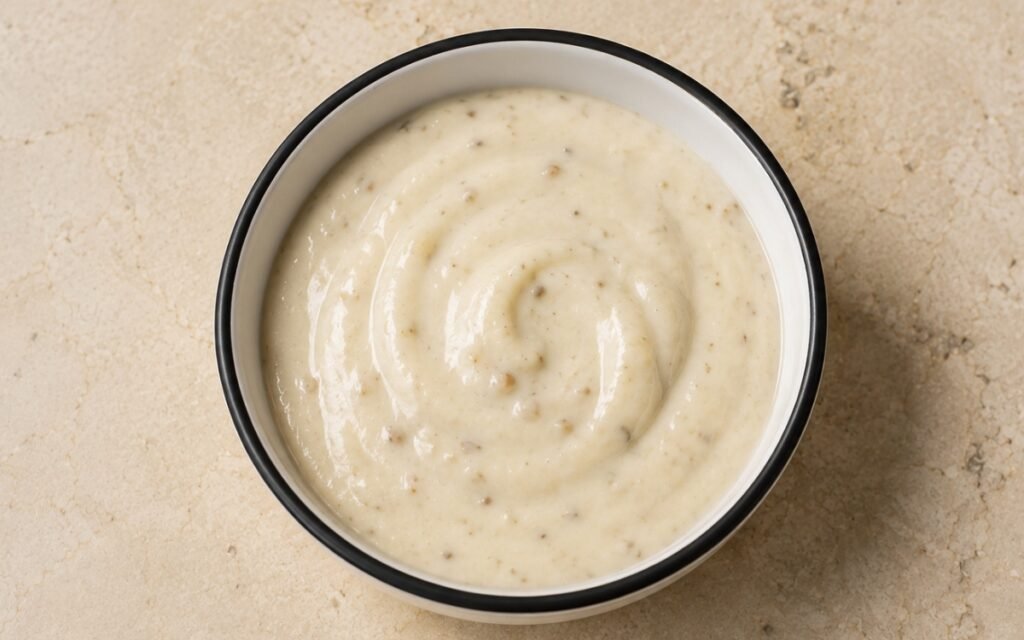
Creamy Roasted Garlic Sauce
Sweet roasted garlic meets creamy yogurt for a sophisticated sauce ready in 45 minutes.
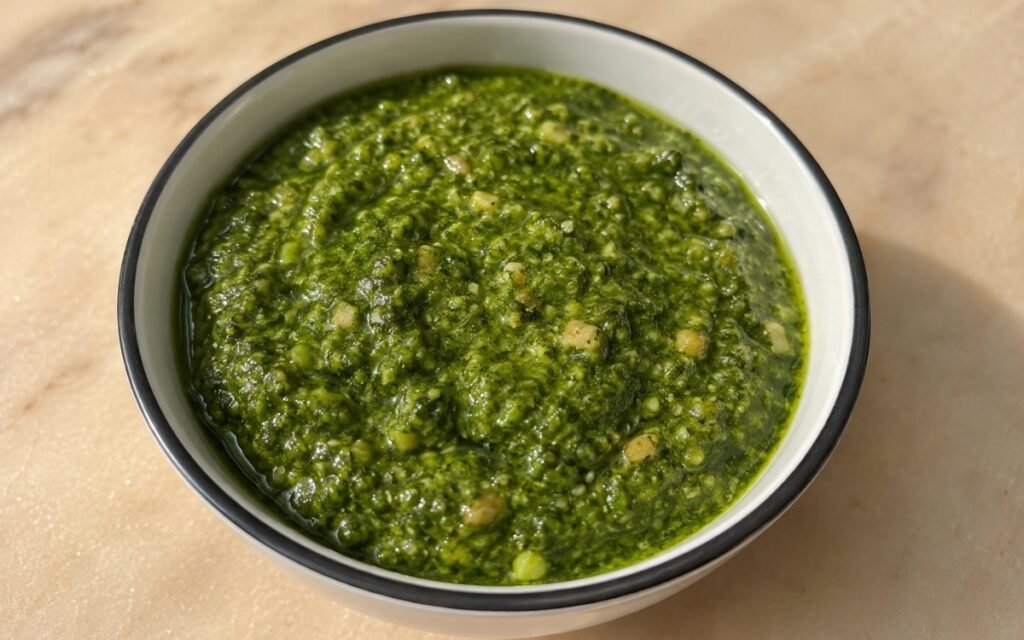
Fresh Basil Pesto (Weeknight Batch)
Fresh basil and toasted pine nuts blend into vibrant Italian pesto — ready in 10 minutes.
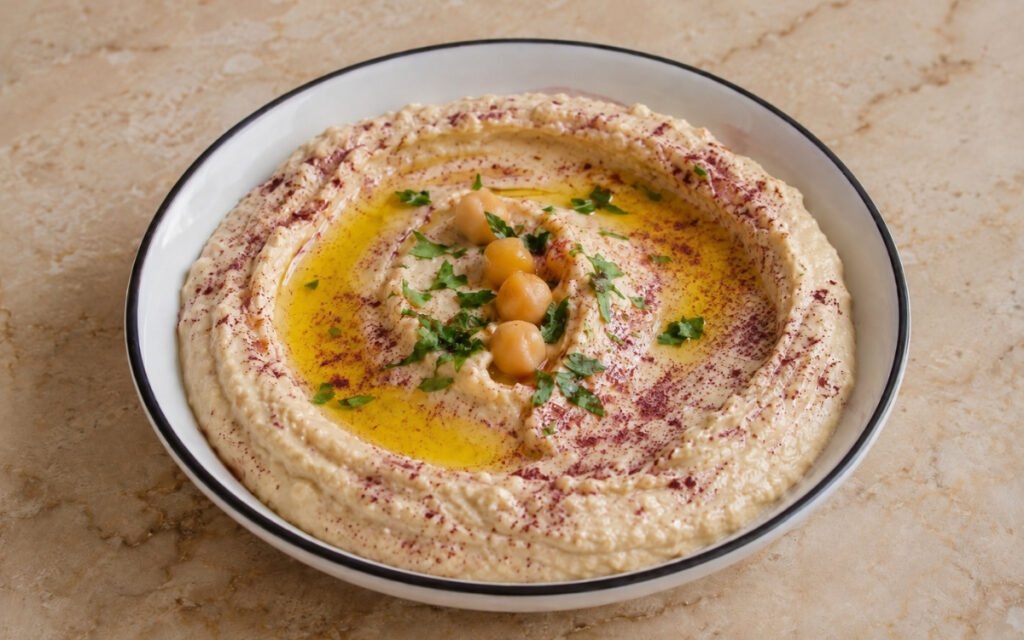
Classic Hummus
Dried chickpeas cooked with baking soda, processed warm with tahini, lemon, and garlic, emulsified with ice-cold water — the ultra-smooth base hummus that every flavoured variation is built on.
You might also like
You might also like
Light Carrot Lemon Salad
Crisp shredded carrots tossed with bright lemon juice, olive oil, and fresh herbs in ten minutes.
Grilled Chicken Skewers
Juicy grilled chicken skewers lacquered with caramelized honey–sriracha glaze for smoky, sticky heat.
Grilled Halloumi Burger with Roasted Peppers
Golden grilled halloumi in a toasted brioche bun with caramelized peppers, peppery rocket, and creamy harissa-lime mayo.


Authentic Tzatziki
Ingredients
Method
- Grate the cucumber on the large holes of a box grater directly over a fine mesh strainer or clean kitchen cloth. Salt it lightly and let it sit for 5 minutes — the salt draws moisture out of the cells, which makes the subsequent squeezing dramatically more effective than squeezing unsalted cucumber. After 5 minutes, gather the cloth or use your hands to squeeze with genuine force. This is not a gentle press — squeeze repeatedly and hard until almost no more liquid comes out. The grated cucumber in your hand should feel nearly dry and hold together slightly rather than dripping. This step is the single most important thing you can do for tzatziki quality. Unsqueezed or under-squeezed cucumber releases its water into the yogurt base within minutes of mixing, thinning the sauce and diluting every flavor in it. A properly squeezed 120g of cucumber loses roughly 40–50% of its weight in expelled water.
- Mince the garlic as finely as possible — ideally on a Microplane grater, which reduces it to a smooth paste that disperses invisibly and evenly throughout the sauce. Minced garlic from a knife is acceptable but produces occasional concentrated pockets of sharp raw garlic rather than the even background warmth that makes tzatziki’s garlic presence so satisfying. If you want a milder garlic character, combine the minced garlic with the lemon juice and let it sit for 5 minutes before mixing — the acid softens raw garlic’s harshest compounds considerably without eliminating its flavor.
- In a medium bowl, add the Greek yogurt, squeezed cucumber, minced garlic, lemon juice, and salt. Fold together with a flexible spatula using slow, deliberate strokes — combine thoroughly but do not over-work. Greek yogurt’s thick, creamy texture comes from its strained protein structure, and aggressive stirring can break those proteins down, making the sauce thinner and slightly grainy. Once the base is uniform, fold in the chopped fresh dill and mint. Add the olive oil last, drizzling it around the edge of the bowl and folding it in gently so it ribbons through the sauce rather than pooling on top.
- Cover and refrigerate for a minimum of 20 minutes before serving. This resting period is not optional — it is where the sauce becomes tzatziki rather than simply a mixture of its ingredients. The garlic infuses the yogurt, the dill and mint bloom fully, and the lemon integrates from a sharp note into a clean brightness that ties the whole sauce together. Serve in a shallow bowl with a drizzle of olive oil over the top and an optional pinch of dried dill or a small sprig of fresh dill for garnish.