Ingredients
Method
Marinate the Chicken
- In a large bowl, whisk together the 45ml of olive oil, 30ml of fresh lemon juice, 12g of minced garlic, 8g of dried oregano, 4g of ground cumin, 3g of paprika, and 6g of salt until fully combined. The marinade's spice combination is the Greek gyro flavour profile in concentrated form — oregano is the defining herb of Greek cooking, providing the floral, slightly bitter aromatic character that is immediately identifiable as Greek; cumin adds the earthy, slightly citrusy warmth that deepens the marinade beyond plain herb-and-lemon; paprika provides colour and mild sweetness; and the ratio of lemon to oil is deliberately generous to ensure the chicken absorbs citrus brightness throughout rather than only at the surface. Add the 680g of chicken strips and toss to coat every surface thoroughly. Allow to marinate for 15 minutes at room temperature — sufficient for the lemon's acidity to begin penetrating the surface and the spices to adhere. For a more deeply flavoured result, marinate for up to 4 hours refrigerated. If time allows before cutting into strips, pound each thigh to an even thickness — uniform strips cook at a consistent rate, preventing thicker pieces from remaining underdone while thinner pieces overcook.
Cook the Basmati Rice
- Rinse the 280g of basmati rice under cold running water until completely clear. Combine with 420ml of cold water and 4g of salt in a medium saucepan. Bring to a full rolling boil over high heat, then reduce immediately to the lowest possible setting, cover tightly, and simmer for 15 minutes without lifting the lid. Remove from heat and allow to stand covered and undisturbed for 5 minutes. After the full rest, uncover and fluff with a fork using a gentle lifting motion. Basmati's specific long-grain, low-starch character produces the separate, fluffy, non-sticky grains that carry the bowl's components without clumping — the correct textural contrast to the creamy tzatziki and the moist chicken.
Make the Tzatziki
- For the full authentic method — including the critical cucumber preparation, the correct garlic incorporation, and the resting technique — follow the complete Authentic Tzatziki recipe. For this bowl, you will need the full batch: combine the 240g of full-fat Greek yogurt with the 120g of grated cucumber that has had its excess moisture squeezed out completely, the 8g of minced garlic, 15ml of lemon juice, 15ml of olive oil, 6g of chopped fresh dill, and 3g of salt. The moisture removal from the grated cucumber is the most important step — inadequately drained cucumber produces a watery, thin tzatziki that runs off the bowl's components rather than providing the thick, clinging, cooling contrast the dish requires. Refrigerate until assembly.
Prepare the Cucumber-Tomato Salad
- Combine the 200g of diced cucumber, 200g of diced Roma tomatoes, and 80g of thinly sliced red onion in a medium bowl. In a small bowl, whisk together the 20ml of olive oil, 15ml of red wine vinegar, 4g of dried oregano, and 3g of salt until combined. Pour over the vegetables and toss gently. Allow to sit for the duration of the chicken cooking step — 10 minutes of standing allows the salt to draw a small amount of moisture from the cucumber and tomatoes and the oregano to bloom in the olive oil, producing a lightly dressed, slightly softened salad that has more cohesion and flavour than a freshly tossed version. The red wine vinegar provides the sharp, specifically Greek acid note that distinguishes this salad from a simple mixed vegetable accompaniment — its character is more tannic and more assertive than lemon juice alone.
Cook the Marinated Chicken
- Heat a large skillet over medium-high heat until hot — no additional oil is needed as the olive oil in the marinade provides sufficient fat for searing. Add the marinated chicken strips in a single layer with space between each piece. Cook undisturbed for 4–5 minutes — the oregano and paprika in the marinade caramelise against the hot pan surface alongside the lemon's reduced sugars, producing the specific golden-brown, slightly spiced crust that makes gyro chicken distinctive. After 4–5 minutes flip each strip and cook the second side for 4–5 minutes until cooked through to 75°C internal temperature. Transfer to a plate and rest for 3 minutes — the brief rest allows the juices to redistribute before slicing into bite-sized pieces if the strips have been left whole during cooking.
Assemble and Serve
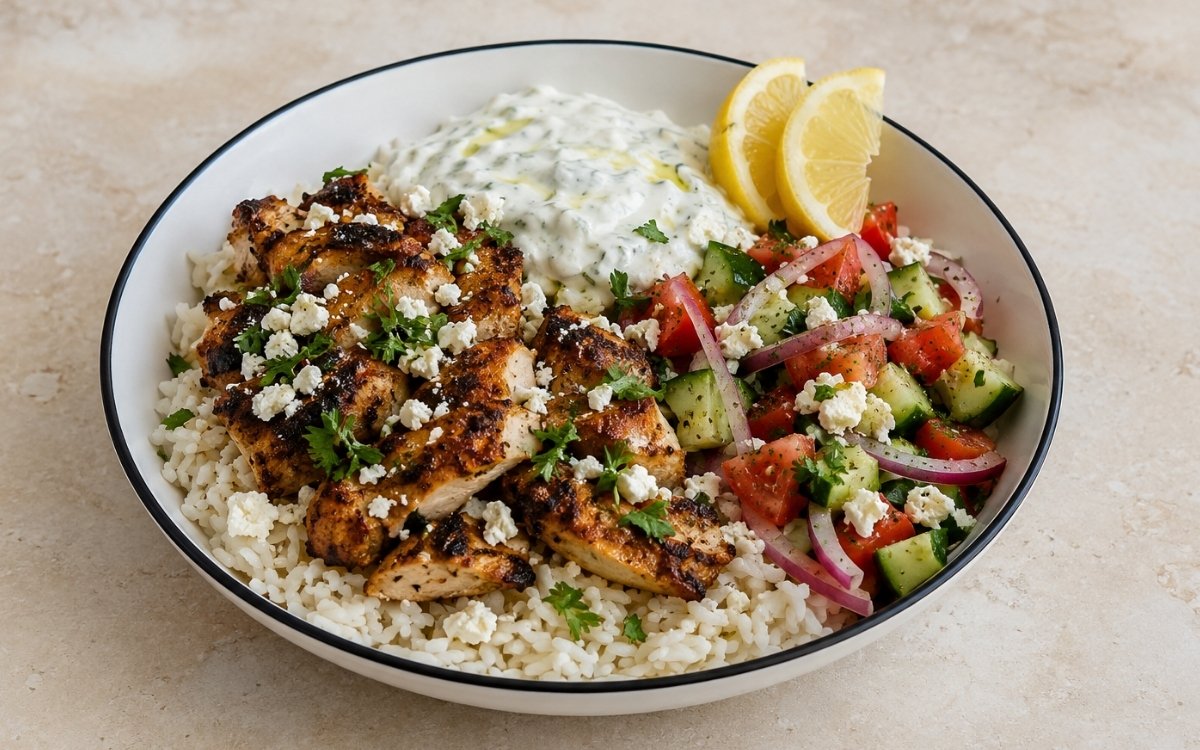
- Divide the basmati rice among four wide bowls. Top each with the cooked chicken pieces, arranging them so the caramelised surfaces are visible. Spoon the cucumber-tomato salad alongside the chicken. Add a generous dollop of tzatziki — the quantity should be substantial enough to be a primary component rather than a garnish, with a large spoonful that pools into the rice and extends toward the chicken. Scatter 15g of crumbled feta cheese per bowl — the feta's sharp, salty character against the cool tzatziki and the warm, spiced chicken is the specific combination that makes this bowl taste unmistakably Greek. Scatter fresh parsley leaves over each bowl. Place lemon wedges alongside. Drizzle a small amount of good olive oil over each finished bowl — the raw olive oil's fruity, grassy character at serving amplifies the Mediterranean character of the assembled bowl.
Notes
The tzatziki preparation in this bowl uses the complete Authentic Tzatziki recipe deliberately — the quality of the tzatziki is the single component that most determines whether this bowl tastes like a restaurant-quality Greek dish or a generic chicken-and-yogurt preparation. Properly made tzatziki requires specific attention to cucumber moisture removal, garlic preparation, and resting time that produce a fundamentally different result from quickly combined yogurt and cucumber. The full recipe and technique are worth following completely rather than approximating.
The dried oregano in both the marinade and the salad dressing is specified rather than fresh for this specific application. Dried Greek oregano — Origanum vulgare subsp. hirtum — has a more concentrated, more intensely aromatic character than fresh oregano when used in an oil-based marinade or dressing, because the drying process concentrates its essential oils. In applications where the oregano is bloomed in oil and will have time to release its compounds — as in this marinade and the salad dressing — dried produces a more distinctly Greek aromatic result than fresh. Fresh oregano is specified only for applications where its brightness and colour are required.