
Caribbean Jerk Chicken Rice Bowl
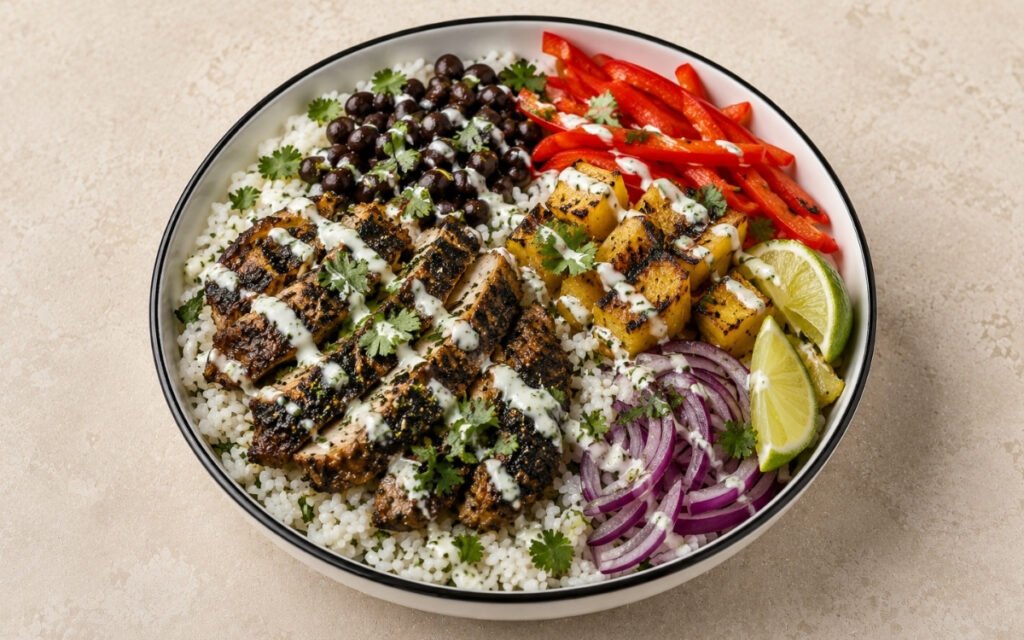
A jerk marinade built in the food processor — scallions, ginger, garlic, fresh thyme, allspice, cinnamon, nutmeg, cayenne, brown sugar, soy sauce, and lime juice blended into a paste, then massaged into scored chicken thighs and left for a minimum of 2 hours. The scoring is not decorative — it opens channels for the paste to penetrate the flesh rather than sitting only on the surface. Cooked in a cast iron skillet until the skin side is deeply charred and the meat is cooked through, then charred pineapple in the same pan while the chicken rests. Coconut rice with cilantro and lime as the base, black beans warmed with cumin, and a sour cream cilantro-lime crema drizzled over everything. Island flavour that earns its name.
Prep Time : 25 min
Cook Time : 35 min
Servings : 4
25 min
35 min
4
Ingredients
For the Jerk Chicken
• 600g boneless, skinless chicken thighs
• 30g scallions, roughly chopped
• 15g fresh ginger, peeled and chopped
• 12g garlic cloves
• 8g fresh thyme leaves
• 6g ground allspice — this one on Amazon
• 4g ground cinnamon
• 3g ground nutmeg
• 2g cayenne pepper
• 8g light brown sugar
• 445ml low-sodium soy sauce
• 60ml fresh lime juice, divided
• 30ml vegetable oil
For the Coconut Rice
• 300g jasmine rice — this one on Amazon
• 200ml coconut milk — this one on Amazon
• 260ml water
• 4g salt
• 15g fresh cilantro, chopped
• 10ml lime juice
For the Bowl Toppings
• 400g canned black beans, drained and rinsed
• 200g fresh pineapple, cut into 2cm chunks
• 100g red bell pepper, thinly sliced
• 80g red onion, thinly sliced
• 2g ground cumin
For the Lime-Cilantro Crema
• 120g sour cream
• 30ml lime juice
• 20g fresh cilantro, chopped
• 2g garlic, minced
• Salt to taste
For Garnish
• 30g fresh cilantro leaves
• Lime wedges
This post may contain affiliate links. As an Amazon Associate I earn from qualifying purchases, at no additional cost to you.
Directions
- Prepare the Jerk Marinade
Combine the 30g of roughly chopped scallions, 15g of fresh ginger, 12g of garlic cloves, 8g of fresh thyme leaves, 6g of ground allspice, 4g of ground cinnamon, 3g of ground nutmeg, 2g of cayenne pepper, 8g of brown sugar, 30ml of the lime juice, 45ml of soy sauce, and 30ml of vegetable oil in a food processor. Blend until completely smooth — stopping to scrape down the sides once or twice to ensure the ginger and scallion are fully processed rather than leaving fibrous pieces. The marinade should be a uniform, deep green-brown paste with a pungent, complex aroma combining the warm spices, fresh herbs, and garlic-ginger sharpness simultaneously. The food processor is the correct tool for this preparation rather than a blender — the paste consistency rather than a liquid consistency is what adheres to the chicken’s surface and penetrates the scored cuts during marinating. Reserve 60ml of the blended marinade in a small separate bowl for basting during cooking — this reserved portion must be set aside before the raw chicken contacts the marinade to prevent cross-contamination with a portion that will be applied during the cooking’s final stages. - Score and Marinate the Chicken
Pat each chicken thigh completely dry on both sides with paper towels — removing surface moisture ensures the marinade paste adheres directly to the meat rather than being diluted by surface water. Using a sharp knife, score the smooth top side of each thigh with shallow diagonal cuts approximately 2cm apart — just deep enough to open channels through the surface without cutting all the way through the flesh. The scoring serves a specific purpose beyond aesthetics: the channels allow the marinade paste to penetrate the meat’s interior during the marinating period rather than sitting exclusively on the surface, which produces the deepest jerk flavour through the cooked chicken rather than only on its exterior. Place the chicken thighs in a large bowl and pour the remaining marinade over them. Using your hands, massage the paste thoroughly into every surface — working it into the scored cuts and turning the thighs to coat the undersides completely. Cover tightly and refrigerate for a minimum of 2 hours. Overnight marinating — 12–24 hours — produces a measurably more deeply flavoured result as the allspice, cinnamon, and thyme penetrate further into the muscle fibres and the soy sauce’s salt draws moisture from the meat and redistributes it as flavoured brine throughout. - Cook the Coconut Rice
Rinse the 300g of jasmine rice under cold running water until completely clear. Combine the rinsed rice with the 260ml of water, 200ml of coconut milk, and 4g of salt in a medium saucepan. The coconut milk replaces a portion of the water, infusing the rice with its characteristic slightly sweet, faintly tropical creaminess — the ratio of water to coconut milk is calibrated so the rice tastes specifically coconut-forward without being heavy or oily. Bring to a full rolling boil over high heat, then reduce immediately to the lowest possible setting, cover tightly, and cook for 15 minutes without lifting the lid. The coconut milk’s fat can cause the rice to catch at the bottom of the pan if the heat is not genuinely at its lowest — use a heat diffuser if available. After 15 minutes, remove from heat and allow to stand covered and completely undisturbed for 10 minutes — do not open the lid at any point during either the cooking or the resting period. After the full 10-minute rest, uncover and fluff with a fork using a gentle lifting motion. While the rice is still warm, fold in the 15g of chopped fresh cilantro and 10ml of lime juice — both are absorbed more effectively by warm rice than cold, distributing their aromatic oils and acidity evenly through every grain. - Cook the Jerk Chicken
Remove the marinated chicken thighs from the refrigerator 20 minutes before cooking — allowing them to approach room temperature reduces the temperature gradient between the cold interior and the exterior, producing more even cooking throughout. Heat a large cast iron skillet or grill pan over medium-high heat until properly hot — 2–3 minutes of preheating. Remove each thigh from the marinade and allow the excess to drip off briefly — thick excess marinade on the surface will burn rather than caramelise. Place the thighs smooth-side down in the skillet. Leave completely undisturbed for 8–10 minutes. The jerk marinade’s sugar and soy undergo Maillard caramelisation and partial charring against the hot cast iron surface — the deep char marks and blackened edges that develop during this undisturbed period are not burning but the specific caramelised-char that defines authentic jerk cooking. The char produces bitter, smoky, intensely aromatic compounds from the allspice, thyme, and sugar that are essential to jerk flavour’s specific complexity. After 8–10 minutes, flip each thigh and brush the top surface immediately with the reserved marinade that was set aside before the raw chicken was added. Cook the second side for a further 8–10 minutes until the internal temperature reads 75°C throughout the thickest part of the thigh. Transfer to a plate and rest for 5 minutes — the resting period allows the internal juices to redistribute through the meat before slicing. Slice into strips for bowl assembly. - Char the Pineapple
While the chicken rests, increase the heat under the same skillet to high — do not clean the pan, as the jerk marinade char in the pan contributes flavour to the pineapple’s charring. Add the 200g of pineapple chunks directly to the hot pan without any additional oil. The pineapple’s natural sugars are extremely concentrated — they caramelise and develop char marks within 2–3 minutes per side at high heat. Cook undisturbed for 2–3 minutes until deep golden-brown char marks develop on the contact surface, then turn each piece and char the second side for 2–3 minutes. Charred pineapple undergoes a specific transformation: the surface sugars caramelise to a deep, slightly smoky sweetness while the interior retains its bright, acidic tropical freshness — the combination of exterior caramelisation and interior juiciness provides a specific flavour contrast that raw pineapple cannot produce. Remove and set aside. - Make the Lime-Cilantro Crema and Warm the Beans
In a small bowl, whisk together the 120g of sour cream, 30ml of lime juice, 20g of chopped fresh cilantro, and 2g of minced garlic until completely smooth. Season with salt to taste — the crema should taste prominently of lime and cilantro with a background garlic note and sufficient salt to season the components it drizzles over. It should be thick enough to drizzle in a controlled stream rather than pouring freely. In a small saucepan, warm the drained and rinsed black beans with the 2g of ground cumin and a small splash of water over medium heat for 3–4 minutes until heated through. The cumin blooms in the warm water around the beans, distributing its earthy, slightly citrusy warmth through the beans evenly. - Assemble and Serve
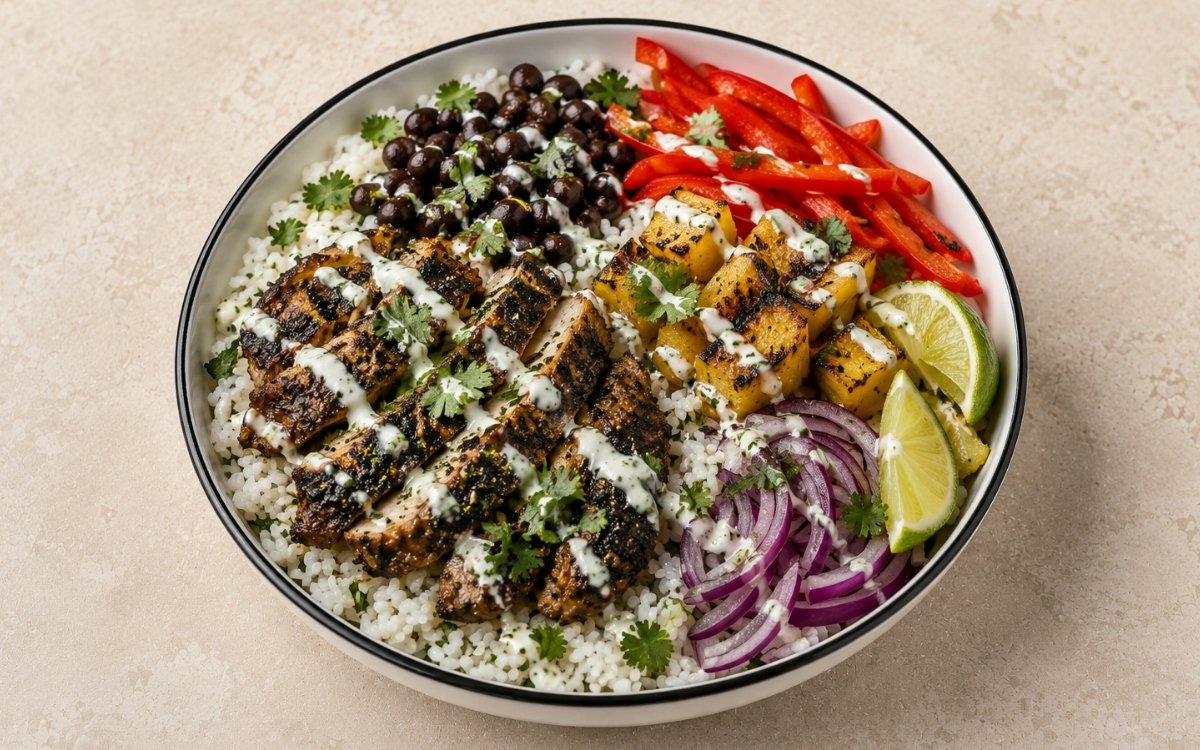
Divide the coconut rice among four wide bowls. Top each bowl with sliced jerk chicken strips arranged across the rice surface. Distribute the components in distinct sections alongside the chicken: 100g of black beans per bowl, charred pineapple chunks, 25g of red bell pepper slices, and 20g of thinly sliced red onion. The red bell pepper and red onion are served raw — their fresh, crunchy, slightly sharp characters provide the textural and flavour contrast against the warm, cooked, smoky chicken. Drizzle the lime-cilantro crema generously over each bowl, extending it across both the chicken and the rice rather than concentrating it at the centre. Scatter fresh cilantro leaves over each bowl. Place lime wedges alongside for squeezing at the table — the fresh lime juice at serving amplifies the bowl’s citrus brightness and provides volatile aromatic compounds that the marinated lime cannot replicate after cooking.
*Notes :
- Authentic jerk seasoning is built on two specific flavour pillars that distinguish it from generic Caribbean or spiced preparations: allspice and Scotch bonnet chili. Allspice — pimento berry from the Jamaican pimento tree — provides a compound aromatic that combines the simultaneous characteristics of clove, cinnamon, and nutmeg in a single spice, producing the warm, complex, deeply Caribbean-spiced character. The recipe uses ground allspice as its primary warm spice, with cinnamon and nutmeg adding depth. Scotch bonnet peppers are the traditional heat source — fruity, intensely hot, and specifically Caribbean in character — but cayenne is specified in this recipe for its accessibility and more controlled, manageable heat. For a more authentic preparation, add 1–2 seeded Scotch bonnet peppers to the food processor alongside the other marinade ingredients and reduce the cayenne — the Scotch bonnet’s specific fruity, tropical heat is the heat note that makes Jamaican jerk specifically distinctive.
- The scoring technique is critical and worth understanding mechanically. Chicken thigh muscle fibres run longitudinally through the meat — the scored cuts that cross perpendicular to these fibres create cross-sections into which the marinade paste can travel by capillary action during the marinating period. The same principle applies to the salt in the soy sauce — it draws moisture from the meat through osmosis, and as the moisture is reabsorbed during the extended marinating period it carries the dissolved spice compounds back into the flesh. Longer marinating produces a more deeply flavoured result because this osmotic exchange has more time to complete.
- Coconut rice cooked with coconut milk rather than water-only produces a subtly sweet, slightly creamy rice that complements the jerk’s heat and the pineapple’s tropical character specifically — it is the base choice that ties the bowl’s Caribbean identity together at its foundation. The coconut milk’s fat can cause the rice to stick slightly at the pot bottom — using genuinely low heat and a heavy-bottomed saucepan minimises this.
Why This Recipe Works
This recipe works because the jerk marinade is applied to scored chicken for extended contact — allowing the paste to penetrate rather than simply coat — and cooked at a temperature that caramelises the marinade’s sugar into the specific jerk char rather than simply browning it.
The charred pineapple provides the tropical sweetness counterpoint that raw pineapple could provide flavour-wise but not aromatically. The coconut rice provides the base that is itself flavoured rather than neutral. And the lime-cilantro crema provides the cooling, creamy contrast that the heat and char specifically require.
Ingredient Breakdown
Jerk Marinade Paste (Blended, Scored Into Chicken)
The defining preparation — the food processor produces the adhesive paste consistency that scores allow to penetrate; the overnight marinating option produces the maximum depth.
Ground Allspice
The primary jerk spice — its compound aromatic combining clove, cinnamon, and nutmeg character simultaneously is what identifies the dish as specifically Caribbean jerk.
Cayenne Pepper
The accessible heat element — provides manageable warmth that can be increased with Scotch bonnet for authentic intensity.
Deep Char on Chicken (Undisturbed 8–10 Minutes)
The jerk cooking technique — the char produces specific bitter-smoky compounds from the allspice and sugar that are essential to authentic jerk flavour.
Charred Pineapple
The sweet-smoky tropical counterpoint — caramelised exterior against fresh, acidic interior; the specific combination that raw pineapple cannot produce.
Coconut Rice
The flavoured base — coconut milk’s subtle sweetness and creaminess tying the bowl’s tropical Caribbean identity together at the foundation.
Lime-Cilantro Crema
The cooling contrast — sour cream’s richness with lime and cilantro’s brightness provides the specific relief against the jerk’s heat.
Flavor Structure Explained
This jerk chicken rice bowl follows a layered balance model:
- Hot smoky core (jerk chicken)
- Tropical sweet contrast (pineapple, coconut rice)
- Cool creamy balance (lime-cilantro crema)
- Fresh crisp finish (bell pepper, red onion, cilantro)
- Charred spice depth (caramelised marinade)
Jerk chicken defines the foundation with allspice warmth, chili heat, and smoky char developed through caramelised marinade. Pineapple and coconut rice create the tropical sweet layer that balances the spice and gives the bowl its Caribbean identity. Lime-cilantro crema cools and softens the heat with fresh dairy richness. Raw vegetables and herbs provide crunch, brightness, and herbal freshness that keep the bowl vibrant. The structure depends on deliberate contrast — hot against cool, smoky against sweet, rich against fresh — all landing together in each bite.
Common Mistakes to Avoid
- Not Scoring the Chicken – Without scoring, the marinade paste sits only on the surface and provides only surface flavour. The scoring channels are what allow inside penetration.
- Under-marinating – 2 hours is the minimum — the marinade’s complexity benefits from the full 12–24 hour window. Make the marinade the night before for the best result.
- Not Charring Fully – Pale, golden-brown jerk chicken is not correctly cooked jerk — the deep char with blackened edges is the correct and intended result, not a sign of burning. The char is where the dish’s most characteristic flavours live.
- Not Reserving Basting Marinade Before Contact with Raw Chicken – The reserved marinade is applied during cooking — it must be set aside before the raw chicken contacts the bulk of the marinade.
- Not Resting the Chicken – Slicing immediately after cooking releases the redistributing juices. Always rest for the full 5 minutes.
- Charring Pineapple With Added Oil – The pineapple’s own sugar content is sufficient for caramelisation in a hot dry pan. Added oil dilutes the caramelisation and produces a different result.
Variations
With Scotch Bonnets
Add 1–2 seeded Scotch bonnet peppers to the food processor alongside the other marinade ingredients, replacing the cayenne — for a specifically authentic Jamaican heat level and the Scotch bonnet’s distinctive fruity, tropical heat character.
Grilled Version
Cook the marinated chicken over medium-high charcoal or gas grill for 8–10 minutes per side — the grill’s smoke adds an authentic outdoor jerk cooking character that cast iron cannot fully replicate.
With Mango Instead of Pineapple
Replace the pineapple with 200g of fresh mango cut into 2cm chunks — charred in the same pan for the same time. Mango’s softer flesh produces a different charred result but its tropical sweetness works equally well with the jerk spicing.
Without Dairy
Replace the sour cream crema with 120g of well-blended coconut cream — whisk with lime juice, cilantro, and garlic for a dairy-free crema with a complementary coconut character that reinforces the rice base.
Storage & Make-Ahead
Marinated raw chicken can be kept in the refrigerator for up to 24 hours, and this is the recommended make-ahead method for developing the best flavor.
Cooked jerk chicken can be refrigerated for up to 3 days. To bring back some of its charred character, reheat it in a dry cast-iron skillet over medium-high heat for 2 to 3 minutes per side.
Coconut rice can be refrigerated for up to 3 days. Reheat it gently in a covered saucepan over low heat with a splash of water or coconut milk.
Lime-cilantro crema can be refrigerated in a sealed jar for up to 3 days. Stir it before using.
Frequently Asked Questions
What makes jerk seasoning specifically Caribbean?
The combination of allspice — grown primarily in Jamaica — with Scotch bonnet peppers is the specific flavour signature of Jamaican jerk. Allspice’s compound aromatic and the Scotch bonnet’s fruity, tropical heat are not closely replicable with substitutions. Cayenne provides manageable heat without the specific Scotch bonnet fruitiness.
Why score the chicken?
Scoring creates channels perpendicular to the muscle fibres that allow the marinade paste to penetrate into the meat rather than sitting only on the surface. The osmotic exchange that occurs during marinating carries dissolved spice compounds from the marinade into the flesh through these channels.
Is the deep char intentional?
Yes — the blackened edges and deep char marks on jerk chicken are the intended result, not burning. The char produces specific bitter-smoky aromatic compounds from the allspice and sugar that are the most characteristic flavour notes of authentic jerk cooking.
Why coconut milk in the rice rather than all water?
Coconut milk infuses the rice with a subtle tropical sweetness and mild creaminess that ties the bowl’s Caribbean identity together at the base level. The coconut rice is a specific flavour contribution rather than a neutral carrier.
Can I use boneless chicken breast instead of thighs?
Thighs are strongly preferred — their higher fat content keeps them moist through the 16–20 minutes of high-heat cooking. Breast meat dries significantly at this cooking time. If using breast, reduce to 6–7 minutes per side and monitor the internal temperature carefully.
Nutrition Facts
( per serving )
Calories
~850 kcal
Protein
41 g
Fat
34 g
Carbs
95 g
Calories
~850 kcal
Protein
41 g
Fat
34 g
Carbs
95 g
Related Recipes
Related Recipes

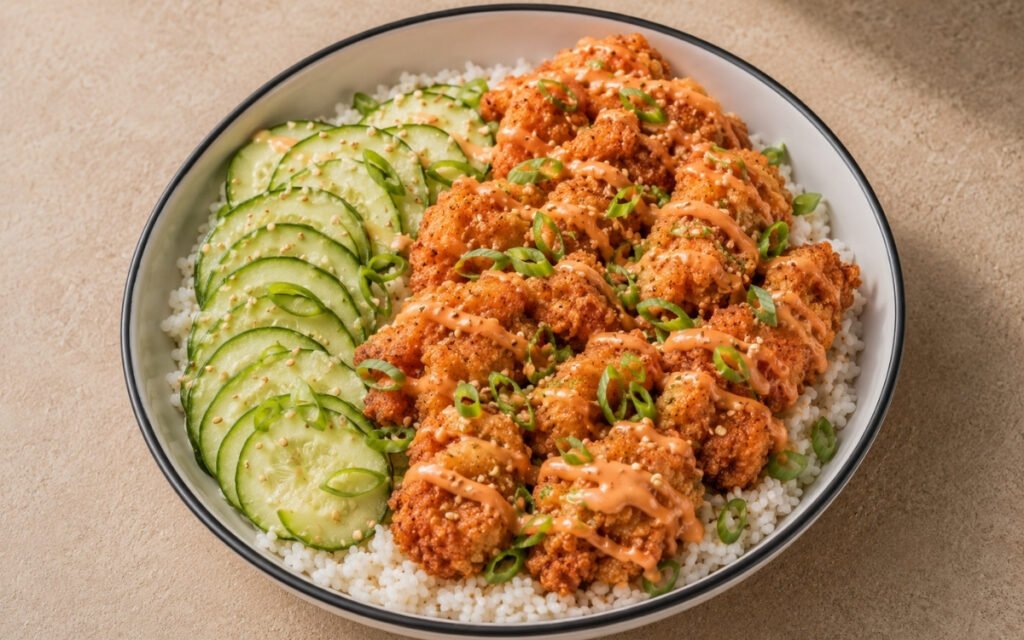
Bang Bang Chicken Rice Bowl
Crispy fried chicken in sweet-spicy bang bang sauce over jasmine rice with cucumber and scallions.
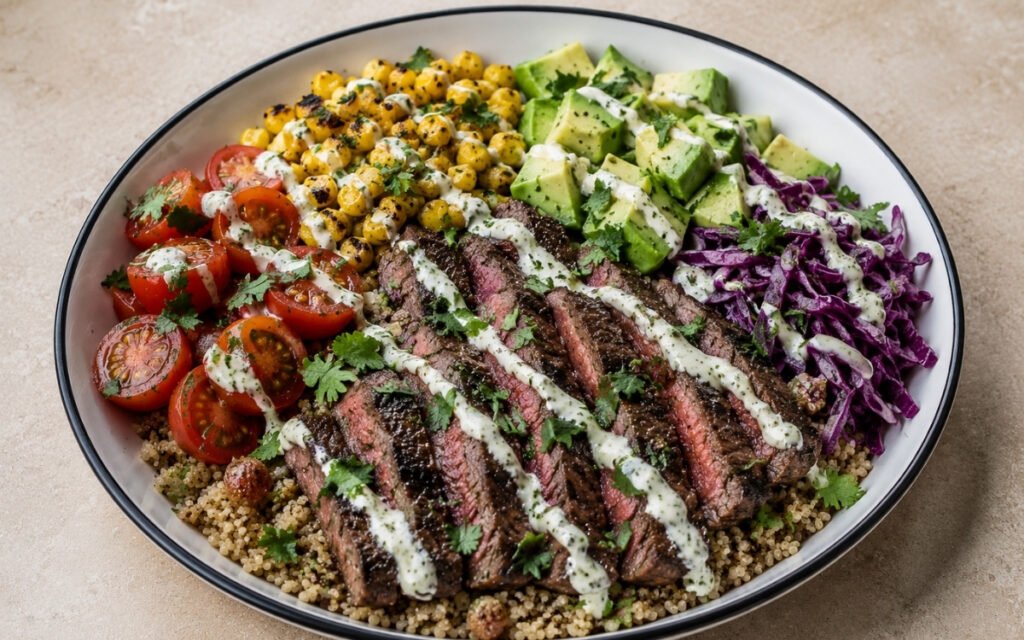
Light Skirt Steak Quinoa Bowl
Cumin-paprika skirt steak seared and sliced against the grain over stock-cooked quinoa — charred tomatoes, corn, avocado, red cabbage, and cilantro-lime Greek yogurt dressing. 40 minutes.
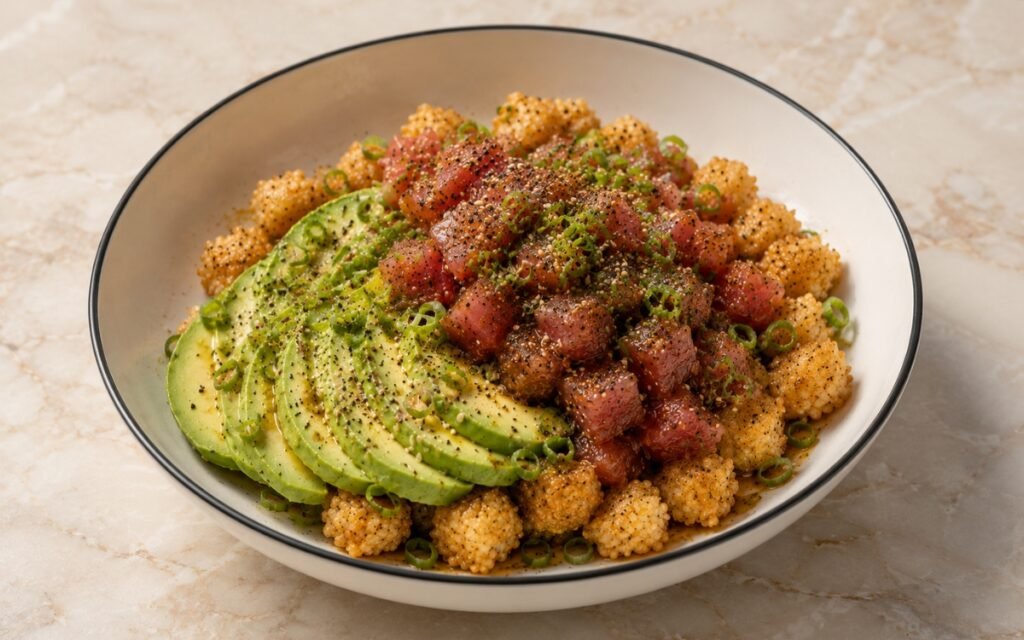
Crispy Rice Salad with Spicy Tuna & Avocado
Sushi rice compressed firmly and baked at 220°C until crunchy outside and chewy inside — topped with soy-sesame marinated tuna for exactly 15 minutes, sliced avocado, and scallions. Serve immediately.
You might also like
You might also like
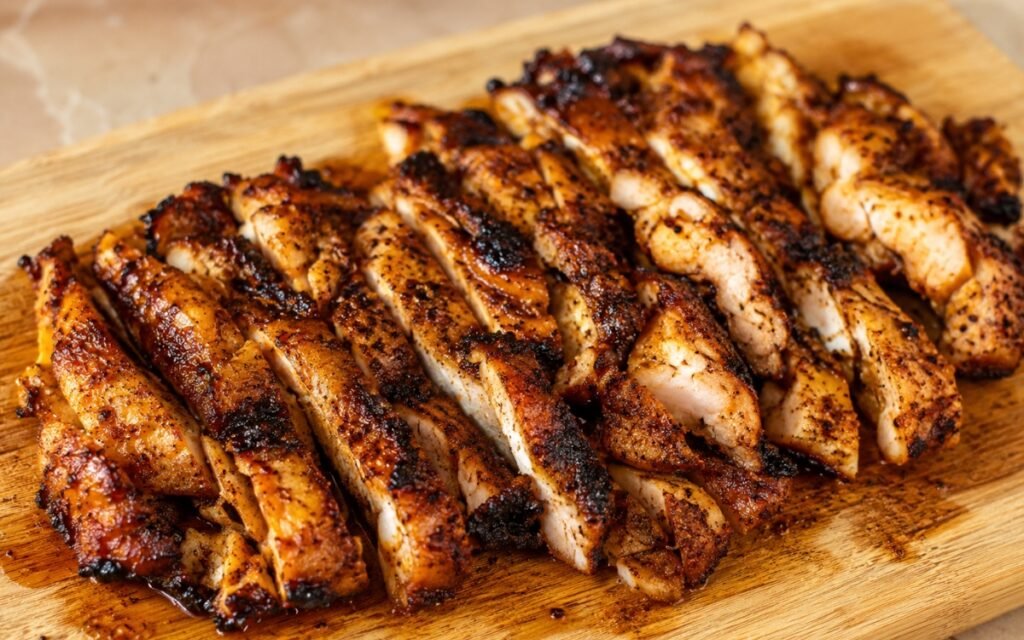
Homemade Chicken Shawarma
Chicken thighs marinated in thick yogurt and warm spices, grilled undisturbed for deep char — rested and sliced against the grain. Aromatic and tangy.
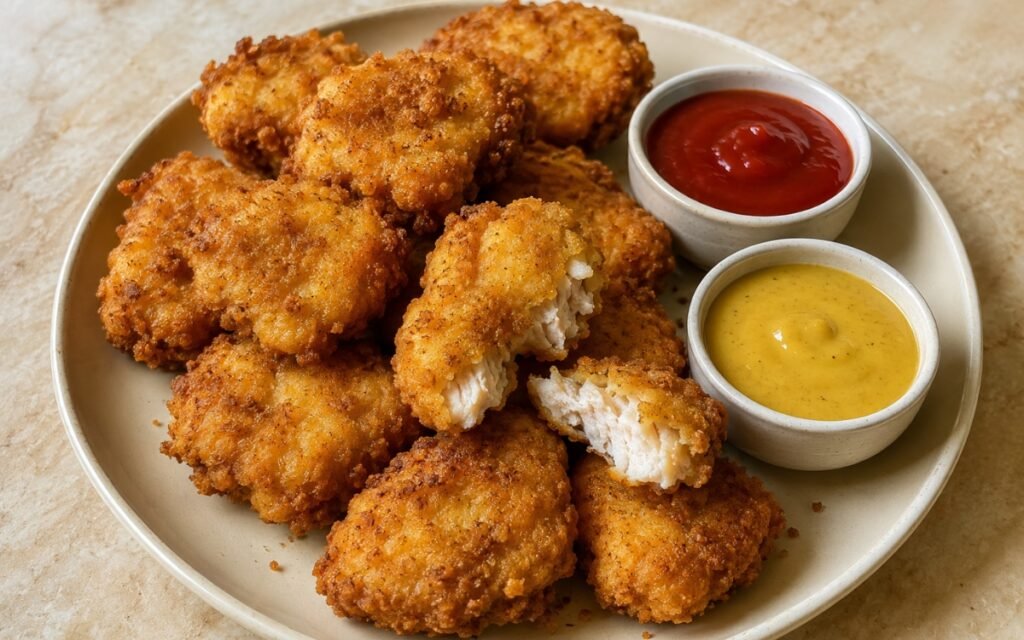
Homemade Chicken Nuggets
A juicy chicken-and-pork blend shaped into hand-formed nuggets, coated in a craggy panko-breadcrumb crust, and fried until deeply golden.
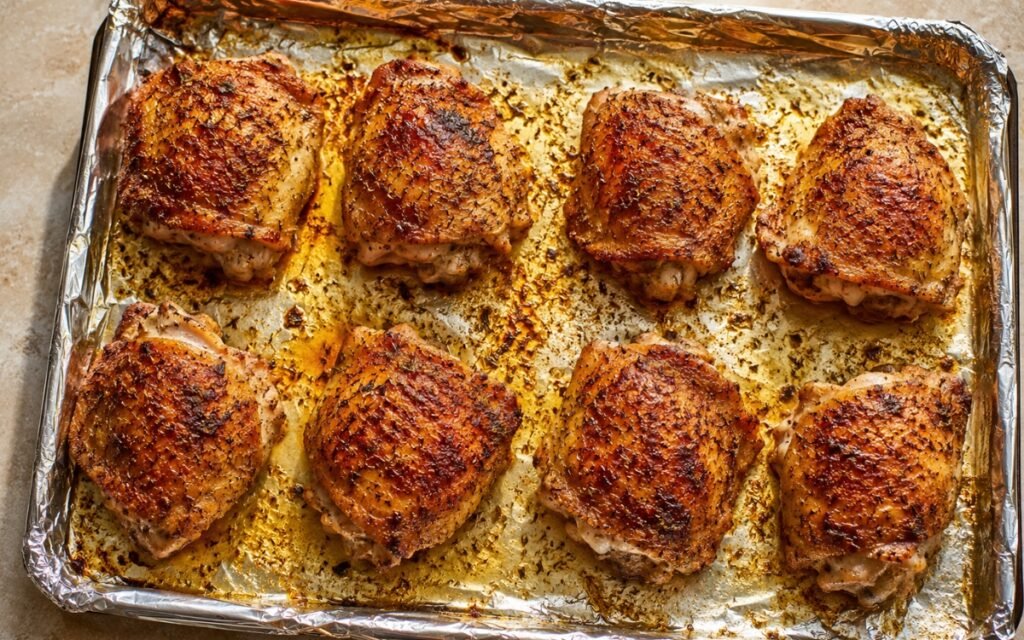
Cripsy Oven-Baked Chicken Thighs
Crispy-skinned chicken thighs baked with simple spices—the most forgiving and flavorful cut.
Caribbean Jerk Chicken Rice Bowl
Ingredients
Method
- Combine the 30g of roughly chopped scallions, 15g of fresh ginger, 12g of garlic cloves, 8g of fresh thyme leaves, 6g of ground allspice, 4g of ground cinnamon, 3g of ground nutmeg, 2g of cayenne pepper, 8g of brown sugar, 30ml of the lime juice, 45ml of soy sauce, and 30ml of vegetable oil in a food processor. Blend until completely smooth — stopping to scrape down the sides once or twice to ensure the ginger and scallion are fully processed rather than leaving fibrous pieces. The marinade should be a uniform, deep green-brown paste with a pungent, complex aroma combining the warm spices, fresh herbs, and garlic-ginger sharpness simultaneously. The food processor is the correct tool for this preparation rather than a blender — the paste consistency rather than a liquid consistency is what adheres to the chicken’s surface and penetrates the scored cuts during marinating. Reserve 60ml of the blended marinade in a small separate bowl for basting during cooking — this reserved portion must be set aside before the raw chicken contacts the marinade to prevent cross-contamination with a portion that will be applied during the cooking’s final stages.
- Pat each chicken thigh completely dry on both sides with paper towels — removing surface moisture ensures the marinade paste adheres directly to the meat rather than being diluted by surface water. Using a sharp knife, score the smooth top side of each thigh with shallow diagonal cuts approximately 2cm apart — just deep enough to open channels through the surface without cutting all the way through the flesh. The scoring serves a specific purpose beyond aesthetics: the channels allow the marinade paste to penetrate the meat’s interior during the marinating period rather than sitting exclusively on the surface, which produces the deepest jerk flavour through the cooked chicken rather than only on its exterior. Place the chicken thighs in a large bowl and pour the remaining marinade over them. Using your hands, massage the paste thoroughly into every surface — working it into the scored cuts and turning the thighs to coat the undersides completely. Cover tightly and refrigerate for a minimum of 2 hours. Overnight marinating — 12–24 hours — produces a measurably more deeply flavoured result as the allspice, cinnamon, and thyme penetrate further into the muscle fibres and the soy sauce’s salt draws moisture from the meat and redistributes it as flavoured brine throughout.
- Rinse the 300g of jasmine rice under cold running water until completely clear. Combine the rinsed rice with the 260ml of water, 200ml of coconut milk, and 4g of salt in a medium saucepan. The coconut milk replaces a portion of the water, infusing the rice with its characteristic slightly sweet, faintly tropical creaminess — the ratio of water to coconut milk is calibrated so the rice tastes specifically coconut-forward without being heavy or oily. Bring to a full rolling boil over high heat, then reduce immediately to the lowest possible setting, cover tightly, and cook for 15 minutes without lifting the lid. The coconut milk's fat can cause the rice to catch at the bottom of the pan if the heat is not genuinely at its lowest — use a heat diffuser if available. After 15 minutes, remove from heat and allow to stand covered and completely undisturbed for 10 minutes — do not open the lid at any point during either the cooking or the resting period. After the full 10-minute rest, uncover and fluff with a fork using a gentle lifting motion. While the rice is still warm, fold in the 15g of chopped fresh cilantro and 10ml of lime juice — both are absorbed more effectively by warm rice than cold, distributing their aromatic oils and acidity evenly through every grain.
- Remove the marinated chicken thighs from the refrigerator 20 minutes before cooking — allowing them to approach room temperature reduces the temperature gradient between the cold interior and the exterior, producing more even cooking throughout. Heat a large cast iron skillet or grill pan over medium-high heat until properly hot — 2–3 minutes of preheating. Remove each thigh from the marinade and allow the excess to drip off briefly — thick excess marinade on the surface will burn rather than caramelise. Place the thighs smooth-side down in the skillet. Leave completely undisturbed for 8–10 minutes. The jerk marinade’s sugar and soy undergo Maillard caramelisation and partial charring against the hot cast iron surface — the deep char marks and blackened edges that develop during this undisturbed period are not burning but the specific caramelised-char that defines authentic jerk cooking. The char produces bitter, smoky, intensely aromatic compounds from the allspice, thyme, and sugar that are essential to jerk flavour’s specific complexity. After 8–10 minutes, flip each thigh and brush the top surface immediately with the reserved marinade that was set aside before the raw chicken was added. Cook the second side for a further 8–10 minutes until the internal temperature reads 75°C throughout the thickest part of the thigh. Transfer to a plate and rest for 5 minutes — the resting period allows the internal juices to redistribute through the meat before slicing. Slice into strips for bowl assembly.
- While the chicken rests, increase the heat under the same skillet to high — do not clean the pan, as the jerk marinade char in the pan contributes flavour to the pineapple’s charring. Add the 200g of pineapple chunks directly to the hot pan without any additional oil. The pineapple’s natural sugars are extremely concentrated — they caramelise and develop char marks within 2–3 minutes per side at high heat. Cook undisturbed for 2–3 minutes until deep golden-brown char marks develop on the contact surface, then turn each piece and char the second side for 2–3 minutes. Charred pineapple undergoes a specific transformation: the surface sugars caramelise to a deep, slightly smoky sweetness while the interior retains its bright, acidic tropical freshness — the combination of exterior caramelisation and interior juiciness provides a specific flavour contrast that raw pineapple cannot produce. Remove and set aside.
- In a small bowl, whisk together the 120g of sour cream, 30ml of lime juice, 20g of chopped fresh cilantro, and 2g of minced garlic until completely smooth. Season with salt to taste — the crema should taste prominently of lime and cilantro with a background garlic note and sufficient salt to season the components it drizzles over. It should be thick enough to drizzle in a controlled stream rather than pouring freely. In a small saucepan, warm the drained and rinsed black beans with the 2g of ground cumin and a small splash of water over medium heat for 3–4 minutes until heated through. The cumin blooms in the warm water around the beans, distributing its earthy, slightly citrusy warmth through the beans evenly.
- Divide the coconut rice among four wide bowls. Top each bowl with sliced jerk chicken strips arranged across the rice surface. Distribute the components in distinct sections alongside the chicken: 100g of black beans per bowl, charred pineapple chunks, 25g of red bell pepper slices, and 20g of thinly sliced red onion. The red bell pepper and red onion are served raw — their fresh, crunchy, slightly sharp characters provide the textural and flavour contrast against the warm, cooked, smoky chicken. Drizzle the lime-cilantro crema generously over each bowl, extending it across both the chicken and the rice rather than concentrating it at the centre. Scatter fresh cilantro leaves over each bowl. Place lime wedges alongside for squeezing at the table — the fresh lime juice at serving amplifies the bowl’s citrus brightness and provides volatile aromatic compounds that the marinated lime cannot replicate after cooking.