
Parsley Lemon Herb Sauce
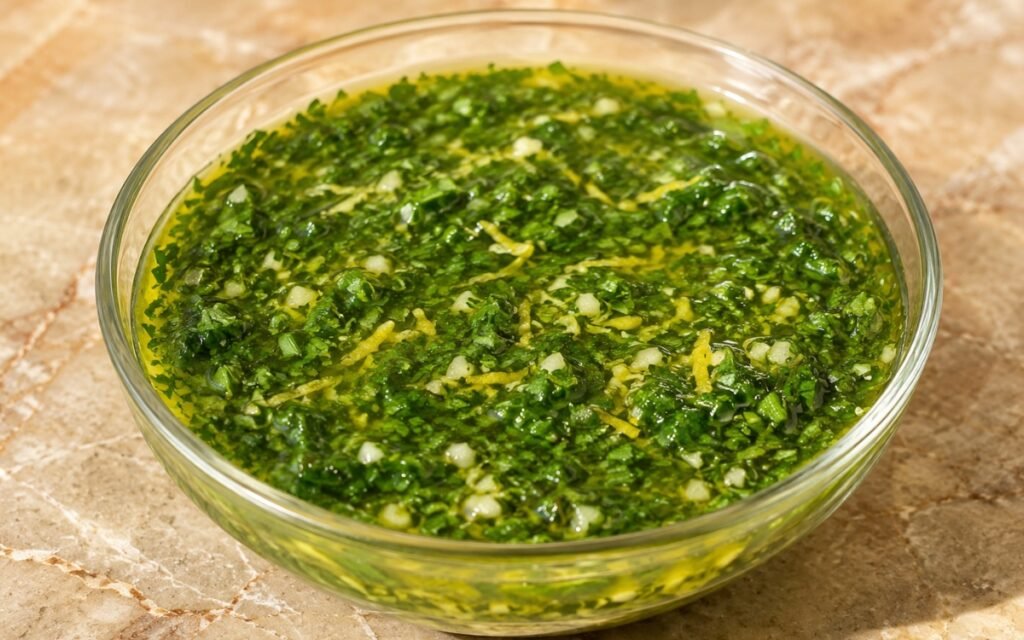
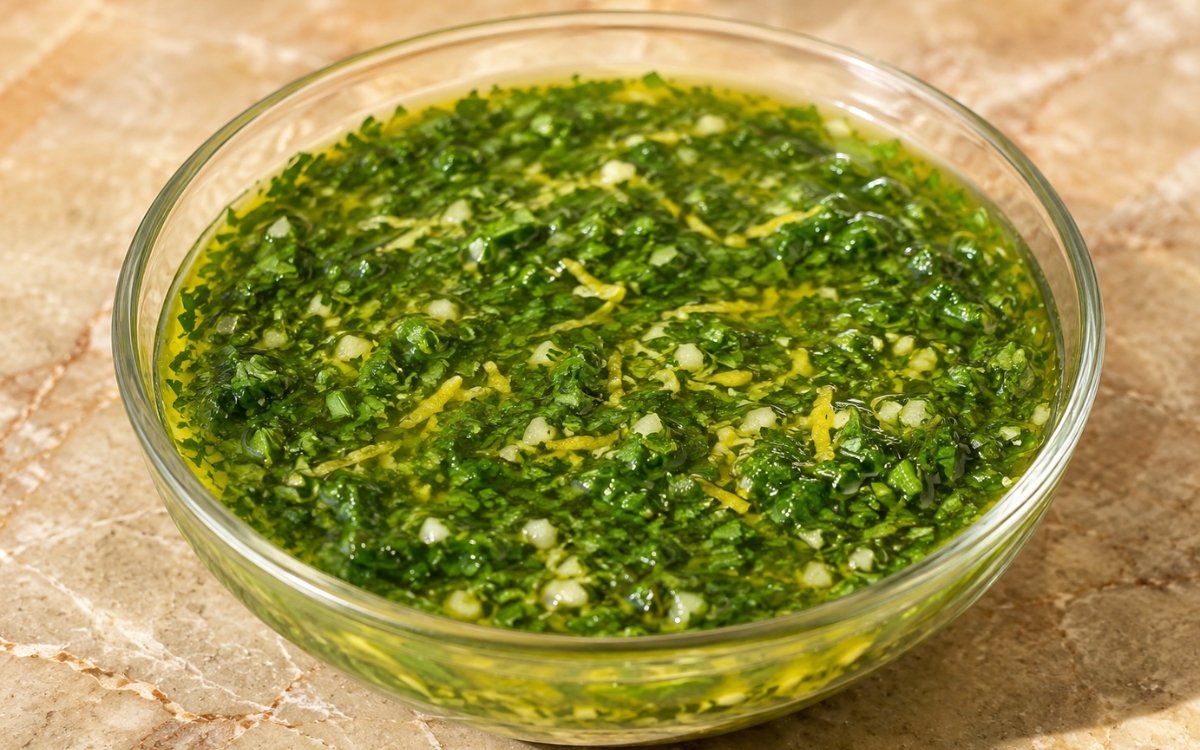
This vibrant oil-based herb sauce brings brightness and freshness to any dish. Fresh parsley and lemon zest bloom in warm olive oil with garlic to create a versatile finishing sauce equally at home over grilled fish, roasted chicken, or steamed vegetables.
Prep Time : 10 min
Cook Time : 0 min
Servings : 4
10 min
0 min
4
Ingredients
Herb Base
• 40g fresh flat-leaf parsley, finely chopped
• 10g fresh chives, finely sliced, optional
Aromatics
• 10g garlic, 2 cloves, minced
• 5g lemon zest, from about 1 large lemon
Seasoning
• 4g salt
• Freshly ground black pepper to taste
• Pinch of red pepper flakes, optional
This post may contain affiliate links. As an Amazon Associate I earn from qualifying purchases, at no additional cost to you.
Directions
- Wash and Dry the Parsley
Rinse the parsley thoroughly in cold water, then dry it completely using a spinner or towels. Proper drying prevents dilution, slows oxidation, and ensures the sauce keeps a smooth, emulsified texture rather than turning watery. - Chop Herbs and Prepare Aromatics
Strip parsley leaves from thick stems and finely chop with a sharp knife using a steady rocking motion — aim for a uniform mince, not a paste. Slice chives if using. Grate or finely mince the garlic and zest the lemon into a small bowl to capture its oils. - Gently Warm the Olive Oil
Heat the extra-virgin olive oil in a small saucepan over very low heat until just warm (about 60–70°C). The oil should shimmer slightly but never smoke. This mild warming helps release herbal aromas and improves flavor extraction. - Soften the Garlic in Warm Oil
Remove the oil from heat and add the minced garlic first, letting it sizzle gently for about 30 seconds. The residual warmth softens the raw bite without fully cooking it. - Combine Herbs and Lemon Elements
Add the chopped parsley, lemon zest, and chives to the oil, stirring to coat evenly. Pour in fresh lemon juice and mix until the sauce looks glossy and cohesive. - Season and Serve
Season generously with salt, freshly ground black pepper, and red pepper flakes if desired. Taste and adjust brightness with more lemon juice if needed. Serve at room temperature or slightly warm for the best aroma and texture.
*Notes :
- Lemon zest is arguably more important than lemon juice in this recipe. While juice provides acidity, zest provides the concentrated essential oils of the lemon peel — intensely fragrant, floral, and complex in a way that juice alone cannot replicate. The combination of both components creates a sauce with multi-layered lemon character rather than simple sourness.
- The choice of flat-leaf parsley over curly parsley is deliberate. Flat-leaf parsley has a noticeably more complex, slightly peppery flavor and a more pleasant texture when chopped. Curly parsley is milder, slightly bitter, and less aromatic. For cooking applications, flat-leaf parsley is always preferred.
- This sauce benefits from being made 10–15 minutes ahead and served at room temperature. During this rest, the garlic and lemon zest infuse the olive oil fully and the flavors of the herbs bloom. Making it directly before serving produces a less cohesive, more raw-tasting result.
Why This Recipe Works
This sauce works through aromatic infusion — warm olive oil is a remarkable carrier of volatile flavor compounds, and by briefly warming it, the recipe achieves in minutes what cold infusions take hours to develop. The combination of lemon juice (acidity) and lemon zest (aromatic oils) creates layered citrus character. Garlic provides savory depth that anchors the brightness of the herbs and lemon.
Ingredient Breakdown
Flat-Leaf Parsley
Provides the primary flavor — clean, slightly peppery, and fresh — and the vivid green color.
Lemon Zest
Contributes concentrated citrus aromatic oils that give the sauce its distinctive bright character.
Lemon Juice
Provides clean acidity that balances the richness of the olive oil and sharpens all the other flavors.
Garlic
Provides savory backbone that prevents the sauce from tasting flat or one-dimensional.
Extra-Virgin Olive Oil
The carrier base that brings all flavors together and provides smooth, rich texture.
Flavor Structure Explained
This sauce follows a layered balance model:
- Dominant herbal note (parsley)
- Bright citrus layer (lemon zest, juice)
- Savory foundation (garlic)
- Fat-driven cohesion (olive oil)
Parsley defines the core identity with a clean, green intensity that leads the profile. Lemon zest and juice work together to create layered citrus brightness — aromatic on the nose, sharp on the palate. Garlic anchors the freshness with subtle savory depth, preventing the sauce from feeling thin or one-dimensional. Warm olive oil binds everything together, carrying the aromatics and delivering a smooth, unified finish.
Common Mistakes to Avoid
- Overheating the Oil – Oil that smokes or sizzles violently when herbs are added will fry rather than infuse them, producing bitter, darkened herbs. The oil should be warm, not hot.
- Using Wet Herbs – Water in the herbs causes rapid oxidation and darkening. Dry the parsley completely before chopping.
- Using Curly Parsley – Curly parsley lacks the aromatic complexity of flat-leaf and produces a noticeably inferior sauce.
- Skipping the Lemon Zest – Juice alone makes the sauce sharp but one-dimensional. Zest provides the aromatic complexity that makes this sauce sing.
Variations
Mixed Herb Version
Replace 20g of the parsley with 10g each of fresh mint and fresh basil for a more complex, Mediterranean herb profile.
Caper Version
Add 15g of finely chopped capers for a salty, briny edge that pairs particularly well with fish.
Anchovy Version
Add 2 mashed anchovy fillets to the warm oil before the herbs for deep umami flavor that amplifies the entire sauce without tasting fishy.
Herb Butter Version
Whisk 30g of softened unsalted butter into the warm sauce for a richer, more luxurious finish excellent over steak.
Storage & Make-Ahead
Store in an airtight container in the refrigerator for up to 3 days. Bring to room temperature before serving, as the olive oil will solidify when cold. Stir well before each use. The herbs will lose some of their vivid green color over time due to oxidation, but the flavor remains excellent. Not suitable for freezing as the herbs become soft and discolored.
Frequently Asked Questions
Can I use this sauce as a marinade?
Yes — it makes an excellent marinade for chicken, fish, and vegetables. The lemon juice acts as a mild tenderizer while the olive oil carries the herb aromas into the meat.
Can I substitute dried parsley?
Dried parsley produces a pale, flat, significantly inferior sauce. Fresh parsley is essential.
What proteins does this pair best with?
This sauce pairs beautifully with Grilled Salmon Fillets , grilled chicken breast, roasted salmon, lamb chops, and grilled shrimp skewers.
Can I use this as a pasta sauce?
Yes — toss with hot pasta, adding 2–3 tablespoons of pasta cooking water to help emulsify the oil. Add extra Parmesan for a more complete sauce.
Nutrition Facts
( per serving )
Calories
~185 kcal
Protein
1 g
Fat
20 g
Carbs
3 g
Calories
~185 kcal
Protein
1 g
Fat
20 g
Carbs
3 g
Related Recipes
Related Recipes

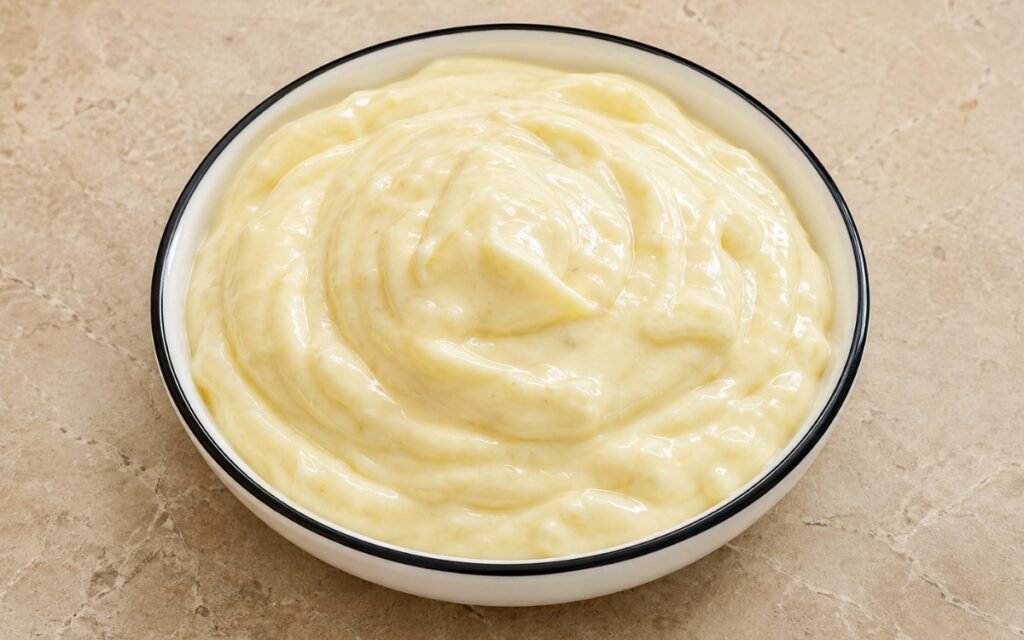
Classic Garlic Aioli (Weeknight Version)
Quick garlic aioli with authentic flavor in 10 minutes—no emulsion technique or fancy tools needed!
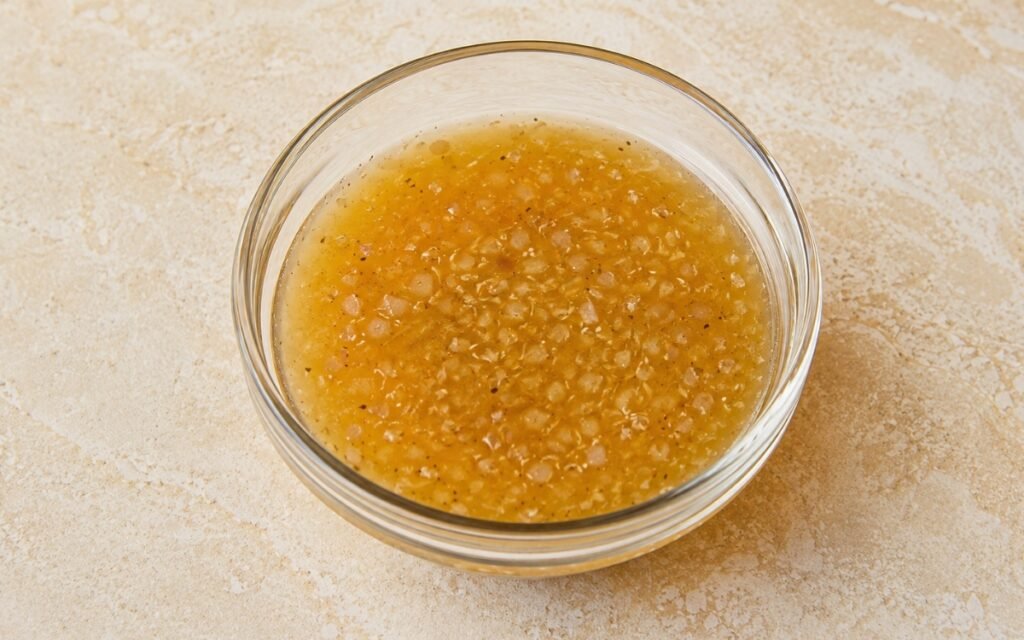
Honey Shallot Vinaigrette
Honey and macerated shallot balance apple cider vinegar in a sweet-tangy 10-minute dressing.
Harissa & Mint Hummus
Harissa paste and fresh mint blended into the classic chickpea-tahini base — warm building heat balanced by cooling aromatic freshness, in 45 minutes active time.

You might also like
You might also like
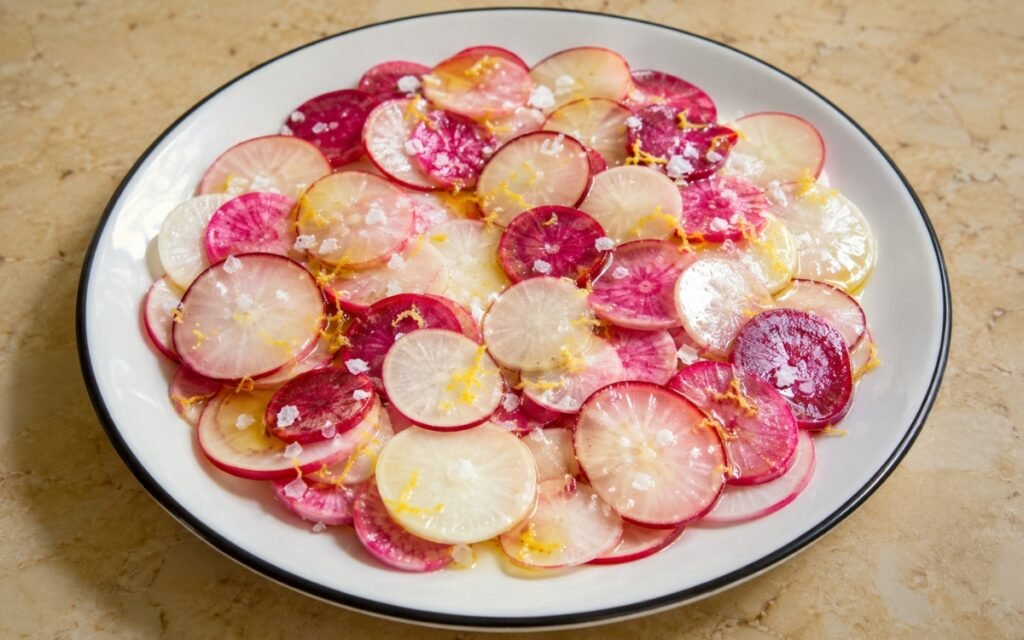
Radish Lemon Olive Oil Salad
Thinly sliced crisp radishes dressed with quality olive oil, bright lemon, and fresh herbs simply.
Mint Green Iced Tea
Green tea at 75–80°C for 2–3 minutes, mint clapped and infused cold 8–15 minutes, tasted from 8 — honey, chilled. Bold, cooling, and clean.
Salmon Cobb Salad
Chickpeas, cherry tomatoes, cucumber, red onion, parsley, and mint dressed with lemony olive oil, topped with warm grilled halloumi.


Parsley Lemon Herb Sauce
Ingredients
Method
- Rinse the parsley thoroughly in cold water, then dry it completely using a spinner or towels. Proper drying prevents dilution, slows oxidation, and ensures the sauce keeps a smooth, emulsified texture rather than turning watery.
- Strip parsley leaves from thick stems and finely chop with a sharp knife using a steady rocking motion — aim for a uniform mince, not a paste. Slice chives if using. Grate or finely mince the garlic and zest the lemon into a small bowl to capture its oils.
- Heat the extra-virgin olive oil in a small saucepan over very low heat until just warm (about 60–70°C). The oil should shimmer slightly but never smoke. This mild warming helps release herbal aromas and improves flavor extraction.
- Remove the oil from heat and add the minced garlic first, letting it sizzle gently for about 30 seconds. The residual warmth softens the raw bite without fully cooking it.
- Add the chopped parsley, lemon zest, and chives to the oil, stirring to coat evenly. Pour in fresh lemon juice and mix until the sauce looks glossy and cohesive.
- Season generously with salt, freshly ground black pepper, and red pepper flakes if desired. Taste and adjust brightness with more lemon juice if needed. Serve at room temperature or slightly warm for the best aroma and texture.