
Classic Chimichurri Sauce
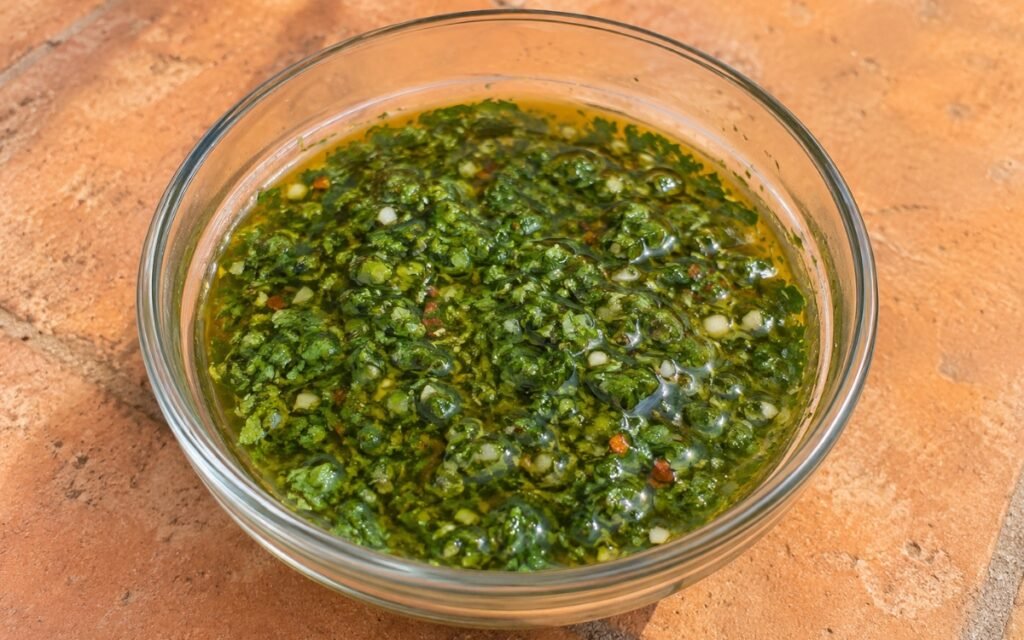
A bold, vibrant chimichurri packed with fresh parsley, garlic, oregano, chili flakes, and rich olive oil — the ultimate sauce for grilled meats, roasted vegetables, or anything that needs a punch of acidity and heat.
Prep Time : 10 min
Cook Time : 0 min
Servings : 8
10 min
0 min
8
Ingredients
Chimichurri
• 1 bunch fresh parsley
• 1 Tbsp red chili flakes — this one on Amazon
• 6 cloves garlic, finely minced or grated
• 3 bay leaves
• ¾ cup (180 ml) good-quality olive oil — this one on Amazon
• 4 Tbsp red wine vinegar — this one on Amazon
• 2 Tbsp dried oregano
• Kosher salt, to taste
• Freshly ground black pepper, to taste
This post may contain affiliate links. As an Amazon Associate I earn from qualifying purchases, at no additional cost to you.
Directions
- Prepare the Parsley
Start by rinsing the parsley thoroughly under cold running water to remove any dirt or grit. Shake off the excess water and dry the herbs completely using a clean kitchen towel or salad spinner. Properly dried herbs are essential so the sauce does not become watery. Remove the thick lower stems, but keep some of the tender upper stems since they contain excellent flavor. Finely chop the parsley using a sharp knife until you have a loose pile of bright green herbs. Avoid over-chopping into a paste — chimichurri should maintain a rustic, slightly coarse texture. - Prepare the Garlic
Peel the garlic cloves and mince them very finely using a sharp knife. Alternatively, grate the garlic on a microplane to create a smoother paste. The finer the garlic is processed, the more evenly it will distribute throughout the sauce and the more aromatic the final chimichurri will be. - Prepare the Bay Leaves
Take the bay leaves and crumble them slightly between your fingers before adding them to the mixture. This helps release their aromatic oils while the sauce rests. The leaves will later be removed before serving, but they contribute subtle herbal depth during infusion. - Combine the Dry Ingredients
In a medium mixing bowl combine the chopped parsley, minced garlic, dried oregano, red chili flakes, and bay leaves. Stir briefly with a spoon to distribute the aromatics evenly throughout the herb mixture. - Add the Olive Oil
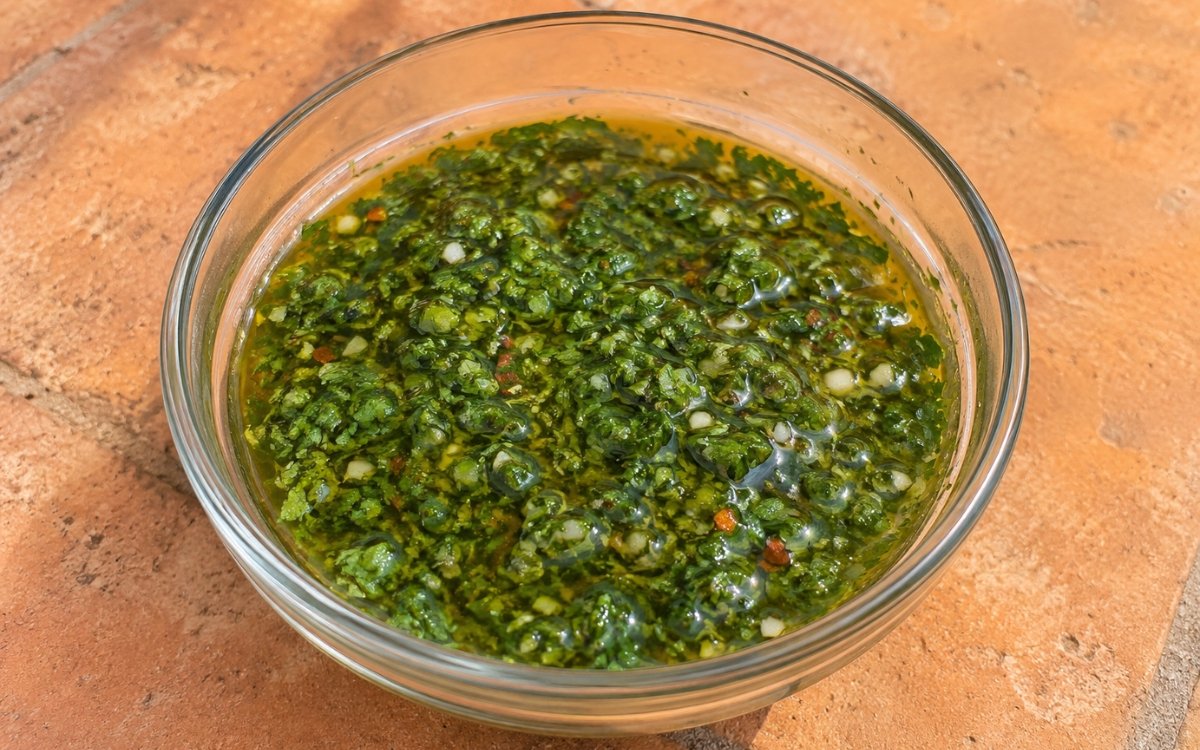
Slowly pour in the olive oil while stirring gently. The oil should coat all of the chopped herbs evenly without drowning them. A good chimichurri should look loose and glossy, with herbs suspended throughout the oil rather than floating separately. - Add the Vinegar
Add the red wine vinegar and stir gently until fully incorporated. The vinegar provides acidity that balances the richness of the olive oil and brightens the fresh herb flavors. - Season the Sauce
Add kosher salt and freshly ground black pepper to taste. Start with a small amount and adjust gradually, since the acidity and garlic will intensify slightly as the sauce rests. - Allow the Sauce to Rest
Let the chimichurri sit at room temperature for at least 15 minutes before serving. This resting time allows the dried oregano, garlic, and chili flakes to hydrate and release their full flavor into the oil. - Remove the Bay Leaves
Before serving, remove the bay leaves from the mixture. Their flavor will already have infused into the sauce. - Serve
Serve the chimichurri immediately or store it in an airtight jar in the refrigerator. Stir well before using, as the herbs will naturally settle over time.
*Notes :
- Fresh parsley forms the backbone of the sauce, while garlic and chili flakes provide depth and heat.
- Red wine vinegar balances the richness of olive oil and keeps the sauce vibrant.
- The texture of chimichurri should remain rustic and slightly chunky rather than smooth.
- Allowing the sauce to rest before serving improves flavor development and balances the aromatics.
Why This Recipe Works
This recipe works because it balances fresh herbs, acidity, garlic heat, and rich olive oil.
Parsley provides freshness, vinegar adds brightness, and garlic creates bold aromatic depth.
The olive oil carries all of the flavors and gives the sauce a silky texture that coats meats and vegetables beautifully.
Ingredient Breakdown
Parsley
Parsley forms the structural base of chimichurri, providing bright herbal freshness and vibrant color. Finely chopping releases essential oils that disperse through the oil, creating the sauce’s characteristic green aroma and lively flavor.
Garlic
Garlic provides the deep aromatic backbone of the sauce. Finely minced or grated garlic disperses evenly through the oil and vinegar mixture, delivering pungency and savory intensity without creating harsh or uneven bites.
Red Chili Flakes
Chili flakes introduce controlled heat that balances the richness of olive oil. Rather than making the sauce spicy, they provide subtle warmth and complexity that sharpens the herbal brightness of the parsley.
Dried Oregano
Oregano contributes earthy Mediterranean herb notes that complement the fresh parsley. Using dried oregano helps stabilize the flavor and adds deeper aromatic complexity that develops as the sauce rests.
Bay Leaves
Bay leaves slowly release warm, aromatic oils during resting. They deepen the herbal complexity of the sauce and provide subtle background bitterness that balances the richness of olive oil and garlic.
Olive Oil
Olive oil acts as the flavor carrier, suspending the herbs and aromatics into a cohesive sauce. A good-quality oil provides smooth texture and mild fruitiness that enhances the freshness of the herbs.
Red Wine Vinegar
Red wine vinegar provides the acidity that defines chimichurri’s brightness. It balances the oil while lifting the herbal flavors, preventing the sauce from tasting heavy or flat.
Flavor Structure Explained
This sauce follows a layered balance model:
- Herbal body (parsley)
- Aromatic intensity (garlic + oregano)
- Controlled acidity (red wine vinegar)
- Warm background heat (chili flakes)
- Richness and texture (olive oil)
The vinegar cuts through the oil to keep the sauce bright rather than heavy. Garlic provides aromatic depth while parsley keeps the flavor fresh and vibrant. Chili flakes function as a gentle structural heat rather than dominant spice.
Common Mistakes to Avoid
- Over-processing the herbs — blending bruises parsley and releases bitterness instead of fresh flavor.
- Using wet parsley — excess water dilutes the oil and prevents proper flavor suspension.
- Low-quality olive oil — since oil forms the base, poor oil results in flat or greasy flavor.
- Skipping resting time — herbs and aromatics need time to hydrate and release their oils.
- Adding too much vinegar — excessive acidity can overpower the herb balance.
- Chopping herbs too coarsely — uneven pieces prevent proper flavor distribution in the oil.
Variations
Cilantro Chimichurri
Replace half of the parsley with fresh cilantro to create a brighter herbal profile with slightly citrusy notes. This version pairs particularly well with grilled chicken, seafood, and roasted vegetables.
Lemon Chimichurri
Add 1–2 tablespoons fresh lemon juice or lemon zest for additional citrus brightness. The lemon accent enhances the freshness of the parsley and works especially well with fish or grilled vegetables.
Spicy Chimichurri
Increase chili flakes or add finely chopped fresh chili peppers such as red Fresno or serrano. This variation builds a stronger heat profile while maintaining the classic herb and vinegar balance.
Smoky Chimichurri
Add ½ teaspoon smoked paprika or roasted chili powder to introduce a subtle smoky depth that pairs beautifully with grilled meats and barbecue dishes.
Garlic-Forward Chimichurri
Increase the garlic to 8 cloves and let the sauce rest longer before serving. This creates a more intense, punchy chimichurri ideal for steak and grilled lamb.
Storage & Make-Ahead
Chimichurri can be stored in an airtight container in the refrigerator for up to 5 days.
Before serving, allow the sauce to sit at room temperature for 10–15 minutes and stir well to redistribute the herbs.
For longer storage, freeze chimichurri in small portions or ice cube trays for up to 3 months.
Frequently Asked Questions
Can chimichurri be blended in a food processor?
It can, but chopping by hand produces the best texture and prevents bitterness.
Can other herbs be used?
Yes. Cilantro, basil, or mint can be mixed with parsley for different variations.
What dishes pair best with chimichurri sauce?
Chimichurri pairs especially well with grilled or pan-seared meats, where its bright acidity and fresh herbs balance rich flavors. It’s an excellent finishing sauce for dishes like Pan-Seared Skirt Steak, Classic Ribeye Steak, or Pan-Seared Skin-on Chicken Breast, adding freshness and contrast to the savory protein.
Can chimichurri be made ahead of time?
Yes. It can be made several hours in advance, and the flavor often improves after resting.
Nutrition Facts
( per serving )
Calories
~191 kcal
Protein
1 g
Fat
20 g
Carbs
2 g
Calories
~191 kcal
Protein
1 g
Fat
20 g
Carbs
2 g
Related Recipes
Related Recipes

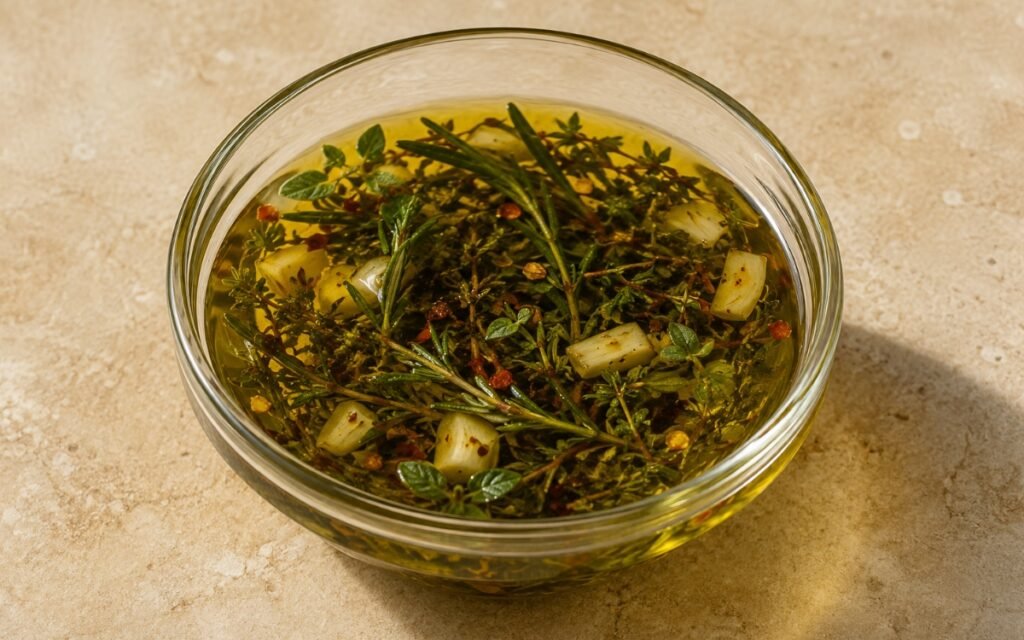
Italian Herb Olive Oil Drizzle
Rosemary, thyme, and garlic infused in warm olive oil — an elegant 10-minute Italian finishing drizzle.
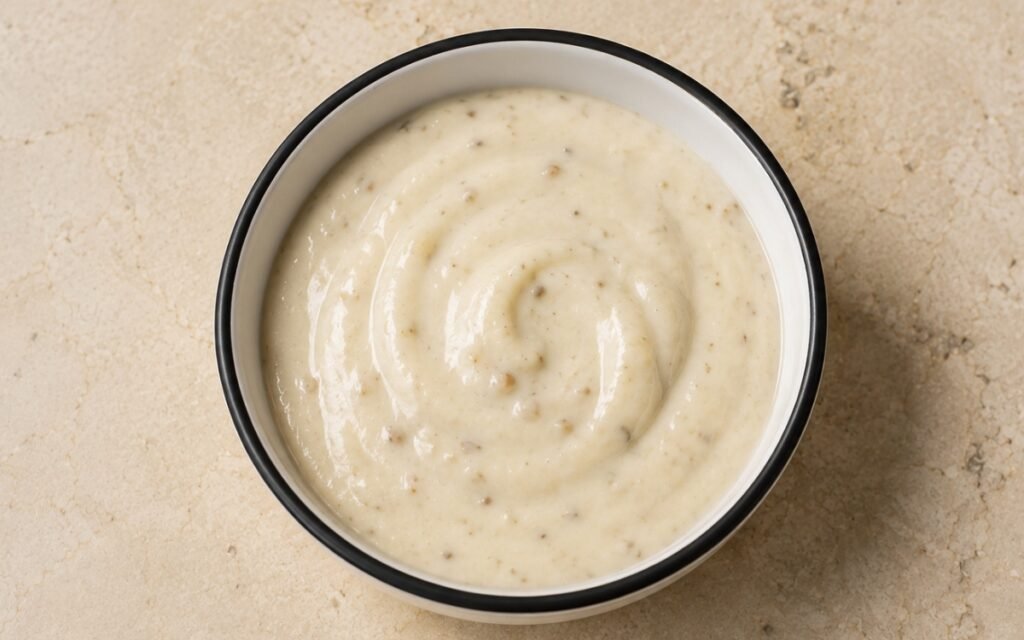
Creamy Roasted Garlic Sauce
Sweet roasted garlic meets creamy yogurt for a sophisticated sauce ready in 45 minutes.
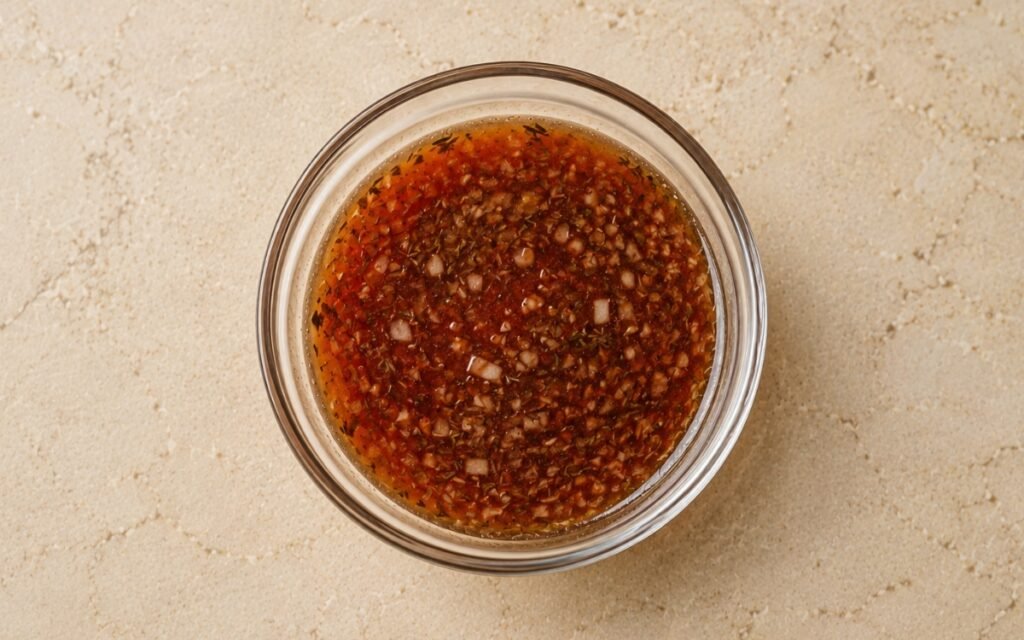
Classic Red Wine Vinaigrette
Tannic red wine vinegar, Dijon and macerated shallot whisked with olive oil into a glossy French-style dressing.
You might also like
You might also like
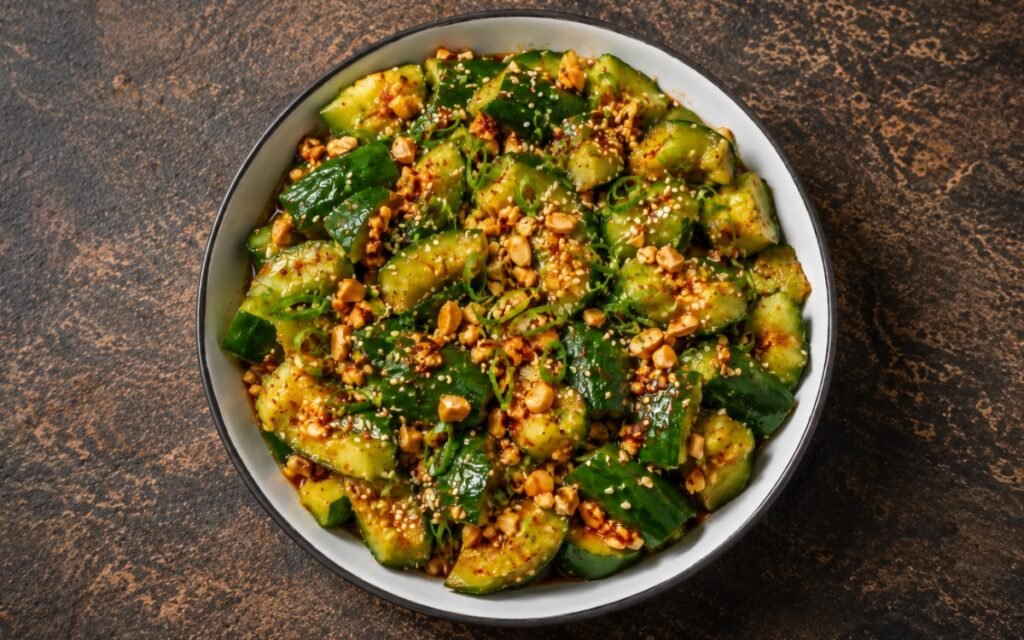
Spicy Asian Cucumber Salad
Crunchy cucumbers tossed in soy, chili oil, yuzu, and garlic deliver sharp, spicy refreshment.
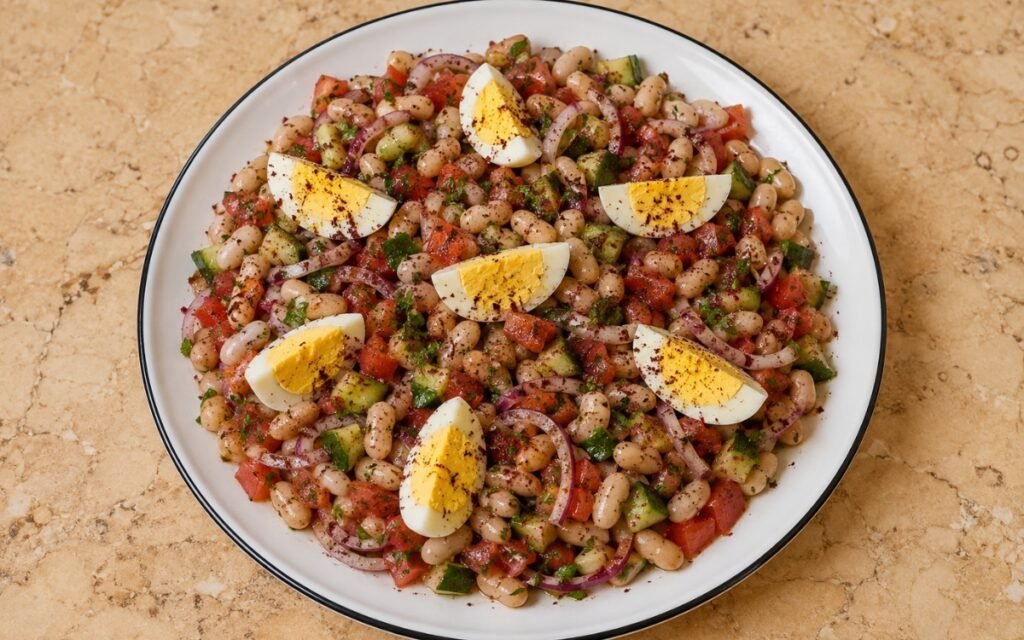
Turkish Piyaz Bean Salad
Traditional Turkish white bean salad with tomatoes, onions, eggs, and tangy sumac dressing.
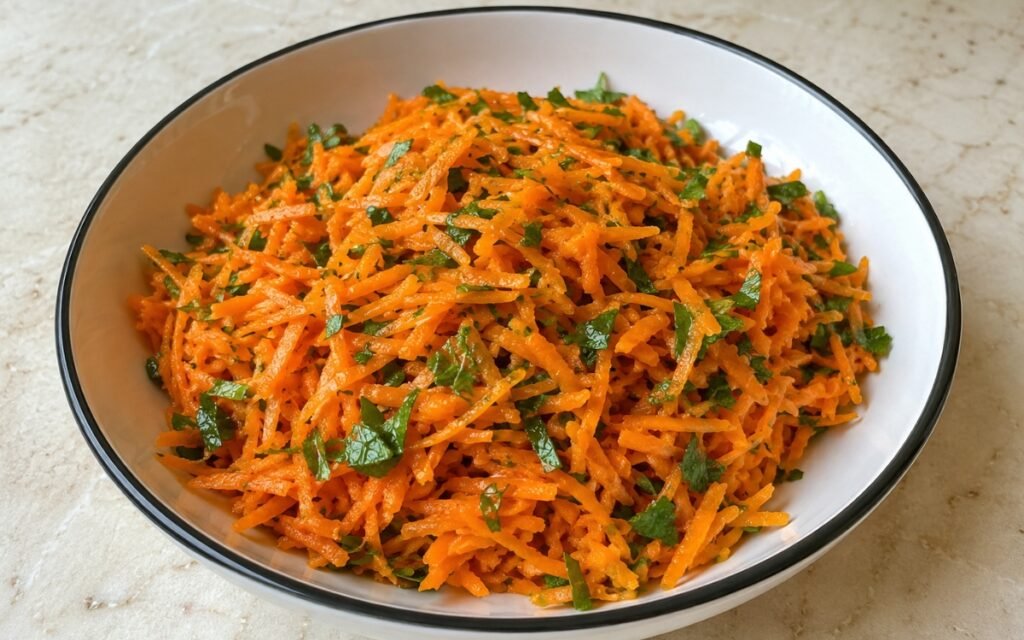
Light Carrot Lemon Salad
Crisp shredded carrots tossed with bright lemon juice, olive oil, and fresh herbs in ten minutes.
Classic Chimichurri Sauce
Ingredients
Method
- Start by rinsing the parsley thoroughly under cold running water to remove any dirt or grit. Shake off the excess water and dry the herbs completely using a clean kitchen towel or salad spinner. Properly dried herbs are essential so the sauce does not become watery. Remove the thick lower stems, but keep some of the tender upper stems since they contain excellent flavor. Finely chop the parsley using a sharp knife until you have a loose pile of bright green herbs. Avoid over-chopping into a paste — chimichurri should maintain a rustic, slightly coarse texture.
- Peel the garlic cloves and mince them very finely using a sharp knife. Alternatively, grate the garlic on a microplane to create a smoother paste. The finer the garlic is processed, the more evenly it will distribute throughout the sauce and the more aromatic the final chimichurri will be.
- Take the bay leaves and crumble them slightly between your fingers before adding them to the mixture. This helps release their aromatic oils while the sauce rests. The leaves will later be removed before serving, but they contribute subtle herbal depth during infusion.
- In a medium mixing bowl combine the chopped parsley, minced garlic, dried oregano, red chili flakes, and bay leaves. Stir briefly with a spoon to distribute the aromatics evenly throughout the herb mixture.
- Slowly pour in the olive oil while stirring gently. The oil should coat all of the chopped herbs evenly without drowning them. A good chimichurri should look loose and glossy, with herbs suspended throughout the oil rather than floating separately.
- Add the red wine vinegar and stir gently until fully incorporated. The vinegar provides acidity that balances the richness of the olive oil and brightens the fresh herb flavors.
- Add kosher salt and freshly ground black pepper to taste. Start with a small amount and adjust gradually, since the acidity and garlic will intensify slightly as the sauce rests.
- Let the chimichurri sit at room temperature for at least 15 minutes before serving. This resting time allows the dried oregano, garlic, and chili flakes to hydrate and release their full flavor into the oil.
- Before serving, remove the bay leaves from the mixture. Their flavor will already have infused into the sauce.
- Serve the chimichurri immediately or store it in an airtight jar in the refrigerator. Stir well before using, as the herbs will naturally settle over time.