
Greek-Style Potato Salad
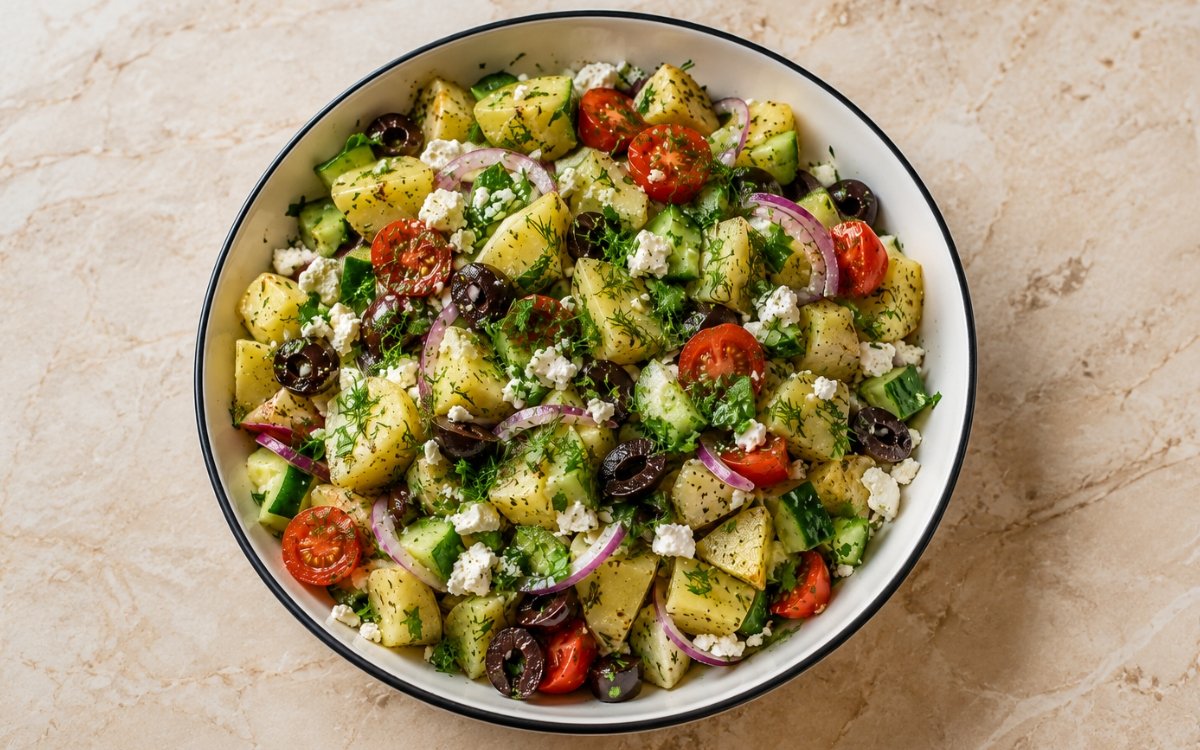
Greek-Style Potato Salad is a refreshing twist on the classic with tender potatoes, briny olives, fresh vegetables, and tangy feta cheese in a bright lemon-oregano dressing. It’s served at room temperature and actually gets better as it sits, making it perfect for meal prep and potlucks. Light, flavorful, and completely addictive. Dressing the potatoes while they’re still warm, rather than waiting for them to cool completely, is the technique this entire salad depends on for real flavor absorption — warm potato cubes soak up the lemon-oregano dressing from the inside rather than simply wearing it as a surface coating, which is exactly why only half the dressing goes on at this stage. The vegetables are deliberately held back until the potatoes have cooled to room temperature, since adding delicate tomatoes and cucumber to still-hot potatoes would soften and wilt them before they ever reach the table. Folding in the feta gently at the very end, rather than mixing it in earlier or more aggressively, keeps it in soft, distinct crumbles instead of breaking down into a paste that would coat everything else in a way this salad isn’t meant to have. The result is a genuinely bright, layered salad that improves with time rather than degrading — ideal for making ahead.
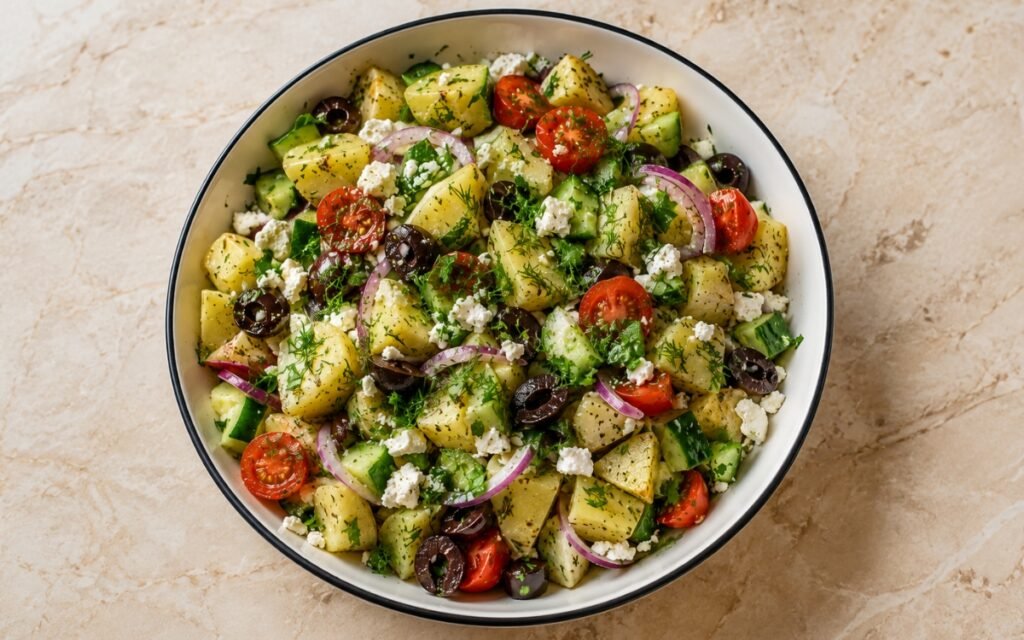
Prep Time : 15 min
Cook Time : 20 min
Servings : 4
15 min
20 min
4
Ingredients
For the Potatoes
• 800g Yukon Gold potatoes, cut into 2cm cubes
• 15g salt (for boiling water)
For the Dressing
• 80ml extra virgin olive oil — this one on Amazon
• 45ml fresh lemon juice (about 1.5 lemons)
• 2 cloves garlic (about 8g), minced
• 5g dried oregano
• 4g salt
• 2g black pepper
• 3g Dijon mustard
For the Salad
• 150g cherry tomatoes, halved
• 100g cucumber, diced
• 80g red onion, thinly sliced
• 80g Kalamata olives, pitted and halved — this one on Amazon
• 100g feta cheese, crumbled — this one on Amazon
• 15g fresh dill, chopped
• 10g fresh parsley, chopped
This post may contain affiliate links. As an Amazon Associate I earn from qualifying purchases, at no additional cost to you.
Directions
- Boil the Potatoes
Place the 800g potatoes (2cm cubes) in a large pot and cover with cold water by 2–3cm. Add the 15g salt, bring to a boil, then reduce to a steady simmer and cook 12–15 minutes until tender but still holding their shape — a fork should slide in easily, but the cubes shouldn’t collapse when stirred. Drain thoroughly and let steam off for 3–5 minutes so the dressing doesn’t get watered down. - Make the Dressing
While the potatoes cook, whisk the 80ml olive oil, 45ml lemon juice, 8g minced garlic, 5g oregano, 4g salt, 2g black pepper, and 3g Dijon mustard until emulsified. Whisk until the mixture looks slightly creamy and unified, not separated; this helps it coat warm potatoes evenly. - Dress Warm Potatoes
Transfer the drained potatoes to a large mixing bowl while still warm. Pour about half the dressing (about 80ml) over the potatoes and toss gently with a spatula to avoid breaking the cubes. Let sit 10 minutes — warm potatoes absorb flavor instead of leaving the dressing only on the surface. - Add Vegetables
Once the potatoes cool to room temperature, add the 150g cherry tomatoes, 100g cucumber, 80g red onion, and 80g olives. Pour over the remaining dressing and toss gently until evenly distributed; if the salad looks dry, toss longer before adding anything extra — the dressing often needs time to coat. - Add Cheese and Herbs
Add the 100g crumbled feta, 15g dill, and 10g parsley. Fold gently so the feta stays in soft crumbles rather than turning into paste and the potato cubes keep their shape. - Chill and Serve
Cover and refrigerate at least 30 minutes (or up to 24 hours) so flavors integrate. Before serving, let stand at room temperature about 15 minutes so the olive oil loosens and the lemon and herbs taste brighter. Toss once more, then taste and adjust salt and pepper if needed.
*Notes :
- Dressing the potatoes while they’re still warm is the single most consequential technique in this recipe. Warm potato cubes have a slightly more open structure than fully cooled ones, and that structure absorbs the lemon-oregano dressing from the inside rather than just holding it on the surface — this is why the dressing is split into two portions, with the first half specifically going onto warm potatoes and the second reserved for the vegetables added later.
- Waiting until the potatoes have fully cooled before adding the tomatoes, cucumber, and onion protects those delicate vegetables from being softened or wilted by residual heat. Adding them too early would leave the finished salad with mushy tomatoes and limp cucumber rather than the crisp, fresh contrast this dish is built around.
- Folding in the feta gently, only at the very end, keeps it in distinct, soft crumbles. Feta breaks down quickly under vigorous mixing or if it’s added too early and tossed repeatedly with everything else, and once it turns pasty it coats the other ingredients in a way that changes the salad’s entire texture.
Why This Recipe Works
This recipe works because splitting the dressing into two applications — half onto warm potatoes, half onto the vegetables — maximizes flavor absorption at the stage when the potatoes can actually take it in. Waiting for the potatoes to cool before adding delicate vegetables protects their texture.
Folding in the feta last and gently preserves its distinct crumble. And the extended chill time allows all these individually protected components to come together into a genuinely cohesive, well-balanced salad.
Ingredient Breakdown
Yukon Gold Potatoes, Dressed Warm
The foundation — a structure that specifically absorbs dressing from the inside when still warm.
Lemon-Oregano Dressing, Split in Two Applications
The flavor-building technique — half for the potatoes, half for the vegetables, each at the right moment.
Delicate Vegetables, Added Only Once Cooled
The texture-protection step — preventing wilting from residual potato heat.
Feta, Folded In Last and Gently
The final textural element — kept in soft crumbles rather than broken down into paste.
Flavor Structure Explained
This Greek Potato Salad follows a bright Mediterranean balance model:
- Tender potato core (warm potatoes)
- Tangy aromatic dressing (lemon and oregano)
- Briny salty contrast (Kalamata olives and feta)
- Fresh vegetable lift (tomatoes, cucumber, red onion)
- Herbal finish (dill and parsley)
The potatoes define the foundation with a tender, absorbent structure that takes in the lemon-oregano dressing while still warm. This gives the salad depth from within rather than leaving the dressing only on the surface. Kalamata olives and feta provide the main briny register, adding salt, tang, and savory contrast against the mild potatoes. Tomatoes, cucumber, and red onion bring freshness, crunch, juiciness, and sharpness, keeping the salad bright rather than dense. Dill and parsley finish with clean herbal lift, reinforcing the Mediterranean profile. The result is a potato salad built around brightness and balance, where tangy dressing, briny accents, fresh vegetables, and tender potatoes remain lively and clearly defined.
Common Mistakes to Avoid
- Overcooking the Potatoes – Causes them to collapse and turn mushy when tossed. Always check for tenderness without disintegration.
- Adding All the Dressing to Cooled Potatoes – Misses the flavor absorption warm potatoes specifically allow. Always dress the potatoes while still warm with the first half of the dressing.
- Adding Vegetables Too Early – Wilts delicate tomatoes and cucumber against residual heat. Always wait until the potatoes reach room temperature.
- Mixing the Feta In Too Vigorously – Breaks it down into a paste rather than soft crumbles. Always fold gently at the very end.
- Serving Straight From the Refrigerator – The olive oil stays firm and the flavors taste muted when cold. Always let the salad sit at room temperature briefly before serving.
Variations
With a Simple Side Salad
For a lighter, vegetable-forward companion dish, see the Greek Village Side Salad.
With Roasted Red Peppers
Add sliced roasted red peppers for additional sweetness and color.
With Capers
Add a small spoonful of capers alongside the olives for extra brininess.
With Chickpeas
Fold in a can of drained, rinsed chickpeas for added protein and heartiness.
Storage & Make-Ahead
The assembled salad refrigerates well for up to 24 hours, and its flavour genuinely improves as it sits, making it an excellent make-ahead dish.
The dressing can be made up to 3 days in advance and refrigerated, then whisked again to re-emulsify before using.
Frequently Asked Questions
Why does the dressing need to be added in two separate stages?
The first portion goes onto the potatoes while they’re still warm, since warm potato cubes absorb dressing into their structure rather than just holding it on the surface. The second portion goes onto the vegetables once the potatoes have cooled, ensuring everything in the salad gets properly coated at the moment it can best take on flavor.
Why wait for the potatoes to cool before adding the tomatoes and cucumber?
Residual heat from freshly boiled potatoes would soften and wilt delicate vegetables like tomatoes and cucumber if they were added too early, losing the crisp, fresh texture that provides contrast against the tender potatoes. Waiting until the potatoes reach room temperature protects that texture.
Why does the feta need to be folded in so gently at the end?
Feta breaks down quickly under vigorous mixing, especially if it’s tossed repeatedly with the rest of the salad. Adding it last and folding gently keeps it in distinct, soft crumbles rather than letting it turn into a paste that would coat and change the texture of everything else in the bowl.
What should I serve alongside this greek salad?
This salad pairs naturally with the Grilled Salmon Fillets or Pan-Seared Cod, and for a lighter, vegetable-forward companion, try the Greek Village Side Salad.
Nutrition Facts
( per serving )
Calories
~340 kcal
Protein
8 g
Fat
24 g
Carbs
26 g
Calories
~340 kcal
Protein
8 g
Fat
24 g
Carbs
26 g
Related Recipes
Related Recipes

Mashed Sweet Potatoes
Creamy mashed sweet potatoes with butter, milk, and cinnamon—ready in 30 minutes for any meal.
Garlic Turmeric Yellow Rice
Fluffy golden long-grain rice with garlic, bloomed turmeric and cumin, finished with melted butter and fresh parsley.
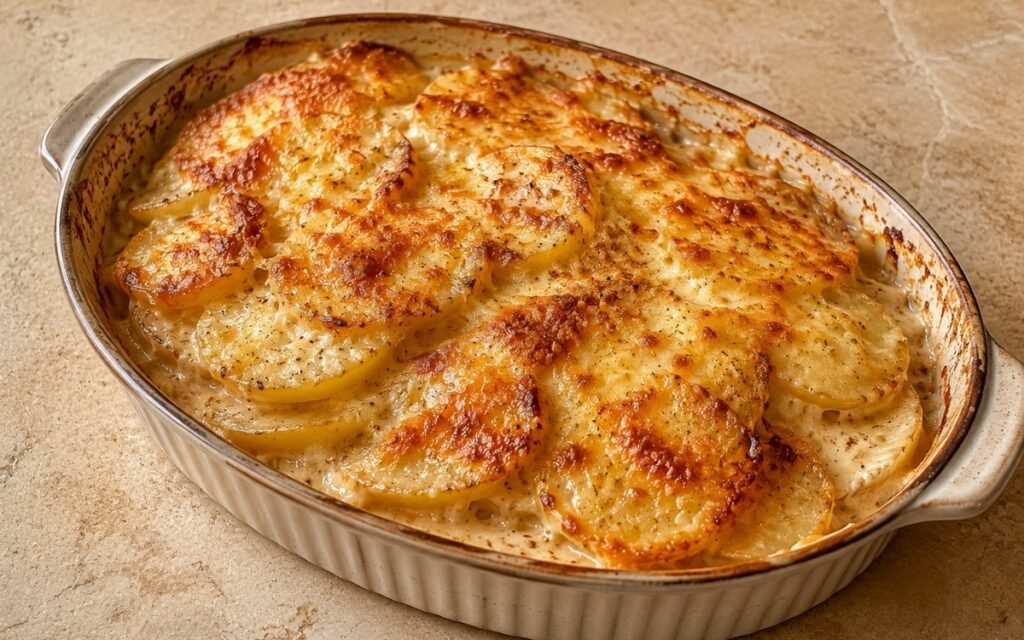
Creamy Scalloped Potatoes
Potatoes sliced evenly, layered with roux-based gruyere cream sauce, baked covered then uncovered until golden. Rested. Velvety and rich.


You might also like
You might also like
Light Hibiscus Mint Cooler
Hibiscus steeped at 95°C, honey while warm, exactly 1 tsp orange blossom water — mint cold-infused 10–15 minutes, chilled. Vivid ruby and floral.
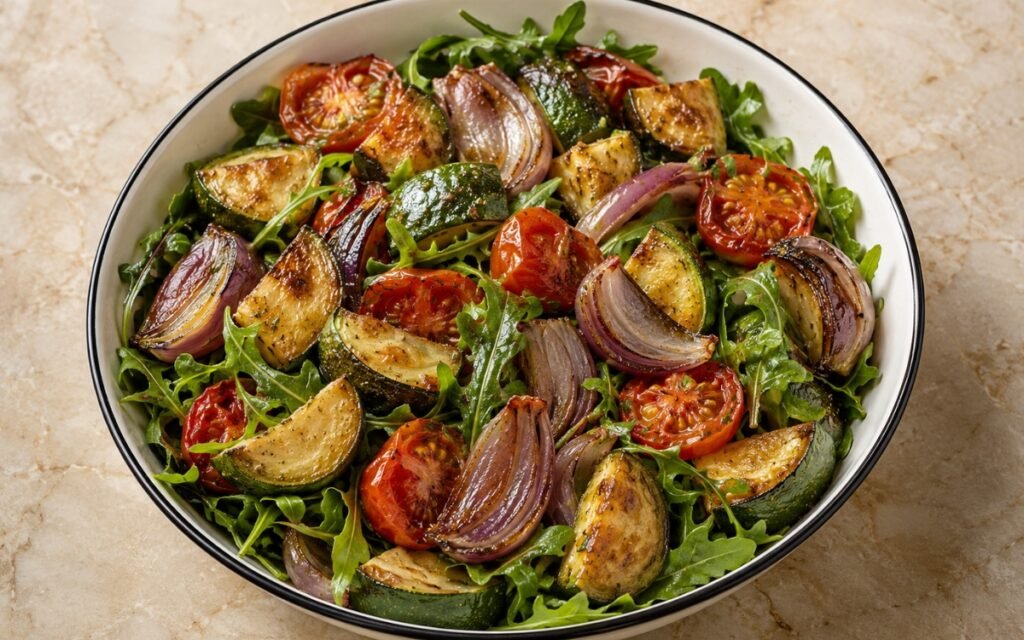
Warm Roasted Vegetable Salad
Caramelised roasted peppers, zucchini and cherry tomatoes served warm over peppery arugula with bright lemon Dijon dressing.
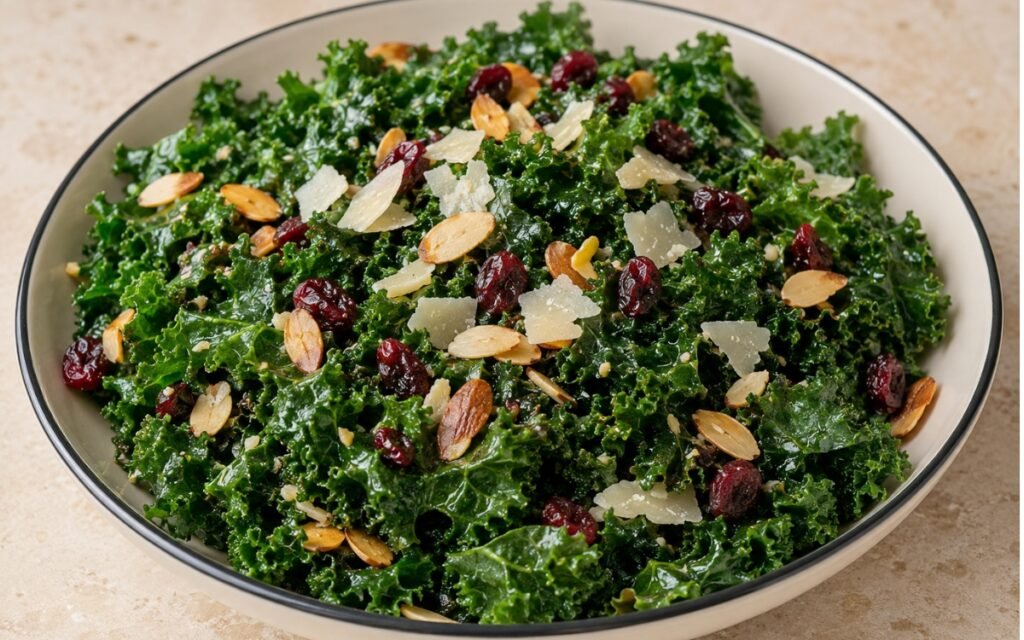
Lemon Parmesan Kale Salad
Massaged kale with bright lemon dressing, shaved Parmesan, toasted almonds, and cranberries.

Greek-Style Potato Salad
Ingredients
Method
- Place the 800g potatoes (2cm cubes) in a large pot and cover with cold water by 2–3cm. Add the 15g salt, bring to a boil, then reduce to a steady simmer and cook 12–15 minutes until tender but still holding their shape — a fork should slide in easily, but the cubes shouldn’t collapse when stirred. Drain thoroughly and let steam off for 3–5 minutes so the dressing doesn’t get watered down.
- While the potatoes cook, whisk the 80ml olive oil, 45ml lemon juice, 8g minced garlic, 5g oregano, 4g salt, 2g black pepper, and 3g Dijon mustard until emulsified. Whisk until the mixture looks slightly creamy and unified, not separated; this helps it coat warm potatoes evenly.
- Transfer the drained potatoes to a large mixing bowl while still warm. Pour about half the dressing (about 80ml) over the potatoes and toss gently with a spatula to avoid breaking the cubes. Let sit 10 minutes — warm potatoes absorb flavor instead of leaving the dressing only on the surface.
- Once the potatoes cool to room temperature, add the 150g cherry tomatoes, 100g cucumber, 80g red onion, and 80g olives. Pour over the remaining dressing and toss gently until evenly distributed; if the salad looks dry, toss longer before adding anything extra — the dressing often needs time to coat.
- Add the 100g crumbled feta, 15g dill, and 10g parsley. Fold gently so the feta stays in soft crumbles rather than turning into paste and the potato cubes keep their shape.
- Cover and refrigerate at least 30 minutes (or up to 24 hours) so flavors integrate. Before serving, let stand at room temperature about 15 minutes so the olive oil loosens and the lemon and herbs taste brighter. Toss once more, then taste and adjust salt and pepper if needed.