
Garlic Turmeric Yellow Rice
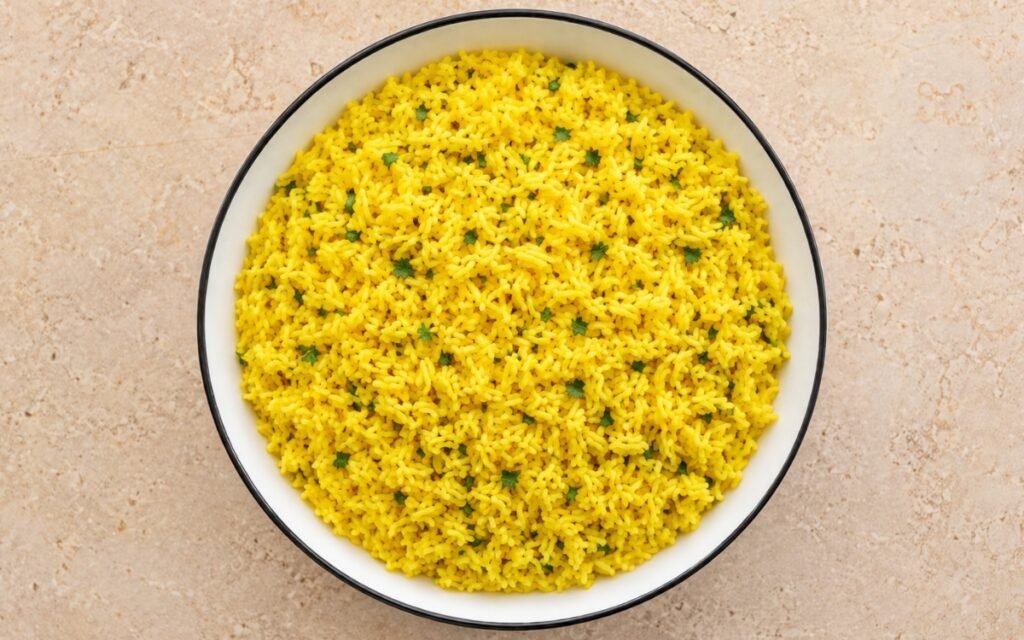
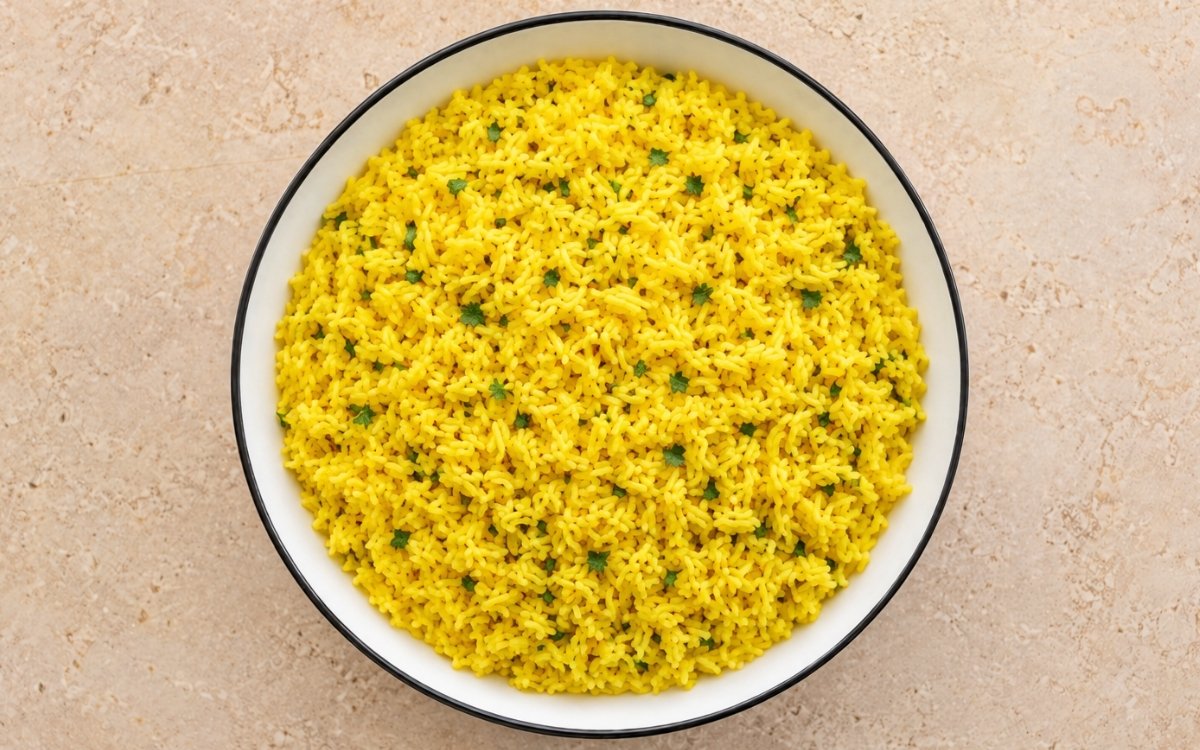
Garlic Turmeric Yellow Rice is a vividly golden long-grain rice side, simmered in vegetable broth with garlic, ground turmeric, cumin and a bay leaf, then finished with butter and fresh parsley, the key being spices bloomed briefly in warm oil rather than simply stirred into the liquid. Blooming the turmeric and cumin with the garlic in warm oil for just 30 seconds, rather than adding them straight to the broth, is the technique this whole dish depends on for its depth and colour — dry spices release their aromatic oils far more fully into fat than into liquid, but turmeric turns harsh and bitter if it scorches even briefly, the same bloom-in-fat principle that applies whenever ground spices are meant to flavour an entire pot. Rinsing the rice until the water runs clear is what lets every separate grain pick up an even coating of the spiced oil instead of clumping together. Simmering covered and completely undisturbed for 15 minutes, then resting for 5, is what lets trapped steam finish every grain at the same rate. The payoff is a rice with real, warm aromatic depth — fluffy, distinct golden grains, earthy turmeric and cumin, mellow garlic, rich butter and a bright parsley finish.
Prep Time : 5 min
Cook Time : 20 min
Servings : 4
5 min
20 min
4
Ingredients
For the Rice
• 300g long-grain white rice
• 500ml vegetable broth — this one on Amazon
• 30ml vegetable oil
• 5 cloves garlic, minced
• 6g ground turmeric — this one on Amazon
• 3g ground cumin — this one on Amazon
• 5g salt
• 2g black pepper
• 1 bay leaf
For the Finishing
• 15g unsalted butter
• 15g fresh parsley, chopped
This post may contain affiliate links. As an Amazon Associate I earn from qualifying purchases, at no additional cost to you.
Directions
- Rinse the Rice
Place the 300g of long-grain white rice in a fine-mesh strainer and rinse it under cold running water, gently agitating the grains with your fingers as the water passes through. Keep going until the water runs genuinely clear rather than just less cloudy. Drain the rice very well, giving the strainer a firm shake to remove as much excess water as possible, then set it aside while you prepare the aromatics. If the water still looks milky, rinse for a little longer. That thorough rinse is what removes the loose surface starch that would otherwise glue the grains together and stop the spiced oil from reaching every piece evenly. - Sauté the Garlic
Warm the 30ml of vegetable oil in a medium 2L saucepan over medium heat, letting it come up to temperature gradually rather than rushing it on high. Add the 5 minced garlic cloves and cook for 1 minute, stirring constantly, until fragrant and softened but not browned. If the garlic starts to colour quickly or sizzle hard, lower the heat slightly before moving on, since the spices go into this same oil next. That gentle minute is what builds a mellow, savoury garlic base before the spices arrive, without the bitterness of browned garlic carrying into the rice. - Bloom the Spices
Stir in the 6g of ground turmeric, 3g of ground cumin, 5g of salt and 2g of black pepper, and cook for 30 seconds — just long enough to bloom the spices without scorching them. Keep the heat at medium and stir the whole time so nothing catches on the base of the pan. The spices should smell warm and toasty, and the oil should turn a deep golden yellow. If they darken towards brown or smell sharp and acrid, they have scorched and the bitterness will run through the whole pot. That short, controlled 30-second bloom is what releases the spices’ aromatic oils into the fat while staying inside the narrow window before turmeric turns harsh. - Coat the Rice
Add the rinsed, well-drained rice to the pan and stir for 1 minute, working it around the pan so every grain is coated in the spiced oil and no pale patches remain. The rice should look evenly golden and glossy, with the garlic and spices distributed through it rather than stuck to the base of the pan. Keep the heat at medium during this stage so the spices on the base do not overcook. That full minute of stirring is what gives each separate grain its own coating of spiced oil, which is where the even yellow colour and flavour in the finished rice come from. - Simmer Undisturbed
Pour in the 500ml of vegetable broth, add the bay leaf and bring to a boil over high heat. As soon as it boils, reduce the heat to low, cover tightly with a well-fitting lid and simmer for 15 minutes, completely undisturbed. Don’t lift the lid or stir at any point during the simmer. If your lid fits loosely, the steam escapes and the rice can finish dry or uneven, so choose the snuggest lid you have. That sealed, undisturbed simmer is what lets the steam build and circulate evenly through the pot, cooking every grain at the same rate as the broth is absorbed. - Rest and Fluff
Remove the pot from the heat and let it stand, still covered, for 5 minutes. Keep the lid on for the whole rest so the trapped steam can finish softening the grains gently. After 5 minutes, lift the lid and check that the broth has been fully absorbed and the grains are tender. Remove and discard the bay leaf, then fluff the rice with a fork, lifting and separating the grains gently rather than stirring or pressing them. That covered rest is what evens out the moisture through the pot, so the grains firm up slightly and separate cleanly instead of breaking when fluffed. - Finish and Serve
Fold the 15g of unsalted butter and the 15g of chopped parsley through the hot rice, using the fork to toss gently until the butter has melted and the parsley is evenly distributed. Taste a few grains and check that the seasoning carries through evenly. Serve immediately while the aromatics are strongest, spooning the rice loosely into a warm serving dish rather than packing it down. That last-minute finish is what keeps the butter rich and glossy and the parsley bright and fresh against the deeper, cooked-in warmth of the turmeric, cumin and garlic.
*Notes :
- Blooming the turmeric and cumin in warm oil for exactly 30 seconds deserves genuine recognition as the technique most directly responsible for whether this rice tastes warm and aromatic or harsh and bitter. The spices’ essential oils dissolve far more fully into fat than into broth, but turmeric has a particularly low threshold before it scorches — so the timing is treated as precise rather than approximate, and the heat stays at medium throughout.
- Rinsing the rice until the water runs clear deserves the same attention as the bloom itself, because the two work together to set the colour and texture. The whole point of blooming the spices in oil is to coat every grain evenly, and starchy, clumped rice blocks that coating, leaving some grains vividly golden and others pale and bland.
- Keeping the lid on through the full 15-minute simmer and the 5-minute rest deserves genuine respect as the detail most directly responsible for even cooking. Rice cooked by absorption depends on steam circulating consistently through the sealed pot — every time the lid comes off, that steam escapes, and the grains at the top finish noticeably firmer than those underneath.
- The bay leaf deserves attention as a quiet supporting element rather than a defining flavour of its own. It infuses gently into the broth for the full simmer and is removed before the rice is fluffed, adding a subtle background depth that rounds out the assertive turmeric and cumin without ever registering as a distinct herbal note.
Why This Recipe Works
This recipe works because every step protects the even coating of spiced oil on each grain. Rinsing the rice clears away the surface starch, so the grains stay separate and take the oil evenly.
A brief 30-second bloom over medium heat draws the full aroma and colour out of the turmeric and cumin without scorching them.
Simmering in broth with a bay leaf under a tight lid, then resting for 5 minutes, lets steam cook every grain at the same rate. Butter and parsley folded in only at the end add richness and freshness, leaving the finished rice golden, fluffy and genuinely aromatic.
Ingredient Breakdown
Turmeric and Cumin (Bloomed 30 Seconds)
The critical technique — a short bloom in warm oil unlocks their aroma and colour without scorching.
Long-Grain Rice (Rinsed Until Clear)
The structural foundation — removing surface starch keeps the grains separate so the spiced oil coats every one evenly.
Garlic Sautéed First
The flavour foundation — one gentle minute in the oil builds a mellow, savoury base before the spices go in.
Rice Coated in Spiced Oil
The core flavour-building stage — a full minute of stirring gives each grain its own golden coating.
Vegetable Broth and Bay Leaf
The savoury simmering base — 500ml absorbed under a tight lid for 15 minutes seasons the rice through.
Butter and Parsley (Folded In Last)
The finishing touch — added once the rice is cooked, they bring richness and a bright herbal lift.
Flavor Structure Explained
This garlic turmeric yellow rice follows a layered balance model:
- Tender structural foundation (long-grain white rice)
- Earthy spice depth (turmeric and cumin)
- Savoury aromatic base (garlic, vegetable broth, bay leaf)
- Rich finishing layer (butter)
- Fresh herbal lift (parsley)
Long-grain rice sets a tender, absorbent foundation that carries the spices and broth evenly through every grain. Turmeric and cumin provide the main flavour register, adding warm earthiness, golden colour and subtle depth once properly bloomed in oil. Garlic, vegetable broth and the bay leaf build a quiet, savoury backbone that makes the rice taste fuller and more complete. Butter adds a final layer of richness, and chopped parsley brings the clean, fresh lift that ties this golden rice together.
Common Mistakes to Avoid
- Skipping the Rinse – This leaves loose surface starch that clumps the grains and stops the spiced oil coating them evenly. Always rinse the rice until the water runs clear.
- Letting the Spices Scorch During Blooming – This turns the turmeric harsh and bitter throughout the pot. Always keep the heat at medium and limit the bloom to 30 seconds.
- Lifting the Lid During the Simmer – This releases the trapped steam and leaves the rice unevenly cooked. Always keep the pot covered for the full 15 minutes and the 5-minute rest.
- Forgetting to Remove the Bay Leaf – This leaves a tough, inedible leaf hidden in the finished rice. Always fish it out before fluffing the grains with a fork.
- Adding the Butter and Parsley Too Early – This dulls the parsley and loses the fresh, rich finish they are meant to give. Always fold them in only once the rice has rested.
Variations
Vegan Version
Leave out the butter and finish the rice with a small drizzle of the same vegetable oil instead, keeping the vegetable broth, so the whole dish becomes fully plant-based without losing its golden colour.
Coconut Milk Version
Replace some of the 500ml of vegetable broth with coconut milk, keeping the total liquid the same, for a richer, slightly sweet rice that leans in a Caribbean-style direction.
Pea Version
Fold cooked green peas through the rice along with the butter and parsley for extra colour, a little sweetness and a soft contrast to the fluffy golden grains.
Cilantro Version
Replace the parsley with the same amount of chopped fresh cilantro for a brighter, more citrusy finish that suits Latin and Indian dishes especially well.
Storage & Make-Ahead
The turmeric, cumin, salt and black pepper can be measured into a small bowl ahead of time for quicker assembly, although the bloom itself should always happen fresh in the pan during cooking.
To store leftovers, spread the cooked rice in a shallow container so it cools quickly, then cover and refrigerate it within 1 hour of cooking rather than leaving it to sit at room temperature.
Refrigerated rice keeps for up to 3 days in an airtight container, and it should be reheated only once, so portion out just what you need each time.
Reheat the rice gently with a splash of water or vegetable broth, covered, in a pan or the microwave, until it is steaming hot all the way through, which restores the moisture lost in the fridge.
The rice is at its best served immediately after fluffing, while the bloomed spices, melted butter and fresh parsley are at their most vivid and aromatic.
Frequently Asked Questions
Why are the turmeric and cumin bloomed in oil instead of added with the broth?
Ground spices release their essential oils and colour far more fully into warm fat than into liquid. Blooming them briefly in the oil with the garlic unlocks much more aroma and depth than stirring them into the broth would achieve.
Why is the bloom limited to just 30 seconds?
Turmeric has a narrow window between properly bloomed and scorched. Once it burns even slightly, it develops a harsh, bitter edge that spreads through the whole pot, because the spice coats every grain rather than staying in one spot.
Why should the lid stay on while the rice simmers and rests?
Rice cooked by absorption relies on trapped steam circulating evenly through the pot to cook every grain at the same rate. Lifting the lid releases that steam and disrupts the process, often leaving the rice unevenly cooked once the broth is absorbed.
Why is the rice stirred in the spiced oil before the broth goes in?
A full minute of stirring coats each rinsed grain in the garlic, turmeric and cumin oil. That coating is what spreads the colour and flavour evenly, so the finished rice turns uniformly golden instead of streaky.
Are there other classic steamed rice, seasoned rice, or rice bowl dishes worth trying?
Plain Steamed Basmati Rice offers another classic rice side direction worth exploring. Cilantro Lime Jasmine Rice and Fluffy Butter Rice are also worth trying for other simply seasoned rice sides, and Mexican-Style Rice and Lebanese Chicken Shawarma Rice Bowl offer other hearty, rice-based dishes worth exploring.
Nutrition Facts
( per serving )
Calories
~385 kcal
Protein
6 g
Fat
11 g
Carbs
64 g
Calories
~385 kcal
Protein
6 g
Fat
11 g
Carbs
64 g
Related Recipes
Related Recipes

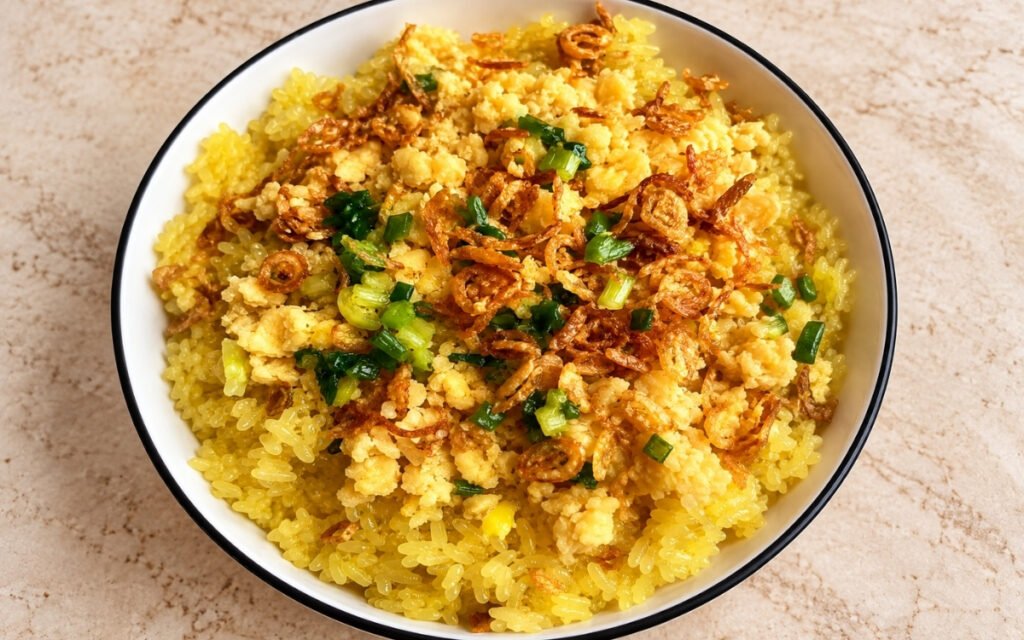
Vietnamese Turmeric Sticky Rice (Xôi Xéo)
Golden turmeric sticky rice topped with soft crumbled mung bean, crispy fried shallots, and glossy scallion oil.
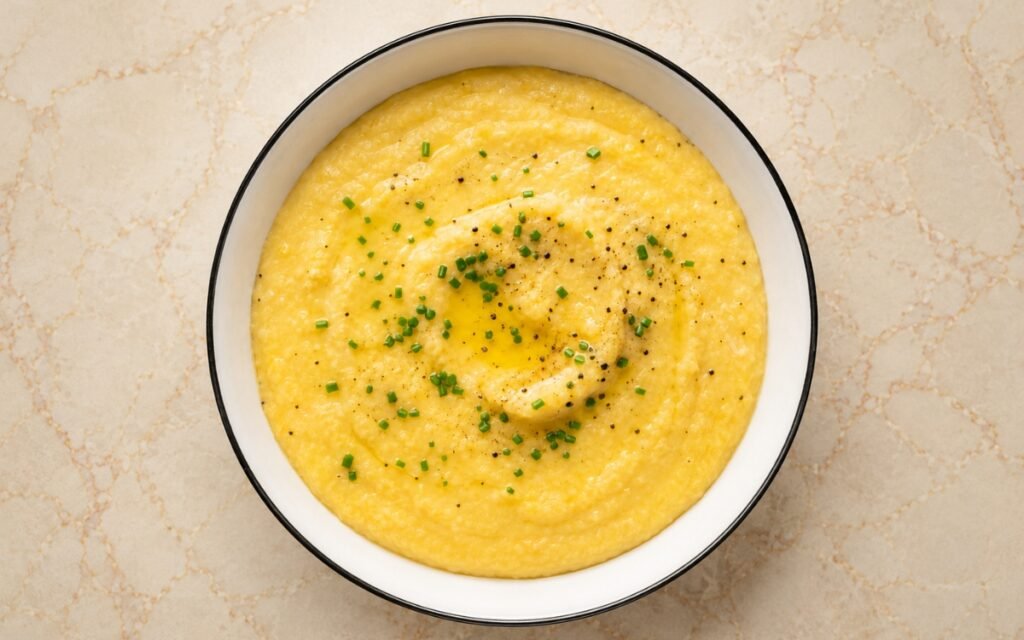
Creamy Buttery Polenta
Creamy, buttery polenta with Parmesan—a silky smooth Italian side dish that’s pure comfort.
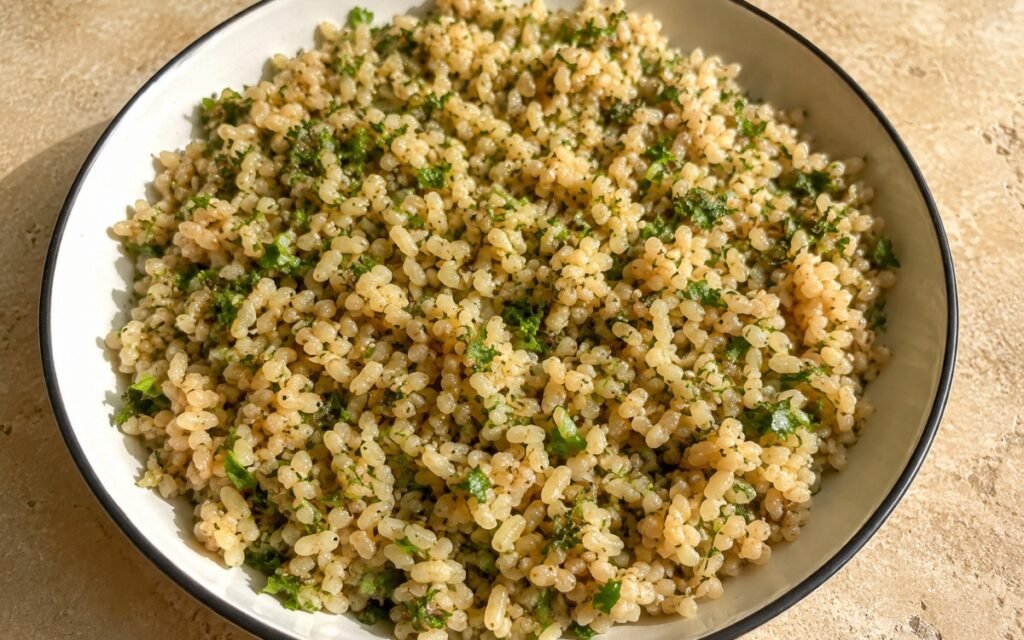
Herbed Brown Rice
Brown rice toasted with garlic, simmered covered undisturbed 40–45 minutes with thyme and oregano, finished with fresh parsley. Nutty and wholesome.
You might also like
You might also like
Iced Cortado
Equal parts freshly brewed espresso and cold milk served over a single large ice cube, for a deep caramel-brown, concentrated coffee.
Classic Deli Coleslaw
Finely shredded cabbage and carrot in a creamy, tangy mayonnaise-sour cream dressing, salted and rested for a coleslaw that stays crisp, not watery.
Lavender Honey Green Iced Tea
Properly brewed green tea combined with a carefully extracted lavender-honey infusion for a pale golden-green, floral, lightly sweet iced tea.


Garlic Turmeric Yellow Rice
Ingredients
Method
- Place the 300g of long-grain white rice in a fine-mesh strainer and rinse it under cold running water, gently agitating the grains with your fingers as the water passes through. Keep going until the water runs genuinely clear rather than just less cloudy. Drain the rice very well, giving the strainer a firm shake to remove as much excess water as possible, then set it aside while you prepare the aromatics. If the water still looks milky, rinse for a little longer. That thorough rinse is what removes the loose surface starch that would otherwise glue the grains together and stop the spiced oil from reaching every piece evenly.
- Warm the 30ml of vegetable oil in a medium 2L saucepan over medium heat, letting it come up to temperature gradually rather than rushing it on high. Add the 5 minced garlic cloves and cook for 1 minute, stirring constantly, until fragrant and softened but not browned. If the garlic starts to colour quickly or sizzle hard, lower the heat slightly before moving on, since the spices go into this same oil next. That gentle minute is what builds a mellow, savoury garlic base before the spices arrive, without the bitterness of browned garlic carrying into the rice.
- Stir in the 6g of ground turmeric, 3g of ground cumin, 5g of salt and 2g of black pepper, and cook for 30 seconds — just long enough to bloom the spices without scorching them. Keep the heat at medium and stir the whole time so nothing catches on the base of the pan. The spices should smell warm and toasty, and the oil should turn a deep golden yellow. If they darken towards brown or smell sharp and acrid, they have scorched and the bitterness will run through the whole pot. That short, controlled 30-second bloom is what releases the spices’ aromatic oils into the fat while staying inside the narrow window before turmeric turns harsh.
- Add the rinsed, well-drained rice to the pan and stir for 1 minute, working it around the pan so every grain is coated in the spiced oil and no pale patches remain. The rice should look evenly golden and glossy, with the garlic and spices distributed through it rather than stuck to the base of the pan. Keep the heat at medium during this stage so the spices on the base do not overcook. That full minute of stirring is what gives each separate grain its own coating of spiced oil, which is where the even yellow colour and flavour in the finished rice come from.
- Pour in the 500ml of vegetable broth, add the bay leaf and bring to a boil over high heat. As soon as it boils, reduce the heat to low, cover tightly with a well-fitting lid and simmer for 15 minutes, completely undisturbed. Don’t lift the lid or stir at any point during the simmer. If your lid fits loosely, the steam escapes and the rice can finish dry or uneven, so choose the snuggest lid you have. That sealed, undisturbed simmer is what lets the steam build and circulate evenly through the pot, cooking every grain at the same rate as the broth is absorbed.
- Remove the pot from the heat and let it stand, still covered, for 5 minutes. Keep the lid on for the whole rest so the trapped steam can finish softening the grains gently. After 5 minutes, lift the lid and check that the broth has been fully absorbed and the grains are tender. Remove and discard the bay leaf, then fluff the rice with a fork, lifting and separating the grains gently rather than stirring or pressing them. That covered rest is what evens out the moisture through the pot, so the grains firm up slightly and separate cleanly instead of breaking when fluffed.
- Fold the 15g of unsalted butter and the 15g of chopped parsley through the hot rice, using the fork to toss gently until the butter has melted and the parsley is evenly distributed. Taste a few grains and check that the seasoning carries through evenly. Serve immediately while the aromatics are strongest, spooning the rice loosely into a warm serving dish rather than packing it down. That last-minute finish is what keeps the butter rich and glossy and the parsley bright and fresh against the deeper, cooked-in warmth of the turmeric, cumin and garlic.