
Iced Cortado
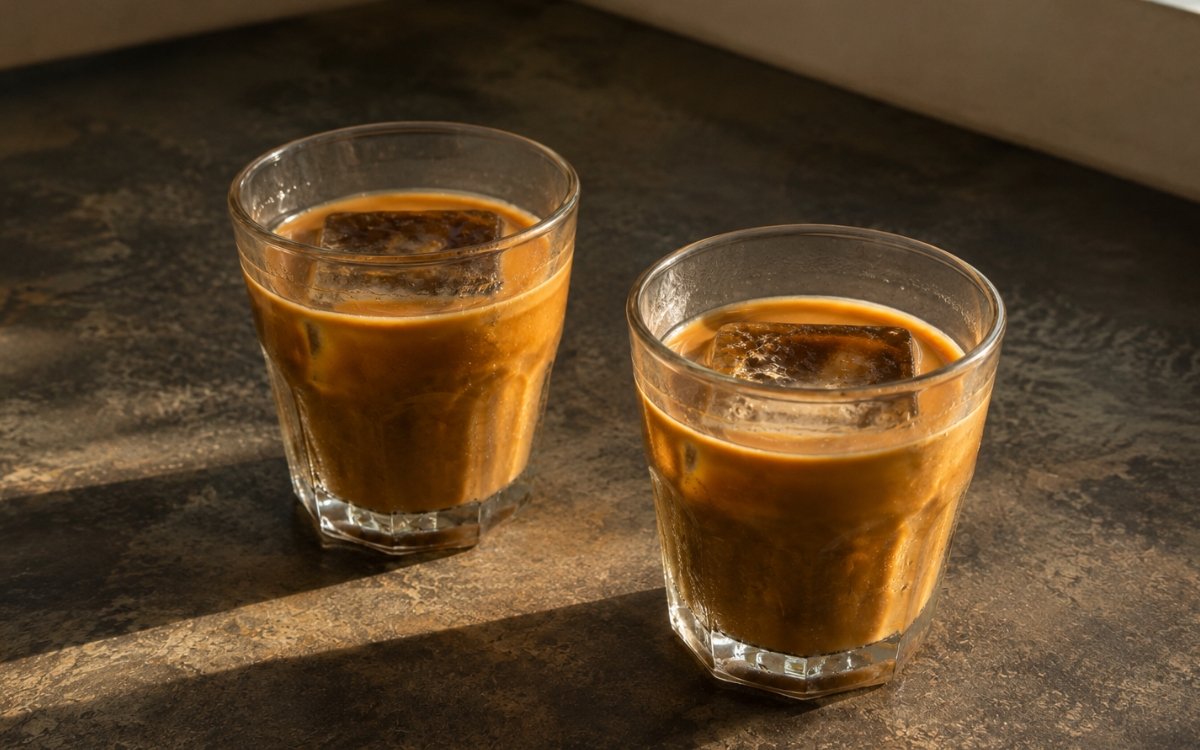
A classic iced cortado built on equal parts espresso and cold milk, served over a single large ice cube. Stronger and darker than an iced latte, with a deep warm caramel-brown colour and a more concentrated, balanced coffee-to-milk profile. Using a single large ice cube per glass, rather than several smaller ones, is the technique this whole drink depends on for keeping its concentrated character intact — a large cube has considerably less surface area relative to its volume, which slows melting and dilution far more effectively than a handful of small cubes would in such a compact drink. Keeping to the classic equal-parts ratio of espresso to milk, rather than leaning toward more milk the way a latte does, is what gives the cortado its defining strength and colour. Adding the espresso only after the cold milk is already in the glass, over the large cube, is what protects that same colour and balance from becoming muddled. The payoff is a drink that’s genuinely more concentrated than an iced latte — deep caramel-brown, balanced between milk and espresso, with neither one ever dominating.

Prep Time : 5 min
Cook Time : 5 min
Servings : 2
5 min
5 min
2
Ingredients
For the Iced Cortado
• 180ml espresso, freshly brewed (6 standard shots total, counting 1 shot = 30ml)
• 180ml cold whole milk — this one on Amazon
• 2 large ice cubes
This post may contain affiliate links. As an Amazon Associate I earn from qualifying purchases, at no additional cost to you.
Directions
- Prepare the Glasses
Place 1 large ice cube into each glass. The large cube is important here. It chills the drink without watering it down too quickly, which matters more in a concentrated drink like a cortado than in a longer milk drink. A single large cube’s low surface-area-to-volume ratio is what slows the melt rate specifically — several smaller cubes with the same total volume would present far more melting surface to the drink, diluting a cortado’s already-concentrated ratio much faster than this format is meant to allow. - Brew the Espresso
Brew 180ml espresso total, equal to 6 standard 30ml shots. Let the espresso sit for 30–60 seconds only if it is extremely hot, but do not let it go stale. The espresso should taste clean, bold, and balanced. Because the milk ratio is much lower than in a latte, weak or harsh espresso shows immediately. With equal parts milk to espresso rather than a latte’s heavier milk proportion, there’s simply nowhere for a flawed shot to hide — this drink’s concentrated ratio makes espresso quality far more noticeable than it would be in a more diluted, milk-forward drink. - Add the Milk
Pour 90ml cold milk into each glass over the large ice cube. The milk must be properly cold before the espresso goes in. This helps keep the drink crisp and stops the ice from melting too fast. Cold milk added directly onto the large cube begins working alongside that slow-melting ice from the very start, rather than needing the ice alone to do all the chilling work once the espresso is added on top. - Pour in the Espresso
Pour 90ml espresso into each glass. You can pour it directly over the milk for a layered look, then stir, or pour and stir immediately. The finished drink should be a deep warm caramel-brown, clearly darker and more concentrated-looking than an iced latte. If it looks too pale, the milk ratio is too high. This equal-parts pour is what distinguishes a cortado’s colour and strength from a latte’s much paler, more diluted appearance — the ratio itself, not any technique beyond measuring correctly, is what produces that deeper caramel-brown result. - Stir and Serve
Stir each glass briefly just until the milk and espresso are fully combined. Serve immediately. Once stirred, the drink should be smooth, balanced, and intense — equal parts milk and espresso, with neither one dominating too aggressively. A brief stir is sufficient here specifically because the ratio itself is already correctly balanced by measurement — this isn’t a drink relying on gradual dissolving or layering to find its final balance, so only a short mix is needed to bring the two already-proportioned liquids together.
*Notes :
- The single large ice cube is worth understanding as a genuine structural choice rather than simply a stylistic preference for this drink. A cortado’s whole identity depends on staying concentrated — equal parts milk and espresso, without excessive dilution softening that ratio. A large cube’s comparatively small surface area relative to its volume melts considerably more slowly than an equivalent volume of smaller ice would, which is specifically what protects the drink’s concentration through the time it takes to build, serve, and drink it.
- Because this drink uses such a low milk ratio compared to a latte, the quality of the espresso itself becomes far more exposed and noticeable. A latte’s generous milk proportion has real capacity to soften or mask a slightly flawed shot; a cortado’s equal-parts ratio offers no such cover. This is a drink where paying real attention to the espresso brewing stage pays off more directly and visibly than it would in a more milk-forward format.
- Keeping strictly to the classic equal-parts ratio, rather than adjusting it toward more milk out of habit from making lattes, is worth respecting as the defining characteristic of a cortado specifically. Increasing the milk proportion, even modestly, would produce a paler, gentler drink that reads more like a small iced latte than a genuine cortado — the ratio itself is not a minor detail here but the entire point of the format.
- The instruction against oversweetening reflects the same underlying philosophy as the ratio itself. A cortado is built around balance between two concentrated components, milk and espresso, meeting on genuinely equal terms. Adding syrup or sugar shifts that balance toward sweetness in a way that works against what makes this specific drink distinct from other iced espresso formats.
Why This Recipe Works
This recipe works because every choice protects the drink’s genuinely concentrated character: a single large ice cube slows dilution far more effectively than several smaller cubes would, and the strict equal-parts ratio of milk to espresso — rather than a latte’s heavier milk proportion — is what produces the cortado’s defining deep caramel-brown colour and balanced strength.
Building the glass with cold milk over the ice first, then adding the measured espresso, keeps that ratio precise and controlled. With so little milk to soften any flaws, quality espresso matters more here than in a more diluted drink, and a brief final stir is all that’s needed to bring an already correctly balanced drink together.
Ingredient Breakdown
Single Large Ice Cube (Per Glass)
The critical dilution control — its low surface-area-to-volume ratio melts slowly, protecting the drink’s concentrated character.
Equal Parts Espresso and Cold Milk
The defining ratio — this specific balance, rather than a latte’s heavier milk proportion, is what gives the cortado its deep colour and strength.
Freshly Brewed, Quality Espresso
The exposed component — with so little milk to soften it, any flaw in the espresso is far more noticeable than in a milk-forward drink.
Cold Milk Added First (Over the Ice)
The build sequence — chills alongside the slow-melting ice from the start, working together with it rather than the ice doing all the cooling alone.
Brief Final Stir
The finishing technique — sufficient here because the ratio is already correctly measured, needing only combination rather than gradual balancing.
Flavor Structure Explained
This iced cortado follows a layered balance model:
- Bold concentrated foundation (equal-parts espresso)
- Balanced creamy counterpart (equal-parts cold milk)
- Cool refreshing structure (single large ice cube)
- Clean, unsweetened finish (no added syrup)
Freshly brewed espresso and cold whole milk meet in genuinely equal proportion, defining this drink’s bold yet balanced character — neither the coffee nor the milk overwhelms the other. A single large ice cube keeps the drink properly chilled while protecting that concentrated ratio from excessive dilution. With no added sweetener, the finish stays clean and true to the drink’s classic, balanced identity, letting the quality of the espresso and milk speak for themselves.
Common Mistakes to Avoid
- Using Several Small Ice Cubes Instead of One Large One – This dilutes the drink far faster than intended, softening its concentrated character. Always use a single large cube per glass.
- Increasing the Milk Ratio Beyond Equal Parts – This produces something closer to a small iced latte than a true cortado. Always keep to strict equal parts espresso and milk.
- Using Weak or Poorly Brewed Espresso – With so little milk to mask flaws, a subpar shot is immediately noticeable. Always brew fresh, clean, well-balanced espresso.
- Adding Sweetener – This shifts the drink’s balance away from its defining espresso-and-milk equilibrium. Always serve it unsweetened for the most classic version.
- Pouring the Espresso Before the Milk – This works against the drink’s controlled, concentrated build. Always add the cold milk over the ice first, then the espresso.
Variations
Slightly Lighter Version
Use 2% milk instead of whole milk for a slightly lighter body while keeping the same equal-parts ratio.
More Intense Version
Use a shorter, more concentrated espresso extraction while keeping the milk ratio the same for an even bolder drink.
Oat Milk Version
Substitute a barista-style oat milk for the dairy milk, following the identical equal-parts build.
Layered Presentation
Pour the espresso in slowly over the milk without stirring immediately, presenting the drink briefly layered before mixing at the table.
Storage & Make-Ahead
This drink is meant to be built and served fresh; it does not hold or store well once assembled, since the ice will continue melting and softening the drink’s concentrated ratio over time.
Espresso can be brewed just before building the glasses, but should not be brewed far in advance, since its flavour and aroma fade noticeably as it sits.
Cold milk should be kept refrigerated until the moment of use for the best chill and flavour.
Frequently Asked Questions
Why does this drink use one large ice cube instead of several smaller ones?
A single large cube has considerably less surface area relative to its volume than an equivalent amount of smaller ice, which slows melting and dilution significantly. That matters more here than in a longer milk drink, since a cortado’s whole identity depends on staying concentrated rather than watered down.
Why does the espresso quality matter more in a cortado than in a latte?
A latte’s generous milk proportion has real capacity to soften or mask a slightly flawed shot. A cortado’s equal-parts ratio offers no such cover, which is why brewing genuinely clean, balanced espresso matters more directly and visibly here.
Why is the classic equal-parts ratio described as non-negotiable?
Increasing the milk proportion, even slightly, produces a paler, gentler drink that reads more like a small iced latte than a true cortado. The strict equal-parts ratio is not a minor detail but the actual defining characteristic of the format.
Why shouldn’t the cortado be sweetened?
This drink is built around genuine balance between two concentrated components, milk and espresso, meeting on equal terms. Adding syrup or sugar shifts that balance toward sweetness, working against what makes a cortado distinct from other iced espresso drinks.
Are there other espresso-forward iced drinks worth trying?
Iced Flat White, Freddo Espresso, Iced Americano with Lemon, and Classic Iced Latte all build on a related espresso foundation, each taking a different direction with milk ratio, dilution, or finishing touch worth exploring.
Nutrition Facts
( per serving )
Calories
~90 kcal
Protein
5 g
Fat
4 g
Carbs
5 g
Calories
~90 kcal
Protein
5 g
Fat
4 g
Carbs
5 g
Related Recipes
Related Recipes

Cold Brew Coffee
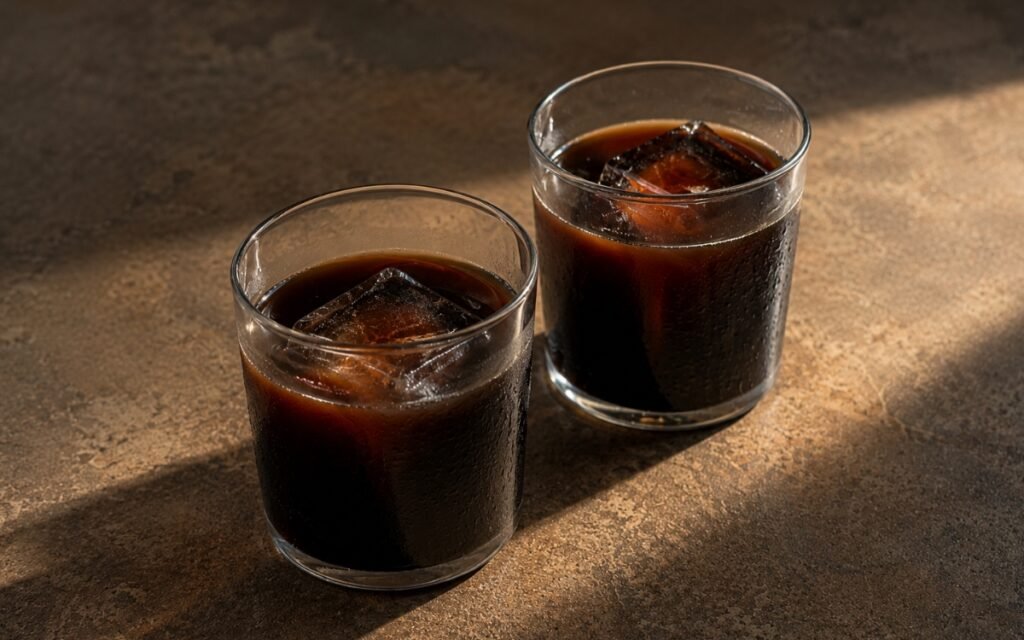
Coarsely ground coffee steeped in cold water for 12–16 hours, strained twice for clarity, and served black over a single large ice cube.
Classic Iced Latte
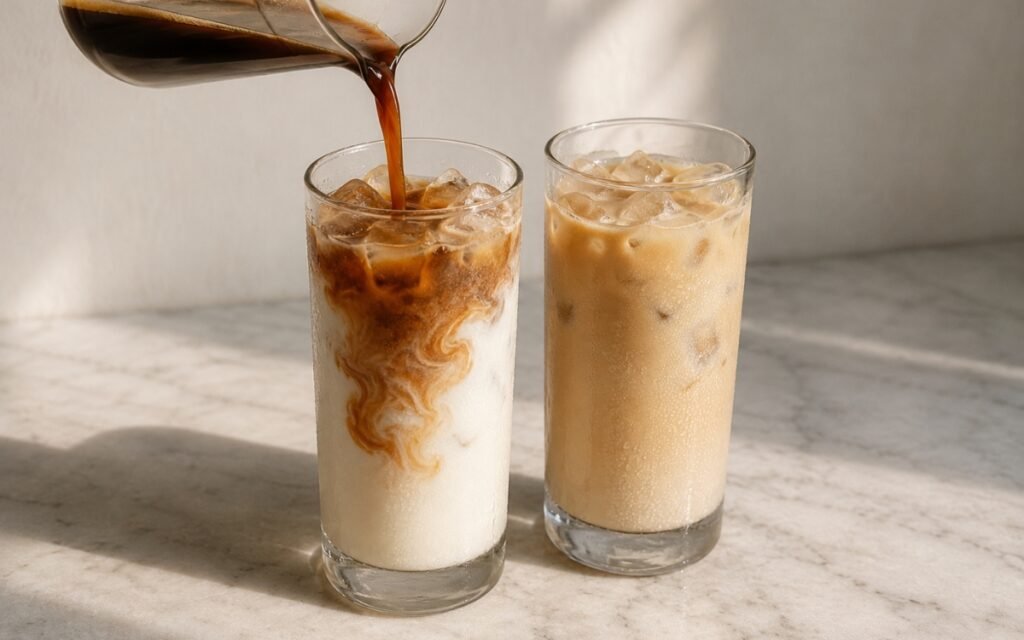
Cold milk and ice topped with freshly brewed espresso poured slowly for the signature swirl, then stirred into a smooth, milk-forward iced latte.
Toasted Coconut Cold Brew
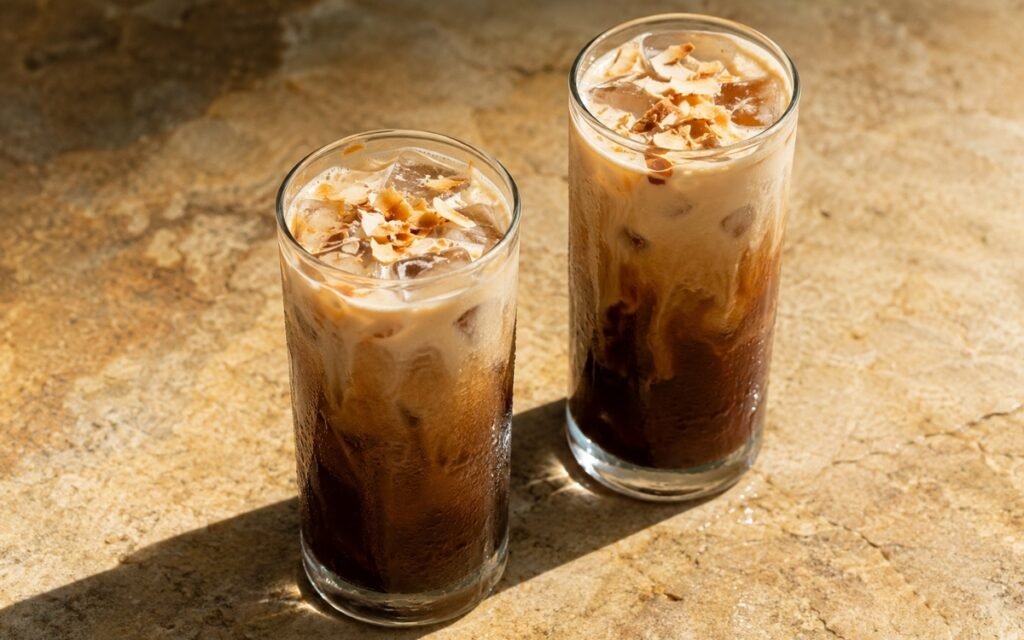
Strong, chilled cold brew coffee sweetened with warm toasted coconut syrup and softened with a restrained splash of coconut milk.
You might also like
You might also like
Apple Lemonade
Cold-extracted lemon zest and juice combined with strained, skin-on apple purée for a crisp, pale golden lemonade.
Huevos Divorciados
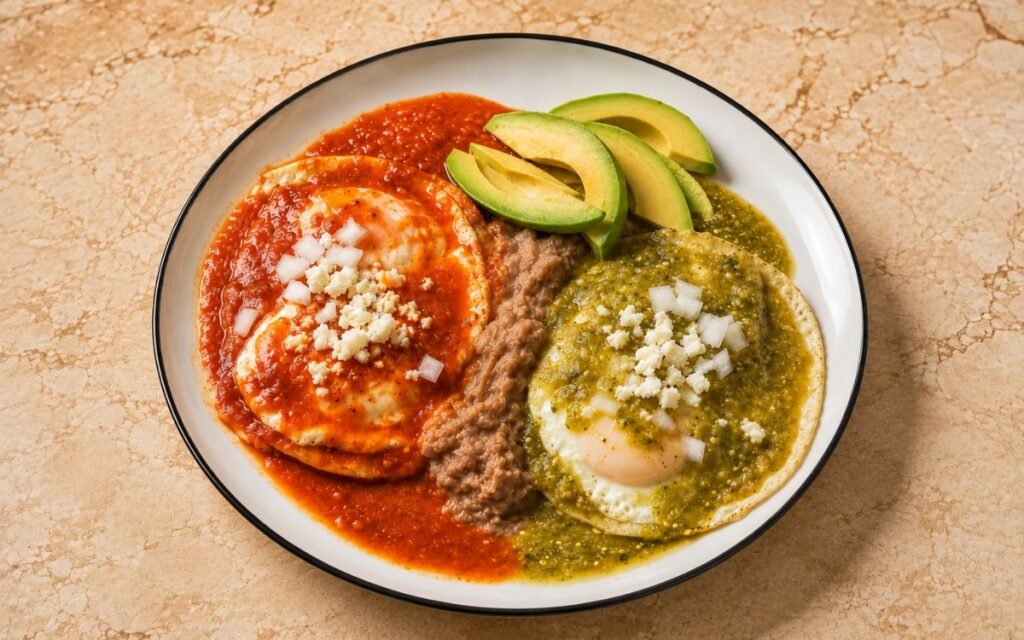
Two fried eggs on lightly fried tortillas, “divorced” by vivid salsa roja and salsa verde, with refried beans and fresh garnishes.
Garlic Butter Shrimp Skillet
Hard-seared shrimp finished gently in a glossy garlic butter sauce with lemon, parsley, and chili flakes.


Iced Cortado
Ingredients
Method
- Place 1 large ice cube into each glass. The large cube is important here. It chills the drink without watering it down too quickly, which matters more in a concentrated drink like a cortado than in a longer milk drink. A single large cube’s low surface-area-to-volume ratio is what slows the melt rate specifically — several smaller cubes with the same total volume would present far more melting surface to the drink, diluting a cortado’s already-concentrated ratio much faster than this format is meant to allow.
- Brew 180ml espresso total, equal to 6 standard 30ml shots. Let the espresso sit for 30–60 seconds only if it is extremely hot, but do not let it go stale. The espresso should taste clean, bold, and balanced. Because the milk ratio is much lower than in a latte, weak or harsh espresso shows immediately. With equal parts milk to espresso rather than a latte’s heavier milk proportion, there’s simply nowhere for a flawed shot to hide — this drink’s concentrated ratio makes espresso quality far more noticeable than it would be in a more diluted, milk-forward drink.
- Pour 90ml cold milk into each glass over the large ice cube. The milk must be properly cold before the espresso goes in. This helps keep the drink crisp and stops the ice from melting too fast. Cold milk added directly onto the large cube begins working alongside that slow-melting ice from the very start, rather than needing the ice alone to do all the chilling work once the espresso is added on top.
- Pour 90ml espresso into each glass. You can pour it directly over the milk for a layered look, then stir, or pour and stir immediately. The finished drink should be a deep warm caramel-brown, clearly darker and more concentrated-looking than an iced latte. If it looks too pale, the milk ratio is too high. This equal-parts pour is what distinguishes a cortado’s colour and strength from a latte’s much paler, more diluted appearance — the ratio itself, not any technique beyond measuring correctly, is what produces that deeper caramel-brown result.
- Stir each glass briefly just until the milk and espresso are fully combined. Serve immediately. Once stirred, the drink should be smooth, balanced, and intense — equal parts milk and espresso, with neither one dominating too aggressively. A brief stir is sufficient here specifically because the ratio itself is already correctly balanced by measurement — this isn’t a drink relying on gradual dissolving or layering to find its final balance, so only a short mix is needed to bring the two already-proportioned liquids together.