
Dalgona Whipped Coffee
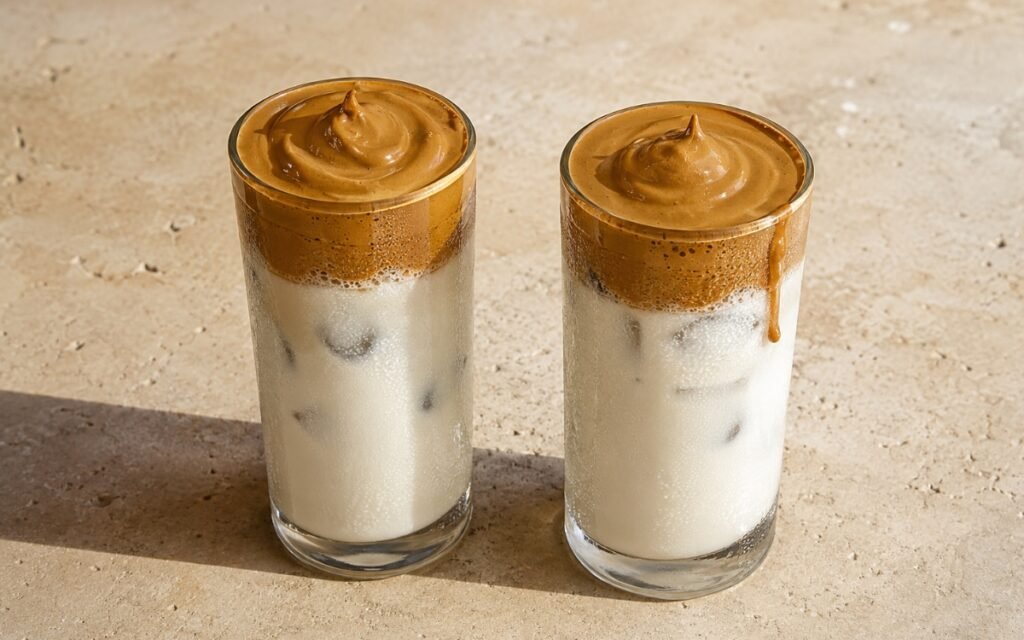
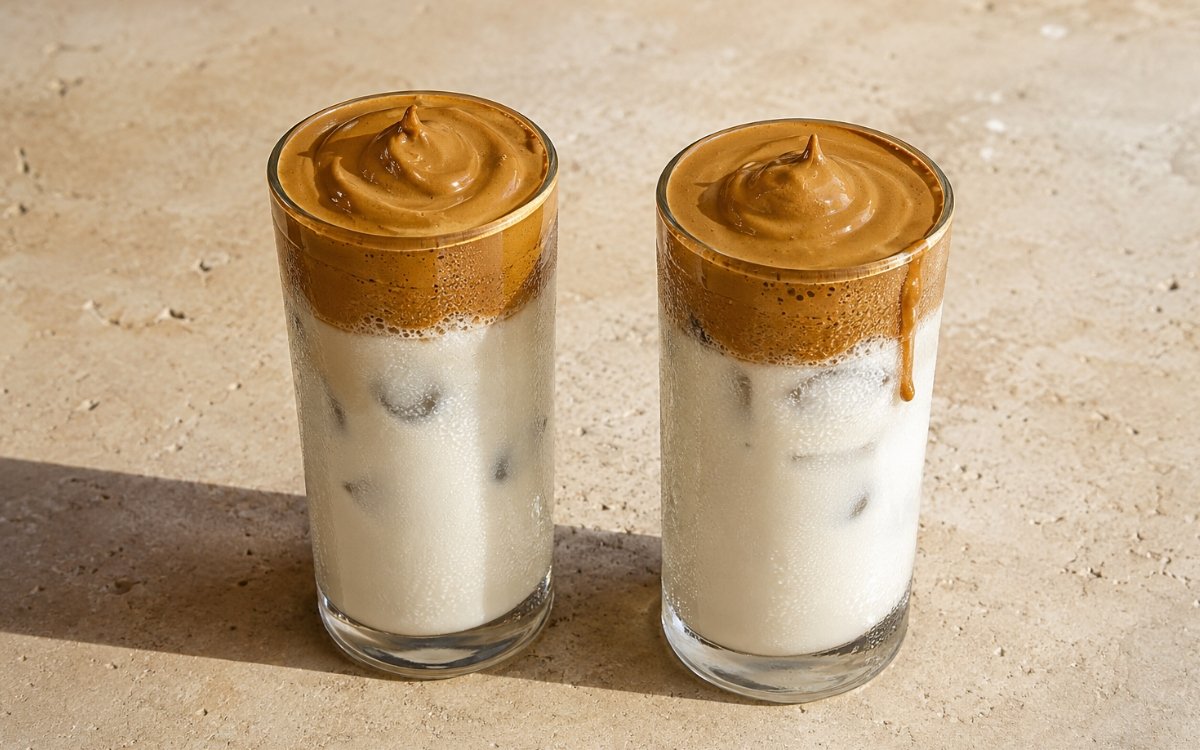
A classic dalgona whipped coffee made with equal parts instant coffee, sugar, and hot water whipped into a thick golden-brown foam, spooned over iced milk. The defining contrast is the dense mousse-like coffee topping sitting clearly above the cold milk without sinking too quickly. Using instant coffee specifically, rather than ground, brewed, or espresso coffee, is the technique this whole drink depends on for its signature foam — only instant coffee’s soluble structure whips up into that thick, mousse-like texture, the same instant-coffee-foaming principle that governs Greek frappé elsewhere in this collection whenever a genuinely whipped, aerated coffee foam is the goal. Whipping until the mixture reaches genuine soft-to-medium peaks, rather than stopping early, is what allows the foam to hold its shape as a distinct cap rather than pouring like sauce and sinking into the milk. Keeping sugar at its full specified amount, rather than reducing it aggressively, matters just as much, since sugar contributes real structural stability to the foam beyond simple sweetness. The payoff is a drink with a genuinely striking visual boundary — a thick, dense, cloud-like coffee foam sitting clearly above cold milk, before the final stir combines everything into a smooth, sweet iced coffee.
Prep Time : 10 min
Cook Time : 0 min
Servings : 2
10 min
0 min
2
Ingredients
For the Dalgona Coffee Foam
• 12g instant coffee — this one on Amazon
• 24g granulated sugar
• 30ml hot water
For the Iced Milk Base
• 300ml cold whole milk, or barista-style oat milk — this one on Amazon
• 8–10 ice cubes
For Finishing
• Small pinch instant coffee powder, for dusting
• Orange peel twists
This post may contain affiliate links. As an Amazon Associate I earn from qualifying purchases, at no additional cost to you.
Directions
- Build the Whipping Base
Add the instant coffee, sugar, and hot water to a medium bowl. The water should be hot enough to dissolve the coffee and sugar quickly, but you do not need to boil aggressively for this step. The mixture should already look dark, fluid, and mostly dissolved before whipping begins. Use instant coffee only. Ground coffee, brewed coffee, or espresso will not whip into the signature dalgona foam. Fully dissolving the coffee and sugar into the hot water before whipping even starts gives the mixture a smooth, uniform starting point — any undissolved granules at this stage would carry through into the whipped foam as gritty texture rather than smoothing out during aeration. - Whip the Coffee Foam
Whip the mixture using a hand mixer, milk frother, or whisk until it becomes thick, glossy, and dramatically lighter in colour, about 3–5 minutes with a mixer or longer by hand. The final foam should hold soft-to-medium peaks and be dense enough to sit on top of the milk rather than disappearing into it immediately. This is the main structural step of the recipe. Stop only when the foam is deep golden-brown, mousse-like, and holds its shape. If under-whipped, it will pour like sauce and sink. If properly whipped, it will sit as a distinct cap. Sugar is not only for sweetness here — it also helps stabilize the foam. Reducing it too aggressively weakens the structure. Instant coffee’s soluble particles, unlike ground or brewed coffee’s oils and insoluble solids, respond to vigorous, sustained whipping by trapping and holding air in a genuinely stable structure — this specific chemistry is what makes dalgona’s dramatic colour lightening and mousse-like texture possible in the first place. - Build the Milk Glasses
Fill 2 glasses generously with ice. Pour 150ml cold milk into each glass, filling them to roughly two-thirds full. The milk should be fully cold and the glasses well iced. The foam sits best on a cold base; if the milk is not cold enough, the top layer softens too fast and loses the visual contrast. A properly chilled milk base protects the whipped foam’s structure from the moment it’s spooned on top — any warmth rising from the milk beneath would begin softening that carefully built foam almost immediately. - Top with the Dalgona Foam
Spoon the whipped coffee mixture over the iced milk, dividing it evenly between the 2 glasses. Pile it generously so it forms a thick visible layer on top. The foam should clearly sit above the milk with a defined boundary between the pale base and the darker whipped coffee. That separation is one of the defining visual and textural features of a proper dalgona coffee. Piling the foam generously rather than spreading it thin is what produces the dramatic, cloud-like presentation this drink is specifically known for — a thin layer would lose much of that visual impact even if properly whipped. - Finish and Serve
Dust the surface very lightly with instant coffee powder and serve immediately. Serve with a spoon or straw so the drink can be stirred just before drinking. The drink should be presented layered first. Once stirred, it becomes a smooth sweet iced coffee, but the signature experience begins with the thick cloud-like foam sitting above the milk. This layered presentation is genuinely brief once the drink is built — serving without delay preserves the striking visual boundary between milk and foam before it has time to soften and blend.
*Notes :
- Instant coffee’s specific role in this recipe is worth understanding as a genuine chemical requirement rather than a traditional preference. Instant coffee’s soluble particles, produced through the freeze-drying or spray-drying process it undergoes, respond to vigorous whipping in a way that ground, brewed, or espresso coffee’s insoluble solids and oils simply don’t replicate. This is exactly the same underlying principle that makes Greek frappé’s shaken foam possible — both drinks depend on instant coffee’s particular chemistry to achieve their signature aerated textures.
- The whipping stage’s dramatic colour change — from a dark, dissolved mixture to something noticeably lighter, glossy, and golden-brown — is worth using as a genuine visual cue for doneness rather than relying purely on time. That colour shift happens as air is progressively incorporated into the mixture’s structure, and it’s a more reliable indicator of proper whipping than any fixed time estimate, since different whipping tools and techniques can reach that point at different speeds.
- Sugar’s structural role in this foam, beyond its obvious contribution to sweetness, deserves real attention given how often it’s the ingredient people instinctively want to reduce. Sugar helps stabilise the protein and particle structures that trap air during whipping, meaning a significantly reduced sugar amount doesn’t just produce a less sweet foam — it produces a genuinely less stable one, more prone to collapsing or sinking into the milk below rather than holding its shape as intended.
- Keeping the milk base properly cold before the foam is ever added protects that foam’s structure from a direction that’s easy to overlook. Even though the foam itself has real stability once properly whipped, a warm liquid immediately beneath it works against that stability from below — a fully chilled milk base is what gives the foam its best chance of sitting cleanly on top for as long as possible before serving.
Why This Recipe Works
This recipe works because instant coffee’s specific soluble chemistry allows it to whip into a genuinely stable, mousse-like foam that ground or brewed coffee simply can’t replicate. Fully dissolving the coffee and sugar in hot water before whipping begins avoids any gritty texture, and whipping to genuine soft-to-medium peaks — using colour and texture as the real indicators of doneness — produces a foam dense enough to hold its shape as a distinct cap.
Keeping sugar at its full amount protects that foam’s structural stability, and building the foam on top of a properly chilled milk base protects it further from softening prematurely. Piling the foam generously and serving immediately preserves the drink’s signature layered presentation before it naturally begins to blend.
Ingredient Breakdown
Instant Coffee (Not Ground or Brewed)
The critical ingredient — its specific soluble chemistry is what allows it to whip into a genuinely stable, mousse-like foam.
Full-Amount Granulated Sugar
The stabilising component — contributes real structural support to the foam beyond simple sweetness, with reduced amounts weakening that structure.
Fully Dissolved Base Mixture
The pre-whipping step — ensures a smooth starting point, avoiding gritty texture that undissolved granules would carry into the finished foam.
Genuine Soft-to-Medium Peak Whipping
The defining technique — a real, dramatic transformation in colour and texture, not simply a fixed whipping time.
Fully Chilled Milk Base
The foundation — protects the whipped foam’s structure from softening prematurely due to warmth rising from beneath.
Flavor Structure Explained
This dalgona whipped coffee follows a layered balance model:
- Bold whipped coffee foundation (dense, mousse-like foam)
- Concentrated sweetness (structural sugar)
- Cool creamy base (cold milk, ice)
- Deep unified strength (once stirred together)
The whipped instant coffee foam defines the drink with bold, concentrated coffee flavour and a genuinely aerated, mousse-like texture. Sugar, present at its full stabilising amount, contributes real sweetness alongside its structural role in the foam. Cold milk and ice provide a smooth, refreshing base beneath that foam, staying distinct until the final stir. Once combined, these components resolve into a smooth, sweet, thoroughly coffee-flavoured iced drink, though the layered presentation before that stir is the experience this recipe is specifically built around.
Common Mistakes to Avoid
- Using Ground, Brewed, or Espresso Coffee Instead of Instant – These won’t whip into the signature dalgona foam at all. Always use instant coffee specifically.
- Not Fully Dissolving the Coffee and Sugar Before Whipping – This carries gritty, undissolved particles into the finished foam. Always ensure the base mixture is fully dissolved and smooth first.
- Stopping the Whip Too Early – An under-whipped mixture pours like sauce and sinks into the milk rather than sitting as a distinct cap. Always continue until genuine soft-to-medium peaks form.
- Reducing the Sugar Too Aggressively – This weakens the foam’s structural stability, not just its sweetness. Always keep sugar close to the specified amount if stability matters.
- Using Milk That Isn’t Fully Cold – This softens the foam’s structure faster than intended. Always chill the milk base thoroughly before topping it.
Variations
Oat Milk Version
Substitute a barista-style oat milk for the whole milk, matching the classic pale visual contrast against the dark whipped foam.
Less Sweet Version
Reduce the sugar slightly, accepting a somewhat less stable foam as a trade-off.
Iced Mocha-Dalgona Version
Add a thin layer of chocolate sauce to the milk base before topping with the whipped coffee foam for a mocha-inflected variation.
Hot Version
Skip the ice and milk chilling, spooning the whipped foam over hot milk instead, for a warm version of the same drink.
Storage & Make-Ahead
This drink is meant to be whipped and served fresh; the foam is stable once whipped but looks and feels best shortly after preparation, so build only what will be consumed soon after whipping.
The whipped foam does not hold well over an extended period and is not suitable for making significantly ahead of time.
Cold milk should be kept refrigerated until the moment of use for the best chill and visual contrast against the foam.
Frequently Asked Questions
Why does this recipe specifically require instant coffee rather than ground or brewed coffee?
Instant coffee’s soluble particles, produced through its manufacturing process, respond to vigorous whipping by trapping and holding air in a genuinely stable structure. Ground, brewed, or espresso coffee’s insoluble solids and oils simply don’t replicate that same whipping behaviour, so they won’t produce the signature dalgona foam.
Why does the coffee and sugar need to be fully dissolved before whipping begins?
Undissolved granules at this stage would carry through into the finished foam as gritty texture. A smooth, fully dissolved starting mixture is what allows the subsequent whipping to build a smooth, cohesive foam.
Why shouldn’t the sugar be reduced significantly for a less sweet version?
Sugar contributes real structural stability to the foam, helping it hold air during whipping, beyond simply providing sweetness. Reducing it aggressively produces a genuinely less stable foam that’s more prone to collapsing or sinking rather than just a less sweet one.
Why does the milk need to be fully cold before the foam is added? A
A warm liquid beneath the foam works against its stability from below, softening it faster than intended. A properly chilled milk base gives the whipped foam its best chance of sitting cleanly on top for as long as possible.
Are there other whipped, shaken, or classic iced coffee drinks worth trying?
Greek Frappé uses a closely related instant-coffee-whipping technique in a shaken, rather than mixer-whipped, format. Vietnamese Iced Coffee, Cold Brew Coffee, and Frozen Coffee Slushie are also worth exploring for a different classic or blended iced coffee direction.
Nutrition Facts
( per serving )
Calories
~160 kcal
Protein
7 g
Fat
7 g
Carbs
18 g
Calories
~160 kcal
Protein
7 g
Fat
7 g
Carbs
18 g
Related Recipes
Related Recipes

White Chocolate Iced Mocha
Gently melted white chocolate sauce combined with hot espresso, poured over ice and cold milk for a creamy, pale caramel-cream mocha.
Greek Frappé
Instant coffee, sugar, and a small amount of water shaken hard into thick pale caramel foam, then topped with ice and cold water.
Coconut Iced Latte
Chilled barista coconut milk and freshly brewed espresso over ice, finished with a soft coconut cream top layer and toasted coconut flakes.



You might also like
You might also like
Mango Pineapple Pitcher Drink
Macerated, strained mango-lime base combined with pineapple and a second infusion of fresh mango, pineapple, and lime wheels.
Mint Lime White Tea Cooler
Properly brewed white tea combined with a cold-style mint-lime infusion and fresh lime juice for a pale, clean, elegant iced tea cooler.
Cherry Limeade Pitcher Drink
Macerated, strained cherry-lime base combined with fresh lime juice and a second infusion of whole cherries and lime slices for a vivid red limeade.



Dalgona Whipped Coffee
Ingredients
Method
- Add the instant coffee, sugar, and hot water to a medium bowl. The water should be hot enough to dissolve the coffee and sugar quickly, but you do not need to boil aggressively for this step. The mixture should already look dark, fluid, and mostly dissolved before whipping begins. Use instant coffee only. Ground coffee, brewed coffee, or espresso will not whip into the signature dalgona foam. Fully dissolving the coffee and sugar into the hot water before whipping even starts gives the mixture a smooth, uniform starting point — any undissolved granules at this stage would carry through into the whipped foam as gritty texture rather than smoothing out during aeration.
- Whip the mixture using a hand mixer, milk frother, or whisk until it becomes thick, glossy, and dramatically lighter in colour, about 3–5 minutes with a mixer or longer by hand. The final foam should hold soft-to-medium peaks and be dense enough to sit on top of the milk rather than disappearing into it immediately. This is the main structural step of the recipe. Stop only when the foam is deep golden-brown, mousse-like, and holds its shape. If under-whipped, it will pour like sauce and sink. If properly whipped, it will sit as a distinct cap. Sugar is not only for sweetness here — it also helps stabilize the foam. Reducing it too aggressively weakens the structure. Instant coffee’s soluble particles, unlike ground or brewed coffee’s oils and insoluble solids, respond to vigorous, sustained whipping by trapping and holding air in a genuinely stable structure — this specific chemistry is what makes dalgona’s dramatic colour lightening and mousse-like texture possible in the first place.
- Fill 2 glasses generously with ice. Pour 150ml cold milk into each glass, filling them to roughly two-thirds full. The milk should be fully cold and the glasses well iced. The foam sits best on a cold base; if the milk is not cold enough, the top layer softens too fast and loses the visual contrast. A properly chilled milk base protects the whipped foam’s structure from the moment it’s spooned on top — any warmth rising from the milk beneath would begin softening that carefully built foam almost immediately.
- Spoon the whipped coffee mixture over the iced milk, dividing it evenly between the 2 glasses. Pile it generously so it forms a thick visible layer on top. The foam should clearly sit above the milk with a defined boundary between the pale base and the darker whipped coffee. That separation is one of the defining visual and textural features of a proper dalgona coffee. Piling the foam generously rather than spreading it thin is what produces the dramatic, cloud-like presentation this drink is specifically known for — a thin layer would lose much of that visual impact even if properly whipped.
- Dust the surface very lightly with instant coffee powder and serve immediately. Serve with a spoon or straw so the drink can be stirred just before drinking. The drink should be presented layered first. Once stirred, it becomes a smooth sweet iced coffee, but the signature experience begins with the thick cloud-like foam sitting above the milk. This layered presentation is genuinely brief once the drink is built — serving without delay preserves the striking visual boundary between milk and foam before it has time to soften and blend.