
Greek Frappé
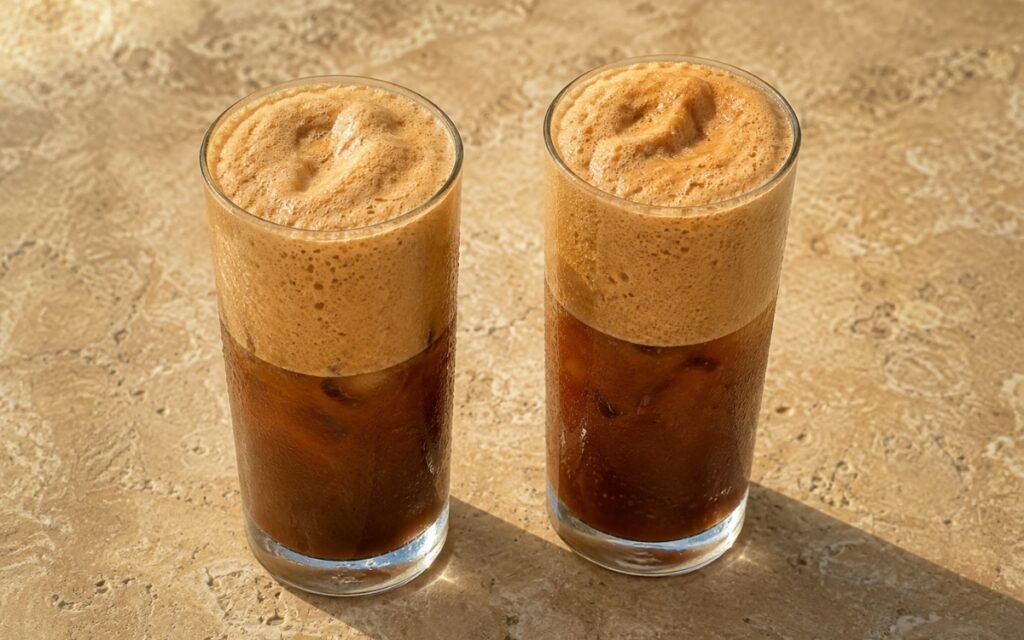
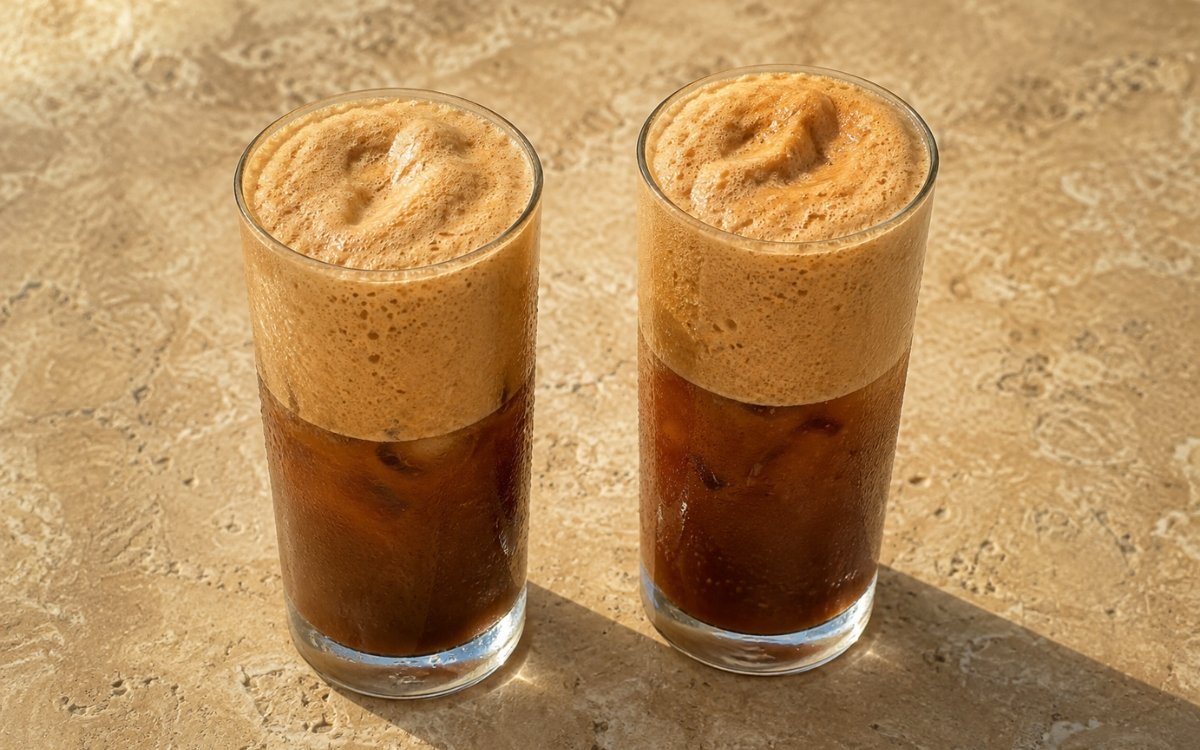
A classic Greek frappé made with instant coffee, sugar, a small amount of cold water, and ice, shaken hard until it forms a thick pale caramel foam. The lower part stays dark and strong, while the foam rises high and slightly uneven above the coffee — simple, iconic, and unmistakably Greek. Using only a small amount of water when shaking the instant coffee and sugar is the technique this whole drink depends on for its defining foam — that concentrated mixture is what allows real, dense foam to build before any final dilution happens, the same concentrate-then-dilute principle used elsewhere in this collection whenever a foam needs to develop its full structure before being loosened with additional liquid. Shaking genuinely hard for the full 20–30 seconds is what transforms that concentrated mixture into the thick, pale caramel-brown foam a proper frappé is known for — a weak or brief shake simply won’t produce it. Adding the final water slowly, poured down the side of the glass or through the ice rather than directly onto the foam, is what keeps that foam sitting visibly on top rather than collapsing into the drink. The payoff is a drink with genuine visual and structural drama — deep, dark coffee below a thick, dense, slightly uneven foam cap that fills the top third of the glass.
Prep Time : 5 min
Cook Time : 0 min
Servings : 2
5 min
0 min
2
Ingredients
For the Greek Frappé
• 8g instant coffee (about 4 tsp total; 2 tsp per serving) — this one on Amazon
• 16g granulated sugar (about 4 tsp total; this is medium-sweet / metrios style)
• 60ml cold water, for shaking
• 280–320ml cold water, for filling
• 8–10 ice cubes
Optional Classical Variations
• No sugar for sketos
• 32g sugar total for glykos, very sweet
• 40–60ml evaporated milk or cold milk, optional, only if making a milk version
This post may contain affiliate links. As an Amazon Associate I earn from qualifying purchases, at no additional cost to you.
Directions
- Build the Coffee Base
Add the instant coffee, sugar, and 60ml cold water to a shaker, drink mixer cup, or tall jar with a tight lid. Use 4g instant coffee, 8g sugar, and 30ml cold water per serving. The coffee and sugar need only a small amount of water at this stage. Too much water makes weak foam. The thick foam comes from concentrating the instant coffee mixture before dilution. Instant coffee’s own composition is specifically what allows this foaming to happen at all, and it works most effectively when the mixture stays concentrated — diluting it too early with the full water amount spreads that foaming potential too thin before the shake ever has a chance to build real structure. - Shake Hard
Shake very hard for 20–30 seconds, or use a handheld frappé mixer until the mixture becomes thick, pale caramel-brown, and foamy. The foam should expand significantly and look dense, slightly uneven, and real — not thin bubbles. This is the whole drink. If the foam is weak, the frappé is weak. Keep shaking until the mixture turns lighter and holds a thick head. Use instant coffee, not espresso and not brewed coffee. Greek frappé depends on the foaming power of instant coffee. Brewed coffee will not give the same classic foam. Instant coffee’s soluble compounds whip into a stable foam under vigorous, sustained agitation in a way that oils and compounds in freshly brewed or espresso coffee simply don’t replicate — this is a genuine chemical difference between the two, not just a matter of one being more traditional than the other. - Fill the Glasses
Divide the foam mixture evenly between 2 tall glasses. Add ice cubes to each glass. The foam should sit high in the glass before you add the final water. If it collapses immediately, the coffee was under-shaken or too diluted. Building the ice into the glass after the shaken foam mixture is already divided gives the foam a chance to establish its own structure in the glass before any further liquid is introduced, which is important given how much dilution is still to come in the next stage. - Add Cold Water
Slowly pour cold water into each glass until each drink reaches about 250ml total volume, including ice and foam. Pour down the side of the glass or through the ice to keep the foam sitting on top. The finished glass should show deep dark coffee underneath and a thick pale caramel foam head filling the top third. If everything turns uniformly light brown, you poured too aggressively or overmixed it. Directing the water down the glass’s side or through the ice, rather than pouring it straight onto the foam, is what protects that foam from being disturbed or forced to mix in — a direct pour onto the foam’s surface risks breaking it down and collapsing the very structure the hard shake just built. - Serve
Add one short straw to each glass and serve immediately. Do not garnish. A proper Greek frappé should be strong, cold, foamy, slightly bitter, and simple. The foam should stay visible while the dark coffee sits below it. This drink’s whole identity rests on that visible contrast between foam and coffee — serving without delay, and without any garnish that would distract from it, keeps the presentation as simple and iconic as the style calls for.
*Notes :
- Using only a small amount of water during the initial shaking stage is worth understanding as the technical foundation this entire drink is built on. The instant coffee and sugar mixture needs to stay genuinely concentrated to whip up into real, dense foam under vigorous shaking — diluted too early with the drink’s full water volume, that same mixture simply doesn’t have enough concentrated coffee solids present to build the thick, stable foam a proper frappé depends on. The final dilution is deliberately saved for after the foam is already fully formed.
- The specific requirement for instant coffee, rather than brewed coffee or espresso, reflects a real chemical distinction worth taking seriously rather than dismissing as tradition for its own sake. Instant coffee’s soluble compounds respond to vigorous agitation by forming a genuinely stable foam structure in a way that brewed coffee’s oils and dissolved compounds don’t replicate. Substituting brewed coffee, however carefully executed, simply produces a different drink — closer to a Freddo Espresso than a true Greek frappé.
- Directing the final water pour down the glass’s side or through the ice, rather than straight onto the foam’s surface, is a small technique detail that protects the drink’s entire presentation. That foam has just been built through genuinely vigorous shaking, and a direct, forceful pour onto its surface risks breaking down and collapsing that structure before the drink is even finished being assembled — the gentler pour path preserves what the hard shake just accomplished.
- The three classical sweetness variations named in this recipe — sketos (unsweetened), metrios (medium), and glykos (very sweet) — are worth understanding as genuinely different, established versions of the same drink rather than simple adjustments to taste. Notably, the sugar level also affects the foam’s own stability, with the sweeter glykos version producing a thicker, more stable foam than the sharper, less sweetened sketos — sugar itself contributes real structural support to the foam, beyond simply flavour.
Why This Recipe Works
This recipe works because the instant coffee and sugar are shaken with only a small, concentrated amount of water first, which is what allows the vigorous, sustained shaking that follows to build genuinely thick, dense foam.
Instant coffee’s specific chemistry is what makes that foaming possible in the first place — a substitution with brewed coffee or espresso simply wouldn’t produce the same result.
Adding the final water slowly, directed away from the foam’s surface, preserves that hard-won structure rather than collapsing it, and serving immediately, without garnish, keeps the drink’s simple, iconic presentation intact.
Ingredient Breakdown
Instant Coffee (Not Brewed or Espresso)
The critical ingredient — its specific soluble chemistry is what makes the classic thick, stable frappé foam possible.
Small Initial Water Amount
The foam-building technique — keeps the mixture genuinely concentrated so vigorous shaking can build real foam structure.
Sugar (Adjustable by Style)
The sweetening component — also contributes to the foam’s own stability, with sweeter versions producing thicker, more stable foam.
Vigorous, Sustained Shaking
The defining technique — a genuinely hard, full 20–30 second shake is what transforms the concentrated mixture into thick, dense foam.
Gently Directed Final Water Pour
The finishing technique — poured down the glass or through the ice to protect the foam’s structure from collapsing.
Flavor Structure Explained
This Greek frappé follows a layered balance model:
- Bold strong foundation (concentrated instant coffee base)
- Thick foamy body (whipped foam cap)
- Adjustable sweetness (sugar, per classical style)
- Cool refreshing structure (ice, cold water)
The concentrated instant coffee base provides the drink’s bold, unmistakably strong foundation, kept genuinely dark and undiluted at the bottom of the glass. Sugar, adjustable to taste across the classic sketos, metrios, and glykos styles, contributes both flavour and real structural support to the foam. The thick, whipped foam cap itself defines the drink’s entire character, sitting distinctly above the dark coffee. Ice and cold water keep the whole drink properly chilled and refreshing, diluting the concentrated base to its final, drinkable strength without disturbing the foam above it.
Common Mistakes to Avoid
- Using Too Much Water in the Initial Shake – This dilutes the mixture before it can foam properly. Always use only the small, specified amount of water at this stage.
- Using Brewed Coffee or Espresso Instead of Instant – This won’t produce the same foaming structure and results in a different drink entirely. Always use instant coffee specifically.
- Shaking Too Briefly or Too Weakly – This produces thin, unstable foam rather than the classic thick, dense cap. Always shake hard for the full 20–30 seconds.
- Pouring the Final Water Directly Onto the Foam – This can break down and collapse the foam’s structure. Always direct the pour down the glass’s side or through the ice.
- Garnishing the Drink – This adds unnecessary distraction to a drink meant to be simple and iconic. Always serve it plain, with just a straw.
Variations
Sketos (Unsweetened)
Omit the sugar entirely for a sharper, more bitter version, accepting a slightly less stable foam.
Glykos (Very Sweet)
Increase the sugar to 32g total for a sweeter drink with a thicker, more stable foam.
Frappé with Milk
Add 40–60ml evaporated milk or cold milk after the water for a creamier, milk-based variation.
Extra-Strong Version
Increase the instant coffee slightly for a bolder, more intense base beneath the foam.
Storage & Make-Ahead
This drink is meant to be shaken and served immediately; it does not hold or store well once assembled, since the foam degrades and the ice dilutes the drink quickly.
The dry instant coffee and sugar can be pre-measured ahead for convenience, but should only be combined with water and shaken right before serving.
Frequently Asked Questions
Why does the initial shaking stage use only a small amount of water?
The instant coffee and sugar mixture needs to stay genuinely concentrated to whip up into thick, dense foam under vigorous shaking. Diluted too early with the drink’s full water volume, there isn’t enough concentrated coffee present to build the classic frappé foam — the final dilution is deliberately saved for after that foam is already formed.
Why does this recipe specifically require instant coffee rather than brewed coffee or espresso?
Instant coffee’s soluble compounds respond to vigorous shaking by forming a genuinely stable foam in a way that brewed coffee’s oils and dissolved compounds don’t replicate. Substituting either produces a fundamentally different drink rather than a variation on the same one.
Why pour the final water down the glass’s side or through the ice instead of directly?
A direct pour onto the foam’s surface risks breaking down and collapsing the structure the hard shake just built. Directing the water away from the foam protects that structure so it stays visible on top of the drink.
Why does the sugar level affect the foam’s stability, not just its sweetness?
Sugar contributes real structural support to the foam beyond flavour alone, which is why the sweeter glykos version produces a noticeably thicker, more stable foam than the sharper, less sweetened sketos.
Are there other shaken or foam-based Greek coffee drinks worth trying?
Freddo Espresso and Freddo Cappuccino both use a related hard-shake technique, though built on espresso rather than instant coffee. Dalgona Whipped Coffee is another whipped-coffee-foam style worth exploring, and Cold Brew Coffee offers a completely different, slow-extracted approach to iced coffee.
Nutrition Facts
( per serving )
Calories
~35 kcal
Protein
0 g
Fat
0 g
Carbs
8 g
Calories
~35 kcal
Protein
0 g
Fat
0 g
Carbs
8 g
Related Recipes
Related Recipes

Cold Brew Coffee
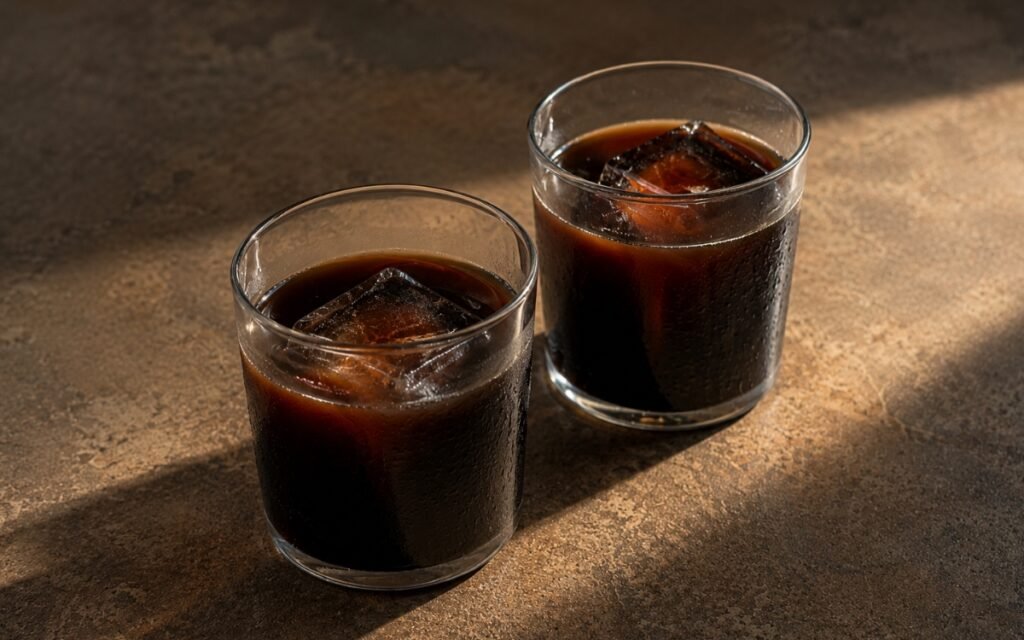
Coarsely ground coffee steeped in cold water for 12–16 hours, strained twice for clarity, and served black over a single large ice cube.
Iced Spanish Latte with Condensed Milk
Sweetened condensed milk at the base, cold milk and ice in the middle, and freshly brewed espresso poured over the top for a rich, layered latte.
Espresso Tonic Mocktail
Cooled fresh espresso gently layered over chilled, fully sparkling tonic water for a crisp, bitter, minimal drink.


You might also like
You might also like
BLT Sandwich
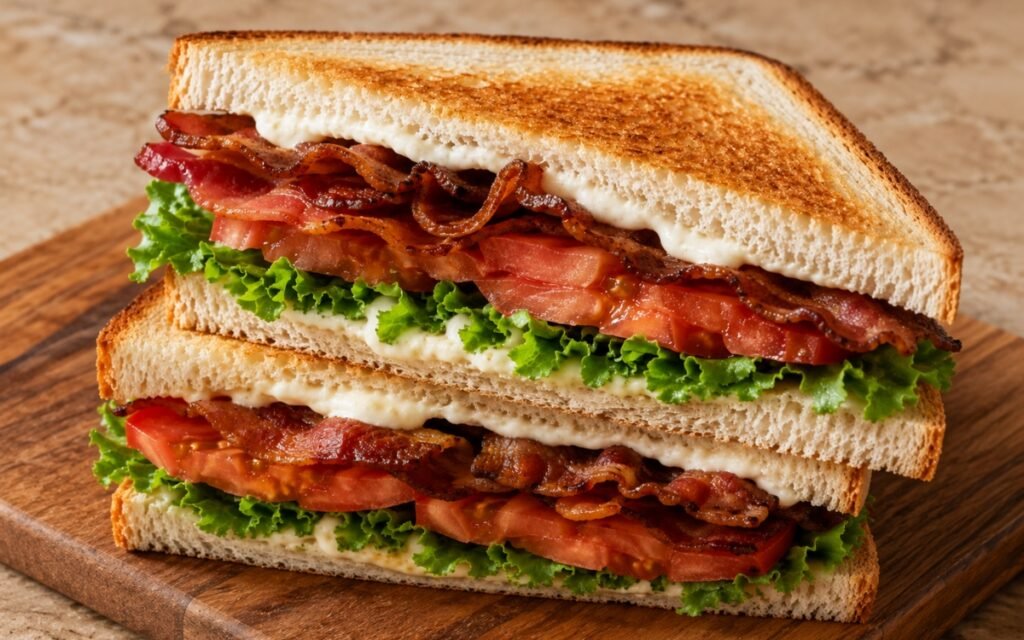
Toasted white bread with crispy bacon, ripe tomato, crisp lettuce, and a generous layer of mayonnaise.
Raspberry Iced Black Tea
Black tea at 90–95°C for 2½–3 minutes, lemon peel infused cold, raspberries blended and firmly strained — combined and tasted, chilled. Bright and tea-forward.
Passion Fruit Lime Pitcher Drink
Gently mashed passion fruit pulp combined with fresh lime juice and sliced limes for a bright golden, tropical, double-lime pitcher drink.


Greek Frappé
Ingredients
Method
- Add the instant coffee, sugar, and 60ml cold water to a shaker, drink mixer cup, or tall jar with a tight lid. Use 4g instant coffee, 8g sugar, and 30ml cold water per serving. The coffee and sugar need only a small amount of water at this stage. Too much water makes weak foam. The thick foam comes from concentrating the instant coffee mixture before dilution. Instant coffee’s own composition is specifically what allows this foaming to happen at all, and it works most effectively when the mixture stays concentrated — diluting it too early with the full water amount spreads that foaming potential too thin before the shake ever has a chance to build real structure.
- Shake very hard for 20–30 seconds, or use a handheld frappé mixer until the mixture becomes thick, pale caramel-brown, and foamy. The foam should expand significantly and look dense, slightly uneven, and real — not thin bubbles. This is the whole drink. If the foam is weak, the frappé is weak. Keep shaking until the mixture turns lighter and holds a thick head. Use instant coffee, not espresso and not brewed coffee. Greek frappé depends on the foaming power of instant coffee. Brewed coffee will not give the same classic foam. Instant coffee’s soluble compounds whip into a stable foam under vigorous, sustained agitation in a way that oils and compounds in freshly brewed or espresso coffee simply don’t replicate — this is a genuine chemical difference between the two, not just a matter of one being more traditional than the other.
- Divide the foam mixture evenly between 2 tall glasses. Add ice cubes to each glass. The foam should sit high in the glass before you add the final water. If it collapses immediately, the coffee was under-shaken or too diluted. Building the ice into the glass after the shaken foam mixture is already divided gives the foam a chance to establish its own structure in the glass before any further liquid is introduced, which is important given how much dilution is still to come in the next stage.
- Slowly pour cold water into each glass until each drink reaches about 250ml total volume, including ice and foam. Pour down the side of the glass or through the ice to keep the foam sitting on top. The finished glass should show deep dark coffee underneath and a thick pale caramel foam head filling the top third. If everything turns uniformly light brown, you poured too aggressively or overmixed it. Directing the water down the glass’s side or through the ice, rather than pouring it straight onto the foam, is what protects that foam from being disturbed or forced to mix in — a direct pour onto the foam’s surface risks breaking it down and collapsing the very structure the hard shake just built.
- Add one short straw to each glass and serve immediately. Do not garnish. A proper Greek frappé should be strong, cold, foamy, slightly bitter, and simple. The foam should stay visible while the dark coffee sits below it. This drink’s whole identity rests on that visible contrast between foam and coffee — serving without delay, and without any garnish that would distract from it, keeps the presentation as simple and iconic as the style calls for.