
Cold Brew Coffee
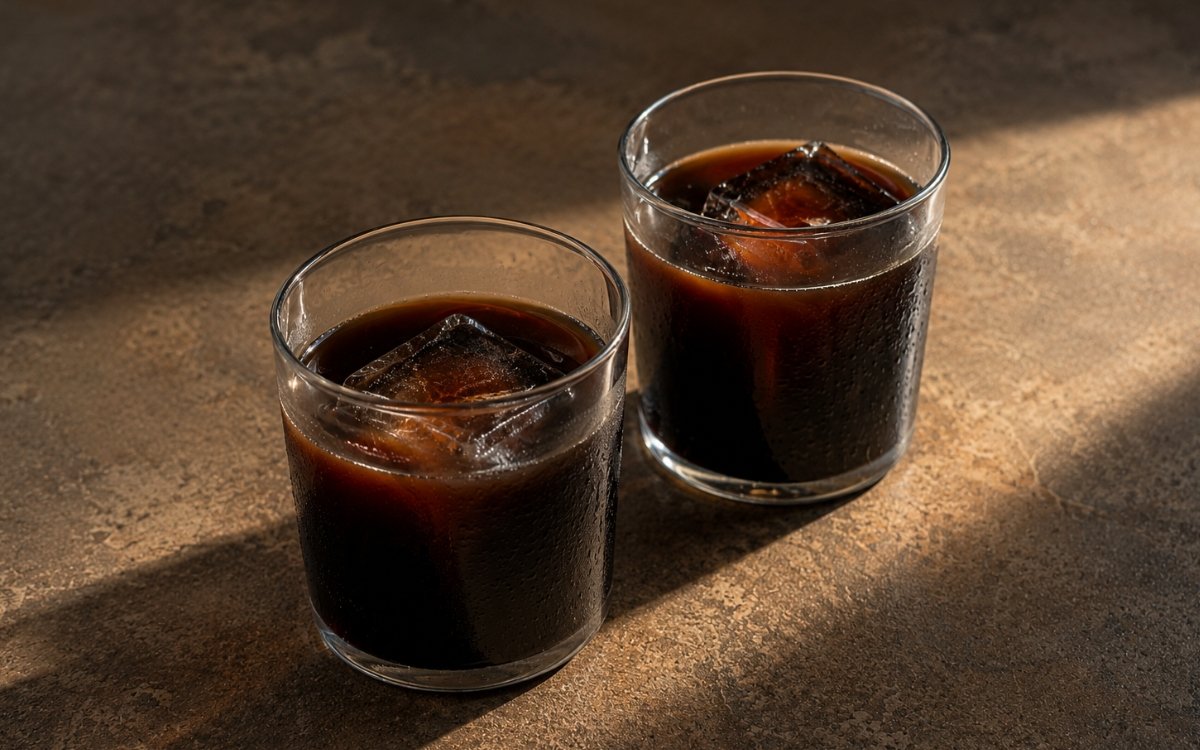
A classic cold brew made by steeping coarsely ground coffee in cold water for an extended period, then straining it until smooth, clean, and deeply flavoured. Served simply over a single large ice cube, it should be intensely dark, low in bitterness, and naturally smooth without milk, garnish, or extra flavouring. Using a genuinely coarse grind, rather than a fine espresso-style grind, is the technique this whole brew depends on — fine grounds over-extract during the long steep and turn the coffee muddy and difficult to filter cleanly, the same coarse-grind principle used elsewhere in this collection whenever an extended cold extraction needs to stay smooth rather than bitter. Saturating every ground fully at the very start, with no dry pockets remaining, is what protects the brew from uneven extraction that would leave parts of it weak and other parts muddy. Straining in two separate stages — a gentle first pass, then a finer final filter — is what produces the clear, sediment-free texture this cold brew is known for. The payoff is a coffee concentrate that’s intensely dark, naturally smooth, low in bitterness, and clean enough to serve completely black over a single large cube.

Prep Time : 10 min
Steeping Time : 12–16 hr
Servings : 4
10 min
12–16 hr
4
Ingredients
For the Cold Brew
• 150g coarsely ground coffee
• 1.2 litres cold filtered water
For Serving
• 4 large clear ice cubes
This post may contain affiliate links. As an Amazon Associate I earn from qualifying purchases, at no additional cost to you.
Directions
- Combine the Coffee and Water
Place the coarsely ground coffee in a large jar, jug, or non-reactive container. Pour over the cold filtered water. Stir thoroughly so all of the grounds are fully saturated and no dry pockets remain. Every ground should be wetted at the beginning. If dry clumps remain, extraction will be uneven and the finished brew will taste weak in some areas and muddy in others. A thorough initial stir is worth genuinely confirming rather than assuming — any grounds left clumped together and unsaturated at this stage won’t extract at the same rate as the rest of the batch, and that inconsistency shows up directly in the finished cup as an uneven, unpredictable flavour. - Steep the Cold Brew
Cover the container and let the coffee steep for 12–16 hours in the refrigerator or at a cool room temperature. The brew should become very dark and smell smooth, rich, and chocolatey rather than sharp or acidic. Shorter steeping gives a thinner, weaker result. Much longer steeping can flatten the flavour and pull out woody bitterness. Use a coarse grind, not fine espresso grind. Fine coffee creates sludge, over-extracts, and makes filtering unnecessarily difficult. Cold water extracts coffee’s compounds far more slowly than hot water does, which is exactly why this steep needs many hours rather than minutes — that slow, patient extraction is what pulls out the smooth, chocolatey notes cold brew is known for while leaving behind more of the sharp acidity and bitterness a hot brew extracts much faster. - First Strain
Pour the mixture through a fine mesh sieve lined with cheesecloth, a clean nut milk bag, or a thin clean kitchen cloth into a clean jug or bowl. Let it drain naturally first, then gently press only if needed. The first strain should remove the bulk of the grounds without forcing too much sediment through. Pressing too aggressively pushes fine particles into the brew and makes it cloudy. Letting the liquid drain naturally under its own weight, rather than pressing hard from the start, is what keeps the finer coffee particles trapped in the cloth or sieve rather than being forced through into the liquid — any aggressive pressing at this stage undoes much of the clarity this two-stage straining process is built to achieve. - Final Filter
Strain the coffee again through a paper coffee filter or a very fine clean cloth into a clean serving bottle or jug. This second filtration is what gives the finished cold brew a cleaner, smoother texture. The finished coffee should look dark and clear, not gritty or muddy. Some patience here makes a real difference in the final drink. This second, finer pass catches the small remaining particles that the first strain’s coarser mesh inevitably let through — skipping this step leaves a noticeably grittier texture in the finished coffee even if the first strain was handled carefully. - Chill and Store
Refrigerate the strained cold brew until fully cold. It can be kept covered in the refrigerator for up to 4 days. Cold brew should be fully chilled before serving. If served only cool rather than properly cold, it tastes flatter and less crisp. Genuine refrigerator-cold temperature sharpens the coffee’s clean, smooth flavour in a way that merely cool room-temperature coffee doesn’t — the difference is noticeable enough that this step is worth the wait rather than serving straight after straining. - Serve
Place 1 large clear ice cube in each glass. Pour the cold brew over the ice and serve immediately. For a classic straight cold brew presentation, serve it black with no milk, no garnish, and no dilution beyond the ice. The drink should be very deep brown to near-black, smooth, and clean-tasting, with the large cube chilling it without watering it down too quickly. A single large cube’s low surface-area-to-volume ratio protects the cold brew’s concentration and clarity through the time it takes to drink — several smaller cubes with the same total volume would dilute the coffee considerably faster.
*Notes :
- The coarse grind requirement is worth understanding as a genuine structural necessity for this method rather than a minor preference. Fine grounds, suited to fast, hot extraction methods like espresso, behave very differently across a 12–16 hour cold steep — that extended contact time combined with fine particles’ greater surface area produces significant over-extraction, pulling out harsh, muddy, over-bitter compounds that a coarse grind’s slower, gentler extraction avoids entirely. Fine grounds also clog filters and cloths far more readily, making the straining stages considerably harder to execute cleanly.
- The two-stage straining process — a gentle first pass followed by a finer final filter — deserves to be treated as a genuine sequence rather than a single step repeated. The first strain’s job is removing the bulk of the spent grounds without forcing fine sediment through, which is why gentle, natural draining matters more than aggressive pressing at that stage. The second, finer filtration then catches whatever smaller particles made it past the first pass, producing the genuinely clear, sediment-free result this method is capable of when both stages are respected.
- Steeping time is worth watching within its specified range rather than treated as flexible in either direction. Too short a steep simply hasn’t given the cold water enough time to extract coffee’s flavour compounds fully, producing something thin and underdeveloped. Too long a steep, on the other hand, genuinely works against the brew — extended time well past the recommended window begins extracting the same harsher, woody bitterness a shorter, properly timed steep avoids.
- The single large ice cube, used here for the same reason it appears throughout other iced coffee drinks in this collection, protects the cold brew’s concentration specifically because of its lower surface-area-to-volume ratio compared to several smaller cubes holding the same total volume. Given how much careful, patient technique goes into building this concentrate’s flavour and clarity, protecting it from rapid dilution at the final serving stage is worth the same attention as every earlier step.
Why This Recipe Works
This recipe works because a genuinely coarse grind, fully saturated at the start, extracts slowly and gently over its long steep, pulling out smooth, chocolatey flavour rather than the harsh bitterness a fine grind or an over-extended steep would produce.
Straining in two distinct stages — a gentle natural drain first, then a finer final filter — is what produces a genuinely clear, sediment-free result rather than a gritty or muddy one.
Chilling the strained coffee fully before serving sharpens its clean flavour, and serving it over a single large ice cube protects that carefully built concentration from diluting too quickly.
Ingredient Breakdown
Coarsely Ground Coffee
The critical grind specification — coarse particles extract slowly and gently over the long steep, avoiding the over-extraction fine grounds would cause.
Cold Filtered Water
The extraction medium — its slow, gentle action over many hours is what pulls out cold brew’s characteristic smooth, low-bitterness flavour.
Full Initial Saturation
The preparation step — ensures every ground extracts evenly, avoiding the weak-and-muddy inconsistency dry pockets would cause.
Two-Stage Straining
The clarity technique — a gentle first pass followed by a finer final filter, together producing a genuinely clear, sediment-free brew.
Single Large Ice Cube
The serving detail — its low surface-area-to-volume ratio protects the finished coffee’s concentration from rapid dilution.
Flavor Structure Explained
This cold brew follows a layered balance model:
- Deep smooth foundation (slow-extracted coffee concentrate)
- Rich chocolatey depth (extended cold steep)
- Low natural bitterness (coarse grind, controlled timing)
- Clean, sediment-free finish (two-stage straining)
The slow, cold extraction defines this coffee’s deep, smooth foundation, built patiently over many hours rather than minutes. That extended steep pulls out genuinely rich, chocolatey depth that a hot brewing method wouldn’t produce in the same way. A coarse grind and carefully controlled steeping time together keep natural bitterness low throughout. Two-stage straining finishes the coffee with a clean, sediment-free texture, letting the concentrate be served completely black over ice without anything to distract from its own smooth character.
Common Mistakes to Avoid
- Using a Fine Grind Instead of Coarse – This over-extracts during the long steep and produces a muddy, harsh brew that’s also difficult to filter cleanly. Always use a coarse, French-press-style grind.
- Leaving Dry Pockets of Unsaturated Grounds – This produces uneven extraction, with some areas tasting weak and others muddy. Always stir thoroughly at the start to fully saturate every ground.
- Steeping Outside the Recommended Time Range – Too short leaves the coffee thin and underdeveloped; too long extracts unwanted woody bitterness. Always steep within the specified 12–16 hours.
- Pressing Too Hard During the First Strain – This forces fine sediment through and clouds the finished coffee. Always let it drain naturally first, pressing only gently if needed.
- Skipping the Second, Finer Filtration – This leaves a gritty texture even if the first strain was handled carefully. Always filter a second time through a finer filter or cloth.
Variations
Concentrated Version for Dilution
Reduce the water to create a stronger concentrate meant to be diluted with water or milk before serving, rather than drunk directly.
Room-Temperature Steep Version
Steep at a cool room temperature instead of the refrigerator for a slightly faster, more active extraction, watching the timing closely within the same range.
Nitro-Style Cold Brew Coffee
Pour the finished, chilled cold brew through a fine strainer while vigorously shaking or aerating it just before serving for a creamier, cascading texture without any actual nitrogen infusion equipment.
Flavoured Steep Version
Add a cinnamon stick or a few cardamom pods to the grounds before steeping for a subtly spiced variation on the same classic method.
Storage & Make-Ahead
The finished, strained cold brew can be refrigerated in a covered container for up to 4 days, with flavour staying stable throughout that window.
Cold brew should always be diluted, if desired, with a splash of cold water added just before serving rather than during the steeping process itself.
This coffee is not suitable for freezing, as its clean, smooth character changes considerably once thawed.
Frequently Asked Questions
Why does this recipe specifically require a coarse grind rather than a fine one?
Fine grounds, suited to fast extraction methods, behave very differently over a 12–16 hour cold steep — their greater surface area produces significant over-extraction, pulling out harsh, muddy compounds a coarse grind’s slower extraction avoids. Fine grounds also make straining considerably more difficult.
Why does every ground need to be fully saturated at the very start?
Dry, unsaturated clumps extract at a different rate than the rest of the batch, producing uneven flavour — some parts of the finished brew tasting weak, others tasting muddy. Thorough initial stirring prevents that inconsistency.
Why does the coffee need to be strained twice rather than just once?
The first, gentle strain removes the bulk of the spent grounds without forcing sediment through. The second, finer filtration then catches the smaller particles that made it past the first pass, producing a genuinely clear result that a single straining pass wouldn’t achieve.
Why does the cold brew need to be fully chilled rather than served just cool?
Genuine refrigerator-cold temperature sharpens the coffee’s clean, smooth flavour in a way that merely cool, room-temperature coffee doesn’t. Serving it before it’s fully chilled produces a noticeably flatter, less crisp result.
Are there other cold brew or flavoured iced coffee drinks worth trying?
Vanilla Sweet Cream Cold Brew, Cold Foam Iced Coffee, Honey Almondmilk Cold Brew, and Toasted Coconut Cold Brew all build on this same slow-extracted cold brew base, each adding its own flavoured cream, foam, or syrup for a different direction on the same classic concentrate.
Nutrition Facts
( per serving )
Calories
~5 kcal
Protein
0 g
Fat
0 g
Carbs
0 g
Calories
~5 kcal
Protein
0 g
Fat
0 g
Carbs
0 g
Related Recipes
Related Recipes

Lavender Iced Latte
Precisely steeped lavender syrup, cold milk, and ice topped with freshly brewed espresso, finished with a thin foam layer and lavender sprig.
White Chocolate Iced Mocha
Gently melted white chocolate sauce combined with hot espresso, poured over ice and cold milk for a creamy, pale caramel-cream mocha.
Iced Hazelnut Latte
Hazelnut syrup, cold milk, and ice topped with freshly brewed espresso, finished with a thin foam layer and light caramel drizzle.



You might also like
You might also like
Strawberry Tarragon White Iced Tea
Properly brewed white tea combined with cold-macerated fresh strawberries and a gentle cold tarragon infusion for a light, elegant iced tea.
Cucumber Lemon Balm Green Iced Tea
Properly brewed green tea combined with strained cucumber juice and a gentle cold lemon balm infusion for a very pale, delicate, garden-fresh iced tea.
Blackberry Sage Iced Black Tea
Properly brewed black tea combined with cold-macerated fresh blackberries and a gentle cold sage infusion for a dark, berry-rich iced tea.



Cold Brew Coffee
Ingredients
Method
- Place the coarsely ground coffee in a large jar, jug, or non-reactive container. Pour over the cold filtered water. Stir thoroughly so all of the grounds are fully saturated and no dry pockets remain. Every ground should be wetted at the beginning. If dry clumps remain, extraction will be uneven and the finished brew will taste weak in some areas and muddy in others. A thorough initial stir is worth genuinely confirming rather than assuming — any grounds left clumped together and unsaturated at this stage won’t extract at the same rate as the rest of the batch, and that inconsistency shows up directly in the finished cup as an uneven, unpredictable flavour.
- Cover the container and let the coffee steep for 12–16 hours in the refrigerator or at a cool room temperature. The brew should become very dark and smell smooth, rich, and chocolatey rather than sharp or acidic. Shorter steeping gives a thinner, weaker result. Much longer steeping can flatten the flavour and pull out woody bitterness. Use a coarse grind, not fine espresso grind. Fine coffee creates sludge, over-extracts, and makes filtering unnecessarily difficult. Cold water extracts coffee’s compounds far more slowly than hot water does, which is exactly why this steep needs many hours rather than minutes — that slow, patient extraction is what pulls out the smooth, chocolatey notes cold brew is known for while leaving behind more of the sharp acidity and bitterness a hot brew extracts much faster.
- Pour the mixture through a fine mesh sieve lined with cheesecloth, a clean nut milk bag, or a thin clean kitchen cloth into a clean jug or bowl. Let it drain naturally first, then gently press only if needed. The first strain should remove the bulk of the grounds without forcing too much sediment through. Pressing too aggressively pushes fine particles into the brew and makes it cloudy. Letting the liquid drain naturally under its own weight, rather than pressing hard from the start, is what keeps the finer coffee particles trapped in the cloth or sieve rather than being forced through into the liquid — any aggressive pressing at this stage undoes much of the clarity this two-stage straining process is built to achieve.
- Strain the coffee again through a paper coffee filter or a very fine clean cloth into a clean serving bottle or jug. This second filtration is what gives the finished cold brew a cleaner, smoother texture. The finished coffee should look dark and clear, not gritty or muddy. Some patience here makes a real difference in the final drink. This second, finer pass catches the small remaining particles that the first strain’s coarser mesh inevitably let through — skipping this step leaves a noticeably grittier texture in the finished coffee even if the first strain was handled carefully.
- Refrigerate the strained cold brew until fully cold. It can be kept covered in the refrigerator for up to 4 days. Cold brew should be fully chilled before serving. If served only cool rather than properly cold, it tastes flatter and less crisp. Genuine refrigerator-cold temperature sharpens the coffee’s clean, smooth flavour in a way that merely cool room-temperature coffee doesn’t — the difference is noticeable enough that this step is worth the wait rather than serving straight after straining.
- Place 1 large clear ice cube in each glass. Pour the cold brew over the ice and serve immediately. For a classic straight cold brew presentation, serve it black with no milk, no garnish, and no dilution beyond the ice. The drink should be very deep brown to near-black, smooth, and clean-tasting, with the large cube chilling it without watering it down too quickly. A single large cube’s low surface-area-to-volume ratio protects the cold brew’s concentration and clarity through the time it takes to drink — several smaller cubes with the same total volume would dilute the coffee considerably faster.