
Iced Mocha
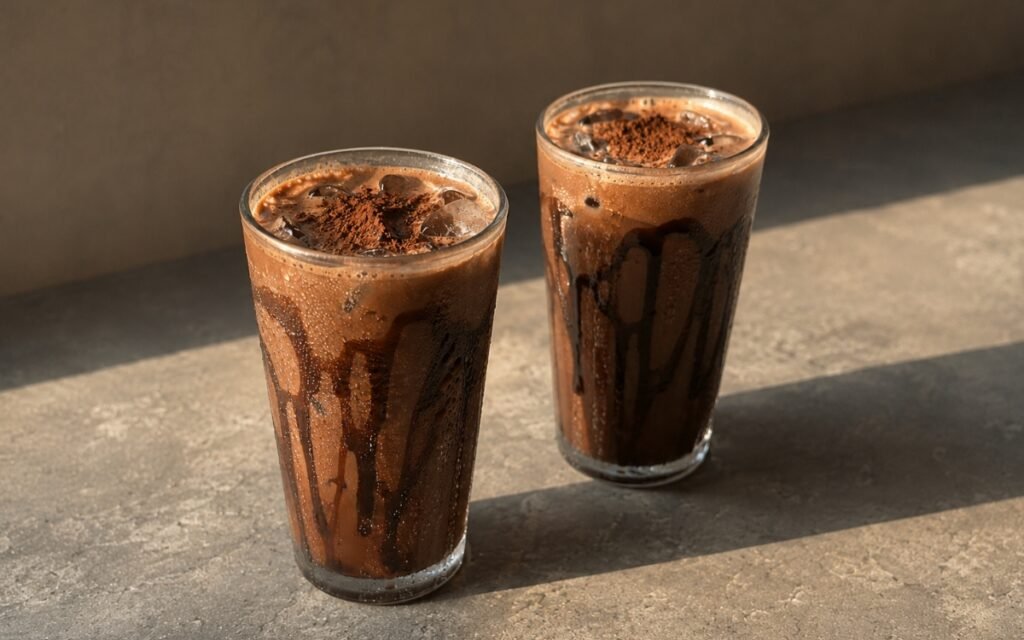
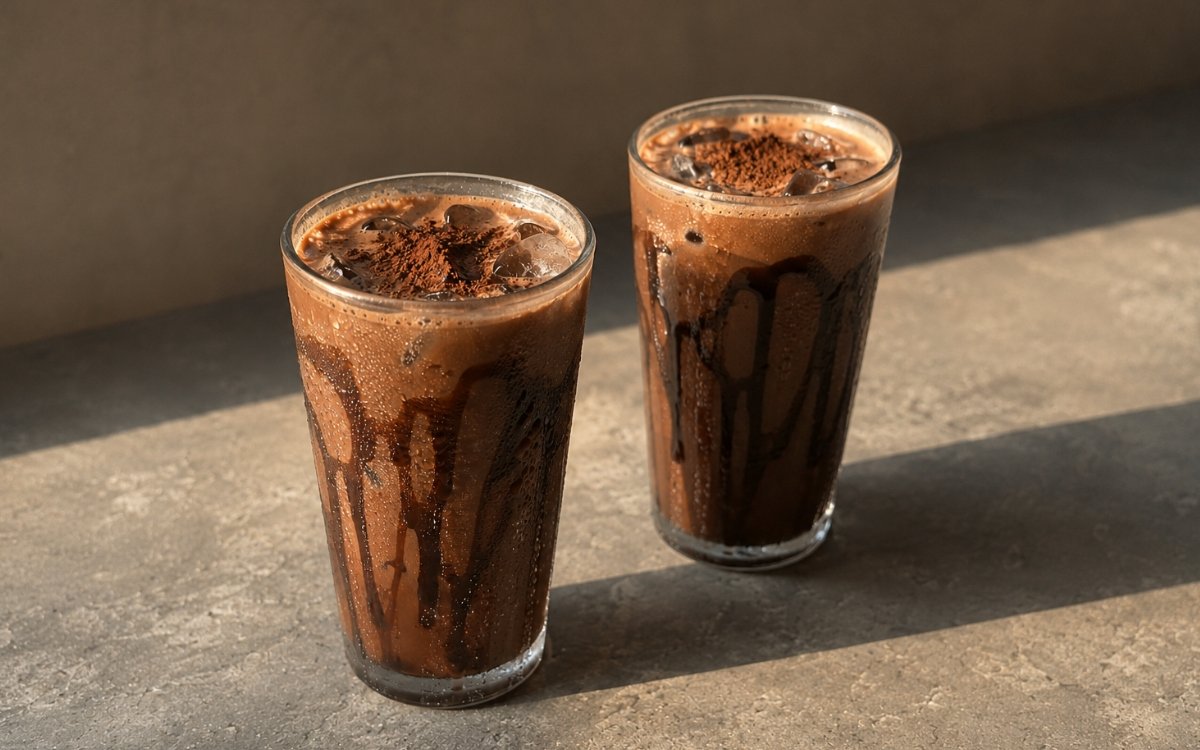
A classic iced mocha made with espresso, chocolate sauce, cold milk, and ice, finished with a very light chocolate milk foam and a dusting of cocoa powder. Darker and richer than an iced latte, with visible chocolate swirls on the glass and a deep chocolate-coffee colour throughout. Combining the chocolate sauce into the espresso while it’s still hot, rather than adding it to cold milk later, is the technique this whole drink depends on for a genuinely unified base — hot espresso dissolves and loosens the sauce cleanly, the same combine-while-hot principle used elsewhere in this collection whenever a rich sauce needs to fully integrate rather than sitting as separate streaks. Drizzling extra chocolate sauce around the inside of the empty glass first is what keeps that sauce visible against the glass rather than pooling invisibly at the bottom. Keeping the final milk foam genuinely thin rather than thick and cappuccino-style is what preserves this drink’s specific character as an iced mocha rather than a chocolate cappuccino. The payoff is a drink with three clear visual cues — deep, dark chocolate-coffee colour throughout, visible chocolate swirls clinging to the glass, and a thin, dark, cocoa-dusted foam layer on top.
Prep Time : 8 min
Cook Time : 5 min
Servings : 2
8 min
5 min
2
Ingredients
For the Chocolate Sauce
• 25g unsweetened cocoa powder — this one on Amazon
• 50g granulated sugar
• 60ml water
• 20g dark chocolate, finely chopped — this one on Amazon
• 1 small pinch fine sea salt
• ½ tsp vanilla extract — this one on Amazon
For the Iced Mocha
• 120ml espresso, freshly brewed (4 standard shots total, counting 1 shot = 30ml)
• 280ml cold whole milk — this one on Amazon
• 8–10 ice cubes
For Finishing
• 1 tsp chocolate sauce, for the foam
• 1 tsp unsweetened cocoa powder, for dusting
This post may contain affiliate links. As an Amazon Associate I earn from qualifying purchases, at no additional cost to you.
Directions
- Make the Chocolate Sauce
In a small saucepan, whisk together the cocoa powder, sugar, and water. Place over medium heat and stir until smooth and fully dissolved. Add the chopped dark chocolate and the pinch of salt. Stir until melted and glossy, then remove from the heat and stir in the vanilla. Let the sauce cool slightly. The sauce should be smooth, shiny, and pourable — not grainy and not thick like fudge. If it is too thick, it will sit in clumps at the bottom of the drink instead of blending properly. Building the sauce from cocoa powder dissolved in warm water first, then finishing with chopped dark chocolate melted into that base, produces a considerably smoother, more pourable result than melting chocolate alone — the cocoa-and-sugar base carries enough liquid to keep the whole sauce fluid rather than seizing into something thick. - Brew the Espresso
Brew 120ml espresso total, equal to 4 standard 30ml shots. While still hot, stir 40ml of the chocolate sauce into the espresso until fully combined. The hot espresso should dissolve and loosen the chocolate sauce into a unified dark mocha base. If the sauce is added only to cold milk later, it blends less cleanly. Combine the chocolate and espresso while the coffee is still hot. That is what gives the drink a smooth base rather than separate chocolate streaks floating through it. Hot espresso has considerably more capacity to loosen and fully dissolve the sauce than cold milk would — stirring the chocolate in at this stage, while the temperature and liquid are working in the sauce’s favour, is what produces a genuinely unified, streak-free mocha base. - Build the Drink
Divide the mocha-espresso mixture evenly between the 2 glasses. Pour about 120ml cold milk into each glass, holding back roughly 40ml milk total for the top foam. Stir each glass briefly so the milk and mocha base combine. The drink should become a deep chocolate-brown colour, clearly darker than a regular iced latte. If it looks too pale, the coffee-chocolate base is too weak or there is too much milk. Holding back a small, specific amount of milk at this stage rather than using it all in the main pour is what makes the separate, lightly frothed foam topping possible in the next step — that reserved portion is deliberately set aside for a different job than the rest of the milk. - Make the Thin Chocolate Milk Foam
Combine the reserved cold milk with 1 tsp chocolate sauce. Froth lightly using a handheld frother, small milk frother, or by shaking briefly in a sealed jar. You only want a thin, light foam, not a thick cappuccino cap. The foam should be soft, lightly aerated, and chocolate-tinted, with fine bubbles and a thin spoonable texture. If it is thick and dry, it is over-frothed for an iced mocha. This restrained, brief frothing is a genuinely different target than the thick, dry foam a cappuccino calls for — stopping well short of that fuller aeration is what keeps this foam reading as a light finishing touch rather than a substantial topping layer. - Finish and Serve
Spoon or pour the thin chocolate milk foam over the top of each drink. Dust lightly with cocoa powder and serve immediately. The final drink should show three clear visual cues: deep dark chocolate-coffee colour, visible chocolate swirls on the inside of the glass, and a thin dark chocolate milk foam with a light cocoa dusting on top. Serving without delay is what preserves all three of those visual cues together — the foam’s light texture softens and the chocolate swirls on the glass begin to blur into the drink the longer it sits.
*Notes :
- Building the chocolate sauce from a cocoa-and-sugar base dissolved in warm water, then finishing with melted dark chocolate, is worth understanding as a deliberate structural choice rather than an unnecessarily complicated method. Melting chopped chocolate on its own, without that liquid base already established, risks a thicker, less pourable result that behaves more like ganache than a proper drizzling sauce. The cocoa-water base carries enough liquid throughout to keep the finished sauce genuinely fluid even once the chocolate is melted into it.
- Combining the chocolate sauce with the espresso while it’s still hot, rather than waiting to mix everything with cold milk later, is the single technique most responsible for this drink’s smooth, unified base. Hot espresso has real capacity to loosen and fully dissolve the sauce on contact; cold milk added afterward doesn’t have that same effect, and sauce combined only at that later, cooler stage tends to leave visible separate streaks rather than blending into one cohesive mocha colour and flavour throughout.
- The distinction between this drink’s thin, lightly aerated foam and a cappuccino’s thick, dry cap deserves the same attention given to it in this collection’s other foam-topped drinks. An iced mocha’s foam exists as a light finishing touch — soft, fine-bubbled, and thin enough to spoon easily — rather than a substantial structural layer. Over-frothing past that point pushes the drink toward a different format entirely, working against the specific, more restrained finish an iced mocha calls for.
- Reserving a specific, modest amount of milk for the foam rather than using all of it in the main pour is a small planning detail worth getting right. That reserved portion needs to be genuinely available and cold when the foaming stage arrives — building the drink without holding any milk back would leave nothing to work with for the separate, lightly frothed topping this drink’s final presentation depends on.
Why This Recipe Works
This recipe works because the chocolate sauce is built with real liquid body from its cocoa-and-water base, keeping it pourable rather than thick and clumpy. Combining that sauce into the espresso while it’s still hot is what produces a genuinely unified, streak-free mocha base rather than separate chocolate pockets.
Finally, late carbonation adds lift and freshness that sharpen perception of acidity and aromaDrizzling extra sauce into the dry glass first keeps it visible against the walls, and holding back a specific portion of milk for a separately, lightly frothed foam topping — kept deliberately thin rather than cappuccino-thick — preserves this drink’s specific identity. Serving immediately keeps all three of the drink’s defining visual cues intact together.. The result is a mocktail that feels festive and adult, with clean balance and refreshing drinkability even in warm weather.
Ingredient Breakdown
Cocoa-and-Water-Based Chocolate Sauce
The sauce’s foundation — built with enough liquid body to stay genuinely pourable even once dark chocolate is melted into it.
Sauce Combined With Hot Espresso
The critical integration technique — hot coffee dissolves and loosens the sauce far more effectively than cold milk would, producing a unified base.
Chocolate Drizzle in the Dry Glass
The visual accent — applied before any liquid is added so it clings visibly to the glass walls rather than disappearing.
Reserved Milk for the Foam
The planning detail — a specific portion held back from the main pour, kept available and cold for the separate foaming stage.
Thin, Lightly Aerated Chocolate Foam
The finishing layer — frothed only briefly, staying soft and spoonable rather than thick and cappuccino-style.
Flavor Structure Explained
This iced mocha follows a layered balance model:
- Deep chocolate-coffee foundation (chocolate sauce combined with hot espresso)
- Smooth creamy body (cold whole milk)
- Cool refreshing structure (ice)
- Light aromatic finish (thin chocolate foam, cocoa dusting)
The chocolate sauce and hot espresso, combined into one unified base, define this drink with deep, rich, genuinely chocolate-forward coffee flavour. Cold whole milk adds smooth, creamy body that carries that mocha base without diluting its intensity. Generous ice keeps the whole drink properly cold and refreshing. A thin, lightly aerated chocolate milk foam and a final dusting of cocoa powder finish the drink with a light, aromatic touch that echoes the chocolate throughout without adding another heavy layer.
Common Mistakes to Avoid
- Making the Chocolate Sauce Too Thick – A ganache-like texture sits in clumps rather than blending into the drink. Always keep it smooth, glossy, and genuinely pourable.
- Adding the Chocolate Sauce Only to Cold Milk – This produces separate chocolate streaks rather than a unified base. Always combine it with the hot espresso first.
- Drizzling the Glass After It’s Already Filled – This causes the sauce to slide down and disappear rather than staying visible. Always drizzle the empty, dry glass first.
- Over-Frothing the Top Milk – Thick, dry foam pushes the drink toward a cappuccino-style finish rather than an iced mocha’s thin topping. Always keep it light and lightly aerated.
- Letting the Drink Sit Before Serving – The chocolate swirls blur and the foam softens the longer it sits. Always serve immediately.
Variations
White Chocolate Version
Substitute white chocolate for the dark chocolate in the sauce for a sweeter, milkier variation.
Extra-Rich Version
Increase the chocolate sauce stirred into the espresso for a darker, more intensely chocolate-forward base.
Oat Milk Version
Substitute a barista-style oat milk for the dairy milk, following the identical build and light foaming technique.
Mint Mocha Version
Add a drop of peppermint extract to the chocolate sauce for a classic mint-mocha variation.
Storage & Make-Ahead
The chocolate sauce can be made ahead and refrigerated in a sealed jar for up to 2 weeks; warm slightly or stir well before using if it thickens.
This drink is meant to be built and served fresh; it does not hold or store well once assembled, since the ice will melt and the foam will settle over time.
Espresso should be brewed just before combining with the chocolate sauce, since its flavour and ability to properly loosen the sauce both fade as it cools.
Frequently Asked Questions
Why does the chocolate sauce need to be combined with the hot espresso rather than added later with the cold milk?
Hot espresso has real capacity to loosen and fully dissolve the sauce on contact, producing a smooth, unified mocha base. Sauce added only to cold milk afterward doesn’t blend as cleanly, often leaving visible separate chocolate streaks rather than one cohesive colour and flavour.
Why does the chocolate drizzle go into the glass before anything else is added?
Applied to a dry, empty glass, the sauce clings directly to the walls and stays visible as a decorative accent. Added after the glass already holds ice or milk, it would simply slide down and disappear rather than remaining visible from the outside.
Why does the top foam need to stay so thin compared to a cappuccino’s foam?
An iced mocha’s foam is meant to be a light finishing touch, not a substantial structural topping. Over-frothing it thick and dry pushes the drink toward a chocolate cappuccino’s presentation rather than preserving the iced mocha’s own, more restrained finish.
Why is a specific amount of milk held back rather than used entirely in the main pour?
That reserved portion is needed cold and available for the separate foaming stage. Building the drink without holding any milk back would leave nothing to work with for the light, spoonable topping this drink’s presentation depends on.
Are there other chocolate or rich iced coffee drinks worth trying?
White Chocolate Iced Mocha, Chocolate Cream Cold Brew, Tiramisu Iced Latte, and Iced Affogato all build on a related rich, chocolate- or dessert-inspired coffee foundation, each taking a different direction worth exploring.
Nutrition Facts
( per serving )
Calories
~310 kcal
Protein
9 g
Fat
13 g
Carbs
40 g
Calories
~310 kcal
Protein
9 g
Fat
13 g
Carbs
40 g
Related Recipes
Related Recipes

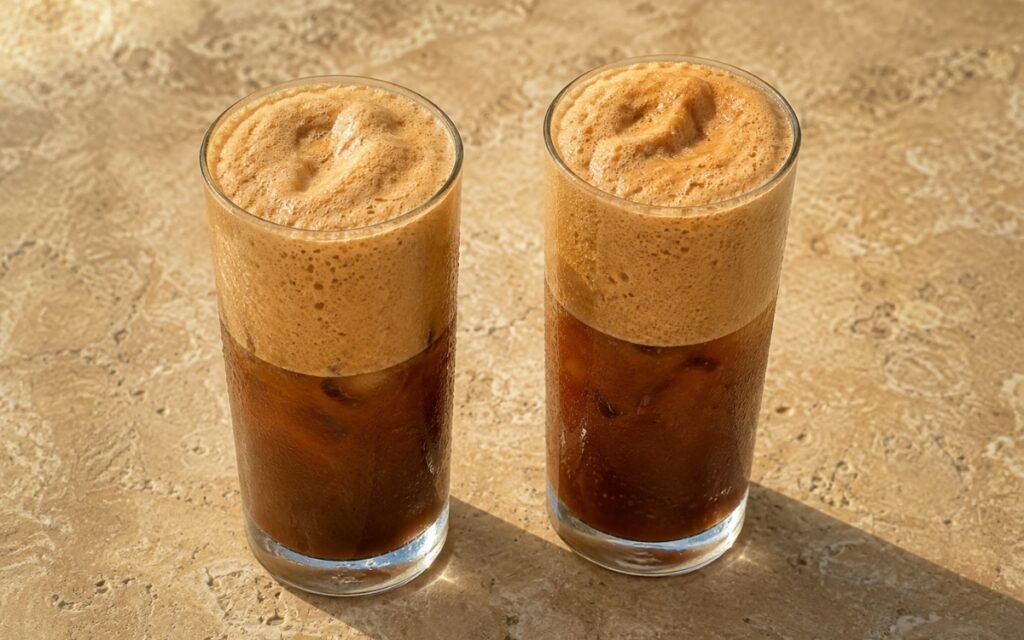
Greek Frappé
Instant coffee, sugar, and a small amount of water shaken hard into thick pale caramel foam, then topped with ice and cold water.
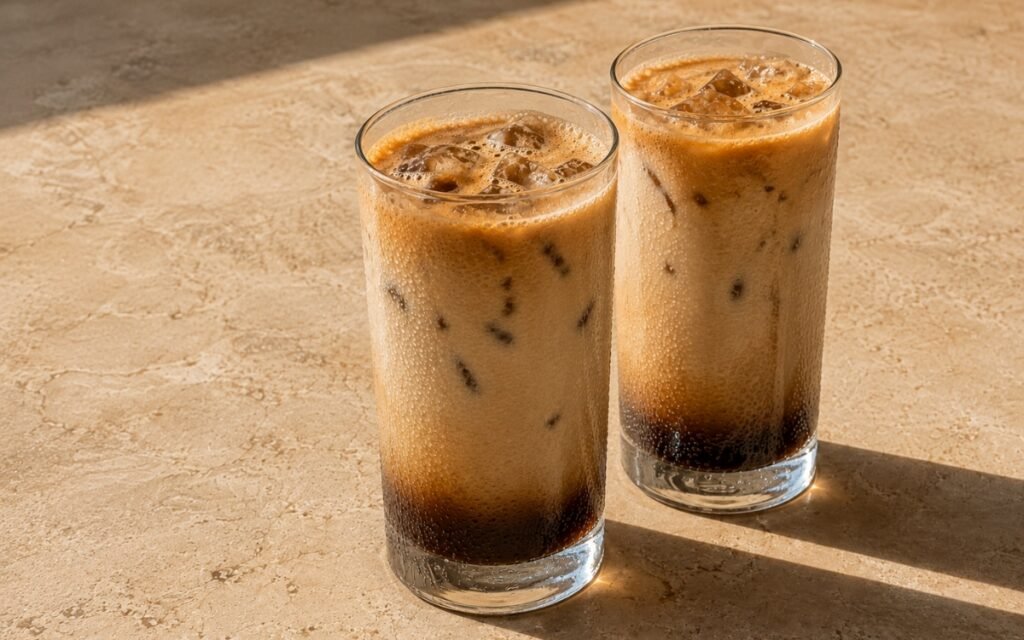
Brown Sugar Shaken Espresso
Hard-shaken espresso with dissolved brown sugar syrup, poured over ice and topped with cold barista oat milk for a pale caramel gradient.
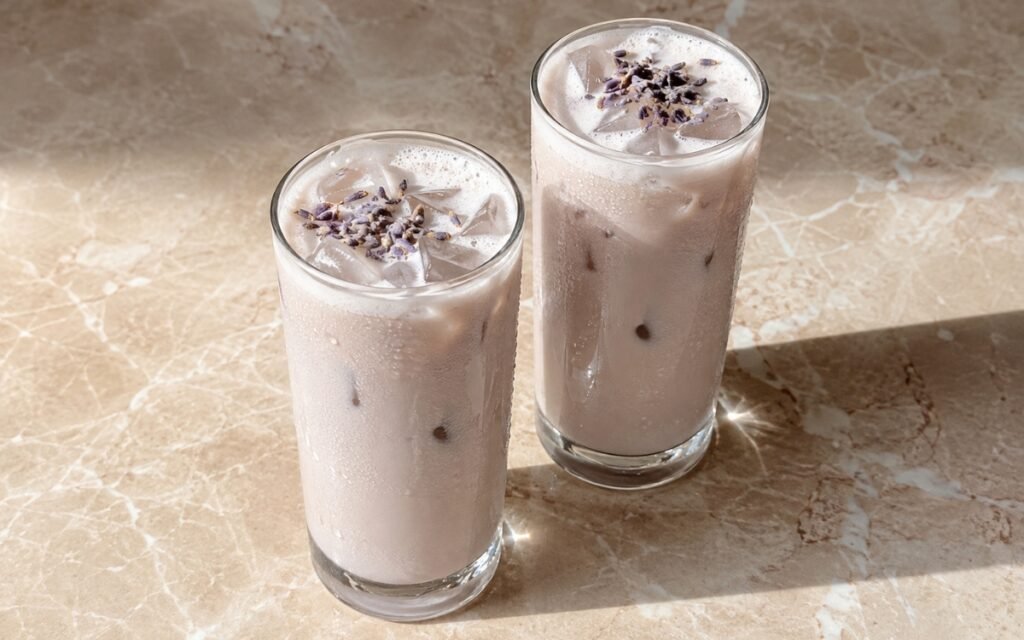
Lavender Iced Latte
Precisely steeped lavender syrup, cold milk, and ice topped with freshly brewed espresso, finished with a thin foam layer and lavender sprig.
You might also like
You might also like
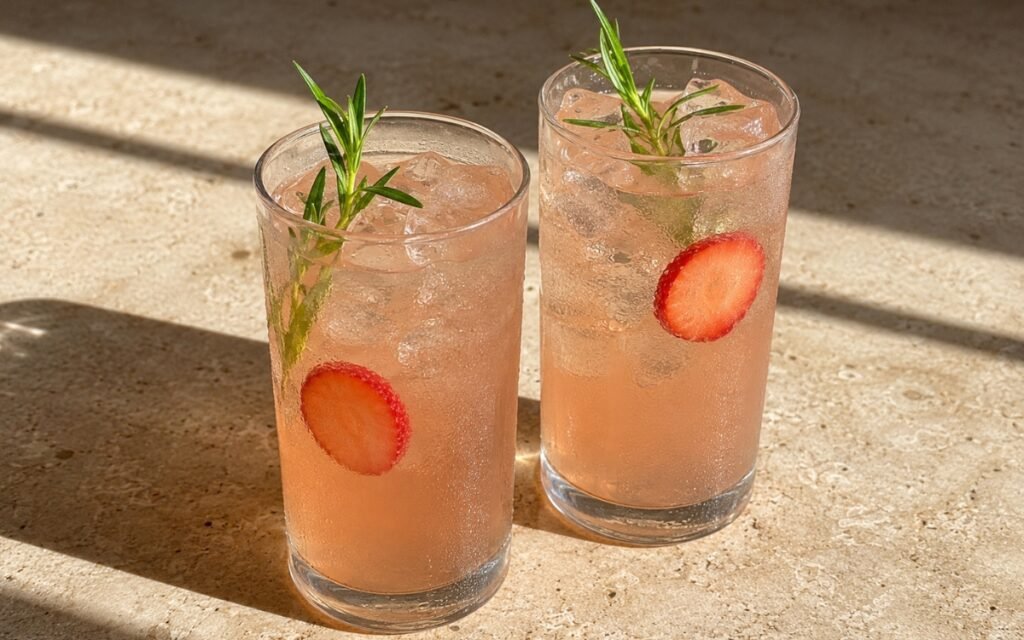
Strawberry Tarragon White Iced Tea
Properly brewed white tea combined with cold-macerated fresh strawberries and a gentle cold tarragon infusion for a light, elegant iced tea.
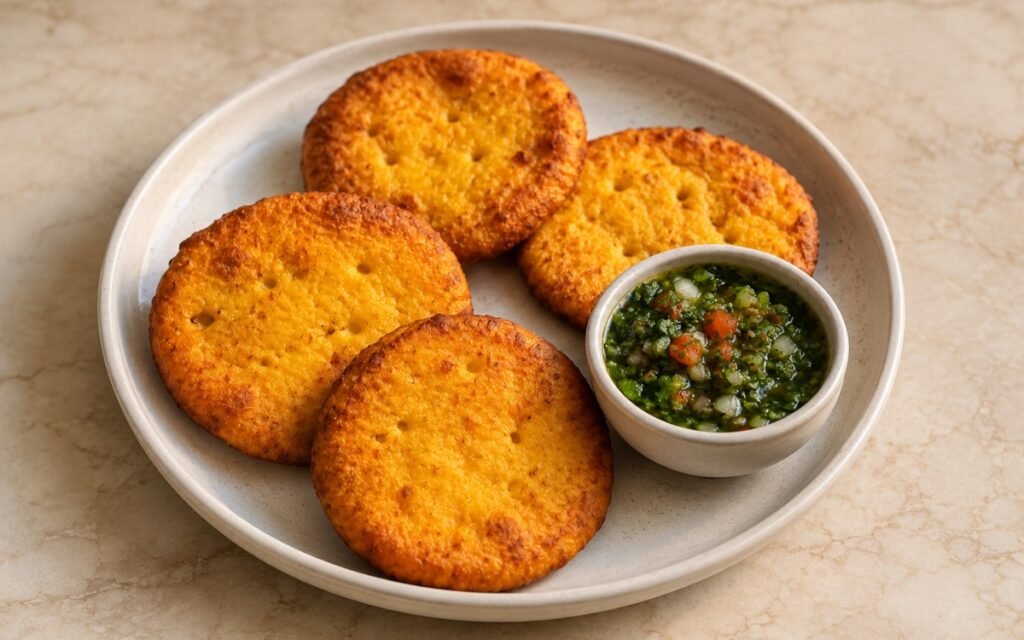
Chilean Sopaipillas with Pebre
Pumpkin-based dough rolled, pricked, and fried until golden-brown and crisp-edged, served with a fresh, chopped pebre of tomato, onion, and cilantro.
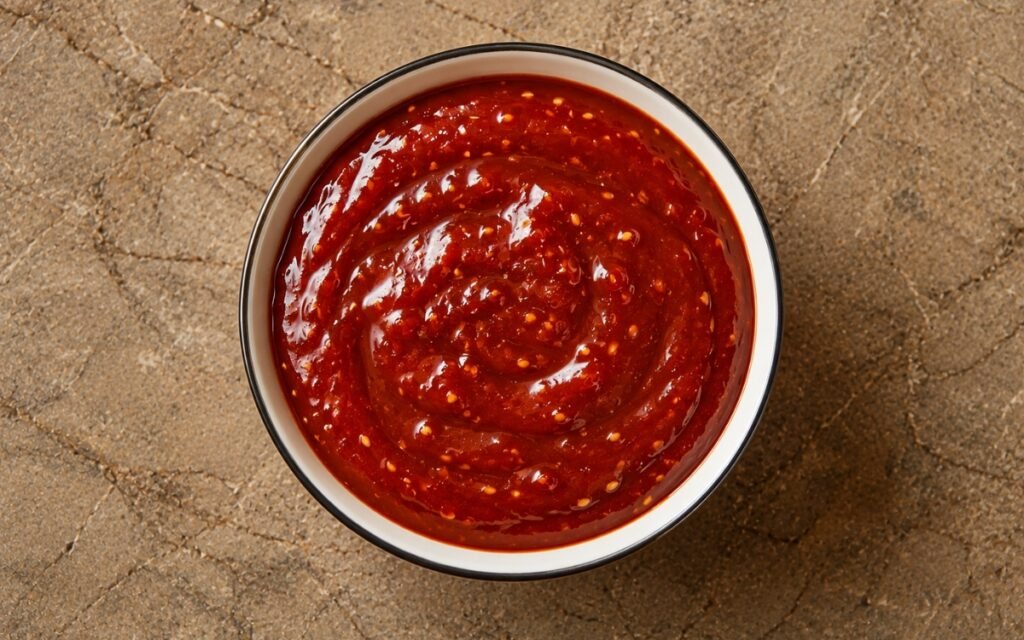
Gochujang Honey Sauce
Korean fermented chili paste and honey create an addictive sweet-spicy glaze — ready in 10 minutes.
Iced Mocha
Ingredients
Method
- In a small saucepan, whisk together the cocoa powder, sugar, and water. Place over medium heat and stir until smooth and fully dissolved. Add the chopped dark chocolate and the pinch of salt. Stir until melted and glossy, then remove from the heat and stir in the vanilla. Let the sauce cool slightly. The sauce should be smooth, shiny, and pourable — not grainy and not thick like fudge. If it is too thick, it will sit in clumps at the bottom of the drink instead of blending properly. Building the sauce from cocoa powder dissolved in warm water first, then finishing with chopped dark chocolate melted into that base, produces a considerably smoother, more pourable result than melting chocolate alone — the cocoa-and-sugar base carries enough liquid to keep the whole sauce fluid rather than seizing into something thick.
- Brew 120ml espresso total, equal to 4 standard 30ml shots. While still hot, stir 40ml of the chocolate sauce into the espresso until fully combined. The hot espresso should dissolve and loosen the chocolate sauce into a unified dark mocha base. If the sauce is added only to cold milk later, it blends less cleanly. Combine the chocolate and espresso while the coffee is still hot. That is what gives the drink a smooth base rather than separate chocolate streaks floating through it. Hot espresso has considerably more capacity to loosen and fully dissolve the sauce than cold milk would — stirring the chocolate in at this stage, while the temperature and liquid are working in the sauce’s favour, is what produces a genuinely unified, streak-free mocha base.
- Drizzle a little chocolate sauce around the inside walls of 2 glasses in a loose pattern so it stays visible from the outside. Fill each glass generously with ice. The chocolate drizzle should cling visibly to the glass without pooling into a thick heavy layer at the bottom. It is there for the classic visual and a little extra chocolate impact, not to overload the drink. Applying this drizzle to the empty, dry glass before any liquid is added is what allows it to cling directly to the glass walls — added later, once the glass already holds ice or milk, that same sauce would slide down and disappear rather than remaining a visible accent.
- Divide the mocha-espresso mixture evenly between the 2 glasses. Pour about 120ml cold milk into each glass, holding back roughly 40ml milk total for the top foam. Stir each glass briefly so the milk and mocha base combine. The drink should become a deep chocolate-brown colour, clearly darker than a regular iced latte. If it looks too pale, the coffee-chocolate base is too weak or there is too much milk. Holding back a small, specific amount of milk at this stage rather than using it all in the main pour is what makes the separate, lightly frothed foam topping possible in the next step — that reserved portion is deliberately set aside for a different job than the rest of the milk.
- Combine the reserved cold milk with 1 tsp chocolate sauce. Froth lightly using a handheld frother, small milk frother, or by shaking briefly in a sealed jar. You only want a thin, light foam, not a thick cappuccino cap. The foam should be soft, lightly aerated, and chocolate-tinted, with fine bubbles and a thin spoonable texture. If it is thick and dry, it is over-frothed for an iced mocha. This restrained, brief frothing is a genuinely different target than the thick, dry foam a cappuccino calls for — stopping well short of that fuller aeration is what keeps this foam reading as a light finishing touch rather than a substantial topping layer.
- Spoon or pour the thin chocolate milk foam over the top of each drink. Dust lightly with cocoa powder and serve immediately. The final drink should show three clear visual cues: deep dark chocolate-coffee colour, visible chocolate swirls on the inside of the glass, and a thin dark chocolate milk foam with a light cocoa dusting on top. Serving without delay is what preserves all three of those visual cues together — the foam’s light texture softens and the chocolate swirls on the glass begin to blur into the drink the longer it sits.