
Iced Affogato
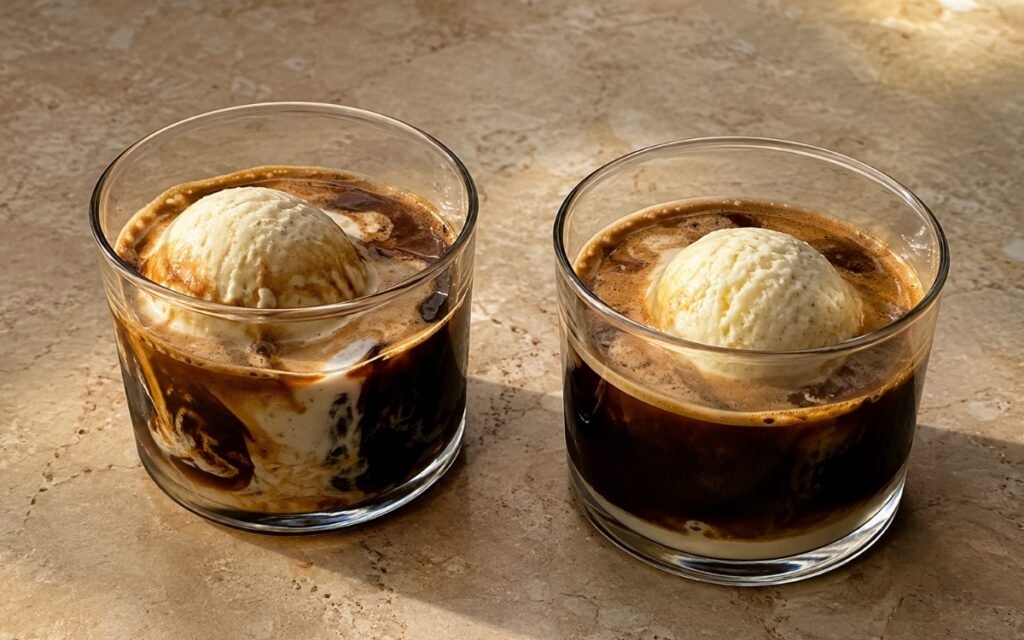
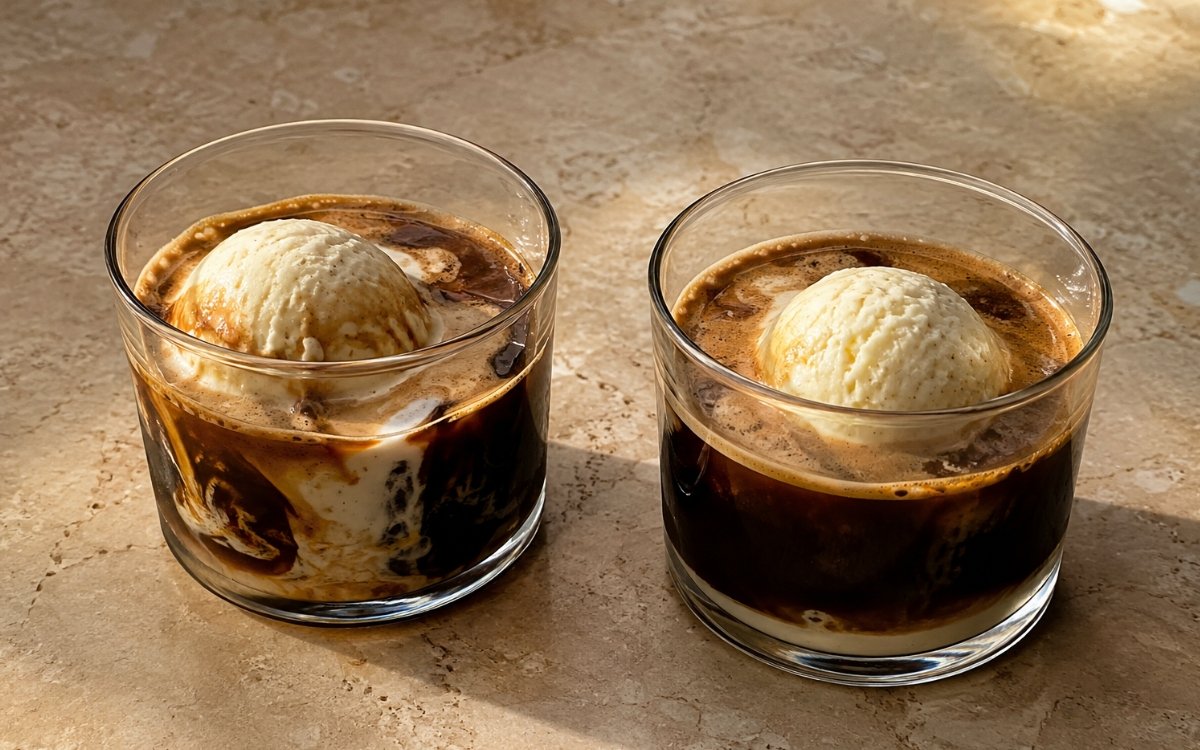
A classic iced affogato built from high-quality vanilla gelato or vanilla ice cream and freshly brewed hot espresso poured directly over the top. The contrast is the whole point: cold creamy gelato beginning to soften at the edges while the hot espresso pools around it and partly melts it into a rich coffee-cream sauce. Working quickly to scoop the gelato while it’s still genuinely firm is the technique this whole drink depends on for its defining texture contrast — gelato that’s already softening before the espresso even arrives loses that contrast before the drink is even assembled, the same speed-before-serving principle used elsewhere in this collection whenever a frozen component needs to hold its structure right up until the final, brief moment it’s combined with something hot. Chilling the serving glasses beforehand is what slows that melt just enough to give the whole assembly a fair chance. Pouring the espresso to hit both the top and the base of the scoops, rather than concentrating it in one spot, is what produces genuine partial melting — softened, creamy edges around a centre that still holds its shape — rather than either a dry, barely-touched scoop or a fully collapsed puddle. The payoff is a dessert with real, immediate sensory drama: hot espresso pooling around cold, still-defined gelato, the two just beginning to merge into a rich coffee-cream sauce at the edges.
Prep Time : 5 min
Cook Time : 5 min
Servings : 2
5 min
5 min
2
Ingredients
For the Iced Affogato
• 200g high-quality vanilla gelato or vanilla ice cream, about 100g per serving — this one on Amazon
• 120ml freshly brewed espresso (4 standard shots total, counting 1 shot = 30ml; 2 shots per serving)
Optional for Serving
• 2 chilled glasses or small dessert cups
This post may contain affiliate links. As an Amazon Associate I earn from qualifying purchases, at no additional cost to you.
Directions
- Chill the Serving Glasses
If possible, place 2 serving glasses or dessert cups in the freezer for 5–10 minutes before assembling. A chilled glass slows the melt slightly and gives you a cleaner affogato moment. A warm glass makes the gelato collapse too quickly before the espresso is poured. Even a glass at ordinary room temperature carries enough ambient warmth to begin working against the gelato from the moment it’s scooped — a properly chilled glass removes that source of premature softening entirely. - Scoop the Gelato
Place 100g vanilla gelato or vanilla ice cream into each glass, ideally as 2 compact scoops per serving. Work quickly so the scoops stay defined and hold their shape. The gelato should be firm enough to sit as a clear mound in the glass, not already soft and slumped. If it is melting before the espresso goes on, the final contrast is lost. Gelato is the most classical choice because it is denser and melts more elegantly into the espresso. Vanilla ice cream works well too, but it softens faster and is usually a bit sweeter. Gelato’s lower fat and air content compared to standard ice cream give it a denser structure that resists melting and holds a defined scoop shape considerably longer — that same density is also what lets it melt into something closer to a smooth, cohesive sauce rather than a looser, more diluted puddle once the hot espresso arrives. - Brew the Espresso
Brew 120ml espresso total, equal to 4 standard 30ml shots. You need 60ml espresso per serving. The espresso must be fresh, hot, and strong. This is one of the main structural points of the recipe. The hot espresso is what partly melts the gelato and creates the affogato texture. Do not brew the espresso too early. Affogato works best when the espresso is poured immediately after brewing. This entire dessert depends on a genuine, sustained temperature contrast between two components — espresso that’s had time to cool even partially before pouring has lost some of the very heat responsible for producing the affogato’s signature partial melt. - Pour the Espresso Over the Gelato
CPour 60ml hot espresso directly over each serving of gelato. Aim partly over the top of the scoops and partly around their base so some of the gelato melts into the coffee while some remains intact. The correct result is partial melting, not total collapse. The edges should begin softening into a creamy coffee pool while the centre of the scoops still holds shape. Distributing the pour across both the top and the base, rather than concentrating it in a single spot, is what produces even, controlled softening around the gelato’s exterior surface — a pour aimed entirely at one point would melt that specific area through completely while leaving the rest of the scoop untouched by any heat at all. - Serve Immediately
Serve immediately with a spoon. Affogato has a very short ideal serving window. The best texture is right after pouring, when you still have the contrast between hot espresso, cold gelato, and the beginning of that creamy melted edge. This dessert’s entire appeal is built around a moment that’s genuinely fleeting — the hot-cold contrast and the specific partial-melt texture both continue changing from the instant the espresso is poured, and any delay in serving simply lets the drink move past its ideal point.
*Notes :
- Working quickly through the scooping stage deserves real attention, since it’s easy to underestimate how much a few extra minutes of exposure to room-temperature air can affect gelato’s readiness for the espresso that follows. A scoop that’s already begun softening and slumping before the espresso is even poured has lost part of its structural definition before the drink’s actual defining moment has even happened — the whole point of the chilled glass and the quick scooping is to preserve that firm starting structure for as long as possible.
- The distinction between gelato and standard vanilla ice cream, while both are workable, is worth understanding as a genuine textural difference rather than simply a matter of quality branding. Gelato’s typically lower fat and air content produce a denser product that both holds its shape longer at room temperature and melts into something closer to a smooth, integrated sauce once heat is applied — ice cream’s higher air content tends to produce a softer, quicker melt that’s somewhat less controlled and often noticeably sweeter as well.
- Pouring the espresso to hit both the top and the base of the scoops, rather than a single concentrated point, reflects real thought about how heat and melting actually spread across a solid, cold mass. A pour aimed only at the top would create a deep, isolated melt pocket right where it landed while leaving much of the rest of the scoop’s surface completely untouched — distributing the pour is what produces the more even, all-around softened edge this recipe describes as the correct result.
- The dessert’s genuinely brief ideal serving window is worth respecting rather than treated as a loose suggestion. Every component of this recipe — the chilled glass, the quick scooping, the freshly brewed and immediately poured espresso — exists specifically to buy the finished affogato as much time as possible within that fleeting window, and serving it without any further delay is what actually cashes in on all of that careful preparation.
Why This Recipe Works
This recipe works because every step is calibrated around preserving a fleeting, specific contrast: chilled glasses and quick scooping keep the gelato genuinely firm right up until the espresso arrives, and gelato’s own denser structure holds its shape and melts more elegantly than standard ice cream would.
Espresso brewed fresh and poured immediately, while still fully hot, is what produces the correct partial melt when it lands on the cold gelato, and distributing that pour across both the top and base of the scoops produces even, all-around softening rather than an isolated melt pocket. Serving without any delay is what actually delivers the dessert’s brief, defining moment of hot-cold contrast.
Ingredient Breakdown
High-Quality Vanilla Gelato
The frozen foundation — its denser structure holds shape longer and melts into a smoother, more integrated coffee-cream sauce than standard ice cream.
Chilled Serving Glasses
The pre-preparation step — removes ambient warmth that would otherwise begin softening the gelato before the espresso even arrives.
Freshly Brewed, Immediately Poured Espresso
The critical heat source — needs genuine, undiminished heat to produce the correct degree of partial melting on contact.
Distributed Pour (Top and Base)
The pouring technique — spreads the melting evenly around the scoop’s exterior rather than creating a single, isolated melt pocket.
Immediate Serving
The final, essential step — captures the dessert’s genuinely brief window of hot-cold contrast before it naturally moves past its ideal point.
Flavor Structure Explained
This iced affogato follows a layered balance model:
- Rich creamy foundation (vanilla gelato)
- Bold hot espresso contrast (freshly brewed coffee)
- Cool refreshing structure (cold, still-defined gelato core)
- Emerging coffee-cream sauce (melted edges combining both)
High-quality vanilla gelato provides the dessert’s rich, creamy foundation, its dense structure holding firm at the centre of each scoop. Freshly brewed, immediately poured espresso contributes bold, hot coffee flavour in direct, deliberate contrast against that cold base. The gelato’s still-firm core keeps the dessert genuinely refreshing even as its edges begin to soften. Where the two meet, a spontaneous coffee-cream sauce emerges — neither pure gelato nor pure espresso, but the specific, fleeting combination this whole dessert is built around.
Common Mistakes to Avoid
- Letting the Gelato Sit Out Before Scooping – This softens it before the espresso even arrives, losing structural definition from the start. Always work quickly and keep the gelato properly frozen until the moment of scooping.
- Using Standard Ice Cream Without Adjusting Expectations – It softens faster and is usually sweeter than gelato. Always account for that faster melt if substituting.
- Brewing the Espresso Too Early – Espresso that’s cooled even partially before pouring has lost the heat responsible for the affogato’s signature partial melt. Always brew immediately before pouring.
- Pouring the Espresso in One Concentrated Spot – This creates an isolated melt pocket rather than even, all-around softening. Always distribute the pour across the top and base of the scoops.
- Letting the Assembled Dessert Sit Before Eating – The defining hot-cold contrast fades quickly. Always serve and eat immediately.
Variations
Espresso Martini-Adjacent Version
Add a small splash of coffee liqueur to the espresso before pouring for a more adult, dessert-cocktail-adjacent variation.
Chocolate Gelato Version
Substitute chocolate gelato for vanilla for a richer, more chocolate-forward affogato.
With a Cookie
Serve alongside a simple biscotti or shortbread cookie for dipping, adding a textural contrast alongside the temperature one.
Extra-Strong Version
Use 3 shots of espresso per serving for a bolder, more intensely coffee-forward result.
Storage & Make-Ahead
This dessert has no meaningful make-ahead component; it must be assembled and eaten immediately, given how quickly its defining texture and temperature contrast fade.
Vanilla gelato itself should be stored according to standard freezer guidance and kept genuinely frozen right up until the moment of scooping.
Espresso should always be brewed fresh, immediately before pouring, rather than prepared in advance for this particular dessert.
Frequently Asked Questions
Why does the gelato need to be scooped so quickly, right before the espresso is poured?
Gelato that’s already begun softening loses structural definition before the espresso even arrives, undermining the whole point of the drink. Working quickly, along with chilling the glasses beforehand, is what preserves that firm starting structure for as long as possible.
Why is gelato considered the more classical choice over standard vanilla ice cream?
Gelato’s typically denser structure, with lower fat and air content, holds its shape longer and melts into something closer to a smooth, integrated sauce once the hot espresso is added. Standard ice cream tends to soften faster and is usually noticeably sweeter as well.
Why does the espresso need to be poured immediately after brewing rather than after it’s had a moment to settle?
This dessert depends on a genuine, sustained temperature contrast between the hot espresso and cold gelato. Espresso that’s cooled even partially before pouring has already lost some of the heat responsible for producing the correct partial melt.
Why pour the espresso over both the top and the base of the scoops instead of just the top?
A pour concentrated in one spot creates an isolated, deep melt pocket right where it lands while leaving much of the rest of the scoop untouched. Distributing the pour produces the more even, all-around softened edge that defines a properly made affogato.
Are there other rich, dessert-style iced coffee drinks worth trying?
Iced Mocha, Tiramisu Iced Latte, Mont Blanc Iced Coffee, and Crème Brûlée Iced Latte all build on a related rich, dessert-inspired coffee foundation, each bringing its own distinct flavour and presentation worth exploring.
Nutrition Facts
( per serving )
Calories
~180 kcal
Protein
4 g
Fat
9 g
Carbs
20 g
Calories
~180 kcal
Protein
4 g
Fat
9 g
Carbs
20 g
Related Recipes
Related Recipes

Greek Frappé
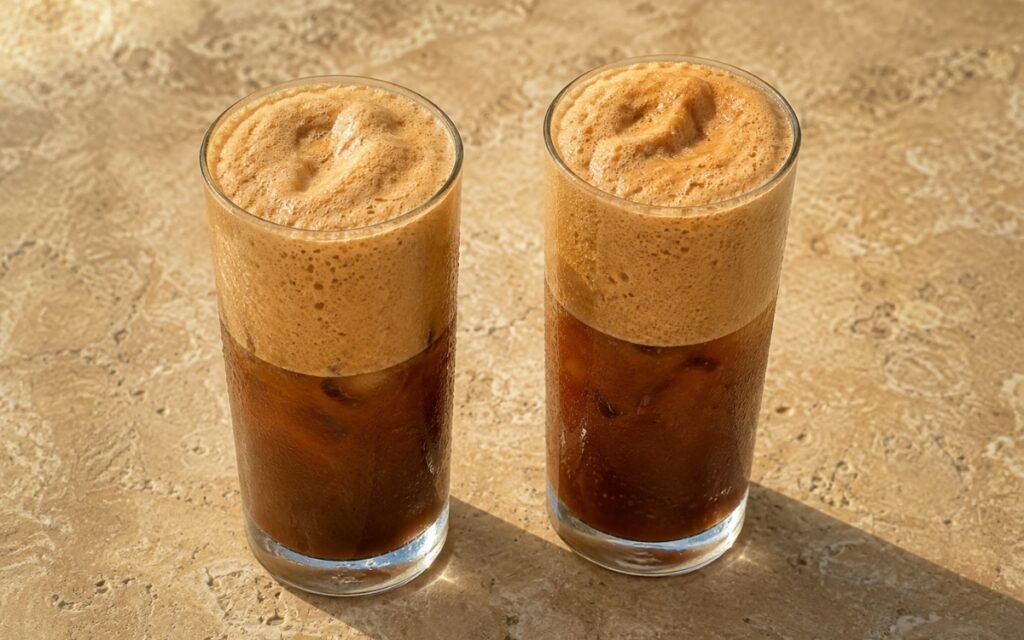
Instant coffee, sugar, and a small amount of water shaken hard into thick pale caramel foam, then topped with ice and cold water.
Iced Vanilla Latte
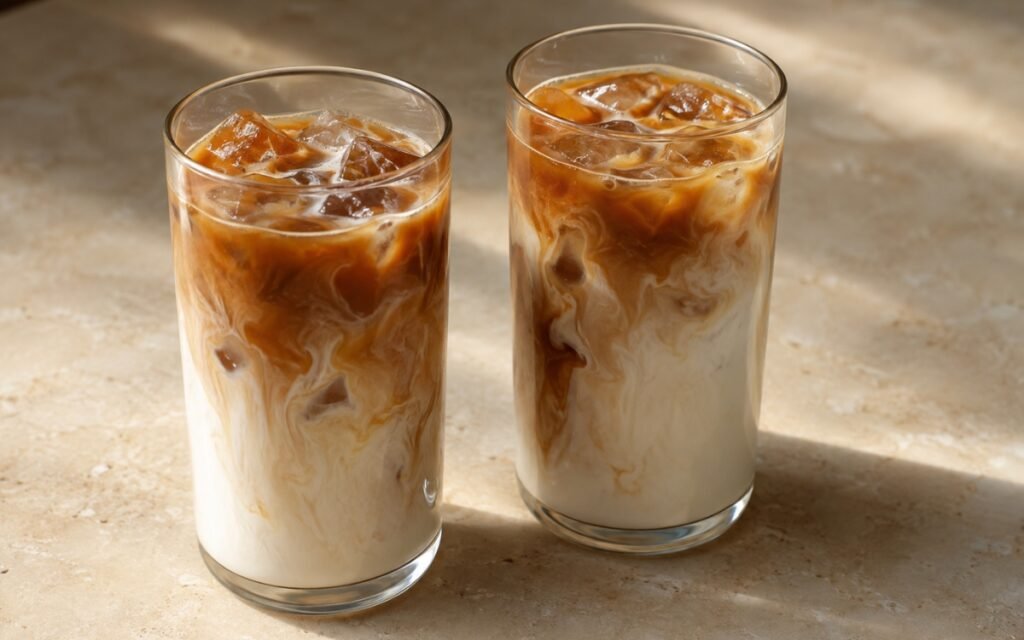
Vanilla syrup, cold milk, and ice topped with freshly brewed espresso poured slowly for the signature swirl, then stirred into a smooth iced vanilla latte.
Vanilla Sweet Cream Cold Brew
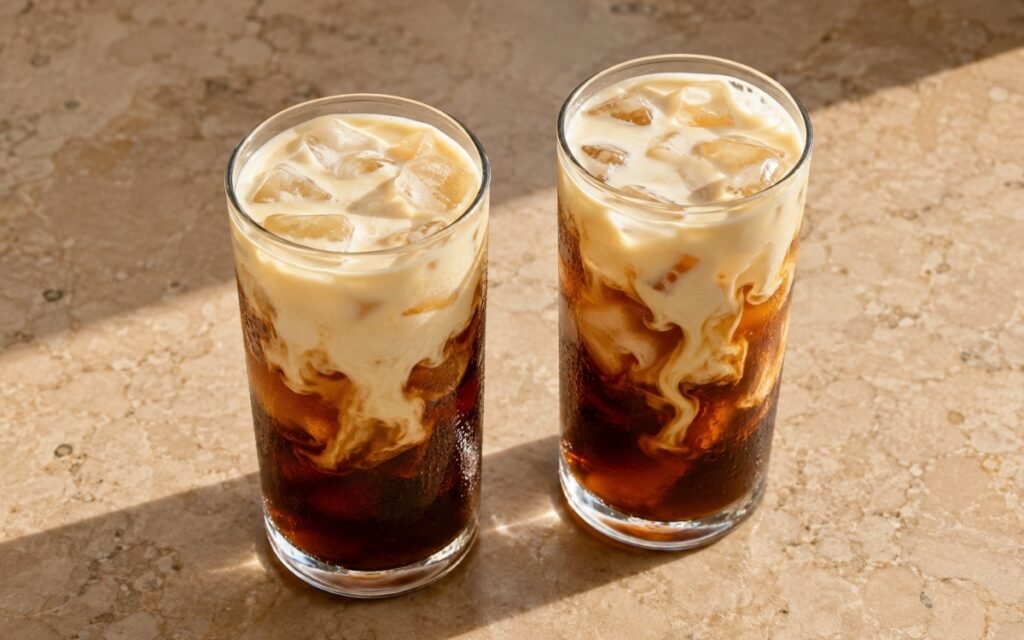
Strong, chilled cold brew coffee topped with a fluid, pourable vanilla sweet cream that marbles slowly through the coffee.
You might also like
You might also like
Homemade Pizza Dough
Long-fermented 00 flour pizza dough with a 24–48 hour cold ferment, producing smooth, elastic dough with a thin center and airy rim.
Calabrian Chili Oil Drizzle
Fruity-spicy chili oil with garlic and oregano. Instant flavor boost for pizza, pasta, and vegetables.
Mint Lime White Tea Cooler
Properly brewed white tea combined with a cold-style mint-lime infusion and fresh lime juice for a pale, clean, elegant iced tea cooler.

Iced Affogato
Ingredients
Method
- If possible, place 2 serving glasses or dessert cups in the freezer for 5–10 minutes before assembling. A chilled glass slows the melt slightly and gives you a cleaner affogato moment. A warm glass makes the gelato collapse too quickly before the espresso is poured. Even a glass at ordinary room temperature carries enough ambient warmth to begin working against the gelato from the moment it’s scooped — a properly chilled glass removes that source of premature softening entirely.
- Place 100g vanilla gelato or vanilla ice cream into each glass, ideally as 2 compact scoops per serving. Work quickly so the scoops stay defined and hold their shape. The gelato should be firm enough to sit as a clear mound in the glass, not already soft and slumped. If it is melting before the espresso goes on, the final contrast is lost. Gelato is the most classical choice because it is denser and melts more elegantly into the espresso. Vanilla ice cream works well too, but it softens faster and is usually a bit sweeter. Gelato’s lower fat and air content compared to standard ice cream give it a denser structure that resists melting and holds a defined scoop shape considerably longer — that same density is also what lets it melt into something closer to a smooth, cohesive sauce rather than a looser, more diluted puddle once the hot espresso arrives.
- Brew 120ml espresso total, equal to 4 standard 30ml shots. You need 60ml espresso per serving. The espresso must be fresh, hot, and strong. This is one of the main structural points of the recipe. The hot espresso is what partly melts the gelato and creates the affogato texture. Do not brew the espresso too early. Affogato works best when the espresso is poured immediately after brewing. This entire dessert depends on a genuine, sustained temperature contrast between two components — espresso that’s had time to cool even partially before pouring has lost some of the very heat responsible for producing the affogato’s signature partial melt.
- Pour 60ml hot espresso directly over each serving of gelato. Aim partly over the top of the scoops and partly around their base so some of the gelato melts into the coffee while some remains intact. The correct result is partial melting, not total collapse. The edges should begin softening into a creamy coffee pool while the centre of the scoops still holds shape. Distributing the pour across both the top and the base, rather than concentrating it in a single spot, is what produces even, controlled softening around the gelato’s exterior surface — a pour aimed entirely at one point would melt that specific area through completely while leaving the rest of the scoop untouched by any heat at all.
- Serve immediately with a spoon. Affogato has a very short ideal serving window. The best texture is right after pouring, when you still have the contrast between hot espresso, cold gelato, and the beginning of that creamy melted edge. This dessert’s entire appeal is built around a moment that’s genuinely fleeting — the hot-cold contrast and the specific partial-melt texture both continue changing from the instant the espresso is poured, and any delay in serving simply lets the drink move past its ideal point.