
Mont Blanc Iced Coffee
A dessert-style iced coffee inspired by the classic Mont Blanc pastry: strong chilled coffee over ice, lightly sweetened milk or cream, a soft whipped cream layer, and a chestnut cream topping. The drink should taste like bold coffee first, then vanilla cream and sweet chestnut, not like a milkshake. Whipping the cream only to soft peaks, rather than stiff, is the technique this whole drink depends on for staying a coffee drink rather than a dessert — stiff whipped cream reads heavy and dessert-like in exactly the wrong way, the same soft-peak restraint used elsewhere in this collection whenever a whipped topping needs to stay light rather than substantial. Loosening the chestnut cream to a specific pipeable consistency, thick enough to hold shape but soft enough to actually pipe, is what lets it sit visibly as its own distinct top layer rather than either sitting like paste or melting into the whipped cream beneath it. Keeping the coffee base genuinely strong and cold is what protects it from disappearing beneath the substantial cream and chestnut layers on top. The payoff is a drink with genuine structural drama — a strong coffee base, a soft whipped cream layer, and a piped, visible chestnut topping resembling a small mountain, resolving into bold coffee first, then vanilla cream, then sweet chestnut with a faint salty finish.

Prep Time : 15 min
Cook Time : 5 min
Servings : 2
15 min
5 min
2
Ingredients
For the Coffee Base
• 180ml strong chilled coffee, cold brew, or chilled iced Americano (90ml per serving)
• 120ml cold whole milk (60ml per serving) — this one on Amazon
• 20ml simple syrup, optional (10ml per serving, only if you want a sweeter café-style drink) — this one on Amazon
• 8–10 ice cubes
For the Whipped Cream Layer
• 100ml heavy cream, very cold — this one on Amazon
• 10g powdered sugar
• ¼ tsp vanilla extract — this one on Amazon
For the Chestnut Mont Blanc Cream
• 120g sweetened chestnut purée or chestnut cream — this one on Amazon
• 30g mascarpone, or 30g softened unsalted butter for a more pastry-style chestnut cream — this one on Amazon
• 20–30ml heavy cream, as needed to loosen
• 1 small pinch fine sea salt
• ¼ tsp vanilla extract
• 1 tsp dark rum, optional but classic with chestnut desserts
This post may contain affiliate links. As an Amazon Associate I earn from qualifying purchases, at no additional cost to you.
Directions
- Prepare the Chestnut Cream
Add the sweetened chestnut purée, mascarpone, salt, vanilla, and rum if using to a bowl. Beat until smooth, then loosen with 20–30ml heavy cream until the mixture is soft enough to pipe but still thick enough to hold shape. Transfer to a piping bag with a small round tip, or use a spoon if you do not need the classic piped Mont Blanc look. The chestnut cream should be smooth, thick, and pipeable. If it is too stiff, it sits like paste. If it is too loose, it melts into the whipped cream and loses the Mont Blanc identity. This target consistency sits deliberately between two failure states — the classic Mont Blanc look depends on the chestnut cream holding fine, visible strands or ribbons once piped, which requires real body without being so stiff it resists piping cleanly. - Make the Whipped Cream
Whip the cold heavy cream with powdered sugar and vanilla until soft peaks form. Do not whip it stiff. The cream should mound softly and still look silky. Stiff whipped cream makes the drink feel heavy and dessert-like in the wrong way. Stopping at soft peaks, rather than continuing to a fully stiff whip, keeps this layer light and yielding enough to still read as part of an iced coffee — pushed further into stiff peaks, the texture shifts toward something closer to a standalone dessert topping than a component of a drink. - Build the Coffee Base
Add 10ml simple syrup to each glass if using. Fill each glass with ice. Pour 90ml strong chilled coffee into each glass, then add 60ml cold whole milk. Stir briefly. The base should still taste clearly like strong coffee. The milk softens it, but it should not become pale or weak like a latte. Given how much rich cream and sweet chestnut sit above this base, it genuinely needs real coffee strength to remain noticeable once the whole drink is eventually stirred together at the end. - Add the Whipped Cream Layer
Spoon a generous layer of soft whipped cream over each iced coffee. Keep the cream mostly on the surface. The coffee base must be cold before the cream goes on. If the coffee is warm, the whipped cream softens immediately and the chestnut topping loses shape. A properly chilled base beneath the cream is what lets that soft-whipped layer hold its own structure rather than melting on contact — any warmth from below works directly against the cream’s texture. - Add the Mont Blanc Chestnut Topping
Pipe or spoon the chestnut cream over the whipped cream. For the most classical Mont Blanc look, pipe thin strands or short ribbons over the top so it resembles a small chestnut “mountain.” The topping should sit visibly on the cream, not dissolve into the coffee. The chestnut layer is the defining feature of the drink. Piping in thin strands rather than a single mounded dollop is what produces the classic Mont Blanc texture and appearance — that specific piped structure, resembling the pastry’s own signature look, is part of what distinguishes this drink from a simple chestnut-flavoured whipped topping. - Serve
Serve immediately with a straw or long spoon. The drink should be stirred lightly before drinking, but the layered cream and chestnut top should be visible first. This layered presentation is genuinely fragile — the whipped cream and piped chestnut both begin softening the moment they’re built, so serving without delay preserves the visual moment this drink is specifically designed around.
*Notes :
- Whipping the cream only to soft peaks, resisting the instinct to whip further for extra stability, deserves real attention as a deliberate restraint rather than an oversight. Stiff whipped cream, while more structurally durable, shifts the drink’s whole character toward something heavier and more dessert-like — closer to a sundae topping than an appropriate layer for an iced coffee. Soft peaks strike the balance this drink calls for: enough structure to sit as a distinct layer, without tipping into that heavier territory.
- The chestnut cream’s specific target consistency — thick enough to hold shape once piped, loose enough to actually pipe cleanly — is worth treating as a genuine technical requirement given how central the piped presentation is to this drink’s whole identity. The classic Mont Blanc pastry is recognisable specifically by its fine, piped chestnut strands resembling a small mountain, and a chestnut cream that’s either too stiff to pipe or too loose to hold its shape once piped loses that recognisable identity entirely.
- Keeping the coffee base genuinely strong and cold matters more here than in many other layered drinks, given just how much rich cream and sweet chestnut sit above it. This drink is explicitly meant to taste like bold coffee first, according to its own description — a base that’s too weak or too diluted with milk simply doesn’t have the presence to come through once it’s finally stirred together with everything layered on top.
- The whole drink’s fragility once assembled is worth appreciating rather than treating as an afterthought. Both the whipped cream and the piped chestnut topping begin softening and losing their defined shape from the moment they’re built, working against a properly chilled coffee base beneath them. Serving without any delay is what preserves the drink’s full layered presentation — cream and chestnut mountain both clearly visible — for the moment it’s meant to be seen before the first stir.
Why This Recipe Works
This recipe works because the whipped cream is stopped at soft peaks rather than whipped stiff, keeping the drink’s texture appropriately light for a coffee rather than shifting toward a heavy dessert. The chestnut cream is loosened to a specific pipeable consistency that lets it hold the classic Mont Blanc’s fine, piped strands.
A genuinely strong, cold coffee base gives the coffee flavour enough presence to remain noticeable beneath the substantial cream and chestnut layers, and building everything on that properly chilled base protects both toppings’ structure. Serving immediately preserves the drink’s full layered presentation before either topping has a chance to soften.
Ingredient Breakdown
Soft-Peak Whipped Cream
The middle layer — stopped short of stiff peaks specifically to keep the drink’s texture light and appropriate for a coffee rather than heavy and dessert-like.
Loosened, Pipeable Chestnut Cream
The signature topping — a specific consistency that allows the classic Mont Blanc piped-strand appearance rather than sitting as paste or melting away.
Strong, Fully Chilled Coffee Base
The drink’s foundation — needs genuine strength and chill both to remain present beneath the rich toppings and to protect their structure.
Sweetened Chestnut Purée
The defining flavour — the drink’s core ingredient, requiring pre-sweetening since plain cooked chestnuts wouldn’t taste correct on their own.
Optional Dark Rum
The traditional flavour note — a small amount that rounds out the chestnut cream’s flavour in a way classically associated with chestnut desserts.
Flavor Structure Explained
This Mont Blanc iced coffee follows a layered balance model:
- Bold coffee foundation (strong, chilled coffee base)
- Soft vanilla cream body (whipped cream layer)
- Sweet chestnut finish (piped chestnut cream)
- Warm rounding note (rum, salt)
The strong, chilled coffee base defines the drink’s bold foundation, kept clearly present despite the rich layers above it. Soft, vanilla-scented whipped cream adds a light, silky body between the coffee and the chestnut topping. The piped chestnut cream finishes the drink with sweet, distinctly nutty flavour, its own richness rounded by a touch of dark rum and a small pinch of salt. Together, these layers are meant to resolve into a specific tasting order — coffee first, then vanilla cream, then sweet chestnut — rather than blending into an undifferentiated dessert drink.
Common Mistakes to Avoid
- Whipping the Cream to Stiff Peaks – This makes the drink feel heavy and dessert-like rather than staying appropriately light. Always stop at soft, silky peaks.
- Making the Chestnut Cream Too Stiff or Too Loose – Too stiff sits like paste; too loose melts into the whipped cream and loses its shape. Always loosen it to a specific pipeable consistency.
- Using a Weak Coffee Base – This disappears beneath the rich cream and chestnut layers. Always use genuinely strong, cold coffee.
- Adding the Cream to a Warm Coffee Base – This softens the whipped cream immediately and causes the chestnut topping to lose its shape. Always confirm the coffee base is fully cold first.
- Letting the Drink Sit Before Serving – Both toppings begin softening quickly once assembled. Always serve immediately.
Variations
Butter-Based Chestnut Cream Version
Use softened butter instead of mascarpone for a richer, more classically pastry-style chestnut cream.
Extra-Chestnut Version
Increase the chestnut purée slightly and adjust the loosening cream accordingly for a more assertive chestnut flavour.
Non-Alcoholic Version
Omit the rum entirely for a family-friendly version, accepting a slightly less traditional chestnut flavour.
Mocha-Chestnut Version
Add a small amount of chocolate sauce to the coffee base for a mocha-chestnut variation on the same layered structure.
Storage & Make-Ahead
The chestnut cream can be made a few hours ahead and refrigerated in a piping bag or covered container; re-whip gently or adjust consistency with a splash more cream if it firms up too much.
The coffee base can be made ahead according to standard cold brew or iced coffee storage guidance.
This drink is meant to be assembled and served fresh; the whipped cream and piped chestnut topping do not hold their structure well once built, so assemble and serve only what will be enjoyed immediately.
Frequently Asked Questions
Why does the whipped cream need to stay at soft peaks rather than being whipped stiff?
Stiff whipped cream shifts the drink’s whole character toward something heavier and more dessert-like, closer to a sundae topping than an appropriate layer for an iced coffee. Soft peaks provide enough structure to sit as a distinct layer while keeping the drink appropriately light.
Why does the chestnut cream need such a specific consistency?
The classic Mont Blanc pastry is recognisable by its fine, piped chestnut strands resembling a small mountain. A chestnut cream that’s too stiff to pipe cleanly, or too loose to hold its shape once piped, loses that distinctive appearance entirely.
Why does the coffee base need to be so strong given how much cream and chestnut sit on top?
This drink is meant to taste like bold coffee first, according to its own core identity. A base that’s too weak or diluted simply doesn’t have enough presence to come through once it’s stirred together with the substantial cream and chestnut layers above it.
Why does the coffee base need to be fully cold before the whipped cream is added?
Warmth from below softens the whipped cream immediately on contact and causes the piped chestnut topping to lose its defined shape. A properly chilled base is what lets both toppings hold their structure once assembled.
Are there other dessert-inspired iced coffee drinks worth trying?
Tiramisu Iced Latte, Crème Brûlée Iced Latte, Iced Affogato, and Pistachio Cream Iced Latte all build on a related rich, dessert-inspired coffee foundation, each bringing its own distinct flavour direction worth exploring.
Nutrition Facts
( per serving )
Calories
~420 kcal
Protein
5 g
Fat
26 g
Carbs
42 g
Calories
~420 kcal
Protein
5 g
Fat
26 g
Carbs
42 g
Related Recipes
Related Recipes

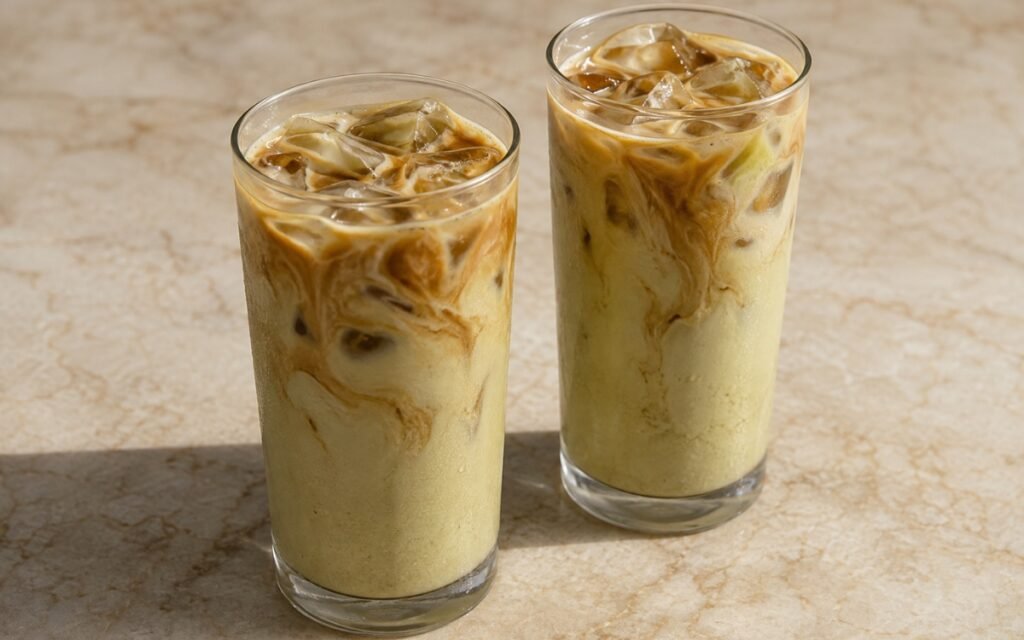
Iced Pistachio Latte
Smooth homemade pistachio syrup, cold milk, and ice topped with freshly brewed espresso, for a milk-forward, lightly nutty latte.
Iced Cortado
Equal parts freshly brewed espresso and cold milk served over a single large ice cube, for a deep caramel-brown, concentrated coffee.
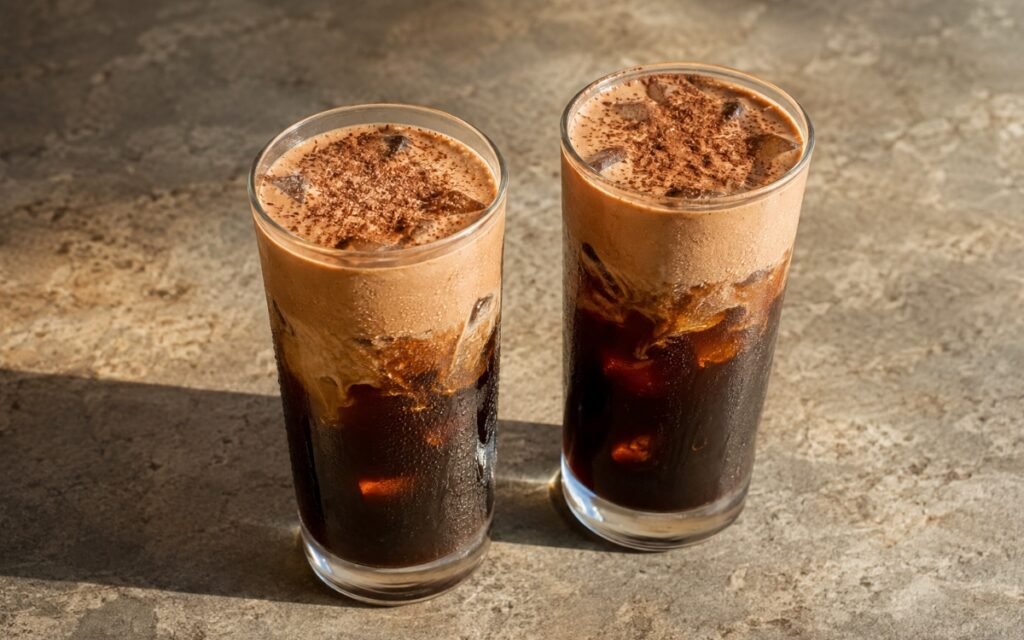
Chocolate Cream Cold Brew
Strong, chilled cold brew coffee topped with a thick, cleanly dissolved chocolate cream cold foam that slowly marbles into the coffee.

You might also like
You might also like
Crêpes Suzette
Delicate French crêpes folded into triangles and coated in a glossy orange-butter Suzette sauce with fresh orange juice and zest.
Huevos a la Mexicana
Softly scrambled eggs cooked with diced tomato, onion, and jalapeño, served with warm refried beans, sliced avocado, and tortillas.
Lemon Ginger Infused Water
Thin lemon slices and very thinly sliced fresh ginger infused cold for a nearly clear, clean, gently warming water.



Mont Blanc Iced Coffee
Ingredients
Method
- Add the sweetened chestnut purée, mascarpone, salt, vanilla, and rum if using to a bowl. Beat until smooth, then loosen with 20–30ml heavy cream until the mixture is soft enough to pipe but still thick enough to hold shape. Transfer to a piping bag with a small round tip, or use a spoon if you do not need the classic piped Mont Blanc look. The chestnut cream should be smooth, thick, and pipeable. If it is too stiff, it sits like paste. If it is too loose, it melts into the whipped cream and loses the Mont Blanc identity. This target consistency sits deliberately between two failure states — the classic Mont Blanc look depends on the chestnut cream holding fine, visible strands or ribbons once piped, which requires real body without being so stiff it resists piping cleanly.
- Whip the cold heavy cream with powdered sugar and vanilla until soft peaks form. Do not whip it stiff. The cream should mound softly and still look silky. Stiff whipped cream makes the drink feel heavy and dessert-like in the wrong way. Stopping at soft peaks, rather than continuing to a fully stiff whip, keeps this layer light and yielding enough to still read as part of an iced coffee — pushed further into stiff peaks, the texture shifts toward something closer to a standalone dessert topping than a component of a drink.
- Add 10ml simple syrup to each glass if using. Fill each glass with ice. Pour 90ml strong chilled coffee into each glass, then add 60ml cold whole milk. Stir briefly. The base should still taste clearly like strong coffee. The milk softens it, but it should not become pale or weak like a latte. Given how much rich cream and sweet chestnut sit above this base, it genuinely needs real coffee strength to remain noticeable once the whole drink is eventually stirred together at the end.
- Spoon a generous layer of soft whipped cream over each iced coffee. Keep the cream mostly on the surface. The coffee base must be cold before the cream goes on. If the coffee is warm, the whipped cream softens immediately and the chestnut topping loses shape. A properly chilled base beneath the cream is what lets that soft-whipped layer hold its own structure rather than melting on contact — any warmth from below works directly against the cream’s texture.
- Pipe or spoon the chestnut cream over the whipped cream. For the most classical Mont Blanc look, pipe thin strands or short ribbons over the top so it resembles a small chestnut “mountain.” The topping should sit visibly on the cream, not dissolve into the coffee. The chestnut layer is the defining feature of the drink. Piping in thin strands rather than a single mounded dollop is what produces the classic Mont Blanc texture and appearance — that specific piped structure, resembling the pastry’s own signature look, is part of what distinguishes this drink from a simple chestnut-flavoured whipped topping.
- Serve immediately with a straw or long spoon. The drink should be stirred lightly before drinking, but the layered cream and chestnut top should be visible first. This layered presentation is genuinely fragile — the whipped cream and piped chestnut both begin softening the moment they’re built, so serving without delay preserves the visual moment this drink is specifically designed around.