
Crème Brûlée Iced Latte
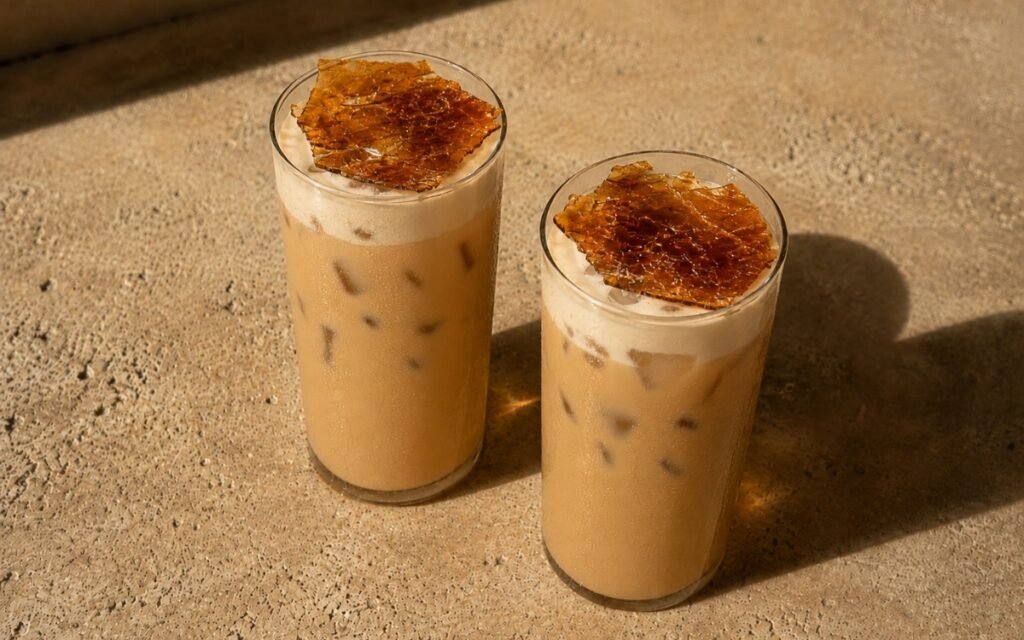
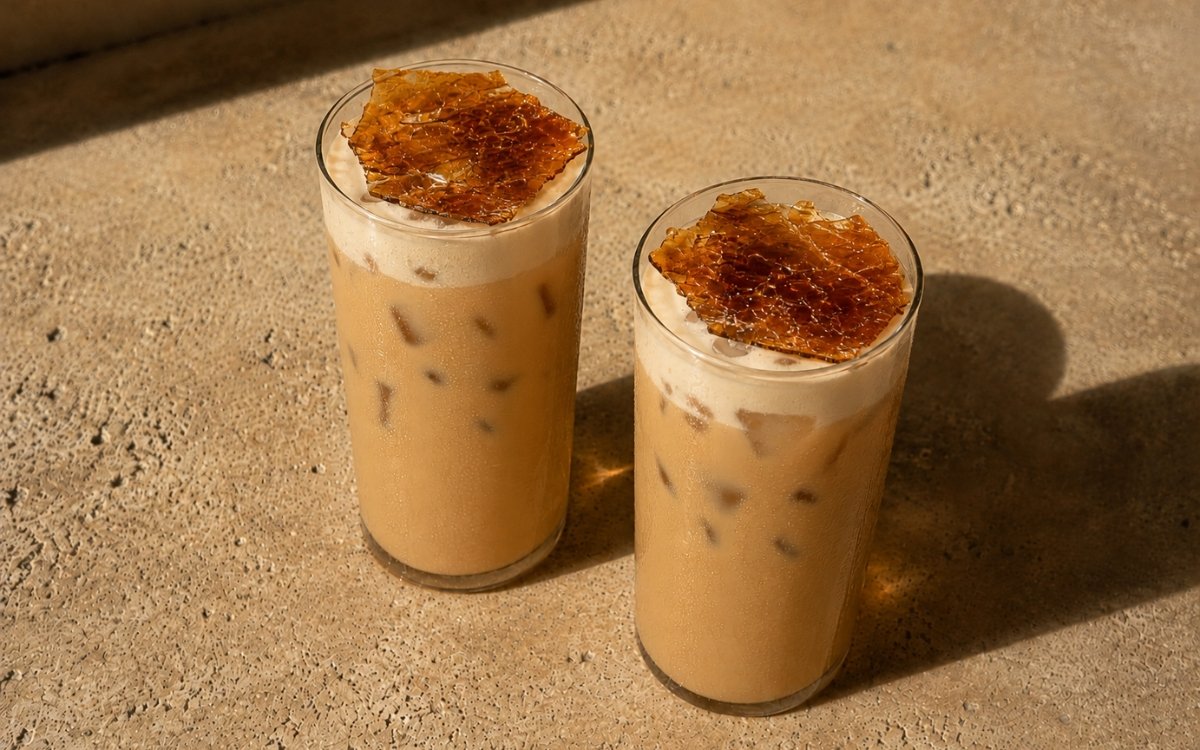
A cold vanilla espresso latte over ice with a custard-style vanilla cream cap and a thin crackled caramelized sugar top. The flavour should read like classic crème brûlée: strong espresso, cold milk, vanilla cream, deep caramelized sugar, and a clean burnt-sugar snap on top. Making the crackled sugar sheet entirely separately, rather than torching sugar directly on the cold, ice-filled glass, is the technique this whole finish depends on for safety and results — ordinary glass can crack from that temperature shock, the same separate-then-assemble principle used elsewhere in this collection whenever a hot, torched element needs to be built independently before joining a cold drink. Cooking that sugar to a genuine deep amber, both in the syrup and the crackled top, is what gives the drink its actual crème brûlée character rather than tasting like a plain vanilla latte. Keeping the vanilla cream cap pourable rather than whipped is what preserves the drink’s identity as an iced latte instead of turning it into a dessert cup. The payoff is a drink with real structural and sensory drama — a strong vanilla-caramel latte base beneath a soft cream cap, topped with a genuine crackled sugar sheet that snaps when tapped, just like the pastry it’s inspired by.
Prep Time : 15 min
Cook Time : 8 min
Servings : 2
15 min
8 min
2
Ingredients
For the Burnt Sugar Syrup
• 80g granulated sugar
• 30ml water
• 60ml hot water
• 1 small pinch fine sea salt
• ½ tsp vanilla extract — this one on Amazon
For the Iced Latte
• 120ml espresso, freshly brewed (4 standard shots total, counting 1 shot = 30ml)
• 280ml cold whole milk — this one on Amazon
• 30ml burnt sugar syrup (15ml per serving)
• 8–10 ice cubes
For the Vanilla Cream Cap
• 80ml heavy cream, very cold — this one on Amazon
• 40ml whole milk, very cold
• 15ml burnt sugar syrup
• ¼ tsp vanilla extract
• 1 small pinch fine sea salt
For the Crackled Brûlée Top
• 35–40g granulated sugar
This post may contain affiliate links. As an Amazon Associate I earn from qualifying purchases, at no additional cost to you.
Directions
- Make the Burnt Sugar Syrup
Add 80g sugar and 30ml water to a small saucepan. Cook over medium heat without stirring until the sugar melts and turns deep amber. Remove from the heat and carefully add 60ml hot water. It will bubble hard. Stir until smooth, then add the salt and vanilla. Let cool completely. The syrup should taste like deep caramelized sugar, not pale simple syrup. If it is too light, the drink will taste like a normal vanilla latte. If it smells burnt and bitter, start again. Cooking the sugar without stirring, letting it melt and colour through gentle swirling instead, is what allows it to reach genuine deep amber evenly rather than crystallising back into a grainy mass — a spoon dragged through molten sugar risks triggering exactly that unwanted recrystallisation. - Make the Crackled Brûlée Sugar
Line a tray with baking paper. Sprinkle the 35–40g sugar into a thin, even layer in a small non-stick pan. Melt over medium heat until it turns amber, then pour immediately onto the baking paper. Tilt the tray slightly or spread quickly with the back of a spoon into a very thin sheet. Let it harden completely, then break into 2 large thin pieces sized to sit on top of the glasses. The sugar layer must be thin. Thick caramel is hard to crack with a spoon or straw and feels clumsy on a drink. Make the brûlée sugar separately. Do not torch sugar directly on top of a cold glass full of ice — ordinary glass can crack from the temperature shock. Building this crackled top entirely apart from the cold drink is a genuine safety measure, not simply a convenience — the temperature differential between molten sugar or a torch flame and an ice-filled glass is exactly the kind of thermal shock ordinary glassware isn’t built to withstand. - Make the Vanilla Cream Cap
Combine the heavy cream, whole milk, 15ml burnt sugar syrup, vanilla, and salt in a small jug. Froth briefly until slightly thickened and softly aerated. It should be pourable, not whipped. The cream should feel like loose crème anglaise or sweet cream, not stiff whipped cream. If it becomes too thick, the drink turns into a dessert cup instead of an iced latte. Stopping the frothing well short of anything resembling whipped cream is what keeps this layer behaving like a proper custard-inspired cream sauce — the same loose, pourable texture crème anglaise itself is known for, rather than a substantial, spoonable topping. - Brew the Espresso
Brew 120ml espresso total, equal to 4 standard 30ml shots. Let it stand for 30–60 seconds only if extremely hot. The espresso needs to be strong and fresh. The cream and caramelized sugar are rich, so weak coffee disappears quickly. Given how much rich cream and deep caramel sit above this base, it genuinely needs real coffee strength to remain noticeable once the whole drink is finally stirred together. - Build the Latte Base
Add 15ml burnt sugar syrup to each glass. Fill each glass generously with ice. Pour 140ml cold whole milk into each glass. Pour 60ml espresso into each glass over the milk and ice, then stir briefly. The base should taste like a strong vanilla-caramel iced latte, not plain sweet milk. The colour should be pale caramel-beige with espresso still clearly present. This stage builds a genuinely balanced latte in its own right — the drink’s identity depends on this base standing up as strong coffee even before the cream cap and brûlée top are added on top of it. - Add the Vanilla Cream and Brûlée Top
Slowly pour or spoon the vanilla cream cap over each iced latte. Place one thin crackled caramelized sugar piece on top of each cream cap. Serve immediately. The top should crack when tapped, like crème brûlée. The sugar should sit on the cream layer long enough to serve, then break into the drink when stirred. Placing the crackled sugar directly onto the pourable cream cap, rather than floating it on the coffee itself, gives it a stable, slightly buoyant surface to rest on right up until it’s tapped and broken.
*Notes :
- The decision to build the crackled sugar sheet entirely separately from the drink, rather than torching sugar directly on top of the ice-filled glass, is worth understanding as a genuine safety requirement rather than an extra step for convenience. The thermal shock from molten sugar or an open flame meeting an already-cold, ice-packed glass is exactly the kind of sudden temperature swing that ordinary drinking glass isn’t designed to survive — building the sugar sheet on its own, then simply placing the finished, cooled piece on top of the drink, sidesteps that risk entirely.
- Cooking the sugar to genuine deep amber, both in the burnt sugar syrup and the crackled top, deserves the same careful attention this technique receives throughout this collection’s other caramel-based recipes. A syrup or sugar sheet pulled too pale hasn’t developed the complex, slightly bitter-edged flavour that actually reads as crème brûlée — it tastes like ordinary sweetness instead. This drink’s entire flavour identity depends on that genuine caramelisation happening in both components, not just one.
- Keeping the vanilla cream cap pourable, deliberately stopped well short of anything resembling whipped cream, protects the drink’s core identity as an iced latte rather than a dessert. The specific texture target here — closer to loose crème anglaise than whipped topping — is a genuine reference point worth aiming for precisely, since overshooting it even slightly shifts the drink’s whole character toward something heavier and more dessert-like.
- The instruction to serve immediately after the sugar top is added reflects a real, time-limited phenomenon worth understanding. The cold cream cap beneath the crackled sugar begins softening that sugar from the moment it’s placed, and the satisfying snap this drink is built around genuinely fades within a fairly short window — there’s no getting that crisp texture back once the sugar has had time to soften against the cold cream underneath it.
Why This Recipe Works
This recipe works because every caramel component is cooked to a genuine deep amber for real crème brûlée character, and the crackled sugar sheet is built entirely separately from the cold, ice-filled glass to avoid thermal shock cracking ordinary glassware.
The latte base itself is built to stand up as a properly strong, balanced drink on its own, and the vanilla cream cap is kept deliberately loose and pourable, closer to crème anglaise than whipped cream, preserving the drink’s identity as an iced latte rather than a dessert cup.
Serving immediately after the sugar top is placed captures the satisfying crackle before the cold cream beneath it has time to soften it.
Ingredient Breakdown
Genuinely Amber-Cooked Burnt Sugar Syrup
The flavour foundation — cooked to real deep amber rather than pale, developing the caramel depth this drink’s crème brûlée identity depends on.
Separately Built Crackled Sugar Sheet
The critical safety and finishing technique — made entirely apart from the cold glass to avoid thermal shock, then simply placed on top.
Pourable Vanilla Cream Cap
The custard-inspired top layer — kept loose like crème anglaise, deliberately stopped short of anything resembling whipped cream.
Strong Latte Base (Espresso, Milk, Syrup)
The drink’s foundation — built to stand as a properly balanced iced latte on its own, before any of the rich toppings are added.
Deep Amber Crackled Top (Immediate Serving)
The finishing crackle — its satisfying snap is genuinely time-limited, fading as the cold cream beneath softens it.
Flavor Structure Explained
This crème brûlée iced latte follows a layered balance model:
- Smooth milky foundation (cold whole milk)
- Bold espresso centre (freshly brewed coffee)
- Deep caramel sweetness (burnt sugar syrup)
- Custard-like cream top (loose vanilla cream cap)
- Crisp crackling finish (caramelized sugar sheet)
Cold whole milk provides the smooth foundation for the strong latte base beneath everything else. Freshly brewed espresso layers in bold, unmistakable coffee flavour that stays clearly present against the rich toppings above it. The burnt sugar syrup, cooked to genuine deep amber, contributes complex caramel sweetness distinct from a plain vanilla syrup. A loose, pourable vanilla cream cap adds custard-like richness on top of the coffee, and a genuinely crackled caramelized sugar sheet finishes the drink with a satisfying, audible snap that echoes the classic dessert this drink is inspired by.
Common Mistakes to Avoid
- Torching Sugar Directly on the Cold, Ice-Filled Glass – This risks cracking ordinary glass from thermal shock. Always build the crackled sugar sheet entirely separately.
- Pulling the Caramel Too Pale – This produces a drink that tastes like a plain vanilla latte rather than genuine crème brûlée. Always cook both the syrup and the sugar sheet to real deep amber.
- Making the Sugar Sheet Too Thick – This is difficult to crack cleanly and feels clumsy on the drink. Always spread it thin before it hardens.
- Whipping the Cream Cap Instead of Keeping It Loose – This turns the drink into a dessert cup rather than staying a proper iced latte. Always keep it pourable, like loose crème anglaise.
- Letting the Drink Sit Before Serving – The cold cream beneath the sugar sheet softens it, and the satisfying crackle fades quickly. Always serve immediately after topping.
Variations
Extra-Deep Caramel Version
Push the burnt sugar syrup and crackled sugar slightly darker for a more intensely caramelised, bittersweet edge, watching closely to avoid true burning.
Oat Milk Version
Substitute a barista-style oat milk for the whole milk in the latte base, keeping the heavy cream for the cap.
Extra-Strong Version
Increase to 3 shots of espresso per serving for a bolder coffee presence beneath the rich toppings.
Salted Version
Increase the sea salt slightly in both the syrup and cream cap for a more pronounced sweet-salty contrast.
Storage & Make-Ahead
The burnt sugar syrup can be made a day or two ahead and refrigerated in a sealed jar. The vanilla cream cap is best made fresh close to serving.
The crackled sugar sheets can be made ahead and stored in an airtight container with parchment between pieces, away from humidity, for up to 2 days.
This drink is meant to be fully assembled and served immediately; the crackled sugar top does not hold its texture once placed on the cold cream, and the layered presentation does not survive storage.
Frequently Asked Questions
Why does the crackled sugar sheet need to be made entirely separately rather than torched directly on the drink?
Molten sugar or an open flame meeting an already-cold, ice-filled glass creates exactly the kind of sudden temperature shock ordinary drinking glass isn’t built to survive. Building the sheet separately, then simply placing the finished piece on top, avoids that risk of the glass cracking entirely.
Why does the sugar need to be cooked to genuine deep amber in both the syrup and the crackled top?
A syrup or sugar sheet pulled too pale tastes like ordinary sweetness rather than developing the complex, slightly bitter-edged flavour that actually reads as crème brûlée. This drink’s whole identity depends on that real caramelisation happening in both components.
Why does the vanilla cream cap need to stay pourable rather than being whipped?
This drink is meant to stay an iced latte, not become a dessert cup. The specific target texture, closer to loose crème anglaise than whipped cream, is what preserves that identity — overshooting it even slightly shifts the drink’s whole character toward something heavier.
Why does the drink need to be served immediately after the sugar top is added?
The cold cream cap beneath the crackled sugar begins softening it from the moment it’s placed, and the satisfying snap fades within a fairly short window. There’s no recovering that crisp texture once the sugar has softened against the cold cream underneath.
Are there other dessert-inspired iced coffee drinks worth trying?
Pistachio Cream Iced Latte, Tiramisu Iced Latte, White Chocolate Iced Mocha, and Iced Vanilla Latte all build on a related rich, dessert-inspired coffee foundation, each bringing its own distinct flavour direction worth exploring.
Nutrition Facts
( per serving )
Calories
~380 kcal
Protein
7 g
Fat
22 g
Carbs
38 g
Calories
~380 kcal
Protein
7 g
Fat
22 g
Carbs
38 g
Related Recipes
Related Recipes

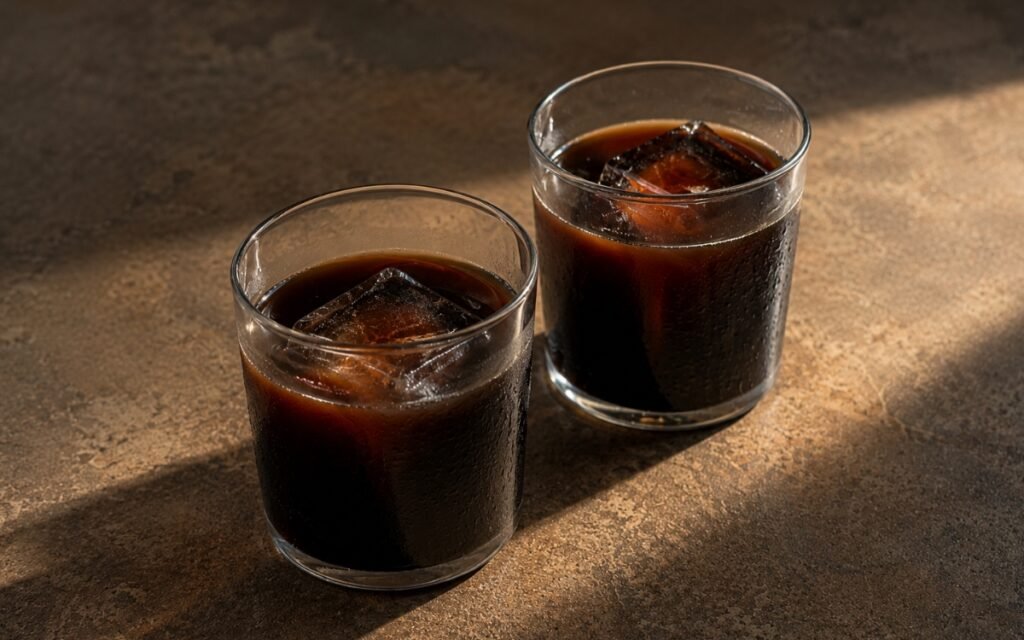
Cold Brew Coffee
Coarsely ground coffee steeped in cold water for 12–16 hours, strained twice for clarity, and served black over a single large ice cube.
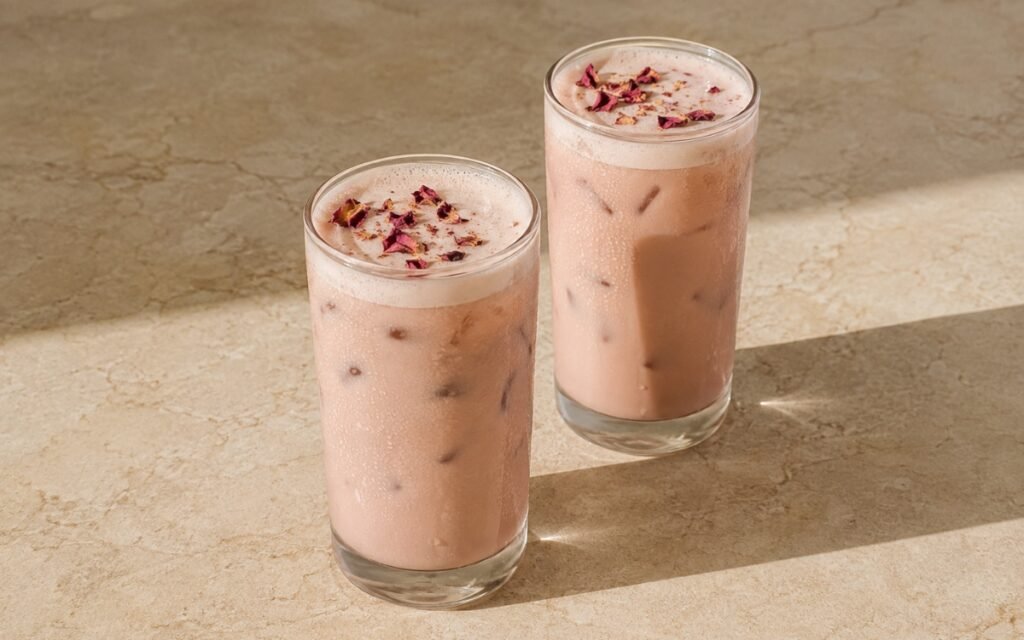
Iced Rose Latte
Restrained rose syrup, cold barista oat milk, and ice topped with freshly brewed espresso, finished with a thin foam layer and a rose petal.
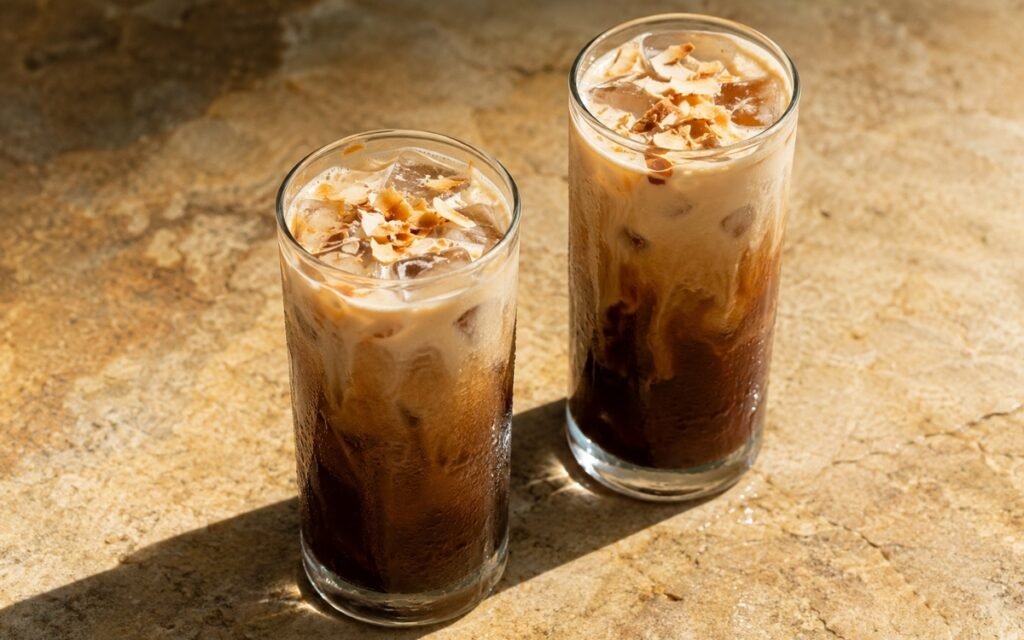
Toasted Coconut Cold Brew
Strong, chilled cold brew coffee sweetened with warm toasted coconut syrup and softened with a restrained splash of coconut milk.
You might also like
You might also like
Cranberry Lemonade
Cold-extracted lemon zest and juice combined with a raw, twice-strained cranberry base for a deep vivid red, tart lemonade.
Peach Ginger Lemonade
Cold-extracted lemon zest and juice combined with raw-blended peaches and a gently extracted ginger infusion for a bright golden-orange lemonade.
Panna Cotta
Delicately set cream, milk, sugar, vanilla and gelatin panna cotta, unmolded and topped with glossy berry sauce and macerated berries.

Crème Brûlée Iced Latte
Ingredients
Method
- Add 80g sugar and 30ml water to a small saucepan. Cook over medium heat without stirring until the sugar melts and turns deep amber. Remove from the heat and carefully add 60ml hot water. It will bubble hard. Stir until smooth, then add the salt and vanilla. Let cool completely. The syrup should taste like deep caramelized sugar, not pale simple syrup. If it is too light, the drink will taste like a normal vanilla latte. If it smells burnt and bitter, start again. Cooking the sugar without stirring, letting it melt and colour through gentle swirling instead, is what allows it to reach genuine deep amber evenly rather than crystallising back into a grainy mass — a spoon dragged through molten sugar risks triggering exactly that unwanted recrystallisation.
- Line a tray with baking paper. Sprinkle the 35–40g sugar into a thin, even layer in a small non-stick pan. Melt over medium heat until it turns amber, then pour immediately onto the baking paper. Tilt the tray slightly or spread quickly with the back of a spoon into a very thin sheet. Let it harden completely, then break into 2 large thin pieces sized to sit on top of the glasses. The sugar layer must be thin. Thick caramel is hard to crack with a spoon or straw and feels clumsy on a drink. Make the brûlée sugar separately. Do not torch sugar directly on top of a cold glass full of ice — ordinary glass can crack from the temperature shock. Building this crackled top entirely apart from the cold drink is a genuine safety measure, not simply a convenience — the temperature differential between molten sugar or a torch flame and an ice-filled glass is exactly the kind of thermal shock ordinary glassware isn’t built to withstand.
- Combine the heavy cream, whole milk, 15ml burnt sugar syrup, vanilla, and salt in a small jug. Froth briefly until slightly thickened and softly aerated. It should be pourable, not whipped. The cream should feel like loose crème anglaise or sweet cream, not stiff whipped cream. If it becomes too thick, the drink turns into a dessert cup instead of an iced latte. Stopping the frothing well short of anything resembling whipped cream is what keeps this layer behaving like a proper custard-inspired cream sauce — the same loose, pourable texture crème anglaise itself is known for, rather than a substantial, spoonable topping.
- Brew 120ml espresso total, equal to 4 standard 30ml shots. Let it stand for 30–60 seconds only if extremely hot. The espresso needs to be strong and fresh. The cream and caramelized sugar are rich, so weak coffee disappears quickly. Given how much rich cream and deep caramel sit above this base, it genuinely needs real coffee strength to remain noticeable once the whole drink is finally stirred together.
- Add 15ml burnt sugar syrup to each glass. Fill each glass generously with ice. Pour 140ml cold whole milk into each glass. Pour 60ml espresso into each glass over the milk and ice, then stir briefly. The base should taste like a strong vanilla-caramel iced latte, not plain sweet milk. The colour should be pale caramel-beige with espresso still clearly present. This stage builds a genuinely balanced latte in its own right — the drink’s identity depends on this base standing up as strong coffee even before the cream cap and brûlée top are added on top of it.
- Slowly pour or spoon the vanilla cream cap over each iced latte. Place one thin crackled caramelized sugar piece on top of each cream cap. Serve immediately. The top should crack when tapped, like crème brûlée. The sugar should sit on the cream layer long enough to serve, then break into the drink when stirred. Placing the crackled sugar directly onto the pourable cream cap, rather than floating it on the coffee itself, gives it a stable, slightly buoyant surface to rest on right up until it’s tapped and broken.