Ingredients
Method
Build the Coffee Base
- Add the instant coffee, sugar, and 60ml cold water to a shaker, drink mixer cup, or tall jar with a tight lid. Use 4g instant coffee, 8g sugar, and 30ml cold water per serving. The coffee and sugar need only a small amount of water at this stage. Too much water makes weak foam. The thick foam comes from concentrating the instant coffee mixture before dilution. Instant coffee's own composition is specifically what allows this foaming to happen at all, and it works most effectively when the mixture stays concentrated — diluting it too early with the full water amount spreads that foaming potential too thin before the shake ever has a chance to build real structure.
Shake Hard
- Shake very hard for 20–30 seconds, or use a handheld frappé mixer until the mixture becomes thick, pale caramel-brown, and foamy. The foam should expand significantly and look dense, slightly uneven, and real — not thin bubbles. This is the whole drink. If the foam is weak, the frappé is weak. Keep shaking until the mixture turns lighter and holds a thick head. Use instant coffee, not espresso and not brewed coffee. Greek frappé depends on the foaming power of instant coffee. Brewed coffee will not give the same classic foam. Instant coffee's soluble compounds whip into a stable foam under vigorous, sustained agitation in a way that oils and compounds in freshly brewed or espresso coffee simply don't replicate — this is a genuine chemical difference between the two, not just a matter of one being more traditional than the other.
Fill the Glasses
- Divide the foam mixture evenly between 2 tall glasses. Add ice cubes to each glass. The foam should sit high in the glass before you add the final water. If it collapses immediately, the coffee was under-shaken or too diluted. Building the ice into the glass after the shaken foam mixture is already divided gives the foam a chance to establish its own structure in the glass before any further liquid is introduced, which is important given how much dilution is still to come in the next stage.
Add Cold Water
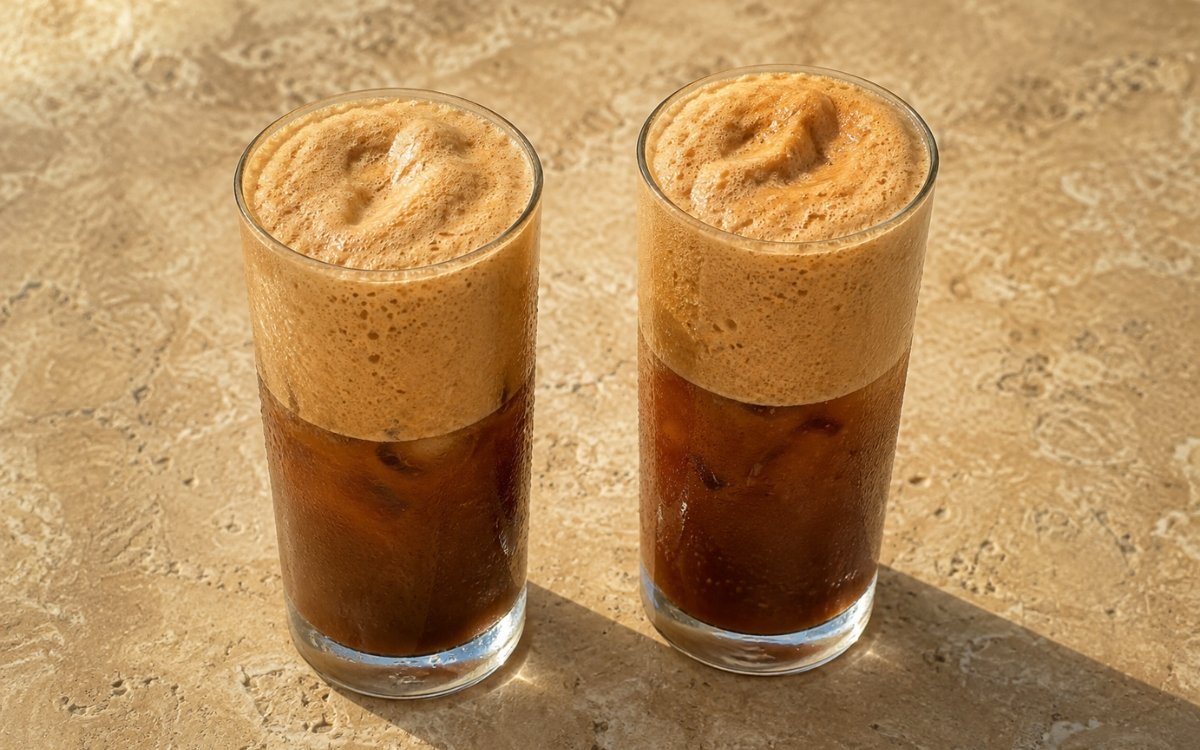
- Slowly pour cold water into each glass until each drink reaches about 250ml total volume, including ice and foam. Pour down the side of the glass or through the ice to keep the foam sitting on top. The finished glass should show deep dark coffee underneath and a thick pale caramel foam head filling the top third. If everything turns uniformly light brown, you poured too aggressively or overmixed it. Directing the water down the glass's side or through the ice, rather than pouring it straight onto the foam, is what protects that foam from being disturbed or forced to mix in — a direct pour onto the foam's surface risks breaking it down and collapsing the very structure the hard shake just built.
Serve
- Add one short straw to each glass and serve immediately. Do not garnish. A proper Greek frappé should be strong, cold, foamy, slightly bitter, and simple. The foam should stay visible while the dark coffee sits below it. This drink's whole identity rests on that visible contrast between foam and coffee — serving without delay, and without any garnish that would distract from it, keeps the presentation as simple and iconic as the style calls for.
Notes
Using only a small amount of water during the initial shaking stage is worth understanding as the technical foundation this entire drink is built on. The instant coffee and sugar mixture needs to stay genuinely concentrated to whip up into real, dense foam under vigorous shaking — diluted too early with the drink's full water volume, that same mixture simply doesn't have enough concentrated coffee solids present to build the thick, stable foam a proper frappé depends on. The final dilution is deliberately saved for after the foam is already fully formed.
The specific requirement for instant coffee, rather than brewed coffee or espresso, reflects a real chemical distinction worth taking seriously rather than dismissing as tradition for its own sake. Instant coffee's soluble compounds respond to vigorous agitation by forming a genuinely stable foam structure in a way that brewed coffee's oils and dissolved compounds don't replicate. Substituting brewed coffee, however carefully executed, simply produces a different drink — closer to a Freddo Espresso than a true Greek frappé.
Directing the final water pour down the glass's side or through the ice, rather than straight onto the foam's surface, is a small technique detail that protects the drink's entire presentation. That foam has just been built through genuinely vigorous shaking, and a direct, forceful pour onto its surface risks breaking down and collapsing that structure before the drink is even finished being assembled — the gentler pour path preserves what the hard shake just accomplished.
The three classical sweetness variations named in this recipe — sketos (unsweetened), metrios (medium), and glykos (very sweet) — are worth understanding as genuinely different, established versions of the same drink rather than simple adjustments to taste. Notably, the sugar level also affects the foam's own stability, with the sweeter glykos version producing a thicker, more stable foam than the sharper, less sweetened sketos — sugar itself contributes real structural support to the foam, beyond simply flavour.