
Iced Spanish Latte with Condensed Milk
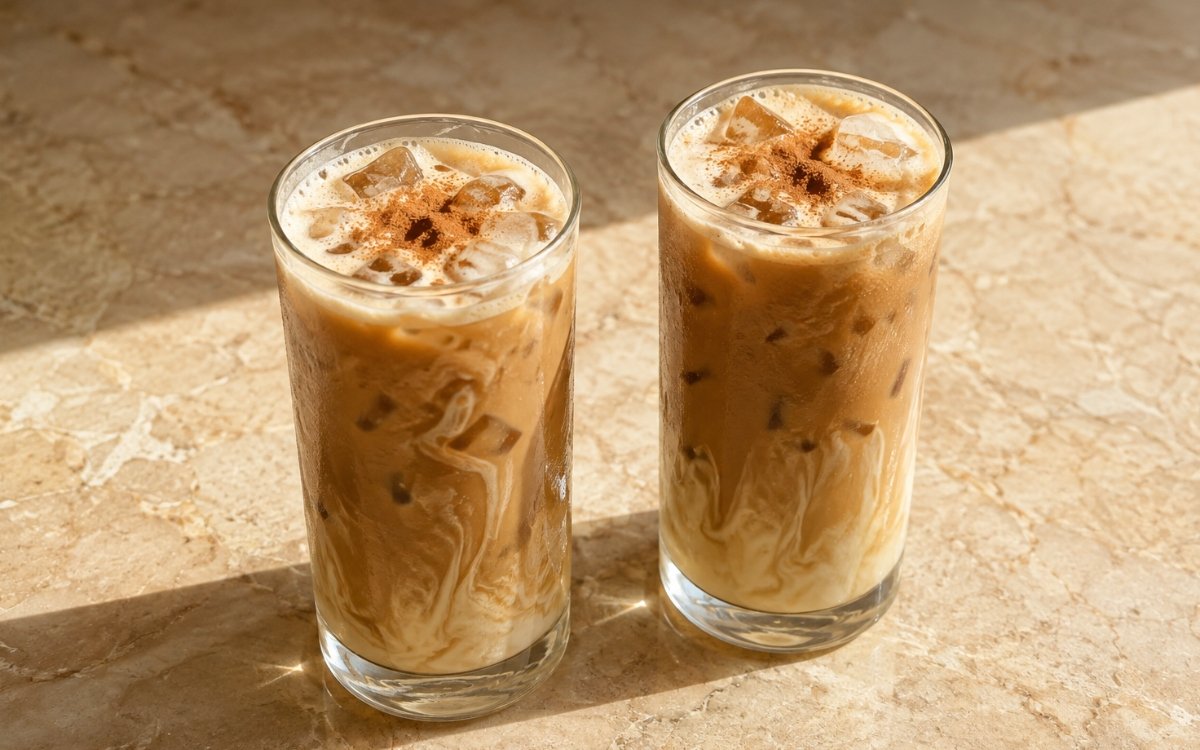
A classic iced Spanish latte built with sweetened condensed milk at the base, cold milk and ice in the middle, and freshly brewed espresso poured over the top so the layers stay visible before mixing. Richer and sweeter than a standard iced latte, but still balanced by strong espresso and cold milk. Leaving the condensed milk undisturbed at the base of the glass, rather than stirring it in immediately, is the technique this whole drink depends on for its defining visual — that thick, settled white layer is one of the clearest signature cues of a proper iced Spanish latte before mixing. Building on top of it with genuinely cold milk poured slowly, over ice that’s already in place, is what keeps the condensed milk from dissolving too fast and collapsing the layers prematurely. Pouring the espresso last, gently, over the top is what produces the drink’s full three-layer structure — condensed milk below, ice through the middle, espresso-tinted liquid above — before the final stir combines everything into a smooth, rich, coffee-forward drink. The payoff is a genuinely striking layered presentation that resolves into something richer and sweeter than a standard iced latte, while staying clearly, unmistakably coffee-based.

Prep Time : 5 min
Cook Time : 5 min
Servings : 2
5 min
5 min
2
Ingredients
For the Iced Spanish Latte
• 120ml espresso, freshly brewed (4 standard shots total, counting 1 shot = 30ml)
• 240ml cold whole milk — this one on Amazon
• 80g sweetened condensed milk (40g per serving) — this one on Amazon
• 8–10 ice cubes
This post may contain affiliate links. As an Amazon Associate I earn from qualifying purchases, at no additional cost to you.
Directions
- Brew the Espresso
Brew 120ml espresso total, equal to 4 standard 30ml shots. Let it stand for 30–60 seconds only if it is extremely hot, but do not let it go stale. The espresso should be fresh, dark, and aromatic. This drink is sweet by design, so the coffee needs enough strength to keep the final balance from becoming flat and overly milky. Given how much sweetness the condensed milk contributes on its own, a genuinely bold, fresh espresso is what keeps that sweetness in check — a weaker shot would let the condensed milk dominate the drink entirely rather than staying in balance with real coffee character. - Build the Condensed Milk Base
Divide the sweetened condensed milk evenly between 2 tall glasses, 40g per glass. Leave it undisturbed at the bottom. The condensed milk should sit as a thick white base. That is one of the defining visual cues of a proper iced Spanish latte before stirring. Condensed milk’s naturally thick, dense consistency is what allows it to settle and stay put at the bottom of the glass without any special technique required — that inherent density is the entire reason this drink can achieve such a clean, defined base layer. - Add the Ice and Milk
Fill each glass generously with ice. Pour 120ml cold whole milk into each glass over the ice. Pour slowly so the condensed milk stays mostly at the base rather than mixing in immediately. The glasses should now show a clearly pale body above the thick white condensed milk, with the ice helping keep the layers separated. The milk must be cold and the glasses must already contain ice. Warm milk or no ice makes the condensed milk dissolve too fast and weakens the layered effect. The ice functions here as more than a chilling agent — positioned between the condensed milk base and the milk poured on top of it, it physically slows how quickly the two would otherwise mix, which is part of what preserves the layered structure this drink is built around. - Pour in the Espresso
Slowly pour 60ml espresso into each glass over the milk and ice. Pour gently so the espresso forms a darker upper layer and visible swirls through the pale milk without immediately fully mixing into the condensed milk. Before stirring, you should see the layered structure clearly through the glass: condensed milk at the base, ice through the middle, and darker espresso-tinted liquid above. The espresso must go in last. If it goes in earlier, you lose the classic Spanish latte layering. This final pour, done gently rather than forcefully, is what completes the drink’s full three-layer presentation — reversing the order at any earlier stage would collapse that structure before it ever had the chance to form. - Serve
Serve immediately as layered, then stir before drinking so the condensed milk fully blends into the espresso and milk. Once stirred, the drink should become a smooth pale caramel-beige colour, richer and sweeter than a regular iced latte, but still clearly coffee-based. The layered presentation is genuinely brief once the drink is poured — serving right away and stirring only right before drinking preserves both that visual moment and the fresh, cold quality of every component.
*Notes :
- The condensed milk base’s tendency to settle and hold its shape at the bottom of the glass is worth understanding as a genuine property of the ingredient itself, not a technique that requires special handling to achieve. Sweetened condensed milk’s thick, dense consistency naturally resists dispersing into a lighter liquid poured carefully on top of it — this is precisely why the recipe explicitly warns against evaporated milk as a substitute, since that considerably thinner product lacks the same density and simply wouldn’t hold a defined layer the same way.
- The ice layer’s role in this drink extends meaningfully beyond basic chilling, much like it does in other layered iced espresso drinks throughout this collection. Positioned between the condensed milk base and the cold milk poured on top, it physically interrupts and slows the natural tendency of those two liquids to blend together on contact — without that structural buffer, the drink would lose its layered definition considerably faster, even with careful, slow pouring.
- Keeping the espresso genuinely strong and fresh matters more in this particular drink than it might in a milder one, precisely because of how much inherent sweetness the condensed milk already contributes. A weak or flat shot would leave the sweetness with nothing substantial to balance against, tipping the whole drink toward tasting like sweetened milk with only a faint coffee note rather than a properly balanced Spanish latte.
- The explicit warning against substituting evaporated milk for condensed milk deserves to be taken seriously rather than treated as a minor ingredient note. These are genuinely different products — evaporated milk is unsweetened and considerably thinner, lacking both the sugar content and the dense, settling texture that define this drink’s entire character. Using it in place of condensed milk wouldn’t produce a slightly less sweet version of the same drink; it would produce something fundamentally different.
Why This Recipe Works
This recipe works because sweetened condensed milk’s own thick, dense consistency naturally settles and holds as a defined base layer without requiring special technique, and building carefully on top of it — cold milk poured slowly over already-placed ice, then espresso poured gently last — preserves that layered structure through to serving.
The ice functions as a genuine physical buffer between layers, slowing how quickly they’d otherwise blend. Strong, fresh espresso is what keeps the drink’s considerable inherent sweetness properly balanced by real coffee character, and serving immediately while stirring only right before drinking preserves both the visual presentation and the freshness of every component.
Ingredient Breakdown
Sweetened Condensed Milk
The defining base layer — its naturally thick, dense consistency is what allows it to settle and hold as a distinct layer without special handling.
Freshly Brewed, Strong Espresso
The coffee foundation — needs genuine strength and freshness to balance the condensed milk’s considerable inherent sweetness.
Cold Whole Milk, Poured Slowly
The middle layer — added carefully over already-placed ice to preserve the condensed milk base rather than mixing in immediately.
Ice as a Structural Buffer
The layering mechanism — physically slows how quickly the condensed milk base and milk poured on top would otherwise blend together.
Correct Build Order (Condensed Milk, Ice, Milk, Espresso)
The critical technique — this specific sequence, and only this sequence, produces the drink’s full three-layer presentation.
Flavor Structure Explained
This iced Spanish latte follows a layered balance model:
- Rich sweet foundation (sweetened condensed milk)
- Bold espresso centre (freshly brewed coffee)
- Smooth milky body (cold whole milk)
- Cool refreshing structure (ice)
Sweetened condensed milk defines the drink’s foundation with rich, concentrated sweetness and creamy body, distinct from a regular sugar-sweetened latte. Freshly brewed espresso provides the bold coffee centre needed to properly balance that sweetness, keeping the drink from tasting like plain sweetened milk. Cold whole milk adds smooth, mellow body between the two, while generous ice keeps the whole drink properly chilled and refreshing as all the layers eventually come together.
Common Mistakes to Avoid
- Substituting Evaporated Milk for Condensed Milk – These are genuinely different products; evaporated milk is unsweetened and far thinner. Always use sweetened condensed milk specifically.
- Pouring the Milk Quickly Instead of Slowly – This mixes the condensed milk in too fast and collapses the layered look. Always pour gently over already-placed ice.
- Pouring the Espresso Before the Milk and Ice – This loses the classic three-layer structure entirely. Always add condensed milk, then ice, then milk, with espresso poured last.
- Using Weak or Stale Espresso – With so much inherent sweetness from the condensed milk, a flat shot leaves the drink unbalanced and overly milky. Always use fresh, strong espresso.
- Skipping the Final Stir – The condensed milk is intentionally concentrated at the bottom at first. Always stir thoroughly before drinking to combine everything.
Variations
Less Sweet Version
Reduce the condensed milk to 30–35g per serving for a milder sweetness while keeping the same layered build.
Vietnamese-Style Version
Brew the coffee through a phin filter instead of espresso for a related, slower-built layered coffee-and-condensed-milk drink.
Oat Milk Version
Substitute a barista-style oat milk for the dairy milk, following the identical layering technique.
Extra-Strong Version
Increase to 3 shots of espresso per serving for a bolder coffee presence against the condensed milk’s sweetness.
Storage & Make-Ahead
This drink is meant to be built and served fresh; it does not hold or store well once assembled, since the ice will melt and the layers will blend together over time.
Espresso can be brewed just before building the glasses, but should not be brewed far in advance, since its flavour and aroma fade noticeably as it sits.
Sweetened condensed milk should be kept at room temperature or lightly chilled, whichever is more convenient, since it doesn’t need to be cold to hold its layered structure at the base.
Frequently Asked Questions
Why does the condensed milk settle as a distinct layer without needing to be specially prepared?
Sweetened condensed milk’s naturally thick, dense consistency resists dispersing into a lighter liquid poured carefully on top of it. This inherent property is what allows it to hold a clean, defined base layer without any special technique required.
Why can’t evaporated milk be used instead of condensed milk?
These are genuinely different products. Evaporated milk is unsweetened and considerably thinner, lacking both the sugar content and the dense, settling texture that define this drink’s entire character. Substituting it would produce a fundamentally different result, not just a less sweet version.
Why does the ice matter beyond simply chilling the drink?
Positioned between the condensed milk base and the milk poured on top, the ice physically slows how quickly those two liquids would otherwise blend together. That structural buffer is part of what preserves the drink’s layered look even with slow, careful pouring.
Why does the espresso need to be genuinely strong rather than a standard shot?
The condensed milk already contributes considerable inherent sweetness, and a weak or flat shot leaves that sweetness with nothing substantial to balance against. Strong, fresh espresso is what keeps the finished drink properly balanced rather than tasting like plain sweetened milk.
Are there other condensed milk or Vietnamese-style iced coffee drinks worth trying?
Vietnamese Iced Coffee, Classic Iced Latte and Brown Sugar Shaken Espresso are also worth trying for a different, less sweet direction on iced espresso.
Nutrition Facts
( per serving )
Calories
~280 kcal
Protein
8 g
Fat
10 g
Carbs
40 g
Calories
~280 kcal
Protein
8 g
Fat
10 g
Carbs
40 g
Related Recipes
Related Recipes

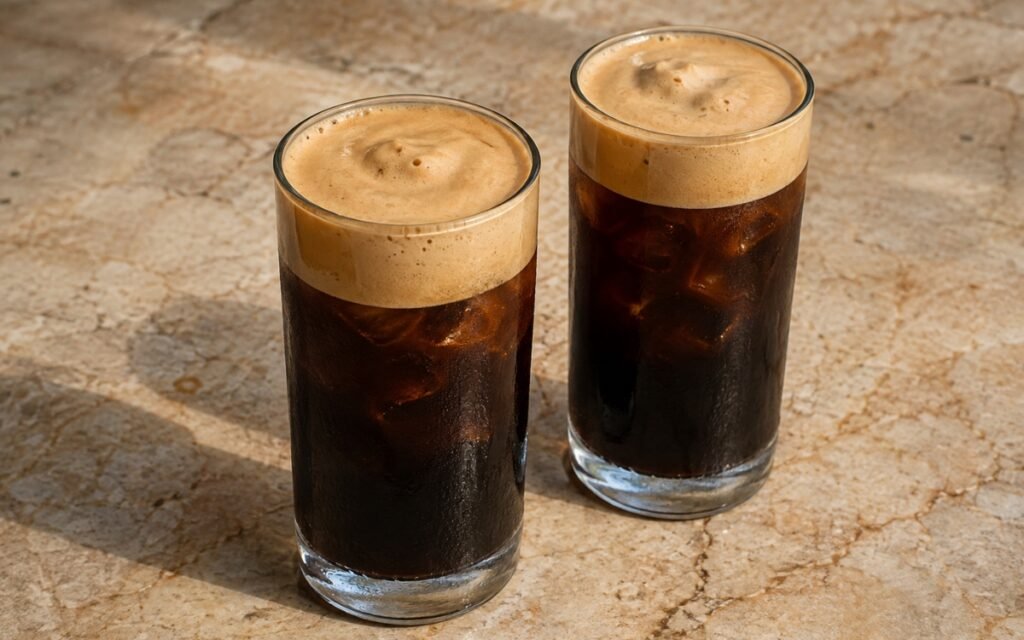
Freddo Espresso
Hot espresso shaken hard with ice until chilled, aerated, and capped with thick foam, then poured over fresh ice.
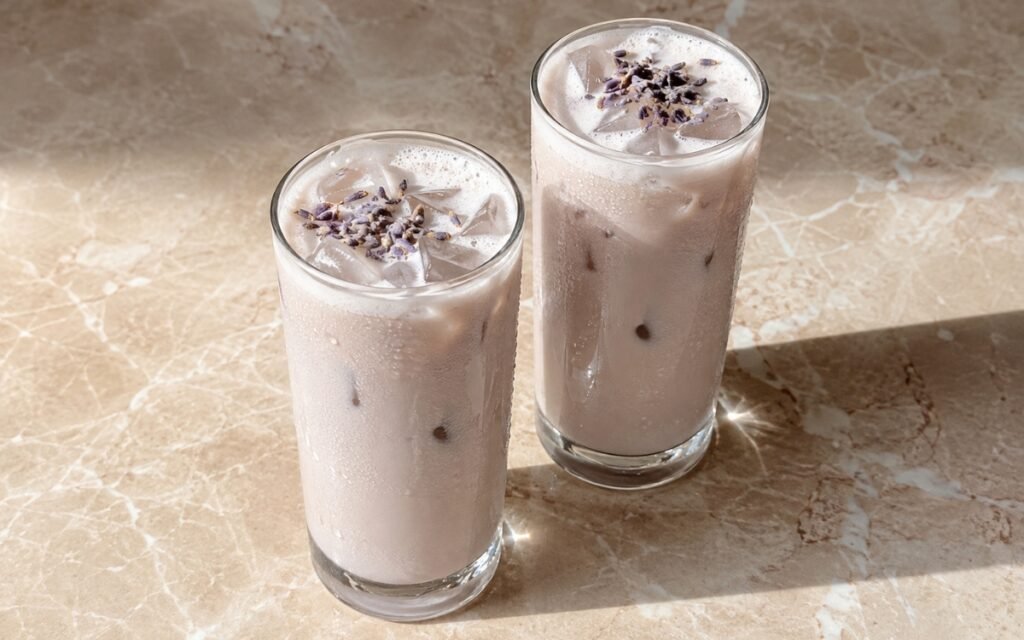
Lavender Iced Latte
Precisely steeped lavender syrup, cold milk, and ice topped with freshly brewed espresso, finished with a thin foam layer and lavender sprig.
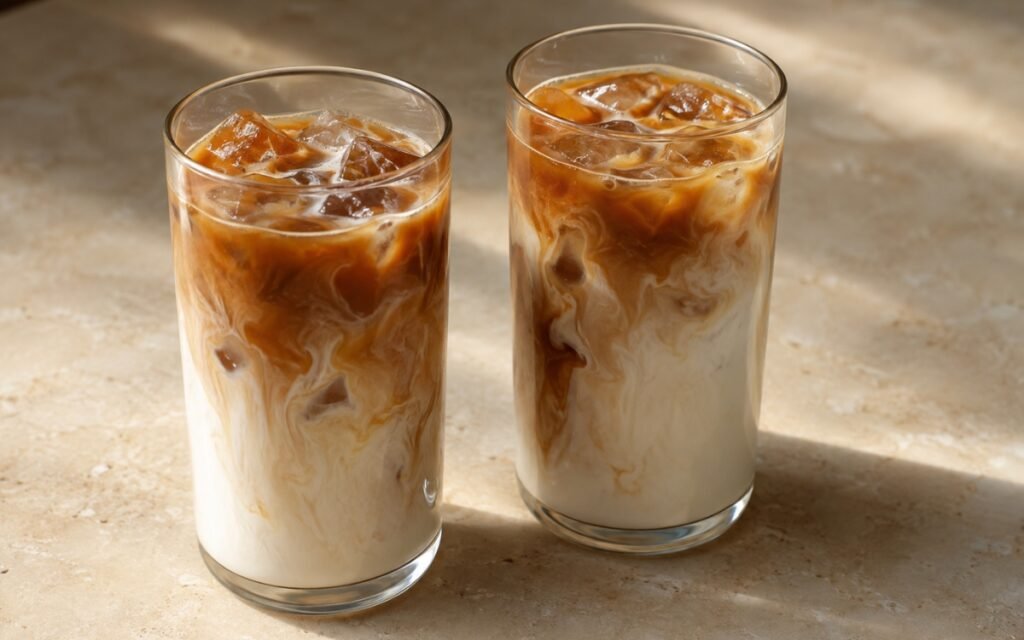
Iced Vanilla Latte
Vanilla syrup, cold milk, and ice topped with freshly brewed espresso poured slowly for the signature swirl, then stirred into a smooth iced vanilla latte.
You might also like
You might also like
Tamarind Lemonade
Cold-extracted lemon zest and juice combined with a gently extracted, deep amber tamarind base for a vivid, tangy lemonade.
Spaghetti alla Nerano
Fried zucchini rounds tossed with spaghetti in a glossy, emulsified Pecorino Romano sauce, finished with black pepper and fresh basil.
Mango Pineapple Pitcher Drink
Macerated, strained mango-lime base combined with pineapple and a second infusion of fresh mango, pineapple, and lime wheels.



Iced Spanish Latte with Condensed Milk
Ingredients
Method
- Brew 120ml espresso total, equal to 4 standard 30ml shots. Let it stand for 30–60 seconds only if it is extremely hot, but do not let it go stale. The espresso should be fresh, dark, and aromatic. This drink is sweet by design, so the coffee needs enough strength to keep the final balance from becoming flat and overly milky. Given how much sweetness the condensed milk contributes on its own, a genuinely bold, fresh espresso is what keeps that sweetness in check — a weaker shot would let the condensed milk dominate the drink entirely rather than staying in balance with real coffee character.
- Divide the sweetened condensed milk evenly between 2 tall glasses, 40g per glass. Leave it undisturbed at the bottom. The condensed milk should sit as a thick white base. That is one of the defining visual cues of a proper iced Spanish latte before stirring. Condensed milk’s naturally thick, dense consistency is what allows it to settle and stay put at the bottom of the glass without any special technique required — that inherent density is the entire reason this drink can achieve such a clean, defined base layer.
- Fill each glass generously with ice. Pour 120ml cold whole milk into each glass over the ice. Pour slowly so the condensed milk stays mostly at the base rather than mixing in immediately. The glasses should now show a clearly pale body above the thick white condensed milk, with the ice helping keep the layers separated. The milk must be cold and the glasses must already contain ice. Warm milk or no ice makes the condensed milk dissolve too fast and weakens the layered effect. The ice functions here as more than a chilling agent — positioned between the condensed milk base and the milk poured on top of it, it physically slows how quickly the two would otherwise mix, which is part of what preserves the layered structure this drink is built around.
- Slowly pour 60ml espresso into each glass over the milk and ice. Pour gently so the espresso forms a darker upper layer and visible swirls through the pale milk without immediately fully mixing into the condensed milk. Before stirring, you should see the layered structure clearly through the glass: condensed milk at the base, ice through the middle, and darker espresso-tinted liquid above. The espresso must go in last. If it goes in earlier, you lose the classic Spanish latte layering. This final pour, done gently rather than forcefully, is what completes the drink’s full three-layer presentation — reversing the order at any earlier stage would collapse that structure before it ever had the chance to form.
- Serve immediately as layered, then stir before drinking so the condensed milk fully blends into the espresso and milk. Once stirred, the drink should become a smooth pale caramel-beige colour, richer and sweeter than a regular iced latte, but still clearly coffee-based. The layered presentation is genuinely brief once the drink is poured — serving right away and stirring only right before drinking preserves both that visual moment and the fresh, cold quality of every component.