
Brown Sugar Shaken Espresso
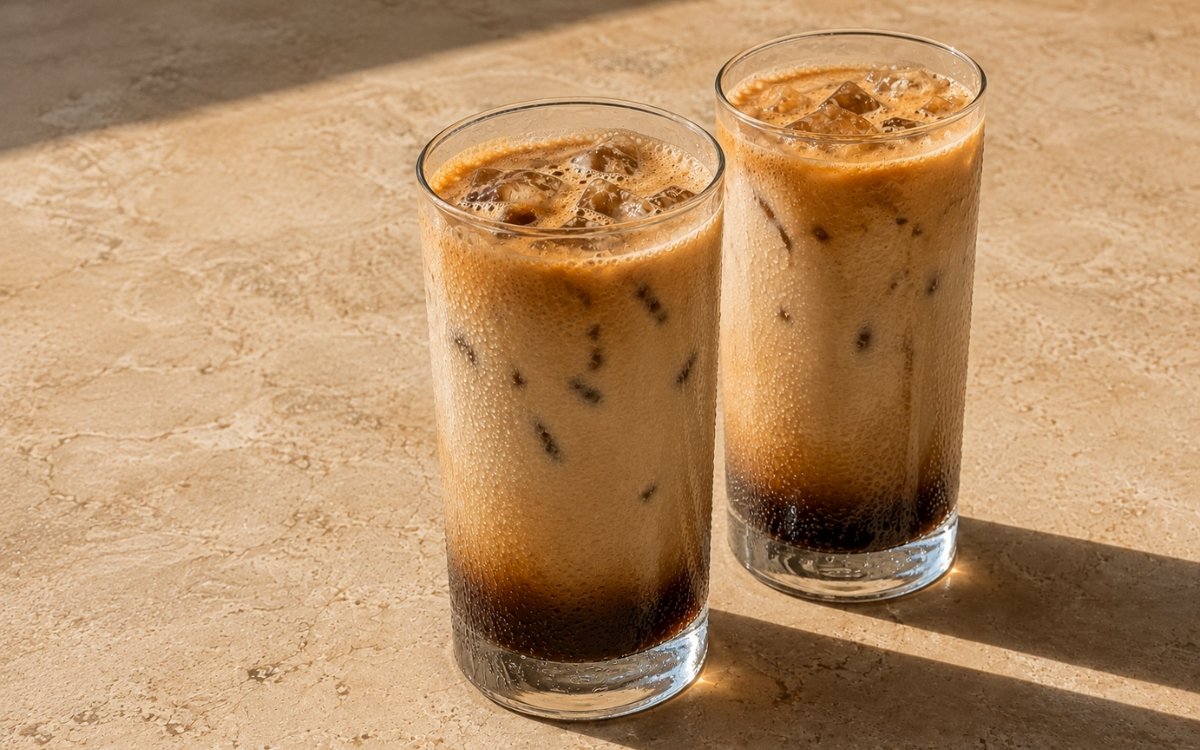
A classic brown sugar shaken espresso made with freshly brewed espresso, brown sugar syrup, ice, and cold oat milk. The espresso is shaken hard so it becomes chilled, aerated, and foamy, then poured over ice and topped with oat milk for a pale caramel gradient through the glass. Shaking the hot espresso hard with ice and syrup together is the technique this whole drink depends on for its defining frothy texture — that vigorous agitation chills, aerates, and lightens the espresso all at once, the same hard-shake principle used elsewhere in this collection whenever a drink needs rapid chilling and real aeration rather than a gradual, gentle cooling. Fully dissolving the brown sugar into a smooth, pourable syrup before it ever meets the espresso is what allows it to distribute evenly rather than leaving grainy, undissolved sugar behind. Keeping most of the sweetness shaken directly with the espresso, with only a small syrup layer left at the base for visual effect, is what makes the drink taste genuinely integrated rather than simply sweet on one end and weak on the other. The payoff is a drink with a real visual gradient — a small deep syrup layer at the base, pale oat milk softening the colour above it, and a light caramel-amber foam sitting on top.

Prep Time : 8 min
Cook Time : 2 min
Servings : 2
8 min
2 min
2
Ingredients
For the Brown Sugar Syrup
• 60g dark or light brown sugar — this one on Amazon
• 60ml water
• 1 small pinch fine sea salt
• ¼ tsp ground cinnamon, optional but classical for this style — this one on Amazon
For the Brown Sugar Shaken Espresso
• 120ml espresso, freshly brewed (4 standard shots total, counting 1 shot = 30ml)
• 240ml cold barista-style oat milk — this one on Amazon
• 160–200g ice, for shaking and serving
This post may contain affiliate links. As an Amazon Associate I earn from qualifying purchases, at no additional cost to you.
Directions
- Make the Brown Sugar Syrup
Add the brown sugar, water, salt, and cinnamon if using to a small saucepan. Warm over medium heat, stirring until the sugar fully dissolves. Simmer briefly for 30–60 seconds, then remove from the heat and let it cool slightly. The syrup should be fully dissolved, smooth, and pourable — not grainy and not thick like caramel. Brown sugar that is not fully dissolved will not distribute evenly through the drink. Brown sugar’s molasses content makes it slightly more resistant to dissolving cleanly than white sugar, which is exactly why the full warming and brief simmer matter here — rushing this step risks leaving fine undissolved grains that never fully integrate once the syrup meets cold liquid later on. - Brew the Espresso
Brew 120ml espresso total, equal to 4 standard 30ml shots. Use the espresso while still fresh and hot. If it sits too long, the flavour flattens and the shaken foam becomes less lively. The espresso should taste bold and clean, not burnt. This drink needs a strong coffee base because oat milk and ice soften the intensity quickly. Both the shaking stage and the oat milk topping that follows work to dilute and cool the espresso considerably — starting with a genuinely bold, fresh shot is what ensures real coffee character survives all the way through to the finished drink. - Prepare the Glasses
Divide a small amount of the brown sugar syrup between the 2 glasses, about 5ml per glass. This creates the visible deeper syrup layer at the base. Fill both glasses generously with fresh ice. The syrup should sit at the bottom clearly, while the glasses are packed enough with ice to support the gradient and keep the drink cold without becoming watery immediately. This small syrup reservoir at the very base is a deliberate visual anchor — its dense, slow-dissolving pool is what gives the finished drink its darkest, most concentrated point at the bottom of the glass. - Shake the Espresso
In a shaker, combine the hot espresso with 30ml of the remaining brown sugar syrup and a generous handful of ice. Shake hard for 10–15 seconds until the shaker feels very cold and the espresso becomes frothy and aerated. This is the core step. The mixture should lighten slightly in colour and develop a pale caramel-amber foam on top. If you barely shake it, you do not get the classic shaken espresso texture. The espresso must be shaken while still hot with ice. That rapid chilling and aeration is what creates the proper frothy top. Shaking the syrup directly into the espresso at this stage, rather than adding it separately later, means the majority of the drink’s sweetness gets fully whipped and integrated into the coffee itself — this is what keeps the finished drink tasting cohesive rather than sweet in one spot and plain elsewhere. - Build the Drinks
Strain or pour the shaken espresso evenly into the 2 prepared glasses over the fresh ice. Slowly top each glass with 120ml cold oat milk. Do not stir immediately if you want the proper visual gradient. Let the oat milk move through the espresso naturally so the drink shows a pale upper layer, darker lower tones, and a visible syrup concentration at the base. The drink should show a gradient through the glass, with the shaken espresso foam sitting lightly at the top and the oat milk softening the colour into a pale caramel tone. Pouring the oat milk in slowly rather than all at once lets it settle and layer over the denser, already-shaken espresso rather than immediately blending through it — that gentle pour is what preserves the visible gradient through the glass. - Serve
Serve immediately. Stir before drinking if desired, but the classical presentation is to serve it with the gradient intact first. Presenting the drink in its naturally layered state before stirring is what showcases the visual effect the whole build was designed to create — that layered moment fades quickly once the drink sits, so serving right away matters for both freshness and presentation.
*Notes :
- Fully dissolving the brown sugar before it ever touches the espresso is worth treating as a genuine technique requirement rather than a routine cooking step. Brown sugar’s molasses content makes it somewhat more resistant to dissolving cleanly than plain white sugar, and any undissolved grains left behind will never properly integrate once the syrup meets cold espresso and ice — the brief warming and simmer specified here exists specifically to guarantee that full dissolution before the syrup is used.
- The decision to shake most of the syrup directly with the espresso, rather than relying entirely on the small base layer for sweetness, reflects a real understanding of how flavour distributes through a layered iced drink. If all the sweetness sat only at the bottom as a visual layer, the drink would taste unevenly sweet — weak at the top, cloying at the bottom. Shaking the bulk of the syrup into the espresso itself is what makes the sweetness taste genuinely integrated throughout, while the small remaining syrup pool at the base still provides the visual gradient this drink is known for.
- Using barista-style oat milk specifically, rather than a standard version, matters here for the same reasons it does throughout this collection’s other oat milk drinks — barista blends are formulated with a smoother, more stable body that integrates more cleanly into a layered drink than thinner standard oat milk, which can separate or look thin against the shaken espresso’s texture.
- The instruction against overdoing the oat milk addresses a genuine risk specific to this drink’s identity. Brown sugar shaken espresso is fundamentally an espresso-forward drink built around the hard-shaken coffee’s own texture and flavour, not an oat milk latte with coffee flavouring. Adding oat milk beyond the specified amount shifts that balance meaningfully, and the recipe’s suggestion to increase espresso rather than syrup for a stronger version reflects the same underlying priority — strength should come from the coffee, not from adjusting the sweetener.
Why This Recipe Works
This recipe works because the brown sugar syrup is fully dissolved before use, ensuring even sweetness rather than gritty, undissolved sugar. Shaking the bulk of that syrup directly with the hot espresso and ice integrates the sweetness genuinely throughout the coffee itself, while a small reserved syrup layer at the glass’s base still provides the drink’s signature visual gradient.
Barista-style oat milk, poured slowly over the shaken espresso rather than stirred in immediately, layers cleanly to preserve that gradient. Keeping the drink genuinely espresso-forward, with oat milk playing a supporting rather than dominant role, is what protects its identity as a shaken espresso drink rather than an oat latte.
Ingredient Breakdown
Fully Dissolved Brown Sugar Syrup
The sweetening base — brown sugar’s molasses content requires real warming and simmering to dissolve cleanly, avoiding gritty undissolved sugar.
Freshly Brewed, Bold Espresso
The coffee foundation — needs genuine strength since both shaking and the oat milk topping soften its intensity considerably.
Syrup Shaken Directly Into the Espresso
The critical integration technique — distributes most of the sweetness throughout the coffee itself, rather than concentrating it only visually at the base.
Small Reserved Syrup Layer
The visual anchor — a deliberately small amount left at the bottom of the glass creates the drink’s darkest, most concentrated point.
Barista-Style Oat Milk (Poured Slowly)
The topping layer — its smoother body integrates cleanly and layers gently over the shaken espresso to preserve the visible gradient.
Flavor Structure Explained
This brown sugar shaken espresso follows a layered balance model:
- Bold espresso foundation (hard-shaken, aerated coffee)
- Deep warm sweetness (dissolved brown sugar, optional cinnamon)
- Cool refreshing structure (ice)
- Soft creamy finish (barista oat milk)
Hard-shaken espresso provides the drink’s bold, aerated coffee foundation, its texture and chill both built through the vigorous shake itself. Fully dissolved brown sugar syrup, shaken directly into that espresso, contributes deep, warm, molasses-forward sweetness rather than a simple sugary note, with optional cinnamon adding further warmth. Generous ice keeps the whole drink properly cold and refreshing. Barista-style oat milk, poured gently over the top, softens the drink’s colour and adds a smooth, creamy finish without ever overtaking the espresso’s own presence.
Common Mistakes to Avoid
- Using Undissolved or Grainy Brown Sugar Syrup – This won’t distribute evenly through the drink. Always fully dissolve the sugar with warming and a brief simmer before use.
- Shaking the Espresso Too Weakly – This produces flat, unaerated cold espresso rather than the classic frothy, lightened texture. Always shake hard for a full 10–15 seconds.
- Putting All the Sweetness Into the Base Layer Only – This leaves the drink unevenly sweet, weak at the top and cloying at the bottom. Always shake the bulk of the syrup directly with the espresso.
- Using Standard Oat Milk Instead of Barista-Style – Thinner standard oat milk integrates less cleanly and can look separated. Always use a barista-formulated version.
- Pouring in Too Much Oat Milk – This shifts the drink toward an oat latte rather than staying espresso-forward. Always keep to the specified amount and increase espresso, not milk, for a stronger drink.
Variations
With Cinnamon
Include the optional cinnamon in the syrup for a warmer, more classically spiced version.
Extra-Strong Version
Increase to 3 shots of espresso per serving, keeping the syrup amount the same, for a bolder coffee base.
Whole Milk Version
Substitute cold whole milk for the oat milk for a richer, more traditional dairy-based finish.
Vanilla-Brown Sugar Version
Add a few drops of vanilla extract to the syrup while it simmers for a rounder, more aromatic sweetness.
Storage & Make-Ahead
The brown sugar syrup can be made ahead and refrigerated in a sealed jar for up to 2 weeks; warm slightly or shake well before using if it thickens.
This drink is meant to be shaken and served fresh; it does not hold or store well once assembled, since the ice will melt and the layered gradient will blend together over time.
Espresso should be brewed just before shaking, since its flavour and aroma fade noticeably as it sits.
Frequently Asked Questions
Why does the brown sugar syrup need to be fully dissolved before use?
Brown sugar’s molasses content makes it more resistant to dissolving cleanly than white sugar. Any undissolved grains left behind won’t properly integrate once the syrup meets cold espresso and ice, leaving a gritty texture rather than smooth, even sweetness.
Why is most of the syrup shaken directly with the espresso instead of all of it staying in the base layer?
Concentrating all the sweetness only at the bottom of the glass would produce an unevenly sweet drink — weak at the top, cloying at the bottom. Shaking the bulk of the syrup into the espresso integrates the sweetness genuinely throughout, while the small reserved base layer still provides the visual gradient.
Why does this recipe specifically call for barista-style oat milk?
Barista blends have a smoother, more stable body that integrates more cleanly into a layered drink than thinner standard oat milk, which can separate or look thin against the shaken espresso’s own texture.
Why shouldn’t more oat milk be added for a milder drink?
This is fundamentally an espresso-forward drink built around the hard-shaken coffee’s own flavour and texture, not an oat milk latte. Adding more oat milk shifts that balance meaningfully — for a stronger drink, the recipe recommends increasing the espresso instead.
Are there other flavoured iced espresso drinks worth trying?
Iced Vanilla Latte, Iced Caramel Macchiato, Cinnamon Dolce Iced Latte, and Maple Cinnamon Iced Latte all build on a related syrup-and-espresso technique, each bringing its own distinct flavour direction worth exploring.
Nutrition Facts
( per serving )
Calories
~140 kcal
Protein
3 g
Fat
3 g
Carbs
25 g
Calories
~140 kcal
Protein
3 g
Fat
3 g
Carbs
25 g
Related Recipes
Related Recipes

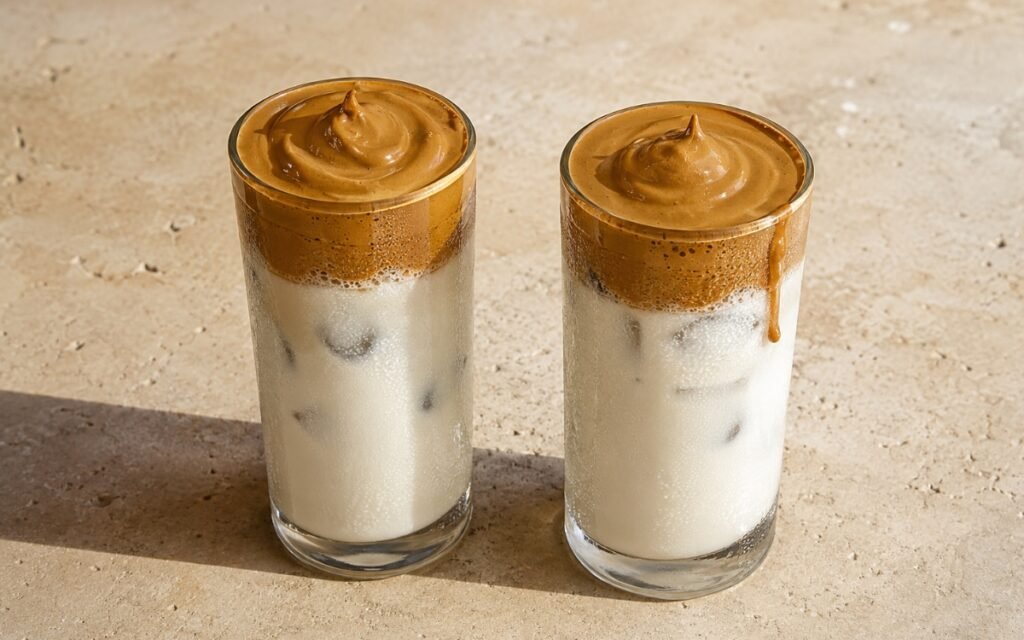
Dalgona Whipped Coffee
Equal parts instant coffee, sugar, and hot water whipped into a thick, mousse-like golden-brown foam, spooned over iced milk.
Cold Foam Iced Coffee
A very dark, fully chilled cold coffee base topped with a thick, dense cold foam layer that sits clearly, cloud-like, on top.
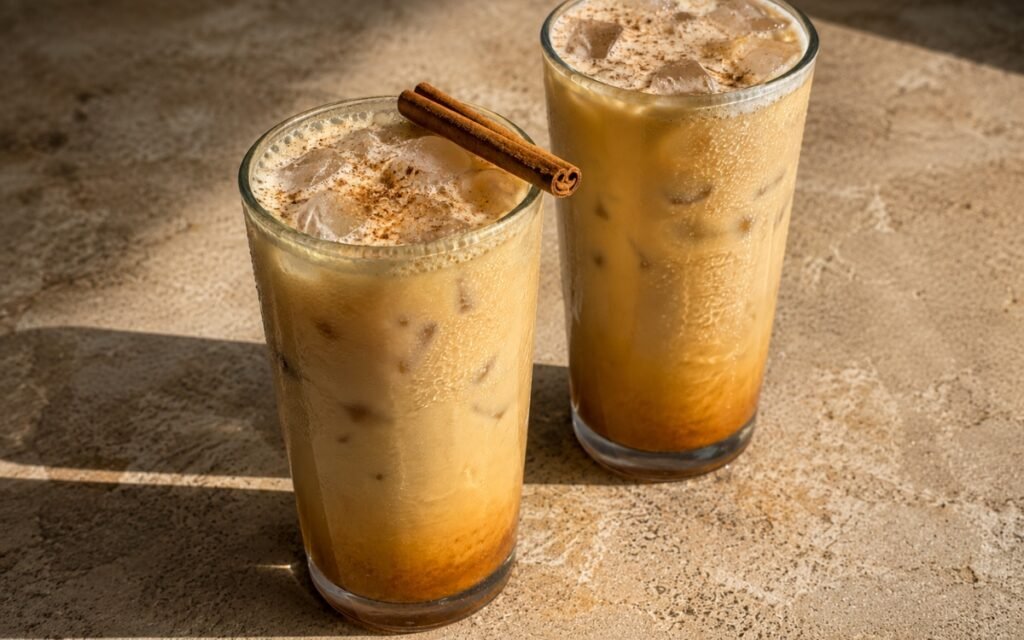
Pumpkin Spice Iced Latte
Pumpkin spice syrup left concentrated at the base, cold milk, and ice topped with freshly brewed espresso, finished with a light foam and spice dusting.

You might also like
You might also like
Apple Lemonade
Cold-extracted lemon zest and juice combined with strained, skin-on apple purée for a crisp, pale golden lemonade.
Strawberry Iced Black Tea
Black tea at 90–95°C for 2½–3 minutes, strawberries simmered into a light unreduced syrup, lemon peel infused cold 5 minutes — chilled. Fresh, crisp, restrained.
Lemongrass Lime Green Tea Cooler
Properly brewed green tea combined with a gentle lemongrass infusion and fresh cold lime juice for a bright, clean, layered cooler.



Brown Sugar Shaken Espresso
Ingredients
Method
- Add the brown sugar, water, salt, and cinnamon if using to a small saucepan. Warm over medium heat, stirring until the sugar fully dissolves. Simmer briefly for 30–60 seconds, then remove from the heat and let it cool slightly. The syrup should be fully dissolved, smooth, and pourable — not grainy and not thick like caramel. Brown sugar that is not fully dissolved will not distribute evenly through the drink. Brown sugar’s molasses content makes it slightly more resistant to dissolving cleanly than white sugar, which is exactly why the full warming and brief simmer matter here — rushing this step risks leaving fine undissolved grains that never fully integrate once the syrup meets cold liquid later on.
- Brew 120ml espresso total, equal to 4 standard 30ml shots. Use the espresso while still fresh and hot. If it sits too long, the flavour flattens and the shaken foam becomes less lively. The espresso should taste bold and clean, not burnt. This drink needs a strong coffee base because oat milk and ice soften the intensity quickly. Both the shaking stage and the oat milk topping that follows work to dilute and cool the espresso considerably — starting with a genuinely bold, fresh shot is what ensures real coffee character survives all the way through to the finished drink.
- Divide a small amount of the brown sugar syrup between the 2 glasses, about 5ml per glass. This creates the visible deeper syrup layer at the base. Fill both glasses generously with fresh ice. The syrup should sit at the bottom clearly, while the glasses are packed enough with ice to support the gradient and keep the drink cold without becoming watery immediately. This small syrup reservoir at the very base is a deliberate visual anchor — its dense, slow-dissolving pool is what gives the finished drink its darkest, most concentrated point at the bottom of the glass.
- In a shaker, combine the hot espresso with 30ml of the remaining brown sugar syrup and a generous handful of ice. Shake hard for 10–15 seconds until the shaker feels very cold and the espresso becomes frothy and aerated. This is the core step. The mixture should lighten slightly in colour and develop a pale caramel-amber foam on top. If you barely shake it, you do not get the classic shaken espresso texture. The espresso must be shaken while still hot with ice. That rapid chilling and aeration is what creates the proper frothy top. Shaking the syrup directly into the espresso at this stage, rather than adding it separately later, means the majority of the drink’s sweetness gets fully whipped and integrated into the coffee itself — this is what keeps the finished drink tasting cohesive rather than sweet in one spot and plain elsewhere.
- Strain or pour the shaken espresso evenly into the 2 prepared glasses over the fresh ice. Slowly top each glass with 120ml cold oat milk. Do not stir immediately if you want the proper visual gradient. Let the oat milk move through the espresso naturally so the drink shows a pale upper layer, darker lower tones, and a visible syrup concentration at the base. The drink should show a gradient through the glass, with the shaken espresso foam sitting lightly at the top and the oat milk softening the colour into a pale caramel tone. Pouring the oat milk in slowly rather than all at once lets it settle and layer over the denser, already-shaken espresso rather than immediately blending through it — that gentle pour is what preserves the visible gradient through the glass.
- Serve immediately. Stir before drinking if desired, but the classical presentation is to serve it with the gradient intact first. Presenting the drink in its naturally layered state before stirring is what showcases the visual effect the whole build was designed to create — that layered moment fades quickly once the drink sits, so serving right away matters for both freshness and presentation.