
Iced Caramel Macchiato
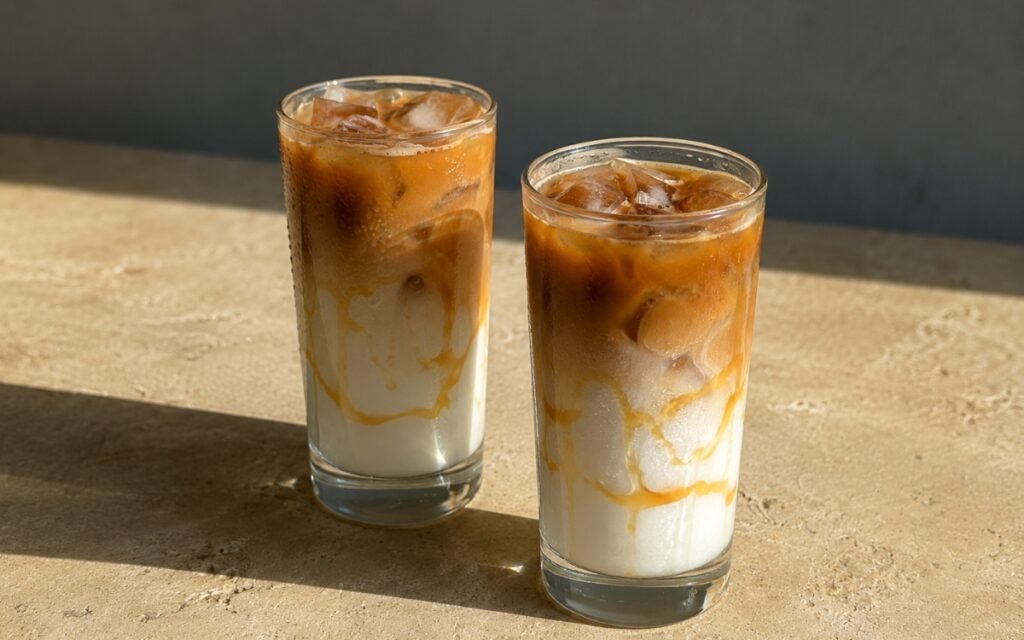
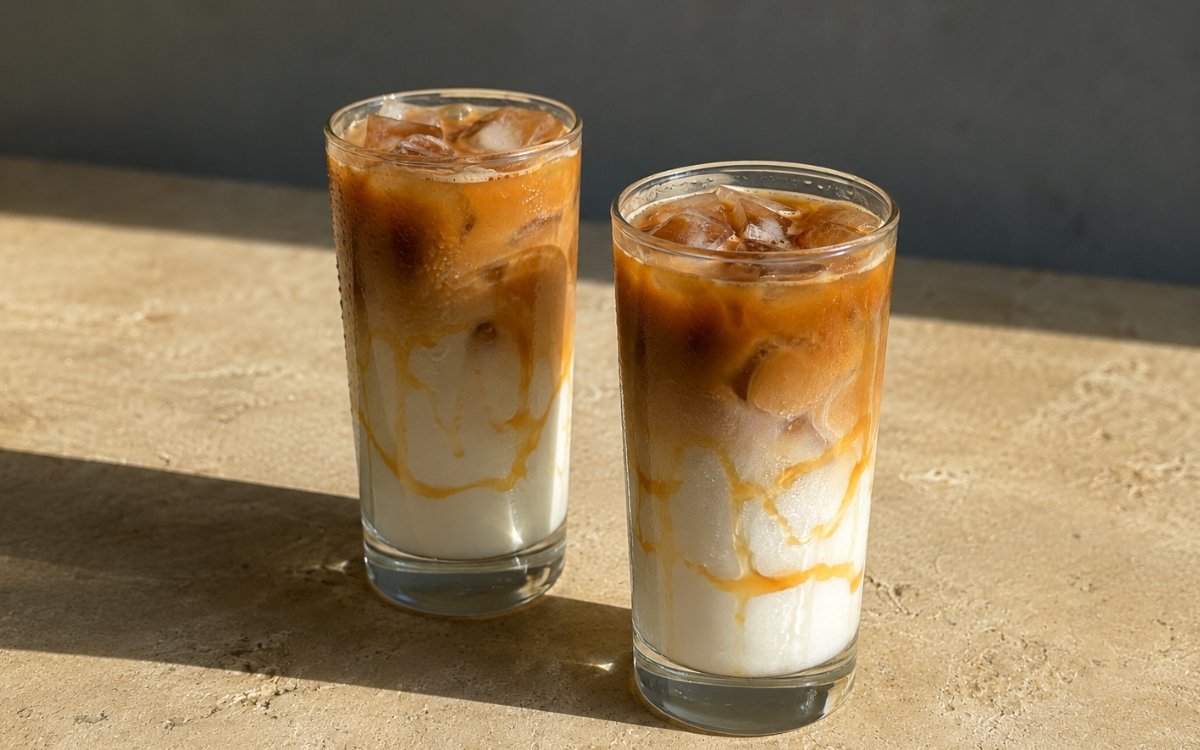
A classic iced caramel macchiato built in layers: vanilla-sweetened cold milk at the base, ice in the middle, espresso poured over the top so it falls through the drink in dark swirls, and caramel sauce drizzled inside the glass and over the surface. Milk-forward, lightly sweet, and visually defined by the layered gradient and espresso clouding through the pale milk. Drizzling the caramel around the inside walls of the glass before anything else goes in is the technique this whole presentation depends on — that early placement lets the sauce cling visibly to the glass and show through the finished drink, the same drizzle-first principle used elsewhere in this collection whenever a sauce needs to remain a visible accent rather than pooling invisibly at the bottom. Mixing the vanilla syrup into the milk before the ice is added is what keeps the drink evenly sweet from the first sip to the last, rather than leaving concentrated syrup to settle unevenly. Pouring the espresso last, slowly over the ice, is what produces the classic gradient — pale milk below, dark espresso above, with visible swirling in between. The payoff is a drink with real layered drama: caramel visible against the glass, a pale vanilla-milk base, and a dark espresso top clouding through it.
Prep Time : 5 min
Cook Time : 5 min
Servings : 2
5 min
5 min
2
Ingredients
For the Iced Caramel Macchiato
• 120ml espresso, freshly brewed (4 standard shots total, counting 1 shot = 30ml)
• 300ml cold whole milk — this one on Amazon
• 30ml vanilla syrup (15ml per serving) — this one on Amazon
• 8–10 ice cubes
For the Caramel Finish
• 30–40ml caramel sauce (for drizzling inside the glasses and over the top) — this one on Amazon
This post may contain affiliate links. As an Amazon Associate I earn from qualifying purchases, at no additional cost to you.
Directions
- Prepare the Espresso
Brew 120ml espresso total, equal to 4 standard 30ml shots. Let it stand for 30–60 seconds only if it is extremely hot, but do not let it sit long enough to go flat. The espresso should be fresh, dark, and aromatic. This drink depends on the espresso keeping enough intensity to sit visually and flavour-wise above the milk. Espresso that’s fresh and genuinely dark is what allows it to remain visually distinct as it falls through the milk — flat, tired espresso lacks the same colour intensity and would disperse into a duller, less defined layer. - Drizzle the Glasses
Take 2 tall glasses and drizzle caramel sauce around the inside walls in a loose spiral pattern, mainly on the upper interior of each glass. Do not flood the glass with caramel. The drizzle should stay visible as a defined accent, not become a thick sticky pool at the bottom. The caramel should cling to the inside walls and remain visible through the glass. Too much sauce makes the drink overly sweet and muddies the clean layered look. Applying the caramel to the empty, dry glass first is what allows it to cling directly to the glass walls rather than sliding down into whatever liquid is already there — drizzling caramel into a glass that’s already partly filled would produce a messier, less defined result. - Build the Vanilla Milk Base
Divide the vanilla syrup evenly between the 2 glasses, 15ml per glass. Pour 150ml cold milk into each glass and stir briefly just to combine the vanilla syrup with the milk. The base should be evenly sweetened before the ice goes in. If the syrup is not mixed at this stage, it can settle and leave the drink unevenly sweet from top to bottom. Combining the syrup and milk fully while the glass still has plenty of room to stir freely is considerably more effective than trying to mix it once ice, and later espresso, have already been added on top. - Add the Ice
Fill each glass generously with ice. The ice should sit between the milk base and the espresso top layer, helping the espresso disperse slowly rather than dropping straight to the bottom. The glasses should be filled enough with ice to support the layered effect, but still leave room for the espresso and final caramel drizzle. The ice functions here as a genuine structural layer rather than simply a chilling agent — it physically slows and redirects the espresso as it’s poured, which is part of what produces the visible swirling and dispersion this drink’s presentation depends on. - Pour in the Espresso
Slowly pour 60ml espresso into each glass over the top of the ice. Pour gently so the espresso falls through the drink in visible dark ribbons and cloud-like swirls rather than mixing in immediately. You should see the classic gradient: pale vanilla milk below, dark espresso concentration at the top, and visible swirling in between. That layered look is one of the defining characteristics of a proper iced caramel macchiato. The espresso must be poured last. If it goes in before the milk, you lose the macchiato-style layered visual. This build order — milk base, then ice, then espresso last — is the entire mechanism behind the drink’s signature gradient; reversing any part of that sequence collapses the layers into a more uniformly mixed drink from the start. - Finish with Caramel
Drizzle a little more caramel sauce across the top of each drink. Serve immediately as layered, then stir before drinking if desired. The final drink should have visible caramel, a pale milk base, and a darker espresso top layer. Once stirred, it should become a smooth light caramel-beige colour with balanced vanilla, espresso, milk, and caramel flavour. Presenting the drink in its layered state before stirring, rather than mixing everything together immediately, is what showcases the visual effect the whole build was designed to create — that moment is genuinely brief, so serving right away matters for the presentation as much as for freshness.
*Notes :
- Drizzling the caramel sauce into the empty glass first, before any liquid is added, deserves to be understood as a deliberate presentation technique rather than a minor garnish step. Applied to a dry glass, the sauce clings directly to the walls and stays visible as a defined spiral through every layer that’s built afterward. Added later, once the glass already holds milk or ice, that same caramel would slide down and pool at the bottom rather than remaining a visible accent against the glass — the order here is what preserves the drink’s layered, visually striking appearance.
- Mixing the vanilla syrup into the milk before the ice ever goes in is worth treating as more consequential than it might initially seem. Syrup added directly to a glass already holding ice, or left unmixed at the bottom, doesn’t distribute evenly through the drink — it tends to settle, producing a sip sequence that starts weak and turns cloyingly sweet by the final mouthfuls. Mixing thoroughly while the glass is still simple and mostly empty avoids that unevenness from ever developing.
- The ice layer’s role in this drink extends well beyond basic chilling, and it’s worth understanding that dual function. Positioned between the milk base and the point where espresso is poured in, the ice physically interrupts and redirects the falling espresso, which is a real part of what produces the visible dark ribbons and cloud-like dispersion this drink is known for — a glass without enough ice in that middle position would let the espresso reach the milk more directly, producing a flatter, less dramatic visual.
- The build order overall — caramel, then vanilla milk, then ice, then espresso poured last — functions as a single connected sequence rather than several independent steps, and disrupting any part of it undermines the whole presentation. Pouring the espresso earlier in the process, even by one step, collapses the layered gradient this recipe is specifically built to produce, regardless of how carefully every other stage was executed.
Why This Recipe Works
This recipe works because every stage of the build protects the drink’s signature layered presentation: caramel drizzled into the empty glass first stays visible against the walls, vanilla syrup mixed fully into the milk before the ice arrives sweetens the drink evenly throughout, and the ice itself functions as a structural layer that slows and disperses the espresso as it’s poured last.
That specific order — caramel, milk, ice, espresso — is what produces the classic gradient of pale milk below and dark espresso above with visible swirling in between, and serving immediately preserves that dramatic moment before the layers naturally blend together.
Ingredient Breakdown
Freshly Brewed, Dark Espresso
The top layer — genuine freshness and colour intensity are what let it remain visually distinct as it falls through the milk.
Caramel Sauce, Applied to a Dry Glass First
The visual accent — drizzled before any liquid is added so it clings to the walls rather than pooling and disappearing.
Vanilla Syrup, Fully Mixed Into the Milk
The sweetening base — combined thoroughly before ice is added, ensuring the drink stays evenly sweet from first sip to last.
Ice as a Structural Layer
The dispersion mechanism — sits between the milk base and the poured espresso, physically slowing and redirecting it into visible swirls.
Correct Build Order (Caramel, Milk, Ice, Espresso)
The critical technique — this specific sequence, and no other, produces the drink’s signature layered gradient.
Flavor Structure Explained
This iced caramel macchiato follows a layered balance model:
- Smooth milky foundation (vanilla-sweetened cold milk)
- Bold aromatic centre (freshly brewed espresso)
- Cool refreshing structure (ice)
- Rich caramel finish (drizzled caramel sauce)
Vanilla-sweetened cold milk provides the drink’s smooth, mellow foundation, evenly sweetened throughout. Freshly brewed espresso, poured last, layers in bold, aromatic coffee flavour concentrated visibly at the top before it’s stirred through. Ice keeps the whole drink properly chilled while also helping build the visual gradient this drink is known for. Caramel sauce, drizzled both inside the glass and over the top, finishes the drink with rich, buttery sweetness that plays a supporting rather than dominant role against the vanilla and espresso.
Common Mistakes to Avoid
- Drizzling the Caramel Too Late – Added after the glass already holds liquid, it slides down and pools rather than clinging visibly to the glass. Always drizzle it into the empty glass first.
- Not Mixing the Vanilla Syrup Fully Into the Milk – Unmixed syrup settles and leaves the drink unevenly sweet. Always stir the syrup and milk together before adding ice.
- Pouring the Espresso Before the Milk and Ice – This collapses the drink’s signature layered gradient entirely. Always build milk first, then ice, then espresso last.
- Using Too Little Ice – Without enough ice as a structural layer, the espresso reaches the milk too directly and the visual dispersion is lost. Always fill the glass generously.
- Flooding the Glass With Caramel – Too much sauce makes the drink overly sweet and muddies the clean layered look. Always drizzle it as a defined accent, not a heavy pour.
Variations
Salted Caramel Version
Use a salted caramel sauce instead of standard caramel for a sharper, more balanced sweetness.
Extra-Strong Version
Increase to 3 shots of espresso per serving for a bolder, more coffee-forward drink while keeping the same layered build.
Oat Milk Version
Substitute a barista-style oat milk for the dairy milk, following the identical drizzle-syrup-ice-espresso build.
Iced Blended Version
Blend the fully built drink with extra ice for a frozen, slushier caramel macchiato variation.
Storage & Make-Ahead
This drink is meant to be built and served fresh; it does not hold or store well once assembled, since the ice will continue melting and the layers will blend together over time.
Espresso can be brewed just before building the glasses, but should not be brewed far in advance, since its flavour, aroma, and colour intensity all fade noticeably as it sits.
Cold milk and caramel sauce should be kept refrigerated until the moment of use for the best temperature contrast and cleanest drizzle.
Frequently Asked Questions
Why does the caramel sauce need to go into the empty glass before anything else?
Applied to a dry glass, the sauce clings directly to the walls and stays visible as a defined spiral through the drink’s other layers. Added later, once milk or ice is already in the glass, it would slide down and pool at the bottom instead of remaining a visible accent.
Why does the vanilla syrup need to be mixed into the milk before the ice is added?
Syrup that isn’t fully combined at this stage tends to settle unevenly, producing a drink that starts weak and turns overly sweet by the final sips. Mixing thoroughly while the glass is still simple and mostly empty avoids that unevenness entirely.
Why does the ice matter beyond just chilling the drink?
Positioned between the milk base and where the espresso is poured, the ice physically slows and redirects the falling espresso, which is part of what produces the visible dark ribbons and cloud-like swirling this drink’s presentation depends on.
Why must the espresso be poured last, after everything else is built?
This build order is the entire mechanism behind the drink’s signature layered gradient. Pouring the espresso earlier in the process, even by one step, collapses that gradient into a more uniformly mixed drink from the start.
Are there other flavoured iced lattes or espresso drinks worth trying?
Iced Vanilla Latte, Salted Caramel Iced Latte, Brown Sugar Shaken Espresso, and Classic Iced Latte all build on a related cold-milk-and-espresso foundation, each bringing its own distinct syrup, technique, or sweetened finish worth exploring.
Nutrition Facts
( per serving )
Calories
~260 kcal
Protein
8 g
Fat
8 g
Carbs
38 g
Calories
~260 kcal
Protein
8 g
Fat
8 g
Carbs
38 g
Related Recipes
Related Recipes

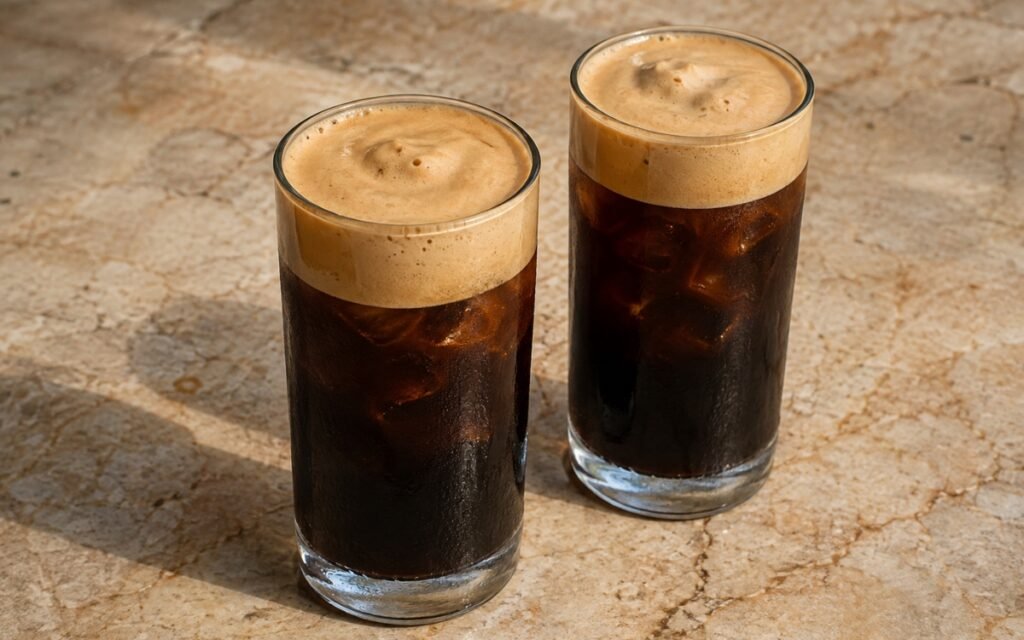
Freddo Espresso
Hot espresso shaken hard with ice until chilled, aerated, and capped with thick foam, then poured over fresh ice.
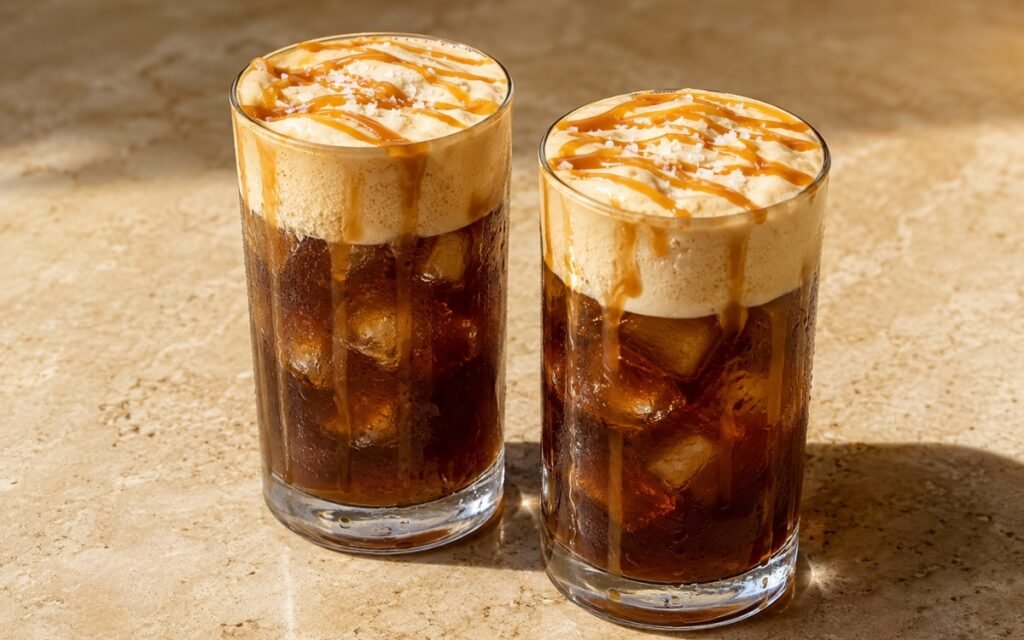
Salted Caramel Cold Foam Cold Brew
Strong, chilled cold brew coffee topped with a thick salted caramel cold foam that slowly marbles into the coffee.
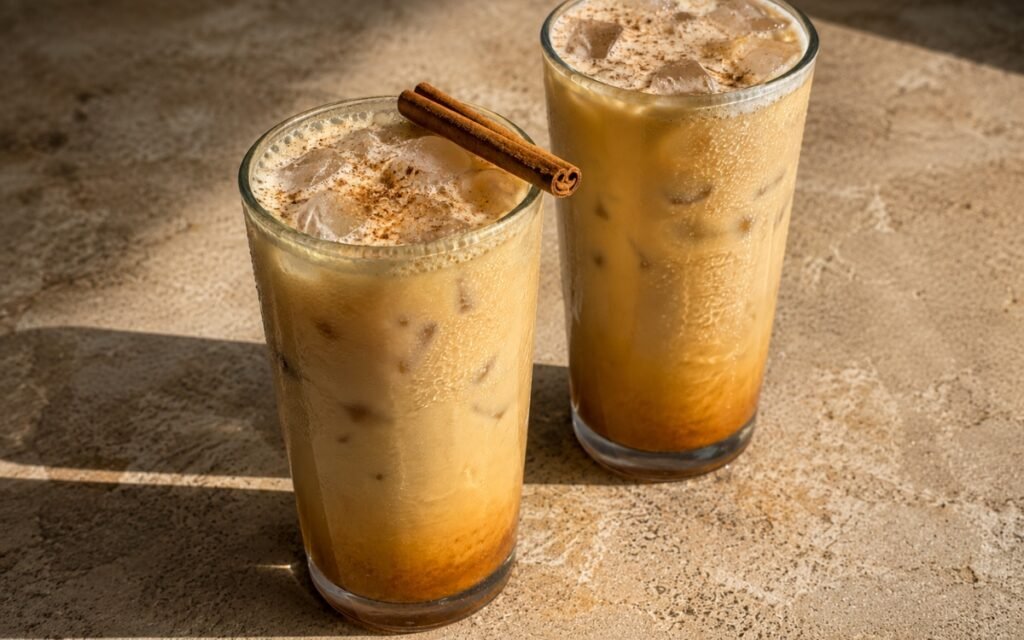
Pumpkin Spice Iced Latte
Pumpkin spice syrup left concentrated at the base, cold milk, and ice topped with freshly brewed espresso, finished with a light foam and spice dusting.
You might also like
You might also like
Classic Fresh Lemonade
Simple syrup without reduction, fresh lemon juice with natural pulp — salt, cold water, syrup adjusted by taste, chilled. Crisp, bright, and precisely balanced.
Classic Sparkling Lemonade
Lemon base chilled separately, sparkling water side-poured and gently stirred right before serving — less sugar for carbonation’s sweetness enhancement. Crisp, bright, and fully fizzy.
Chilean Sopaipillas with Pebre
Pumpkin-based dough rolled, pricked, and fried until golden-brown and crisp-edged, served with a fresh, chopped pebre of tomato, onion, and cilantro.
Iced Caramel Macchiato
Ingredients
Method
- Brew 120ml espresso total, equal to 4 standard 30ml shots. Let it stand for 30–60 seconds only if it is extremely hot, but do not let it sit long enough to go flat. The espresso should be fresh, dark, and aromatic. This drink depends on the espresso keeping enough intensity to sit visually and flavour-wise above the milk. Espresso that’s fresh and genuinely dark is what allows it to remain visually distinct as it falls through the milk — flat, tired espresso lacks the same colour intensity and would disperse into a duller, less defined layer.
- Take 2 tall glasses and drizzle caramel sauce around the inside walls in a loose spiral pattern, mainly on the upper interior of each glass. Do not flood the glass with caramel. The drizzle should stay visible as a defined accent, not become a thick sticky pool at the bottom. The caramel should cling to the inside walls and remain visible through the glass. Too much sauce makes the drink overly sweet and muddies the clean layered look. Applying the caramel to the empty, dry glass first is what allows it to cling directly to the glass walls rather than sliding down into whatever liquid is already there — drizzling caramel into a glass that’s already partly filled would produce a messier, less defined result.
- Divide the vanilla syrup evenly between the 2 glasses, 15ml per glass. Pour 150ml cold milk into each glass and stir briefly just to combine the vanilla syrup with the milk. The base should be evenly sweetened before the ice goes in. If the syrup is not mixed at this stage, it can settle and leave the drink unevenly sweet from top to bottom. Combining the syrup and milk fully while the glass still has plenty of room to stir freely is considerably more effective than trying to mix it once ice, and later espresso, have already been added on top.
- Fill each glass generously with ice. The ice should sit between the milk base and the espresso top layer, helping the espresso disperse slowly rather than dropping straight to the bottom. The glasses should be filled enough with ice to support the layered effect, but still leave room for the espresso and final caramel drizzle. The ice functions here as a genuine structural layer rather than simply a chilling agent — it physically slows and redirects the espresso as it’s poured, which is part of what produces the visible swirling and dispersion this drink’s presentation depends on.
- Slowly pour 60ml espresso into each glass over the top of the ice. Pour gently so the espresso falls through the drink in visible dark ribbons and cloud-like swirls rather than mixing in immediately. You should see the classic gradient: pale vanilla milk below, dark espresso concentration at the top, and visible swirling in between. That layered look is one of the defining characteristics of a proper iced caramel macchiato. The espresso must be poured last. If it goes in before the milk, you lose the macchiato-style layered visual. This build order — milk base, then ice, then espresso last — is the entire mechanism behind the drink’s signature gradient; reversing any part of that sequence collapses the layers into a more uniformly mixed drink from the start.
- Drizzle a little more caramel sauce across the top of each drink. Serve immediately as layered, then stir before drinking if desired. The final drink should have visible caramel, a pale milk base, and a darker espresso top layer. Once stirred, it should become a smooth light caramel-beige colour with balanced vanilla, espresso, milk, and caramel flavour. Presenting the drink in its layered state before stirring, rather than mixing everything together immediately, is what showcases the visual effect the whole build was designed to create — that moment is genuinely brief, so serving right away matters for the presentation as much as for freshness.