
Classic Deli Coleslaw
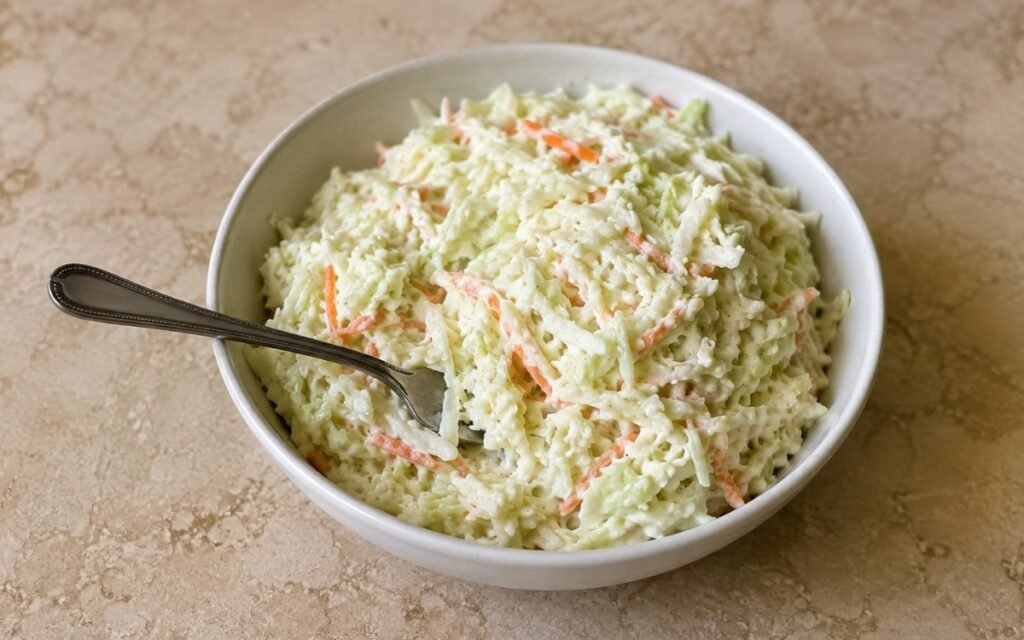
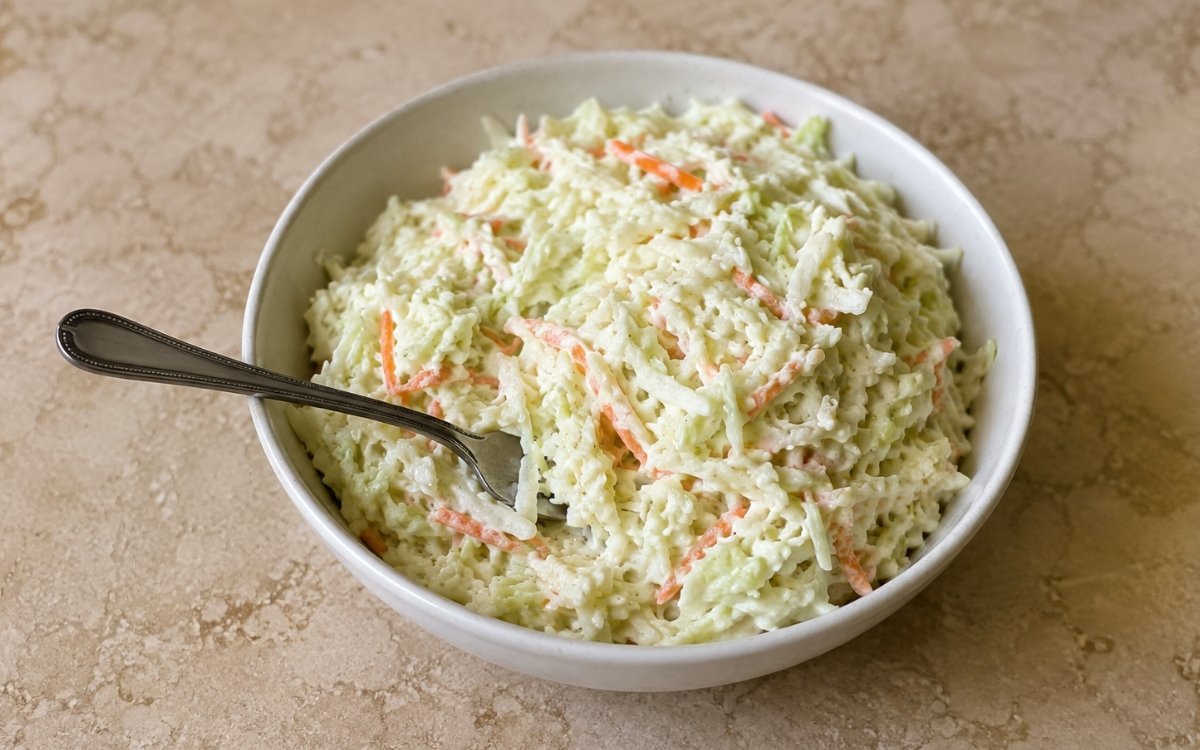
A classic deli-style coleslaw with finely shredded green cabbage and carrot bound in a creamy, tangy mayonnaise dressing sharpened with cider vinegar, a touch of sugar, and celery seed, served cold as the essential counterpart to a hot, rich sandwich. Salting the shredded cabbage before it ever meets the dressing is the technique this whole recipe depends on — that early draw of moisture is what keeps the finished slaw from turning watery and diluting the dressing within an hour of being made, the same pre-salt-and-drain principle used elsewhere in this collection whenever a vegetable’s own water content threatens to thin out a sauce or dressing. Letting the dressed slaw rest in the refrigerator for at least an hour before serving matters just as much, since that rest is what allows the dressing to actually penetrate the cabbage rather than just coating its surface. The payoff is a coleslaw that’s genuinely creamy and clinging rather than watery, crunchy rather than limp, and sharp enough to cut cleanly through a rich, hot sandwich.
Prep Time : 20 min
Rest Time : 1 hr min
Servings : 6
20 min
1 hr minimum
6
Ingredients
For the Cabbage
• 700g green cabbage, very finely shredded
• 150g carrot, finely grated or shredded
• 8g fine sea salt, for salting the cabbage
For the Dressing
• 180g mayonnaise
• 30g sour cream
• 25ml apple cider vinegar — this one on Amazon
• 15g granulated sugar
• 5g Dijon mustard — this one on Amazon
• 2g celery seed
• 3g fine sea salt, plus more to taste
• Freshly ground black pepper, to taste
This post may contain affiliate links. As an Amazon Associate I earn from qualifying purchases, at no additional cost to you.
Directions
- Salt and Drain the Cabbage
Place the finely shredded cabbage in a large colander set over a bowl or in the sink. Toss with the fine sea salt, working it through with your hands so it’s evenly distributed. Let sit for 30–45 minutes. The cabbage should release a noticeable amount of liquid into the bowl or sink below. After salting, squeeze the cabbage firmly in batches, using a clean kitchen towel or your hands, to remove as much excess liquid as possible. This step is not optional if you want a coleslaw that stays creamy rather than watery. Salting draws water out of the cabbage’s cell structure through osmosis before it ever meets the dressing — skipped, that same water releases slowly over the following hours instead, thinning the dressing and pooling at the bottom of the bowl. - Make the Dressing
In a bowl, whisk together the mayonnaise, sour cream, apple cider vinegar, sugar, Dijon mustard, celery seed, salt, and black pepper until fully smooth. Taste and adjust. The dressing should taste creamy, tangy, lightly sweet, and well-seasoned on its own — it will mellow slightly once combined with the cabbage. If it tastes flat, add a touch more vinegar or salt. Combining mayonnaise with a smaller amount of sour cream gives the dressing a slightly tangier, less heavy character than mayonnaise alone would produce, while still keeping it genuinely thick and clinging. - Combine and Rest
Add the drained, squeezed cabbage and grated carrot to a large bowl. Pour over the dressing and toss thoroughly until every strand of cabbage is evenly coated. Cover and refrigerate for at least 1 hour, ideally 2–4 hours, before serving. Give it one more good toss just before serving, since some liquid may settle at the bottom of the bowl. This resting period is what actually lets the dressing work into the cabbage rather than simply sitting on its surface — a coleslaw tasted immediately after mixing reads as noticeably less developed and less unified in flavour than the same batch after a proper chill. - Serve
Serve cold, straight from the refrigerator, alongside a hot sandwich or as a stand-alone side. The coleslaw should look glossy and creamy, with the cabbage still holding real crunch rather than turning limp. Serving it properly cold is part of what makes this coleslaw work as a counterpoint to a hot sandwich — the temperature contrast is as much a part of the pairing as the flavour contrast.
*Notes :
- The initial salting and draining stage is worth understanding as the single technique most responsible for whether this coleslaw holds up over time. Cabbage carries a genuinely significant amount of water within its cell structure, and that water doesn’t simply disappear once the vegetable is shredded — it continues to release slowly for hours afterward unless drawn out deliberately first. Salting and then squeezing the cabbage removes that water in advance, on the recipe’s own terms, rather than letting it seep out gradually into the finished dressing and dilute it.
- The resting period after the slaw is fully dressed serves a genuinely different purpose from the salting stage, though both matter for the finished texture. Where salting removes excess water, this later rest is about penetration — giving the dressing’s vinegar, mustard, and seasoning actual time to work into the cabbage rather than just sitting as a coating around it. A coleslaw eaten the moment it’s tossed tastes noticeably more disjointed, with the cabbage and dressing reading as separate elements rather than a unified whole.
- Combining mayonnaise with a smaller proportion of sour cream, rather than relying on mayonnaise alone, is a small formulation choice that affects the dressing’s overall character. Sour cream contributes its own tang and a slightly lighter, less heavy mouthfeel than an all-mayonnaise dressing would have, while the mayonnaise still provides the body and clinging quality the coleslaw needs to properly coat every strand of cabbage.
- This coleslaw is deliberately built to hold its texture well over a few hours, which matters given how it’s most often served — alongside a hot sandwich, potentially prepared somewhat ahead of the meal itself. The salting stage in particular is what allows this coleslaw to sit dressed in the refrigerator for several hours without turning watery, a genuine practical advantage over a version that skips that step.
Why This Recipe Works
This recipe works because the cabbage’s own water content is managed deliberately before it ever meets the dressing, through a proper salt-and-squeeze stage that prevents the finished slaw from turning watery over time.
The dressing itself combines mayonnaise and sour cream for a balance of body and tang, and the fully dressed slaw is given real resting time in the refrigerator so the flavours actually penetrate the cabbage rather than sitting only on its surface.
Served properly cold, this coleslaw provides genuine textural and temperature contrast against a hot, rich sandwich.
Ingredient Breakdown
Very Finely Shredded Cabbage
The base vegetable — cut fine for a classic, easily forkable deli texture rather than coarser, chunkier shreds.
Salted and Squeezed Cabbage
The critical prep step — draws out excess moisture in advance, protecting the finished coleslaw from turning watery.
Mayonnaise-Sour Cream Dressing
The binding sauce — mayonnaise for body and cling, sour cream for a lighter, tangier character than mayonnaise alone.
Apple Cider Vinegar and Sugar
The flavour balance — sharp acidity tempered by a touch of sweetness, the classic deli coleslaw profile.
Refrigerated Resting Time
The final technique — lets the dressing genuinely penetrate the cabbage rather than simply coating its surface.
Flavor Structure Explained
This coleslaw follows a layered balance model:
- Crisp fresh foundation (shredded cabbage, carrot)
- Rich creamy body (mayonnaise-sour cream dressing)
- Sharp tangy acidity (apple cider vinegar, Dijon mustard)
- Gentle sweet balance (sugar)
- Subtle aromatic note (celery seed)
The finely shredded cabbage and carrot provide a crisp, fresh, crunchy foundation that carries the dressing. The mayonnaise-sour cream dressing adds rich, clinging creaminess throughout. Apple cider vinegar and Dijon mustard cut sharply through that richness with real tang, while a modest amount of sugar rounds out the acidity without tipping the coleslaw toward sweet. Celery seed contributes a subtle, distinctive aromatic note that’s a hallmark of classic deli-style coleslaw.
Common Mistakes to Avoid
- Skipping the Salt-and-Drain Step – This leaves the cabbage’s own water content free to dilute the dressing over time. Always salt and squeeze the cabbage first.
- Serving the Coleslaw Immediately After Mixing – The dressing hasn’t had time to penetrate the cabbage yet, and the flavour reads as disjointed. Always let it rest at least an hour before serving.
- Shredding the Cabbage Too Coarsely – Thick shreds don’t take up the dressing as evenly and lack the classic deli texture. Always cut it very fine.
- Using Mayonnaise Alone Without Sour Cream – This produces a heavier, less tangy dressing than the classic deli version. Always include a smaller proportion of sour cream for balance.
- Serving the Coleslaw Warm or at Room Temperature – Part of the pairing with a hot sandwich depends on temperature contrast. Always serve it cold, straight from the refrigerator.
Variations
Extra-Tangy Version
Increase the apple cider vinegar slightly and reduce the sugar for a sharper, less sweet coleslaw.
With Red Cabbage
Substitute half the green cabbage with red cabbage for a more colourful version with a slightly different, sharper flavour.
Poppy Seed Version
Substitute poppy seeds for the celery seed for a different, milder aromatic note.
Vinegar-Based Version
Omit the mayonnaise and sour cream, increasing the vinegar and adding a little oil for a lighter, tangier vinegar-based slaw.
Storage & Make-Ahead
The dressing can be made 1–2 days ahead and refrigerated in a sealed container. The salted, drained cabbage can be prepared several hours ahead and refrigerated separately from the dressing.
Fully dressed coleslaw can be refrigerated in an airtight container for up to 3 days; the texture stays reasonably good given the initial salting step, though it will continue softening gradually over time.
This coleslaw is not suitable for freezing, as the texture breaks down considerably once thawed.
Frequently Asked Questions
Why does the cabbage need to be salted and drained before it’s dressed?
Cabbage holds a significant amount of water within its own cell structure, and that water continues to release gradually for hours after shredding unless drawn out first. Salting and squeezing removes that excess moisture in advance, which is what keeps the finished coleslaw creamy rather than watery over time.
Why does the dressed coleslaw need to rest in the refrigerator before serving?
That resting period gives the dressing’s vinegar, mustard, and seasoning real time to actually penetrate the cabbage, rather than sitting only as a coating on its surface. A coleslaw served immediately after mixing tastes noticeably more disjointed, with the cabbage and dressing reading as separate rather than unified.
Why combine mayonnaise with sour cream instead of using mayonnaise alone?
Sour cream contributes its own tang and a slightly lighter mouthfeel than an all-mayonnaise dressing would have, while the mayonnaise still provides the thick, clinging body the coleslaw needs. Together they produce the specific balance associated with classic deli coleslaw.
Why does this coleslaw hold up well over several hours in the refrigerator, unlike some versions?
The initial salting and draining stage is specifically what protects it from turning watery over time. Skipping that step is the most common reason a coleslaw looks fine right after mixing but turns thin and diluted by the time it’s actually served.
What sandwiches does this coleslaw pair especially well with?
Reuben Sandwich is the classic pairing here, with the cold, creamy coleslaw offering real contrast against the hot, griddled sandwich’s richness. French Dip Sandwich and Italian Beef Sandwich both work well alongside it too, given how effectively this coleslaw’s cold, tangy crunch cuts through a rich, hot beef sandwich in general.
Nutrition Facts
( per serving )
Calories
~180 kcal
Protein
2 g
Fat
15 g
Carbs
10 g
Calories
~180 kcal
Protein
2 g
Fat
15 g
Carbs
10 g
Related Recipes
Related Recipes

Vietnamese Green Papaya Salad (Gỏi Đu Đủ)
Fine julienne of crisp green papaya and carrot dressed with a sharp fish sauce–lime dressing, finished with tomatoes, peanuts, herbs, and dried shrimp.
Panzanella Salad
Heirloom tomatoes salted for juice, torn sourdough toasted to crust-and-chew, red onion macerated in red wine vinegar — assembled and rested 10 minutes. The Tuscan summer salad built on timing.
Turkish Bulgur Salad (Kısır)
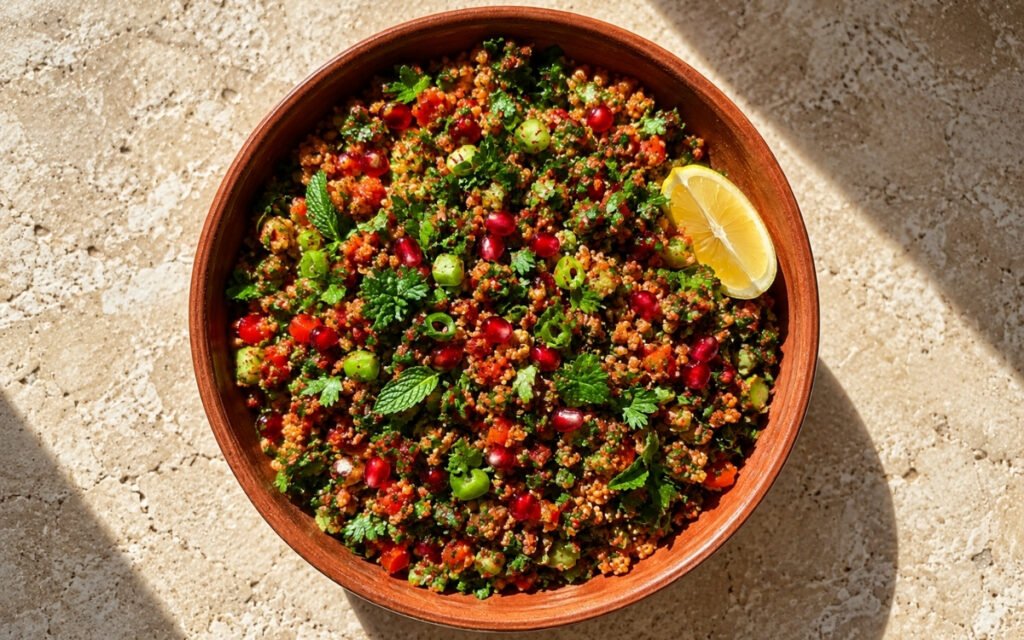
Fine bulgur softened in hot water, worked with tomato paste, pepper paste, olive oil, lemon, and pomegranate molasses, finished with parsley, mint, and fresh vegetables.


You might also like
You might also like
Steak Salad Bowl with Garlic Vinaigrette
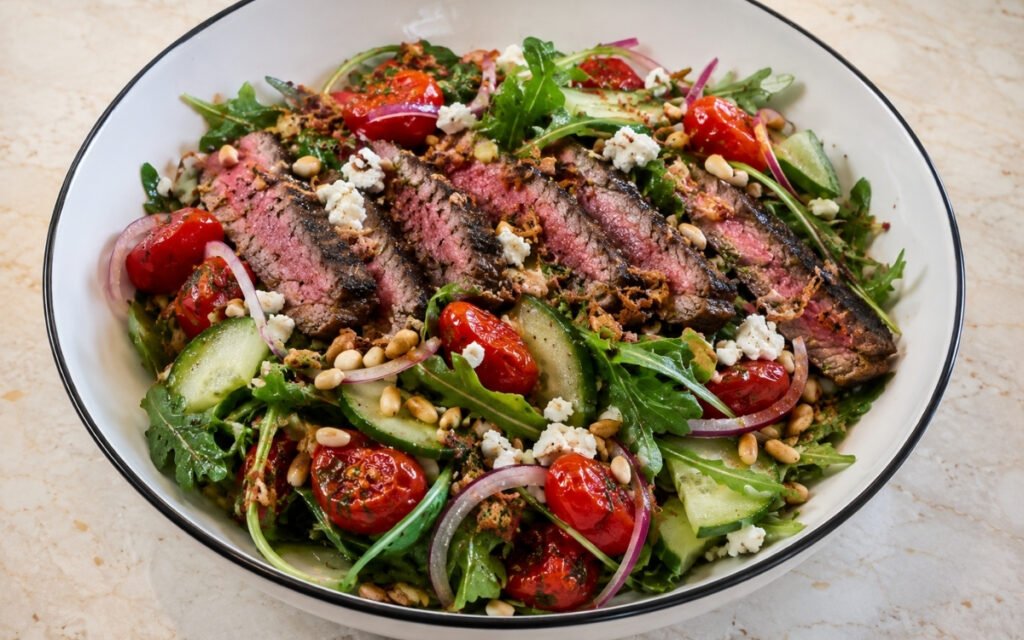
Seared sirloin over fresh greens with roasted tomatoes, feta, and bold garlic vinaigrette.
Garlic Knots
Soft, bun-size homemade garlic knots baked until golden, then coated while hot in garlicky butter with parsley and Parmesan.
Thick-Cut Steak Fries
Potatoes cut into thick wedges, briefly soaked, dried thoroughly, roasted low then high until golden and fluffy inside. Hearty and crisp.


Classic Deli Coleslaw
Ingredients
Method
- Place the finely shredded cabbage in a large colander set over a bowl or in the sink. Toss with the fine sea salt, working it through with your hands so it’s evenly distributed. Let sit for 30–45 minutes. The cabbage should release a noticeable amount of liquid into the bowl or sink below. After salting, squeeze the cabbage firmly in batches, using a clean kitchen towel or your hands, to remove as much excess liquid as possible. This step is not optional if you want a coleslaw that stays creamy rather than watery. Salting draws water out of the cabbage’s cell structure through osmosis before it ever meets the dressing — skipped, that same water releases slowly over the following hours instead, thinning the dressing and pooling at the bottom of the bowl.
- In a bowl, whisk together the mayonnaise, sour cream, apple cider vinegar, sugar, Dijon mustard, celery seed, salt, and black pepper until fully smooth. Taste and adjust. The dressing should taste creamy, tangy, lightly sweet, and well-seasoned on its own — it will mellow slightly once combined with the cabbage. If it tastes flat, add a touch more vinegar or salt. Combining mayonnaise with a smaller amount of sour cream gives the dressing a slightly tangier, less heavy character than mayonnaise alone would produce, while still keeping it genuinely thick and clinging.
- Add the drained, squeezed cabbage and grated carrot to a large bowl. Pour over the dressing and toss thoroughly until every strand of cabbage is evenly coated. Cover and refrigerate for at least 1 hour, ideally 2–4 hours, before serving. Give it one more good toss just before serving, since some liquid may settle at the bottom of the bowl. This resting period is what actually lets the dressing work into the cabbage rather than simply sitting on its surface — a coleslaw tasted immediately after mixing reads as noticeably less developed and less unified in flavour than the same batch after a proper chill.
- Serve cold, straight from the refrigerator, alongside a hot sandwich or as a stand-alone side. The coleslaw should look glossy and creamy, with the cabbage still holding real crunch rather than turning limp. Serving it properly cold is part of what makes this coleslaw work as a counterpoint to a hot sandwich — the temperature contrast is as much a part of the pairing as the flavour contrast.