
Reuben Sandwich
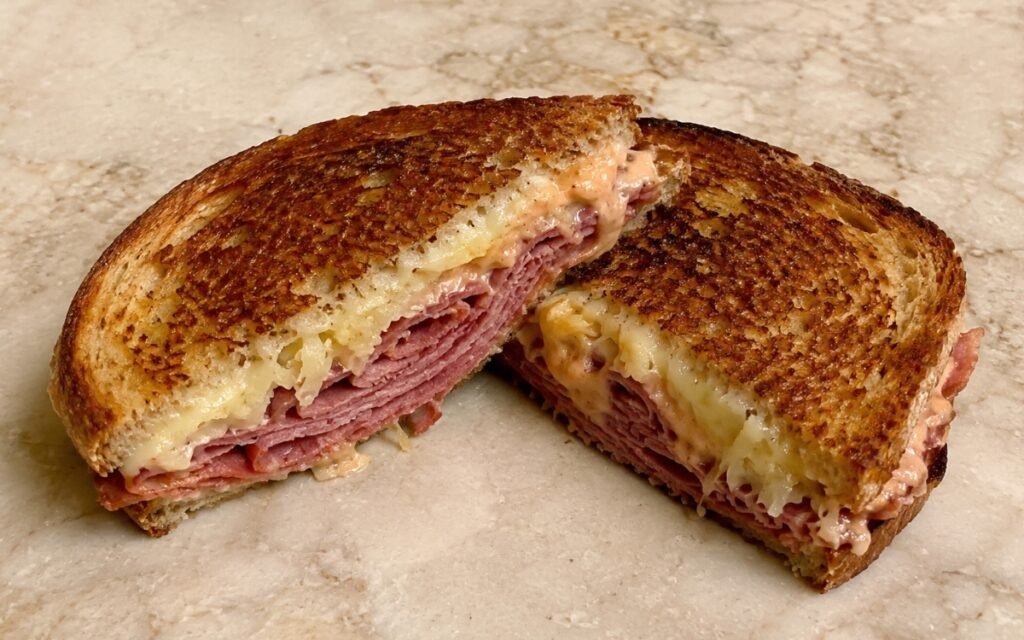
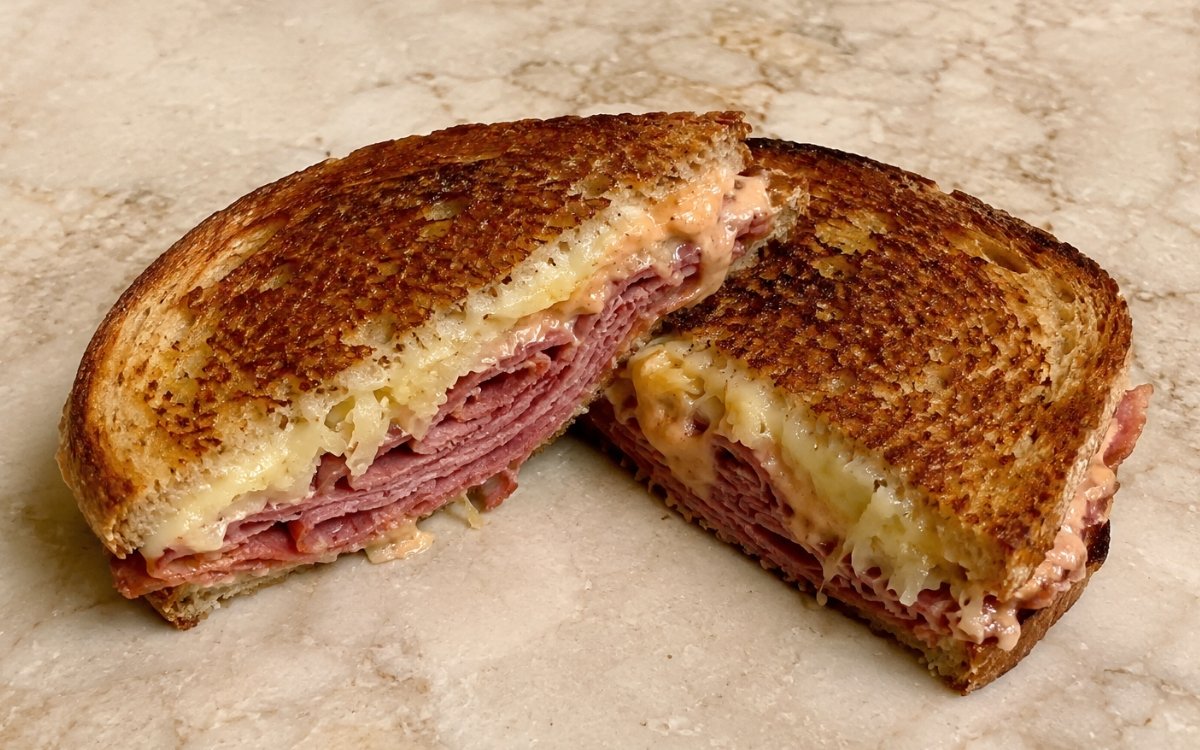
A classic Reuben sandwich built with deeply griddled rye bread, warm thick-sliced corned beef, melted Swiss cheese, well-drained sauerkraut, and Russian dressing oozing at the edges, cut diagonally and stacked so the cross-section shows pink corned beef, pale sauerkraut, melted cheese pull, and crisp golden rye. Draining the sauerkraut aggressively is the single technique this whole sandwich depends on — even well-drained sauerkraut still carries meaningful moisture, and skipping this step is the fastest route to soggy rye before the cheese has even melted, the same wet-ingredient-management principle used elsewhere in this collection whenever a moist filling meets bread that needs to stay crisp. Warming the corned beef before it ever goes into the sandwich matters just as much, since a cold pile of meat blocks the cheese around it from melting properly and forces the bread to overcook while waiting for the centre to catch up. Keeping the griddle heat moderate rather than high protects the rye specifically, since this bread burns before the cheese has a chance to fully melt at higher heat. The payoff is a sandwich with a genuinely crisp, deeply golden rye exterior giving way to warm, tangy, melted layers inside, held together by dressing that oozes rather than floods.
Prep Time : 20 min
Cook Time : 25 min
Servings : 4
20 min
25 min
4
Ingredients
For the Russian Dressing
• 120g mayonnaise
• 60g ketchup or chilli sauce
• 30g sweet pickle relish, finely chopped if chunky — this one on Amazon
• 15g prepared horseradish
• 5ml Worcestershire sauce
• 5ml fresh lemon juice or pickle brine
• 3g Dijon mustard — this one on Amazon
• 2g smoked paprika — this one on Amazon
• 1g garlic powder
• Fine sea salt, to taste
• Freshly cracked black pepper, to taste
For the Sandwiches
• 8 slices rye bread, preferably seeded rye or Jewish-style deli rye
• 600–700g cooked corned beef, thinly sliced but piled thickly
• 240g Swiss cheese, sliced, about 8 slices — this one on Amazon
• 280g sauerkraut, drained very well
• 60g unsalted butter, softened, for griddling the bread — this one on Amazon
This post may contain affiliate links. As an Amazon Associate I earn from qualifying purchases, at no additional cost to you.
Directions
- Make the Russian Dressing
Mix the mayonnaise, ketchup or chilli sauce, pickle relish, horseradish, Worcestershire sauce, lemon juice or pickle brine, Dijon mustard, smoked paprika, garlic powder, salt, and black pepper until smooth. Taste and adjust. The dressing should be creamy, tangy, lightly sweet, and sharp enough to cut through the beef and cheese. If it tastes flat, add more pickle brine or horseradish. The horseradish and pickle brine together give the dressing enough sharpness to stand up against the richness of warm corned beef and two layers of melted Swiss — a dressing that’s too mild tends to disappear once the sandwich is fully assembled and hot. - Drain the Sauerkraut
Place the sauerkraut in a sieve and press out as much liquid as possible. For an even cleaner sandwich, squeeze it in a clean towel or paper towels. This is a major turning point. Wet sauerkraut will ruin the rye bread and turn the sandwich soggy before the cheese even melts. Pressing rather than simply draining removes considerably more liquid than gravity alone would over the same time — sauerkraut holds onto brine tenaciously, and this more aggressive step is what actually gets it dry enough to sit safely against bread for the full griddling time. - Warm the Corned Beef
Place the sliced corned beef in a skillet over low heat with 15–30ml water, or warm it gently in a covered pan for 2–3 minutes until hot and flexible. Drain off any excess moisture. Do not put cold corned beef straight into the sandwich unless you want burnt bread and unmelted cheese. The filling needs a head start. A cold, dense pile of meat acts as a heat sink at the centre of the sandwich — the griddle has to work through that cold mass before the surrounding cheese can properly melt, and by the time it does, the bread on either side has often browned well past ideal. - Build the Sandwiches
Spread Russian dressing on one side of each slice of rye bread. On 4 slices, layer Swiss cheese, warm corned beef, drained sauerkraut, and another layer of Swiss cheese. Close with the remaining rye slices, dressing-side down. Keep the sauerkraut in the centre, not spilling to the edges. Exposed sauerkraut burns and leaks moisture into the pan. Sandwiching the sauerkraut between two layers of Swiss cheese does double duty — the cheese melts around it and helps seal in any remaining moisture, while also physically containing it away from the bread’s edges where the butter and direct heat would otherwise scorch any exposed pieces. - Butter the Bread
Spread softened butter on the outside of each sandwich. Use an even layer from edge to edge so the rye browns evenly. An even, edge-to-edge layer of butter is what produces uniform browning across the whole slice — thin or missing patches brown more slowly and unevenly than the rest, leaving a mottled, inconsistent crust. - Griddle the Reubens
Heat a large skillet, griddle, or cast-iron pan over medium-low to medium heat. Add the sandwiches and press gently with a spatula or a second heavy pan. Cook for 4–5 minutes on the first side, until the bread is deeply golden-brown and crisp. Flip carefully and cook for another 4–5 minutes, pressing gently, until the second side is crisp and the Swiss cheese is fully melted. Do not use high heat. Rye burns before the cheese melts. Medium-low heat is the difference between a proper Reuben and a scorched mess. This moderate heat is calibrated specifically to let the substantial filling — warm beef, two cheese layers, drained kraut — come fully up to melted, hot temperature in roughly the same window the rye needs to develop deep colour, which a hotter pan wouldn’t allow. - Rest and Slice
Transfer the sandwiches to a cutting board and rest for 1–2 minutes. Cut each sandwich diagonally in half. The short rest helps the cheese settle slightly so the cross-section looks clean but still gives a visible pull. Cheese straight off the griddle is at its most fluid; a brief rest lets it firm up just enough that the first cut doesn’t send it pouring out, while it’s still melted and stretchy enough to show a proper pull. - Serve
Stack the sandwich halves slightly offset so the filling is visible. Serve immediately while the rye is crisp, the beef is hot, and the cheese is melted. A Reuben gets worse every minute it sits because steam softens the rye. The hot, moist filling continues releasing steam even after the sandwich leaves the pan, and that trapped steam works directly against the crisp crust the griddling stage just built — serving without delay is what keeps that crust intact.
*Notes :
- Draining the sauerkraut is worth treating as the single most consequential step in this whole recipe, disproportionate to how simple it sounds. Sauerkraut holds onto brine far more stubbornly than most people expect, and even sauerkraut that looks reasonably dry straight from the jar or bag typically still carries enough moisture to soften rye bread over a multi-minute griddling time. Pressing it firmly in a towel, rather than just letting it sit in a sieve, is what actually gets it dry enough to sit safely inside a pressed, griddled sandwich.
- Warming the corned beef before assembly addresses a heat-distribution problem that’s easy to underestimate. A thick, cold pile of sliced meat at the centre of the sandwich has real thermal mass, and the griddle’s heat has to work through that mass before the cheese immediately surrounding it can properly melt. Pre-warming the beef removes that obstacle, letting the whole filling come up to temperature in roughly the same window the bread needs to develop its crust.
- Placing Swiss cheese on both sides of the sauerkraut, rather than using it only once, serves two purposes simultaneously. It contributes more melted cheese overall for flavour and the classic cheese pull, but it also functions structurally — the melting cheese helps bind the layers together and forms a barrier around the sauerkraut that limits how much of its residual moisture can escape sideways into the bread.
- The moderate heat specified for griddling exists to solve a genuine timing tension unique to a sandwich this substantially filled. Rye bread browns and can burn relatively quickly at higher heat, but this particular filling — cold-started corned beef, two layers of cheese, and pressed sauerkraut — needs real time to come fully up to hot, melted temperature. Medium-low to medium heat is the setting that lets both of those processes finish in roughly the same window, rather than forcing a choice between burnt bread and a cold centre.
Why This Recipe Works
This recipe works because it manages moisture and heat distribution with real care at every stage: the sauerkraut is pressed aggressively dry rather than simply drained, the corned beef is warmed before assembly so it doesn’t act as a cold heat sink, and Swiss cheese sandwiched on both sides of the filling both adds flavour and helps contain any remaining moisture from the kraut.
Moderate, patient heat during griddling lets this substantial filling come fully up to hot, melted temperature in the same window the rye develops a deep, crisp crust, and a brief rest before slicing lets the cheese firm just enough for a clean cut that still shows a proper pull.
Ingredient Breakdown
Sturdy Seeded Rye Bread
The specified bread — structurally substantial enough to hold corned beef, sauerkraut, dressing, and cheese through pressing and griddling.
Aggressively Pressed, Drained Sauerkraut
The critical moisture-control step — pressed dry in a towel rather than simply drained, protecting the bread from sogginess.
Pre-Warmed Corned Beef
The filling preparation — warmed before assembly so it doesn’t act as a cold mass that blocks the cheese from melting evenly.
Double-Layered Swiss Cheese
The binding technique — cheese on both sides of the sauerkraut adds flavour, cheese pull, and helps contain residual moisture.
Edge-to-Edge Butter Layer
The griddling fat — an even coating that produces uniform browning across the entire slice rather than a patchy crust.
Flavor Structure Explained
This Reuben follows a layered balance model:
- Crisp buttery foundation (griddled rye bread)
- Rich savoury centre (warm corned beef)
- Melted creamy body (Swiss cheese)
- Tangy fermented contrast (sauerkraut)
- Sharp creamy finish (Russian dressing)
The griddled rye bread provides a crisp, buttery, deeply browned foundation for everything inside. Warm, thickly piled corned beef delivers the sandwich’s central savoury richness. Melted Swiss cheese, layered on both sides of the filling, adds a rich, binding creaminess throughout. Well-drained sauerkraut cuts through that richness with tangy, fermented brightness and a satisfying bite. Russian dressing ties every layer together with its own sharp, tangy, lightly sweet creaminess, oozing slightly at the edges with each bite.
Common Mistakes to Avoid
- Not Draining the Sauerkraut Aggressively Enough – Residual moisture soaks straight into the rye and turns the sandwich soggy before the cheese melts. Always press it dry in a towel, not just drain it in a sieve.
- Assembling with Cold Corned Beef – This blocks the surrounding cheese from melting properly and forces the bread to overcook while the centre catches up. Always warm the beef before building the sandwich.
- Griddling Over High Heat – Rye burns before the cheese has time to fully melt. Always use medium-low to medium heat and be patient through the full cooking time.
- Letting Sauerkraut Spill to the Edges – Exposed kraut burns against the pan and leaks moisture where the bread has the least protection. Always keep it contained toward the centre of the filling.
- Slicing Immediately Off the Griddle – Cheese at its most fluid pours out messily when cut. Always rest for 1–2 minutes before slicing.
Variations
Reuben Sandwich With Pastrami
Substitute warm sliced pastrami for the corned beef, following the identical assembly and griddling method, for a smokier, more peppery version.
Extra-Tangy Dressing
Increase the horseradish and add an extra splash of pickle brine to the Russian dressing for a sharper, more assertive tang.
Half-and-Half Version
Use half sauerkraut and half well-drained coleslaw for a lighter, crunchier texture alongside the classic tang.
Open-Faced Reuben
Build the sandwich open-faced on a single slice of rye, melting the cheese under a broiler instead of griddling, for a lighter presentation.
Storage & Make-Ahead
Russian dressing can be made ahead and refrigerated in a sealed container for up to 1 week. Drained sauerkraut can be prepped a day ahead and refrigerated in an airtight container.
Warmed corned beef is best prepared fresh close to assembly rather than reheated multiple times, which can dry it out.
Fully assembled, griddled sandwiches are not suitable for storage — a Reuben’s rye softens noticeably within minutes of leaving the pan, so build and cook only what will be eaten immediately.
Frequently Asked Questions
Why does the sauerkraut need to be pressed dry rather than just drained in a sieve?
Sauerkraut holds onto brine more stubbornly than it appears to, and even kraut that looks reasonably dry from a sieve alone typically still carries enough moisture to soften rye bread during the multi-minute griddling time. Pressing it firmly in a towel removes considerably more liquid, which is what actually protects the bread.
Why does the corned beef need to be warmed before it goes into the sandwich?
A cold, dense pile of meat acts as a heat sink at the centre of the sandwich, and the griddle has to work through that cold mass before the surrounding cheese can properly melt. Pre-warming removes that obstacle, letting the whole filling heat through in the same window the bread browns.
Why use Swiss cheese on both sides of the sauerkraut instead of just one layer?
Beyond adding more melted cheese and a better pull, cheese on both sides helps physically contain the sauerkraut and any remaining moisture it carries, limiting how much can escape sideways into the bread during griddling.
Why does the griddle need to stay at medium-low to medium heat rather than higher?
This particular filling needs real time to come fully up to hot, melted temperature, while rye bread browns relatively quickly. Moderate heat is what lets both of those things finish in the same window, rather than forcing a choice between burnt bread and a filling that’s still cold at the centre.
Are there other classic deli-style sandwiches worth trying?
French Dip Sandwich and Chopped Cheese are both worth exploring if you enjoy this kind of substantial, griddled or dipped sandwich — the French Dip built around thinly sliced roast beef served with a side of jus for dipping, and Chopped Cheese built on a griddled beef-and-onion filling folded into melted cheese on a hero roll. For the bread itself in a different sandwich format, Philly Cheesesteak Hoagie Rolls shows another approach to a sturdy roll built to hold a substantial, juicy filling.
Nutrition Facts
( per serving )
Calories
~820 kcal
Protein
42 g
Fat
52 g
Carbs
46 g
Calories
~820 kcal
Protein
42 g
Fat
52 g
Carbs
46 g
Related Recipes
Related Recipes

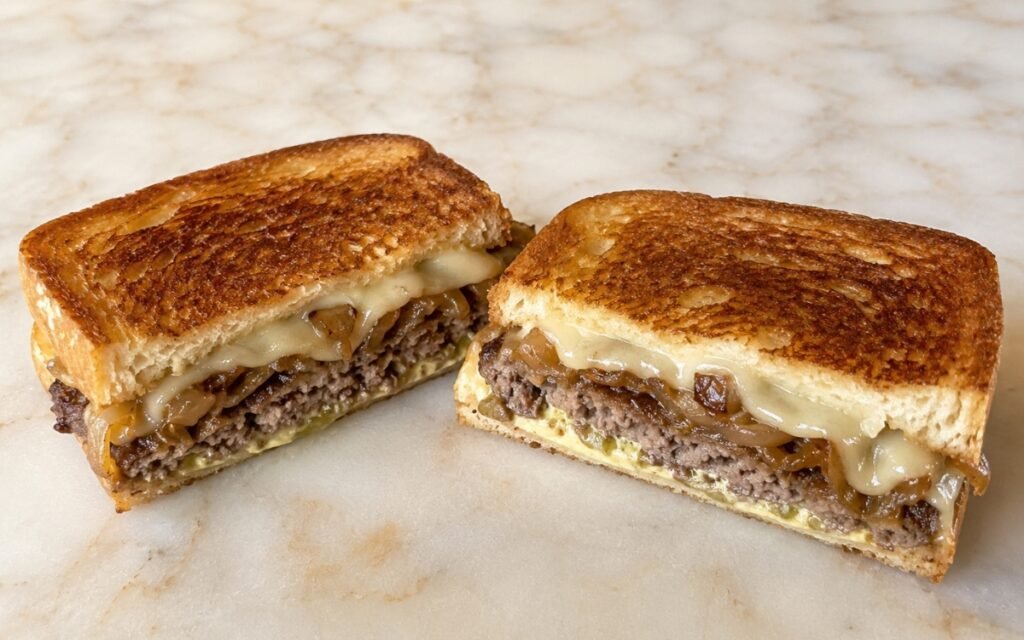
Patty Melt
A thin seared beef patty with slow-caramelized onions and melted Swiss cheese, griddled between brioche toast bread with a tangy pickle sauce.
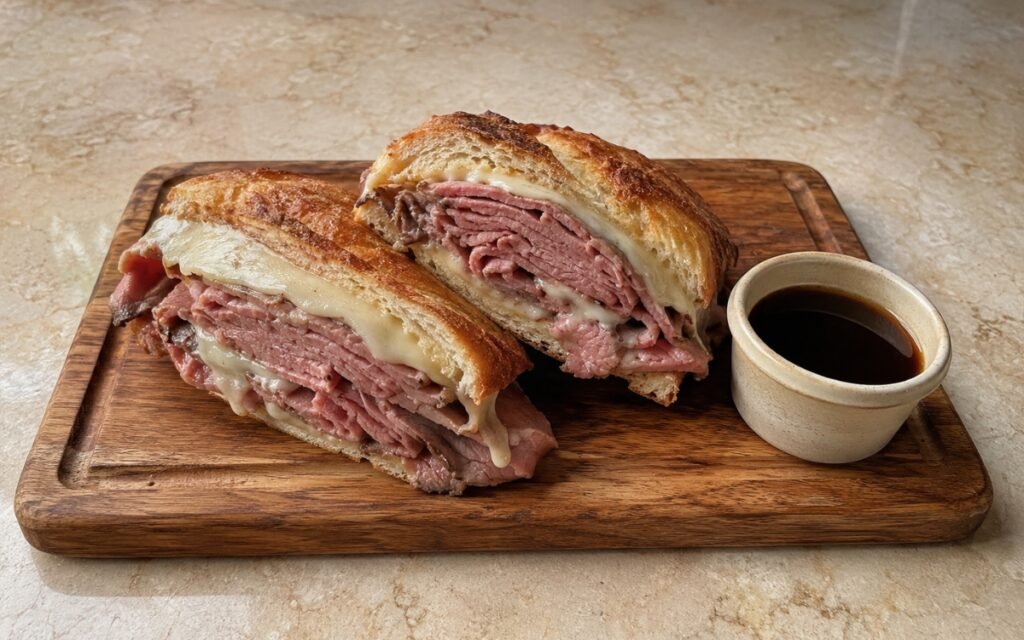
French Dip Sandwich
Thinly sliced, medium-rare roast beef and melted Swiss and provolone piled into a toasted homemade hoagie roll, served with savoury au jus for dipping.
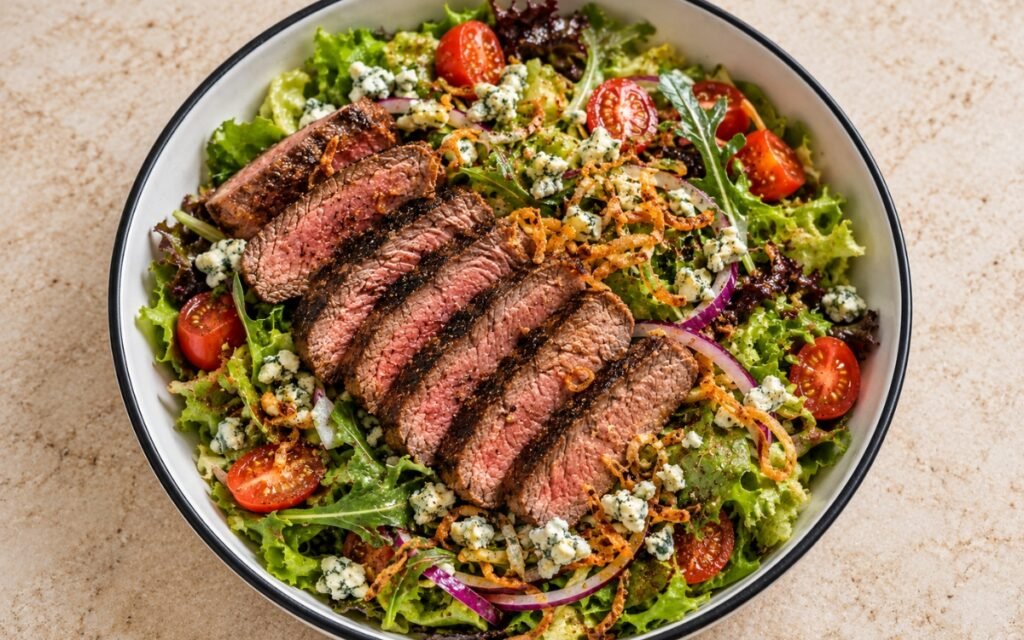
Steakhouse Steak Salad with Blue Cheese
Sliced medium-rare seared steak over crisp greens with cherry tomatoes, red onion, blue cheese crumbles, and crispy fried shallots.
You might also like
You might also like
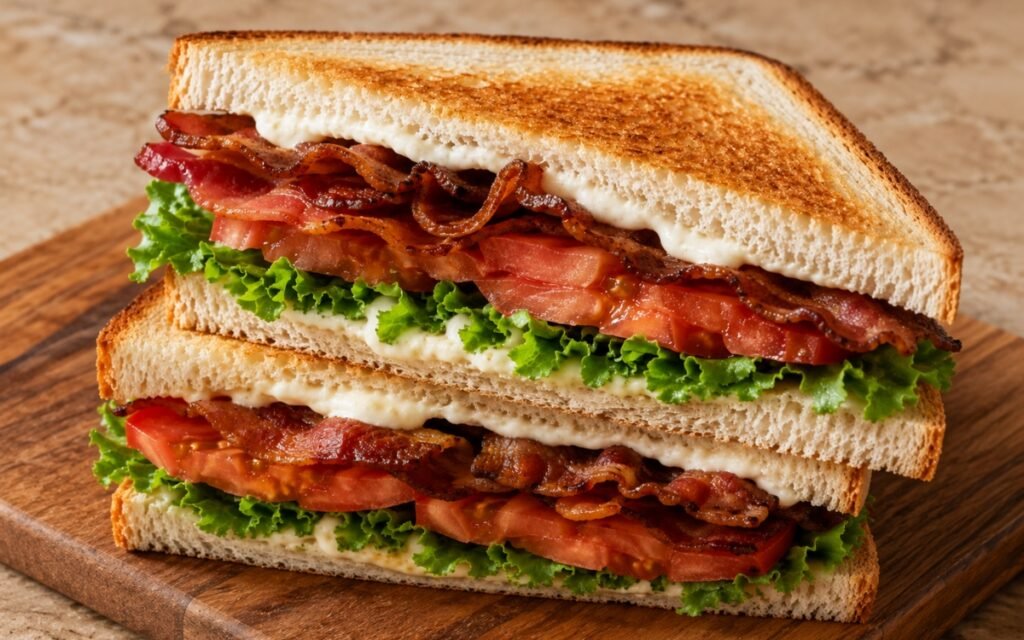
BLT Sandwich
Toasted white bread with crispy bacon, ripe tomato, crisp lettuce, and a generous layer of mayonnaise.
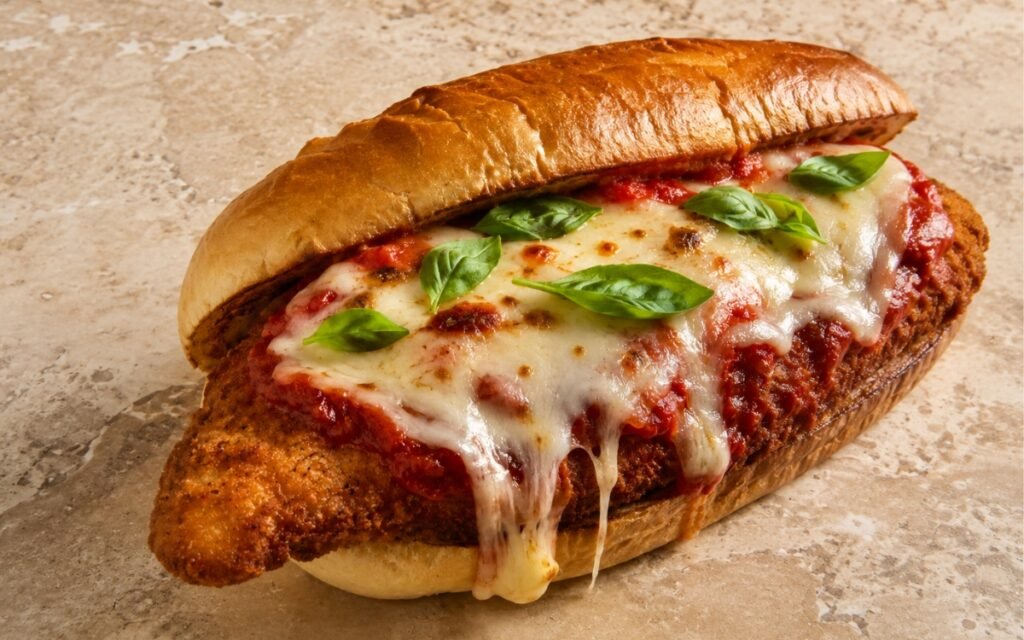
Chicken Parm Hero
A golden fried chicken cutlet in a toasted hoagie roll, topped with thick marinara, melted mozzarella, Parmesan, and fresh basil.
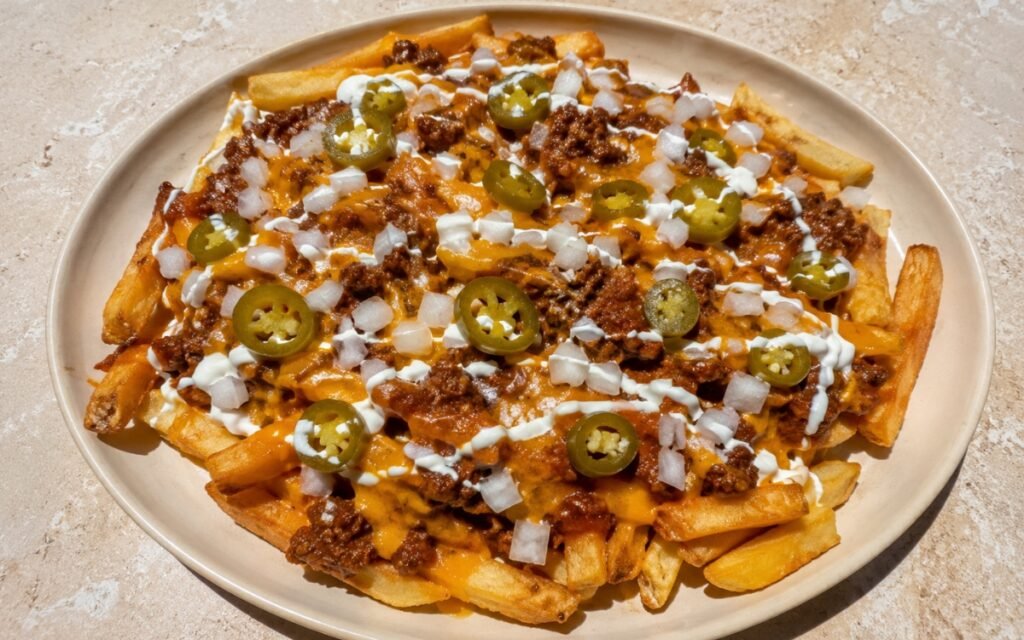
Loaded Chili Cheese Fries
Double-fried thick-cut potatoes topped with rich, reduced beef chili, melted Mexican cheese, diced onion, pickled jalapeños, and sour cream.
Reuben Sandwich
Ingredients
Method
- Mix the mayonnaise, ketchup or chilli sauce, pickle relish, horseradish, Worcestershire sauce, lemon juice or pickle brine, Dijon mustard, smoked paprika, garlic powder, salt, and black pepper until smooth. Taste and adjust. The dressing should be creamy, tangy, lightly sweet, and sharp enough to cut through the beef and cheese. If it tastes flat, add more pickle brine or horseradish. The horseradish and pickle brine together give the dressing enough sharpness to stand up against the richness of warm corned beef and two layers of melted Swiss — a dressing that’s too mild tends to disappear once the sandwich is fully assembled and hot.
- Place the sauerkraut in a sieve and press out as much liquid as possible. For an even cleaner sandwich, squeeze it in a clean towel or paper towels. This is a major turning point. Wet sauerkraut will ruin the rye bread and turn the sandwich soggy before the cheese even melts. Pressing rather than simply draining removes considerably more liquid than gravity alone would over the same time — sauerkraut holds onto brine tenaciously, and this more aggressive step is what actually gets it dry enough to sit safely against bread for the full griddling time.
- Place the sliced corned beef in a skillet over low heat with 15–30ml water, or warm it gently in a covered pan for 2–3 minutes until hot and flexible. Drain off any excess moisture. Do not put cold corned beef straight into the sandwich unless you want burnt bread and unmelted cheese. The filling needs a head start. A cold, dense pile of meat acts as a heat sink at the centre of the sandwich — the griddle has to work through that cold mass before the surrounding cheese can properly melt, and by the time it does, the bread on either side has often browned well past ideal.
- Spread Russian dressing on one side of each slice of rye bread. On 4 slices, layer Swiss cheese, warm corned beef, drained sauerkraut, and another layer of Swiss cheese. Close with the remaining rye slices, dressing-side down. Keep the sauerkraut in the centre, not spilling to the edges. Exposed sauerkraut burns and leaks moisture into the pan. Sandwiching the sauerkraut between two layers of Swiss cheese does double duty — the cheese melts around it and helps seal in any remaining moisture, while also physically containing it away from the bread’s edges where the butter and direct heat would otherwise scorch any exposed pieces.
- Spread softened butter on the outside of each sandwich. Use an even layer from edge to edge so the rye browns evenly. An even, edge-to-edge layer of butter is what produces uniform browning across the whole slice — thin or missing patches brown more slowly and unevenly than the rest, leaving a mottled, inconsistent crust.
- Heat a large skillet, griddle, or cast-iron pan over medium-low to medium heat. Add the sandwiches and press gently with a spatula or a second heavy pan. Cook for 4–5 minutes on the first side, until the bread is deeply golden-brown and crisp. Flip carefully and cook for another 4–5 minutes, pressing gently, until the second side is crisp and the Swiss cheese is fully melted. Do not use high heat. Rye burns before the cheese melts. Medium-low heat is the difference between a proper Reuben and a scorched mess. This moderate heat is calibrated specifically to let the substantial filling — warm beef, two cheese layers, drained kraut — come fully up to melted, hot temperature in roughly the same window the rye needs to develop deep colour, which a hotter pan wouldn’t allow.
- Transfer the sandwiches to a cutting board and rest for 1–2 minutes. Cut each sandwich diagonally in half. The short rest helps the cheese settle slightly so the cross-section looks clean but still gives a visible pull. Cheese straight off the griddle is at its most fluid; a brief rest lets it firm up just enough that the first cut doesn’t send it pouring out, while it’s still melted and stretchy enough to show a proper pull.
- Stack the sandwich halves slightly offset so the filling is visible. Serve immediately while the rye is crisp, the beef is hot, and the cheese is melted. A Reuben gets worse every minute it sits because steam softens the rye. The hot, moist filling continues releasing steam even after the sandwich leaves the pan, and that trapped steam works directly against the crisp crust the griddling stage just built — serving without delay is what keeps that crust intact.