
Steakhouse Peppercorn Crusted Steak
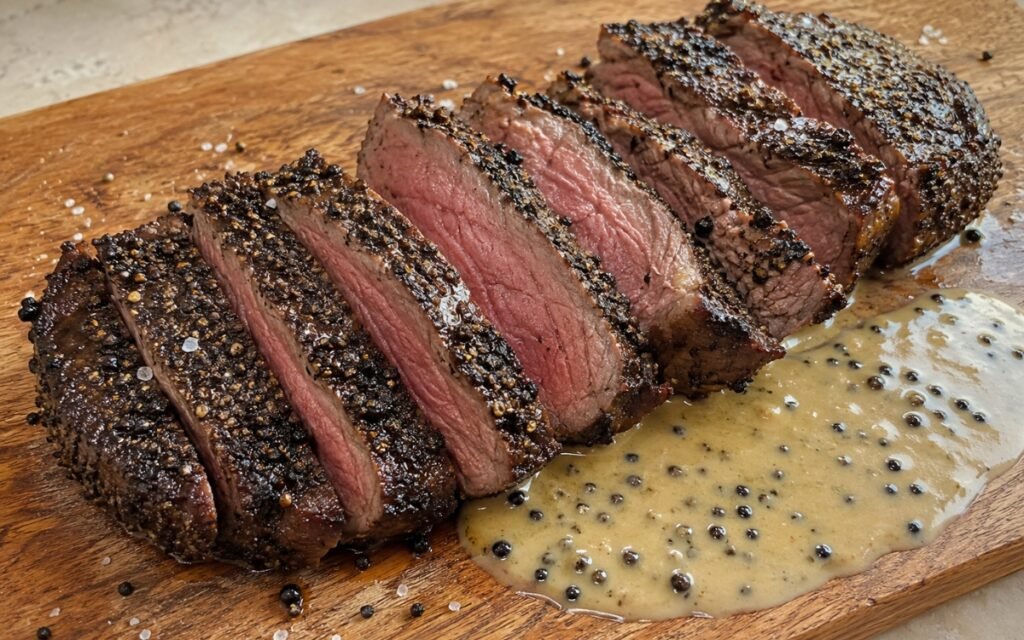
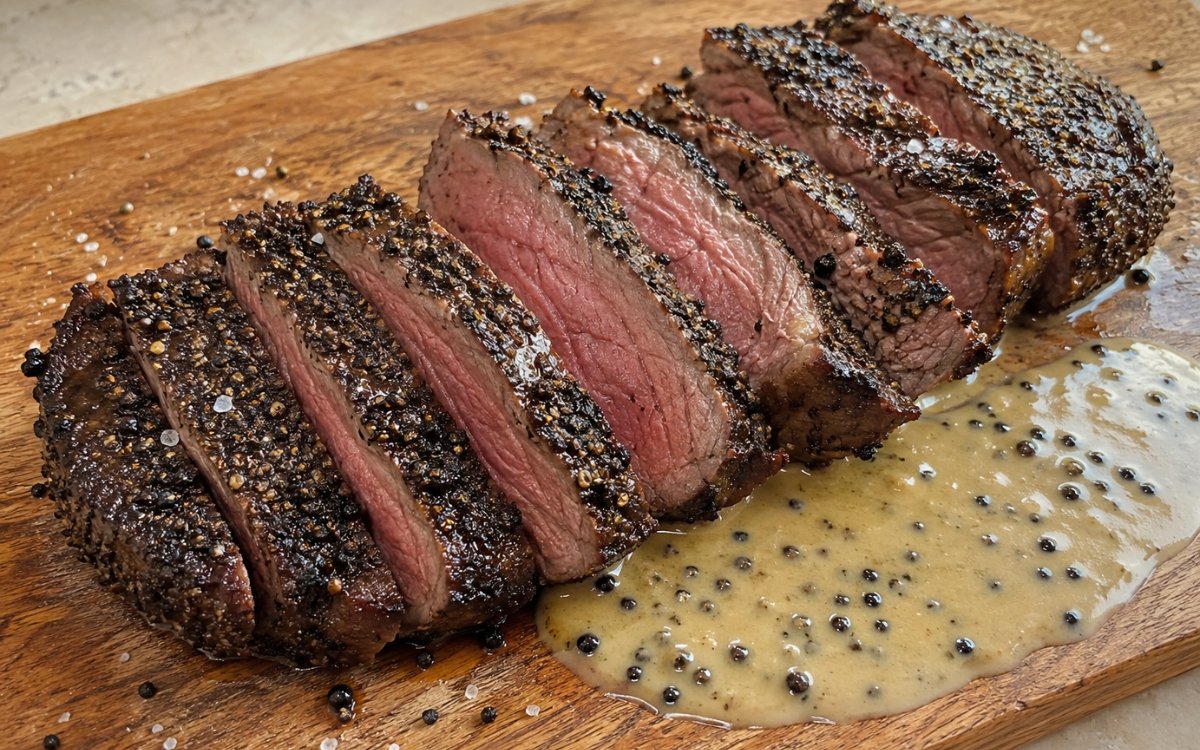
Peppercorn Crusted Steak is a steakhouse classic built on contrast — tender, juicy beef wrapped in a coarse, aromatic peppercorn crust that delivers sharp heat, texture, and depth. The technique is deceptively simple but unforgiving: heat must be aggressive enough to build a crust, yet controlled enough to prevent the pepper from turning bitter. Every step here addresses a specific physical or chemical process rather than existing as tradition for its own sake — tempering equalises the temperature gradient between the meat’s cold centre and warm exterior, thorough drying is what makes searing physically possible at all, and coarsely crushed rather than finely ground peppercorns toast gradually in stages instead of burning immediately into acrid bitterness. Salt goes on first and penetrates the meat internally, while pepper stays external, forming the crust rather than seasoning from within — an order that matters both for flavour and for the physical adhesion of the crust itself. Finished with butter basting and an optional brandy cream reduction, this dish is a genuine study in timing, sequencing, and balance.
Prep Time : 10 min
Cook Time : 12 min
Servings : 4
10 min
12 min
4
Ingredients
For the Steak
• 800g beef tenderloin or strip steak (2 steaks, about 3cm thick)
• 10g flaky sea salt — this one on Amazon
• 25ml olive oil — this one on Amazon
• 40g unsalted butter — this one on Amazon
For the Peppercorn Crust
• 20g whole black peppercorns
For the Optional Pan Sauce
• 30ml brandy
• 80ml heavy cream
This post may contain affiliate links. As an Amazon Associate I earn from qualifying purchases, at no additional cost to you.
Directions
- Temper and Dry the Meat
Remove the steaks from the refrigerator 30 minutes before cooking and leave them uncovered on a tray. This step equalizes the internal temperature of the meat, reducing the gradient between the cold center and warm exterior. Without tempering, the outer layers overcook before the center reaches proper doneness. Pat the steaks completely dry on all surfaces using paper towels. This is not optional — it is foundational. Surface moisture must evaporate before the temperature can rise above 100°C. If water remains, the steak steams instead of sears, and the peppercorn crust will not adhere properly. A wet steak cannot form a crust — it is physically impossible. - Crush the Peppercorns Properly
Place the whole peppercorns in a mortar and pestle or under a heavy pan and crush them coarsely. The correct texture is irregular — large fragments, cracked halves, and smaller shards. Do not grind into powder. This step defines the entire dish. Coarse peppercorns behave differently under heat: they toast gradually and release aromatic oils in stages, creating layered heat instead of uniform bitterness. Fine pepper burns quickly and produces an acrid, flat flavor. The goal is controlled release, not immediate intensity. - Season First, Then Apply the Pepper
Season the steaks generously with salt on all sides and press it into the meat. Allow it to sit briefly, then press the crushed peppercorns firmly onto the surface. This order matters. Salt penetrates and enhances the meat internally, while pepper must remain external to form a crust. Applying pepper too early or too loosely leads to poor adhesion and uneven flavor. There is also a structural issue: peppercorns create a physical barrier between meat and pan. If applied incorrectly, they reduce surface contact and weaken the sear. Some professional techniques intentionally coat only one side for this reason. - Preheat the Pan Aggressively
Heat a heavy pan (cast iron or stainless steel) over high heat until it begins to smoke lightly. Add oil just before placing the steak. This level of heat is required for the Maillard reaction — the chemical process responsible for creating hundreds of complex flavor compounds. Without sufficient heat, you do not get a crust — you get browned meat that tastes flat. - Sear Without Movement
Place the steaks in the pan and leave them completely undisturbed for 4 minutes. Do not touch them, press them, or adjust them. During this time, two processes happen simultaneously: the meat surface undergoes Maillard browning and the peppercorns toast and embed into the protein structure Interrupting this stage breaks both processes. Movement destroys crust formation and prevents proper adhesion of the pepper layer. - Flip and Transition to Controlled Heat
Flip the steaks and immediately add butter. As the butter melts and foams, tilt the pan and continuously spoon it over the meat. This is the critical transition point. The cooking method shifts from aggressive direct heat to controlled fat-mediated heat transfer. Butter reduces the effective surface temperature while still delivering energy, preventing the pepper from burning while finishing the steak. Fat also dissolves aromatic compounds from the pepper and distributes them more evenly across the surface, reducing harshness and increasing perceived depth. - Control Doneness with Precision
Cook for another 3–4 minutes, depending on thickness. Remove the steak at 52–54°C for medium-rare. Peppercorn crusts are less forgiving than standard steaks. The spice layer continues to cook even after removal, meaning overcooking affects both meat texture and flavor quality. Precision is not optional here — it is required. - Build the Pan Sauce (Optional but Strategic)
Remove the steaks and add brandy to the hot pan, scraping up the fond. The fond is concentrated flavor created during searing and must be incorporated into the sauce. Allow the alcohol to reduce for 60–90 seconds. This burns off harsh volatile compounds while concentrating sweetness. Then add cream and simmer gently until the sauce thickens and coats the back of a spoon. Heat control is critical here — boiling cream causes separation. The sauce should reduce slowly, not aggressively. - Rest and Slice
Rest the steaks for 5 minutes before slicing against the grain. During cooking, muscle fibers contract and push moisture inward. Resting allows those juices to redistribute throughout the structure. Cutting immediately results in moisture loss and a visibly dry steak.
*Notes :
- Coarse peppercorn texture is the single most consequential decision in this recipe. The irregular fragments, cracked halves, and shards toast gradually and release their aromatic oils in stages under heat, producing layered heat rather than uniform bitterness — finely ground pepper, by contrast, burns almost immediately and produces a flat, acric result no technique afterward can correct.
- The order of salt then pepper is deliberate and structural. Salt is meant to penetrate into the meat; pepper is meant to stay on the surface as a crust. Reversing or rushing that order — applying pepper too early or too loosely — produces poor adhesion and uneven flavour distribution across the finished steak.
- Doneness precision matters more here than with an unseasoned steak, since the peppercorn crust continues cooking even after the steak is removed from the pan. Pulling the steak at 52–54°C for medium-rare, rather than waiting for a higher final temperature, accounts for that carryover cooking specifically in the crusted layer.
Why This Recipe Works
This recipe works because every step addresses a specific physical or chemical process. Tempering and thorough drying make genuine searing possible. Coarsely crushed pepper toasts gradually rather than burning. Salt-then-pepper sequencing supports both flavour and crust adhesion.
Undisturbed searing lets both the Maillard reaction and pepper toasting complete without interruption. Butter basting shifts to a gentler, fat-mediated finish that protects the pepper from burning. And the rest allows redistributed moisture to stay in the meat rather than spill onto the board.
Ingredient Breakdown
Beef Tenderloin or Strip Steak, Tempered and Dried
The foundation — physically incapable of forming a crust without thorough drying first.
Coarsely Crushed Peppercorns
The defining texture — irregular fragments that toast in stages rather than burning immediately.
Salt Applied First, Pepper Second
The structural sequencing — internal penetration versus external crust formation.
Butter, Added at the Flip
The controlled-heat transition — protecting the pepper crust from burning while finishing the interior.
Optional Brandy Cream Reduction
The fond-based sauce — capturing concentrated pan flavour that would otherwise be lost.
Flavor Structure Explained
This Peppercorn Crusted Steak follows a contrast-driven balance model:
- Sharp aromatic crust (coarse black pepper)
- Rich beef core (steak)
- Deep seared exterior (high-heat cooking)
- Tender interior contrast (proper doneness)
- Rounded finishing layer (brandy cream pan sauce)
The black pepper crust defines the steak’s main flavor identity, bringing sharp heat, aromatic intensity, and a bold textured surface. Staged toasting deepens the pepper’s character, turning it from raw sharpness into something warmer, more fragrant, and more layered. The steak itself provides the structural counterpoint, with a deeply seared exterior and tender interior giving the crust something rich and substantial to play against. This contrast between peppery intensity and juicy beef is the center of the dish. A brandy cream pan sauce, if used, softens the pepper’s edge with richness and gentle sweetness while adding a more polished, restaurant-style finish. The result is a steak built around bold aromatics, crust, and contrast, where sharp pepper and rich beef remain clearly defined but balanced.
Common Mistakes to Avoid
- Skipping the Tempering Step – Produces an uneven cook, overdone outside before the centre reaches doneness. Always allow the full 30 minutes.
- Not Drying the Steak Thoroughly – Prevents crust formation entirely, both for the sear and the pepper. Always pat completely dry.
- Grinding the Peppercorns Finely – Burns quickly and produces acrid, flat flavour. Always crush coarsely into irregular fragments.
- Moving or Pressing the Steak During the Sear – Interrupts both Maillard browning and pepper toasting simultaneously. Always leave undisturbed for the full 4 minutes.
- Boiling the Cream in the Pan Sauce – Causes separation. Always reduce slowly at a gentle simmer.
Variations
Without the Pan Sauce
Omit the brandy and cream entirely for a simpler, crust-focused version of the same steak.
With Cognac Instead of Brandy
Substitute cognac for a slightly more refined, aromatic pan sauce.
With Green Peppercorns
Replace some or all of the black peppercorns with brined green peppercorns for a milder, brighter crust.
With Garlic Butter
For a comparable technique using a garlic-herb butter finish in place of the peppercorn crust, see the Garlic Butter Sirloin Steak.
Storage & Make-Ahead
Cooked steak can be refrigerated for up to 3 days. Reheat it gently to avoid overcooking the crust further.
The pan sauce can be refrigerated separately for up to 2 days. Reheat it gently without boiling.
Frequently Asked Questions
Why must the peppercorns be coarsely crushed rather than finely ground?
Coarse fragments toast gradually under heat, releasing their aromatic oils in stages and producing layered, complex heat. Finely ground pepper has far more surface area exposed to direct heat and burns almost immediately, producing an acrid, flat flavour that coarse pepper avoids entirely.
Why does the order of salt and pepper matter?
Salt is meant to penetrate into the meat and season it internally, while pepper is meant to stay on the surface and form a crust. Applying them in the correct order, with salt first and a brief rest before the pepper goes on, supports both proper seasoning and proper crust adhesion — reversing or rushing it produces uneven results.
Why does the steak need to come off the pan at a lower temperature than a normal steak?
The peppercorn crust continues cooking even after the steak is removed from the heat, meaning the crust’s spice character keeps developing during the rest. Pulling the steak at 52–54°C for medium-rare accounts for that carryover effect specifically in the crusted layer, not just the meat itself.
What should I serve alongside this steak?
Classic Mashed Potatoes offer a smooth, rich counterpoint to the peppercorn crust’s sharp heat, while Thick-Cut Steak Fries provide a more textural, substantial side that holds up well against the dish’s bold flavour. For a different steak technique using a garlic-herb butter finish instead of a spice crust, see the Garlic Butter Sirloin Steak.
Nutrition Facts
( per serving )
Calories
~480 kcal
Protein
40 g
Fat
34 g
Carbs
2 g
Calories
~480 kcal
Protein
40 g
Fat
34 g
Carbs
2 g
Related Recipes
Related Recipes

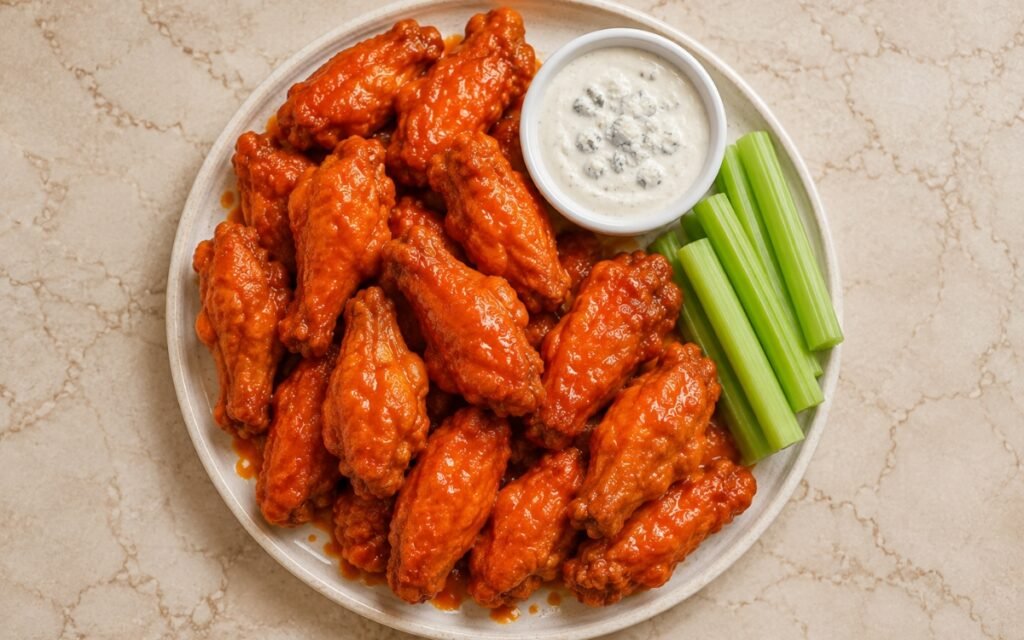
Hot Buffalo Wings
Double-fried chicken wings tossed hot in a glossy butter-and-hot-sauce Buffalo coating, served with blue cheese dressing and celery.
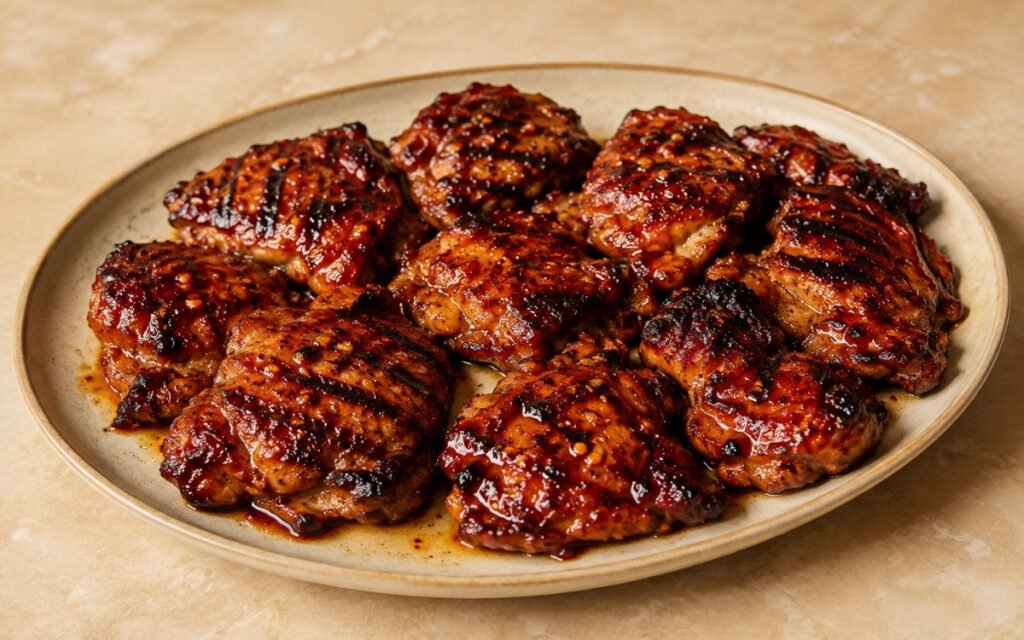
Grilled Hot Honey Chicken Thighs
Grilled yogurt-marinated chicken thighs with charred edges and a sticky, glossy chili-infused hot honey glaze.
Homemade Chicken Nuggets
A juicy chicken-and-pork blend shaped into hand-formed nuggets, coated in a craggy panko-breadcrumb crust, and fried until deeply golden.

You might also like
You might also like
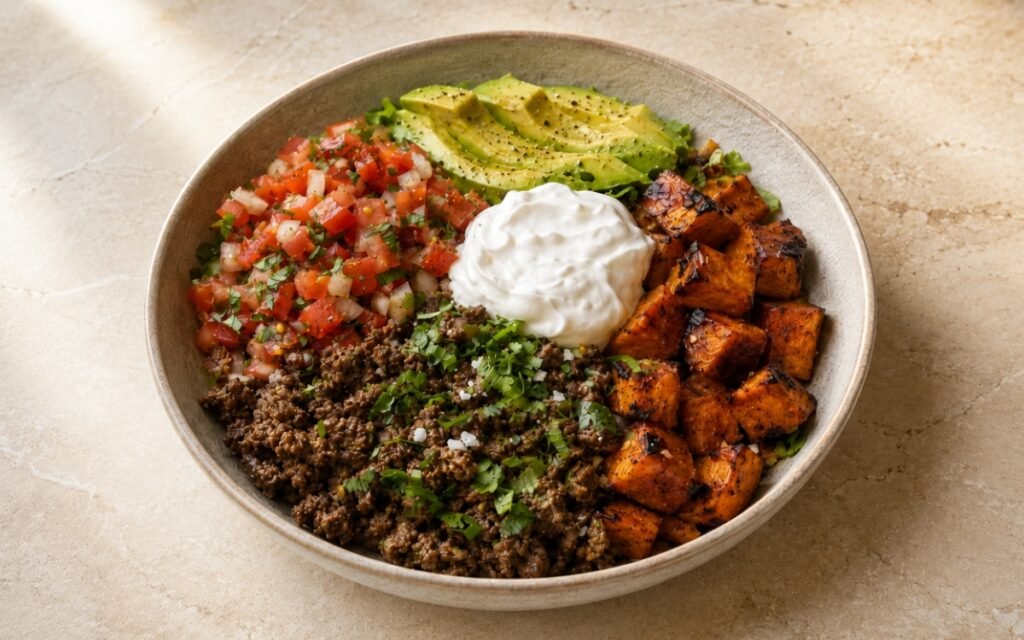
Sweet Potato Ground Beef Burrito Bowl
Crisp roasted sweet potato and browned seasoned ground beef with fresh pico de gallo, sliced avocado and cool sour cream.
Chicken Parm Hero
A golden fried chicken cutlet in a toasted hoagie roll, topped with thick marinara, melted mozzarella, Parmesan, and fresh basil.
Suadero Tacos
Slow-braised suadero beef crisped hot and fast in a skillet, mixed with crispy chicharrón, and piled onto blue corn tortillas with bright salsa verde.
Peppercorn Crusted Steak
Ingredients
Method
- Remove the steaks from the refrigerator 30 minutes before cooking and leave them uncovered on a tray. This step equalises the internal temperature of the meat, reducing the gradient between the cold centre and warm exterior. Without tempering, the outer layers overcook before the centre reaches proper doneness. Pat the steaks completely dry on all surfaces using paper towels. This is not optional — it is foundational. Surface moisture must evaporate before the temperature can rise above 100°C. If water remains, the steak steams instead of sears, and the peppercorn crust will not adhere properly. A wet steak cannot form a crust — it is physically impossible.
- Place the whole peppercorns in a mortar and pestle or under a heavy pan and crush them coarsely. The correct texture is irregular — large fragments, cracked halves, and smaller shards. Do not grind into powder. This step defines the entire dish. Coarse peppercorns behave differently under heat: they toast gradually and release aromatic oils in stages, creating layered heat instead of uniform bitterness. Fine pepper burns quickly and produces an acrid, flat flavour. The goal is controlled release, not immediate intensity.
- Season the steaks generously with salt on all sides and press it into the meat. Allow it to sit briefly, then press the crushed peppercorns firmly onto the surface. This order matters. Salt penetrates and enhances the meat internally, while pepper must remain external to form a crust. Applying pepper too early or too loosely leads to poor adhesion and uneven flavour. There is also a structural issue: peppercorns create a physical barrier between meat and pan. If applied incorrectly, they reduce surface contact and weaken the sear. Some professional techniques intentionally coat only one side for this reason.
- Heat a heavy pan (cast iron or stainless steel) over high heat until it begins to smoke lightly. Add oil just before placing the steak. This level of heat is required for the Maillard reaction — the chemical process responsible for creating hundreds of complex flavour compounds. Without sufficient heat, you do not get a crust — you get browned meat that tastes flat.
- Place the steaks in the pan and leave them completely undisturbed for 4 minutes. Do not touch them, press them, or adjust them. During this time, two processes happen simultaneously: the meat surface undergoes Maillard browning and the peppercorns toast and embed into the protein structure. Interrupting this stage breaks both processes. Movement destroys crust formation and prevents proper adhesion of the pepper layer.
- Flip the steaks and immediately add butter. As the butter melts and foams, tilt the pan and continuously spoon it over the meat. This is the critical transition point. The cooking method shifts from aggressive direct heat to controlled fat-mediated heat transfer. Butter reduces the effective surface temperature while still delivering energy, preventing the pepper from burning while finishing the steak. Fat also dissolves aromatic compounds from the pepper and distributes them more evenly across the surface, reducing harshness and increasing perceived depth.
- Cook for another 3–4 minutes, depending on thickness. Remove the steak at 52–54°C for medium-rare. Peppercorn crusts are less forgiving than standard steaks. The spice layer continues to cook even after removal, meaning overcooking affects both meat texture and flavour quality. Precision is not optional here — it is required.
- Remove the steaks and add brandy to the hot pan, scraping up the fond. The fond is concentrated flavour created during searing and must be incorporated into the sauce. Allow the alcohol to reduce for 60–90 seconds. This burns off harsh volatile compounds while concentrating sweetness. Then add cream and simmer gently until the sauce thickens and coats the back of a spoon. Heat control is critical here — boiling cream causes separation. The sauce should reduce slowly, not aggressively.
- Rest the steaks for 5 minutes before slicing against the grain. During cooking, muscle fibers contract and push moisture inward. Resting allows those juices to redistribute throughout the structure. Cutting immediately results in moisture loss and a visibly dry steak.