
Braised Beef Chuck Steak
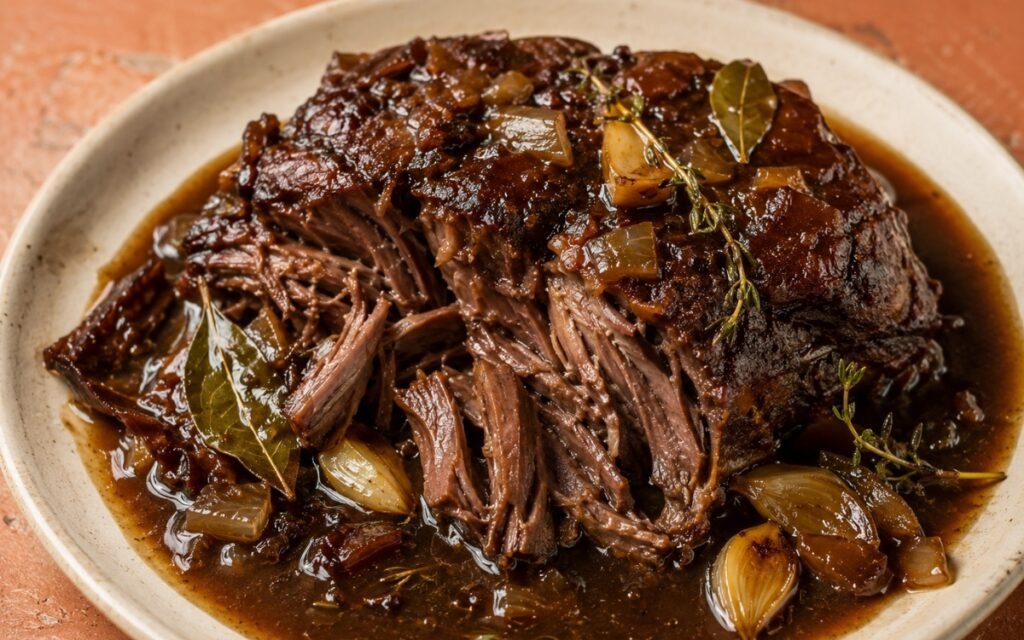
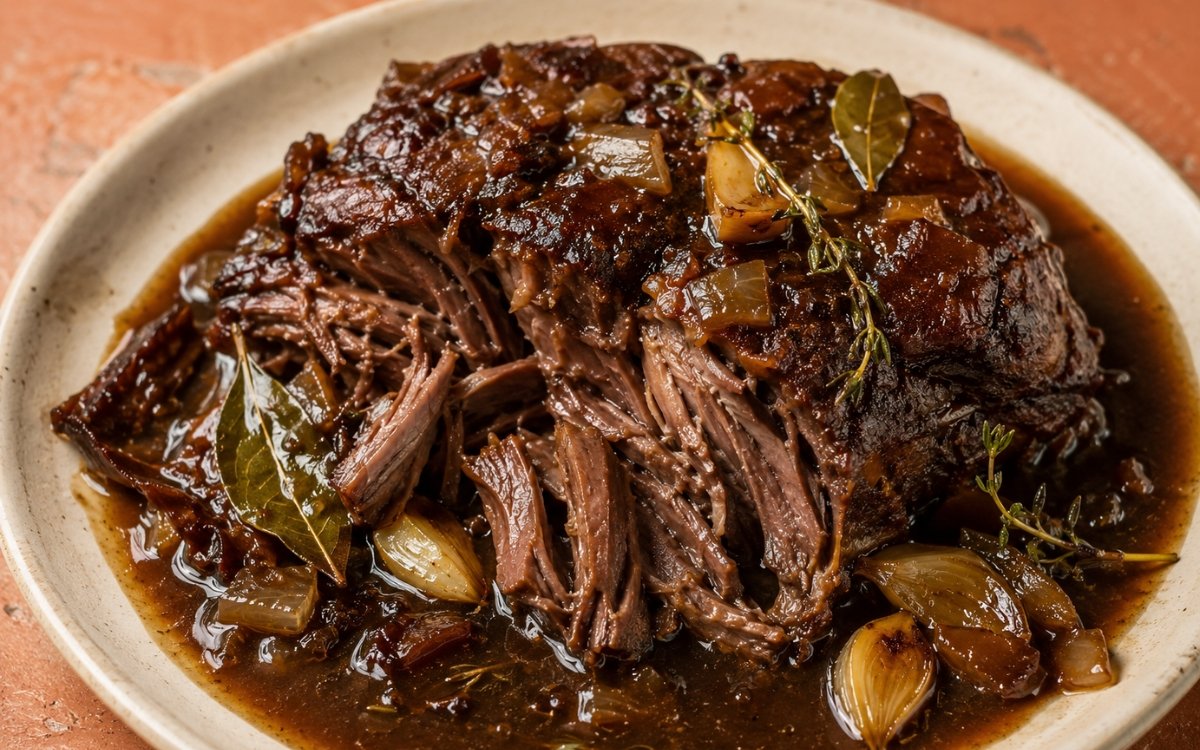
A tough, collagen-rich cut transformed into fork-tender, deeply flavourful beef through patient slow braising. This method builds flavour in layers — from a hard, dark sear to a gently reduced, aromatic wine-and-stock liquid — creating a rich, concentrated sauce and meat that breaks apart under minimal pressure. No shortcuts, no complexity. Just time applied correctly to the right cut.
Prep Time : 15 min
Cook Time : 2hr, 30 min
Servings : 4
15 min
2hr, 30 min
4
Ingredients
For the Beef Chuck
• 900g beef chuck steak, cut into 4 portions
• 10g fine sea salt — this one on Amazon
• 4g freshly ground black pepper
• 30ml olive oil — this one on Amazon
For the Braising Liquid
• 100g yellow onion, roughly chopped
• 4 garlic cloves, smashed
• 250ml beef stock
• 125ml red wine (or additional beef stock)
• 15ml Worcestershire sauce — this one on Amazon
• 4 sprigs fresh thyme
• 2 bay leaves
This post may contain affiliate links. As an Amazon Associate I earn from qualifying purchases, at no additional cost to you.
Directions
- Preheat and Season
Preheat the oven to 160°C (325°F). While it heats, season the chuck steak portions evenly and generously with the fine sea salt and freshly ground black pepper on all surfaces — both flat sides and all edges. Press the seasoning firmly into the meat with your palm rather than simply sprinkling it over the surface. Proper, thorough seasoning at this stage is important because the long cooking process that follows will drive the salt deeper into the meat’s structure, seasoning it throughout rather than only on the surface. A lightly seasoned chuck steak after 2.5 hours of braising tastes under-seasoned all the way through — there is no correction available after the braise begins. Be deliberate and be generous. - Sear for the Flavor Foundation
Heat the olive oil in a large, heavy-bottomed oven-safe pot — a Dutch oven or enamelled cast iron is ideal — over high heat until the oil is shimmering and beginning to smoke lightly at the edges. This high heat is essential: the sear that follows is not merely for color but for flavour. The Maillard reaction that occurs when seasoned beef meets a screaming-hot surface in the presence of fat creates hundreds of complex flavour compounds — nutty, caramelised, deeply savory molecules that will infuse the entire braising liquid over the hours that follow and define the character of the finished dish. Place the seasoned chuck portions in the hot oil without crowding — work in two batches if necessary to maintain the pan temperature. Sear without moving for 3 minutes until a deep, dark, almost mahogany crust forms on the bottom. Flip and sear the second side for another 3 minutes. The crust should be dark and firmly adhered — not lightly browned, not grey. Remove the beef and set aside on a plate. Do not discard anything remaining in the pot. - Build the Aromatic Base
Reduce the heat to medium. Add the roughly chopped onion to the same pot, directly into the rendered fat and oil left from searing. The browned bits adhering to the bottom of the pot — called the fond — are concentrated flavour that must be preserved and incorporated into the sauce. The onion’s moisture will begin to lift and dissolve the fond as it cooks. Stir occasionally and cook for approximately 5 minutes until the onion has softened and taken on a light golden color. Add the smashed garlic cloves and cook for a further 60 seconds until fragrant. The aromatics at this stage are absorbing the fat and the dissolved fond — they are not just flavoring the liquid, they are carrying the flavour history of the sear forward into the sauce. - Deglaze and Build the Braising Liquid
Pour in the red wine first, scraping the bottom of the pot firmly with a wooden spoon or spatula to release any remaining browned bits that the onion moisture did not dissolve. The wine’s acidity is particularly effective at lifting the fond completely clean. Allow the wine to bubble vigorously for 60–90 seconds — this brief reduction cooks off the harshest alcohol compounds and begins concentrating the wine’s fruit and tannin character. Add the beef stock and Worcestershire sauce. Add the fresh thyme sprigs and bay leaves. Stir everything together and taste the liquid — it should taste bold, slightly acidic from the wine, deeply savory from the stock and Worcestershire, and well-seasoned. This liquid is not merely a cooking medium; it will become the final sauce, and its balance at this stage determines the balance of everything it produces. - Return the Beef and Establish Submersion
Place the seared chuck portions back into the pot, nestling them into the braising liquid. The correct liquid level is critically important: the beef should be submerged approximately halfway up its sides — not fully covered, and not barely touching the liquid. Full submersion dilutes the flavour concentration of both the meat and the liquid — the meat leaches its juices into an excessive amount of liquid, producing bland meat and a thin, flavourless sauce. Insufficient liquid leads to the exposed upper surfaces drying out and the pot bottom potentially scorching before the braise is complete. Halfway submersion produces the correct result: the submerged half cooks through liquid conduction, the exposed upper half cooks through steam trapped under the lid, and the liquid remains in the concentrated ratio needed for a glossy, rich finished sauce. Bring the liquid to a gentle simmer over medium heat before covering. - Braise Low and Slow
Cover the pot tightly with its lid and transfer to the preheated 160°C oven. The oven environment is preferable to stovetop for braising because it provides even, ambient heat from all directions rather than the uneven, bottom-only heat of a burner — this produces more even cooking throughout the braise and eliminates the risk of the bottom of the pot overheating. The liquid should maintain a gentle, barely-there simmer throughout — occasional small bubbles breaking the surface is the target. A vigorous boil at this stage is the most common braising error: boiling temperatures cause the muscle proteins to contract aggressively and squeeze moisture out of the fibres, producing tough, dry meat despite the long cooking time. If you lift the lid at any point and see a rolling boil, reduce the oven temperature by 10°C immediately. Braise for 2 to 2.5 hours. Do not open the lid unnecessarily — each opening releases the built-up steam that is cooking the top half of the beef. - Check Doneness Correctly
At the 2-hour mark, check the beef by pressing the thickest portion firmly with a fork. Properly braised chuck steak should yield and begin to pull apart under gentle fork pressure — the fibres separate easily and the meat offers almost no resistance. If it resists with any firmness, it is not done and needs more time. This is a counter-intuitive moment for many cooks: when braised chuck feels tough at the 1.5-hour mark, the instinct is to assume something went wrong. It has not. Collagen breakdown is not linear — the transformation from tough to tender accelerates as the connective tissue reaches its breakdown temperature and converts to gelatin. A tough chuck at 1.5 hours can be fork-tender 45 minutes later. Do not increase the temperature to hurry it. Time is the only variable that works. - Finish the Sauce and Serve
Remove the beef carefully from the pot and set aside to rest, tented loosely with foil. Pour the braising liquid through a fine mesh strainer into a clean saucepan, pressing the solids gently to extract all the liquid. Discard the strained solids — the onion, garlic, thyme, and bay leaves have given everything they have to the liquid and their texture is no longer pleasant. Evaluate the strained liquid: it should be glossy and lightly thickened from the gelatin released by the collagen breakdown, but if it appears thin or watery, bring it to a simmer over medium heat and reduce for 5–10 minutes, stirring occasionally, until it reaches a coating consistency. Spoon the finished sauce generously over the rested beef at serving. The beef itself needs 5 minutes of rest before serving — the gelatin-rich juices need a brief moment to redistribute and settle after the long cook.
*Notes :
- Chuck steak’s location on the animal explains everything about how it behaves. It comes from the shoulder — one of the most heavily worked muscle groups in the animal, responsible for supporting the head and driving forward movement. Heavily worked muscles develop dense connective tissue, particularly collagen, which cross-links the muscle fibres in a matrix of tough, fibrous bands. Collagen is what makes raw chuck chewy and resistant. It is also what makes braised chuck extraordinary — when held at temperatures between 70–80°C for extended periods, collagen denatures and converts to gelatin, a silky, slippery protein that coats every muscle fibre, creating the fork-tender, almost liquid-rich texture of a perfect braise.
- The temperature window of 160°C oven is deliberate. At this temperature, the braising liquid maintains a gentle simmer of approximately 85–95°C — below a full boil and within the optimal range for collagen breakdown without protein tightening. Higher oven temperatures push the liquid into a rolling boil, which aggressively contracts the muscle fibres faster than the collagen can break down, producing a paradox: tough meat in a lot of liquid after a long time. Lower temperatures slow the collagen breakdown and extend cooking time without additional benefit.
- Braised chuck is genuinely better the next day. As the dish cools, the gelatin in the sauce sets slightly and redistributes throughout the meat, improving texture and deepening flavour through a process of osmotic equilibration. Reheated the following day, gently in a covered pot with a splash of stock, the dish reaches a level of tenderness and flavour integration that is difficult to achieve on the day of cooking.
Why This Recipe Works
This recipe works because every step is in service of the same goal: creating the conditions for collagen-to-gelatin conversion. The hard sear builds the flavour foundation that the long braise would otherwise lack. The precise liquid level ensures concentration rather than dilution.
The covered oven braise maintains the gentle, sustained temperature that breaks down connective tissue without tightening protein. The sauce reduction at the end concentrates what the braise produced. Nothing in this recipe is decorative — every decision exists because it makes the chuck steak measurably better.
Ingredient Breakdown
Beef Chuck Steak
The defining ingredient — high collagen content from heavily worked shoulder muscles that converts to gelatin under long, low heat, producing fork-tender meat and a naturally thickened sauce.
High-Heat Sear (Maillard Foundation)
The most flavour-intensive step — the dark crust built here infuses the entire braising liquid with complexity that cannot be added any other way.
Red Wine
Provides acidity that lifts the fond completely during deglazing, and contributes tannins, fruit, and body to the braising liquid that stock alone cannot provide.
Beef Stock
The primary liquid medium — its gelatin content adds body and its savory depth is amplified by concentration during braising.
Worcestershire Sauce
A small but impactful addition — its fermented, anchovy-derived umami deepens the savory character of the entire braising liquid without any detectable sauce flavor in the finished dish.
Thyme and Bay Leaves
Aromatic background herbs that infuse the liquid over 2+ hours — removed before serving, their contribution is present throughout without dominating.
Yellow Onion
The aromatic base that picks up the fond and the rendered fat, carrying the flavour history of the sear forward into the braising liquid.
Flavor Structure Explained
This dish follows a deep, slow-built structure:
- Savory base (beef providing depth and umami)
- Gelatin richness (collagen breakdown creating body and mouthfeel)
- Aromatic backbone (onion and garlic forming the base)
- Herbal layer (thyme and bay adding subtle complexity)
- Acid balance (wine cutting richness and adding structure)
- Umami enhancement (Worcestershire reinforcing depth)
The sauce is as important as the meat. Without reduction and concentration, the dish feels diluted. Proper braising creates a sauce that is naturally thickened by gelatin, not flour or starch.
Common Mistakes to Avoid
- Insufficient Sear – A pale or lightly browned surface produces a pale, flat braising liquid. The crust must be deep and dark — this is the entire flavour foundation of the dish.
- Boiling Rather Than Simmering – The most destructive mistake in braising. A rolling boil tightens protein faster than collagen can break down, producing tough, fibrous meat in a thin, diluted liquid.
- Full Submersion – Covering the beef entirely in liquid dilutes both the meat’s flavour and the sauce’s concentration. Half-submersion is the correct ratio.
- Giving Up on Tough Meat Too Early 0 Chuck that still feels tough at the 1.5–2 hour mark is not failing — it is approaching the conversion point. More time at the same temperature is the only correct response.
- Not Straining and Evaluating the Sauce – The braising liquid must be strained of its spent solids and tasted for concentration before serving. A thin, unsettled sauce is the difference between a restaurant-quality braise and a home one.
Variations
Red Wine Reduction Version
Double the wine to 250ml and omit the water in the stock, reducing the liquid more aggressively at the end for an intensely wine-forward sauce with a darker, more complex character.
Tomato Base Version
Add 30g of tomato paste during the aromatic stage and one 400g can of crushed tomatoes as part of the braising liquid for a heartier, Italian-inspired preparation closer to a stracotto.
Root Vegetable Addition
Add 200g of roughly chopped carrot and 150g of celery with the onion for a more complete braise that produces vegetables soft enough to serve alongside the meat.
Beer Braise
Replace the red wine with 150ml of a dark stout or porter for a slightly bitter, malt-forward braising liquid that pairs particularly well with creamy mashed potato.
Storage & Make-Ahead
Braised beef is one of the best dishes to prepare in advance. It can be refrigerated for up to 4 days when stored submerged in its strained sauce in an airtight container. When cold, the gelatin in the sauce will set into a loose jelly, which is completely normal and a sign of a properly executed braise.
To reheat, cover the pot or container and warm it gently over low heat. If the sauce has thickened too much to pour easily, add a splash of beef stock. Do not reheat it at a boil, since the same protein-tightening effect that matters during cooking also applies during reheating.
Braised beef also freezes very well for up to 3 months. Freeze the beef and sauce together, then thaw it overnight in the refrigerator before reheating it gently in the same way.
In fact, this dish is often even better when made the day before serving. Refrigerating it overnight allows the gelatin to redistribute fully and gives the flavors more time to deepen and balance, so serving it the next day after a gentle reheat often produces the best result.
Frequently Asked Questions
Can I braise this on the stovetop instead of the oven?
Yes — maintain the lowest possible heat setting on your smallest burner to achieve a gentle simmer rather than a boil. Check every 30 minutes and adjust as needed. The oven is preferred because it provides more even, controllable heat from all directions, but the stovetop method produces comparable results with more monitoring.
What if I don’t have red wine?
Replace it with additional beef stock — the braise will be slightly less complex but entirely excellent. Grape juice with a small amount of red wine vinegar is an effective non-alcoholic substitute that replicates the acidity and color contribution of wine.
How do I know when the collagen has fully broken down?
The fork test is the most reliable method — the beef should yield and pull apart under gentle pressure with no resistance. A second indicator is the texture of the braising liquid: fully converted gelatin makes the liquid visibly thicker and glossier than stock alone.
What cut can I substitute for chuck?
Beef brisket, short ribs, and beef shin are all excellent substitutes with similar or higher collagen content and comparable braising requirements. All benefit from the same technique and timing.
What should I serve with this?
Braised chuck calls for something that absorbs the sauce. Fluffy Butter Rice or Crispy Parmesan Smashed Potatoes both work beautifully — the smashed potatoes in particular, where the sauce pools into their craggy surface. A simple green salad dressed with Classic Red Wine Vinaigrette provides the bright, acidic contrast the richness of the braise needs.
Nutrition Facts
( per serving )
Calories
~570 kcal
Protein
47 g
Fat
40 g
Carbs
4 g
Calories
~570 kcal
Protein
47 g
Fat
40 g
Carbs
4 g
Related Recipes
Related Recipes

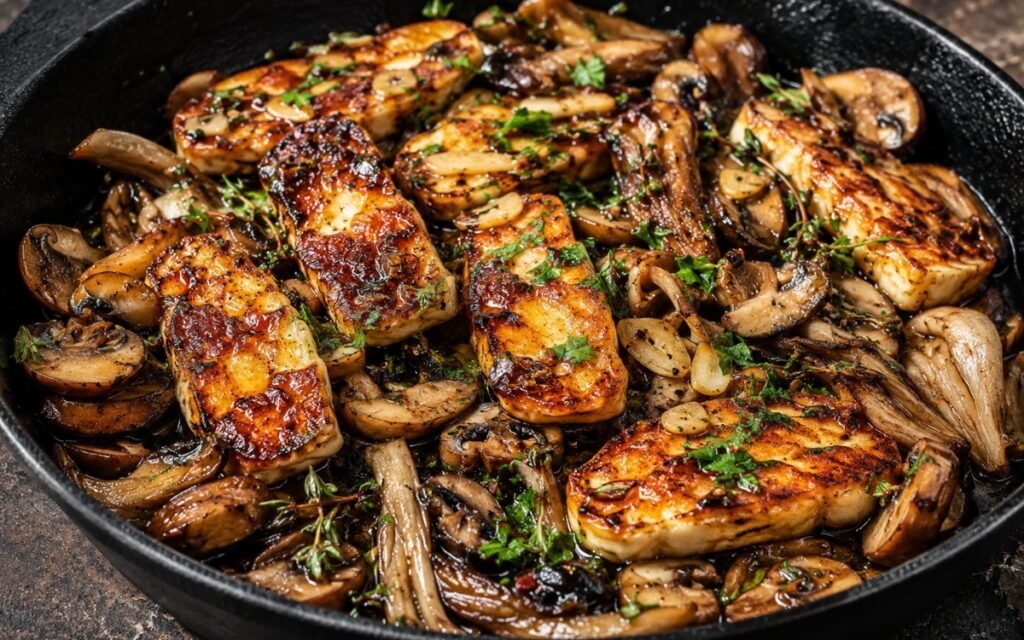
Garlic Mushroom & Halloumi Skillet
Mushrooms seared uncrowded until caramelized, halloumi cooked separately until crisp, combined in garlic balsamic pan sauce. Savory and satisfying.
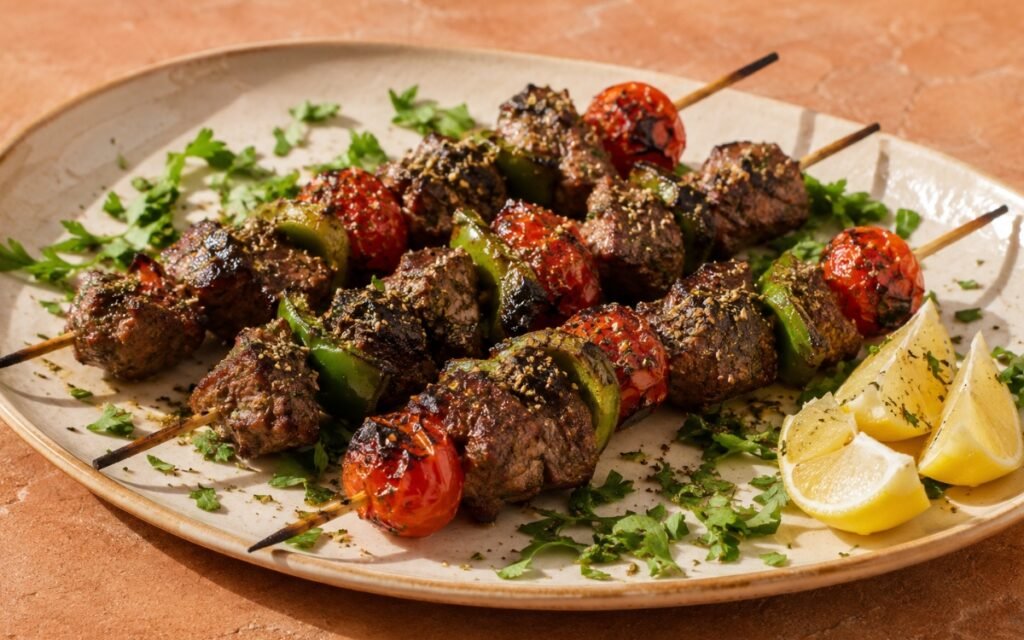
Grilled Lamb Kebabs with Charred Veggies
Charred lamb shoulder kebabs in a lemon, onion and za’atar marinade, grilled with green peppers and cherry tomatoes.
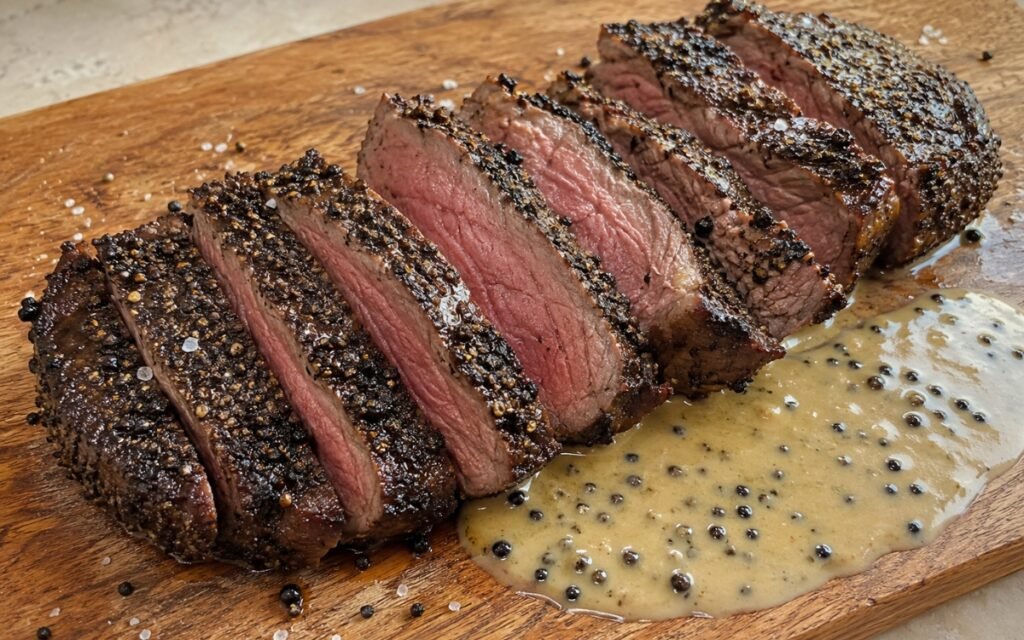
Peppercorn Crusted Steak
Steak tempered and dried, coated in coarsely crushed peppercorns — seared undisturbed, butter-basted, optional brandy cream sauce, rested. Sharp, tender, rich.
You might also like
You might also like
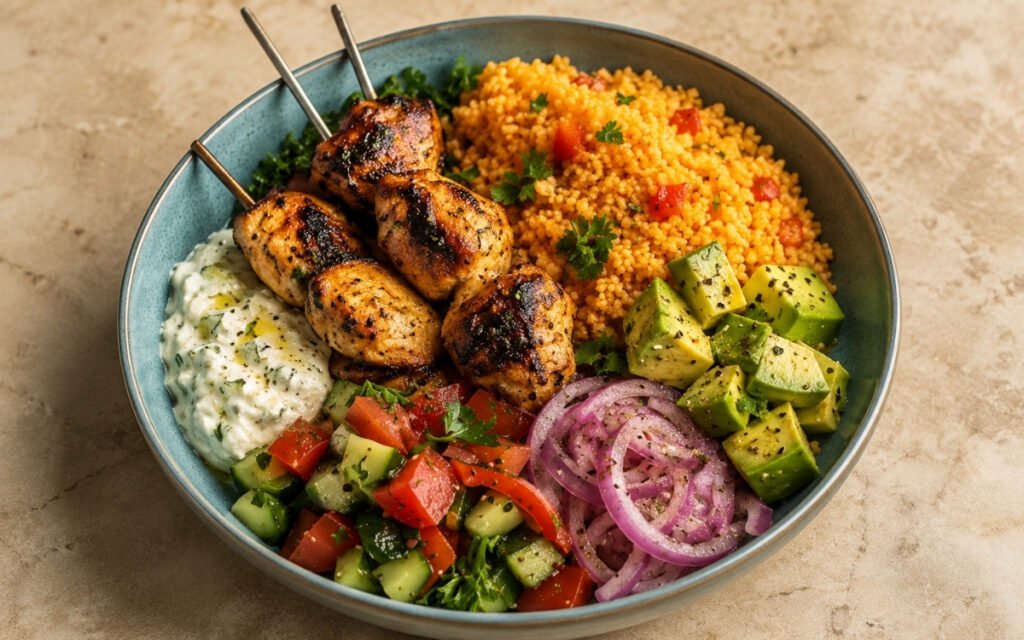
Greek Chicken Souvlaki Mediterranean Bowl
Charred chicken souvlaki over golden couscous with tzatziki, pink pickled onion, tomato-cucumber salad and avocado.
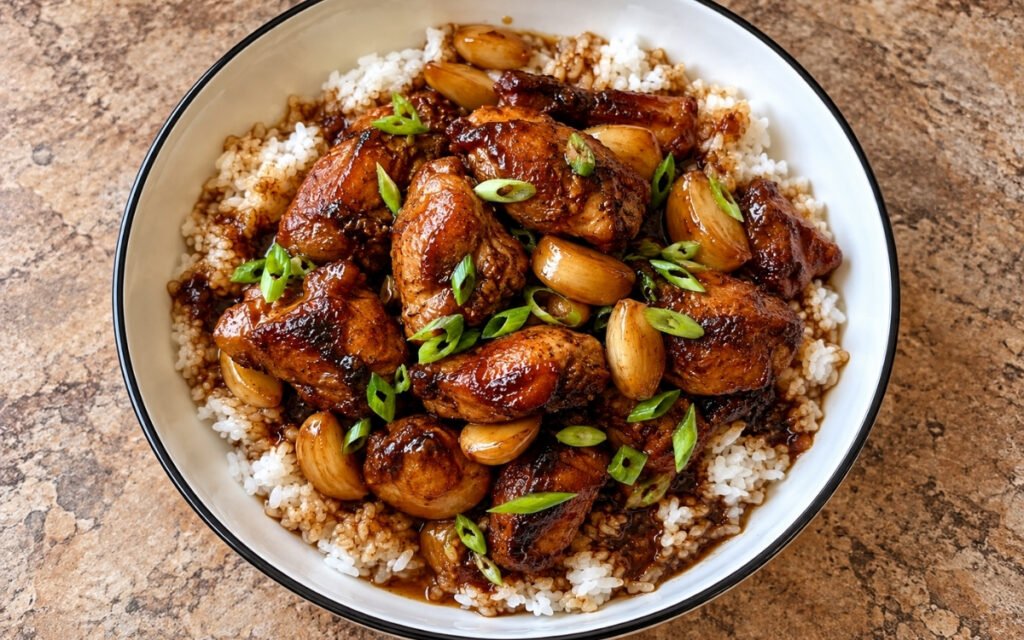
Chicken Adobo Rice Bowl
Boneless chicken thighs braised in soy sauce, vinegar, garlic, bay leaf and black pepper until deeply savory and glossy, spooned over rice.
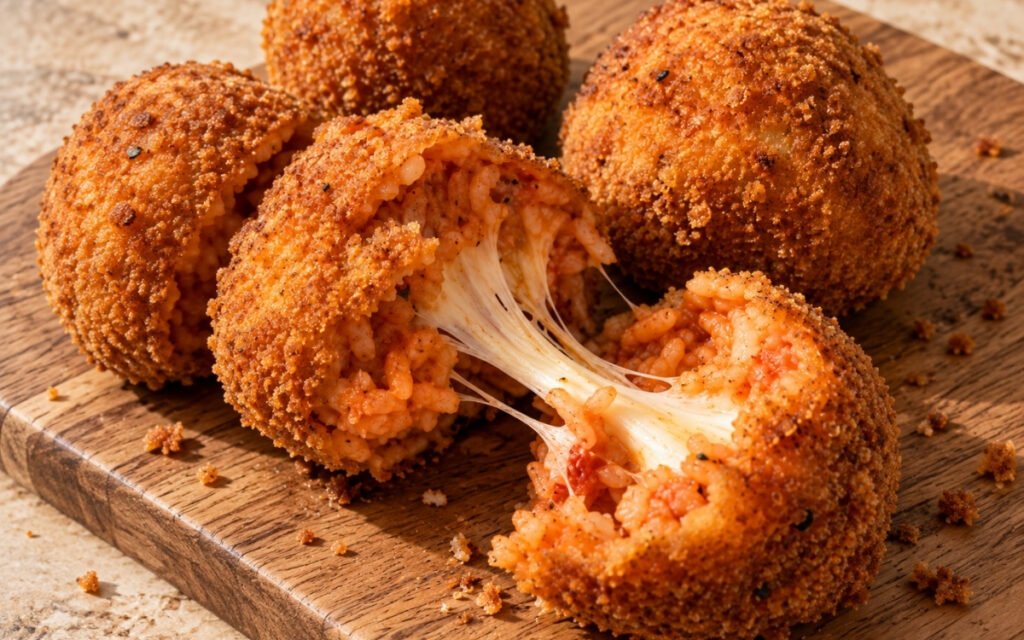
Supplì al Telefono
Oblong fried rice croquettes made with a tomato-enriched rice base, filled with mozzarella, breaded and fried until deeply golden.
Braised Beef Chuck Steak
Ingredients
Method
- Preheat the oven to 160°C (325°F). While it heats, season the chuck steak portions evenly and generously with the fine sea salt and freshly ground black pepper on all surfaces — both flat sides and all edges. Press the seasoning firmly into the meat with your palm rather than simply sprinkling it over the surface. Proper, thorough seasoning at this stage is important because the long cooking process that follows will drive the salt deeper into the meat’s structure, seasoning it throughout rather than only on the surface. A lightly seasoned chuck steak after 2.5 hours of braising tastes under-seasoned all the way through — there is no correction available after the braise begins. Be deliberate and be generous.
- Heat the olive oil in a large, heavy-bottomed oven-safe pot — a Dutch oven or enamelled cast iron is ideal — over high heat until the oil is shimmering and beginning to smoke lightly at the edges. This high heat is essential: the sear that follows is not merely for color but for flavour. The Maillard reaction that occurs when seasoned beef meets a screaming-hot surface in the presence of fat creates hundreds of complex flavour compounds — nutty, caramelised, deeply savory molecules that will infuse the entire braising liquid over the hours that follow and define the character of the finished dish. Place the seasoned chuck portions in the hot oil without crowding — work in two batches if necessary to maintain the pan temperature. Sear without moving for 3 minutes until a deep, dark, almost mahogany crust forms on the bottom. Flip and sear the second side for another 3 minutes. The crust should be dark and firmly adhered — not lightly browned, not grey. Remove the beef and set aside on a plate. Do not discard anything remaining in the pot.
- Reduce the heat to medium. Add the roughly chopped onion to the same pot, directly into the rendered fat and oil left from searing. The browned bits adhering to the bottom of the pot — called the fond — are concentrated flavour that must be preserved and incorporated into the sauce. The onion’s moisture will begin to lift and dissolve the fond as it cooks. Stir occasionally and cook for approximately 5 minutes until the onion has softened and taken on a light golden color. Add the smashed garlic cloves and cook for a further 60 seconds until fragrant. The aromatics at this stage are absorbing the fat and the dissolved fond — they are not just flavoring the liquid, they are carrying the flavour history of the sear forward into the sauce.
- Pour in the red wine first, scraping the bottom of the pot firmly with a wooden spoon or spatula to release any remaining browned bits that the onion moisture did not dissolve. The wine’s acidity is particularly effective at lifting the fond completely clean. Allow the wine to bubble vigorously for 60–90 seconds — this brief reduction cooks off the harshest alcohol compounds and begins concentrating the wine’s fruit and tannin character. Add the beef stock and Worcestershire sauce. Add the fresh thyme sprigs and bay leaves. Stir everything together and taste the liquid — it should taste bold, slightly acidic from the wine, deeply savory from the stock and Worcestershire, and well-seasoned. This liquid is not merely a cooking medium; it will become the final sauce, and its balance at this stage determines the balance of everything it produces.
- Place the seared chuck portions back into the pot, nestling them into the braising liquid. The correct liquid level is critically important: the beef should be submerged approximately halfway up its sides — not fully covered, and not barely touching the liquid. Full submersion dilutes the flavour concentration of both the meat and the liquid — the meat leaches its juices into an excessive amount of liquid, producing bland meat and a thin, flavourless sauce. Insufficient liquid leads to the exposed upper surfaces drying out and the pot bottom potentially scorching before the braise is complete. Halfway submersion produces the correct result: the submerged half cooks through liquid conduction, the exposed upper half cooks through steam trapped under the lid, and the liquid remains in the concentrated ratio needed for a glossy, rich finished sauce. Bring the liquid to a gentle simmer over medium heat before covering.
- Cover the pot tightly with its lid and transfer to the preheated 160°C oven. The oven environment is preferable to stovetop for braising because it provides even, ambient heat from all directions rather than the uneven, bottom-only heat of a burner — this produces more even cooking throughout the braise and eliminates the risk of the bottom of the pot overheating. The liquid should maintain a gentle, barely-there simmer throughout — occasional small bubbles breaking the surface is the target. A vigorous boil at this stage is the most common braising error: boiling temperatures cause the muscle proteins to contract aggressively and squeeze moisture out of the fibres, producing tough, dry meat despite the long cooking time. If you lift the lid at any point and see a rolling boil, reduce the oven temperature by 10°C immediately. Braise for 2 to 2.5 hours. Do not open the lid unnecessarily — each opening releases the built-up steam that is cooking the top half of the beef.
- At the 2-hour mark, check the beef by pressing the thickest portion firmly with a fork. Properly braised chuck steak should yield and begin to pull apart under gentle fork pressure — the fibres separate easily and the meat offers almost no resistance. If it resists with any firmness, it is not done and needs more time. This is a counter-intuitive moment for many cooks: when braised chuck feels tough at the 1.5-hour mark, the instinct is to assume something went wrong. It has not. Collagen breakdown is not linear — the transformation from tough to tender accelerates as the connective tissue reaches its breakdown temperature and converts to gelatin. A tough chuck at 1.5 hours can be fork-tender 45 minutes later. Do not increase the temperature to hurry it. Time is the only variable that works.
- Remove the beef carefully from the pot and set aside to rest, tented loosely with foil. Pour the braising liquid through a fine mesh strainer into a clean saucepan, pressing the solids gently to extract all the liquid. Discard the strained solids — the onion, garlic, thyme, and bay leaves have given everything they have to the liquid and their texture is no longer pleasant. Evaluate the strained liquid: it should be glossy and lightly thickened from the gelatin released by the collagen breakdown, but if it appears thin or watery, bring it to a simmer over medium heat and reduce for 5–10 minutes, stirring occasionally, until it reaches a coating consistency. Spoon the finished sauce generously over the rested beef at serving. The beef itself needs 5 minutes of rest before serving — the gelatin-rich juices need a brief moment to redistribute and settle after the long cook.