
Argentine Choripán
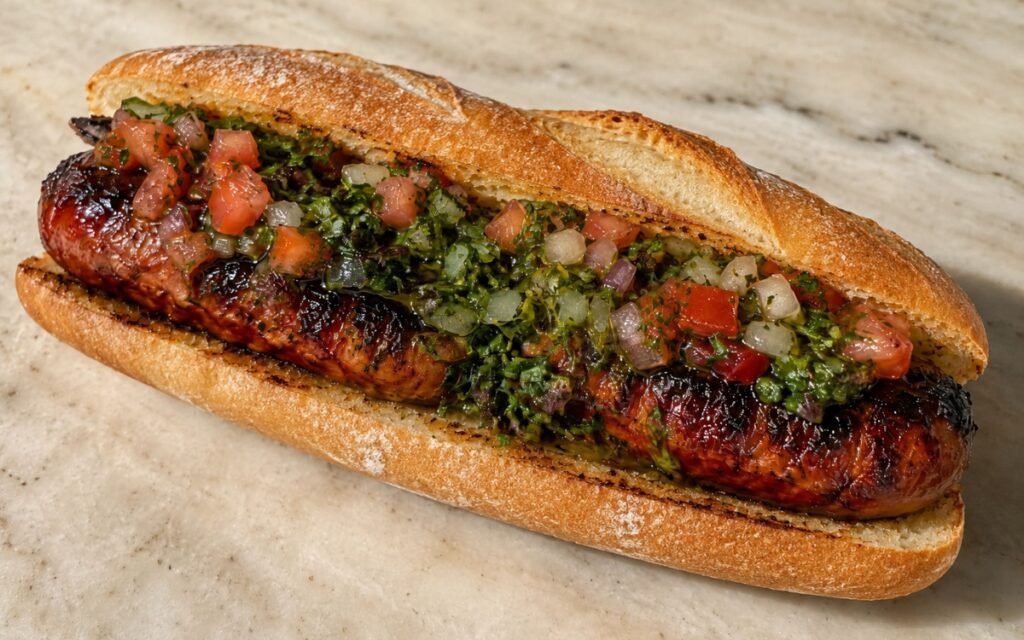
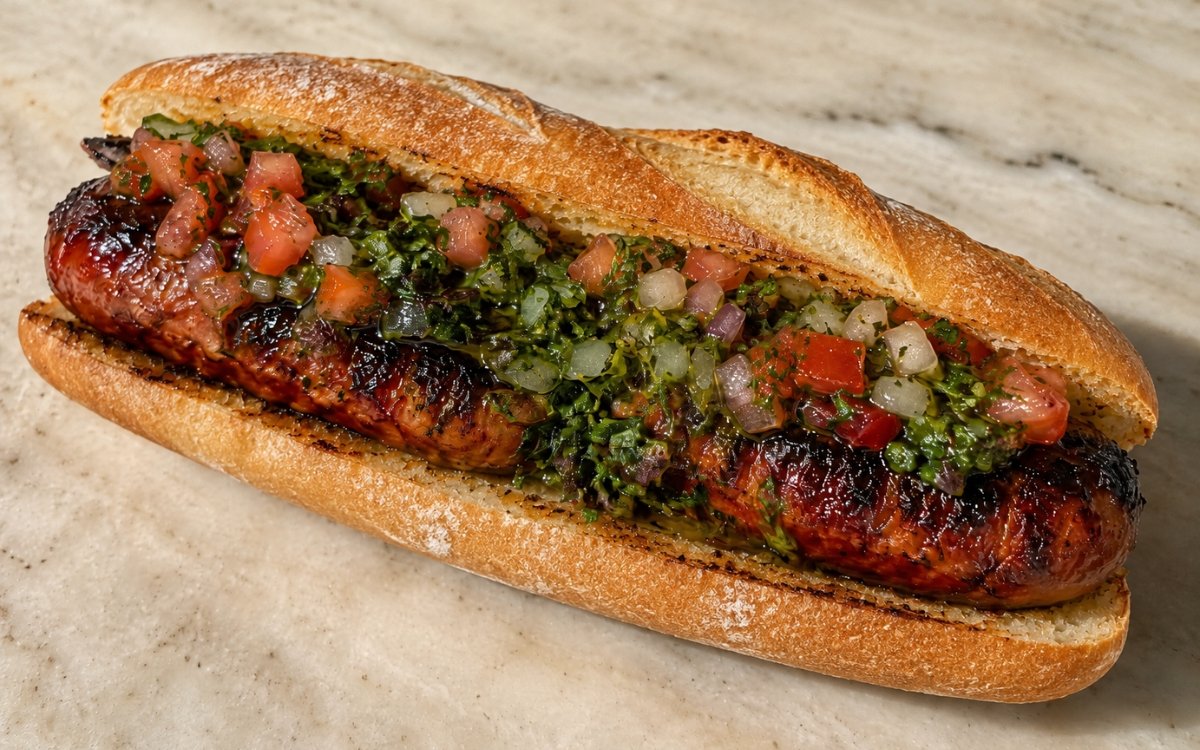
A crusty baguette-style roll split open and toasted with butter, filled with a large grilled Argentinian chorizo sausage butterflied lengthwise and seared until deeply charred, glossy, and crisp at the edges, finished with generous chimichurri and a simple tomato-shallot salsa so the green herb oil drips slightly into the bread. Butterflying the chorizo is the technique this whole sandwich depends on — splitting it lengthwise and pressing it flatter against the skillet roughly doubles the surface area in direct contact with the heat, the same open-and-flatten principle used elsewhere in this collection whenever a cut needs faster, more even char than its natural shape would allow. Letting the chimichurri sit for at least 15 minutes before serving matters just as much, since that rest is what gives the garlic, oregano, chili, and vinegar time to actually season the oil rather than sitting as separate, unblended ingredients. Draining the tomato-shallot salsa if it releases excess liquid protects the one thing this sandwich has almost no tolerance for — a softened, soggy roll. The payoff is a sandwich with real contrast: a deeply charred, glossy sausage against a crisp-edged toasted roll, finished with sharp, herb-heavy chimichurri and a bright, fresh tomato accent.
Prep Time : 25 min
Cook Time : 20 min
Servings : 4
25 min
20 min
4
Ingredients
For the Baguette-Style Rolls
• 4 small baguette-style rolls or semi-baguette rolls, about the same length as the chorizo sausages — use store-bought small baguettes or prepare the rolls from the Semi-Baguettes recipe
• 40g unsalted butter, softened, for toasting the bread — this one on Amazon
For the Chorizo
• 4 good-quality Argentinian-style chorizo sausages, ideally the same length as the rolls
• 10ml neutral oil, only if needed for the skillet
Chimichurri
• 1 bunch fresh parsley
• 1 Tbsp red chili flakes — this one on Amazon
• 6 cloves garlic, finely minced or grated
• 3 bay leaves
• ¾ cup (180 ml) good-quality olive oil — this one on Amazon
• 4 Tbsp red wine vinegar — this one on Amazon
• 2 Tbsp dried oregano
• Kosher salt, to taste
• Freshly ground black pepper, to taste
For the Tomato-Shallot Salsa
• 300g Roma tomatoes, diced small
• 80g shallots, finely diced
• 15ml olive oil
• 10ml red wine vinegar
• 3g fine sea salt, plus more to taste
• Freshly ground black pepper, to taste
For Serving
• Extra chimichurri, for spooning over the sausage
• Extra tomato-shallot salsa, for filling the roll
This post may contain affiliate links. As an Amazon Associate I earn from qualifying purchases, at no additional cost to you.
Directions
- Prepare the Bread
Use 4 prepared semi-baguette rolls from the referenced Ciabatta Rolls / Semi-Baguettes recipe, or use 4 store-bought small baguettes. The roll should be crusty outside but not so hard that it shatters when pressed around the sausage. Split each roll open lengthwise, leaving a hinge if possible. Spread the cut sides lightly with softened butter. A hinged split, rather than cutting all the way through, holds the sandwich together as a single unit around the sausage rather than two loose halves — the same structural logic as a proper hot dog bun. - Prepare the Chimichurri
Finely chop the parsley. Mix it with the chili flakes, garlic, bay leaves, olive oil, red wine vinegar, dried oregano, kosher salt, and black pepper. Let the chimichurri sit for at least 15 minutes before serving so the garlic, oregano, chili, and vinegar season the oil properly. Remove the bay leaves before spooning onto the sandwiches. The chimichurri should be loose, oily, sharp, and herb-heavy. It should spoon over the sausage and drip slightly into the bread, not sit like a dry paste. The resting period is doing real, active work here — raw garlic, oregano, and chili flakes all need time steeping in the acidic, oily base to actually infuse the whole mixture, rather than sitting as separate, sharp-tasting fragments floating in plain oil. - Prepare the Tomato-Shallot Salsa
Combine the diced Roma tomatoes, shallots, olive oil, red wine vinegar, salt, and black pepper. Let sit for 10 minutes, then taste and adjust salt or vinegar. If the salsa releases a lot of liquid, spoon off the excess before assembling. Wet salsa will soften the bread too fast. This salsa is a genuinely different role from the chimichurri — a bright, acidic accent rather than the sandwich’s main sauce — which is why it’s used sparingly and why draining any excess liquid matters more here than it might in a dish where the salsa itself is the centrepiece. - Butterfly the Chorizo
Slice each chorizo lengthwise down the middle without cutting all the way through, then open it like a book. Press gently so it lies flatter against the skillet or grill. Do not cut it into small pieces. Choripán needs one whole split sausage per roll so the cross-section stays bold and simple. Opening the sausage this way roughly doubles the surface area making direct contact with the hot skillet or grill compared to cooking it whole and round — that expanded contact is what produces faster, more even char across the sausage rather than a round exterior that chars unevenly while the centre lags behind. - Sear the Chorizo
Heat a cast-iron skillet, grill pan, or grill over medium-high heat. Add a thin film of oil only if needed. Place the butterflied chorizos cut-side down and sear for 3–4 minutes, until browned, crisped, and charred in spots. Flip and cook the skin side for another 3–5 minutes, until glossy, deeply coloured, and cooked through. If using raw pork chorizo, cook until the centre reaches 71°C. If the outside is charring too quickly before the centre is hot, lower the heat and continue cooking more gently. Starting cut-side down puts the freshly exposed, flat interior in direct contact with the hottest part of the pan first, which is where the most dramatic char and colour development happens — the skin side, cooked second, finishes the sausage through while picking up its own glossy colour. - Toast the Bread
Place the buttered rolls cut-side down in the same skillet or on the grill. Toast for 1–2 minutes, until golden, crisp at the edges, and lightly marked. Do not over-toast until dry. The bread needs enough structure to hold chimichurri and salsa, but it should still bite cleanly. Toasting in the same skillet used for the chorizo, rather than a clean pan, lets the bread pick up rendered fat and browned flavour left behind by the sausage — a small detail that adds real depth to the bread beyond what butter alone would provide. - Assemble the Choripán
Spoon a little chimichurri onto the toasted inside of each roll. Place one butterflied chorizo inside each roll, charred side facing up. Spoon more chimichurri generously over the sausage, letting the oil run slightly into the bread. Add a small amount of tomato-shallot salsa along the sausage. Spooning a little chimichurri onto the bread before the sausage even goes in, rather than only on top afterward, seasons the roll itself from the inside as well as the sausage from above — every bite ends up carrying some of that herb-oil flavour, not just the top layer. - Serve
Serve immediately while the chorizo is hot and glossy, the bread is crisp, and the chimichurri is vivid green and oily. This sandwich has almost no holding window — the hot sausage’s juices and the oily chimichurri both begin softening the bread from the moment of assembly, so serving without delay is what keeps the roll crisp enough to bite cleanly.
*Notes :
- Butterflying the chorizo is worth understanding as the single most consequential technique decision in this recipe rather than a minor prep step. A whole, round sausage cooked as-is chars unevenly around its curved surface and takes considerably longer for the heat to reach the centre. Splitting it open and pressing it flatter against the hot surface both accelerates the cook and roughly doubles the area developing real char, which is directly why choripán reads as a dramatically charred, flat cross-section rather than simply a grilled sausage in a bun.
- The chimichurri’s resting time is not a flexible suggestion despite how simple the ingredient list looks. Raw minced garlic, dried oregano, and chili flakes all taste sharp and disconnected from each other immediately after mixing — the 15-minute rest is what allows the acidic, oily base to actually draw those flavours together into something that reads as a cohesive sauce rather than a collection of separate seasonings floating in oil.
- The relationship between the chimichurri and the tomato-shallot salsa is worth being deliberate about rather than treating both as interchangeable toppings. Chimichurri is the sandwich’s dominant sauce, meant to be spooned generously and to visibly drip into the bread. The tomato-shallot salsa plays a smaller, brighter supporting role, and using it too generously — or failing to drain it if it’s released excess liquid — works against the roll’s structure in a way that using plenty of chimichurri doesn’t, since chimichurri is largely oil rather than watery tomato liquid.
- Toasting the bread in the same pan used for the chorizo, after the sausages come out, is a small sequencing choice that adds real value for very little extra effort. Any rendered fat and browned bits left behind by the chorizo transfer directly into the bread during its brief toast, contributing a layer of savoury depth that toasting in a clean pan with butter alone wouldn’t achieve.
Why This Recipe Works
This recipe works because the chorizo’s butterflied shape maximises its contact with direct heat, producing fast, even char across a flat cross-section rather than the uneven browning a whole round sausage would develop.
The chimichurri is given real resting time to actually become a cohesive sauce rather than a collection of raw, separate ingredients, and it’s used generously as the sandwich’s primary flavour, while the tomato-shallot salsa plays a smaller, brighter supporting role and is drained if needed to protect the bread.
Toasting the bread in the same pan as the chorizo adds a final layer of flavour that ties the whole sandwich together.
Ingredient Breakdown
Butterflied Argentinian Chorizo
The technique-defining protein — split and flattened to roughly double its contact area with the hot skillet or grill, producing fast, even char.
Rested Chimichurri
The primary sauce — given at least 15 minutes to let raw garlic, oregano, and chili actually infuse the oily, acidic base into a cohesive flavour.
Drained Tomato-Shallot Salsa
The brighter accent — used sparingly and drained of excess liquid to protect the bread’s structure, playing a supporting role to the chimichurri.
Butter-Toasted Roll (Same Pan as the Chorizo)
The bread technique — toasted after the sausage, picking up rendered fat and browned flavour left in the pan.
Charred-Side-Up Assembly
The plating detail — the sausage’s most dramatically charred face turned upward and visible once inside the roll.
Flavor Structure Explained
This choripán follows a layered balance model:
- Crisp buttery foundation (toasted roll)
- Deep charred savoury centre (grilled chorizo)
- Sharp herbal richness (chimichurri)
- Bright fresh acidity (tomato-shallot salsa)
- Warm spiced undertone (chili flakes, oregano)
The toasted roll provides a crisp, buttery base that holds everything together. The butterflied, charred chorizo defines the sandwich with deep, smoky, well-seasoned pork flavour and a satisfying crisp exterior. Chimichurri layers in sharp, herbal, garlicky richness, its oil running slightly into the bread with every bite. The tomato-shallot salsa cuts through that richness with bright, fresh acidity. Chili flakes and dried oregano running through the chimichurri add a warm, gently spiced undertone that ties the whole sandwich together.
Common Mistakes to Avoid
- Cooking the Chorizo Whole Instead of Butterflying It – This produces uneven char and a longer cook time before the centre is done. Always split and press it flatter before searing.
- Using Chimichurri Immediately After Mixing – Raw garlic and dried herbs taste sharp and disconnected without time to infuse. Always let it rest at least 15 minutes before serving.
- Skipping the Salsa Draining Step – Excess liquid released by the tomato and shallot softens the bread quickly. Always drain if the salsa looks watery.
- Over-Toasting the Bread Until Dry – This makes the roll shatter rather than bite cleanly around the sausage. Always toast just until golden and crisp at the edges.
- Assembling Too Far Ahead of Serving – The hot sausage and oily chimichurri both soften the bread quickly. Always assemble and serve immediately.
Variations
With Red Chimichurri
SubstituteRed Chimichurri (Chimichurri Rojo) for the classic green version for a smokier, paprika-forward take on the same sandwich.
Spicier Version
Increase the red chili flakes in the chimichurri to 2 tbsp for a noticeably sharper heat throughout the sandwich.
With Provoleta Cheese
Add a few thin slices of grilled provoleta cheese alongside the chorizo for a richer, cheese-forward version common at Argentine parrillas.
Smaller Party Portions
Use cocktail-sized rolls and mini chorizo links, following the identical butterflying and searing technique, for an appetizer-style presentation.
Storage & Make-Ahead
Chimichurri can be refrigerated in a sealed container for up to 5 days; the flavour continues to develop over the first day or two.
The tomato-shallot salsa is best made fresh within a few hours of serving; it can be refrigerated for up to 1 day, though it will release more liquid over time.
Chorizo can be butterflied ahead and refrigerated for up to 1 day before grilling.
Assembled, fully built sandwiches are not suitable for storage — assemble only what will be eaten immediately.
Frequently Asked Questions
Why does the chorizo need to be butterflied rather than cooked whole?
A whole, round sausage develops char unevenly around its curved surface and takes longer for heat to reach the centre. Splitting it open and pressing it flatter against the skillet roughly doubles the surface area in direct contact with the heat, producing faster, more even char across a flat cross-section.
Why does the chimichurri need to rest for at least 15 minutes before serving?
Raw minced garlic, dried oregano, and chili flakes all taste sharp and disconnected immediately after mixing. The rest allows the acidic, oily base to draw those flavours together into a cohesive sauce rather than separate seasonings floating in plain oil.
Why is the tomato-shallot salsa used in smaller amounts than the chimichurri?
The salsa plays a bright, supporting role rather than being the sandwich’s primary sauce. It also carries watery tomato liquid, unlike the largely oil-based chimichurri, so using it sparingly and draining any excess liquid protects the bread from softening too quickly.
Why toast the bread in the same skillet used for the chorizo instead of a clean pan?
Rendered fat and browned bits left behind by the sausage transfer directly into the bread during its brief toast, adding a layer of savoury depth that toasting in a clean pan with butter alone wouldn’t achieve.
Are there other South or Central American sandwiches worth trying?
Cuban Frita Burger and the Cuban Sandwich (Cubano) are both worth exploring if you enjoy this style — the Frita is a spiced, griddled beef patty on a soft roll topped with shoestring potatoes, while the Cubano is a pressed sandwich built on citrus-marinated roast pork, ham, and Swiss cheese. Both share the same emphasis on bold, well-charred fillings against a crisp or pressed bread.
Nutrition Facts
( per serving )
Calories
~720 kcal
Protein
28 g
Fat
52 g
Carbs
38 g
Calories
~720 kcal
Protein
28 g
Fat
52 g
Carbs
38 g
Related Recipes
Related Recipes

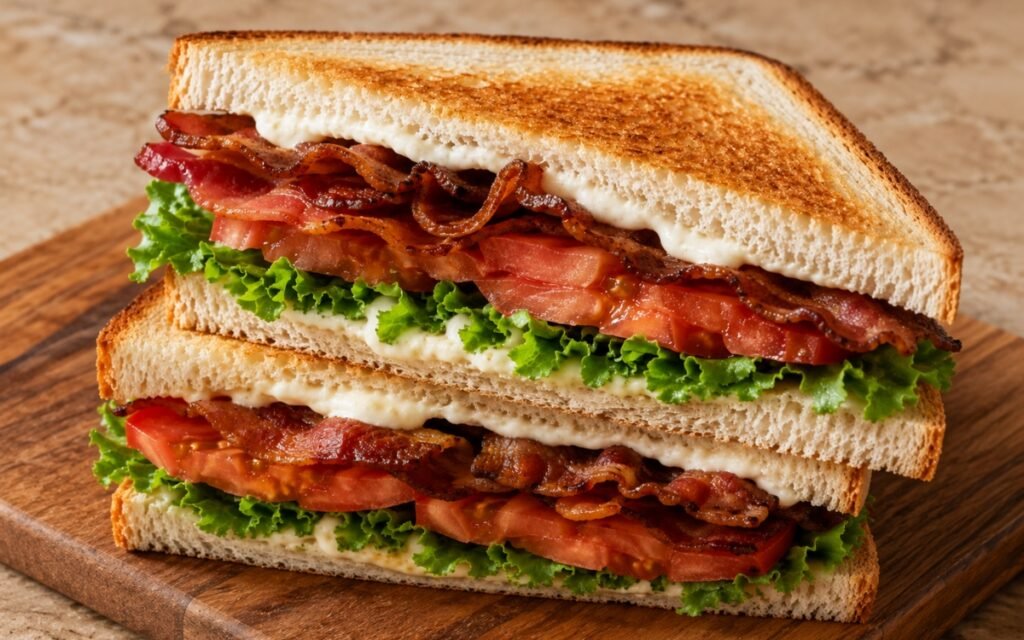
BLT Sandwich
Toasted white bread with crispy bacon, ripe tomato, crisp lettuce, and a generous layer of mayonnaise.
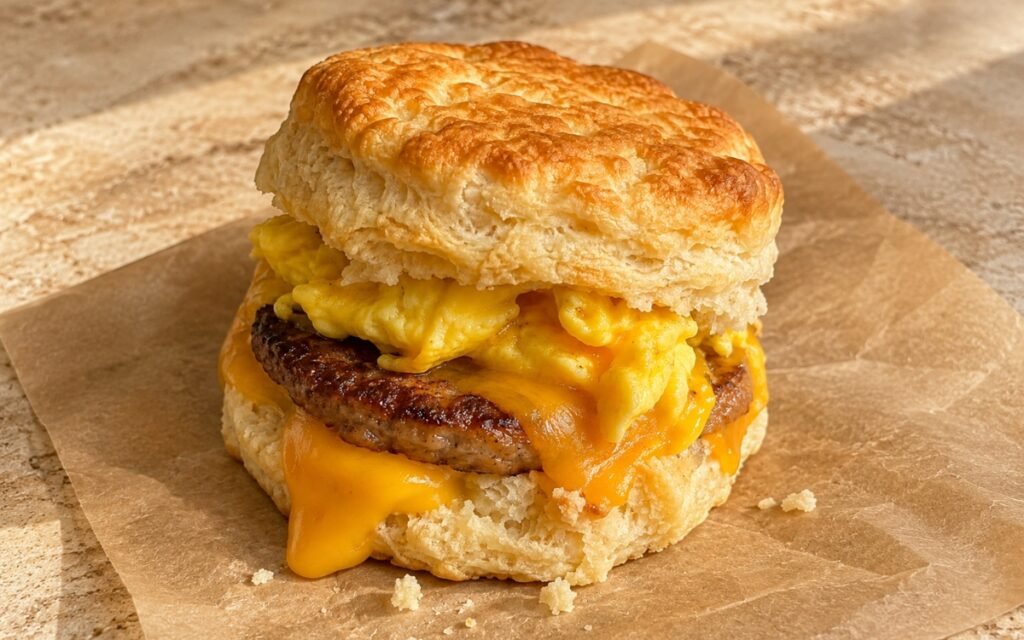
Classic Breakfast Biscuit Sandwich
A tender buttermilk biscuit filled with a browned breakfast sausage patty, soft folded scrambled egg, and melted American cheese.
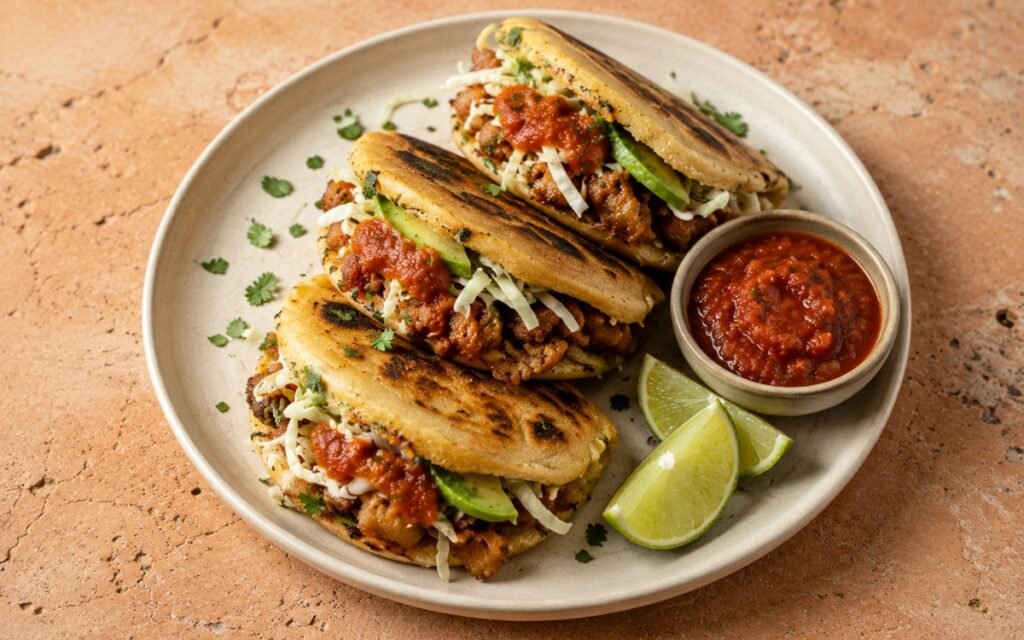
Gorditas with Chicharrón and Salsa
Thick masa gorditas cooked golden and split into a pocket while warm, filled with crispy chicharrón, salsa roja, shredded cabbage, and avocado.
You might also like
You might also like
Pan con Chicharrón
Crispy pork belly chicharrón, golden fried sweet potato, and bright pickled red onion piled into a crusty roll.
Mexican Hot Dog
Bacon-wrapped smoked frankfurters seared crisp, topped with melted Mexican cheese, guacamole, fresh pico de gallo, and a crema drizzle.
Argentine Chimichurri Steak
Thick, dry-brined steak grilled until deeply charred with a pink medium-rare centre, finished with loose, hand-chopped chimichurri.
Argentine Choripán
Ingredients
Method
- Use 4 prepared semi-baguette rolls from the referenced Ciabatta Rolls / Semi-Baguettes recipe, or use 4 store-bought small baguettes. The roll should be crusty outside but not so hard that it shatters when pressed around the sausage. Split each roll open lengthwise, leaving a hinge if possible. Spread the cut sides lightly with softened butter. A hinged split, rather than cutting all the way through, holds the sandwich together as a single unit around the sausage rather than two loose halves — the same structural logic as a proper hot dog bun.
- Finely chop the parsley. Mix it with the chili flakes, garlic, bay leaves, olive oil, red wine vinegar, dried oregano, kosher salt, and black pepper. Let the chimichurri sit for at least 15 minutes before serving so the garlic, oregano, chili, and vinegar season the oil properly. Remove the bay leaves before spooning onto the sandwiches. The chimichurri should be loose, oily, sharp, and herb-heavy. It should spoon over the sausage and drip slightly into the bread, not sit like a dry paste. The resting period is doing real, active work here — raw garlic, oregano, and chili flakes all need time steeping in the acidic, oily base to actually infuse the whole mixture, rather than sitting as separate, sharp-tasting fragments floating in plain oil.
- Combine the diced Roma tomatoes, shallots, olive oil, red wine vinegar, salt, and black pepper. Let sit for 10 minutes, then taste and adjust salt or vinegar. If the salsa releases a lot of liquid, spoon off the excess before assembling. Wet salsa will soften the bread too fast. This salsa is a genuinely different role from the chimichurri — a bright, acidic accent rather than the sandwich’s main sauce — which is why it’s used sparingly and why draining any excess liquid matters more here than it might in a dish where the salsa itself is the centrepiece.
- Slice each chorizo lengthwise down the middle without cutting all the way through, then open it like a book. Press gently so it lies flatter against the skillet or grill. Do not cut it into small pieces. Choripán needs one whole split sausage per roll so the cross-section stays bold and simple. Opening the sausage this way roughly doubles the surface area making direct contact with the hot skillet or grill compared to cooking it whole and round — that expanded contact is what produces faster, more even char across the sausage rather than a round exterior that chars unevenly while the centre lags behind.
- Heat a cast-iron skillet, grill pan, or grill over medium-high heat. Add a thin film of oil only if needed. Place the butterflied chorizos cut-side down and sear for 3–4 minutes, until browned, crisped, and charred in spots. Flip and cook the skin side for another 3–5 minutes, until glossy, deeply coloured, and cooked through. If using raw pork chorizo, cook until the centre reaches 71°C. If the outside is charring too quickly before the centre is hot, lower the heat and continue cooking more gently. Starting cut-side down puts the freshly exposed, flat interior in direct contact with the hottest part of the pan first, which is where the most dramatic char and colour development happens — the skin side, cooked second, finishes the sausage through while picking up its own glossy colour.
- Place the buttered rolls cut-side down in the same skillet or on the grill. Toast for 1–2 minutes, until golden, crisp at the edges, and lightly marked. Do not over-toast until dry. The bread needs enough structure to hold chimichurri and salsa, but it should still bite cleanly. Toasting in the same skillet used for the chorizo, rather than a clean pan, lets the bread pick up rendered fat and browned flavour left behind by the sausage — a small detail that adds real depth to the bread beyond what butter alone would provide.
- Spoon a little chimichurri onto the toasted inside of each roll. Place one butterflied chorizo inside each roll, charred side facing up. Spoon more chimichurri generously over the sausage, letting the oil run slightly into the bread. Add a small amount of tomato-shallot salsa along the sausage. Spooning a little chimichurri onto the bread before the sausage even goes in, rather than only on top afterward, seasons the roll itself from the inside as well as the sausage from above — every bite ends up carrying some of that herb-oil flavour, not just the top layer.
- Serve immediately while the chorizo is hot and glossy, the bread is crisp, and the chimichurri is vivid green and oily. This sandwich has almost no holding window — the hot sausage’s juices and the oily chimichurri both begin softening the bread from the moment of assembly, so serving without delay is what keeps the roll crisp enough to bite cleanly.