
Cuban Sandwich (Cubano)
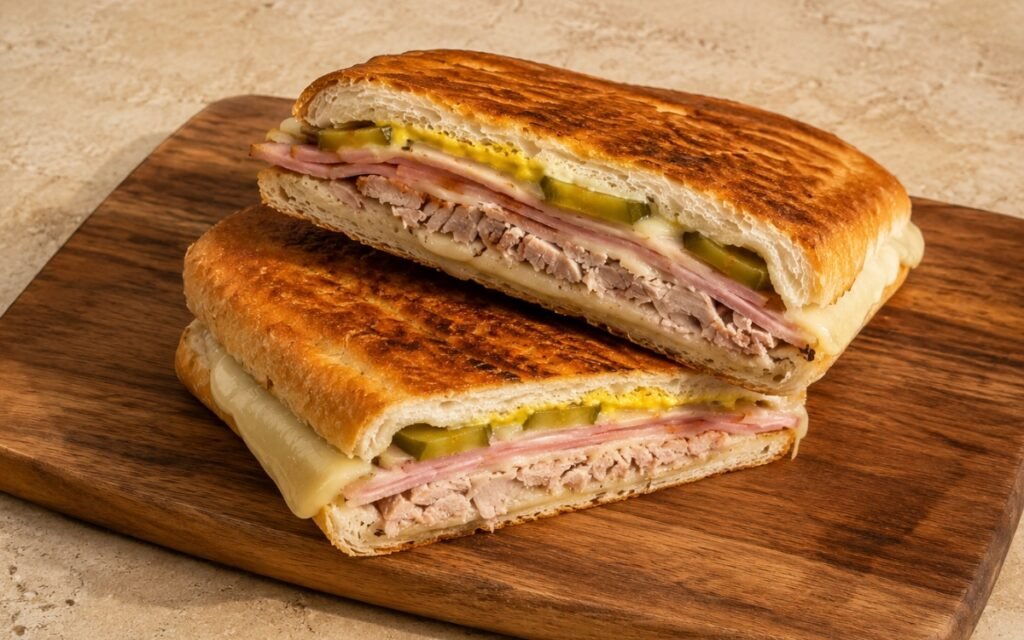
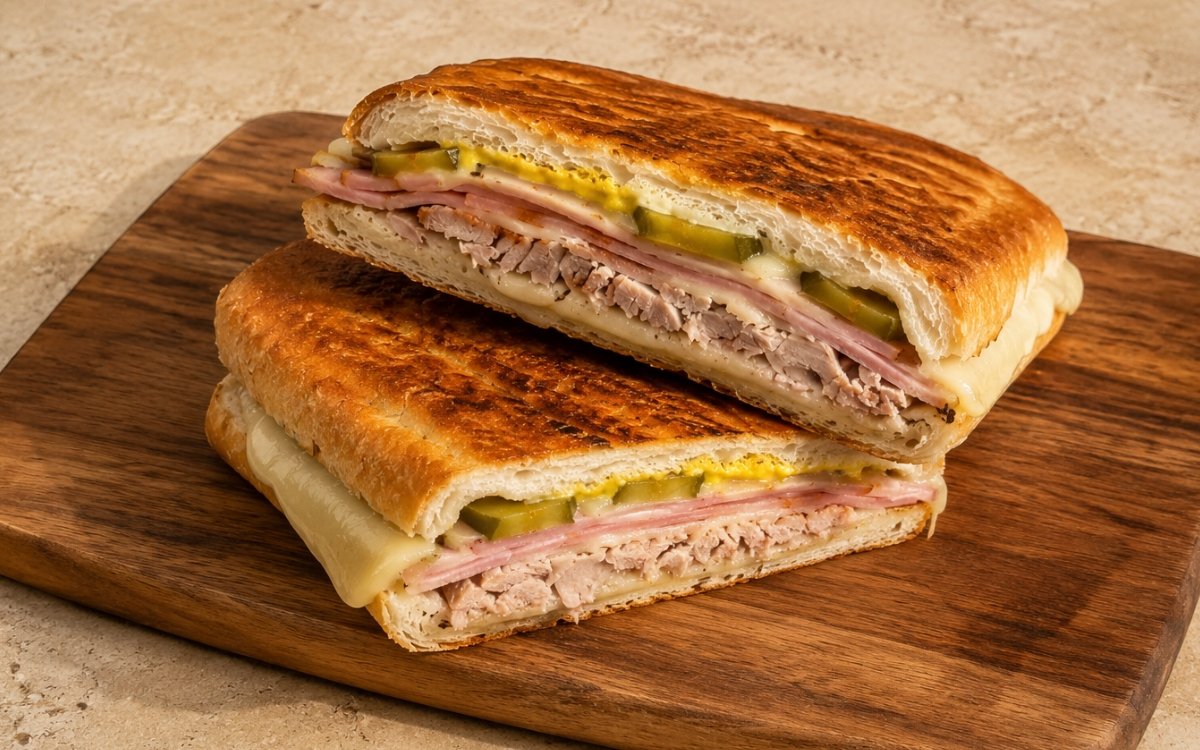
A pressed Cuban sandwich built on crisp, golden-brown Cuban bread baked into long slender loaves, then split into 8-inch sandwiches and filled with citrusy roast pork, smoked ham, melted Swiss cheese, dill pickles, and yellow mustard, pressed hard on a buttered plancha or skillet until visibly flattened, crisp, and deeply golden. The mojo marinade does double duty across two long stages — it flavours the pork through 4–12 hours of refrigerated contact, then continues cooking directly alongside the meat through the full roast, so nothing about that citrus-herb brightness is lost between marinating and serving, the same full-marinade-into-braise principle used elsewhere in this collection whenever a marinade is meant to become the cooking liquid rather than being discarded. Shaping the bread into long, slender loaves rather than a rounder shape is what produces the correct 8-inch Cubano profile once portioned, and pressing the crumb down lightly if it bakes too airy matters just as much — an artisan-style loaf that resists compression won’t press flat the way this sandwich needs. The payoff is a cross-section with genuinely distinct layers, a crisp, deeply golden pressed crust, and a slight cheese pull at the cut.
Prep Time : 45 min
Cook Time : 3 hr, 10 min
Servings : 4
45 min
3 hr, 10 min
4
Ingredients
For the Cuban Bread
• 500g bread flour — this one on Amazon
• 7g active dry yeast
• 20g granulated sugar
• 10g fine sea salt
• 30g lard, softened
• 320–330ml warm water, approximately 38–40°C
For the Mojo-Style Roast Pork
• 1.2kg boneless pork shoulder
• 80g shallots, roughly chopped
• 6 garlic cloves
• Zest of 2 oranges
• Zest of 2 limes
• 2 tsp dried oregano — this one on Amazon
• 12g fresh mint leaves
• 2 tsp freshly ground cumin — this one on Amazon
• 1–2 serrano chilies, roughly chopped
• 30ml olive oil — this one on Amazon
• 12g fine sea salt
• 45ml fresh lime juice
• 180ml fresh orange juice
• 120–180ml chicken stock, as needed during roasting
For Assembling the Sandwiches
• 8 tbsp yellow mustard — this one on Amazon
• 2 tbsp whole grain French mustard, optional, for mixing into the yellow mustard — this one on Amazon
• 320g smoked ham, thinly sliced
• 320g Swiss cheese, sliced
• 180g dill pickles, thinly sliced lengthwise
• 80g unsalted butter, softened or melted, for pressing and searing — this one on Amazon
This post may contain affiliate links. As an Amazon Associate I earn from qualifying purchases, at no additional cost to you.
Directions
- Make the Cuban Bread Dough
Combine the bread flour, active dry yeast, sugar, and salt in a large bowl. Add the lard and warm water, then mix until a shaggy dough forms. Knead for 8–10 minutes until smooth, elastic, and only lightly tacky. The dough should feel soft but not sticky. If it feels dry and tight, add a small splash of water. If it is very sticky, add a little flour. Transfer to a lightly oiled bowl, cover, and let rise until doubled, about 1 hour to 1 hour 15 minutes. Lard rather than butter or oil is the traditional fat here, and it contributes to Cuban bread’s specific tender-but-not-rich crumb — a texture that’s noticeably less enriched than a brioche-style loaf but more tender than a lean baguette dough. - Prepare the Pork Marinade
While the dough rises or earlier in the day, blend the shallots, garlic, orange zest, lime zest, dried oregano, mint, cumin, serrano chilies, olive oil, salt, lime juice, and orange juice until mostly smooth. The marinade should be fragrant, citrusy, and loose enough to coat the pork well. Blending rather than simply mixing the aromatics distributes the citrus zest, herbs, and chilies evenly throughout the liquid, so every part of the pork’s surface gets equal exposure to the same concentrated flavour rather than uneven pockets of chopped ingredients. - Marinate the Pork
Trim only any very excessive exterior fat from the pork shoulder. Place the pork in a dish or zip bag and pour over the marinade. Turn thoroughly to coat. Cover and refrigerate for 4–12 hours. Do not skip the marinating time. This is the main flavor base for the whole sandwich. Because this marinade travels with the pork straight into the roasting dish rather than being discarded, the marinating window here is less about a hard tenderising cutoff and more about giving the citrus and herbs enough time to genuinely penetrate the meat’s surface before that same liquid becomes the braising base. - Shape and Bake the Bread
Punch down the risen dough and divide it into 2 even pieces. Shape each piece into a tight log about 16 inches / 40cm long, keeping them slender and even. Place on a parchment-lined tray, leaving space between them. Cover lightly and let rise again for 45–60 minutes until puffy. Bake at 220°C / 425°F for 18–22 minutes until golden-brown. The crust should be thin and crisp, not thick and hard. Cool fully. Each 16-inch loaf will later be cut into 2 sandwich portions, giving 4 whole 8-inch sandwiches total. Shaping the dough into a tight, even log rather than a looser or rounder shape is what gives the finished loaf its narrow, elongated profile — a wider or more irregular shape would produce sandwiches that press unevenly and don’t match the classic Cubano proportions. - Roast the Pork
Remove the pork from the refrigerator 30 minutes before roasting. Transfer it with its marinade to a covered Dutch oven or roasting dish. Add 120ml chicken stock around the pork if the liquid level looks too low. Cover and roast at 160°C / 325°F for about 2 hours 30 minutes. Turn the pork once or twice during cooking. Add a little more chicken stock only if the pan starts drying out. Uncover for the last 20–25 minutes so the exterior can deepen in color slightly. The pork should be fully tender but still sliceable, not braised into total collapse. Covering the pork for the bulk of the roast keeps it essentially braising in its own marinade, which is what carries all that citrus and herb flavour directly into the meat over the long cook — the brief uncovered finish at the end is purely for colour, not for any further tenderising. - Rest and Slice the Pork
Let the pork rest for 15–20 minutes. Slice thinly across the grain. If some parts want to shred slightly, that is fine, but the majority should stay in thin juicy slices or soft sliced chunks. Keep a little of the pan juices to moisten the sliced pork lightly if needed, but do not soak it. Resting before slicing allows the juices that redistributed through the meat during roasting to settle rather than spilling out onto the board the moment a knife goes in — cutting immediately would lose more of that moisture than the meat can afford to give up. - Portion the Bread
Cut each cooled loaf in half to create 4 pieces about 8 inches / 20cm long. Split each piece horizontally like a sandwich roll. If the crumb is very airy, press it down lightly with your hand. Cuban sandwiches should compress well under the press, not resist it like a tall artisan loaf. This gentle pre-compression, if needed, is a small correction that matters for how the sandwich behaves later — bread with too much open, airy crumb structure resists the final hard press and won’t flatten into the tight, layered cross-section this sandwich is known for. - Prepare the Mustard
Use straight yellow mustard, or mix the yellow mustard with the whole grain French mustard if you want that slight spin-off version. Spread on the inside of both top and bottom bread halves. Spreading mustard on both halves rather than just one distributes its sharp, tangy flavour evenly through every bite rather than concentrating it on only one side of the sandwich. - Assemble the Sandwiches
Layer the bottom half of each loaf with Swiss cheese, then sliced roast pork, then smoked ham, then pickle slices, then another layer of Swiss cheese. Close with the top half. Do not overstuff. The filling should be generous but still allow the sandwich to press flat and heat through evenly. Placing cheese both directly against the bottom bread and again near the top means melted cheese ends up binding the whole stack together from both sides once pressed, rather than pooling only in the middle. - Press and Sear the Sandwiches
Butter the outside of each sandwich lightly. Heat a large skillet, griddle, or plancha over medium heat. Place the sandwiches on the hot surface and weight them down firmly with another heavy skillet, bacon press, or foil-wrapped brick. Cook for 3–5 minutes on the first side until deeply golden and visibly compressed. Flip carefully, butter the second side if needed, press again, and cook another 3–5 minutes until crisp and the cheese is melted. The bread should be flattened, crisp, and deeply golden with clear contact browning. If the heat is too high, the bread burns before the cheese melts. Medium heat combined with genuine, sustained weight is what lets the sandwich compress and the cheese fully melt in roughly the same window the bread browns — too hot, and the crust darkens well before the centre has warmed through. - Slice and Serve
Cut each sandwich diagonally in half and serve immediately while hot and crisp. Diagonal slicing is the traditional presentation, and it also reveals the sandwich’s layered cross-section clearly — a deliberate visual payoff for all the careful layering during assembly.
*Notes :
- The mojo marinade’s dual role — first as a marinade, then as the pork’s own braising liquid — is what gives this Cubano its specific depth of citrus and herb flavour rather than a milder, more surface-level version. Because none of that marinade is discarded before roasting, every bit of the shallot, garlic, citrus zest, and herb flavour that penetrated the pork during marinating continues concentrating and building throughout the multi-hour covered roast, rather than being rinsed or wiped away.
- Bread shape matters more in this recipe than it might in a more forgiving sandwich format. A rounder or wider loaf shape would produce something that doesn’t portion cleanly into the traditional 8-inch Cubano profile, and it would also press unevenly under the heavy weight this sandwich requires. The specific instruction to shape the dough into a tight, even, 16-inch log exists to set up everything that happens later, from portioning through pressing.
- Pressing down lightly on an overly airy crumb before assembly is a small correction worth taking seriously if it applies to your loaf. Cuban bread is meant to compress readily under the sandwich press, collapsing into that tight, layered cross-section rather than springing back. A crumb structure that’s too open and artisan-style resists that compression, and the resulting sandwich won’t achieve the same visibly flattened, dense profile that’s part of a proper Cubano’s identity.
- The final pressing stage is genuinely one of the defining moments of this whole recipe, not simply a way to melt the cheese. A Cubano is specifically supposed to look visibly compressed once finished — a tight, dense cross-section with a crisp, deeply browned crust rather than a sandwich that merely had cheese melted onto it. Sustained, firm weight through the full cooking time on both sides is what produces that specific result, and skimping on either the weight or the time leaves a sandwich that’s warmed through but not properly pressed.
Why This Recipe Works
This recipe works because the mojo marinade is never discarded — it becomes the pork’s braising liquid, carrying its full citrus and herb flavour all the way through the long roast rather than stopping at the marinating stage.
The bread is shaped specifically for the Cubano’s narrow profile and gently compressed if needed so it presses properly, and the final searing stage uses sustained weight and moderate heat to achieve genuine compression and full cheese melt in the same window the crust develops its deep golden colour.
Ingredient Breakdown
Lard-Enriched Cuban Bread Dough
The specific bread style — tender but not overly rich, shaped into a narrow log for the correct 8-inch sandwich profile.
Full Mojo Marinade (Marinade Into Braise)
The pork’s flavour foundation — never discarded, continuing to season the meat throughout the entire covered roast.
Covered-Then-Uncovered Roasting Method
The technique — covered for the bulk of the cook to braise in the marinade, uncovered briefly at the end purely for colour.
Cheese Layered on Both Sides
The binding technique — Swiss cheese placed against both the bottom and near the top of the filling, melting to hold the whole stack together once pressed.
Sustained Weighted Pressing
The defining final step — firm, continuous weight through the full searing time, producing the sandwich’s signature visible compression.
Flavor Structure Explained
This Cuban sandwich follows a layered balance model:
- Crisp buttery foundation (pressed, seared bread)
- Rich savoury centre (citrus-marinated roast pork, smoked ham)
- Melted creamy body (Swiss cheese)
- Sharp tangy contrast (yellow mustard, dill pickles)
- Bright citrus undertone (mojo marinade throughout the pork)
The pressed, buttered bread defines the eating experience with a crisp, deeply golden exterior. Citrus-marinated roast pork and smoked ham together provide rich, savoury depth, with the pork carrying a bright, herbal citrus character all the way through from its marinade. Melted Swiss cheese adds a creamy, binding richness throughout the layers. Sharp yellow mustard and tangy dill pickles cut through that richness with acidity and a satisfying crunch, keeping the dense, pressed sandwich from feeling one-note.
Common Mistakes to Avoid
- Discarding the Marinade Before Roasting – This loses most of the citrus and herb depth that’s meant to build throughout the cook. Always roast the pork directly in its marinade.
- Shaping the Bread Into a Wide or Round Loaf – This won’t portion into the correct 8-inch Cubano profile and presses unevenly. Always shape into a tight, narrow, 16-inch log.
- Using Thick Pickle Slices – Thick pickles sit unevenly and distribute poorly through the layered sandwich. Always use thin, lengthwise slices.
- Pressing Over Too-High Heat – This burns the bread’s exterior before the cheese has fully melted. Always use medium heat with firm, sustained weight.
- Overstuffing the Sandwich – This prevents the sandwich from pressing flat and heating through evenly. Always keep the filling generous but contained.
Variations
Baguette-Style Cubano
If Cuban bread isn’t practical to make, Classic French Baguette can stand in as an alternative — not traditional, but its long, narrow shape and thin crust make it a workable substitute that presses in a broadly similar way.
Extra-Tangy Version
Mix the full amount of whole grain French mustard into the yellow mustard rather than using it as an optional addition, for a sharper, more textured mustard layer throughout.
Spicier Pork
Increase the serrano chilies to 3 in the marinade for a noticeably sharper heat running through the roast pork.
Smaller Party Sandwiches
Cut each 8-inch sandwich into 3–4 smaller pieces after pressing for an appetizer-style presentation rather than a full individual sandwich.
Storage & Make-Ahead
Raw pork can marinate for up to 12 hours in the refrigerator; do not exceed this window given the acidic citrus marinade.
Roasted, sliced pork can be refrigerated in an airtight container with some of its pan juices for up to 4 days, or frozen for up to 3 months.
Baked, cooled Cuban bread loaves can be stored at room temperature, wrapped, for up to 2 days, or frozen for up to 1 month.
Assembled but unpressed sandwiches can be refrigerated for a few hours before pressing; press directly from cold, allowing a little extra time on the first side.
Pressed, cooked sandwiches are best eaten immediately; they lose their crisp texture and pressed structure on reheating, though a brief re-press in a hot pan can partially restore it.
Frequently Asked Questions
Why is the pork roasted directly in its own marinade instead of discarding it first?
Discarding the marinade before roasting would lose most of the citrus, garlic, and herb flavour built up during the 4–12 hour marinating time. Roasting the pork covered in that same liquid lets it continue seasoning and flavouring the meat throughout the entire multi-hour cook.
Why does the bread need to be shaped into a long, narrow log rather than a rounder loaf?
A wider or rounder shape wouldn’t portion cleanly into the traditional 8-inch Cubano profile, and it would also press unevenly under the sandwich’s heavy weighted searing stage. The narrow log shape sets up everything that happens later in the recipe.
Why press the crumb down lightly if the baked bread turns out very airy?
Cuban sandwiches are meant to compress readily and visibly under the final press. An overly open, artisan-style crumb resists that compression, producing a sandwich that doesn’t achieve the tight, flattened cross-section that defines a properly made Cubano.
Why does the final pressing stage matter so much beyond just melting the cheese?
A Cubano is specifically supposed to look visibly compressed — dense, flat, and tightly layered — rather than simply warmed with melted cheese on top. Sustained, firm weight through the full cooking time on both sides is what produces that defining compressed structure.
Are there similar pressed-format or alternative-bread options worth trying?
If you enjoy the format of a rich, pressed filling built on a specific bread, Gorditas with Chicharrón and salsa follows a related idea in a completely different direction — a thick masa pocket stuffed with crispy pork rather than a pressed wheat bread sandwich. As for the bread itself, if genuine Cuban bread isn’t practical, Classic French Baguette is a reasonable, non-traditional stand-in given its similarly narrow shape and thin crust.
Nutrition Facts
( per serving )
Calories
~890 kcal
Protein
56 g
Fat
44 g
Carbs
64 g
Calories
~890 kcal
Protein
56 g
Fat
44 g
Carbs
64 g
Related Recipes
Related Recipes

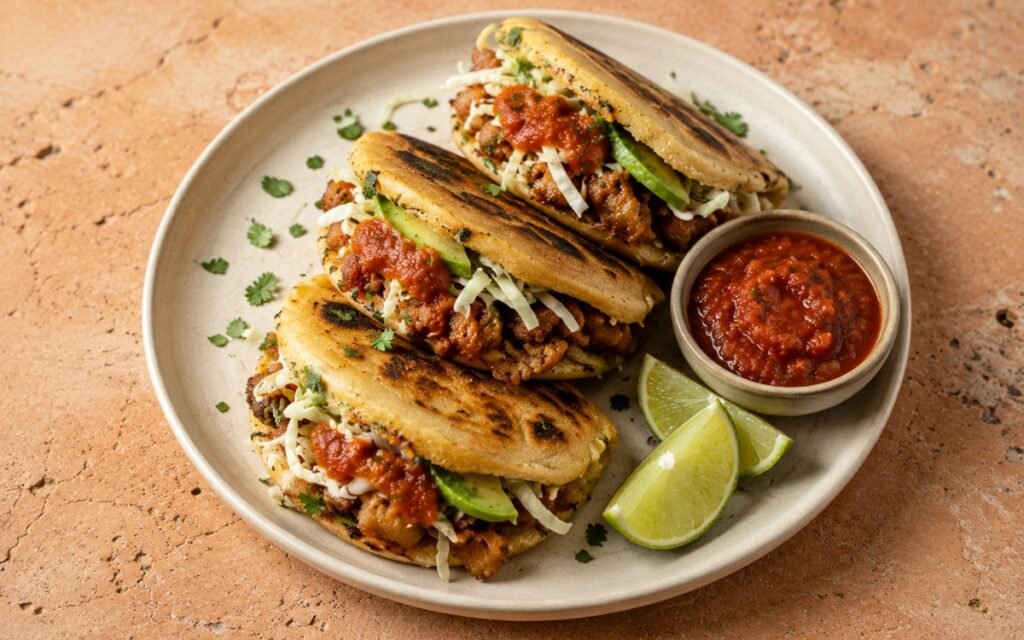
Gorditas with Chicharrón and Salsa
Thick masa gorditas cooked golden and split into a pocket while warm, filled with crispy chicharrón, salsa roja, shredded cabbage, and avocado.
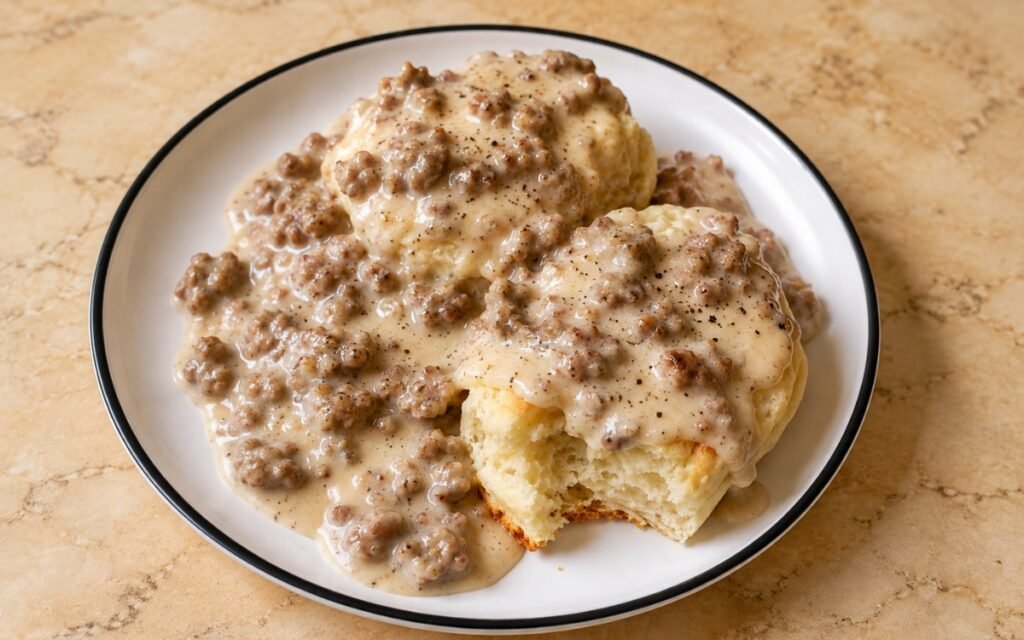
Southern Biscuits and Sausage Gravy
Tender buttermilk biscuits split open and covered with thick, creamy sausage gravy loaded with browned breakfast sausage and black pepper.
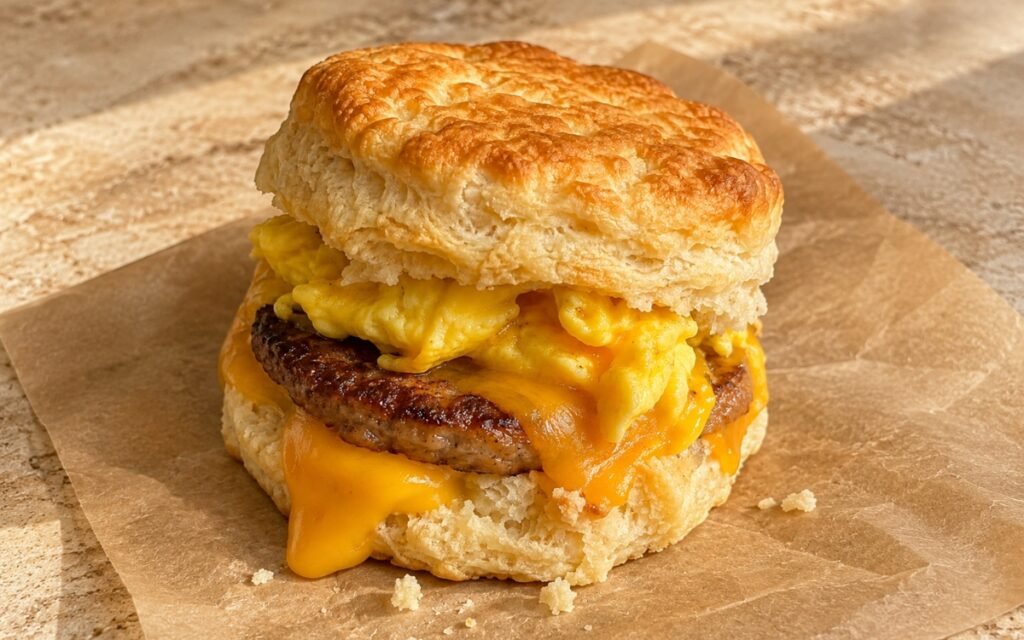
Classic Breakfast Biscuit Sandwich
A tender buttermilk biscuit filled with a browned breakfast sausage patty, soft folded scrambled egg, and melted American cheese.
You might also like
You might also like
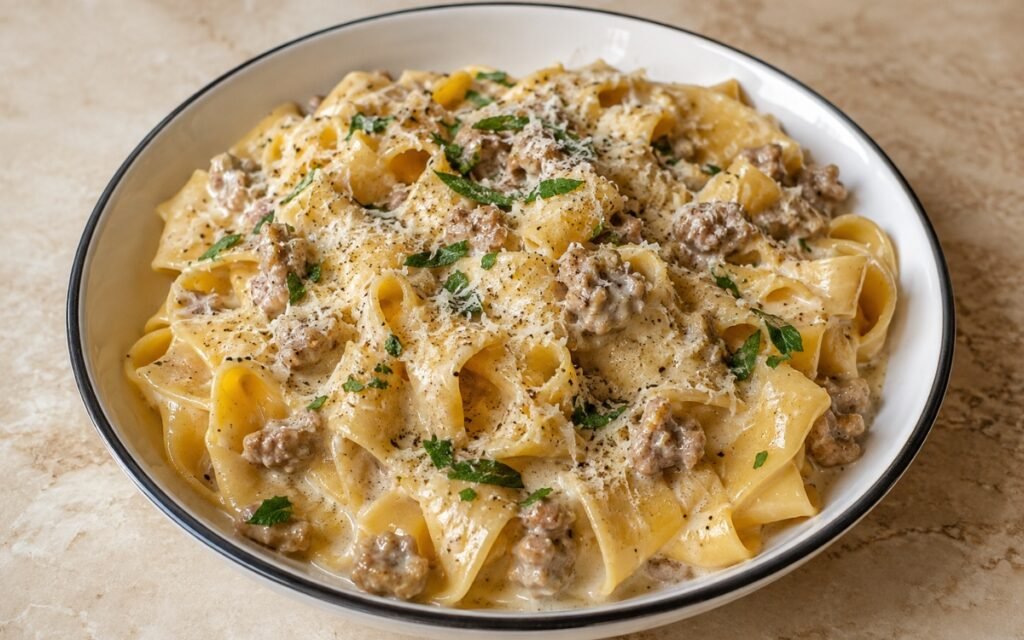
Pappardelle White Sausage Ragù
Wide pappardelle ribbons coated in a pale, glossy sausage ragù emulsified from browned sausage fat, pasta water, and Parmigiano-Reggiano.
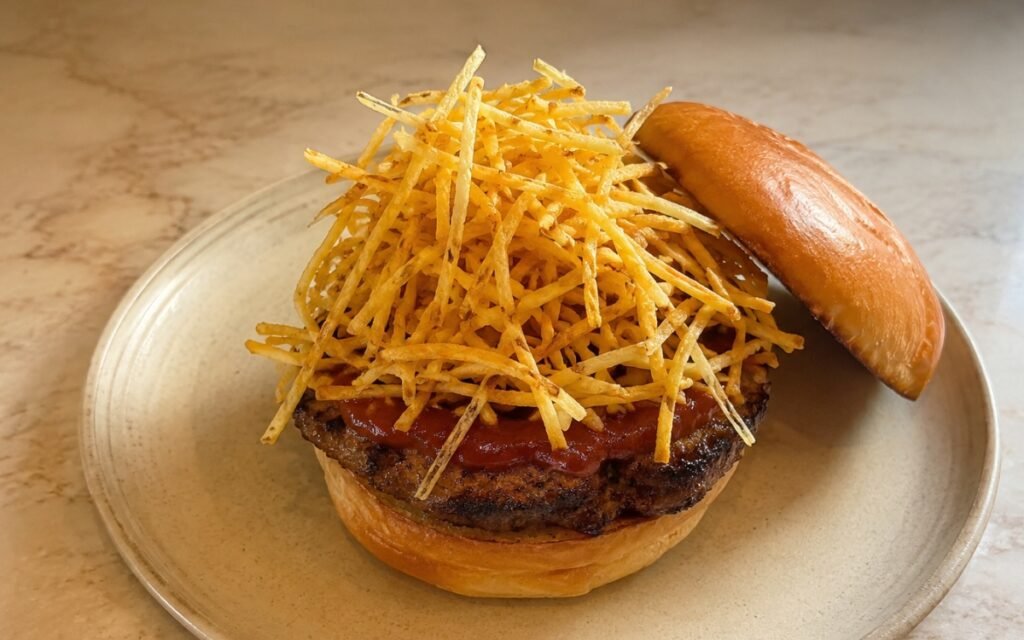
Cuban Frita Burger
A paprika-red chorizo-beef patty glazed in tangy frita sauce, piled high with crispy thin shoestring potatoes on a toasted brioche bun.
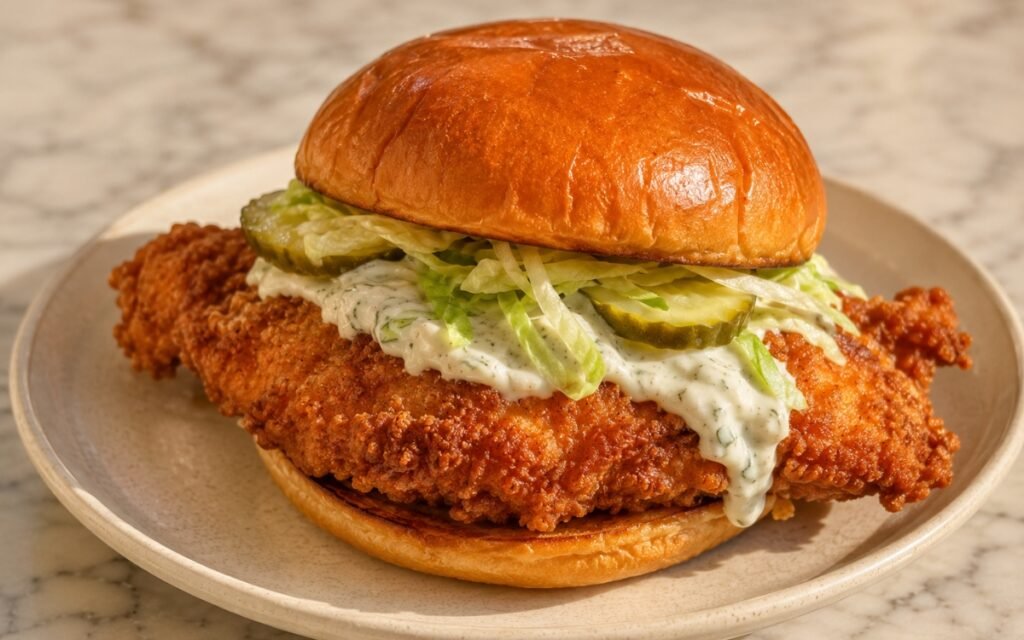
Crispy Fish Sandwich
Beer-battered cod fried until deeply golden and crisp, piled onto a soft toasted brioche bun with tangy tartar sauce, lettuce, and pickles.
Cuban Sandwich (Cubano)
Ingredients
Method
- Combine the bread flour, active dry yeast, sugar, and salt in a large bowl. Add the lard and warm water, then mix until a shaggy dough forms. Knead for 8–10 minutes until smooth, elastic, and only lightly tacky. The dough should feel soft but not sticky. If it feels dry and tight, add a small splash of water. If it is very sticky, add a little flour. Transfer to a lightly oiled bowl, cover, and let rise until doubled, about 1 hour to 1 hour 15 minutes. Lard rather than butter or oil is the traditional fat here, and it contributes to Cuban bread’s specific tender-but-not-rich crumb — a texture that’s noticeably less enriched than a brioche-style loaf but more tender than a lean baguette dough.
- While the dough rises or earlier in the day, blend the shallots, garlic, orange zest, lime zest, dried oregano, mint, cumin, serrano chilies, olive oil, salt, lime juice, and orange juice until mostly smooth. The marinade should be fragrant, citrusy, and loose enough to coat the pork well. Blending rather than simply mixing the aromatics distributes the citrus zest, herbs, and chilies evenly throughout the liquid, so every part of the pork’s surface gets equal exposure to the same concentrated flavour rather than uneven pockets of chopped ingredients.
- Trim only any very excessive exterior fat from the pork shoulder. Place the pork in a dish or zip bag and pour over the marinade. Turn thoroughly to coat. Cover and refrigerate for 4–12 hours. Do not skip the marinating time. This is the main flavor base for the whole sandwich. Because this marinade travels with the pork straight into the roasting dish rather than being discarded, the marinating window here is less about a hard tenderising cutoff and more about giving the citrus and herbs enough time to genuinely penetrate the meat’s surface before that same liquid becomes the braising base.
- Punch down the risen dough and divide it into 2 even pieces. Shape each piece into a tight log about 16 inches / 40cm long, keeping them slender and even. Place on a parchment-lined tray, leaving space between them. Cover lightly and let rise again for 45–60 minutes until puffy. Bake at 220°C / 425°F for 18–22 minutes until golden-brown. The crust should be thin and crisp, not thick and hard. Cool fully. Each 16-inch loaf will later be cut into 2 sandwich portions, giving 4 whole 8-inch sandwiches total. Shaping the dough into a tight, even log rather than a looser or rounder shape is what gives the finished loaf its narrow, elongated profile — a wider or more irregular shape would produce sandwiches that press unevenly and don’t match the classic Cubano proportions.
- Remove the pork from the refrigerator 30 minutes before roasting. Transfer it with its marinade to a covered Dutch oven or roasting dish. Add 120ml chicken stock around the pork if the liquid level looks too low. Cover and roast at 160°C / 325°F for about 2 hours 30 minutes. Turn the pork once or twice during cooking. Add a little more chicken stock only if the pan starts drying out. Uncover for the last 20–25 minutes so the exterior can deepen in color slightly. The pork should be fully tender but still sliceable, not braised into total collapse. Covering the pork for the bulk of the roast keeps it essentially braising in its own marinade, which is what carries all that citrus and herb flavour directly into the meat over the long cook — the brief uncovered finish at the end is purely for colour, not for any further tenderising.
- Let the pork rest for 15–20 minutes. Slice thinly across the grain. If some parts want to shred slightly, that is fine, but the majority should stay in thin juicy slices or soft sliced chunks. Keep a little of the pan juices to moisten the sliced pork lightly if needed, but do not soak it. Resting before slicing allows the juices that redistributed through the meat during roasting to settle rather than spilling out onto the board the moment a knife goes in — cutting immediately would lose more of that moisture than the meat can afford to give up.
- Cut each cooled loaf in half to create 4 pieces about 8 inches / 20cm long. Split each piece horizontally like a sandwich roll. If the crumb is very airy, press it down lightly with your hand. Cuban sandwiches should compress well under the press, not resist it like a tall artisan loaf. This gentle pre-compression, if needed, is a small correction that matters for how the sandwich behaves later — bread with too much open, airy crumb structure resists the final hard press and won’t flatten into the tight, layered cross-section this sandwich is known for.
- Use straight yellow mustard, or mix the yellow mustard with the whole grain French mustard if you want that slight spin-off version. Spread on the inside of both top and bottom bread halves. Spreading mustard on both halves rather than just one distributes its sharp, tangy flavour evenly through every bite rather than concentrating it on only one side of the sandwich.
- Layer the bottom half of each loaf with Swiss cheese, then sliced roast pork, then smoked ham, then pickle slices, then another layer of Swiss cheese. Close with the top half. Do not overstuff. The filling should be generous but still allow the sandwich to press flat and heat through evenly. Placing cheese both directly against the bottom bread and again near the top means melted cheese ends up binding the whole stack together from both sides once pressed, rather than pooling only in the middle.
- Butter the outside of each sandwich lightly. Heat a large skillet, griddle, or plancha over medium heat. Place the sandwiches on the hot surface and weight them down firmly with another heavy skillet, bacon press, or foil-wrapped brick. Cook for 3–5 minutes on the first side until deeply golden and visibly compressed. Flip carefully, butter the second side if needed, press again, and cook another 3–5 minutes until crisp and the cheese is melted. The bread should be flattened, crisp, and deeply golden with clear contact browning. If the heat is too high, the bread burns before the cheese melts. Medium heat combined with genuine, sustained weight is what lets the sandwich compress and the cheese fully melt in roughly the same window the bread browns — too hot, and the crust darkens well before the centre has warmed through.
- Cut each sandwich diagonally in half and serve immediately while hot and crisp. Diagonal slicing is the traditional presentation, and it also reveals the sandwich’s layered cross-section clearly — a deliberate visual payoff for all the careful layering during assembly.