
Broken Rice with Grilled Pork (Cơm Tấm)
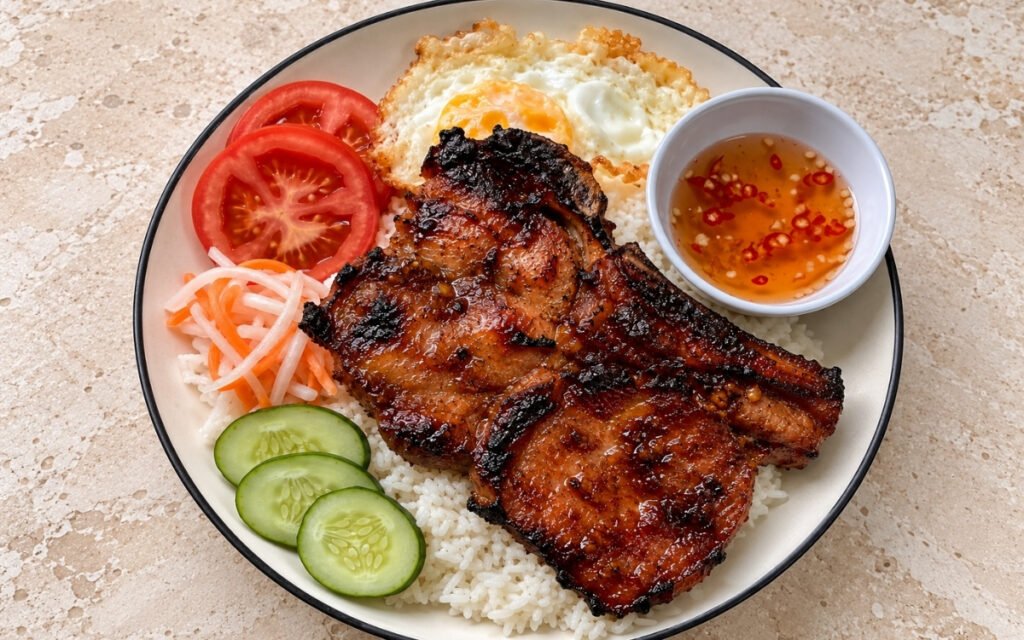
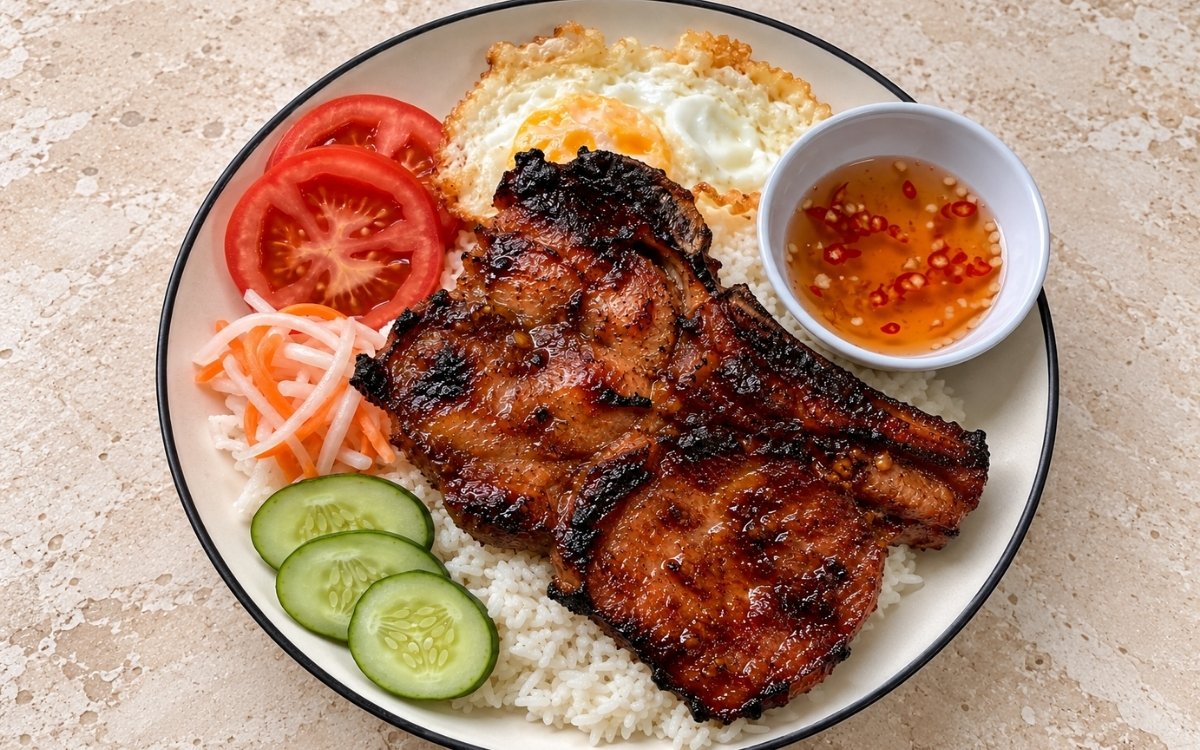
A classic Vietnamese broken rice plate with one whole grilled lemongrass pork chop per serving, served over broken rice with a fried egg, quick pickled carrot and daikon, cucumber, tomato, and nước chấm, built on a balanced sweet-savory marinade, enough marinating time for the pork, strong heat for caramelized char, and a properly balanced fish sauce dressing to season the whole plate. Marinating the pork for a genuine minimum of 4 hours, ideally overnight, is the technique this whole dish depends on for flavour reaching all the way through — thick chops given only a brief marinade taste bland at the center, the same long-marinate-for-thick-cuts principle used elsewhere in this collection whenever a substantial cut of meat needs real time for its own marinade to actually penetrate beyond the surface. Mincing the lemongrass genuinely finely is what lets it perfume the meat evenly without leaving large, fibrous, unpleasant pieces behind. Cooking the pork over genuinely strong heat, watching carefully to protect deep caramelization from tipping into burnt bitterness, is what produces the dish’s classic lacquered char. The payoff is a plate with real, deliberate Vietnamese contrast — hot, charred, sweet-savoury pork and rice against cool, crisp pickles, fresh vegetables, and a rich fried egg, all tied together by bright, salty nước chấm.
Prep Time : 35 min
Cook Time : 35–45 min
Servings : 4
35 min
35–45 min
4
Ingredients
For the Broken Rice
• 300g broken rice (75g per serving)
• 360–390ml water
• ½ tsp salt
For the Grilled Pork Chops
• 4 whole thick pork chops, preferably bone-in, about 250–300g each
• 2 stalks lemongrass, tender inner part only, very finely minced
• 4 garlic cloves, finely minced
• 2 shallots, finely minced
• 3 tbsp fish sauce — this one on Amazon
• 1 tbsp light soy sauce
• 1 tbsp oyster sauce — this one on Amazon
• 2 tbsp sugar
• 1 tbsp honey — this one on Amazon
• 1 tbsp neutral oil
• 1 tsp black pepper
• ½ tsp five-spice powder, optional but useful — this one on Amazon
• 1 tsp lime juice or rice vinegar
For the Quick Pickled Carrot and Daikon
• 120g carrot, julienned
• 120g daikon, julienned
• 1 tsp salt
• 2 tbsp sugar
• 80ml rice vinegar — this one on Amazon
• 80ml warm water
For the Nước Chấm
• 60ml fish sauce
• 60ml warm water
• 2 tbsp sugar
• 2 tbsp lime juice
• 1–2 garlic cloves, finely minced
• 1 small red chili, finely sliced
For the Scallion Oil
• 3 scallions, thinly sliced
• 3 tbsp neutral oil
• Pinch of salt
For Serving
• 4 eggs
• 1 medium cucumber, sliced
• 2 tomatoes, sliced
• Neutral oil, as needed for frying and grilling
This post may contain affiliate links. As an Amazon Associate I earn from qualifying purchases, at no additional cost to you.
Directions
- Marinate the Pork
If the pork chops are very thick or uneven, lightly pound the thickest parts so they cook more evenly, but keep them whole. Make a few shallow cuts through the fat edge so the chops do not curl during cooking. Mix the lemongrass, garlic, shallot, fish sauce, soy sauce, oyster sauce, sugar, honey, oil, black pepper, five-spice if using, and lime juice or vinegar. Coat the pork chops thoroughly. Cover and marinate in the fridge for at least 4 hours, preferably overnight. The lemongrass must be minced very finely so it perfumes the meat without burning in big fibrous pieces. Sugar and honey are important because they give the pork the traditional lacquered caramelization and char. If using very thick chops, do not skip the long marination; otherwise the center tastes bland. That extended marinating time gives the salt and aromatics genuine hours to actually penetrate beyond the surface of a thick chop — a brief marinade would only ever season the exterior, leaving the center comparatively flat. - Make the Pickles
Toss the carrot and daikon with the salt and let stand for 10 minutes. Squeeze gently to remove excess moisture. Mix the sugar, rice vinegar, and warm water until dissolved. Add the carrot and daikon and let pickle for at least 30 minutes. The pickles should taste lightly sweet-tart and stay crisp. Do not soak them too long in an overly strong vinegar mix or they become harsh. That initial salting and squeezing step draws real moisture out of the vegetables first, which is what lets them actually absorb the pickling liquid afterward rather than simply diluting it. - Make the Nước Chấm
Stir together the fish sauce, warm water, sugar, lime juice, garlic, and chili until the sugar dissolves. Taste and adjust. It should be balanced: salty, lightly sweet, bright, and pourable. Nước chấm should not be too sharp or too salty on its own. It is meant to season the rice and pork when eaten together. That specific, deliberately balanced target reflects the sauce’s real functional role — it’s not eaten alone, but spooned over the rest of the plate, so a sauce that reads slightly mild on its own is exactly what seasons the whole dish correctly once combined. - Make the Scallion Oil
Put the sliced scallions and a pinch of salt in a heatproof bowl. Heat the oil until hot, then pour it over the scallions. Stir and set aside. The scallions should soften and turn glossy, not brown. Pouring genuinely hot oil directly over the raw scallions is what gently cooks and wilts them on contact, releasing their own aromatics without needing any further direct heat that would risk browning them. - Cook the Broken Rice
Rinse the broken rice briefly until the water is less cloudy, then drain. Cook with 360ml water for firmer rice or 390ml water for softer rice, plus the salt, using a rice cooker or covered pot. Once cooked, let the rice rest 10 minutes, then fluff gently. Broken rice cooks softer and slightly faster than whole jasmine rice. Do not overfill with water or it turns mushy; the grains should stay tender but distinct. That resting period after cooking lets residual steam finish distributing evenly through the rice, which is directly what makes it easier to fluff into tender, still-distinct grains rather than a compacted mass. - Cook the Pork Chops
Take the pork chops out of the fridge 20–30 minutes before cooking. Preheat a grill, grill pan, or heavy skillet over medium-high to high heat. Lightly oil the grate or pan. Cook the chops until well caramelized and slightly charred at the edges, about 4–6 minutes per side, depending on thickness. Turn as needed to prevent the sugars from scorching too fast. If needed, lower the heat slightly after the first side browns so the inside finishes cooking without the outside burning. Rest the chops for 5 minutes before serving. You want deep caramelization, not burnt bitterness. Thick chops need enough time to cook through; if the surface darkens too quickly, finish over slightly gentler heat. The pork should be juicy and cooked through, not dry. Target an internal temperature of about 63°C / 145°F, then rest. That willingness to lower the heat partway through protects the marinade’s own sugar content from crossing into genuine burning — sugar caramelizes readily under high heat, and this particular marinade carries real amounts of both sugar and honey. - Fry the Eggs
Heat a little oil in a skillet over medium heat and fry the eggs until the whites are set and the edges lightly crisp. Keep the yolks runny or softly set. A lightly crisp-edged sunny-side egg is the most classical for this plate and adds richness when broken over the rice. That specific, lightly crisp-edged style is what lets the egg contribute real, additional richness once broken — a fully firm yolk wouldn’t provide that same enriching pool of sauce across the rice. - Assemble the Plates
For each serving, place a mound of broken rice, 1 whole grilled pork chop, 1 fried egg, some pickled carrot and daikon, sliced cucumber, sliced tomato, a spoonful of scallion oil over the rice, and a small dish or spoonful of nước chấm on the side. Serve immediately. The plate works best when the pork, rice, and egg are hot, while the pickles and vegetables stay cool and fresh. That deliberate temperature contrast, hot components against cool ones, is central to this plate’s whole classical identity — serving everything at the same temperature would lose exactly the layered sensation this dish is built around.
*Notes :
- Marinating the pork for a genuine 4-hour minimum, ideally overnight, deserves genuine recognition as the technique most directly responsible for whether the meat tastes seasoned all the way through. The recipe’s own explicit warning that skipping the long marination leaves thick chops tasting bland at the center reflects a real, common shortfall — that extended time is what actually gives the salt, fish sauce, and aromatics room to penetrate beyond the surface.
- Mincing the lemongrass genuinely finely deserves the same attention this technique receives throughout this collection’s other lemongrass-forward marinades. Large, fibrous pieces don’t distribute their own aroma evenly and risk burning during the pork’s high-heat cook, while a properly fine mince perfumes the meat throughout without leaving behind anything unpleasant to actually chew.
- Cooking the pork over genuinely strong heat, while staying carefully watchful for the line between deep caramelization and outright burning, deserves genuine respect given how much sugar and honey this particular marinade carries. That real risk of scorching is exactly why the recipe builds in the option to lower the heat partway through — protecting the sugars’ own caramelization from tipping over into bitterness.
- The deliberate temperature contrast built into the final assembly — hot pork, rice, and egg against cool pickles and fresh vegetables — deserves recognition as a genuine, central organizing principle of this dish’s whole identity. The recipe’s own explicit framing of this contrast as when “the plate works best” reflects real understanding that cơm tấm’s appeal depends specifically on that layered temperature and texture difference, not simply on the individual components alone.
Why This Recipe Works
This recipe works because the pork is marinated for a genuine, extended period, letting the marinade actually penetrate a thick cut rather than only seasoning the surface. The lemongrass is minced finely, perfuming the meat evenly.
The pork is cooked over strong heat with real attention to protecting its sugary marinade from burning, delivering deep caramelization without bitterness.
The pickles, nước chấm, and scallion oil are each built with their own specific balance in mind, and the final plate deliberately contrasts hot components against cool ones, delivering the layered temperature and texture experience this classic dish depends on.
Ingredient Breakdown
Extended Pork Marinade (4+ Hours)
The critical technique — gives salt and aromatics real time to penetrate a thick chop beyond just the surface.
Finely Minced Lemongrass
The critical technique — perfumes the meat evenly and protects against unpleasant fibrous pieces or burning.
Strong-Heat, Watched Grilling
The critical technique — builds deep caramelization while protecting the sugar-rich marinade from tipping into bitterness.
Balanced Nước Chấm
he critical technique — deliberately mild on its own since it’s meant to season the whole plate when spooned over, not eaten alone.
Salted, Squeezed Pickled Vegetables
The critical technique — removes moisture first so the vegetables actually absorb the pickling liquid.
Deliberate Hot-Cold Plate Contrast
The organizing principle — hot pork, rice, and egg against cool pickles and vegetables define this dish’s classical identity.
Flavor Structure Explained
This cơm tấm follows a layered balance model:
- Tender, neutral base (broken rice)
- Sweet-savoury, charred centrepiece (grilled lemongrass pork chop)
- Rich, enriching accent (fried egg)
- Bright, acidic freshness (pickled carrot and daikon, cucumber, tomato)
- Salty-sweet unifying sauce (nước chấm)
Tender broken rice provides this plate’s neutral, versatile base. A grilled lemongrass pork chop, marinated extensively and caramelized under strong heat, serves as the sweet-savoury, charred centrepiece. A fried egg adds rich, enriching accent when broken over the rice. Pickled carrot and daikon, alongside fresh cucumber and tomato, contribute bright, acidic freshness that cuts through the richer components. Nước chấm, spooned over everything, ties the whole plate together with its own salty-sweet, unifying balance.
Common Mistakes to Avoid
- Marinating the Pork for Only a Short Time – This leaves thick chops tasting bland at the center. Always give it the full 4 hours minimum, ideally overnight.
- Mincing the Lemongrass Too Coarsely – This leaves large, fibrous pieces that don’t perfume evenly and risk burning. Always mince it very finely.
- Cooking the Pork Over Heat That’s Too High Throughout – This burns the sugary marinade before the inside cooks through. Always lower the heat partway through if the surface darkens too quickly.
- Oversoaking the Pickles in Strong Vinegar – This makes them taste harsh rather than lightly sweet-tart. Always keep the pickling time and vinegar ratio balanced.
- Serving Everything at the Same Temperature – This loses the deliberate hot-cold contrast central to this dish. Always keep the pork, rice, and egg hot while the pickles and vegetables stay cool.
Variations
Charcoal-Grilled Version
Use a charcoal grill instead of a grill pan or skillet, per the recipe’s own note on it giving the most traditional flavour, accepting that a heavy pan still works well provided the heat is genuinely strong.
Extra Scallion Oil Version
Add extra scallion oil directly over the pork itself, in addition to the rice, per the recipe’s own optional suggestion, for a richer, more aromatic finished plate.
Real Broken Rice Version
Seek out authentic broken rice specifically, per the recipe’s own note, rather than pulsing jasmine rice as a substitute, since true broken rice offers a genuinely distinct texture this dish is built around.
Extra-Spicy Version
Increase the sliced chili in the nước chấm for a sharper, more assertive heat that carries through every spoonful poured over the plate.
Storage & Make-Ahead
Bone-in pork loin or rib chops work especially well for this recipe, and if your chops are extra thick, pound them slightly or score them so they cook evenly rather than developing an overcooked exterior around an undercooked center.
Cơm tấm is genuinely built around contrast — sweet-savory charred pork, plain rice, acidic pickles, rich egg, and salty-bright sauce — so resist the urge to simplify or skip any one component, since each plays a distinct, necessary role in the finished plate.
Authentic broken rice gives the best result here, and while pulsed jasmine rice can work in a pinch if broken rice isn’t available, real broken rice offers a genuinely distinct texture that’s worth seeking out for this dish specifically.
Overnight marination gives noticeably better depth of flavour and better caramelization than the shorter 4-hour minimum, so plan ahead when possible, and remember that the pickles are a key freshness element here, not simply a garnish to be skipped.
Spoon the nước chấm over the rice and pork as you eat rather than leaving the rice completely plain, since the sauce is specifically meant to season the whole plate together rather than being treated as a side condiment used sparingly.
Frequently Asked Questions
Why does the pork need such a long marinating time, especially for thick chops?
That extended time gives the salt, fish sauce, and aromatics genuine room to penetrate beyond just the surface of a thick cut. A shorter marinade only ever seasons the exterior, leaving the center noticeably blander by comparison.
Why does the lemongrass need to be minced so finely?
Large, fibrous pieces don’t distribute their aroma evenly through the meat and risk burning during the pork’s high-heat cook. A genuinely fine mince perfumes the meat throughout without leaving anything unpleasant behind to chew.
Why does the nước chấm need to taste only mildly balanced rather than very strong on its own?
This sauce isn’t eaten alone — it’s meant to season the rice and pork together once spooned over the whole plate. A sauce that tastes right in isolation would actually read as too sharp or salty once combined with everything else.
Why does the finished plate rely so much on contrasting hot and cold components?
That deliberate contrast between hot pork, rice, and egg against cool pickles and fresh vegetables is central to cơm tấm’s whole classical identity. Serving everything at the same temperature would lose exactly the layered experience this dish is built around.
Are there other classic Vietnamese grilled pork, salad, or rice bowl dishes worth trying?
Bún Chả Vietnamese Grilled Pork Noodle Bowls offers another classic Vietnamese grilled pork direction worth exploring. Vietnamese Green Papaya Salad and Vietnamese Rare Beef Salad (Bò Tái Chanh) are also worth trying for other classic Vietnamese dishes, and Lemongrass Chicken Rice Bowl and Char Siu over Rice offer other satisfying rice bowl directions worth exploring.
Nutrition Facts
( per serving )
Calories
~920 kcal
Protein
52 g
Fat
38 g
Carbs
92 g
Calories
~920 kcal
Protein
52 g
Fat
38 g
Carbs
92 g
Related Recipes
Related Recipes

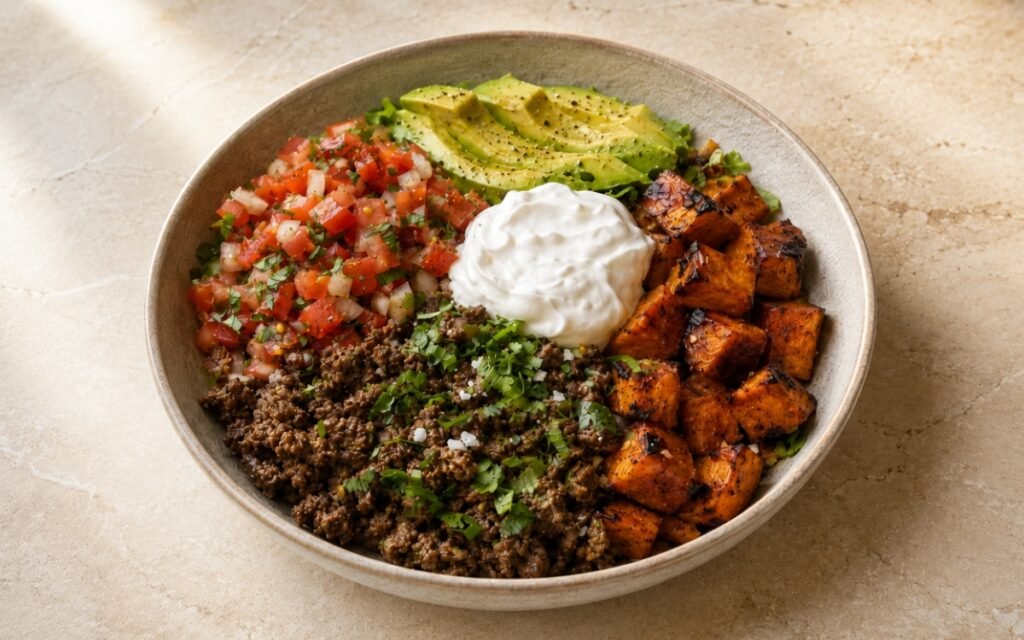
Sweet Potato Ground Beef Burrito Bowl
Crisp-edged roasted sweet potato and well-browned seasoned ground beef, topped with fresh pico de gallo, avocado, and sour cream.
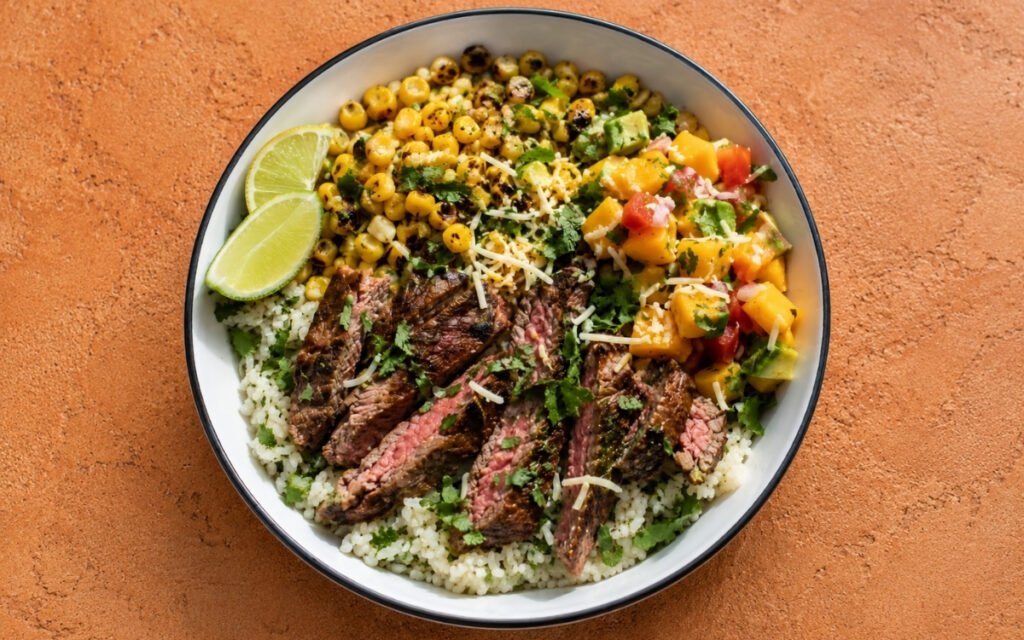
Flank Steak & Mango Salsa Rice Bowl
Charred flank steak over cilantro lime rice with mango avocado salsa, smoky corn, and Mexican cheese — a vibrant, complete bowl in under an hour.
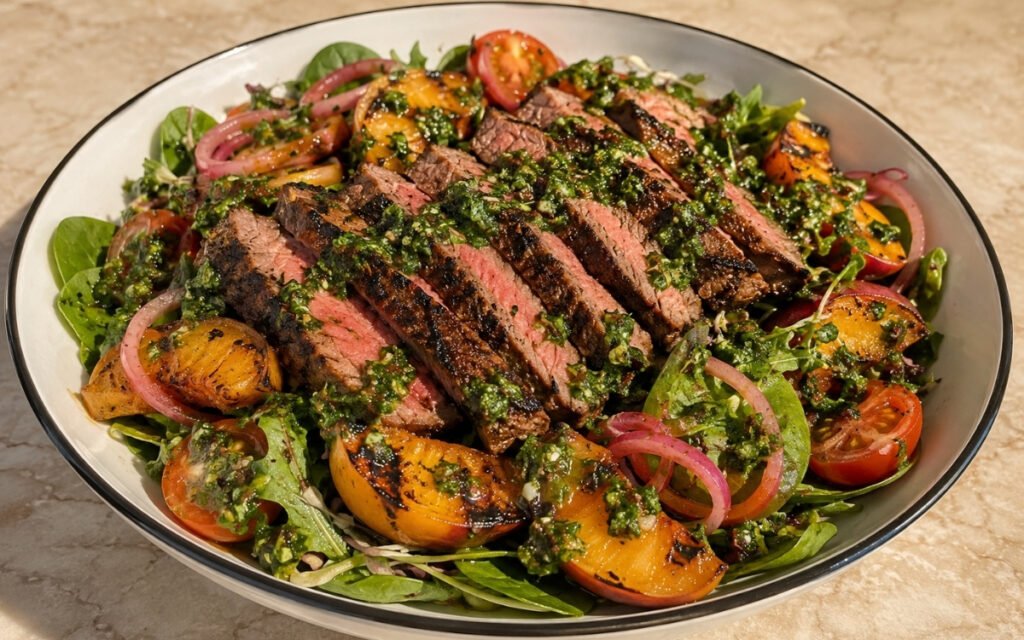
Grilled Steak & Peach Chimichurri Salad
Dry-brined grilled sirloin and caramelised peaches over fresh greens with pickled red onion and a heavy chimichurri drizzle — summer in a bowl.
You might also like
You might also like
Huevos Motuleños
Crisp corn tortillas layered with black beans and fried eggs, topped with light tomato sauce, ham, peas, and sweet fried plantain.
Al Pastor Tacos on Corn Tortillas
Thin-sliced pork shoulder marinated in achiote and toasted chiles, charred hot and fast, served on small corn tortillas with grilled pineapple, onion, and cilantro.
Pollo Sopes with Refried Beans
Thick masa sopes shaped with a raised rim, fried golden, and layered with refried black beans, adobo-simmered shredded chicken, lettuce, tomato, and crema.


Broken Rice with Grilled Pork (Cơm Tấm)
Ingredients
Method
- If the pork chops are very thick or uneven, lightly pound the thickest parts so they cook more evenly, but keep them whole. Make a few shallow cuts through the fat edge so the chops do not curl during cooking. Mix the lemongrass, garlic, shallot, fish sauce, soy sauce, oyster sauce, sugar, honey, oil, black pepper, five-spice if using, and lime juice or vinegar. Coat the pork chops thoroughly. Cover and marinate in the fridge for at least 4 hours, preferably overnight. The lemongrass must be minced very finely so it perfumes the meat without burning in big fibrous pieces. Sugar and honey are important because they give the pork the traditional lacquered caramelization and char. If using very thick chops, do not skip the long marination; otherwise the center tastes bland. That extended marinating time gives the salt and aromatics genuine hours to actually penetrate beyond the surface of a thick chop — a brief marinade would only ever season the exterior, leaving the center comparatively flat.
- Toss the carrot and daikon with the salt and let stand for 10 minutes. Squeeze gently to remove excess moisture. Mix the sugar, rice vinegar, and warm water until dissolved. Add the carrot and daikon and let pickle for at least 30 minutes. The pickles should taste lightly sweet-tart and stay crisp. Do not soak them too long in an overly strong vinegar mix or they become harsh. That initial salting and squeezing step draws real moisture out of the vegetables first, which is what lets them actually absorb the pickling liquid afterward rather than simply diluting it.
- Stir together the fish sauce, warm water, sugar, lime juice, garlic, and chili until the sugar dissolves. Taste and adjust. It should be balanced: salty, lightly sweet, bright, and pourable. Nước chấm should not be too sharp or too salty on its own. It is meant to season the rice and pork when eaten together. That specific, deliberately balanced target reflects the sauce’s real functional role — it’s not eaten alone, but spooned over the rest of the plate, so a sauce that reads slightly mild on its own is exactly what seasons the whole dish correctly once combined.
- Put the sliced scallions and a pinch of salt in a heatproof bowl. Heat the oil until hot, then pour it over the scallions. Stir and set aside. The scallions should soften and turn glossy, not brown. Pouring genuinely hot oil directly over the raw scallions is what gently cooks and wilts them on contact, releasing their own aromatics without needing any further direct heat that would risk browning them.
- Rinse the broken rice briefly until the water is less cloudy, then drain. Cook with 360ml water for firmer rice or 390ml water for softer rice, plus the salt, using a rice cooker or covered pot. Once cooked, let the rice rest 10 minutes, then fluff gently. Broken rice cooks softer and slightly faster than whole jasmine rice. Do not overfill with water or it turns mushy; the grains should stay tender but distinct. That resting period after cooking lets residual steam finish distributing evenly through the rice, which is directly what makes it easier to fluff into tender, still-distinct grains rather than a compacted mass.
- Take the pork chops out of the fridge 20–30 minutes before cooking. Preheat a grill, grill pan, or heavy skillet over medium-high to high heat. Lightly oil the grate or pan. Cook the chops until well caramelized and slightly charred at the edges, about 4–6 minutes per side, depending on thickness. Turn as needed to prevent the sugars from scorching too fast. If needed, lower the heat slightly after the first side browns so the inside finishes cooking without the outside burning. Rest the chops for 5 minutes before serving. You want deep caramelization, not burnt bitterness. Thick chops need enough time to cook through; if the surface darkens too quickly, finish over slightly gentler heat. The pork should be juicy and cooked through, not dry. Target an internal temperature of about 63°C / 145°F, then rest. That willingness to lower the heat partway through protects the marinade’s own sugar content from crossing into genuine burning — sugar caramelizes readily under high heat, and this particular marinade carries real amounts of both sugar and honey.
- Heat a little oil in a skillet over medium heat and fry the eggs until the whites are set and the edges lightly crisp. Keep the yolks runny or softly set. A lightly crisp-edged sunny-side egg is the most classical for this plate and adds richness when broken over the rice. That specific, lightly crisp-edged style is what lets the egg contribute real, additional richness once broken — a fully firm yolk wouldn’t provide that same enriching pool of sauce across the rice.
- For each serving, place a mound of broken rice, 1 whole grilled pork chop, 1 fried egg, some pickled carrot and daikon, sliced cucumber, sliced tomato, a spoonful of scallion oil over the rice, and a small dish or spoonful of nước chấm on the side. Serve immediately. The plate works best when the pork, rice, and egg are hot, while the pickles and vegetables stay cool and fresh. That deliberate temperature contrast, hot components against cool ones, is central to this plate’s whole classical identity — serving everything at the same temperature would lose exactly the layered sensation this dish is built around.