
Vietnamese Caramelized Pork Bowl
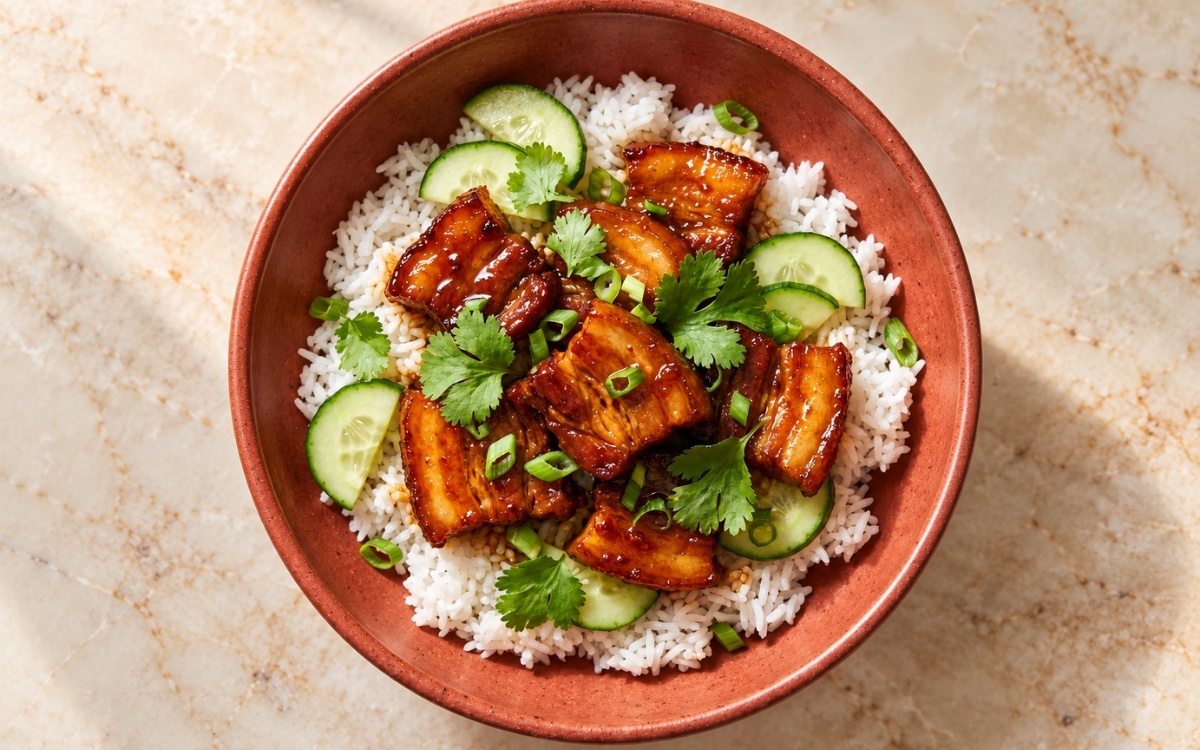
A home-style Vietnamese-inspired rice bowl of glossy pork belly braised in a rich fish sauce caramel, served over fluffy jasmine rice with cool cucumber, cilantro and scallion, the key being sticky, deep amber-brown pork against plain, fresh garnishes. Cooking the sugar to a deep amber caramel, rather than stopping at pale gold or pushing it towards black, is the technique this whole bowl depends on for its colour and flavour — pale caramel leaves the pork sweet and flat, while burnt caramel turns the glaze bitter beyond rescue, the same cook-the-sugar-to-amber principle used elsewhere in this collection whenever a caramel forms the base of a savoury sauce. Rendering and browning the pork belly before the caramel goes in is what gives the pieces caramelised edges and releases enough fat to carry the shallots and garlic. Simmering the pork in the caramel liquid until it reduces to a spoonable glaze is what keeps the meat tender and lacquered rather than dry or hard. The payoff is a bowl with real, savoury-sweet depth — genuinely tender, glossy pork belly, a sticky fish sauce glaze soaking lightly into fluffy rice, and crisp cucumber and fresh herbs cutting through the richness.

Prep Time : 20 min
Total Time : 1 hr 15 min
Servings : 4
20 min
1 hr 15 min
4
Ingredients
For the Jasmine Rice
• 300g jasmine rice
• 375ml water
For the Marinated Pork
• 600g boneless pork belly, cut into bite-size chunks, about 3–4cm
• 2 tbsp fish sauce
• 1 tbsp sugar
• ½ tsp black pepper
• 2 shallots, thinly sliced, divided
• 4 garlic cloves, finely minced, divided
For the Caramel Braise
• 2 tbsp neutral oil
• 3 tbsp sugar
• 2 tbsp water
• 120ml coconut water or water
• 1 tbsp fish sauce
• ¼ tsp black pepper, or to taste
• A small splash of extra water, only if needed
For the Bowl Garnishes
• 1 small English cucumber or 2 Persian cucumbers, thinly sliced
• 2 scallions, thinly sliced
• 10–15g cilantro leaves
• Extra black pepper, optional
Directions
- Marinate the Pork
Cut the 600g pork belly into bite-size chunks of about 3–4cm, keeping a layer of fat and lean meat in each piece so they cook evenly. Place the pork in a bowl and add the 2 tbsp fish sauce, 1 tbsp sugar, ½ tsp black pepper, half of the sliced shallots and half of the minced garlic, keeping the remaining shallots and garlic aside for the pan. Mix well with your hands until every piece is coated, then cover and leave to marinate for 20 minutes at room temperature. Do not salt the pork separately, since the fish sauce is the main seasoning and will concentrate as the sauce reduces later. That short fish sauce marinade is what seasons the pork through without risking an over-salted glaze. - Cook the Jasmine Rice
As soon as the pork is marinating, rinse the 300g jasmine rice in cold water 3–4 times, swirling it with your fingers, until the water runs mostly clear, then drain well. Combine the rice and 375ml water in a medium saucepan and bring to a boil over medium-high heat. Stir once, cover tightly, reduce to the lowest heat and cook for 12–13 minutes, until the water has been absorbed and small steam holes dot the surface. Turn off the heat and leave it to rest, still covered, for 10 minutes without lifting the lid; it can keep resting while the pork begins to brown. The grains should be soft and fluffy but never wet or clumped. That rinse and undisturbed rest is what keeps the rice separate enough for the glaze to coat it lightly without turning it mushy. - Prep the Garnishes
While the rice cooks, thinly slice the cucumber, keeping the slices plain and unseasoned, and thinly slice the 2 scallions. Pick the 10–15g cilantro into small leaves and sprigs, discarding any thick stems. Arrange the garnishes in separate small piles beside the stove, with the extra black pepper alongside if using, and keep the cucumber in the fridge until assembly so it stays cold and crisp. None of these garnishes goes into the hot pan at any point; they are there purely for genuine, fresh contrast. Once the caramel starts, there is no time to stop and chop. That advance preparation is what lets the pork go straight from the pan into the bowls while the glaze is still genuinely glossy. - Brown and Render the Pork
Heat a heavy pan or wok over medium heat and add the 2 tbsp neutral oil. Add the marinated pork, scraping in any shallot and garlic from the bowl, and spread it into a single layer as far as possible. Cook for 8–10 minutes, stirring as needed, until the fat begins to render and the pieces have visible browned, caramelised edges. If the pan releases a lot of fat, spoon off the excess, leaving just enough to cook the aromatics and glaze the pork. Add the remaining shallots and garlic and cook for 30–60 seconds, just until fragrant, without letting them darken. Do not fully crisp the pork at this stage, since it still needs to soften in the braise. That partial rendering is what builds flavour and colour while keeping the pork tender enough to absorb the glaze. - Make the Caramel
Push the pork to the edges of the pan, or lift it onto a plate briefly if the centre is crowded. Add the 3 tbsp sugar and 2 tbsp water to the cleared centre and let it bubble over medium heat for 3–5 minutes, watching closely, until it turns a deep amber caramel. As soon as it reaches a rich amber-brown colour, carefully pour in the 120ml coconut water or water, standing back from the steam. The caramel may seize into lumps briefly; that is normal. Add the 1 tbsp fish sauce and ¼ tsp black pepper and stir for 1–2 minutes until the caramel dissolves back into the liquid, then toss the pork through it. If it looks brown-black or smells acrid, it will taste bitter. That precise amber stage is what gives the glaze its depth without harshness. - Glaze and Reduce
Lower the heat to medium-low and simmer the pork in the caramel liquid for 12–18 minutes, stirring occasionally, until the pork is tender, the sauce has reduced and the glaze turns shiny and clings to the meat. If the sauce reduces too quickly before the pork is tender, add a small splash of extra water and keep simmering. Taste a piece near the end and add a little more black pepper if needed rather than more fish sauce. The pork should finish a deep amber-brown and glossy, never pale or blackened, and the pieces should still hold their shape. Stop reducing while there is still a little fluid glaze in the pan, just enough to spoon over the rice. That timely stop is what preserves the lacquered look before the sugar can catch and scorch. - Assemble the Bowls
Fluff the rested rice and divide it among 4 bowls. Top each bowl with a quarter of the caramelised pork and spoon a little of the remaining glaze over the rice, letting it soak in lightly rather than pool. Arrange the cold cucumber slices around or beside the pork, then scatter over the sliced scallion and cilantro leaves. Finish with a grind of extra black pepper, if using. Keep the assembly minimal and clean, with white rice, glossy pork and fresh green garnish each visible in the bowl. Serve immediately, while the pork is hot and the cucumber is still cold. That simple, uncluttered assembly is what lets the rich glaze and the fresh garnishes balance each other in every spoonful.
*Notes :
- Taking the caramel to deep amber deserves genuine recognition as the technique most directly responsible for whether this bowl tastes rich or bitter. The recipe’s own instruction to “Aim for deep amber, not burnt brown-black” explains why — sugar keeps developing roasted, bittersweet flavour as it darkens, but within seconds of passing amber it scorches, and no amount of fish sauce or coconut water can mask that acrid edge.
- Browning the pork belly before glazing deserves the same attention this technique receives throughout this collection’s other braised pork dishes, because it sets both texture and flavour. Eight to ten minutes over medium heat renders fat and builds caramelised edges, while the recipe’s own warning against fully crisping “the pork hard at this stage” matters just as much — over-crisped pieces stay tough and cannot soften properly during the simmer.
- Stopping the reduction while some glaze is still fluid deserves genuine respect as the detail most directly responsible for the lacquered finish. The recipe’s own note to “Stop reducing while there is still a little fluid glaze in the pan” reflects simple sugar chemistry — once most of the water has gone, the caramel climbs in temperature quickly, catches on the pan and leaves the pork dull, sticky and faintly burnt.
- The consistency of the glaze deserves attention as a genuine, checkable readiness cue rather than a loose approximation. It should be thick, shiny and spoonable, clinging to each piece and lightly coating the rice when served — a watery sauce means the pork needs a few more minutes, while a glaze that drags and sizzles loudly means it has already gone too far.
Why This Recipe Works
This recipe works because each stage builds a different layer of the same savoury-sweet flavour. A short fish sauce marinade seasons the pork belly without extra salt, and an initial browning renders fat and creates caramelised edges. Sugar cooked to deep amber in the same pan adds roasted, bittersweet depth, while the coconut water or water turns it into a braising liquid rather than hard candy. A gentle 12–18-minute simmer then tenderises the pork as the sauce reduces to a glossy glaze, which plain jasmine rice, cool cucumber and fresh herbs genuinely balance in every bite.
Ingredient Breakdown
Deep Amber Caramel (Not Brown-Black)
The critical technique — sugar cooked just to rich amber gives roasted, bittersweet depth without burnt bitterness.
Rendered, Browned Pork Belly
The critical technique — 8–10 minutes renders fat and builds caramelised edges while keeping the pieces soft enough to braise.
Balanced Pork Belly (Lean and Fat)
The critical ingredient choice — layered fat gives the glaze richness and keeps each 3–4cm piece genuinely juicy.
Fish Sauce (Instead of Extra Salt)
The flavour foundation — it seasons marinade and caramel, concentrating into deep savoury flavour as the sauce reduces.
Coconut Water Braising Liquid
The structural choice — it loosens the caramel into a braise and adds a rounder, gentler sweetness.
Plain Cucumber, Cilantro and Scallion
The finishing touch — cool garnishes kept out of the hot pan cut through the genuinely rich glaze.
Flavor Structure Explained
This Vietnamese caramelized pork bowl follows a layered balance model:
- Soft, neutral foundation (fluffy jasmine rice)
- Rich, savoury centrepiece (pork belly, rendered fat, fish sauce)
- Bittersweet caramel depth (deep amber sugar caramel, coconut water)
- Warm aromatic backbone (shallots, garlic, black pepper)
- Cool, fresh lift (cucumber, cilantro, scallion)
Fluffy jasmine rice forms the soft, neutral foundation that takes a spoonful of glaze without turning mushy. Pork belly, its rendered fat and fish sauce build the rich, savoury centrepiece, while sugar cooked to deep amber and loosened with coconut water adds a genuinely bittersweet caramel depth. Shallots, garlic and black pepper give a warm aromatic backbone that keeps the sweetness in check. Cucumber, cilantro and scallion then bring the cool, fresh lift that ties this caramelized pork bowl together.
Common Mistakes to Avoid
- Burning the Caramel – This turns the whole glaze bitter, and the burnt flavour cannot be corrected later. Always add the coconut water the moment the sugar reaches rich amber.
- Fully Crisping the Pork Before Glazing – This hardens the outside so the pieces stay tough and chewy through the simmer. Always stop browning once the edges are caramelised and some fat has rendered.
- Leaving All the Rendered Fat in the Pan – This makes the sauce greasy and stops the caramel from clinging to the pork. Always spoon off the excess, keeping just enough to cook the aromatics.
- Over-Reducing the Glaze – This lets the sugar catch on the pan, leaving dull, sticky pork with a scorched edge. Always stop while a little fluid glaze still remains in the pan.
- Salting the Pork Separately – This makes the finished pork too salty, because the fish sauce concentrates as the sauce reduces. Always let the fish sauce do the seasoning and adjust only with black pepper.
Variations
Coconut Water Version
Braise the pork in coconut water rather than plain water, per the recipe’s own note, for a slightly more classical flavour profile with a rounder sweetness that works especially well with the pork caramel.
Peppery Finish Version
Grind a generous amount of extra black pepper over each bowl just before serving, which sharpens the sweetness of the caramel and gives the rich pork belly a warmer, more pronounced bite.
Pork Shoulder Version
Use boneless pork shoulder in 3–4cm chunks for a leaner bowl, simmering it with an extra 120ml water for 20–30 minutes longer so it turns tender before the glaze reduces.
Chilli Heat Version
Add 1–2 thinly sliced red chillies to the pan with the remaining shallots and garlic for a gentle heat that cuts through the sweet, sticky glaze without changing the simple bowl structure.
Storage & Make-Ahead
Choose pork belly with an even balance of lean meat and fat, ideally a single slab you can cut yourself into 3–4cm chunks, because the layered fat gives the glaze its genuine richness and helps the pieces hold their shape.
The pork can be cut and marinated up to 1 day ahead in a covered container in the fridge, which deepens the fish sauce seasoning without any extra salt, then browned and glazed just before serving.
Leftover caramelized pork keeps in an airtight container in the fridge for up to 3 days, and the glaze firms as it chills because of the rendered fat and reduced sugar, so expect it to look set rather than glossy.
Reheat the pork in a covered pan over medium-low heat with 1–2 tbsp water, stirring until the glaze loosens and turns glossy again, rather than microwaving it on high, which can toughen the meat and scorch the sugar.
Slice the cucumber and pick the cilantro and scallion just before serving, and store any leftover rice separately so it reheats fluffy instead of absorbing the glaze and turning soft.
Frequently Asked Questions
Why does the caramel need to reach deep amber rather than light gold?
Light golden caramel tastes mostly sweet and gives the pork little colour. Deep amber has developed the roasted, bittersweet notes and rich brown tone that define the glaze, while going any darker turns it genuinely bitter.
Why is the pork belly browned before the caramel is made?
Browning renders some of the fat and builds caramelised edges that add flavour and help the glaze cling. Starting the caramel with raw pork would genuinely leave the meat pale and the sauce greasy, with none of that savoury, roasted depth.
Why does the caramel seize when the coconut water goes in?
The cooler liquid drops the temperature of the hot sugar suddenly, so part of it firms into hard lumps for a moment. Stirring over the heat for a minute or two dissolves it back into a smooth, even braising liquid.
Why is no extra salt added to the pork?
The fish sauce already seasons both the marinade and the caramel, and it concentrates as the liquid reduces into a glaze. Extra salt would push the finished pork from savoury to harsh once the sauce has cooked down.
Are there other classic pork rice bowl, pork belly, or salad dishes worth trying?
Broken Rice with Grilled Pork (Cơm Tấm) offers another classic Vietnamese pork-and-rice direction worth exploring. Banh Mi Rice Bowl and Steam-Roasted Pork Belly with Vietnamese-ish Herb Sauce are also worth trying for other pork-centred directions, and Spicy Asian Cucumber Salad and Filipino Pork Adobo Bowl offer a crisp side and another pork rice bowl worth exploring.
Nutrition Facts
( Per Serving — 1 bowl )
Calories
~990 kcal
Protein
21 g
Fat
67 g
Carbs
76 g
Calories
~990 kcal
Protein
21 g
Fat
67 g
Carbs
76 g
Related Recipes
Related Recipes
-

Bun Bo Hue Inspired Spicy Beef Noodle Soup
Thick round rice noodles in a spicy red lemongrass beef broth, topped with tender beef, chả lụa, fresh herbs, bean sprouts and lime.
-
Thai Red Curry Shrimp
Plump shrimp simmered in a creamy red coconut curry with bell peppers, bamboo shoots, lime leaves and Thai basil, served with jasmine rice.
-
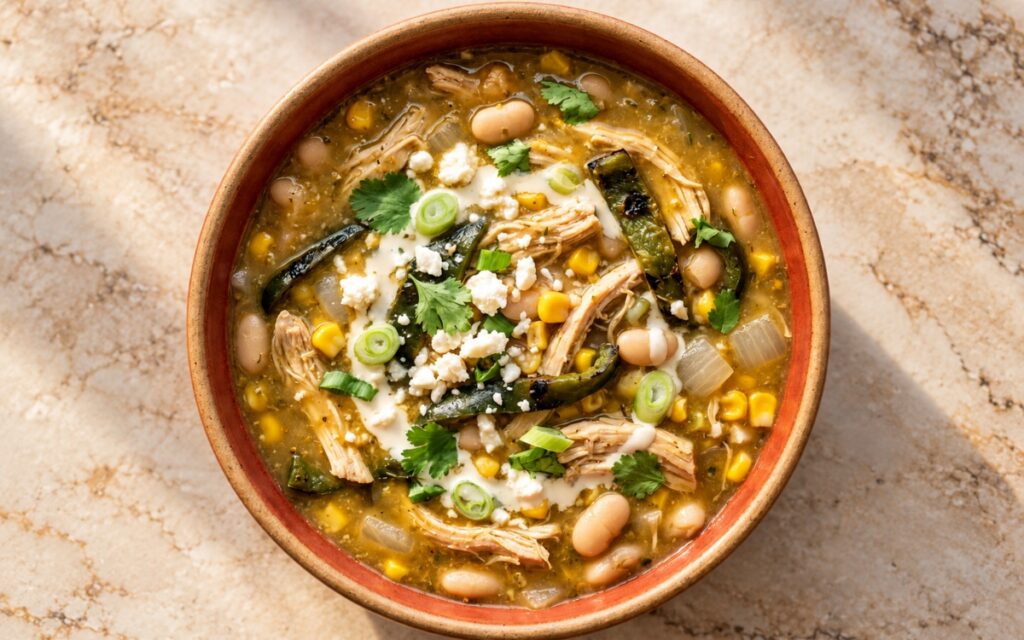
Poblano Chicken Chili Soup
A thick, creamy Mexican-inspired soup of roasted poblanos, shredded chicken, white beans, and corn, finished with crema, queso fresco, and cilantro.


You might also like
You might also like
-
Tonkatsu with Cabbage Slaw
Golden panko-crusted pork cutlet, sliced and served over fine cabbage with fluffy rice, glossy sauce, and lemon.
-
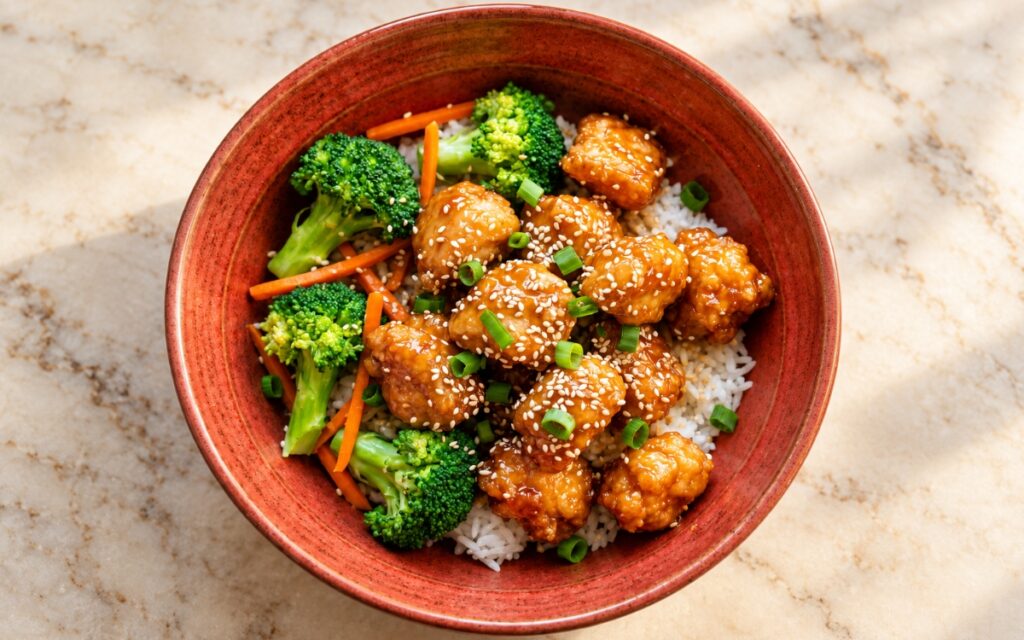
Honey Sesame Chicken Rice Bowl
Crisp fried chicken coated in thick glossy honey sesame glaze, served over jasmine rice with steamed broccoli, carrot strips, sesame seeds, and scallions.
-
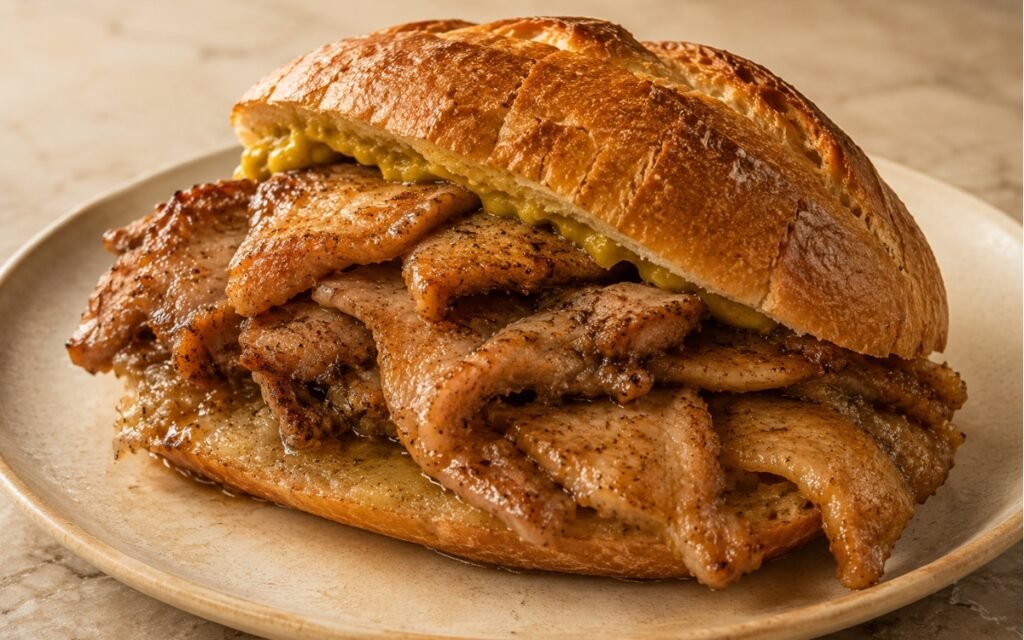
Portuguese Pork Bifana
Thin pork slices marinated in garlic and white wine, simmered until glossy and tender, piled into crusty homemade papo-seco rolls.

Vietnamese Caramelized Pork Bowl
Ingredients
Method
- Cut the 600g pork belly into bite-size chunks of about 3–4cm, keeping a layer of fat and lean meat in each piece so they cook evenly. Place the pork in a bowl and add the 2 tbsp fish sauce, 1 tbsp sugar, ½ tsp black pepper, half of the sliced shallots and half of the minced garlic, keeping the remaining shallots and garlic aside for the pan. Mix well with your hands until every piece is coated, then cover and leave to marinate for 20 minutes at room temperature. Do not salt the pork separately, since the fish sauce is the main seasoning and will concentrate as the sauce reduces later. That short fish sauce marinade is what seasons the pork through without risking an over-salted glaze.
- As soon as the pork is marinating, rinse the 300g jasmine rice in cold water 3–4 times, swirling it with your fingers, until the water runs mostly clear, then drain well. Combine the rice and 375ml water in a medium saucepan and bring to a boil over medium-high heat. Stir once, cover tightly, reduce to the lowest heat and cook for 12–13 minutes, until the water has been absorbed and small steam holes dot the surface. Turn off the heat and leave it to rest, still covered, for 10 minutes without lifting the lid; it can keep resting while the pork begins to brown. The grains should be soft and fluffy but never wet or clumped. That rinse and undisturbed rest is what keeps the rice separate enough for the glaze to coat it lightly without turning it mushy.
- While the rice cooks, thinly slice the cucumber, keeping the slices plain and unseasoned, and thinly slice the 2 scallions. Pick the 10–15g cilantro into small leaves and sprigs, discarding any thick stems. Arrange the garnishes in separate small piles beside the stove, with the extra black pepper alongside if using, and keep the cucumber in the fridge until assembly so it stays cold and crisp. None of these garnishes goes into the hot pan at any point; they are there purely for genuine, fresh contrast. Once the caramel starts, there is no time to stop and chop. That advance preparation is what lets the pork go straight from the pan into the bowls while the glaze is still genuinely glossy.
- Heat a heavy pan or wok over medium heat and add the 2 tbsp neutral oil. Add the marinated pork, scraping in any shallot and garlic from the bowl, and spread it into a single layer as far as possible. Cook for 8–10 minutes, stirring as needed, until the fat begins to render and the pieces have visible browned, caramelised edges. If the pan releases a lot of fat, spoon off the excess, leaving just enough to cook the aromatics and glaze the pork. Add the remaining shallots and garlic and cook for 30–60 seconds, just until fragrant, without letting them darken. Do not fully crisp the pork at this stage, since it still needs to soften in the braise. That partial rendering is what builds flavour and colour while keeping the pork tender enough to absorb the glaze.
- Push the pork to the edges of the pan, or lift it onto a plate briefly if the centre is crowded. Add the 3 tbsp sugar and 2 tbsp water to the cleared centre and let it bubble over medium heat for 3–5 minutes, watching closely, until it turns a deep amber caramel. As soon as it reaches a rich amber-brown colour, carefully pour in the 120ml coconut water or water, standing back from the steam. The caramel may seize into lumps briefly; that is normal. Add the 1 tbsp fish sauce and ¼ tsp black pepper and stir for 1–2 minutes until the caramel dissolves back into the liquid, then toss the pork through it. If it looks brown-black or smells acrid, it will taste bitter. That precise amber stage is what gives the glaze its depth without harshness.
- Lower the heat to medium-low and simmer the pork in the caramel liquid for 12–18 minutes, stirring occasionally, until the pork is tender, the sauce has reduced and the glaze turns shiny and clings to the meat. If the sauce reduces too quickly before the pork is tender, add a small splash of extra water and keep simmering. Taste a piece near the end and add a little more black pepper if needed rather than more fish sauce. The pork should finish a deep amber-brown and glossy, never pale or blackened, and the pieces should still hold their shape. Stop reducing while there is still a little fluid glaze in the pan, just enough to spoon over the rice. That timely stop is what preserves the lacquered look before the sugar can catch and scorch.
- Fluff the rested rice and divide it among 4 bowls. Top each bowl with a quarter of the caramelised pork and spoon a little of the remaining glaze over the rice, letting it soak in lightly rather than pool. Arrange the cold cucumber slices around or beside the pork, then scatter over the sliced scallion and cilantro leaves. Finish with a grind of extra black pepper, if using. Keep the assembly minimal and clean, with white rice, glossy pork and fresh green garnish each visible in the bowl. Serve immediately, while the pork is hot and the cucumber is still cold. That simple, uncluttered assembly is what lets the rich glaze and the fresh garnishes balance each other in every spoonful.