
Thai Red Curry Shrimp
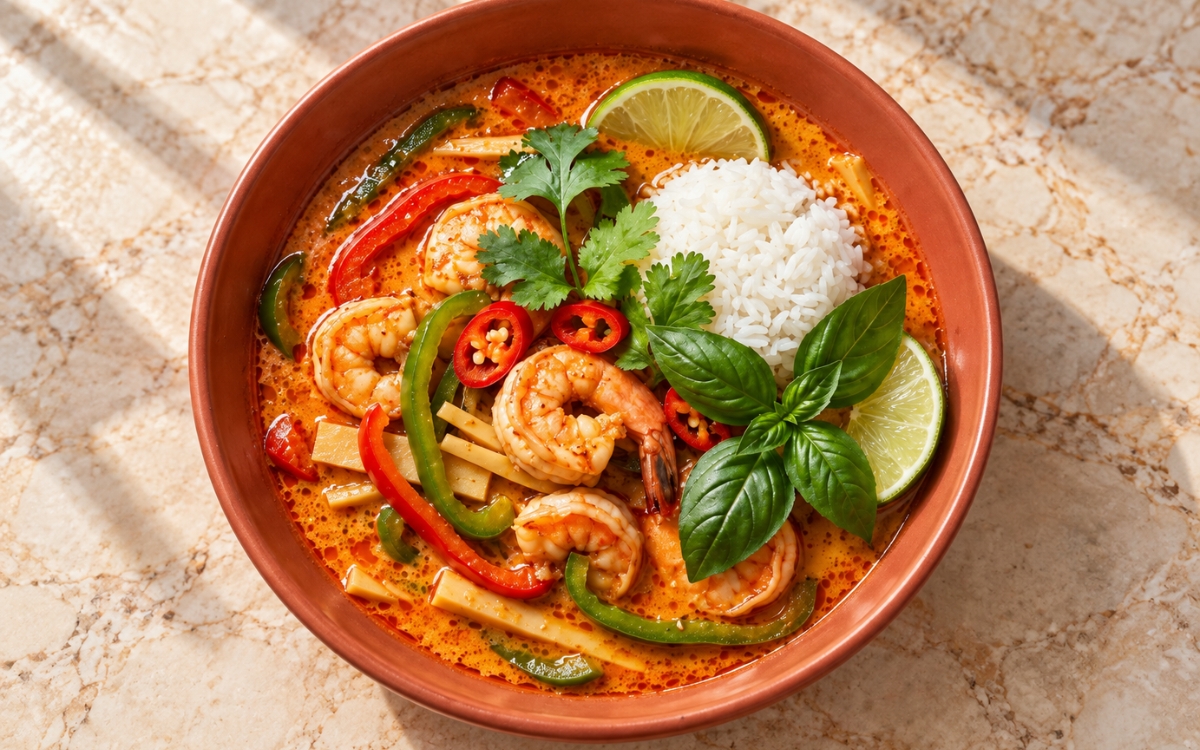
A classic Thai red curry with shrimp — plump shrimp simmered briefly in a rich, red-orange coconut sauce with bell peppers, bamboo shoots and makrut lime leaves, served over jasmine rice with Thai basil and lime, the key being shrimp added only at the very end. Frying the red curry paste in thick coconut cream for 2–4 minutes, rather than stirring it into the full pot of liquid, is the technique this whole curry depends on for its deep colour and rounded aroma — paste that only stews in coconut milk keeps a raw, flat edge that fish sauce cannot correct, the same fry-the-paste-first principle used elsewhere in this collection whenever a spice or chilli paste carries most of a dish’s flavour. Holding the sauce at a steady, gentle simmer once the full coconut milk is in is what keeps it silky, glossy and creamy rather than broken or grainy. Adding the shrimp last, for just 2–4 minutes until they turn opaque and curl into a loose C, is what keeps them plump and tender instead of rubbery. The payoff is a curry with real, layered warmth — sweet, juicy shrimp and bright peppers in a silky red-orange coconut sauce, lifted by fresh Thai basil and lime.

Prep Time : 20 min
Total Time : 45 min
Servings : 4
20 min
45 min
4
Ingredients
For the Jasmine Rice
• 200g jasmine rice
• 300ml water
• A pinch of fine salt, optional
For the Shrimp
• 600g raw shrimp, medium-large, peeled and deveined, tails on or off
• A light pinch of fine salt
• A light pinch of white pepper
For the Curry Base
• 800ml full-fat coconut milk, divided
• 4–5 tbsp Thai red curry paste, to taste and strength of paste
• 1 tbsp neutral oil, only if needed
• 150–200ml chicken stock or water, divided
• 1½–2 tbsp fish sauce, plus more to taste
• 2 tsp palm sugar or light brown sugar, plus a little more to taste
• 4 makrut lime leaves, torn
• 1 stalk lemongrass, trimmed, bruised and cut into 2–3 large pieces
• 3 garlic cloves, finely minced
• 1 small shallot, thinly sliced
For the Vegetables
• 1 medium red bell pepper, thinly sliced
• 1 medium green bell pepper, thinly sliced
• 120–150g bamboo shoots, drained and sliced
• 1–2 red chillies, thinly sliced
For the Finish and Garnish
• 1 generous handful Thai basil leaves
• 1 small handful cilantro leaves
• 2 limes, cut into wedges
Directions
- Prep the Curry Components
Pat the 600g shrimp genuinely dry with kitchen paper and season them with only a light pinch of salt and a light pinch of white pepper; do not salt them heavily or marinate them. Thinly slice the red and green bell peppers, drain and slice the 120–150g bamboo shoots, tear the 4 makrut lime leaves and bruise the trimmed lemongrass with the back of a knife before cutting it into 2–3 large pieces. Finely mince the 3 garlic cloves, thinly slice the shallot and the 1–2 red chillies, and pick the Thai basil and cilantro leaves. Keep the shrimp chilled until the moment they go in. That complete setup matters because once the paste starts frying the curry moves quickly, and the shrimp must go in late, with no pause to chop. - Cook the Jasmine Rice
Rinse the 200g jasmine rice in cold water, swirling it with your fingers, until the water runs mostly clear, then drain it well. Combine the rice and 300ml water in a small saucepan with a pinch of salt, if using, and bring to a boil over medium-high heat. Stir once, cover tightly, reduce to the lowest heat and cook for 12 minutes. Turn off the heat and leave it to rest, still covered, for 10 minutes, then fluff gently with a fork just before serving. Start the curry as soon as the lid goes on, so both are ready at the same time, and do not lift the lid while the rice cooks or rests. That undisturbed resting time is what lets the trapped steam finish the grains evenly, keeping them tender and intact rather than wet or broken. - Fry the Curry Paste
Open the 800ml coconut milk without shaking it, so any thick cream that has separated stays at the top. Heat a wok, sauté pan or medium pot over medium heat and add about 200ml of the coconut milk, taking the thick cream first. Simmer for 2–3 minutes, stirring, until slightly thickened and glossy. Add 4 tbsp red curry paste, or up to 5 tbsp for a stronger curry, and fry for 2–4 minutes, stirring constantly, until it is deep brick-red, very fragrant and the raw smell has gone. If the paste starts to catch rather than sizzle, add the 1 tbsp neutral oil. Add the garlic and shallot and cook for 30–60 seconds more, just until aromatic. That frying stage is what deepens the paste’s colour and aroma, since under-fried paste tastes raw and flat in the finished curry. - Build the Curry Sauce
Pour in the remaining 600ml coconut milk and 150ml of the chicken stock or water and stir until smooth, keeping the rest of the stock aside. Add 1½ tbsp fish sauce, the 2 tsp palm sugar, the torn lime leaves and the lemongrass pieces. Bring to a gentle simmer over medium heat — small bubbles breaking steadily at the surface, never a hard boil — and cook for 5 minutes so the aromatics infuse the sauce. Taste the base now: it should already taste rich, savoury, slightly sweet and aromatic, and still a little strong, because the vegetables and shrimp will soften it. Lower the heat if it begins to bubble hard. That steady, gentle simmer is what keeps the coconut sauce smooth and creamy rather than letting it break into a grainy, oily surface. - Cook the Vegetables
Add the sliced bamboo shoots and the red and green bell peppers and stir them into the sauce. Simmer gently for 3–5 minutes, until the peppers are just tender but still bright and holding their shape, with a little bite left in each slice. If the curry looks too thick, add the remaining stock or water, up to 50ml, a little at a time; it should be spoonable and silky, closer to a rich broth than a heavy gravy. A red-orange sheen of oil on the surface is a good sign. That short simmer is what keeps the peppers softened but never limp, so they still give texture against the creamy sauce and the tender shrimp. - Poach the Shrimp
Add the shrimp and stir gently to submerge them in the sauce. Keep the curry at a gentle simmer and cook for 2–4 minutes, depending on their size, until every shrimp has turned fully opaque and pink and curled into a loose C shape, reaching about 63°C / 145°F at the thickest point. Lift one out and check it if unsure. Take the pan off the heat as soon as they are cooked, because they keep cooking in the hot sauce. Shrimp curled into a tight O are already overcooked. That brief, gentle cooking is what keeps the shrimp genuinely plump, sweet and juicy instead of shrunken, tight and rubbery. - Finish the Curry
With the heat off, remove the lemongrass pieces if you prefer easier serving. Stir in most of the Thai basil and a little of the sliced chilli, keeping the rest for garnish, just until the leaves wilt lightly. Taste and adjust: add up to ½ tbsp more fish sauce if it needs salt or savouriness, and a little more sugar if it tastes too sharp. Keep the lime for the table rather than squeezing it into the pot, so the curry keeps its clean coconut balance. Fold in a few cilantro leaves, or reserve all of them for the garnish. That off-heat finish is what lets the basil wilt while keeping its sweet, anise-scented aroma genuinely vivid. - Serve
Fluff the rested jasmine rice and divide it among 4 bowls, about 50g of dry rice per serving. Spoon the red curry shrimp around or beside the rice, giving each bowl about 150g of shrimp and an even share of peppers, bamboo shoots and sauce. Garnish with the remaining Thai basil, the cilantro leaves and the rest of the sliced red chillies, and set the lime wedges on the side for squeezing at the table. The sauce should pool loosely around the rice with a glossy, red-orange sheen. Serve immediately, while the curry is hot. That quick finish is what puts the shrimp on the table at their peak texture, before the residual heat of the sauce can tighten them.
*Notes :
- Frying the red curry paste in coconut cream deserves genuine recognition as the technique most directly responsible for whether this curry tastes deep and rounded or raw and flat. The recipe’s own turning point that “The paste must be fried enough to deepen in aroma and color” reflects how a few minutes in hot fat cook out the chillies, garlic and shrimp paste in the blend — simply stirred into liquid, they never fully develop.
- Keeping the curry at a gentle simmer deserves the same attention this technique receives throughout this collection’s other coconut-based curries, because it decides the texture of the finished sauce. The recipe’s own instruction to “keep it at a steady gentle simmer so the sauce stays smooth and creamy” explains why the heat stays low for the 5-minute infusion and the vegetable stage — a hard boil breaks the coconut fat into a grainy, oily surface.
- Adding the shrimp only at the very end deserves genuine respect as the detail most directly responsible for whether they arrive plump or rubbery. The recipe’s own note that “shrimp must always be added last” matters because shrimp proteins tighten within minutes, so 2–4 minutes at a gentle simmer cooks them through, while every extra minute squeezes out moisture and curls them into a tight, chewy O.
- The loose C shape deserves attention as a genuine, checkable readiness cue rather than a loose approximation of time. Shrimp sizes vary, so the opaque flesh and loose curl, checked by lifting one out, tell you when to pull the pan off the heat far more reliably than the clock, and catching that moment keeps the residual heat from overcooking them.
Why This Recipe Works
This recipe works because it builds flavour in the fat first and protects the delicate elements until the end. Frying the paste in thick coconut cream cooks out its raw edge and deepens its colour before the remaining coconut milk and stock dilute it. A gentle 5-minute simmer with makrut lime leaves and lemongrass then infuses the sauce without breaking it, while fish sauce and palm sugar set a savoury-sweet base. The peppers and bamboo shoots cook just long enough to soften, and the shrimp go in last for only minutes, so the curry finishes silky, fragrant around genuinely plump, tender shrimp.
Ingredient Breakdown
Fried Red Curry Paste (2–4 Minutes)
The critical technique — frying it in thick coconut cream removes its raw taste and builds a genuinely deep base.
Gentle Simmer, Never a Boil
The critical technique — steady, small bubbles keep the coconut sauce smooth and glossy rather than grainy or split.
Shrimp Added Last
The critical timing technique — 2–4 minutes at a gentle simmer cooks them through while keeping them plump, sweet and tender.
Full-Fat Coconut Milk
The structural foundation — its richness gives the curry body and supplies the thick cream that lets the paste fry properly.
Makrut Lime Leaves and Lemongrass
The defining flavour ingredients — infused for 5 minutes, they give the sauce its citrusy, unmistakably Thai fragrance.
Thinly Sliced Peppers and Bamboo Shoots
The structural choice — sliced rather than diced, they cook in minutes and keep a bright, crisp-tender bite.
Thai Basil Off the Heat
The finishing touch — stirred in off the heat, the leaves wilt lightly but keep their sweet, anise aroma.
Flavor Structure Explained
This Thai red curry shrimp follows a layered balance model:
- Soft, neutral foundation (jasmine rice)
- Creamy, rich body (full-fat coconut milk)
- Warm, aromatic core (fried red curry paste, garlic, shallot, makrut lime leaves, lemongrass)
- Sweet, tender contrast (shrimp, red and green bell pepper, bamboo shoots)
- Salty-sweet balance (fish sauce, palm sugar)
- Fresh, bright finish (Thai basil, cilantro, sliced red chillies, lime)
Jasmine rice gives the curry a soft, neutral foundation that soaks up the loose sauce. Full-fat coconut milk supplies a genuinely creamy, rich body, while the fried red curry paste, garlic, shallot, lime leaves and lemongrass build a warm, aromatic core. Plump shrimp, bright peppers and bamboo shoots add sweetness and texture, and fish sauce with palm sugar settles everything into a savoury-sweet balance. Thai basil, cilantro, chilli and lime at the table bring the fresh, bright finish that ties this Thai red curry shrimp together.
Common Mistakes to Avoid
- Skipping the Paste-Frying Step – This leaves the curry tasting raw and flat, with a dull colour. Always fry the paste in thick coconut cream for 2–4 minutes first.
- Boiling the Curry Hard – This breaks the coconut milk into a grainy, oily sauce. Always keep it at a steady, gentle simmer once the full coconut milk is in.
- Adding the Shrimp Too Early – This overcooks them into tight, rubbery O shapes while the vegetables finish. Always add them last and simmer for only 2–4 minutes.
- Marinating or Heavily Salting the Shrimp – This over-seasons them before the salty paste and fish sauce join. Always season them with just a light pinch of salt and white pepper.
- Squeezing the Lime Into the Pot – This sharpens the whole curry and flattens its clean coconut balance. Always serve the lime wedges at the table instead.
Variations
Milder Version
Start with 4 tbsp red curry paste, per the recipe’s own note, and keep the sliced chillies on the side for a gentler, creamier curry that still smells genuinely of lime leaf and lemongrass.
Bolder Version
Use the full 5 tbsp red curry paste and stir a few more sliced red chillies into the curry with the basil for a hotter, deeper red sauce with a stronger, lingering chilli warmth.
Chicken Version
Replace the shrimp with 600g boneless chicken thighs cut into bite-size pieces, coating them in the fried paste and simmering for 10–12 minutes before the vegetables, so the meat cooks through gently.
Mixed Seafood Version
Swap half the shrimp for firm white fish chunks or scallops, adding the fish 1–2 minutes before the shrimp, for a seafood curry that stays just as tender and lightly cooked.
Storage & Make-Ahead
Red curry pastes vary widely in heat and saltiness between brands, so taste a little of yours before cooking and start with 4 tbsp if you are unsure, adding the fifth only for a bolder curry.
The peppers, bamboo shoots, aromatics and herbs can be prepared up to a day ahead and refrigerated in separate covered containers, while the shrimp are best patted dry and seasoned only shortly before cooking.
The curry is genuinely best eaten fresh, because the shrimp are at their peak texture the moment they come off the heat and begin to tighten as the sauce cools around them.
Store leftover curry and rice in separate airtight containers in the fridge for up to 2 days, cooling the rice quickly and refrigerating it within an hour, since cooked rice should never sit warm for long.
Reheat the curry gently over low heat only until it is just heated through, never at a boil, adding a splash of water if it has thickened, because reheated shrimp overcook and turn rubbery very easily.
Frequently Asked Questions
Why does the red curry paste need to be fried before the liquid goes in?
Frying the paste in thick coconut cream cooks its raw chilli, garlic and shrimp paste aromatics and releases fat-soluble flavour and colour. Stirred straight into the full volume of liquid, it only stews and tastes raw and flat.
Why should the curry never boil hard once the coconut milk is in?
A hard boil agitates the coconut milk so its fat separates unevenly, leaving the sauce grainy, oily and broken. A steady, gentle simmer keeps it genuinely smooth, silky and creamy, with only a fine sheen of red-orange oil on top.
Why are the shrimp added only at the very end?
Shrimp are genuinely lean and cook through in 2–4 minutes, after which their proteins tighten, squeeze out moisture and turn rubbery. Adding them last means they spend only that short time in the sauce and stay plump and tender.
Why is the lime served at the table instead of squeezed into the pot?
Stirring lime juice into the whole pot sharpens the curry and blurs its clean, creamy coconut balance. Serving wedges on the side lets each person add a bright, fresh squeeze just before eating.
Are there other classic Thai curry, noodle, or rice dishes worth trying?
Thai Green Curry Chicken offers another classic Thai curry direction worth exploring. Massaman Beef Curry and Shrimp Pad Thai are also worth trying for other rich curry and stir-fried noodle directions, and Coconut Rice and Khao Soi Chicken Curry Noodles offer other rice and curry noodle dishes worth exploring.
Nutrition Facts
( Per Serving )
Calories
~830 kcal
Protein
40 g
Fat
48 g
Carbs
60 g
Calories
~830 kcal
Protein
40 g
Fat
48 g
Carbs
60 g
Related Recipes
Related Recipes
-

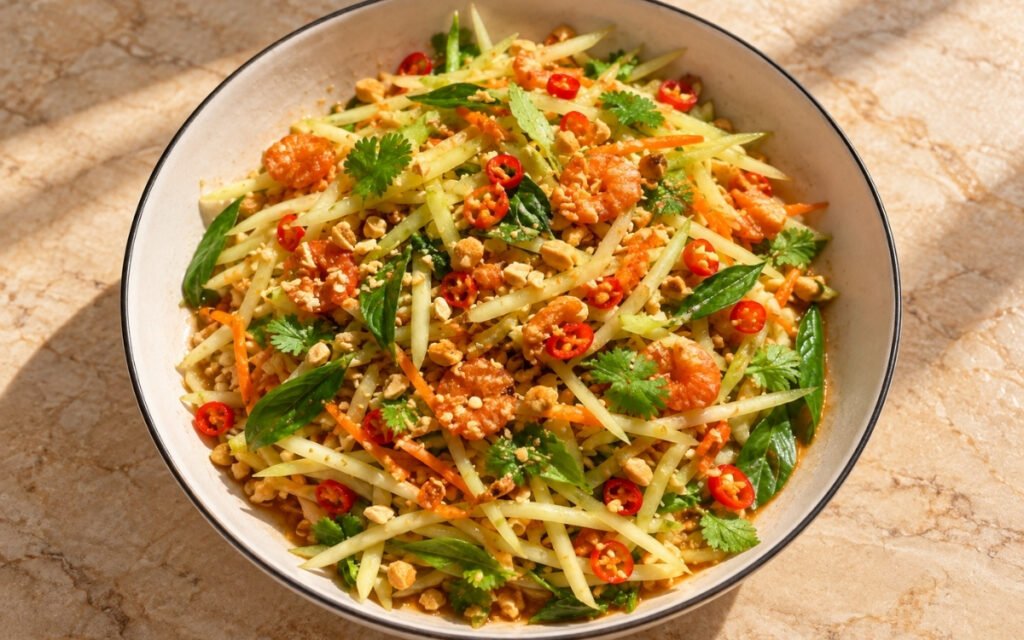
Thai Green Mango Salad with Peanuts & Chili
Crisp julienned unripe mango and carrot with dried shrimp, roasted peanuts, bird’s eye chili, and fresh herbs in a sour-salty-sweet dressing.
-
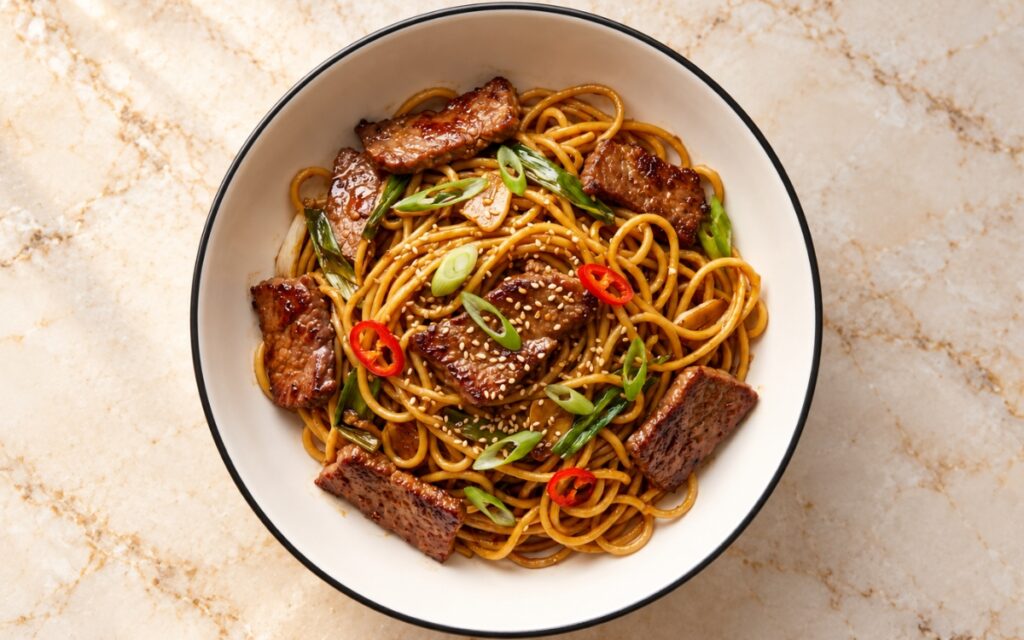
Mongolian Beef and Noodles
Lo mein-style wheat noodles tossed with seared beef, scallions, garlic and ginger in a dark, glossy savoury-sweet Mongolian-style sauce.
-
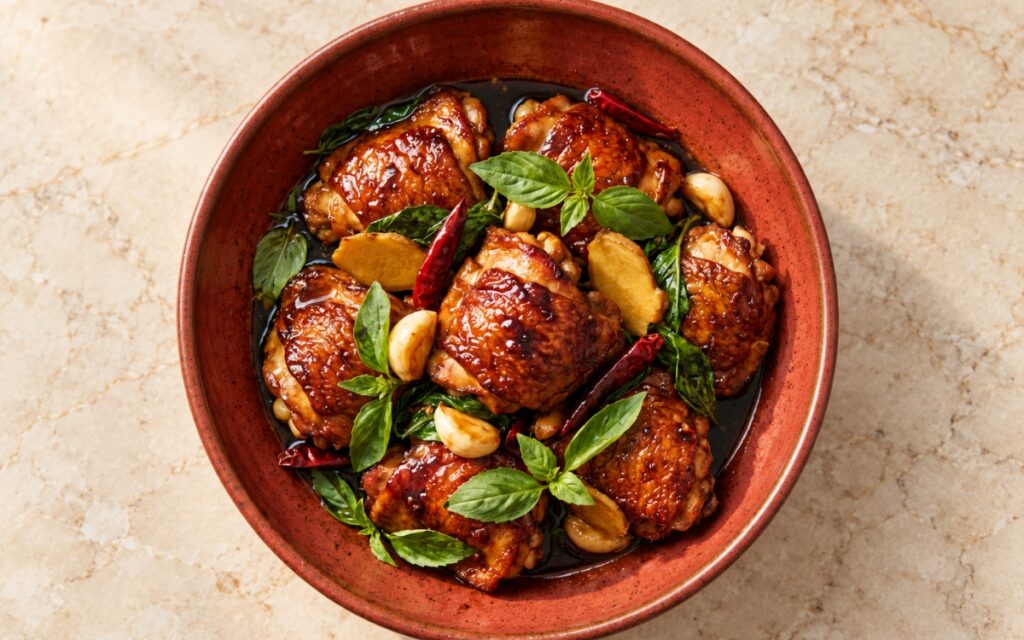
Taiwanese Three Cup Chicken (San Bei Ji)
Glossy soy-braised chicken thighs with whole garlic cloves, thick ginger, dried red chilies, and fresh Thai basil in a dark, syrupy sauce.
You might also like
You might also like
-
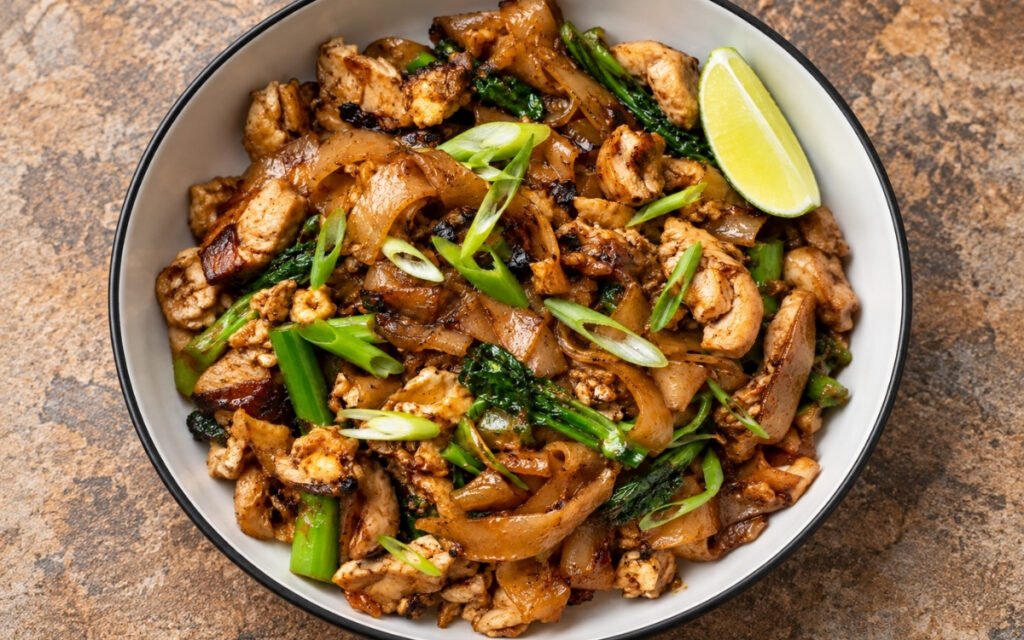
Pad See Ew — Thai Stir-Fried Wide Noodles
Wide rice noodles stir-fried with dark soy sauce, Chinese broccoli, sliced chicken, and egg over high heat for smoky wok-hei char.
-
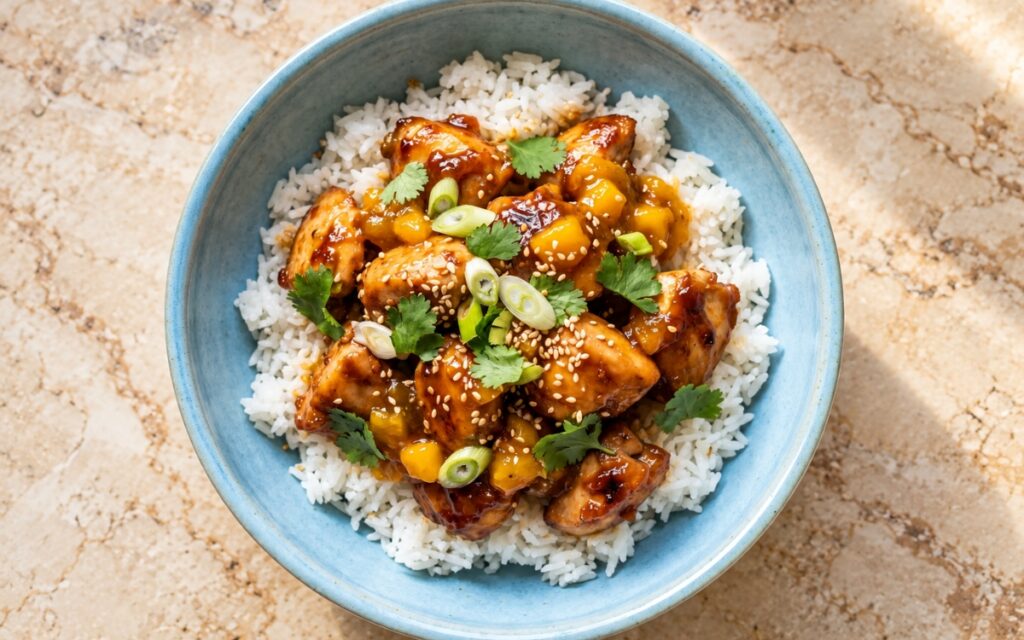
Mango Chutney Chicken Rice Bowl
Seared chicken thighs tossed in a glossy mango chutney glaze with fresh mango cubes, served over fluffy jasmine rice with scallions.
-
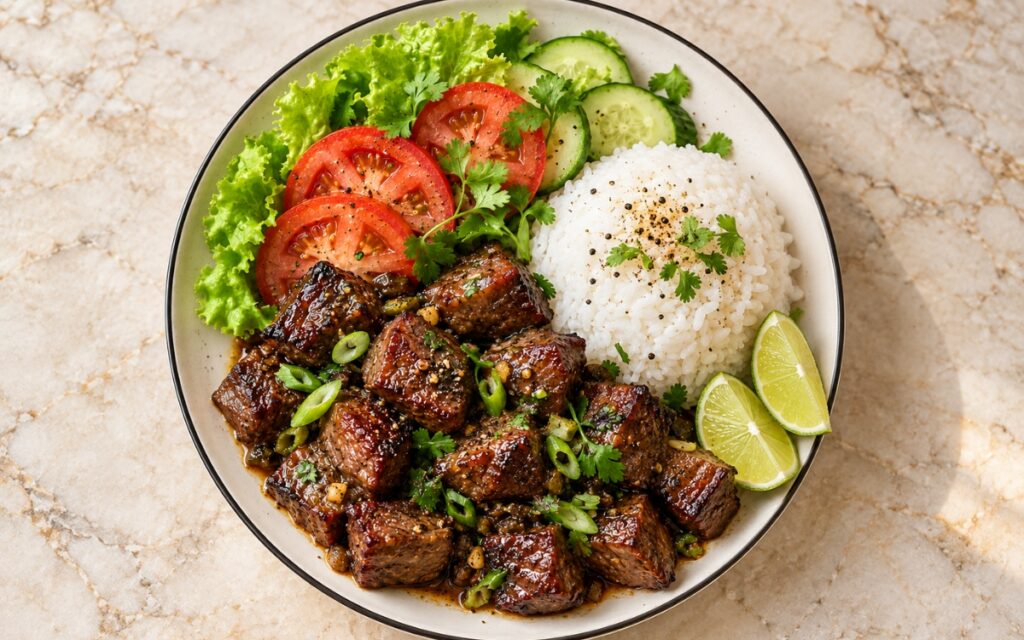
Vietnamese Shaking Beef / Bò Lúc Lắc
Seared Vietnamese beef cubes in a glossy garlic and oyster sauce glaze, served with jasmine rice, lettuce, tomato, cucumber and lime.
Thai Red Curry Shrimp
Ingredients
Method
- Pat the 600g shrimp genuinely dry with kitchen paper and season them with only a light pinch of salt and a light pinch of white pepper; do not salt them heavily or marinate them. Thinly slice the red and green bell peppers, drain and slice the 120–150g bamboo shoots, tear the 4 makrut lime leaves and bruise the trimmed lemongrass with the back of a knife before cutting it into 2–3 large pieces. Finely mince the 3 garlic cloves, thinly slice the shallot and the 1–2 red chillies, and pick the Thai basil and cilantro leaves. Keep the shrimp chilled until the moment they go in. That complete setup matters because once the paste starts frying the curry moves quickly, and the shrimp must go in late, with no pause to chop.
- Rinse the 200g jasmine rice in cold water, swirling it with your fingers, until the water runs mostly clear, then drain it well. Combine the rice and 300ml water in a small saucepan with a pinch of salt, if using, and bring to a boil over medium-high heat. Stir once, cover tightly, reduce to the lowest heat and cook for 12 minutes. Turn off the heat and leave it to rest, still covered, for 10 minutes, then fluff gently with a fork just before serving. Start the curry as soon as the lid goes on, so both are ready at the same time, and do not lift the lid while the rice cooks or rests. That undisturbed resting time is what lets the trapped steam finish the grains evenly, keeping them tender and intact rather than wet or broken.
- Open the 800ml coconut milk without shaking it, so any thick cream that has separated stays at the top. Heat a wok, sauté pan or medium pot over medium heat and add about 200ml of the coconut milk, taking the thick cream first. Simmer for 2–3 minutes, stirring, until slightly thickened and glossy. Add 4 tbsp red curry paste, or up to 5 tbsp for a stronger curry, and fry for 2–4 minutes, stirring constantly, until it is deep brick-red, very fragrant and the raw smell has gone. If the paste starts to catch rather than sizzle, add the 1 tbsp neutral oil. Add the garlic and shallot and cook for 30–60 seconds more, just until aromatic. That frying stage is what deepens the paste’s colour and aroma, since under-fried paste tastes raw and flat in the finished curry.
- Pour in the remaining 600ml coconut milk and 150ml of the chicken stock or water and stir until smooth, keeping the rest of the stock aside. Add 1½ tbsp fish sauce, the 2 tsp palm sugar, the torn lime leaves and the lemongrass pieces. Bring to a gentle simmer over medium heat — small bubbles breaking steadily at the surface, never a hard boil — and cook for 5 minutes so the aromatics infuse the sauce. Taste the base now: it should already taste rich, savoury, slightly sweet and aromatic, and still a little strong, because the vegetables and shrimp will soften it. Lower the heat if it begins to bubble hard. That steady, gentle simmer is what keeps the coconut sauce smooth and creamy rather than letting it break into a grainy, oily surface.
- Add the sliced bamboo shoots and the red and green bell peppers and stir them into the sauce. Simmer gently for 3–5 minutes, until the peppers are just tender but still bright and holding their shape, with a little bite left in each slice. If the curry looks too thick, add the remaining stock or water, up to 50ml, a little at a time; it should be spoonable and silky, closer to a rich broth than a heavy gravy. A red-orange sheen of oil on the surface is a good sign. That short simmer is what keeps the peppers softened but never limp, so they still give texture against the creamy sauce and the tender shrimp.
- Add the shrimp and stir gently to submerge them in the sauce. Keep the curry at a gentle simmer and cook for 2–4 minutes, depending on their size, until every shrimp has turned fully opaque and pink and curled into a loose C shape, reaching about 63°C / 145°F at the thickest point. Lift one out and check it if unsure. Take the pan off the heat as soon as they are cooked, because they keep cooking in the hot sauce. Shrimp curled into a tight O are already overcooked. That brief, gentle cooking is what keeps the shrimp genuinely plump, sweet and juicy instead of shrunken, tight and rubbery.
- With the heat off, remove the lemongrass pieces if you prefer easier serving. Stir in most of the Thai basil and a little of the sliced chilli, keeping the rest for garnish, just until the leaves wilt lightly. Taste and adjust: add up to ½ tbsp more fish sauce if it needs salt or savouriness, and a little more sugar if it tastes too sharp. Keep the lime for the table rather than squeezing it into the pot, so the curry keeps its clean coconut balance. Fold in a few cilantro leaves, or reserve all of them for the garnish. That off-heat finish is what lets the basil wilt while keeping its sweet, anise-scented aroma genuinely vivid.
- Fluff the rested jasmine rice and divide it among 4 bowls, about 50g of dry rice per serving. Spoon the red curry shrimp around or beside the rice, giving each bowl about 150g of shrimp and an even share of peppers, bamboo shoots and sauce. Garnish with the remaining Thai basil, the cilantro leaves and the rest of the sliced red chillies, and set the lime wedges on the side for squeezing at the table. The sauce should pool loosely around the rice with a glossy, red-orange sheen. Serve immediately, while the curry is hot. That quick finish is what puts the shrimp on the table at their peak texture, before the residual heat of the sauce can tighten them.