
Thai Green Mango Salad with Peanuts & Chili
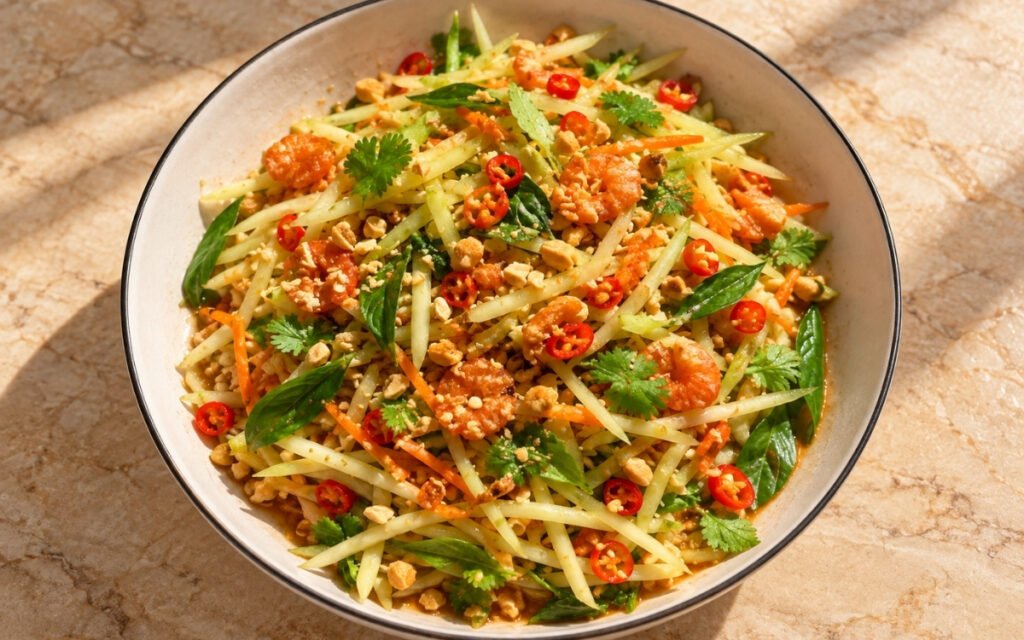
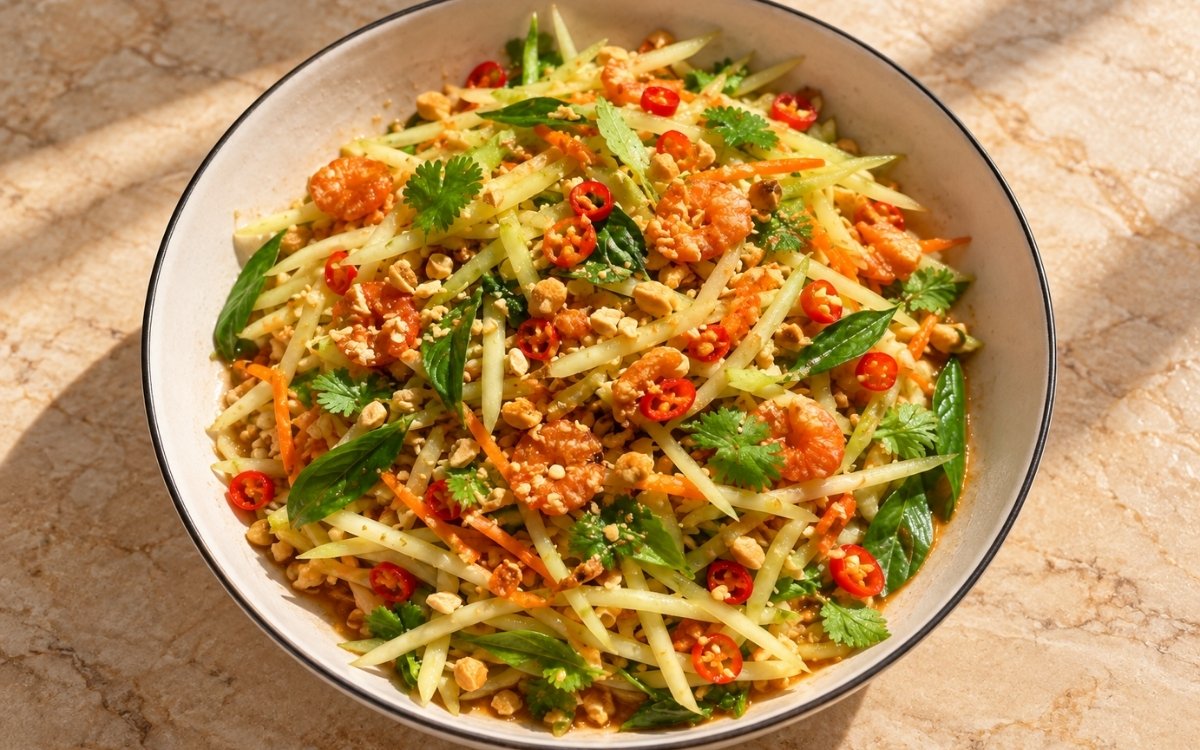
A sharp, refreshing Thai-style green mango salad built around crisp julienned unripe mango, carrot, dried shrimp, roasted peanuts, bird’s eye chili, and fresh herbs in a palm sugar–fish sauce–lime dressing, the final texture staying crunchy and lively, lightly glossy rather than wet, with a clear balance of sour, salty, sweet, and spicy. Choosing genuinely firm, fully unripe green mango is the technique this whole salad depends on for its real, defining crunch — soft or semi-ripe mango would collapse and taste too sweet, the same firm-unripe-fruit-for-crunch principle used elsewhere in this collection whenever a raw fruit’s own crisp texture is essential and depends on real unripeness rather than a close approximation. Building the dressing deliberately punchier than the finished salad should taste is what lets it actually season the large volume of julienned mango and carrot without ending up flat. Dressing the salad only shortly before serving, rather than well in advance, is what keeps it crisp and sharp rather than softening excessively. The payoff is a salad with real, vivid Thai character — crisp, tart mango and carrot against savoury dried shrimp, crunchy peanuts, sharp chili, and fresh herbs, all brightened by a sour-salty-sweet dressing.
Prep Time : 25 min
Cook Time : 5 min
Servings : 4
25 min
5 min
4
Ingredients
For the Salad
• 600g unripe green mango, peeled and cut into fine julienne
• 120g carrot, peeled and cut into fine julienne
• 35g dried shrimp — this one on Amazon
• 60g roasted peanuts, roughly chopped
• 3–5 bird’s eye chilies, thinly sliced into rings
• 20g fresh cilantro leaves and tender stems
• 15g Thai basil leaves
• 1 small shallot (about 30g), very thinly sliced, optional but recommended
For the Dressing
• 45ml fish sauce — this one on Amazon
• 45ml fresh lime juice
• 20–30g palm sugar, finely chopped or grated — this one on Amazon
• 1 small garlic clove, finely pounded or grated, optional but traditional in many versions
Optional Balancing Additions
• 1–2 tbsp water, only if the dressing tastes too intense
• Extra lime juice, fish sauce, or palm sugar as needed for final balance
This post may contain affiliate links. As an Amazon Associate I earn from qualifying purchases, at no additional cost to you.
Directions
- Prepare the Mango and Carrot
Peel the green mangoes and slice the flesh away from the pit. Cut into very fine julienne strips. Julienne the carrot to a similar thickness. If the mango is very tart, taste a strip now so you know how aggressively to season later. Use firm, fully unripe green mango. It should be crisp and pale, not soft, fragrant, or sweet like ripe mango. The salad depends on a crunchy texture. That early taste test gives you a genuine, real-time sense of the mango’s own acidity, letting the dressing’s own seasoning be calibrated accurately rather than guessed at. - Prepare the Dried Shrimp and Peanuts
If the dried shrimp are very hard or salty, rinse them quickly and soak in warm water for 5–10 minutes, then drain very well and pat dry. Leave them whole or chop roughly if large. Roughly crush the roasted peanuts so you get both smaller crumbs and larger bits. Do not leave the dried shrimp wet. Excess moisture will dilute the dressing and make the salad watery. That thorough draining and drying protects the dressing’s own concentration from being watered down by any residual moisture the shrimp would otherwise carry into the salad. - Make the Dressing
In a bowl, combine the fish sauce, lime juice, and palm sugar. Stir until the sugar dissolves as much as possible. Add the garlic if using. Taste the dressing. It should be punchy and slightly stronger than you want the finished salad to be — sour first, then salty, then sweet, with a rounded finish. Palm sugar dissolves more easily if finely grated or chopped. If needed, mash it with the liquid or warm it very briefly. That deliberately punchy early seasoning accounts for real, predictable dilution once the dressing meets the large volume of mango, carrot, and herbs still to come — a milder dressing would read as noticeably flatter once actually tossed through the whole salad. - Combine the Salad
In a large bowl, combine the green mango, carrot, sliced chilies, shallot if using, about two-thirds of the dried shrimp, and about two-thirds of the peanuts. Add most of the dressing and toss thoroughly but gently. Add the cilantro and Thai basil last and fold just until combined. Let the salad sit for 5–10 minutes, then taste and adjust with more lime juice, fish sauce, or palm sugar as needed. Do not dress too far ahead. The salad should stay crisp and sharp, not soften excessively. Adding the herbs only at this final stage, rather than earlier in the process, protects their own genuine freshness right through to the finished toss. - Finish and Serve
Transfer to a wide shallow bowl. Scatter over the remaining dried shrimp, the remaining peanuts, and a little extra cilantro and Thai basil. Serve immediately. For the best texture and appearance, the salad should look lightly glossy, not swimming in dressing. Reserving a portion of shrimp, peanuts, and herbs specifically for this final scatter keeps those elements genuinely visible and distinct right at the surface, rather than buried throughout the tossed salad beneath.
*Notes :
- Choosing genuinely firm, fully unripe green mango deserves recognition as the technique most directly responsible for whether this salad achieves its whole defining crunch. The recipe’s own explicit warning that “soft or semi-ripe mango will collapse and taste too sweet” reflects a real, common shortfall — that firmness is the actual foundation the entire salad’s texture depends on, well before the dressing or any other technique ever comes into play.
- Building the dressing deliberately punchier than the finished salad should taste deserves the same attention this technique receives throughout this collection’s other large-volume dressed salads. The recipe’s own specific ordering — sour first, then salty, then sweet — reflects real, deliberate attention to how these flavours are meant to register in sequence, not simply as one undifferentiated punch.
- Dressing the salad only shortly before serving, rather than well in advance, deserves genuine attention as a real, functional timing choice. The recipe’s own explicit warning against dressing “too far ahead” reflects a genuine, ongoing process — the dressing’s own salt and acid continue softening the mango’s crisp texture the longer it sits, working directly against the crunch this dish depends on.
- Adding the fresh herbs only at the very final combining stage deserves genuine respect as the detail responsible for protecting their own real brightness. Cilantro and Thai basil both wilt and dull with extended handling or contact with acidic dressing, and holding them back until this last moment is what keeps them genuinely vivid right through to the finished toss.
Why This Recipe Works
This recipe works because genuinely firm, unripe green mango is chosen specifically for its own crisp texture, protecting the salad’s whole defining crunch. The dried shrimp is drained and dried thoroughly, protecting the dressing’s own concentration from dilution.
The dressing itself is built deliberately punchy, accounting for real dilution across a large volume of mango and carrot.
Fresh herbs are added only at the final stage, staying genuinely bright, and the salad is dressed and served within a real, narrow window that protects its crisp, sharp texture right through to the table.
Ingredient Breakdown
Genuinely Firm, Unripe Green Mango
The critical ingredient choice — real firmness is the foundation this salad’s whole defining crunch depends on.
Thoroughly Dried Dried Shrimp
The critical technique — removes excess moisture that would otherwise dilute the dressing’s own concentration.
Deliberately Punchy Dressing
The critical technique — intentional over-intensity accounts for real dilution across a large volume of mango and carrot.
Last-Minute Fresh Herbs
The critical technique — added only at the final stage to protect their own genuine brightness.
Roughly Crushed Peanuts
The finishing technique — kept coarse for both smaller crumbs and larger bits, giving real textural variety.
Brief Dressing Window (Close to Serving)
The critical technique — protects the salad’s crisp, sharp texture from softening excessively.
Flavor Structure Explained
This Thai green mango salad follows a layered balance model:
- Crisp, tart foundation (firm, unripe julienned mango and carrot)
- Savoury depth (dried shrimp)
- Sour-salty-sweet dressing (lime, fish sauce, palm sugar)
- Sharp, spicy heat (bird’s eye chili)
- Crunchy, nutty finish (roasted peanuts)
- Fresh herbal lift (cilantro, Thai basil)
Firm, unripe julienned mango and carrot provide this salad’s crisp, genuinely tart foundation, its texture protected through careful fruit selection and timing. Dried shrimp contributes real, savoury depth throughout. A sour-salty-sweet dressing of lime juice, fish sauce, and palm sugar ties the salad together with classic, layered Thai balance. Bird’s eye chili adds sharp, direct heat. Roasted peanuts contribute crunchy, nutty finish, and fresh cilantro and Thai basil, added only at the final stage, top the whole salad with bright, genuine herbal lift.
Common Mistakes to Avoid
- Using Ripe or Semi-Ripe Mango – This collapses in texture and tastes too sweet. Always choose genuinely firm, fully unripe green mango.
- Leaving the Dried Shrimp Wet – This dilutes the dressing and makes the salad watery. Always drain and pat them thoroughly dry.
- Underseasoning the Dressing – This produces a flat-tasting salad once diluted by the large volume of mango and carrot. Always build it deliberately punchy.
- Adding the Herbs Too Early – This lets them wilt and dull before serving. Always fold them in only at the final combining stage.
- Dressing the Salad Too Far in Advance – This softens the mango’s crisp texture excessively. Always toss it together only shortly before serving.
Variations
Extra-Spicy Version
Increase the bird’s eye chilies toward the higher end of the recommended range, per the recipe’s own note on 3 chilies giving moderate heat and 5 or more being much hotter, for a sharper finished salad.
Shallot-Forward Version
Include the optional thinly sliced shallot, per the recipe’s own note on it being useful for sharpness and aroma, keeping it thin and restrained so it doesn’t overpower the salad.
Extra-Peanut Version
Increase the roasted peanuts generously, per the recipe’s own emphasis on them being important for contrast and richness, for a more pronounced crunchy, nutty presence.
Balanced-Correction Version
If the finished salad tastes too sour, add a little more palm sugar; if too sweet, add more lime juice, per the recipe’s own real-time troubleshooting guidance, adjusting gradually until properly balanced.
Storage & Make-Ahead
The most classical flavour balance for this salad runs sour, salty, sweet, spicy, in that specific order, so if the finished dish tastes flat, it usually needs more lime juice or fish sauce rather than more sugar.
Mango choice genuinely matters more than almost anything else here: choose hard, tart green mangoes specifically, since soft or semi-ripe mango will collapse in texture and taste too sweet for this style of salad.
Keep the mango and carrot cut thin and genuinely even so the salad eats cleanly and the dressing coats everything lightly, and remember that dried shrimp should add savoury depth without dominating, so use the lower amount if yours are especially strong.
Add plenty of peanuts, since they’re genuinely important for contrast and richness, and Thai basil gives the most authentic herb profile here, with cilantro adding freshness; mint is less standard in this particular style than in some Vietnamese-style salads.
For the best make-ahead approach, prep the mango, carrot, herbs, peanuts, shrimp, and dressing all separately, tossing everything together only just before serving, and if the salad softens too much after standing, dress it closer to serving time next time and keep the mango colder and drier.
Frequently Asked Questions
Why does this salad specifically require firm, unripe green mango rather than a riper fruit?
Soft or semi-ripe mango will collapse in texture and taste too sweet for this style of salad. Genuine firmness is the real foundation this dish’s whole defining crunch depends on, before any other technique comes into play.
Why does the dried shrimp need to be drained and dried so thoroughly?
Excess moisture left on the shrimp would dilute the dressing’s own concentration and make the finished salad watery. Thorough draining and drying protects that concentration right from this early stage.
Why does the dressing need to taste punchier than you actually want the finished salad to be?
This dressing has to season a genuinely large volume of julienned mango and carrot. A milder dressing would read as noticeably flat once actually tossed through the whole salad’s real volume of ingredients.
Why can’t the salad be dressed well in advance of serving?
The dressing’s own salt and acid continue softening the mango’s crisp texture the longer it sits. Dressing it only shortly before serving is what protects that essential crunch right through to the table.
Are there other classic Thai, Vietnamese, or bright fresh salad dishes worth trying?
Vietnamese Green Papaya Salad offers another classic bright, crunchy salad direction worth exploring. Larb Gai and Pad See Ew are also worth trying for other classic Thai dishes, and Spicy Thai Beef Salad (Yam Neua) and Avocado Mango Salsa offer other fresh, bright directions worth exploring.
Nutrition Facts
( per serving )
Calories
~280 kcal
Protein
10 g
Fat
14 g
Carbs
32 g
Calories
~280 kcal
Protein
10 g
Fat
14 g
Carbs
32 g
Related Recipes
Related Recipes

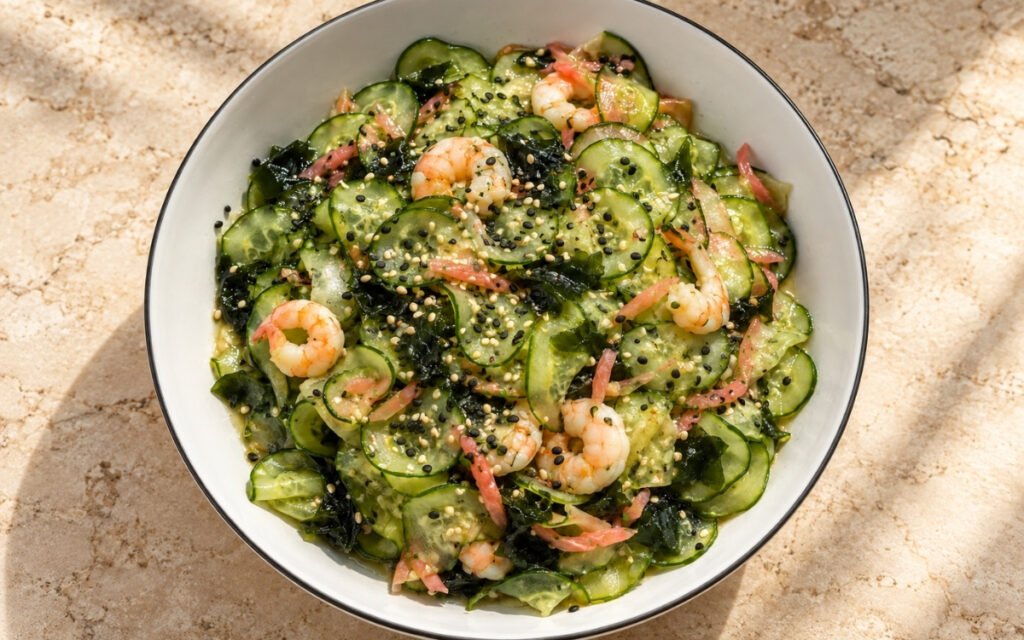
Japanese Cucumber Salad (Sunomono)
Very thinly sliced cucumber, rehydrated wakame, tender shrimp, and a balanced sweet-tart rice vinegar dressing, finished with sesame seeds and pickled ginger.
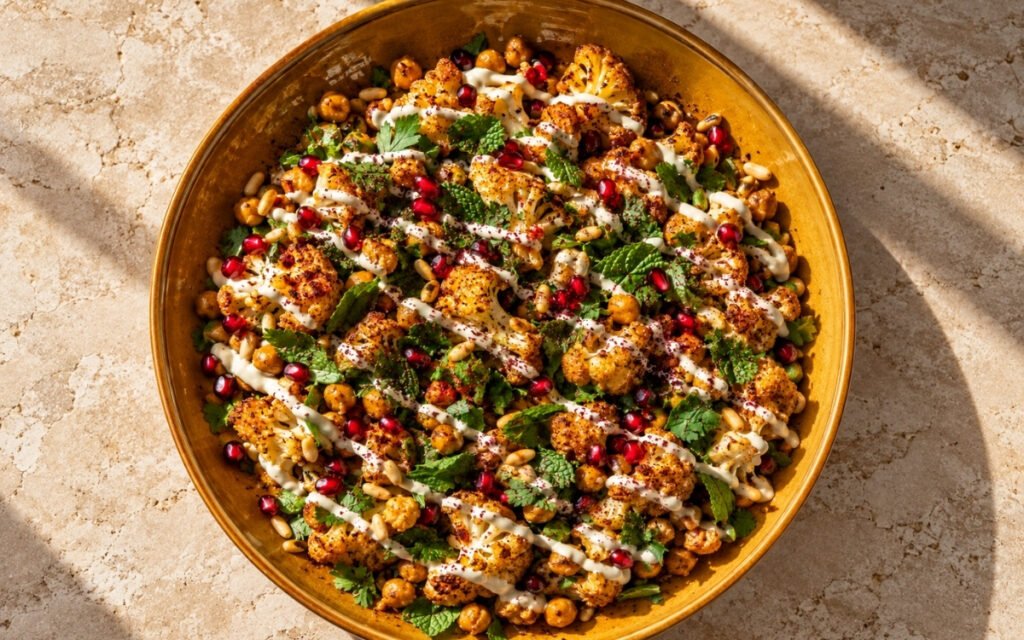
Roasted Cauliflower and Chickpea Salad with Tahini
Deeply roasted cauliflower and crisp-edged chickpeas finished with tahini sauce, fresh herbs, toasted pine nuts, pomegranate seeds, and sumac.
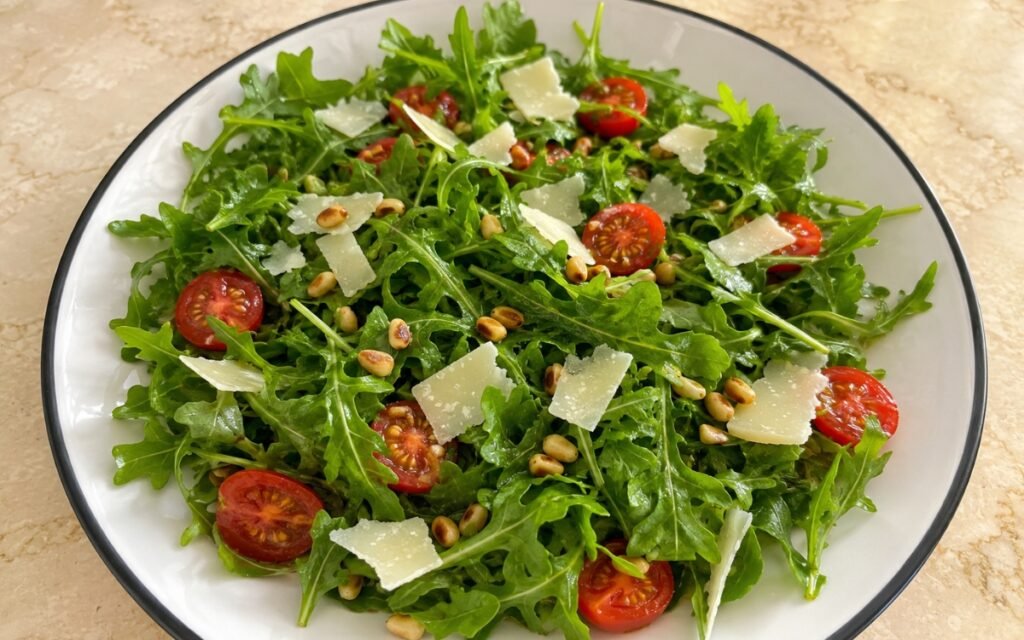
Simple Arugula Salad with Lemon Vinaigrette
Peppery arugula with lemon vinaigrette, cherry tomatoes, shaved Parmesan, and toasted pine nuts.
You might also like
You might also like
Pad Krapao — Thai Basil Stir-Fry
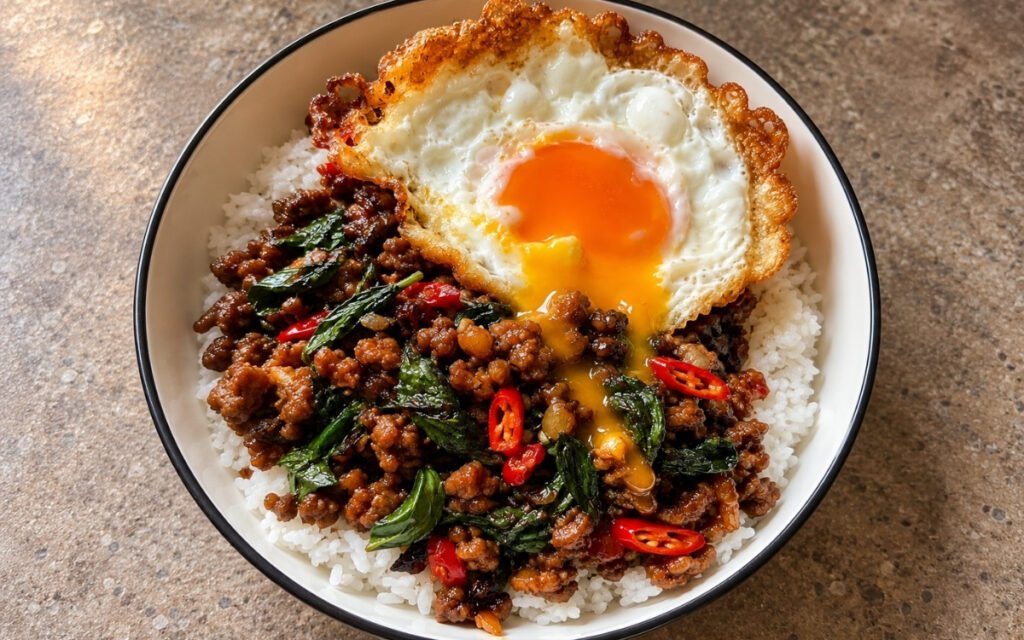
Hard-caramelized minced pork with garlic, chilies, glossy sauce, and Thai holy basil, served over jasmine rice with a crispy fried egg.
BLT Sandwich
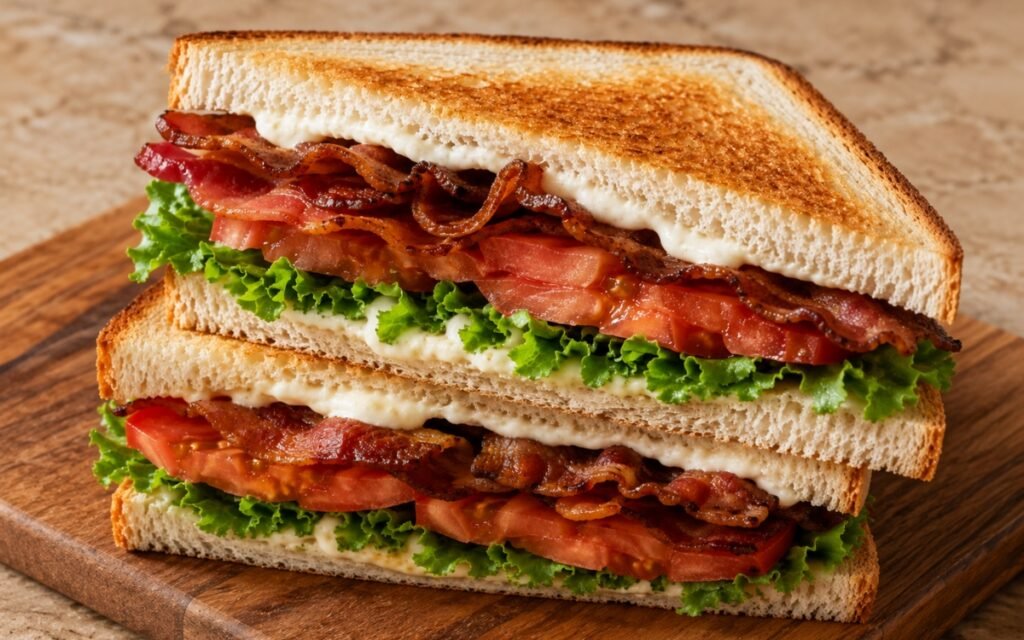
Toasted white bread with crispy bacon, ripe tomato, crisp lettuce, and a generous layer of mayonnaise.
Spicy Fried Chicken Sandwich
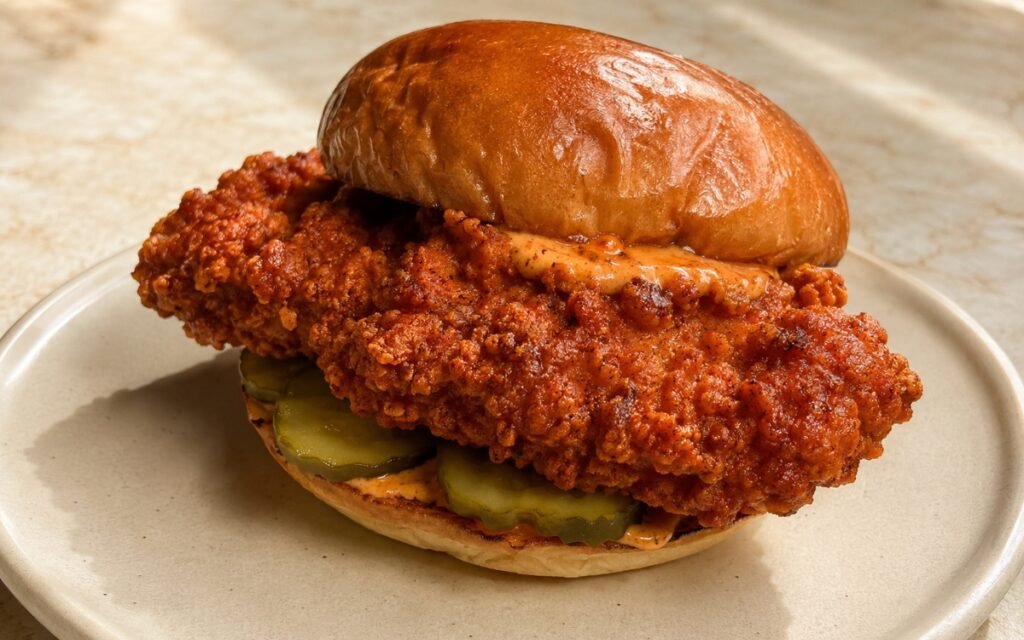
Ultra-crispy gochujang-marinated chicken with pickles, melted cheese, and garlicky heat stacked on toasted brioche.
Thai Green Mango Salad with Peanuts & Chili
Ingredients
Method
- Peel the green mangoes and slice the flesh away from the pit. Cut into very fine julienne strips. Julienne the carrot to a similar thickness. If the mango is very tart, taste a strip now so you know how aggressively to season later. Use firm, fully unripe green mango. It should be crisp and pale, not soft, fragrant, or sweet like ripe mango. The salad depends on a crunchy texture. That early taste test gives you a genuine, real-time sense of the mango’s own acidity, letting the dressing’s own seasoning be calibrated accurately rather than guessed at.
- If the dried shrimp are very hard or salty, rinse them quickly and soak in warm water for 5–10 minutes, then drain very well and pat dry. Leave them whole or chop roughly if large. Roughly crush the roasted peanuts so you get both smaller crumbs and larger bits. Do not leave the dried shrimp wet. Excess moisture will dilute the dressing and make the salad watery. That thorough draining and drying protects the dressing’s own concentration from being watered down by any residual moisture the shrimp would otherwise carry into the salad.
- In a bowl, combine the fish sauce, lime juice, and palm sugar. Stir until the sugar dissolves as much as possible. Add the garlic if using. Taste the dressing. It should be punchy and slightly stronger than you want the finished salad to be — sour first, then salty, then sweet, with a rounded finish. Palm sugar dissolves more easily if finely grated or chopped. If needed, mash it with the liquid or warm it very briefly. That deliberately punchy early seasoning accounts for real, predictable dilution once the dressing meets the large volume of mango, carrot, and herbs still to come — a milder dressing would read as noticeably flatter once actually tossed through the whole salad.
- In a large bowl, combine the green mango, carrot, sliced chilies, shallot if using, about two-thirds of the dried shrimp, and about two-thirds of the peanuts. Add most of the dressing and toss thoroughly but gently. Add the cilantro and Thai basil last and fold just until combined. Let the salad sit for 5–10 minutes, then taste and adjust with more lime juice, fish sauce, or palm sugar as needed. Do not dress too far ahead. The salad should stay crisp and sharp, not soften excessively. Adding the herbs only at this final stage, rather than earlier in the process, protects their own genuine freshness right through to the finished toss.
- Transfer to a wide shallow bowl. Scatter over the remaining dried shrimp, the remaining peanuts, and a little extra cilantro and Thai basil. Serve immediately. For the best texture and appearance, the salad should look lightly glossy, not swimming in dressing. Reserving a portion of shrimp, peanuts, and herbs specifically for this final scatter keeps those elements genuinely visible and distinct right at the surface, rather than buried throughout the tossed salad beneath.