
Spicy Thai Beef Salad (Yam Neua)
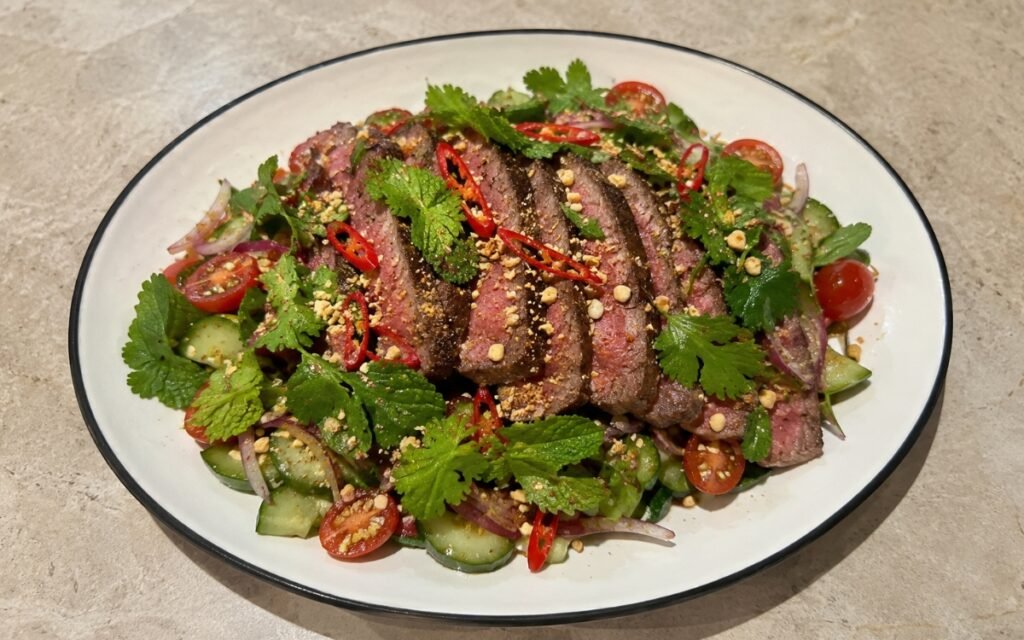
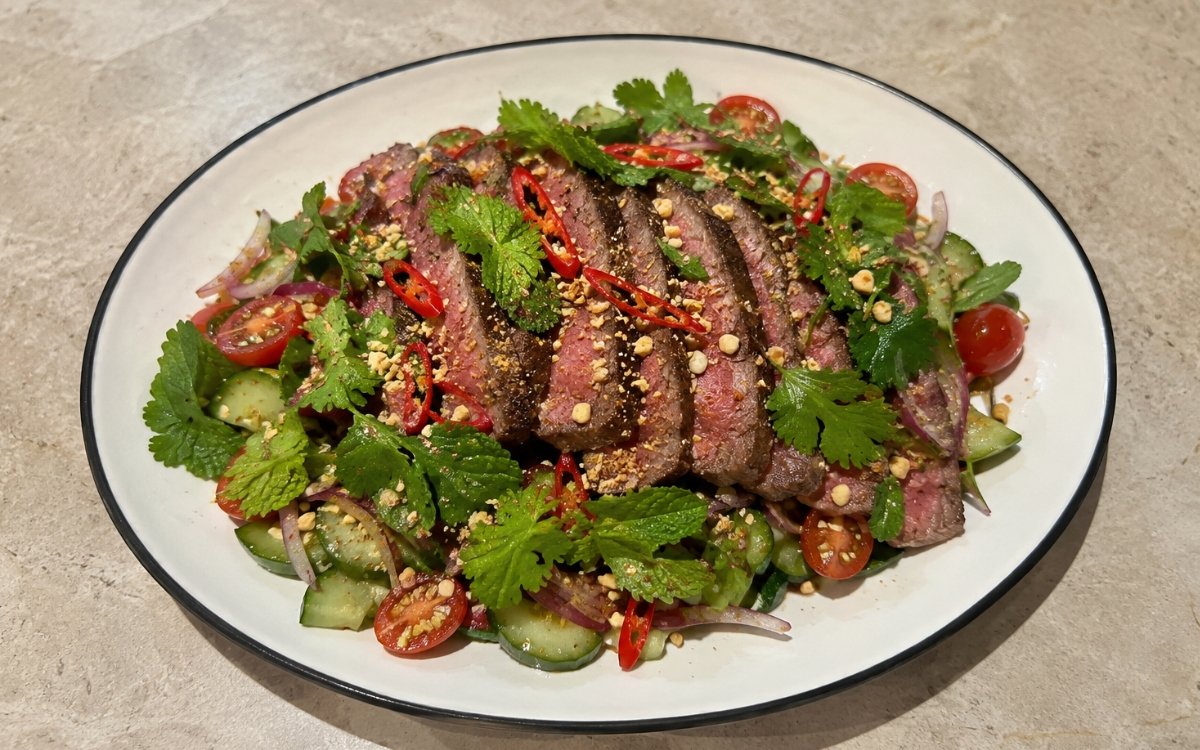
The dressing is the recipe — fish sauce, lime juice, palm sugar, chili, and garlic combined and tasted until the balance is specifically salty, sharp, spicy, and slightly sweet with the lime slightly more forward than the fish sauce. Everything else is assembled to carry this dressing: the seared sirloin rested for the full 7–10 minutes so the accumulated resting juices on the cutting board return to the meat rather than being lost, sliced thinly against the grain so every piece is tender rather than fibrous, and placed on top of the herb and vegetable combination warm rather than cooled — because the contrast between the warm, slightly charred beef and the cold herbs, sharp lime, and chili heat is what makes yam neua specifically more compelling than a room-temperature salad. Three herbs together — mint, cilantro, and Thai basil — not as a choice between them, the same principle that applies throughout Thai fresh-herb cooking. The toasted rice powder scattered over the finished salad providing the nutty depth and the dressing-adhesion that makes each bite more specifically Thai in character.
Prep Time : 20 min
Cook Time : 10 min
Servings : 4
20 min
10 min
4
Ingredients
For the Beef
• 700g sirloin steak — or flank steak; see notes for flank steak adjustments
• Fine sea salt, light seasoning only
• 1 tsp freshly cracked black pepper
• 1 tbsp neutral oil
For the Salad
• 200g cucumber
• 180g cherry tomatoes, halved
• ½ medium red onion, sliced into thin feathers
• 1 packed cup fresh mint leaves
• 1 packed cup fresh cilantro leaves
• 1 packed cup Thai basil leaves
• 2 spring onions, thinly sliced — optional
For the Dressing
• 3 tbsp fish sauce — this one on Amazon
• 4 tbsp fresh lime juice
• 1–1½ tbsp palm sugar — this one on Amazon
• 1–2 fresh red chilies, finely minced — adjust to preferred heat
• 1 garlic clove, finely minced
Optional Garnishes
• 2 tbsp roasted peanuts, roughly crushed or thinly sliced
• 1–2 tbsp toasted rice powder — khao khua — this one on Amazon
This post may contain affiliate links. As an Amazon Associate I earn from qualifying purchases, at no additional cost to you.
Directions
- Rest the Steak at Room Temperature
Remove the steak from the refrigerator and pat completely dry on all surfaces with paper towels. Season lightly with fine sea salt and the 1 tsp of cracked black pepper. Allow to rest at room temperature for 20 minutes before cooking. The room-temperature rest reduces the temperature differential between the steak’s cold interior and the ambient heat — a cold steak placed directly on a smoking-hot cast iron produces a larger temperature gradient that causes the exterior to overcook significantly before the interior reaches the correct medium-rare temperature. At room temperature, the heat penetrates more evenly and the cooking window for the correct internal temperature expands. - Make the Dressing
In a small bowl, combine the 3 tbsp of fish sauce, 4 tbsp of fresh lime juice, 1–1½ tbsp of palm sugar, the finely minced red chilies, and the minced garlic clove. Stir vigorously until the palm sugar has dissolved completely — undissolved palm sugar produces sweet pockets in the dressing rather than uniform sweetness throughout. Taste and assess each dimension. The dressing should be simultaneously salty from the fish sauce, sharply acidic from the lime, spiced from the chili, lightly sweet from the palm sugar, and aromatic from the garlic — with the lime’s brightness slightly more forward than the fish sauce’s saltiness. This balance is the specific character of a properly made yam neua dressing and the single most important variable in the finished salad. Adjust: if the fish sauce dominates, add additional lime juice in small increments; if the acidity is too sharp, add a small additional amount of palm sugar; if the heat is insufficient, add more chili. Set the dressing aside — it can be made up to 2 hours ahead and kept at room temperature. Palm sugar — made from the sap of the sugar palm — has a specifically caramel-adjacent, slightly complex sweetness that is different from refined white sugar’s clean, neutral sweetness. In the dressing, its caramel character softens the lime’s acidity and the fish sauce’s saltiness into a more rounded balance. Granulated white sugar is the functional substitute at ¾ the quantity, though the specific depth of palm sugar’s character is absent. - Prepare the Salad Components
Slice the 200g of cucumber lengthwise into thick vertical quarters, then cut each section diagonally into bite-sized angled pieces — the angled cut produces more surface area on each piece for dressing adhesion. Slice the ½ red onion into thin feathers — from root to tip following the onion’s curve for the most supple, most evenly flavoured slices. Halve the 180g of cherry tomatoes. Pick the mint, cilantro, and Thai basil leaves from their stems, keeping them whole or roughly torn — the three-herb combination is the non-negotiable aromatic foundation of yam neua. Each herb provides a distinct dimension that the other two cannot supply: mint’s cooling, slightly menthol freshness; cilantro’s clean, slightly citrusy-green brightness; Thai basil’s specifically anise-like, slightly spiced warmth. Together they produce the characteristically Thai fresh-herb complexity; any single herb provides only one dimension of this combination. Slice the spring onions thinly if using. - Toast the Rice Powder (If Using)
If using the optional toasted rice powder — khao khua — prepare it now. Add 2 tbsp of uncooked glutinous or jasmine rice to a dry pan over medium-low heat. Toast, stirring frequently, for 8–10 minutes until the rice turns light golden-brown and smells nutty and toasted. Transfer to a bowl and allow to cool completely, then grind to a coarse powder in a mortar and pestle, a spice grinder, or a small food processor. The toasted rice powder is the garnish that makes each piece of beef and each vegetable adhere to the dressing more completely — its starchy, slightly rough surface texture acting as a binding agent between the dressing and the food. It also contributes a specifically nutty, slightly smoky depth that distinguishes yam neua from any other Thai beef preparation. It keeps at room temperature in a sealed container for up to 2 weeks. - Sear the Steak
Heat a cast iron pan or grill over the absolute highest available heat for 2–3 full minutes until genuinely smoking — the quality of the sear is directly proportional to the surface temperature at the moment of contact. Add the 1 tbsp of neutral oil and allow to shimmer. Place the seasoned sirloin flat on the surface. Sear undisturbed for 2–4 minutes depending on thickness — a 2.5cm steak requires approximately 3 minutes per side for medium-rare. Leave completely undisturbed during this period: the Maillard crust that produces the specific charred, deeply savoury exterior of properly seared sirloin requires sustained, uninterrupted contact between the meat’s surface and the hot iron. Flip once and sear the second side for the same time. The correct internal temperature for yam neua is medium-rare to medium — 52–57°C — where the beef is sufficiently pink and juicy to contrast with the dressing’s acidity without the chewiness and dryness of well-done. For flank steak: flank is leaner and more fibrous than sirloin, with a more pronounced grain direction — cook according to thickness (typically 2–3 minutes per side for medium-rare) and slice specifically thin, strictly against the very visible grain, as flank becomes noticeably tough when sliced with the grain. - Rest and Slice
Transfer the seared steak to a cutting board. Rest for 7–10 minutes without cutting. This rest is not optional and should not be shortened — the juices driven to the steak’s surface by the sear’s heat require time to redistribute back through the interior. A steak cut immediately after the pan loses a pool of juice onto the cutting board rather than into each slice; a properly rested steak retains these juices internally. After the full rest, slice the steak thinly against the grain — identifying the muscle fibres and cutting strictly perpendicular to them, into 5–8mm slices. Thin against-grain slices are specifically more tender than thick against-grain slices and significantly more tender than any with-grain slices regardless of thickness. Reserve all accumulated resting juices on the cutting board — they are added back to the salad with the beef. - Assemble and Serve Immediately
In a large bowl, combine the cucumber, cherry tomatoes, red onion, mint, cilantro, Thai basil, and spring onions if using. Pour over approximately two-thirds of the prepared dressing and toss gently — just enough to coat every component without bruising the herbs. Lay the sliced beef on top of the herb and vegetable mixture — arranged rather than tossed through — and pour all the accumulated resting juices over the beef. Spoon the remaining dressing specifically over the steak slices. Scatter the crushed roasted peanuts and the toasted rice powder over the assembled salad. Serve immediately while the beef is still warm — the temperature contrast between the warm, charred beef and the cold fresh herbs, sharp lime dressing, and chili heat is the specific eating experience that makes yam neua compelling. A salad where the beef has cooled to room temperature alongside the herbs loses this contrast and produces a significantly less vivid result.
*Notes :
- Yam neua — ยำเนื้อ — translates literally as beef salad in Thai, and the yam preparation category encompasses a wide range of Thai warm salads characterised by the fish sauce-lime-palm sugar-chili dressing applied to a combination of proteins, vegetables, and fresh herbs. What distinguishes yam neua from all other Thai salads is the specific interaction between warm seared beef’s richness and char against the cold, sharp, intensely acidic dressing and the cooling fresh herbs — a thermal and flavour contrast that is more dramatic than in any other yam preparation.
- The toasted rice powder — khao khua — is worth making from scratch rather than omitting. It appears in numerous Thai preparations (larb, yam neua, lab moo) precisely because its specific function — providing dressing adhesion and nutty depth simultaneously — cannot be approximated by any other garnish. Pre-made versions are available at Thai grocery stores but homemade, made immediately before using, has a more vivid toasted character.
Why This Recipe Works
This recipe works because the dressing is tasted and adjusted to the specific balance — lime slightly more forward than fish sauce — that defines yam neua rather than any generic Thai dressing. The steak rests for the full 7–10 minutes so the resting juices are retained in the meat and then added back to the salad.
The beef is added warm rather than cooled. The three-herb combination is used as a unit. And the dish is served immediately — the contrast between warm beef and cold herbs existing only in the window between assembly and cooling.
Ingredient Breakdown
Sirloin (Rested 7–10 Minutes, Sliced Against Grain)
The warm protein centrepiece — the resting period retaining the juices and the against-grain slicing producing the tenderness that makes each slice yielding rather than fibrous.
Fish Sauce, Lime, Palm Sugar, Chili Dressing (Tasted to Balance)
The defining element — the specific balance of salty, sharp, sweet, and spiced that characterises yam neua; lime slightly more forward than fish sauce.
Three Herbs Together (Mint, Cilantro, Thai Basil)
The non-negotiable aromatic foundation — each providing a distinct dimension; together producing the Thai fresh-herb complexity that no single herb can approximate.
Warm Beef Against Cold Herbs
The temperature contrast that makes yam neua specifically compelling — serve immediately to preserve this contrast.
Toasted Rice Powder (Optional but Recommended)
The dressing-adhesion and nutty depth garnish — its rough, starchy surface making the dressing cling to every surface more completely.
Flavor Structure Explained
This Spicy Thai beef salad follows a layered balance model:
- Salty-sour core (fish sauce, lime)
- CGentle sweet balance (palm sugar)
- Fresh chili heat (red chili)
- Warm charred richness (grilled beef)
- Bright herbal freshness (mint, cilantro, Thai basil)
The dressing forms the foundation with the classic Thai balance of fish sauce and lime — deeply savory, intensely bright, and immediately mouthwatering. Palm sugar softens the sharper edges with subtle caramel-like sweetness, creating equilibrium rather than obvious sweetness. Fresh chili provides aromatic heat that builds gradually across the meal. Beef contributes smoky char, savory depth, and juicy richness, while its warmth creates a striking contrast against the cool, acidic dressing. Fresh herbs complete the structure with cooling, citrusy, and lightly anise-like aromatics that keep the dish vibrant and balanced despite its intensity.
Common Mistakes to Avoid
- Not Resting the Steak – Cutting early loses the juices onto the board rather than into each slice — producing drier, less flavourful meat.
- Not Tasting and Adjusting the Dressing – The balance varies with the sourness of specific limes and the saltiness of specific fish sauce brands. Always taste and adjust before adding to the salad.
- Slicing With Rather Than Against the Grain – With-grain slicing produces tough, fibrous beef regardless of doneness. Always identify and cut strictly perpendicular to the muscle fibres.
- Using Only One or Two Herbs – The three-herb combination is a unit. Cilantro alone, or mint alone, or Thai basil alone provides only one dimension of the characteristically Thai aromatic complexity. Always use all three.
- Not Serving Immediately – The warm-cold contrast is the dish’s primary eating experience. A salad where the beef has cooled to match the vegetables loses this contrast and produces a significantly less compelling result.
- Overcooking the Steak – Medium-rare to medium (52–57°C) produces the juicy, yielding, flavourful beef that works against the sharp dressing. Well-done beef is dry and struggles to hold its own against the dressing’s intensity.
Variations
With Flank Steak
Flank steak is leaner and more fibrous than sirloin but works well at a lower cost. Cook to medium-rare according to thickness (typically 2–3 minutes per side) and slice specifically thinly — 3–5mm — strictly against the very pronounced grain. The grain direction in flank steak is very visible; always cut perpendicular to it.
With Grilled Steak
Grill the seasoned sirloin over charcoal or gas at high heat rather than cast iron for additional char and smoke character that specifically amplifies yam neua’s Thai grilled beef tradition.
With Added Lemongrass
Add 1 stalk of very finely sliced lemongrass (inner pale section only) to the salad components — its citrusy, fragrant character adds a specifically Thai aromatic dimension alongside the herbs.
Milder Version
Reduce the chili to ½ a fresh chili and omit the seeds before mincing — the warmth is present as background heat rather than building spice.
Storage & Make-Ahead
The dressing can be prepared up to 2 hours in advance and kept at room temperature, or refrigerated for up to 5 days. If it has been refrigerated, bring it back to room temperature and stir it well before using.
Toasted rice powder can be made up to 2 weeks ahead and stored in a sealed container at room temperature.
The assembled salad is not suitable for storage and should be served immediately after assembly. The herbs wilt quickly, and the beef cools rapidly, reducing the quality of the dish.
Frequently Asked Questions
What is toasted rice powder (khao khua)?
Khao khua is raw glutinous or jasmine rice toasted in a dry pan until golden-brown, then ground to a coarse powder. It appears in numerous Thai salad preparations — larb, yam neua, lab moo — for its dual function: the starchy, slightly rough surface makes the dressing adhere more completely to each piece of beef and vegetable, and the toasted character adds a specific nutty depth that distinguishes professionally made Thai salads from home versions that omit it.
Why is palm sugar better than regular sugar in the dressing?
Palm sugar — derived from the sap of sugar palms — has a specific caramel-adjacent, slightly complex sweetness with notes of butterscotch that refined white sugar lacks. In the dressing, this complexity softens the lime and fish sauce’s sharpness into a more rounded balance. Granulated white sugar at ¾ the quantity is a functional substitute but the depth of palm sugar’s character is noticeably absent.
Why three herbs rather than one?
Mint, cilantro, and Thai basil each provide a distinct aromatic dimension — mint’s cooling menthol freshness, cilantro’s citrusy-green clarity, and Thai basil’s specifically anise-like warmth. In combination they produce the characteristically Thai aromatic complexity that is the defining quality of yam preparations. Any single herb provides only one of these three dimensions.
Why medium-rare rather than fully cooked?
Medium-rare to medium sirloin (52–57°C) retains sufficient moisture and tenderness to hold its own against the dressing’s intense acidity and chili heat. Well-done beef becomes dry and fibrous — both texturally and flavour-wise less able to carry the sharp dressing and compete with the fresh herbs.
What is the correct dressing balance?
The fish sauce provides saltiness and umami; the lime provides sharp, vivid acidity; the palm sugar softens both; the chili provides the building heat. For yam neua specifically, the lime should be slightly more forward than the fish sauce — the acidity should be the most immediately perceptible note, with the fish sauce’s saltiness supporting rather than dominating. Always taste before adding to the salad and adjust until this balance is genuinely achieved.
Nutrition Facts
( per serving )
Calories
~380 kcal
Protein
42 g
Fat
18 g
Carbs
14 g
Calories
~380 kcal
Protein
42 g
Fat
18 g
Carbs
14 g
Related Recipes
Related Recipes

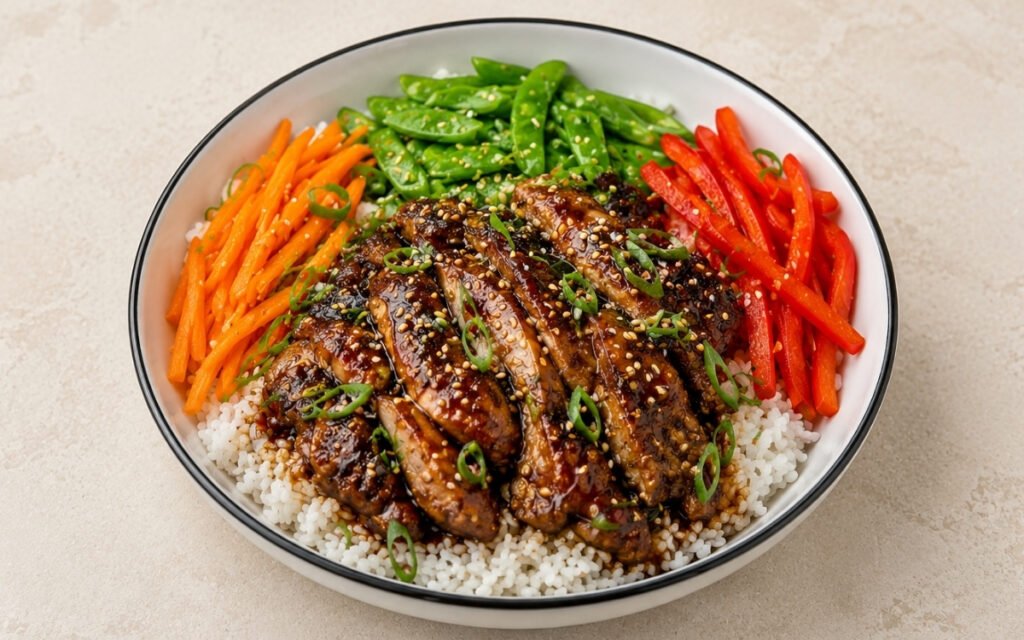
Teriyaki Chicken Rice Bowl
Chicken thighs seared and glazed in homemade soy-mirin-sake-ginger teriyaki — reduced until sticky and glossy over jasmine rice with crisp stir-fried vegetables. 40 minutes.
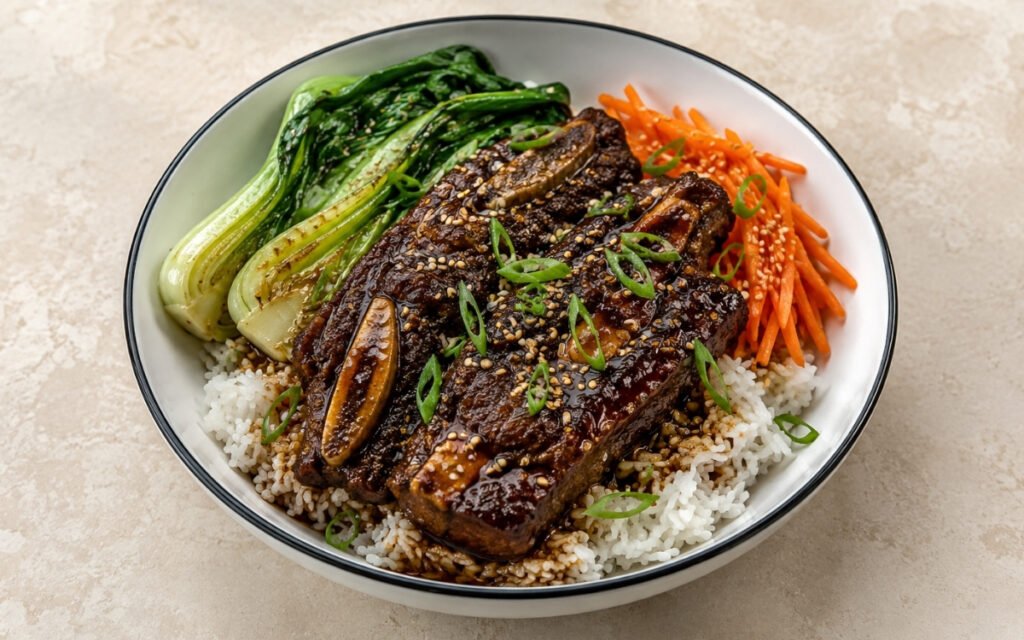
Korean-Style Braised Beef Rice Bowl
Bone-in short ribs braised 2 hours in soy-mirin-gochugaru-star anise liquid — strained, reduced to a glossy sauce, shredded beef returned. Over jasmine rice with bok choy.
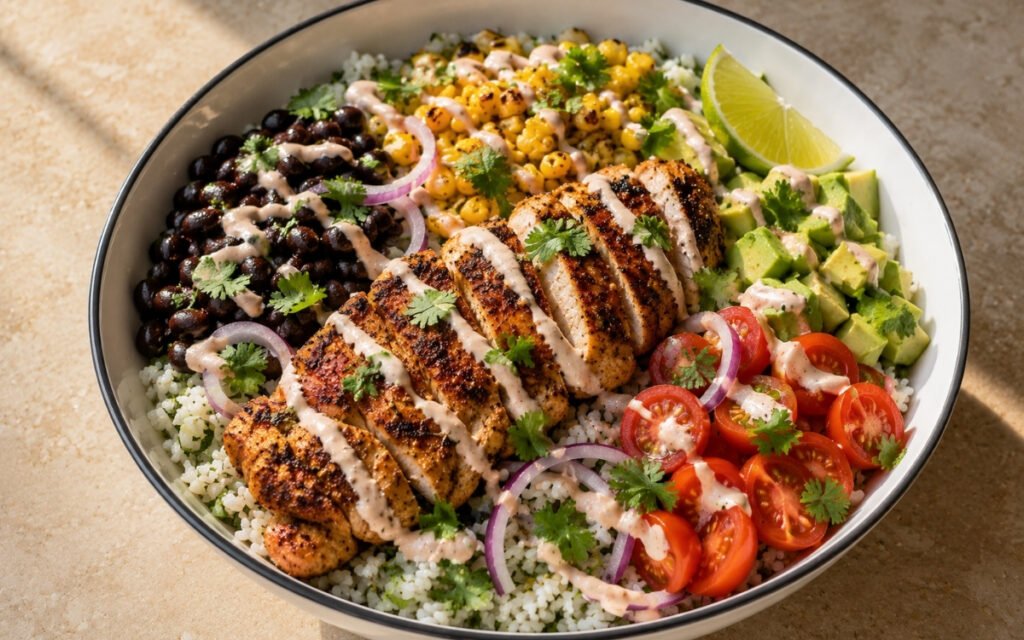
Chili Lime Chicken Rice Bowl
Chili-lime marinated chicken and charred corn over cilantro-lime rice with black beans, avocado, and Greek yogurt crema — vibrant, balanced, 45 minutes.
You might also like
You might also like
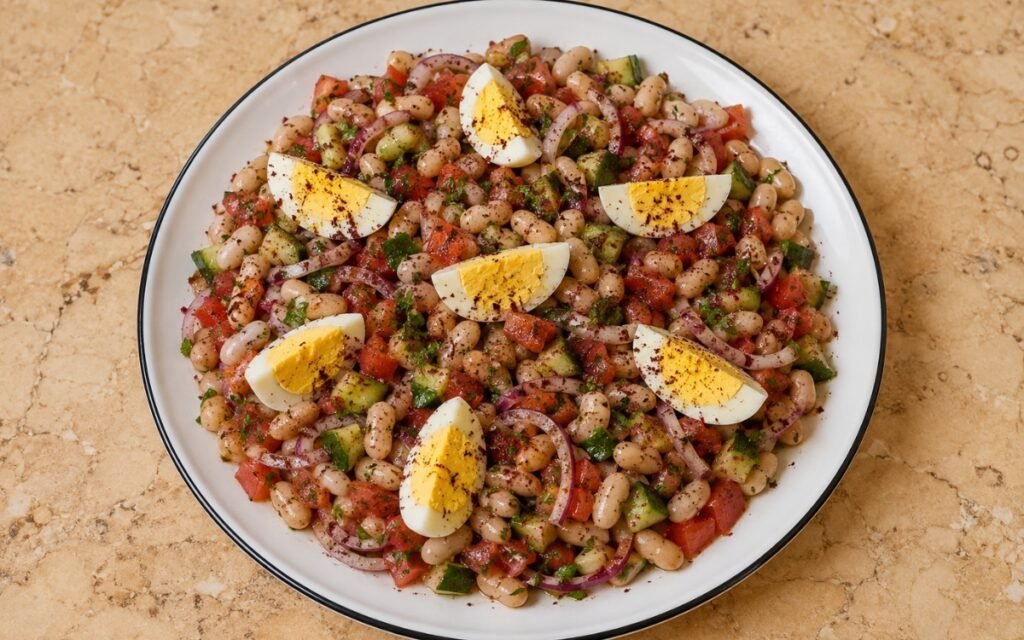
Turkish Piyaz Bean Salad
Traditional Turkish white bean salad with tomatoes, onions, eggs, and tangy sumac dressing.
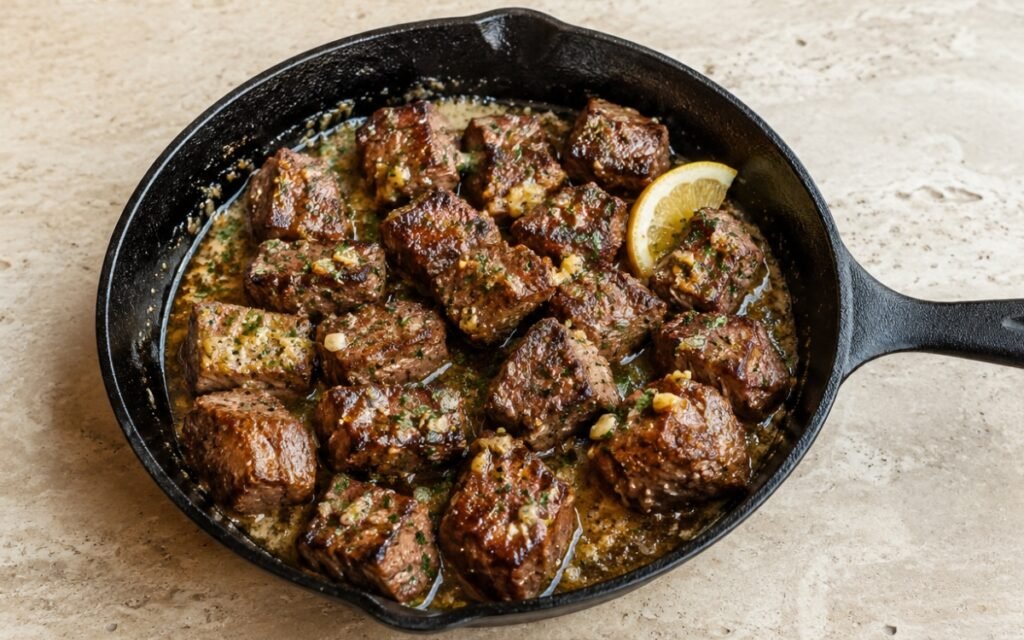
Garlic Butter Steak Bites
Large seared steak cubes with dark crust and juicy centers, tossed in glossy garlic butter with parsley, lemon, and black pepper.
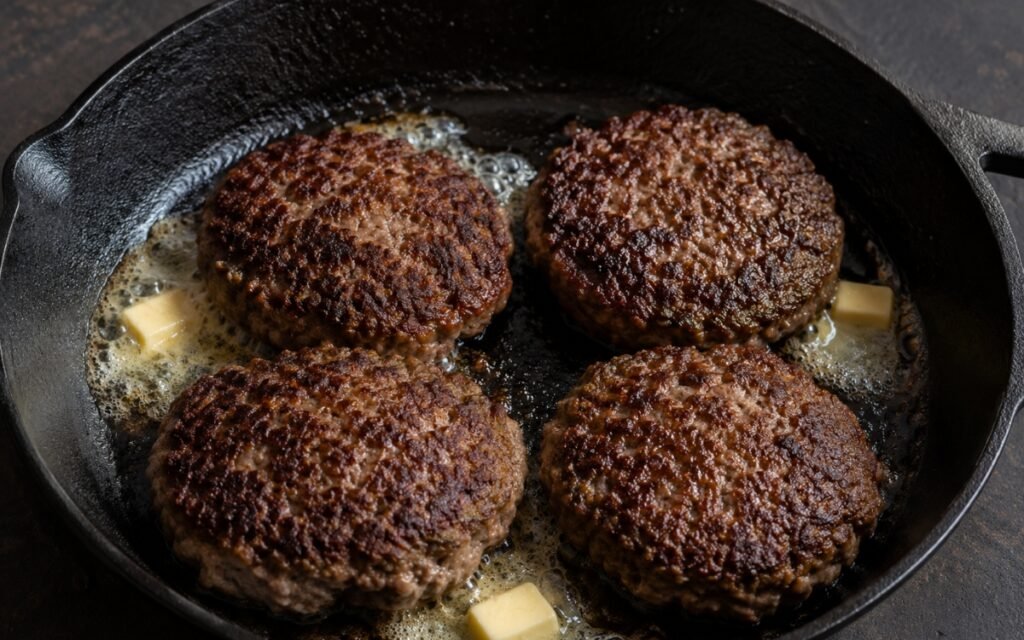
Easy Ground Beef Patties
Ground beef portioned gently, indented, seasoned late — seared undisturbed, butter-basted, and rested. Caramelized crust, juicy interior.
Spicy Thai Beef Salad (Yam Neua)
Ingredients
Method
- Remove the steak from the refrigerator and pat completely dry on all surfaces with paper towels. Season lightly with fine sea salt and the 1 tsp of cracked black pepper. Allow to rest at room temperature for 20 minutes before cooking. The room-temperature rest reduces the temperature differential between the steak’s cold interior and the ambient heat — a cold steak placed directly on a smoking-hot cast iron produces a larger temperature gradient that causes the exterior to overcook significantly before the interior reaches the correct medium-rare temperature. At room temperature, the heat penetrates more evenly and the cooking window for the correct internal temperature expands.
- In a small bowl, combine the 3 tbsp of fish sauce, 4 tbsp of fresh lime juice, 1–1½ tbsp of palm sugar, the finely minced red chilies, and the minced garlic clove. Stir vigorously until the palm sugar has dissolved completely — undissolved palm sugar produces sweet pockets in the dressing rather than uniform sweetness throughout. Taste and assess each dimension. The dressing should be simultaneously salty from the fish sauce, sharply acidic from the lime, spiced from the chili, lightly sweet from the palm sugar, and aromatic from the garlic — with the lime’s brightness slightly more forward than the fish sauce’s saltiness. This balance is the specific character of a properly made yam neua dressing and the single most important variable in the finished salad. Adjust: if the fish sauce dominates, add additional lime juice in small increments; if the acidity is too sharp, add a small additional amount of palm sugar; if the heat is insufficient, add more chili. Set the dressing aside — it can be made up to 2 hours ahead and kept at room temperature. Palm sugar — made from the sap of the sugar palm — has a specifically caramel-adjacent, slightly complex sweetness that is different from refined white sugar’s clean, neutral sweetness. In the dressing, its caramel character softens the lime’s acidity and the fish sauce’s saltiness into a more rounded balance. Granulated white sugar is the functional substitute at ¾ the quantity, though the specific depth of palm sugar’s character is absent.
- Slice the 200g of cucumber lengthwise into thick vertical quarters, then cut each section diagonally into bite-sized angled pieces — the angled cut produces more surface area on each piece for dressing adhesion. Slice the ½ red onion into thin feathers — from root to tip following the onion’s curve for the most supple, most evenly flavoured slices. Halve the 180g of cherry tomatoes. Pick the mint, cilantro, and Thai basil leaves from their stems, keeping them whole or roughly torn — the three-herb combination is the non-negotiable aromatic foundation of yam neua. Each herb provides a distinct dimension that the other two cannot supply: mint’s cooling, slightly menthol freshness; cilantro’s clean, slightly citrusy-green brightness; Thai basil’s specifically anise-like, slightly spiced warmth. Together they produce the characteristically Thai fresh-herb complexity; any single herb provides only one dimension of this combination. Slice the spring onions thinly if using.
- If using the optional toasted rice powder — khao khua — prepare it now. Add 2 tbsp of uncooked glutinous or jasmine rice to a dry pan over medium-low heat. Toast, stirring frequently, for 8–10 minutes until the rice turns light golden-brown and smells nutty and toasted. Transfer to a bowl and allow to cool completely, then grind to a coarse powder in a mortar and pestle, a spice grinder, or a small food processor. The toasted rice powder is the garnish that makes each piece of beef and each vegetable adhere to the dressing more completely — its starchy, slightly rough surface texture acting as a binding agent between the dressing and the food. It also contributes a specifically nutty, slightly smoky depth that distinguishes yam neua from any other Thai beef preparation. It keeps at room temperature in a sealed container for up to 2 weeks.
- Heat a cast iron pan or grill over the absolute highest available heat for 2–3 full minutes until genuinely smoking — the quality of the sear is directly proportional to the surface temperature at the moment of contact. Add the 1 tbsp of neutral oil and allow to shimmer. Place the seasoned sirloin flat on the surface. Sear undisturbed for 2–4 minutes depending on thickness — a 2.5cm steak requires approximately 3 minutes per side for medium-rare. Leave completely undisturbed during this period: the Maillard crust that produces the specific charred, deeply savoury exterior of properly seared sirloin requires sustained, uninterrupted contact between the meat’s surface and the hot iron. Flip once and sear the second side for the same time. The correct internal temperature for yam neua is medium-rare to medium — 52–57°C — where the beef is sufficiently pink and juicy to contrast with the dressing’s acidity without the chewiness and dryness of well-done. For flank steak: flank is leaner and more fibrous than sirloin, with a more pronounced grain direction — cook according to thickness (typically 2–3 minutes per side for medium-rare) and slice specifically thin, strictly against the very visible grain, as flank becomes noticeably tough when sliced with the grain.
- Transfer the seared steak to a cutting board. Rest for 7–10 minutes without cutting. This rest is not optional and should not be shortened — the juices driven to the steak’s surface by the sear’s heat require time to redistribute back through the interior. A steak cut immediately after the pan loses a pool of juice onto the cutting board rather than into each slice; a properly rested steak retains these juices internally. After the full rest, slice the steak thinly against the grain — identifying the muscle fibres and cutting strictly perpendicular to them, into 5–8mm slices. Thin against-grain slices are specifically more tender than thick against-grain slices and significantly more tender than any with-grain slices regardless of thickness. Reserve all accumulated resting juices on the cutting board — they are added back to the salad with the beef.
- In a large bowl, combine the cucumber, cherry tomatoes, red onion, mint, cilantro, Thai basil, and spring onions if using. Pour over approximately two-thirds of the prepared dressing and toss gently — just enough to coat every component without bruising the herbs. Lay the sliced beef on top of the herb and vegetable mixture — arranged rather than tossed through — and pour all the accumulated resting juices over the beef. Spoon the remaining dressing specifically over the steak slices. Scatter the crushed roasted peanuts and the toasted rice powder over the assembled salad. Serve immediately while the beef is still warm — the temperature contrast between the warm, charred beef and the cold fresh herbs, sharp lime dressing, and chili heat is the specific eating experience that makes yam neua compelling. A salad where the beef has cooled to room temperature alongside the herbs loses this contrast and produces a significantly less vivid result.