
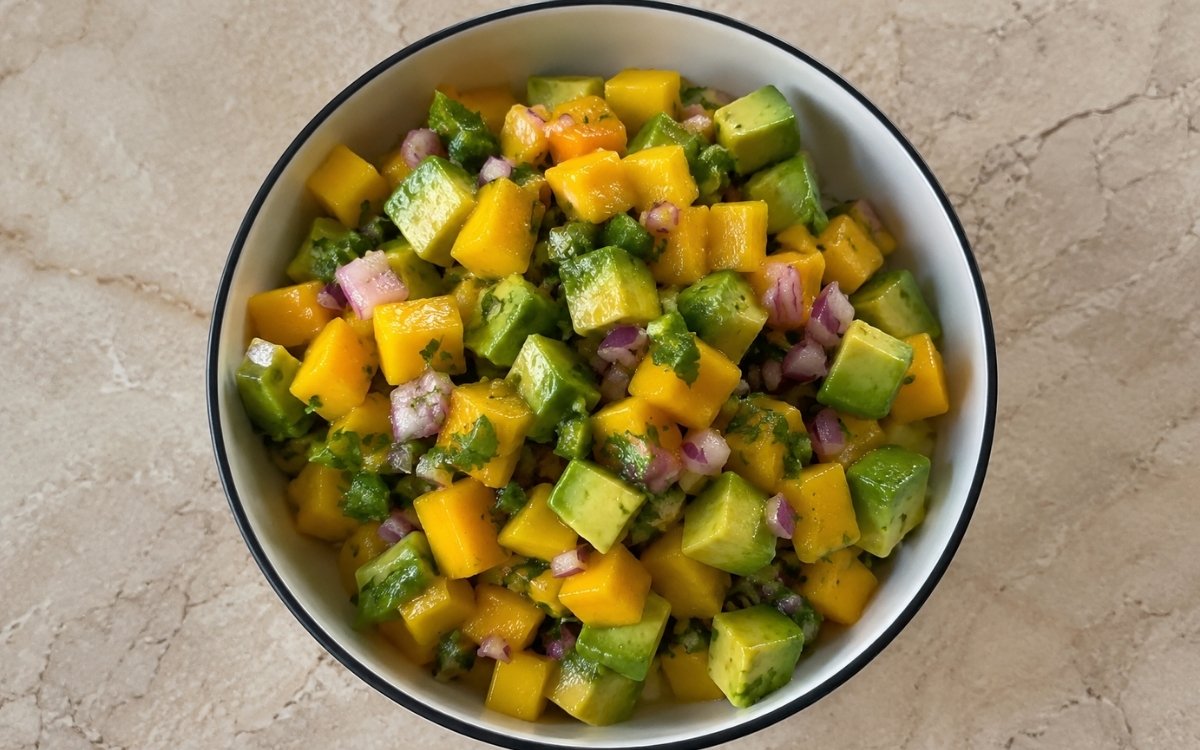
Avocado & Mango Salsa
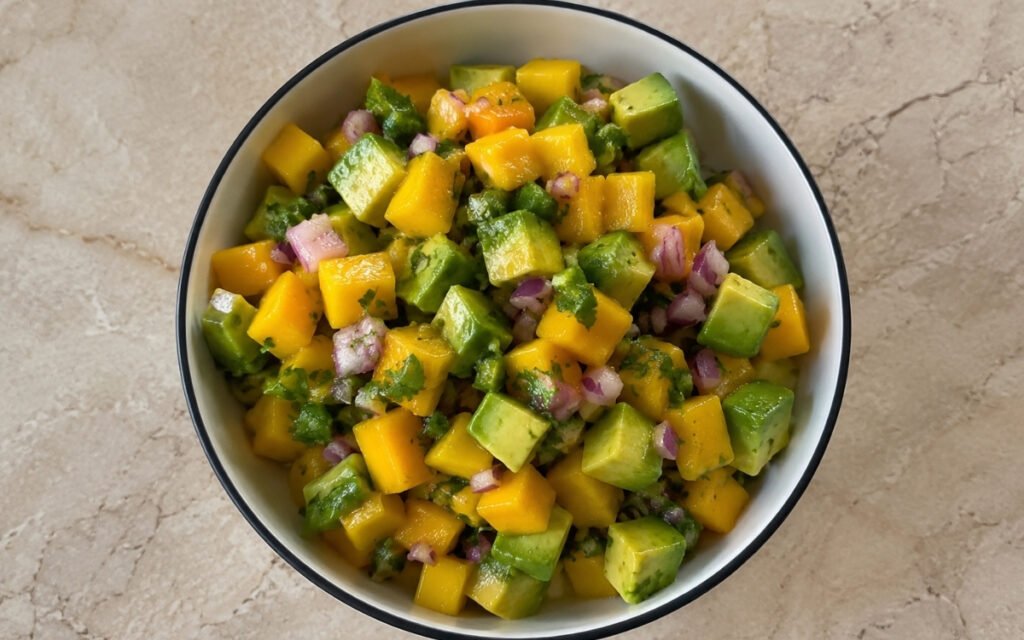
Sweet mango, creamy avocado, sharp red onion, and a herb-forward dressing of lime, cilantro, and parsley — this salsa is sweet, creamy, acidic, and gently spiced all at once. It is the condiment that makes smoky grilled meats taste brighter, tacos taste more complete, and burrito bowls taste like they were assembled somewhere warm and coastal. Ten minutes of knife work, fifteen minutes of rest, and everything on the table gets better.
Prep Time : 10 min
Cook Time : 0 min
Servings : 4
10 min
0 min
4
Ingredients
For the Avocado & Mango Salsa
• 1 ripe avocado, diced
• 2 ripe mangos, diced
• 1 large red onion, diced into ⅛–¼ inch cubes
• 1 green jalapeño, deseeded, diced into ⅛ inch cubes
• Juice of 2 limes
• Zest of half a lime
• Large handful fresh cilantro, chopped — approximately ⅔ of the total herb volume
• Smaller handful fresh flat-leaf parsley, chopped — approximately ⅓ of the total herb volume
• 2 tbsp extra-virgin olive oil — this one on Amazon
• 1 tbsp green Tabasco, optional — this one on Amazon
• Salt to taste
• Freshly ground black pepper to taste
This post may contain affiliate links. As an Amazon Associate I earn from qualifying purchases, at no additional cost to you.
Directions
- Dice in the Correct Order
The order in which you cut and add the components to the bowl is as important as how you cut them. Begin with the red onion, then the jalapeño, then the mango, then the herbs — and save the avocado for absolute last, cutting it immediately before dressing and tossing. This sequence is not arbitrary: each ingredient is ordered by how quickly it deteriorates once cut and exposed to air. Red onion and jalapeño are the most stable — they can sit cut on the board for ten minutes without any quality change. Mango is also stable but should not sit long as its juice begins to collect on the board and the surfaces start to oxidize slightly. Herbs are somewhat fragile when cut and should be prepared close to the moment of combining. Avocado is the most fragile of all — its flesh begins browning through enzymatic oxidation within minutes of being exposed to air. Cutting it last and moving directly from board to bowl minimises the window of air exposure before the lime juice in the dressing — which slows the oxidation reaction — coats the flesh. A salsa where the avocado was cut first and sat waiting while everything else was prepared often looks brown and uninviting before it even reaches the table. - Dice the Red Onion
Peel the red onion and dice it into ⅛–¼ inch cubes — approximately 3–6mm per side. The smaller end of this range, ⅛ inch, produces onion pieces that distribute invisibly throughout the salsa, contributing their sweet-sharp flavour in every bite without any single piece asserting itself as a dominant element. The larger end, ¼ inch, produces slightly more presence — individual onion bites that are discernible among the mango and avocado. Both are correct depending on preference: finer for a smoother, more cohesive result; slightly larger for more textural contrast. Red onion is used rather than white or sweet onion for its sharper, slightly more pungent allium character and its vivid purple-pink colour that adds visual contrast against the orange-yellow mango and green avocado. Transfer the diced onion directly to the serving bowl. - Prepare the Jalapeño
Slice the jalapeño in half lengthwise. Use a small spoon or the tip of a knife to scrape out all the seeds and the white membrane cleanly — the membrane contains the highest capsaicin concentration and is the source of the most intense, concentrated heat. Once deseeded, dice the jalapeño into genuinely small pieces — ⅛ inch cubes, approximately 3mm per side. This fine dice is specifically important for a salsa where the heat should be an even background warmth distributed throughout every bite rather than an occasional intense encounter with a larger chili piece. A ⅛ inch jalapeño cube provides a flavour presence — slightly vegetal, gently warm — without any single bite delivering a disproportionate spike of heat. The green jalapeño specifically provides a fresh, slightly grassy heat that is different in character from the red jalapeño’s more fruity profile — it is the correct choice for a salsa that emphasises brightness and freshness over depth and complexity. Add to the bowl with the onion. - Dice the Mangos
Peel both mangos and cut the flesh from around the flat central stone. The easiest technique: stand the mango upright and slice down through the flesh on either side of the stone, producing two large mango cheeks and two smaller side pieces. Score the flesh of each cheek in a crosshatch pattern — parallel cuts approximately ¼ inch apart in both directions — then invert the cheek and slice the scored cubes away from the skin. This technique produces clean, uniform mango cubes quickly and with minimal waste. Aim for pieces roughly ½ inch — slightly larger than the onion and jalapeño cubes. The mango cubes should be substantial enough to provide their own identity in the salsa — a sweet, juicy, tropical presence — rather than disappearing into the other components at a similar small size. Add to the bowl. - Chop the Herbs
Combine the cilantro and parsley in a pile on the cutting board — the ⅔ cilantro to ⅓ parsley ratio is a deliberate formula that produces a herb character that is primarily cilantro-forward with its citrusy, floral, distinctly Mexican identity, while the parsley provides a clean, slightly more neutral herbal background that prevents the cilantro from tipping into overwhelming intensity. Chop together using a rocking knife motion until finely but not completely uniform — the herbs should be visibly chopped and aromatic rather than a fine paste. Add to the bowl. The cilantro-parsley combination also provides a practical benefit: for anyone who finds pure cilantro too dominant, the parsley dilutes it to a more accessible level without removing it. For cilantro lovers, the ratio can be shifted toward all cilantro without any other adjustment. - Make the Dressing
In a small jar or bowl, combine the lime juice, lime zest, olive oil, salt, black pepper, and the optional green Tabasco. The green Tabasco is listed as optional but is worth including — it is made from jalapeños and has a fresh, tangy, moderately spicy character that is specifically and naturally suited to fresh fruit salsas in a way that red Tabasco’s more vinegary, earthier profile is not. It adds an extra acid-heat dimension that makes the entire salsa taste more vivid without adding any detectable hot sauce flavour. Whisk or shake until the olive oil and lime juice are as combined as they will get — they will not fully emulsify without a mustard or egg emulsifier, but whisking briefly distributes them well enough to coat the salsa components evenly when tossed. - Dice the Avocado and Combine
Immediately before dressing and tossing, halve the avocado, remove the stone, and cut the flesh into cubes while still in the skin — score in a crosshatch pattern with the knife then scoop the cubes out with a large spoon. Cubes approximately ½ inch — the same size as the mango — are ideal for visual and textural balance between the two main fruit components. Add to the bowl with all other prepared ingredients. Pour the dressing over the entire bowl and toss gently using two large spoons or your hands, lifting from the bottom and turning with slow, deliberate strokes. The avocado is the most fragile element — it will break down into a creamy smear if handled aggressively. Toss only enough to distribute the dressing evenly — 6–8 gentle turns. The lime juice in the dressing coats the avocado surfaces immediately on contact, slowing oxidation and preserving the colour. - Rest and Serve
Cover the bowl loosely and allow the salsa to rest at room temperature for 15 minutes before serving. During this rest, the lime juice continues to soften the raw edge of the red onion’s sharpness, the olive oil carries the herb aromatic compounds throughout the bowl, the mango’s juice and the lime begin to integrate into a cohesive dressing, and the flavours that were distinct immediately after tossing begin to merge into a unified salsa rather than a collection of separately-dressed ingredients. Taste after the rest period and adjust: more salt if flat, more lime if the brightness needs lifting, more Tabasco if additional heat is wanted. Serve immediately after the rest — this salsa does not improve beyond the 15-minute mark as the avocado will begin browning and the mango will continue releasing juice.
*Notes :
- Mango ripeness is as fundamental to this salsa as watermelon ripeness is to the watermelon feta salad. An underripe mango is firm, sour, and starchy — it contributes no sweetness, resists clean dicing, and produces a salsa that tastes sharp and one-dimensional rather than the sweet-acid balance the recipe requires. A ripe mango yields slightly to gentle pressure at the stem end, smells fragrant at the stem, and has flesh that is deep orange-yellow throughout without any pale, starchy patches near the skin. Two fully ripe mangos produce the sweetness volume needed to balance the jalapeño’s heat and the lime’s acidity across four portions. If only one fully ripe mango is available, reduce the recipe to two portions rather than using an underripe second mango.
- The cilantro-to-parsley ratio produces a herb character calibrated specifically for this salsa’s flavor profile. Cilantro’s dominant aromatic — 2-acetyl-1-pyrroline and various aldehyde compounds — is intensely citrusy, floral, and distinctly associated with Mexican and South American cooking. At ⅔ of the herb volume it provides the salsa’s primary aromatic identity without reaching the level of overwhelming intensity that a 100% cilantro preparation can achieve. Parsley at ⅓ provides clean, slightly grassy brightness that softens the cilantro’s edges while adding its own aromatic contribution. The ratio can be adjusted to personal preference — more cilantro for a stronger Mexican character, more parsley for a cleaner, milder herb presence.
- Avocado oxidation is the primary make-ahead limitation of this recipe. The enzymatic browning of avocado flesh occurs when the enzyme polyphenol oxidase contacts oxygen in the air — the lime juice’s citric acid slows this reaction by temporarily inhibiting the enzyme. This is why cutting the avocado last and coating it with the lime dressing immediately is the correct technique, and why this salsa should be served within 30–40 minutes of assembly for the best appearance.
Why This Recipe Works
This salsa works because its four primary components represent four completely different flavour registers that contrast and complement each other simultaneously. Mango brings tropical sweetness. Avocado brings rich, neutral creaminess. Red onion brings sharp, savory pungency. Jalapeño brings warm, building heat.
The lime and herb dressing then provides the bright, acidic, aromatic thread that connects all four registers into a cohesive, unified salsa. No two components taste remotely similar, and this total contrast is what makes the salsa so vivid and interesting — every bite contains a different combination of sweet, creamy, sharp, and warm.
Ingredient Breakdown
Ripe Mango
The sweet, tropical primary note — the flavour foundation that gives the salsa its character and the sweetness that makes the heat and acid balance work.
Ripe Avocado
The creamy, neutral richness element — provides body and a smooth, buttery counterpoint to the mango’s brightness and the onion’s sharpness.
Red Onion
Sharp, slightly pungent allium depth and vivid colour — provides the savory backbone that prevents the salsa from being entirely sweet-acidic.
Green Jalapeño (Deseeded, Fine Dice)
Even background heat distributed in every bite — fresh, slightly vegetal warmth that builds without spiking.
Cilantro (⅔) and Parsley (⅓)
The herb layer — cilantro-forward for Mexican identity and aromatic brightness, parsley for clean herbal softening.
Lime Juice and Zest
The essential acid layer — brightens every component simultaneously, slows avocado oxidation, and defines the salsa’s citrus character.
Green Tabasco (optional)
Additional acid-heat dimension — fresh, tangy jalapeño-based heat that makes the entire salsa taste more vivid.
Olive Oil
Fat carrier — distributes herb and lime aromatic compounds evenly throughout the bowl for cohesive flavour in every bite.
Flavor Structure Explained
This salsa follows a layered balance model:
- Sweet fruit base (mango)
- Creamy richness (avocado)
- Sharp allium bite (red onion)
- Warm heat (jalapeño)
- Bright acidity (lime)
Mango defines the foundation with juicy sweetness that leads the profile. Avocado adds creamy richness, softening sharper elements and giving the salsa body. Red onion introduces pungency and bite, cutting through both sweetness and fat. Jalapeño builds a gentle heat that adds depth without overwhelming. Lime sharpens and lifts the entire composition with clean acidity. Fresh herbs layer in aromatic brightness, while olive oil carries and integrates all elements into a cohesive whole where contrast, not dominance, defines the experience.
Common Mistakes to Avoid
- Cutting the Avocado First – Avocado left cut and exposed to air while the other ingredients are prepared begins browning before it ever reaches the bowl. Cut last, coat with lime immediately.
- Using Underripe Mango – Underripe mango is starchy, sour, and contributes no sweetness — the salsa’s entire sweet-acid balance collapses without properly ripe fruit. Test before buying.
- Large Jalapeño Dice – Large jalapeño pieces deliver concentrated heat bursts rather than even warmth throughout. Always dice to ⅛ inch for balanced distribution.
- Over-tossing – The avocado will smear into a creamy paste if tossed aggressively. 6–8 gentle lifts is the maximum.
- Not Resting Before Serving – The 15-minute rest is where the separate components begin working together as a unified salsa. Serving immediately after tossing produces a noticeably less cohesive result.
- Skipping the Lime Zest – The zest provides aromatic lime oils that the juice alone cannot — it makes the citrus character more complex and fragrant. Take the 30 seconds to zest before juicing.
Variations
Peach and Mango Salsa
Replace one of the mangos with 2 ripe peaches during late summer — the peach’s floral, slightly tart character pairs beautifully with avocado and adds a different dimension of fruit sweetness.
Pineapple and Mango Salsa
Replace one mango with 200g of fresh pineapple diced to the same size — pineapple’s more aggressive, higher-acid sweetness pushes the salsa in a more tropical, assertive direction excellent with pork carnitas and fish tacos.
Extra Heat Version
Leave some jalapeño seeds in or replace the jalapeño with a serrano chili — serranos are 3–5 times hotter and produce a sharper, more immediate heat that works well in this salsa’s fruit-sweet context.
Tomato Addition
Add 2 Roma tomatoes diced to the same size as the other components for a more substantial, more traditional salsa character — the tomato adds an additional acidic, slightly savory note that bridges this salsa toward pico de gallo territory.
Storage & Make-Ahead
This salsa is best served within 30–40 minutes of assembly. The avocado will begin browning and the mango will continue releasing juice beyond this window, producing a softer, wetter, and visually less appealing result. If advance preparation is needed, prepare all components except the avocado and the dressing up to 2 hours ahead and refrigerate separately. Dice the avocado, make the dressing, combine, and toss immediately before serving. Dressed leftovers can be refrigerated for up to 24 hours — drain accumulated juice, taste, and add a fresh squeeze of lime to restore brightness. The avocado will have some browning — stir from the bottom where the lime-coated pieces remain better preserved.
Frequently Asked Questions
How do I know if a mango is ripe?
A ripe mango yields slightly to gentle pressure at the stem end — similar to a ripe avocado or peach. It should smell fragrant and tropical at the stem. Colour is not a reliable indicator as it varies by variety. If your mango feels hard and shows no give, leave it at room temperature for 1–2 days until it softens.
Can I make this without cilantro
Yes — replace the cilantro portion entirely with parsley for a cleaner, more neutral herb profile, or use fresh mint for a cooling, aromatic variation that works particularly well in summer. The salsa will have a completely different but still excellent character.
What dishes does this go best with?
Smoky grilled meats — carne asada, grilled chicken thighs, pork carnitas — benefit the most from the salsa’s bright, sweet contrast against char and smoke. It also works in tacos, burrito bowls, alongside fajitas, on nachos, and spooned over grilled fish. As South American and Mexican recipes are added to the collection, this salsa will appear across them as a natural component.
Why green Tabasco rather than red?
Green Tabasco is made from jalapeños rather than cayenne or Tabasco peppers — its heat is fresher, its acidity is cleaner, and its flavour has a specific affinity with fresh fruit and herb preparations. Red Tabasco’s earthier, more vinegary character competes with the lime and mango rather than complementing them.
Can I use frozen mango?
Fresh mango is strongly preferred. Frozen mango thaws with significant excess moisture that makes the salsa watery, and its texture softens considerably, making clean dicing impossible. Thawed frozen mango is also noticeably less sweet and less aromatic than fresh. If out-of-season fresh mango is the only alternative, frozen is acceptable but the result will be noticeably wetter and less vibrant.
Nutrition Facts
( per serving )
Calories
~195 kcal
Protein
2 g
Fat
11 g
Carbs
26 g
Calories
~195 kcal
Protein
2 g
Fat
11 g
Carbs
26 g
Related Recipes
Related Recipes

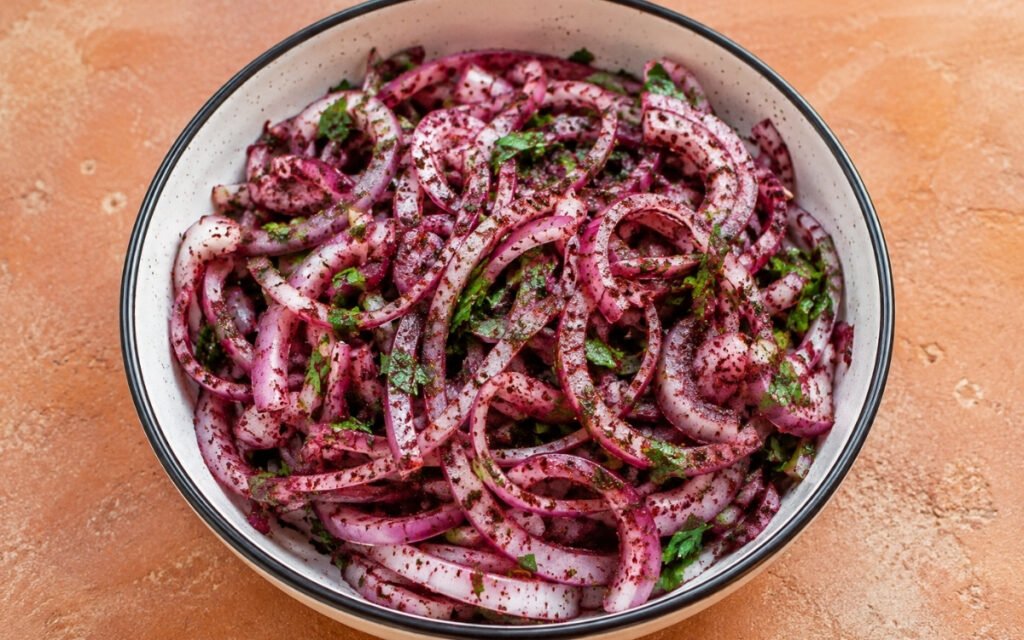
Sumac Onions Salad
Paper-thin red onions in sumac-lemon dressing with fresh parsley — the Middle Eastern condiment salad that completes every grilled meat and flatbread.
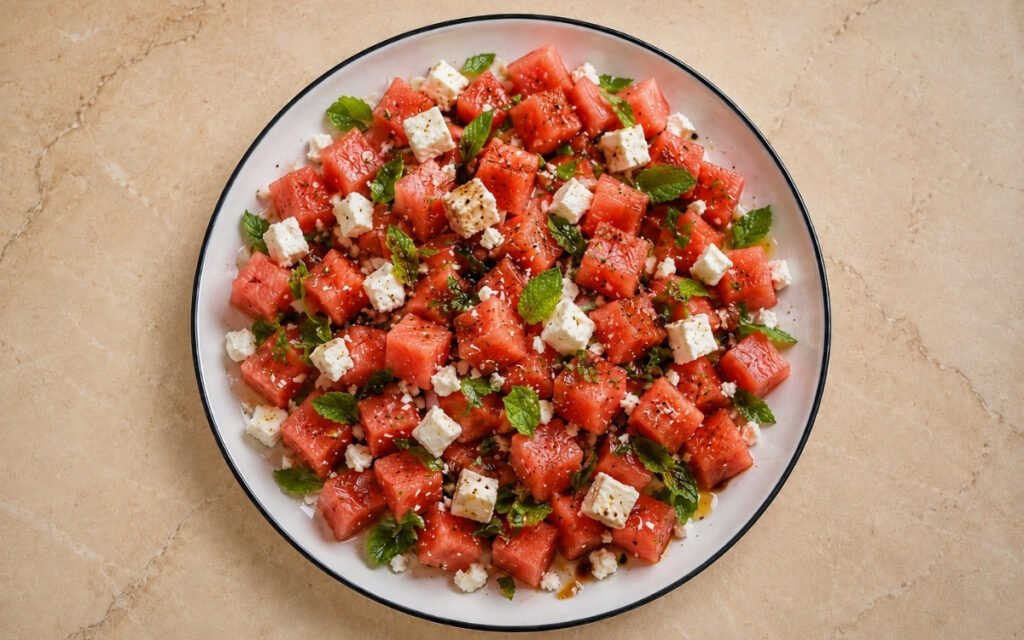
Watermelon Feta Salad
Sweet watermelon, salty feta, fresh mint, and honey-lime-balsamic dressing — the freshest summer salad built entirely on contrast, ready in 10 minutes.
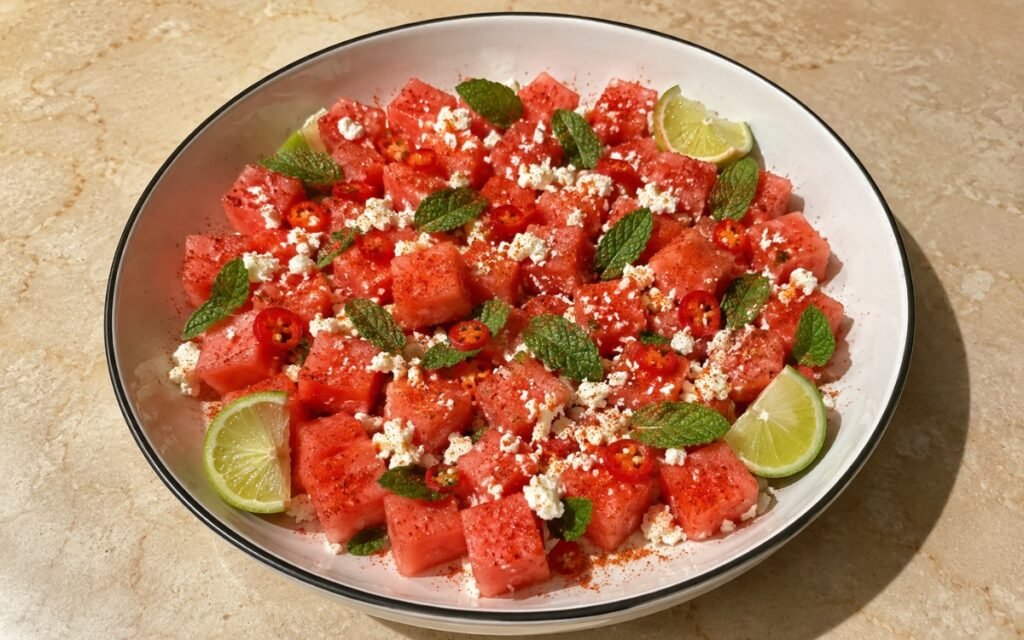
Watermelon Tajín Salad
Watermelon drained 5 minutes, tossed with Tajín, lime, and olive oil — cotija crumbled over the top with fresno chili, fresh mint, and an extra Tajín dusting. The summer salad in 25 minutes.
You might also like
You might also like
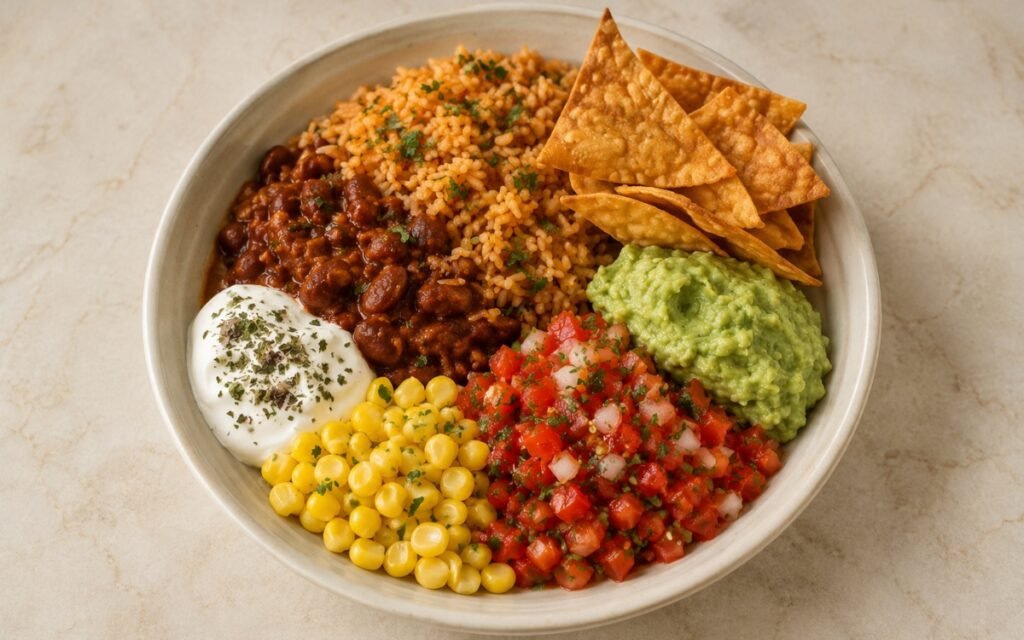
Loaded Mexican Taco Bowl
Toasted tomato rice, smoky chipotle red beans, fresh pico de gallo, plain guacamole, sour cream, and crispy tortilla chips, layered in one vibrant bowl.
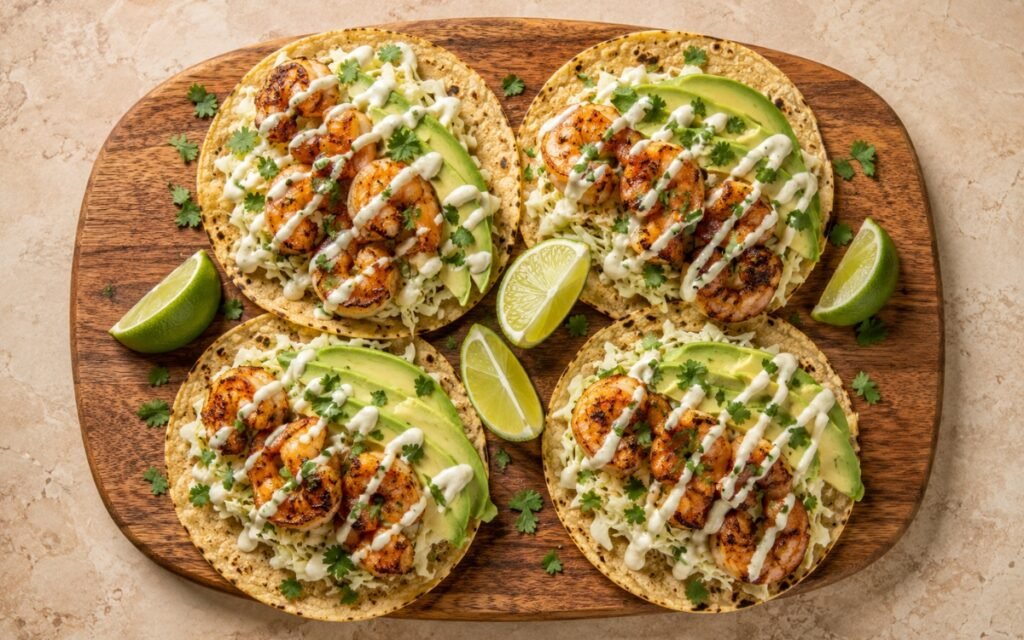
Shrimp Tacos with Lime Crema
Large shrimp dried, spiced, and seared hot and fast, piled onto small corn tortillas with crisp cabbage, fanned avocado, and a thick lime crema drizzle.
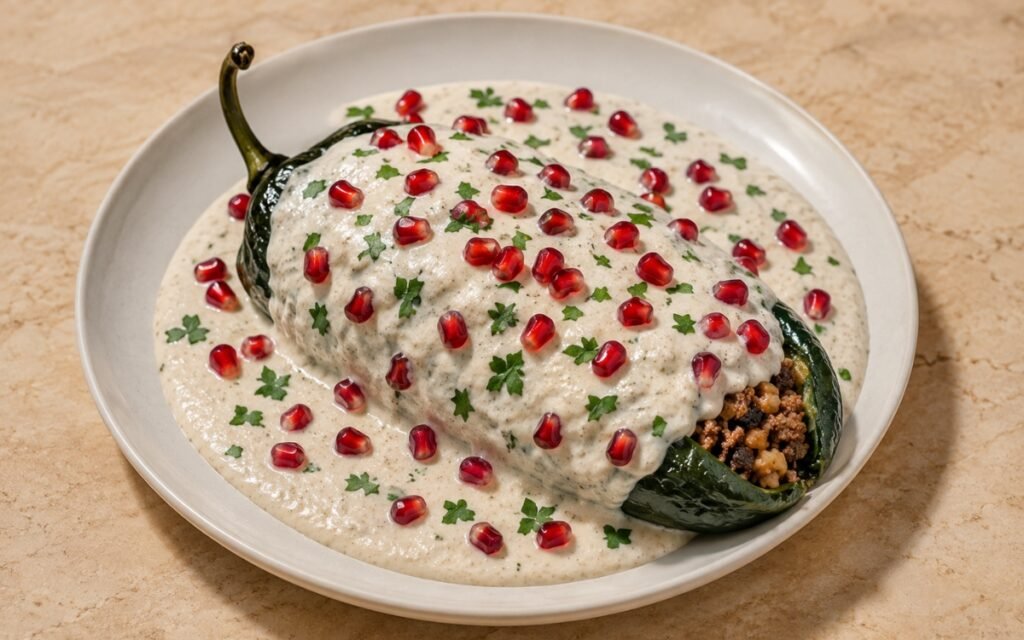
Chiles en Nogada
Roasted poblano peppers stuffed with a savoury-sweet pork and beef picadillo, covered in creamy white walnut sauce, and finished with pomegranate seeds.
Avocado & Mango Salsa
Ingredients
Method
- The order in which you cut and add the components to the bowl is as important as how you cut them. Begin with the red onion, then the jalapeño, then the mango, then the herbs — and save the avocado for absolute last, cutting it immediately before dressing and tossing. This sequence is not arbitrary: each ingredient is ordered by how quickly it deteriorates once cut and exposed to air. Red onion and jalapeño are the most stable — they can sit cut on the board for ten minutes without any quality change. Mango is also stable but should not sit long as its juice begins to collect on the board and the surfaces start to oxidize slightly. Herbs are somewhat fragile when cut and should be prepared close to the moment of combining. Avocado is the most fragile of all — its flesh begins browning through enzymatic oxidation within minutes of being exposed to air. Cutting it last and moving directly from board to bowl minimises the window of air exposure before the lime juice in the dressing — which slows the oxidation reaction — coats the flesh. A salsa where the avocado was cut first and sat waiting while everything else was prepared often looks brown and uninviting before it even reaches the table.
- Peel the red onion and dice it into ⅛–¼ inch cubes — approximately 3–6mm per side. The smaller end of this range, ⅛ inch, produces onion pieces that distribute invisibly throughout the salsa, contributing their sweet-sharp flavour in every bite without any single piece asserting itself as a dominant element. The larger end, ¼ inch, produces slightly more presence — individual onion bites that are discernible among the mango and avocado. Both are correct depending on preference: finer for a smoother, more cohesive result; slightly larger for more textural contrast. Red onion is used rather than white or sweet onion for its sharper, slightly more pungent allium character and its vivid purple-pink colour that adds visual contrast against the orange-yellow mango and green avocado. Transfer the diced onion directly to the serving bowl.
- Slice the jalapeño in half lengthwise. Use a small spoon or the tip of a knife to scrape out all the seeds and the white membrane cleanly — the membrane contains the highest capsaicin concentration and is the source of the most intense, concentrated heat. Once deseeded, dice the jalapeño into genuinely small pieces — ⅛ inch cubes, approximately 3mm per side. This fine dice is specifically important for a salsa where the heat should be an even background warmth distributed throughout every bite rather than an occasional intense encounter with a larger chili piece. A ⅛ inch jalapeño cube provides a flavour presence — slightly vegetal, gently warm — without any single bite delivering a disproportionate spike of heat. The green jalapeño specifically provides a fresh, slightly grassy heat that is different in character from the red jalapeño’s more fruity profile — it is the correct choice for a salsa that emphasises brightness and freshness over depth and complexity. Add to the bowl with the onion.
- Peel both mangos and cut the flesh from around the flat central stone. The easiest technique: stand the mango upright and slice down through the flesh on either side of the stone, producing two large mango cheeks and two smaller side pieces. Score the flesh of each cheek in a crosshatch pattern — parallel cuts approximately ¼ inch apart in both directions — then invert the cheek and slice the scored cubes away from the skin. This technique produces clean, uniform mango cubes quickly and with minimal waste. Aim for pieces roughly ½ inch — slightly larger than the onion and jalapeño cubes. The mango cubes should be substantial enough to provide their own identity in the salsa — a sweet, juicy, tropical presence — rather than disappearing into the other components at a similar small size. Add to the bowl.
- Combine the cilantro and parsley in a pile on the cutting board — the ⅔ cilantro to ⅓ parsley ratio is a deliberate formula that produces a herb character that is primarily cilantro-forward with its citrusy, floral, distinctly Mexican identity, while the parsley provides a clean, slightly more neutral herbal background that prevents the cilantro from tipping into overwhelming intensity. Chop together using a rocking knife motion until finely but not completely uniform — the herbs should be visibly chopped and aromatic rather than a fine paste. Add to the bowl. The cilantro-parsley combination also provides a practical benefit: for anyone who finds pure cilantro too dominant, the parsley dilutes it to a more accessible level without removing it. For cilantro lovers, the ratio can be shifted toward all cilantro without any other adjustment.
- In a small jar or bowl, combine the lime juice, lime zest, olive oil, salt, black pepper, and the optional green Tabasco. The green Tabasco is listed as optional but is worth including — it is made from jalapeños and has a fresh, tangy, moderately spicy character that is specifically and naturally suited to fresh fruit salsas in a way that red Tabasco’s more vinegary, earthier profile is not. It adds an extra acid-heat dimension that makes the entire salsa taste more vivid without adding any detectable hot sauce flavour. Whisk or shake until the olive oil and lime juice are as combined as they will get — they will not fully emulsify without a mustard or egg emulsifier, but whisking briefly distributes them well enough to coat the salsa components evenly when tossed.
- Immediately before dressing and tossing, halve the avocado, remove the stone, and cut the flesh into cubes while still in the skin — score in a crosshatch pattern with the knife then scoop the cubes out with a large spoon. Cubes approximately ½ inch — the same size as the mango — are ideal for visual and textural balance between the two main fruit components. Add to the bowl with all other prepared ingredients. Pour the dressing over the entire bowl and toss gently using two large spoons or your hands, lifting from the bottom and turning with slow, deliberate strokes. The avocado is the most fragile element — it will break down into a creamy smear if handled aggressively. Toss only enough to distribute the dressing evenly — 6–8 gentle turns. The lime juice in the dressing coats the avocado surfaces immediately on contact, slowing oxidation and preserving the colour.
- Cover the bowl loosely and allow the salsa to rest at room temperature for 15 minutes before serving. During this rest, the lime juice continues to soften the raw edge of the red onion’s sharpness, the olive oil carries the herb aromatic compounds throughout the bowl, the mango’s juice and the lime begin to integrate into a cohesive dressing, and the flavours that were distinct immediately after tossing begin to merge into a unified salsa rather than a collection of separately-dressed ingredients. Taste after the rest period and adjust: more salt if flat, more lime if the brightness needs lifting, more Tabasco if additional heat is wanted. Serve immediately after the rest — this salsa does not improve beyond the 15-minute mark as the avocado will begin browning and the mango will continue releasing juice.