
Thai Green Papaya Shrimp Salad
A classic Thai green papaya salad of finely shredded green papaya, poached shrimp, cherry tomatoes and long beans tossed in a pounded garlic, chilli, palm sugar, fish sauce and lime dressing and finished with roasted peanuts and fresh herbs, the key being crisp papaya lightly bruised, never drowned. Bruising the beans, tomatoes and papaya lightly in the mortar, rather than mashing them or simply tossing them in a bowl, is the technique this whole salad depends on for its texture — a few gentle presses let the vegetables drink in the dressing while staying crisp, whereas heavy pounding turns the papaya limp and watery, the same bruise-don’t-crush principle used elsewhere in this collection whenever a dressing needs to soak in without destroying crunch. Poaching the shrimp at a gentle simmer for just 1½–2 minutes and cooling them promptly is what keeps them sweet, tender and juicy rather than tight and rubbery. Pounding the palm sugar into the garlic and chillies before the fish sauce and lime go in is what gives the dressing its smooth, evenly balanced heat. The payoff is a green papaya salad with real, punchy brightness — crisp papaya strands, juicy tomatoes, sweet shrimp, crunchy peanuts and a hot, salty-sour dressing lifted by cilantro and mint.

- Prep Time : 25 min
- Total Time : 35 min
- Servings : 4
Ingredients
For the Salad Base
- 700–800g green papaya, peeled, seeded if needed, and shredded into fine matchsticks
- 180g cherry tomatoes, halved
- 120g long beans, trimmed and cut into 4cm pieces
- Iced water, for crisping the papaya, optional
- 2 limes, cut into wedges, for serving
For the Poached Shrimp
- 400g raw shrimp, peeled and deveined, tails removed
- About 1.5 litres water, for poaching
- 1 tsp salt
For the Pounded Dressing
- 4 large garlic cloves
- 3–5 Thai bird’s eye chillies, to taste
- 70g palm sugar, finely chopped or grated
- 6 tbsp fish sauce, plus a splash extra for adjusting
- 6 tbsp fresh lime juice
- 1–2 tbsp tamarind water, or tamarind concentrate diluted with a little warm water, optional, for extra depth
For the Herbs and Crunchy Finish
- 40g roasted peanuts, roughly chopped
- 12–15g cilantro leaves
- 10–12g mint leaves
- Small handful Thai basil leaves, optional
Directions
- Prepare the Papaya and Vegetables
Choose a firm, fully green, underripe papaya of about 700–800g, then peel it, halve it lengthwise and scrape out any pale seeds. Shred the flesh into fine, thin matchsticks with a julienne peeler, mandoline or sharp knife, keeping the strands long and separate rather than grating them into a wet mash. For extra crispness, soak the shreds in iced water for 10 minutes, then drain very well and pat or spin them genuinely dry. Meanwhile, halve the 180g cherry tomatoes, trim the 120g long beans and cut them into 4cm pieces, cut the 2 limes into wedges and pick the cilantro, mint and Thai basil leaves, if using. That thorough draining is what stops the finished salad from turning watery, because every drop left on the papaya dilutes the dressing. - Poach the Shrimp
While the papaya soaks, bring about 1.5 litres of water with the 1 tsp salt to a gentle simmer in a small pot, with small bubbles just breaking the surface rather than a rolling boil. Add the 400g peeled and deveined shrimp and cook for 1½–2 minutes, depending on size, just until they curl into a loose C shape and turn opaque through the centre. Drain immediately and spread them out on a plate to cool, rather than leaving them piled in a warm colander. If the shrimp are large, cut a few in half lengthwise for easier eating, keeping most whole for presentation. That gentle heat and prompt cooling matter because shrimp tighten and turn rubbery within seconds of overcooking, and carryover heat keeps working while they sit hot. - Pound the Dressing Base
In a large mortar, pound the 4 garlic cloves and 3–5 Thai bird’s eye chillies to a coarse paste, starting with 3 chillies if you are unsure, since the heat rises as the salad sits. Add the 70g palm sugar and pound until it is mostly dissolved into a sticky, fragrant paste. Stir in the 6 tbsp fish sauce, 6 tbsp fresh lime juice and the 1–2 tbsp tamarind water, if using, mixing with a spoon until the sugar has dissolved as completely as possible. Taste: the dressing should be clearly salty, sour, lightly sweet and hot, with no single element dominating. That early dissolving of the palm sugar is what keeps the dressing genuinely smooth and evenly balanced, because sugar added later stays gritty and sweetens only some forkfuls. - Bruise and Toss the Salad
Add the long bean pieces to the mortar and bruise them lightly with the pestle 3–4 times, just until they crack and soften slightly while staying crisp. Add the tomatoes and bruise again lightly, so they release some juice into the dressing but still keep their shape. Add the shredded papaya in batches, tossing with a spoon and pressing lightly with the pestle so the strands absorb the dressing without being crushed. If your mortar is small, transfer everything to a large bowl after the tomatoes and finish tossing there. Fold in the cooled shrimp last. The papaya should be evenly coated and glossy, not swimming in liquid; if a pool forms, drain a little off. That light bruising is what lets the dressing soak into the vegetables, while heavy pounding would leave them limp and wet. - Finish and Serve
Taste a forkful of papaya and shrimp and correct it with a squeeze from one of the lime wedges or a splash more fish sauce if it tastes flat; it should lean bright and punchy, never dull. Transfer the salad to a large serving bowl or platter, leaving any excess liquid behind. Scatter the 40g chopped roasted peanuts over the top, then garnish with the 12–15g cilantro, 10–12g mint and the Thai basil, if using. Divide into 4 portions, each with about 100g shrimp, and serve immediately with the remaining lime wedges. That last-minute topping and immediate serving matter because the peanuts soften and the papaya loses its crunch as it sits in the dressing.
*Notes :
- Bruising the salad lightly in the mortar deserves genuine recognition as the technique most directly responsible for whether the papaya stays crisp and seasoned or turns limp. The recipe’s own instruction to “bruise lightly, do not mash” explains why — a few gentle presses crack the beans, burst the tomatoes and help the papaya absorb dressing, while heavy pounding breaks the strands down into a wet, soft tangle.
- Thorough draining of the papaya deserves the same attention this technique receives throughout this collection’s other crisp salad dishes, because water is the quickest way to flatten the dressing. The recipe’s own note to “drain off a little liquid before plating rather than adding more peanuts to absorb it” reflects how excess liquid dilutes the salt and sour, which extra peanuts would only turn soggy rather than fix.
- Choosing a firm, underripe papaya deserves genuine respect as the detail most directly responsible for the salad’s crunch. The recipe’s own warning that “Ripe papaya will be too soft and sweet” reflects how green papaya has dense, neutral flesh that shreds into crisp strands and carries the dressing, while ripening softens that flesh and adds a sweetness that blurs the sharp balance.
- The opacity of the shrimp deserves attention as a genuine, checkable doneness cue rather than a loose approximation. Shrimp are ready the moment they turn opaque through the centre and curl into a loose C shape, usually after 1½–2 minutes — a tight O shape means they have gone too far, and prompt cooling stops carryover heat from tightening them further.
Why This Recipe Works
This recipe works because each step protects the papaya’s crunch while building a dressing strong enough to season it properly. Shredding underripe papaya into fine strands, crisping them in iced water and draining them thoroughly gives a dry, snappy base that cannot dilute the flavour. Pounding garlic and chillies with palm sugar before adding fish sauce, lime and tamarind creates a smooth, evenly balanced dressing. Gently poached, promptly cooled shrimp stay sweet and tender. Finally, light bruising in the mortar and last-minute peanuts and herbs keep every portion crisp, juicy, punchy and genuinely fresh at the table.
Ingredient Breakdown
Light Bruising in the Mortar (Never Mashed)
The critical technique — a few gentle presses open the beans, tomatoes and papaya to absorb dressing.
Firm, Underripe Green Papaya
The structural foundation — dense, neutral green flesh shreds into crisp strands that carry the dressing without softening.
Well-Drained Papaya Shreds
The critical safeguard — an optional iced-water soak adds crispness, and thorough draining keeps the salad from turning watery.
Gently Poached Shrimp (1½–2 Minutes)
The centrepiece — a soft simmer and prompt cooling keep the shrimp sweet, tender and juicy rather than rubbery.
Palm Sugar Pounded Into the Paste
The core flavour-building stage — pounding the sugar into the garlic first gives a smooth, genuinely balanced dressing.
Roasted Peanuts and Fresh Herbs
The finishing touch — peanuts, cilantro and mint added last bring crunch and cool lift to each forkful.
Flavor Structure Explained
This Thai green papaya shrimp salad follows a layered balance model:
- Crisp, fresh foundation (shredded green papaya, long beans)
- Salty, savoury backbone (fish sauce, pounded garlic)
- Bright, sour lift (fresh lime juice, tamarind water, cherry tomatoes)
- Rounded sweet heat (palm sugar, Thai bird’s eye chillies)
- Sweet, tender centrepiece (poached shrimp)
- Nutty, herbal finish (roasted peanuts, cilantro, mint, Thai basil)
Finely shredded green papaya and lightly bruised long beans form the crisp, fresh foundation that carries the whole salad. Fish sauce and pounded garlic build the salty, savoury backbone, while lime juice, a little tamarind and juicy tomatoes supply a bright, sour lift. Palm sugar and bird’s eye chillies add a rounded sweet heat that builds as the salad sits. Gently poached shrimp bring a sweet, tender centrepiece, and peanuts, cilantro, mint and basil land as the nutty, herbal finish that ties this green papaya salad together.
Common Mistakes to Avoid
- Pounding the Papaya Into a Mash – This breaks the strands down and floods the salad with liquid, losing all of its crunch. Always bruise lightly with a few gentle presses and toss with a spoon.
- Using Ripe or Softening Papaya – This gives soft, sweet strands that cannot hold the dressing or stay crisp once bruised. Always choose a firm, fully green, underripe papaya with pale, hard flesh.
- Leaving the Papaya Wet After Soaking – This dilutes the fish sauce and lime until the salad tastes flat and watery. Always drain the shreds very well and pat or spin them dry.
- Boiling the Shrimp Hard – This tightens the flesh and turns the shrimp rubbery within seconds. Always poach them at a gentle simmer for 1½–2 minutes and cool them promptly.
- Adding the Peanuts Too Early – This softens them in the dressing, so the salad loses its nutty crunch before it reaches the table. Always scatter the peanuts over just before serving.
Variations
Large-Batch Bowl Version
Per the recipe’s own note, mix the dressing in a large bowl and bruise only the garlic, chillies, beans and tomatoes in the mortar, then toss in the papaya for an easier, bigger batch.
Milder Heat Version
Use just 1–2 Thai bird’s eye chillies instead of 3–5, so the dressing stays bright and salty-sour with a gentle warmth that suits heat-shy eaters without losing its punch.
Grilled Shrimp Version
Grill the shrimp over high heat for 1–2 minutes per side instead of poaching them, adding a light, genuinely smoky char that contrasts nicely with the cold, crisp papaya and sharp dressing.
Extra-Tangy Tamarind Version
Use the full 2 tbsp tamarind water in the dressing for a deeper, rounder sourness that adds fruity depth behind the lime without making the salad any heavier.
Storage & Make-Ahead
Shred the papaya up to 1 day ahead and keep it in a sealed container lined with paper towel in the fridge, then give it the 10-minute iced-water soak and drain it well just before assembling.
Poach and cool the shrimp up to 1 day ahead, storing them covered in the fridge and letting them stand at room temperature for about 10 minutes so they are not icy cold when folded in.
Trim the long beans, halve the tomatoes and pick the herbs up to 4 hours ahead, keeping the herbs wrapped in damp paper towel in the fridge so the cilantro and mint stay genuinely perky and fresh.
Pound the garlic, chillies and palm sugar and mix in the fish sauce and lime up to 4 hours ahead, keeping the dressing covered in the fridge and tasting it again before the salad is built.
The finished salad does not store well and is best eaten within 15–20 minutes of assembly, since the recipe is meant to be served immediately and the papaya loses its crunch as it sits in the dressing.
Frequently Asked Questions
Why should the salad be bruised lightly rather than pounded hard?
Light bruising cracks the long beans, releases tomato juice and helps the papaya absorb the dressing while every strand stays crisp. Heavy pounding crushes the papaya into a wet mash, so the salad turns limp and watery instead of crunchy and bright.
Why does the papaya need to be green and underripe?
Underripe papaya has firm, dense, neutral flesh that shreds into crisp strands and soaks up the salty-sour dressing. Ripe papaya is soft and sweet, so it collapses when bruised and blurs the sharp balance this salad depends on.
Why is the palm sugar pounded in before the fish sauce and lime juice are added?
Pounding the sugar into the garlic and chilli paste breaks it down so it dissolves fully once the liquids go in. Added later, the hard palm sugar stays gritty and sweetens some forkfuls while leaving others sharp and unbalanced.
Why does the salad get spicier the longer it sits?
The pounded chillies keep releasing heat into the dressing as it soaks through the papaya and tomatoes, so the spice builds over the first few minutes. Starting with fewer chillies lets you add more later rather than ending up with a salad that is genuinely too hot.
Are there other classic Southeast Asian salad, noodle, or lettuce cup dishes worth trying?
Vietnamese Green Papaya Salad (Gỏi Đu Đủ) offers another classic green papaya salad direction worth exploring. Thai Green Mango Salad with Peanuts & Chili and Shrimp Pad Thai are also worth trying for other bright, tangy Thai directions, and Larb Moo Pork Lettuce Cups and Burmese Tea Leaf Salad offer other fresh, herb-heavy Southeast Asian dishes worth exploring.
Nutrition Facts
( Per Serving )
- Calories
- ~330 kcal
- Protein
- 26 g
- Fat
- 7 g
- Carbs
- 46 g
-

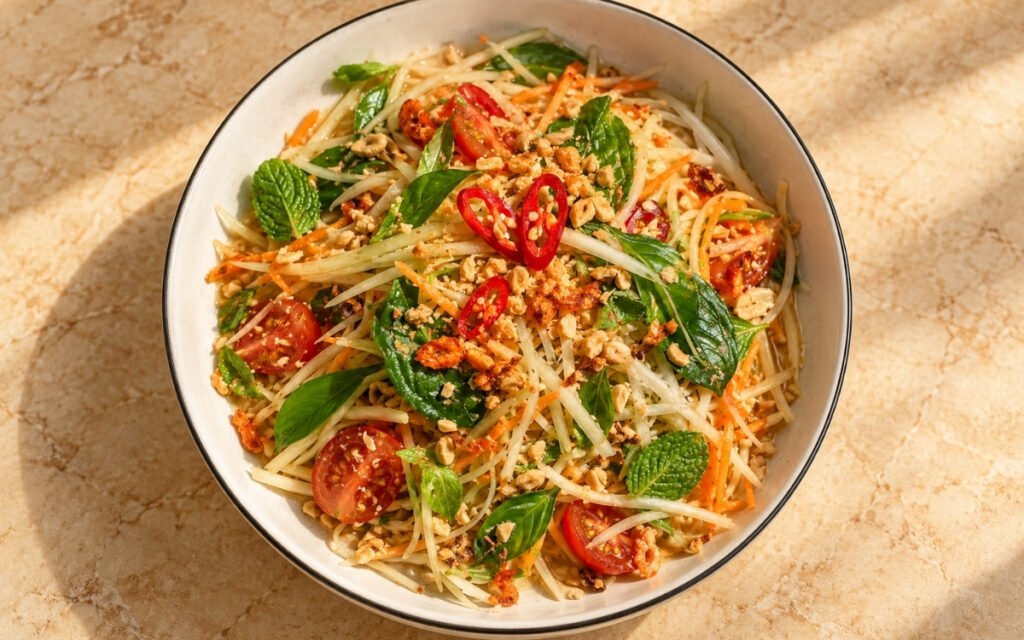
Vietnamese Green Papaya Salad (Gỏi Đu Đủ)
Fine julienne of crisp green papaya and carrot dressed with a sharp fish sauce–lime dressing, finished with tomatoes, peanuts, herbs, and dried shrimp.
-
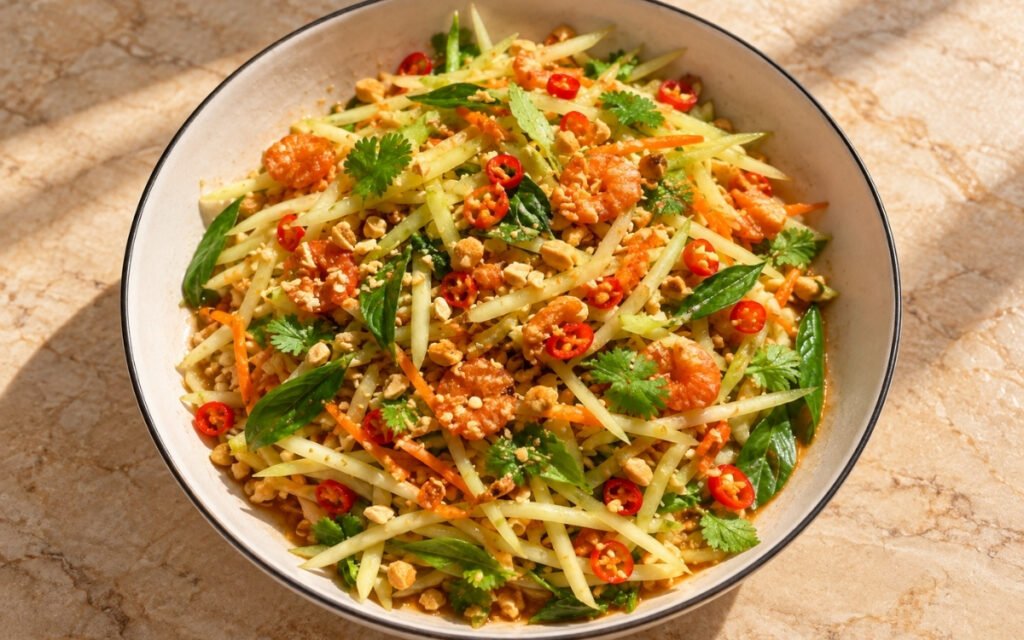
Thai Green Mango Salad with Peanuts & Chili
Crisp julienned unripe mango and carrot with dried shrimp, roasted peanuts, bird’s eye chili, and fresh herbs in a sour-salty-sweet dressing.
-
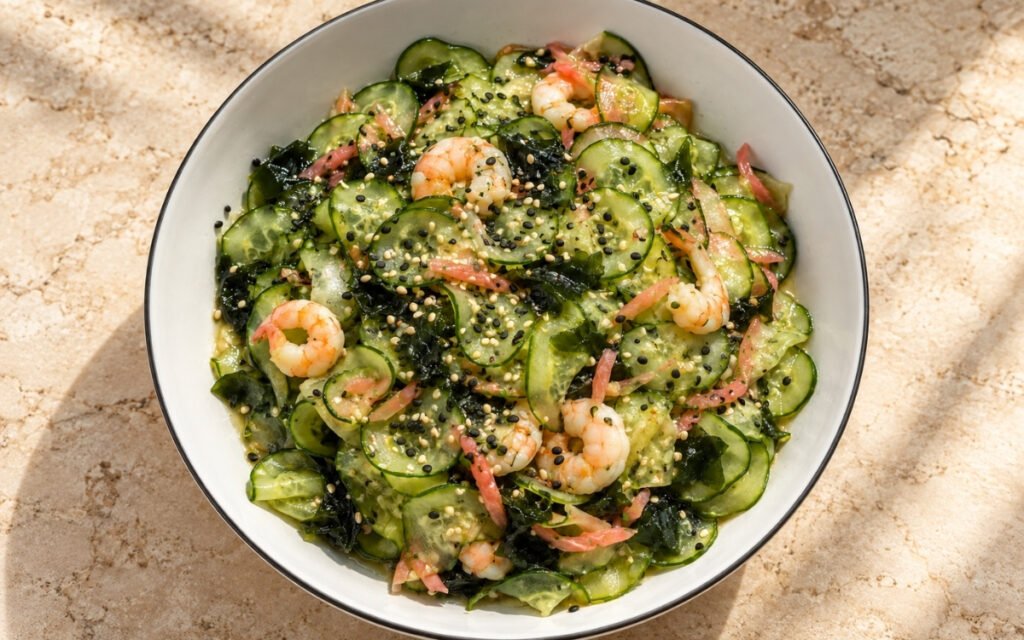
Japanese Cucumber Salad (Sunomono)
Very thinly sliced cucumber, rehydrated wakame, tender shrimp, and a balanced sweet-tart rice vinegar dressing, finished with sesame seeds and pickled ginger.
-
Thai Red Curry Shrimp
Plump shrimp simmered in a creamy red coconut curry with bell peppers, bamboo shoots, lime leaves and Thai basil, served with jasmine rice.
-
Shrimp Pad Thai
Stir-fried flat rice noodles with seared shrimp, egg, bean sprouts and garlic chives in a tamarind sauce, topped with peanuts and lime.
-
Tom Yum Noodle Soup
Shrimp, mushrooms and rice noodles in a red-orange hot-and-sour broth with lemongrass, galangal, kaffir lime leaves, nam prik pao, fish sauce and lime.


