
Larb Moo Pork Lettuce Cups
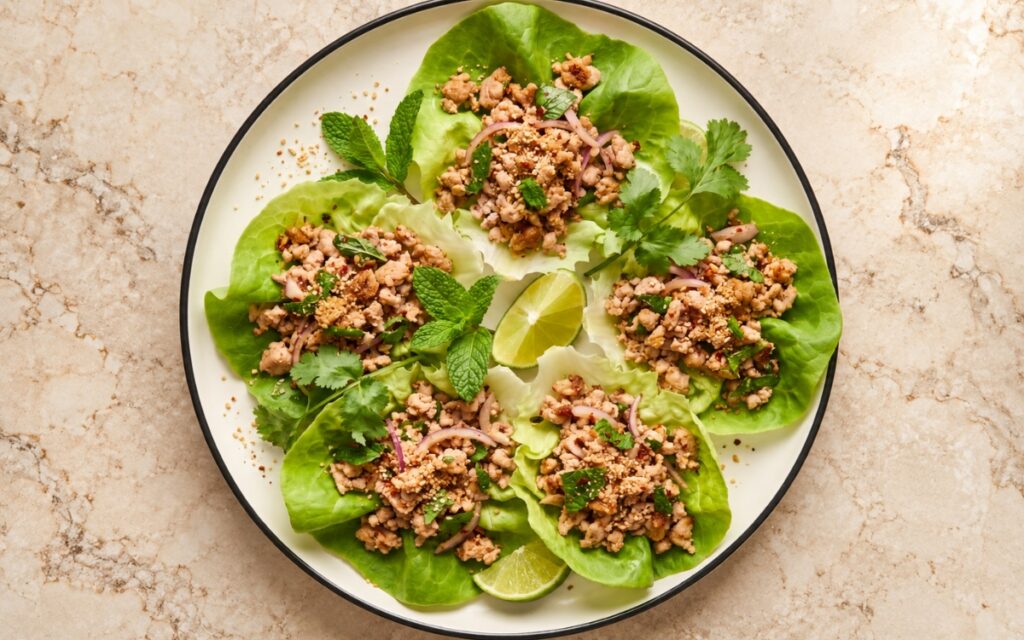
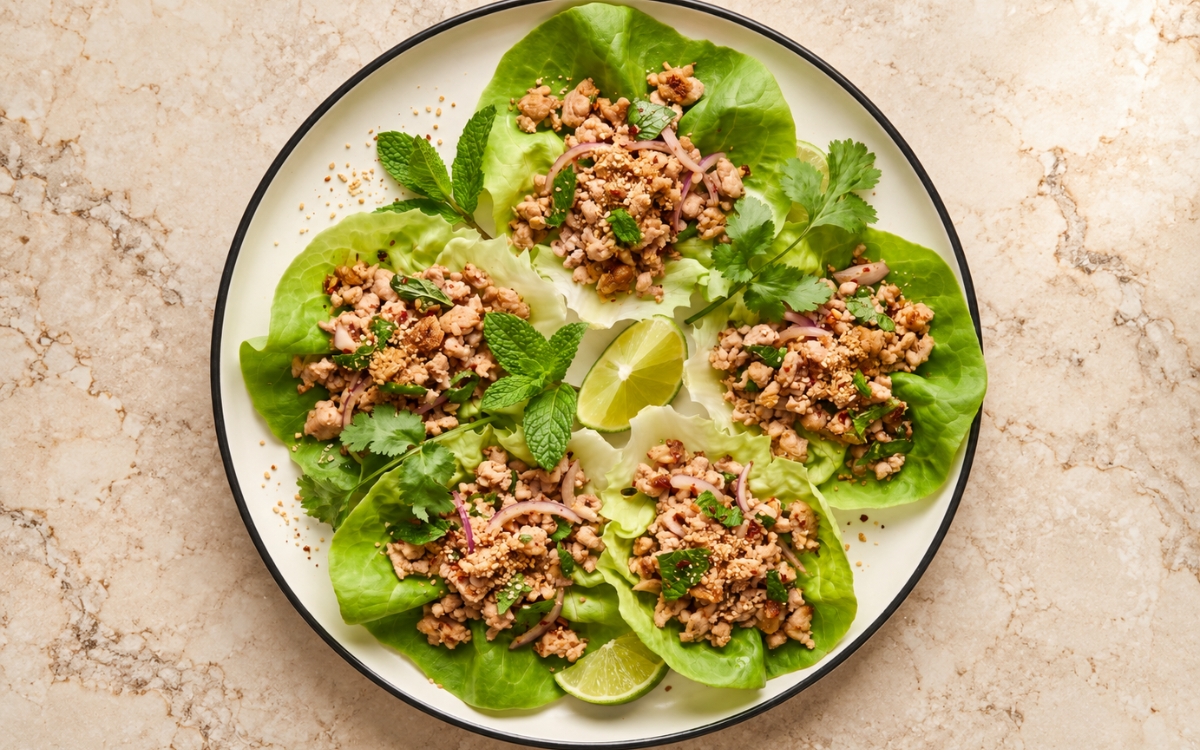
A classic Thai larb moo of softly crumbled minced pork dressed with lime, fish sauce, chilli and nutty toasted rice powder, folded with red onion and plenty of mint and cilantro, then spooned into crisp lettuce cups, the key being juicy, herb-heavy pork against cool, crunchy leaves. Cooking the pork gently in a little water, rather than searing it in hot oil, is the technique this whole dish depends on for its soft, juicy crumb — browned, crisp pork turns dry and refuses the dressing, while the liquid left in the pan carries lime and fish sauce into every crumble, the same keep-the-meat-moist principle used elsewhere in this collection whenever a dressing has to soak into cooked protein. Toasting raw rice in a dry skillet until deep golden, then grinding it only to a coarse, sandy powder, is what gives larb its characteristic nutty aroma and light crunch. Seasoning while the pork is still warm and folding in the delicate herbs only at the end is what keeps the meat well flavoured and the mint genuinely bright. The payoff is a pork larb with real, lime-forward brightness — juicy, savoury crumbles, sharp raw onion, plenty of fresh mint, gentle chilli heat and a nutty dusting of toasted rice.
Prep Time : 20 min
Total Time : 35 min
Servings : 4
20 min
35 min
4
Ingredients
For the Pork
• 700g minced pork
• 60–80ml water
• ½ tsp neutral oil, optional, only if the pork is very lean
For the Toasted Rice Powder
• 35g uncooked jasmine rice or glutinous rice, about 3 tbsp
For the Larb Seasoning
• 5 tbsp fresh lime juice, plus more to taste
• 4 tbsp fish sauce, plus more to taste
• 1–2 tsp palm sugar or light brown sugar, optional, only to round the flavour
• 1½–2 tsp Thai chilli flakes, or to taste
For the Fresh Mix-Ins
• 1 medium red onion or 2 shallots, very thinly sliced
• 3 scallions, thinly sliced
• 20g fresh mint leaves, roughly torn if large
• 15g fresh cilantro leaves and tender stems, roughly chopped
For Serving
• 16 large butter lettuce or little gem leaves, washed and well dried
• 2 limes, cut into wedges
• Extra mint and cilantro, for garnish
• Extra Thai chilli flakes, optional
Directions
- Make the Toasted Rice Powder
Add the 35g uncooked jasmine or glutinous rice to a dry skillet set over medium-low heat, with no oil at all. Toast for 8–10 minutes, stirring often and shaking the pan so the grains colour evenly, until every grain is a deep, even golden brown and the rice smells distinctly nutty. If some grains darken while others stay pale, lower the heat and keep stirring rather than rushing. Tip the rice onto a plate and let it cool completely while you prep the lettuce and herbs, then grind it in a spice grinder or with a mortar and pestle to a coarse, slightly sandy powder, stopping well before it turns to flour. That deliberately coarse grind is what gives larb its gentle grit and light crunch, since a fine powder dissolves into the dressing and turns the mixture pasty. - Prep the Lettuce and Herbs
Separate the 16 large butter lettuce or little gem leaves, keeping each one whole and cup-shaped. Wash them gently, dry them thoroughly in a salad spinner or between clean towels, and refrigerate them until needed so they stay crisp. Slice the red onion or shallots very thinly, slice the 3 scallions, roughly chop the 15g cilantro and tear any large mint leaves. If the onion tastes very sharp, soak the slices in cold water for 5–10 minutes, then drain and dry them well. Squeeze the 5 tbsp lime juice and cut the 2 limes into wedges for serving. That careful drying genuinely matters, because water left on the leaves dilutes the dressing and lets the cups go limp under the warm pork. - Cook the Pork
Place the 700g minced pork in a skillet or sauté pan with 60–80ml water and set it over medium heat, adding the ½ tsp neutral oil only if the pork is very lean. Break the meat up continuously with a spatula or wooden spoon as it heats, so it stays in fine, loose crumbles rather than setting into clumps. Cook for 5–7 minutes, until no pink remains and the pork is just done. If a lot of liquid remains, let it reduce briefly, but stop while a little juice still glistens in the pan, and never let the pork dry out or brown deeply. That gentle, moist cooking is what keeps the crumbles soft and juicy, and the small amount of liquid left behind helps carry the dressing through the meat. - Season the Larb
Turn the heat to low or take the pan off the heat. Add the 4 tbsp fish sauce, 5 tbsp lime juice, 1½ tsp of the Thai chilli flakes and 1 tsp palm or brown sugar, if using, and mix well while the pork is still warm. Taste and adjust, then stir in about 2 tbsp of the toasted rice powder, followed by most of the sliced onion, the scallions and most of the mint and cilantro. Keep a little onion, a little of each herb and the remaining rice powder aside for garnish. The mixture should look loose, juicy and herb-speckled, with the onion still clearly visible. That timing matters because warm pork absorbs the dressing, while delicate herbs folded in last stay fresh and fragrant. - Taste and Adjust
Taste the larb once more and aim for a balance that is clearly lime-forward, savoury from the fish sauce, lightly to moderately spicy and genuinely herb-heavy. Add more lime juice for brightness, more fish sauce for salt and savouriness, up to the remaining ½ tsp chilli flakes for heat, or up to 1 tsp more sugar if the lime tastes harsh. If it needs more nutty body, or looks wet enough to pool, stir in a little more toasted rice powder just before serving rather than a large amount early. The finished larb should be moist enough to spoon, but never watery. That restraint with the rice powder matters because too much, added too soon, swells in the dressing and turns the mixture heavy and pasty. - Assemble the Lettuce Cups
Arrange the 16 chilled lettuce leaves on a platter. Spoon the warm larb moo evenly into the leaves, allowing about 4 cups per person for 4 servings. Garnish with the reserved onion, mint and cilantro, the extra mint and cilantro, and a light sprinkle of the remaining toasted rice powder, adding extra chilli flakes for anyone who wants more heat. Serve straight away with the lime wedges on the side, while the pork is warm or just slightly warm and the leaves are still cold and crisp. That contrast is what makes the dish, because pork left to go fridge-cold firms up and tastes muted, while leaves filled too early wilt under the warm meat.
*Notes :
- Cooking the pork gently in water deserves genuine recognition as the technique most directly responsible for whether the larb tastes juicy or dry. The recipe’s own instruction that “Classical larb moo should be juicy and softly crumbled, not crispy and not heavily seared” explains why — browned, crisp crumbles lose the moisture that carries the dressing, so the lime and fish sauce slide off rather than soaking in, and “Dry pork makes flat larb.”
- Toasting and grinding the rice deserves the same attention this technique receives throughout this collection’s other Thai salad dishes, because it is the ingredient that makes larb taste like larb. The recipe’s own warning “Do not grind it completely fine” reflects how a coarse, sandy powder keeps its nutty crunch and soaks up excess juice, while a fine flour dissolves straight into the dressing and turns the whole mixture heavy and pasty.
- Folding in the herbs last and in generous quantity deserves genuine respect as the detail most directly responsible for the dish’s fresh, aromatic character. The recipe’s own note that “Mint should be noticeable, not just decorative” explains the full 20g measure — warm pork bruises mint and cilantro within seconds, so stirring them in only after the dressing keeps them green, fragrant and clearly present in every cup.
- The look of the finished larb deserves attention as a genuine, checkable readiness cue rather than a loose approximation. The recipe’s own target that it “should look loose, crumbly, juicy, and herb-speckled, with visible onion and a dusting of toasted rice” gives a clear test — clumped, dry meat means it was overcooked, while a puddle in the pan means it needs a little more rice powder before serving.
Why This Recipe Works
This recipe works because each step protects the juiciness of the pork and the freshness of the herbs. Cooking the mince gently in a little water keeps it softly crumbled and leaves just enough liquid in the pan to carry the dressing. Seasoning while the meat is still warm lets lime juice, fish sauce and chilli soak into every crumble rather than simply coating the outside. Coarsely ground toasted rice then adds nutty aroma, a light crunch and enough body to bind the juices. Finally, raw onion and plenty of mint and cilantro go in last, so every crisp lettuce cup tastes bright, savoury and genuinely herb-heavy.
Ingredient Breakdown
Gently Cooked Minced Pork
The critical technique — cooking the pork in 60–80ml water keeps the crumbles soft, juicy and ready to absorb the dressing.
Coarse Toasted Rice Powder
The defining flavour ingredient — deep golden, coarsely ground rice brings larb its nutty aroma, sandy texture and light, genuinely characteristic crunch.
Warm-Pork Seasoning
The critical timing technique — dressing the pork while still warm lets lime juice and fish sauce soak into every crumble.
Lime Juice and Fish Sauce
The flavour foundation — 5 tbsp lime and 4 tbsp fish sauce give larb its bright, salty, clearly lime-forward character.
Generous Mint and Cilantro
The critical ingredient choice — 20g mint and 15g cilantro make the larb genuinely herb-heavy, with mint leading and cilantro in support.
Crisp Butter Lettuce Cups
The finishing touch — cold, well-dried leaves add a cool, crunchy contrast and a tidy, edible vessel for the warm pork.
Flavor Structure Explained
This larb moo follows a layered balance model:
- Juicy, savoury foundation (softly crumbled minced pork, fish sauce)
- Bright, sour lift (fresh lime juice, lime wedges)
- Nutty, toasty body (coarse toasted rice powder)
- Sharp, gentle heat (Thai chilli flakes, raw red onion)
- Fresh herbal finish (mint, cilantro, scallions, crisp lettuce)
Softly crumbled pork seasoned with fish sauce forms the juicy, savoury foundation that carries everything else. Fresh lime juice brings the bright, sour lift that makes larb taste clearly lime-forward, with extra wedges on the side for adjusting at the table. Coarse toasted rice powder adds nutty, toasty body and a light crunch, while Thai chilli flakes and raw red onion supply sharp, gentle heat. Mint, cilantro, scallions and cold lettuce then land as the fresh herbal finish that ties this larb together.
Common Mistakes to Avoid
- Searing the Pork in Hot Oil – This browns and dries the crumbles, so the dressing slides off instead of soaking in. Always cook the pork gently in 60–80ml water over medium heat.
- Grinding the Rice to a Fine Flour – This dissolves into the dressing and turns the larb heavy and pasty. Always stop grinding while the powder is still coarse and slightly sandy.
- Toasting the Rice Over High Heat – This scorches the outside of each grain before the centre turns golden, leaving a bitter, uneven powder. Always toast over medium-low heat for 8–10 minutes, stirring often.
- Seasoning the Pork After It Cools – This leaves the dressing sitting on the surface rather than soaking into the meat. Always add the lime juice and fish sauce while the pork is still warm.
- Stirring the Herbs In Over the Heat – This wilts and darkens the mint and cilantro until their fragrance fades. Always take the pan off the heat and fold the herbs in last.
Variations
Sawtooth Herb Version
Fold a small amount of sawtooth herb in with the mint and cilantro, per the recipe’s own note, for a deeper, more classical cilantro-like aroma that makes the larb taste even more herb-forward.
Roasted Chilli Version
Add a pinch of ground roasted chilli alongside the Thai chilli flakes, per the recipe’s own note, for a smokier, deeper heat that sits behind the lime without making the pork any wetter.
Shallot Version
Use 2 shallots instead of the red onion, as the recipe allows, for a milder, slightly sweeter bite that still gives the larb its fresh, raw crunch without the sharpness of red onion.
Little Gem Version
Use large little gem leaves in place of butter lettuce, as the recipe allows, for firmer, crunchier boat-shaped cups that hold the juicy pork well and stay crisp a little longer on the platter.
Storage & Make-Ahead
Make the toasted rice powder up to 1 week ahead and keep it in a sealed jar at room temperature, since it holds its nutty aroma well once completely cool and saves 10 minutes on the day.
Wash, dry and chill the lettuce leaves up to 1 day ahead, wrapped loosely in a clean towel inside a container, so they stay cold, crisp and ready to fill straight from the fridge.
Slice the onion and scallions and chop the cilantro a few hours ahead, keeping them covered in the fridge, but tear the mint only shortly before cooking, since bruised leaves darken quickly once handled.
Dress the pork only shortly before serving, per the recipe’s own note, because the lime and herbs lose their freshness and the rice powder softens if the finished larb sits for long.
Leftover larb keeps in an airtight container in the fridge for up to 2 days and is best warmed gently in a pan with a splash of water, then brightened with a squeeze of lime before serving.
Frequently Asked Questions
Why is the pork cooked in water instead of oil?
Water cooks the mince gently, so it stays soft, juicy and finely crumbled rather than browning and drying out. The little cooking liquid left in the pan also carries the lime juice and fish sauce right through the meat.
Why does larb need toasted rice powder, and why should it stay coarse?
Toasted rice powder gives larb its characteristic nutty aroma, light crunch and a little body that binds the juices. Ground coarse, it keeps a sandy texture; ground too fine, it dissolves and turns the mixture heavy and pasty.
Why is the larb seasoned while the pork is still warm?
Warm meat absorbs lime juice, fish sauce and chilli far more readily than cold meat, so the flavour reaches the inside of every crumble. Seasoning cold pork leaves the dressing sitting on the surface and the larb tasting thin.
Why should larb moo be served warm rather than hot or fridge-cold?
Slightly warm pork stays juicy and lets the lime and herbs smell fresh, while piping-hot meat wilts the lettuce and mint on contact. Fridge-cold larb firms up, and its fat and seasoning taste genuinely muted and flat.
Are there other classic Thai larb, salad, or noodle bowl dishes worth trying?
Larb Gai — Thai Minced Chicken Salad offers another classic larb direction worth exploring. Crispy Rice Salad (Nam Khao Tod) and Spicy Thai Beef Salad (Yam Neua) are also worth trying for other bright Thai salad directions, and Thai Green Papaya Shrimp Salad and Lemongrass Pork Vermicelli Bowls offer other fresh Southeast Asian dishes worth exploring.
Nutrition Facts
( Per Serving — 4 lettuce cups )
Calories
~460 kcal
Protein
33 g
Fat
30 g
Carbs
14 g
Calories
~460 kcal
Protein
33 g
Fat
30 g
Carbs
14 g
Related Recipes
Related Recipes
-

Pad Krapao — Thai Basil Stir-Fry
Hard-caramelized minced pork with garlic, chilies, glossy sauce, and Thai holy basil, served over jasmine rice with a crispy fried egg.
-
Jalapeño Poppers
Halved jalapeños filled with creamy sriracha-spiked cheddar-cream cheese, wrapped in bacon and baked until crisp, hot, and molten.
-
Sausages in Blankets
Cocktail sausages and a small log of cheddar wrapped in flaky puff pastry, brushed with egg wash until deep golden and glossy.



You might also like
You might also like
-
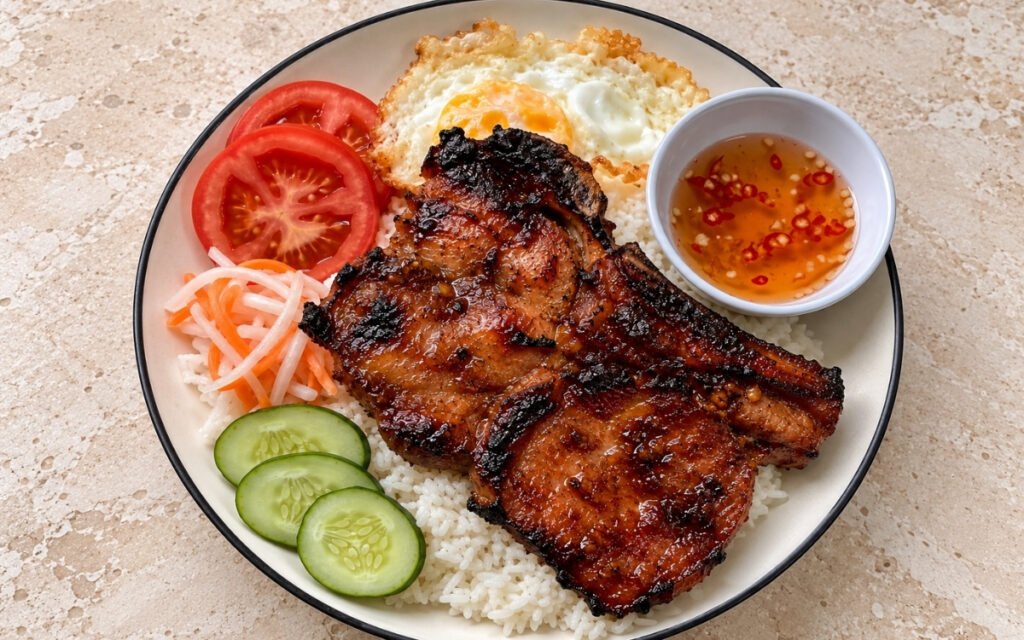
Broken Rice with Grilled Pork (Cơm Tấm)
Grilled lemongrass pork chop over broken rice with a fried egg, quick pickled carrot and daikon, cucumber, tomato, and nước chấm.
-
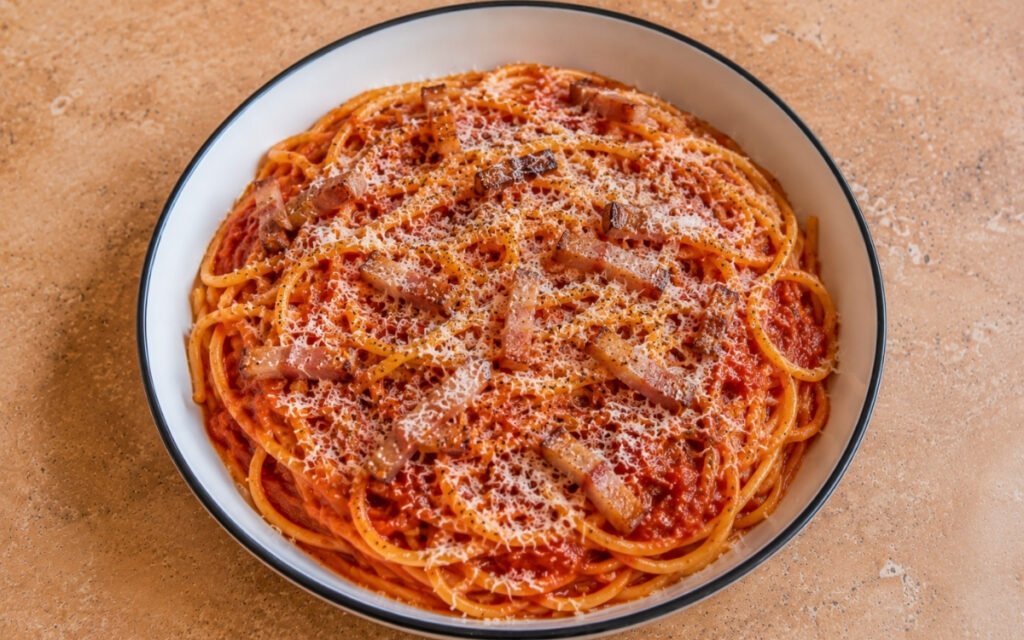
Classic Spaghetti all’Amatriciana
Cold-rendered guanciale, white wine, hand-crushed San Marzano tomatoes, and Pecorino off the heat — 40 minutes.
-
Cuban Mojo Pork Rice Bowl
Tender citrus-garlic mojo roast pork over fluffy white rice with black beans, sautéed onions, fried sweet plantains, and fresh cilantro.

Larb Moo Pork Lettuce Cups
Ingredients
Method
- Add the 35g uncooked jasmine or glutinous rice to a dry skillet set over medium-low heat, with no oil at all. Toast for 8–10 minutes, stirring often and shaking the pan so the grains colour evenly, until every grain is a deep, even golden brown and the rice smells distinctly nutty. If some grains darken while others stay pale, lower the heat and keep stirring rather than rushing. Tip the rice onto a plate and let it cool completely while you prep the lettuce and herbs, then grind it in a spice grinder or with a mortar and pestle to a coarse, slightly sandy powder, stopping well before it turns to flour. That deliberately coarse grind is what gives larb its gentle grit and light crunch, since a fine powder dissolves into the dressing and turns the mixture pasty.
- Separate the 16 large butter lettuce or little gem leaves, keeping each one whole and cup-shaped. Wash them gently, dry them thoroughly in a salad spinner or between clean towels, and refrigerate them until needed so they stay crisp. Slice the red onion or shallots very thinly, slice the 3 scallions, roughly chop the 15g cilantro and tear any large mint leaves. If the onion tastes very sharp, soak the slices in cold water for 5–10 minutes, then drain and dry them well. Squeeze the 5 tbsp lime juice and cut the 2 limes into wedges for serving. That careful drying genuinely matters, because water left on the leaves dilutes the dressing and lets the cups go limp under the warm pork.
- Place the 700g minced pork in a skillet or sauté pan with 60–80ml water and set it over medium heat, adding the ½ tsp neutral oil only if the pork is very lean. Break the meat up continuously with a spatula or wooden spoon as it heats, so it stays in fine, loose crumbles rather than setting into clumps. Cook for 5–7 minutes, until no pink remains and the pork is just done. If a lot of liquid remains, let it reduce briefly, but stop while a little juice still glistens in the pan, and never let the pork dry out or brown deeply. That gentle, moist cooking is what keeps the crumbles soft and juicy, and the small amount of liquid left behind helps carry the dressing through the meat.
- Turn the heat to low or take the pan off the heat. Add the 4 tbsp fish sauce, 5 tbsp lime juice, 1½ tsp of the Thai chilli flakes and 1 tsp palm or brown sugar, if using, and mix well while the pork is still warm. Taste and adjust, then stir in about 2 tbsp of the toasted rice powder, followed by most of the sliced onion, the scallions and most of the mint and cilantro. Keep a little onion, a little of each herb and the remaining rice powder aside for garnish. The mixture should look loose, juicy and herb-speckled, with the onion still clearly visible. That timing matters because warm pork absorbs the dressing, while delicate herbs folded in last stay fresh and fragrant.
- Taste the larb once more and aim for a balance that is clearly lime-forward, savoury from the fish sauce, lightly to moderately spicy and genuinely herb-heavy. Add more lime juice for brightness, more fish sauce for salt and savouriness, up to the remaining ½ tsp chilli flakes for heat, or up to 1 tsp more sugar if the lime tastes harsh. If it needs more nutty body, or looks wet enough to pool, stir in a little more toasted rice powder just before serving rather than a large amount early. The finished larb should be moist enough to spoon, but never watery. That restraint with the rice powder matters because too much, added too soon, swells in the dressing and turns the mixture heavy and pasty.
- Arrange the 16 chilled lettuce leaves on a platter. Spoon the warm larb moo evenly into the leaves, allowing about 4 cups per person for 4 servings. Garnish with the reserved onion, mint and cilantro, the extra mint and cilantro, and a light sprinkle of the remaining toasted rice powder, adding extra chilli flakes for anyone who wants more heat. Serve straight away with the lime wedges on the side, while the pork is warm or just slightly warm and the leaves are still cold and crisp. That contrast is what makes the dish, because pork left to go fridge-cold firms up and tastes muted, while leaves filled too early wilt under the warm meat.